-
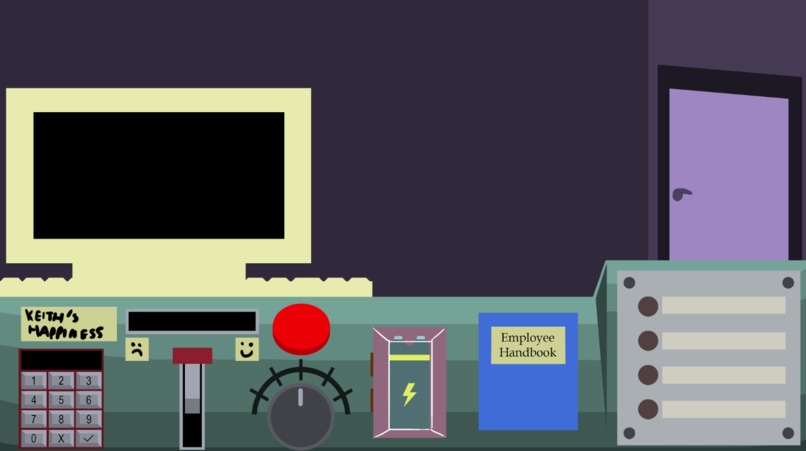
Further Progress
-
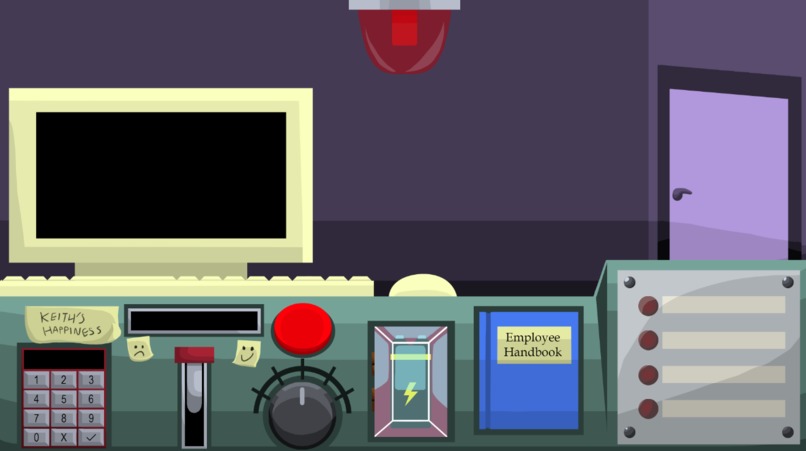
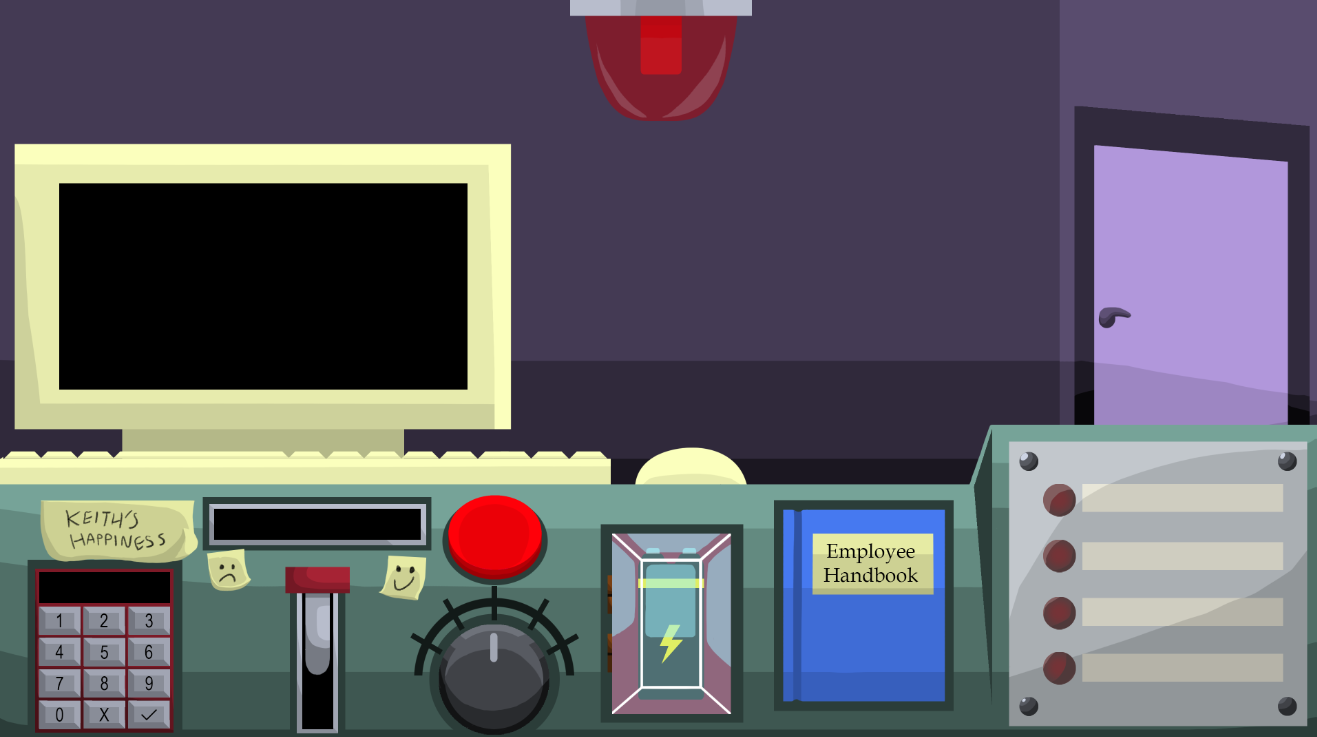
Workstation near completion
-
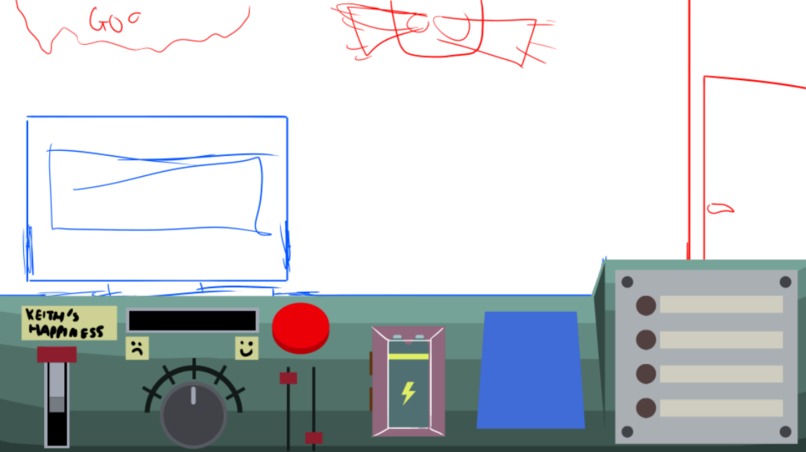
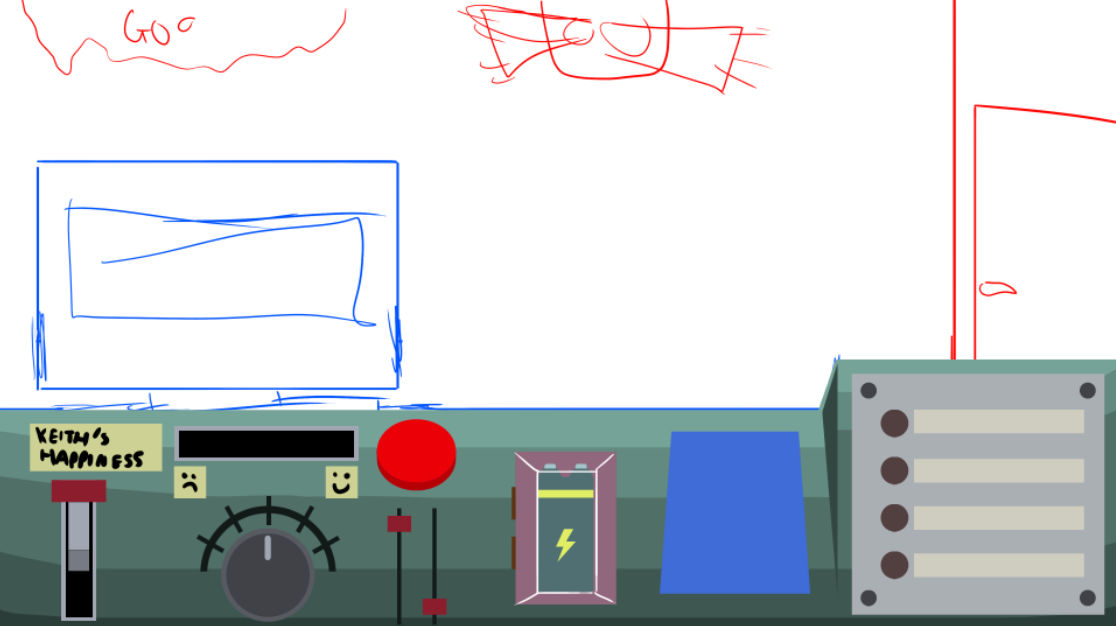
Early Designs
Inspiration
We were inspired by games like "Papers, Please", where you must micro-manage and adapt to constantly changing tasks and rules in hectic, stressful mayhem. We followed the theme of unity, and decided to display what can happen when there is a complete lack of unity. This meant that gradually, everyone leaves the company and you are left to be a placeholder employee, filling in for everyone else and taking on all the responsibilities yourself.
What it does
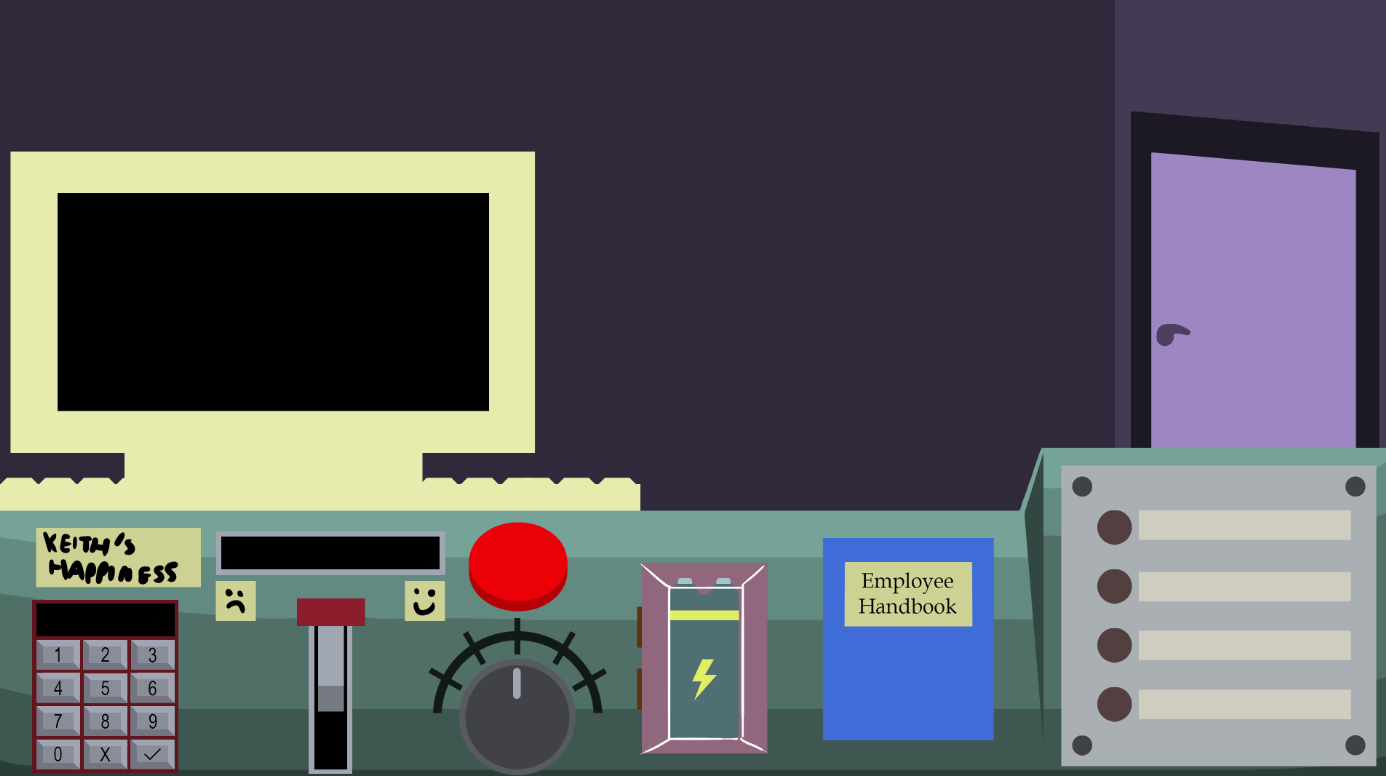
Placeholder mimics an office space, albeit a more fanciful one, as you operate all kinds of devices and manage your workstation. It will have various tasks you must complete as all kinds of things happen at once, for example you may have to respond to a siren by puling a lever or turning a dial, or responding to emails following a certain ruleset displayed in the handbook, or even pressing a button periodically to moderate the happiness of a mysterious figure named Keith.
How we built it
The game was built in the game engine Godot, with visual assets being created in Photoshop, and sound being made in Bosca Ceoil, a webapp for creating 8-bit music. In terms of visuals, we went for a simplistic art style that would allow us to produce all the assets in the short span of time we had, with some shading and highlights to add depth, clarity and visual appeal.
Despite the topic of the Jam, we chose not to use unity and instead picked Godot thanks to the fact that it's open source. This means developers can contribute their own additions to the engine, which helps a lot for avid software engineers like us. For example, their own scripting language can be used as a soft typed language (like Python or JavaScript) or hard typed language (like Java). Hard typed languages give us a lot warnings, allowing us to catch bugs before they become embedded deep within the logic of the game.
Challenges we ran into
Implementing a working version control strategy for our team was a bit of a struggle. Editing the same scene file as another person could lead to merge conflicts or potential loss of work. We ended up circumnavigating this issue by organising the game more, separating functionality between broken down child scenes. This allowed multiple people to work on the game at once, whilst keeping merge conflicts to a minimum.
Accomplishments that we're proud of
We are proud of our concept, and think it is a suitable pick for a game jam/hackathon as it can be completed within a short time frame, but also expanded upon with little difficulty. We think the gameplay format is fun and will keep players on their toes, and that they will enjoy some of the humour in the game. We would also draw attention to our efficiency and coordination as a team, and how this helped us create this in a short span of time.
Visually, we are proud of how the completed workspace came along. The variety in colour is pleasing to look at, and the design is much more interesting to look at than a standard desk. We think the visual appeal will bring a lot to the game and help it stand out from its competition.
On the programming side, we set out an ambitious scope and are proud that we were able to adapt this and scale it appropriately without abandoning our initial ideas. Despite cutting some ideas short, we still made a start on all of them, laying the foundations for future development.
In addition, we are pleased with the sound we produced for the game. We think having an audio element really enhances the feel of the game, and the variety of sounds will help the player recognise and distinguish the tasks.
What we learned
Across the team, we have learned how to program in GDScript, and how to coordinate and organise a Godot project across a team of four developers. We learned what its like to see a game project through all of its main stages into a deliverable final form. Outside of the creation of the game itself, we all learned a lot about working as a team on a creative project like a game, and how to make sure everyone is heard and shares a common vision for the final product.
What's next for Placeholder
The next steps for Placeholder would be to add more jobs and tasks, and improve the variation of existing tasks by adding more rules. This would all be part of improving the day cycle, where difficulty increases with each day and you are given more tasks to do. As well as this, creating animations and further polishing the code are things to pursue in future. We are also interested in exploring ways that this game could be transformed for use by a mental health organisation to spread awareness of stress and burnout in the workplace.

Log in or sign up for Devpost to join the conversation.