-
-
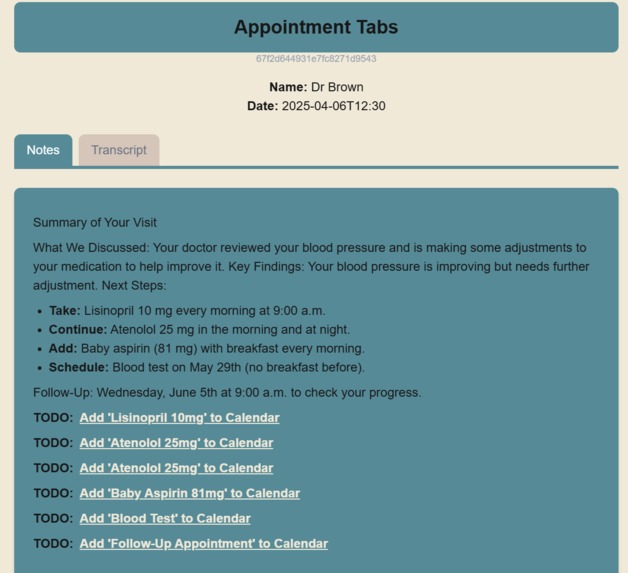
Sample appointment summary
Inspiration
Ever left a doctor’s appointment and immediately forgotten half of what was said? We built CalenDR to solve that. 1 in 3 patients forget medical instructions, leading to worse health outcomes. Our app turns chaotic post-visit notes into clear summaries and automated calendar reminders—so patients never miss a pill, test, or follow-up again.
What it does
- Listens to doctor-patient conversations 2 Extracts critical details: Medication changes (e.g., "Increase lisinopril to 10mg"), appointments ("June 5, 9:00 AM"), and tests ("fasting blood work on May 29").
- Creates a summary of the important details of the conversation
- Generates a one-click Google Calendar link with all instructions embedded.
How we built it
- Frontend: React/NextJS (simple, mobile-friendly UI).
- Backend: FastAPI (lightweight, handles NLP logic).
- Database: MongoDB (stores user med histories securely).
- AI: Google Gemini (parses messy notes into structured data).
- Auth: Auth0 (user logins with JWT tokens).
Challenges we ran into
NextJS integration with Auth0 was horrible because we planned to use the JWT Token as credentials for MongoDB. There was also one bug we faced using ngrok reverse proxy where GET endpoints would return nonsense characters, that we ended up finding the answer on a reddit post (bless you, stranger).
Accomplishments that we're proud of
- Built a working NLP pipeline that accurately extracts meds/dates from real doctor convos
- Made ngrok behave, and got Auth0 to work (sort of).
What we learned
- Medical jargon is messy: Gemini saved us with its context-aware parsing.
- Simple > perfect: We cut scope to ship a clean, usable MVP
What's next for CalenDR
- EHR sync: Pull data directly from clinics (Epic, Cerner).
- SMS/WhatsApp integration: Remind patients via text.

Log in or sign up for Devpost to join the conversation.