-
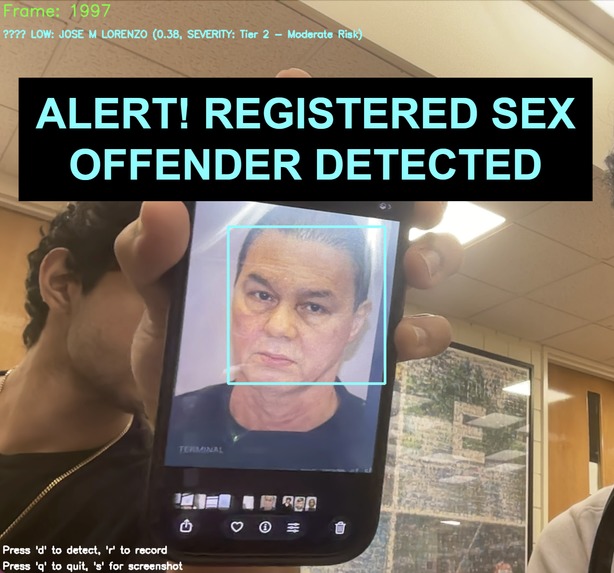
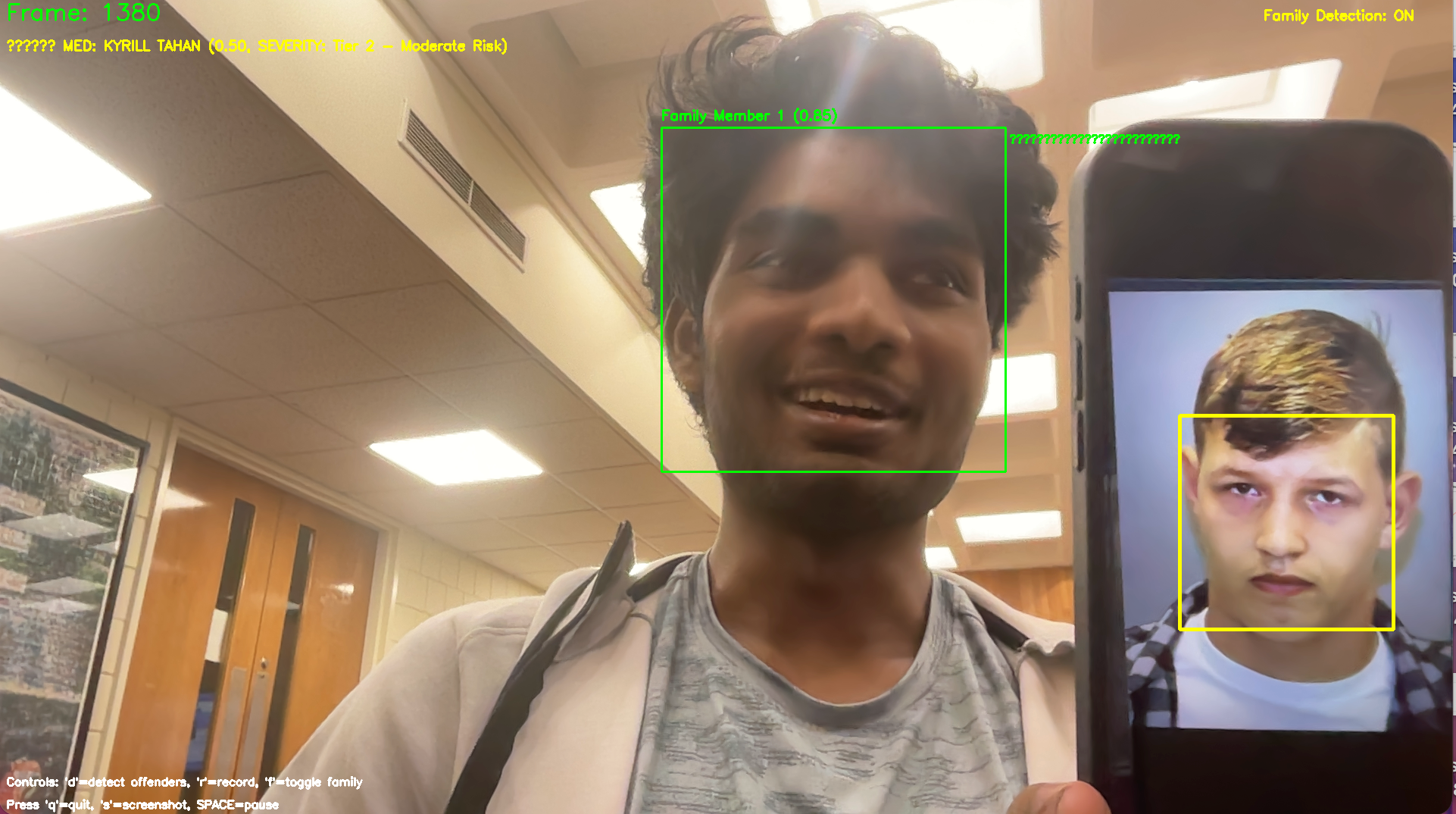
sex offender identification demonstration
-
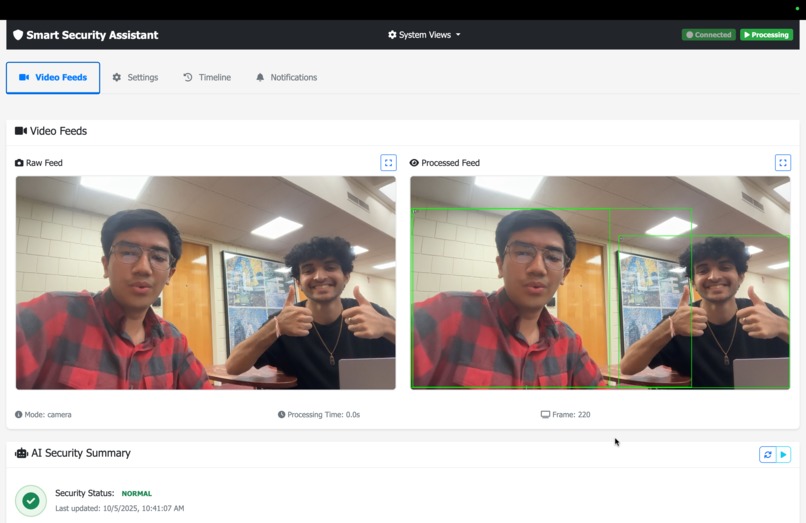
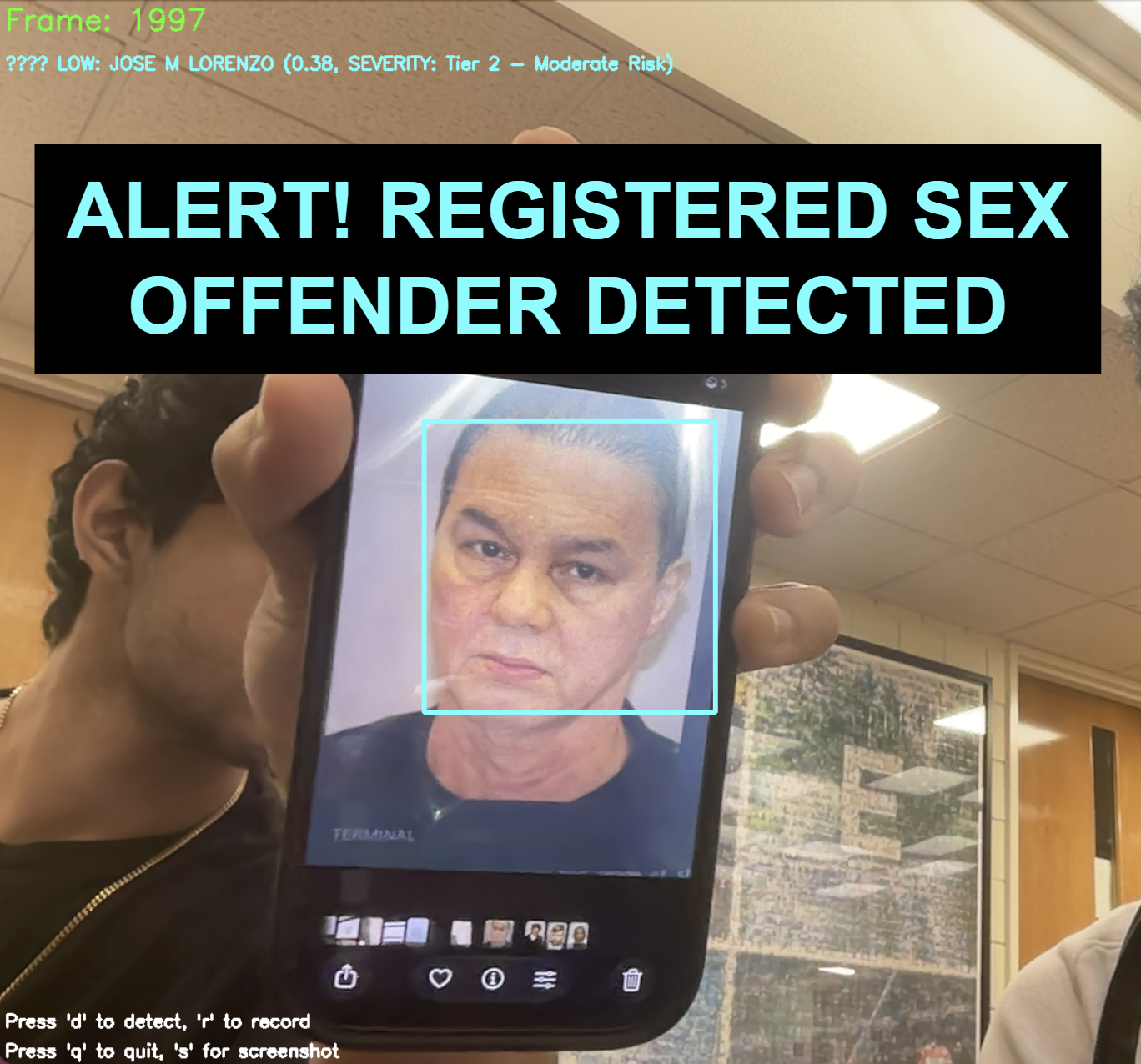
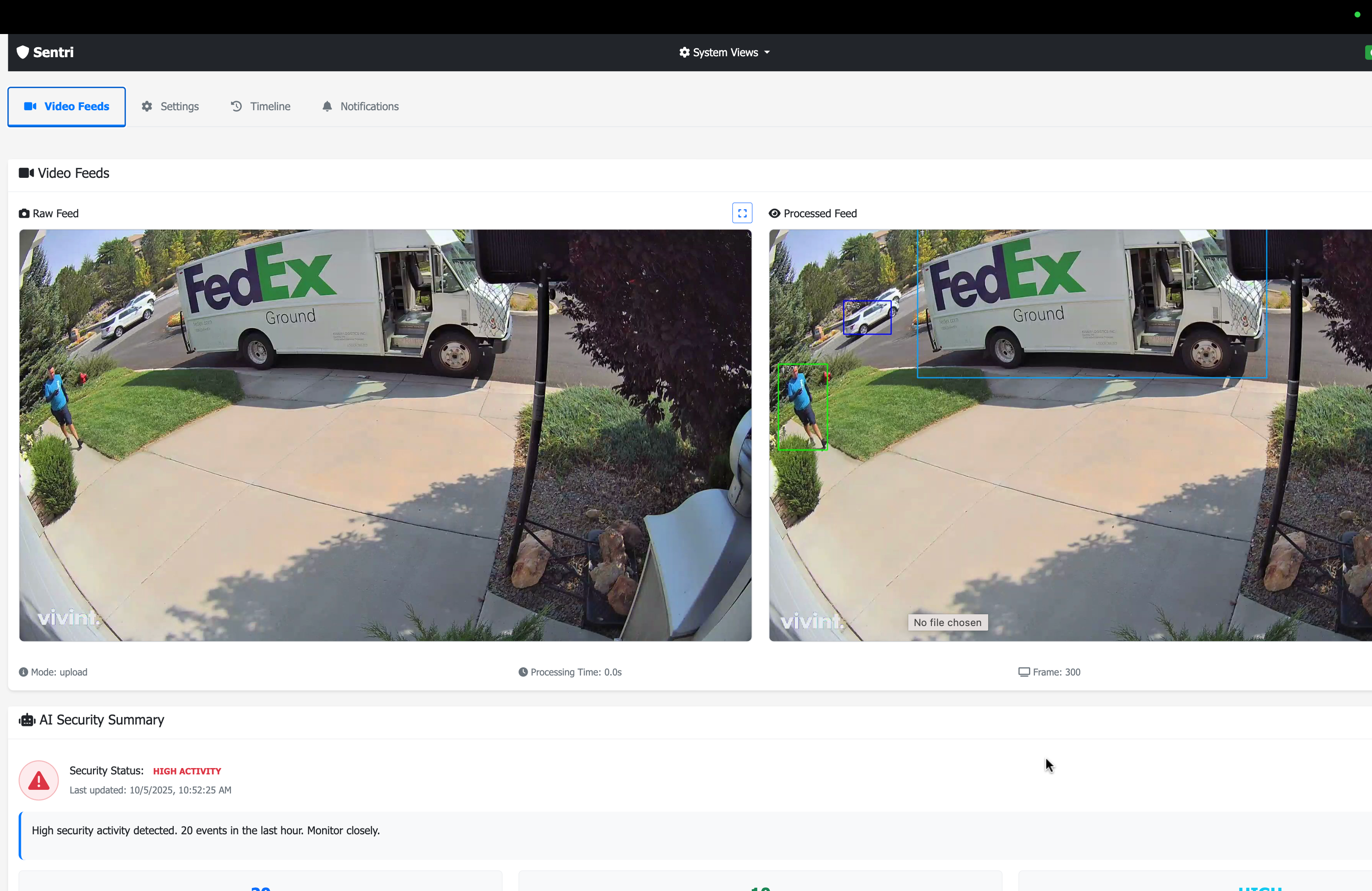
main security dashboard
-
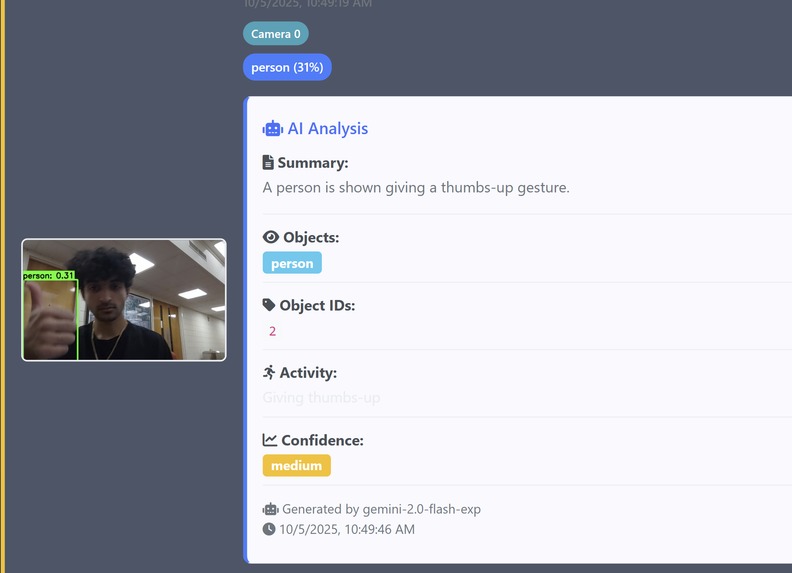
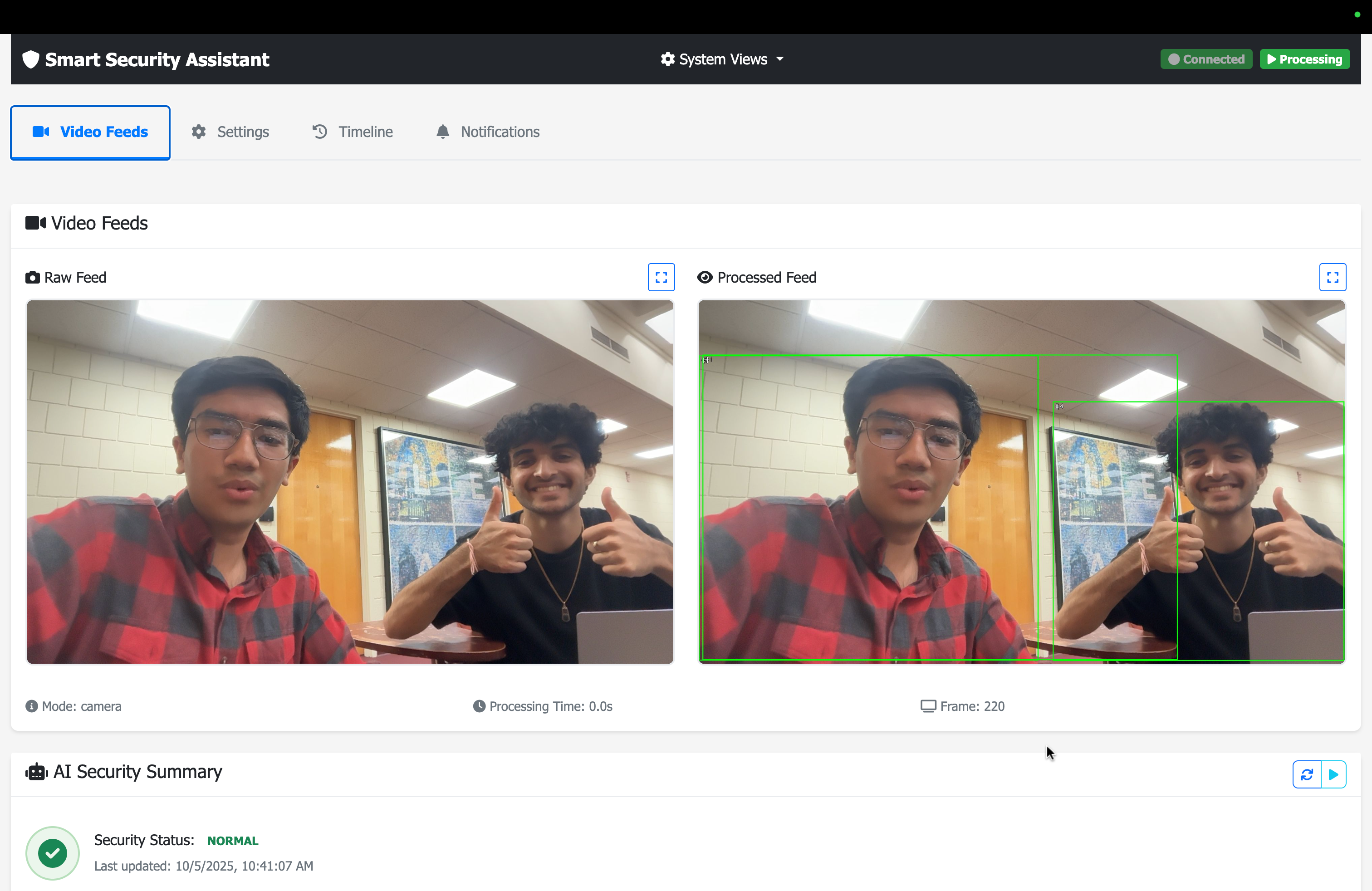
ai threat evaluation demonstration
-
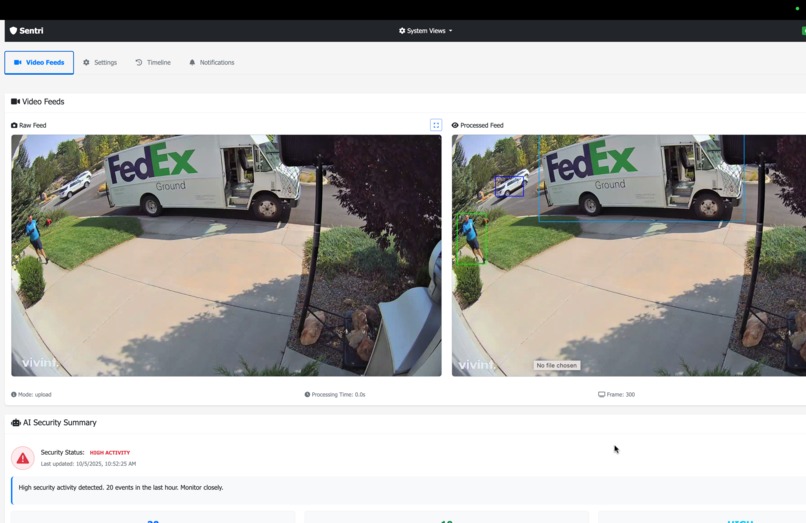
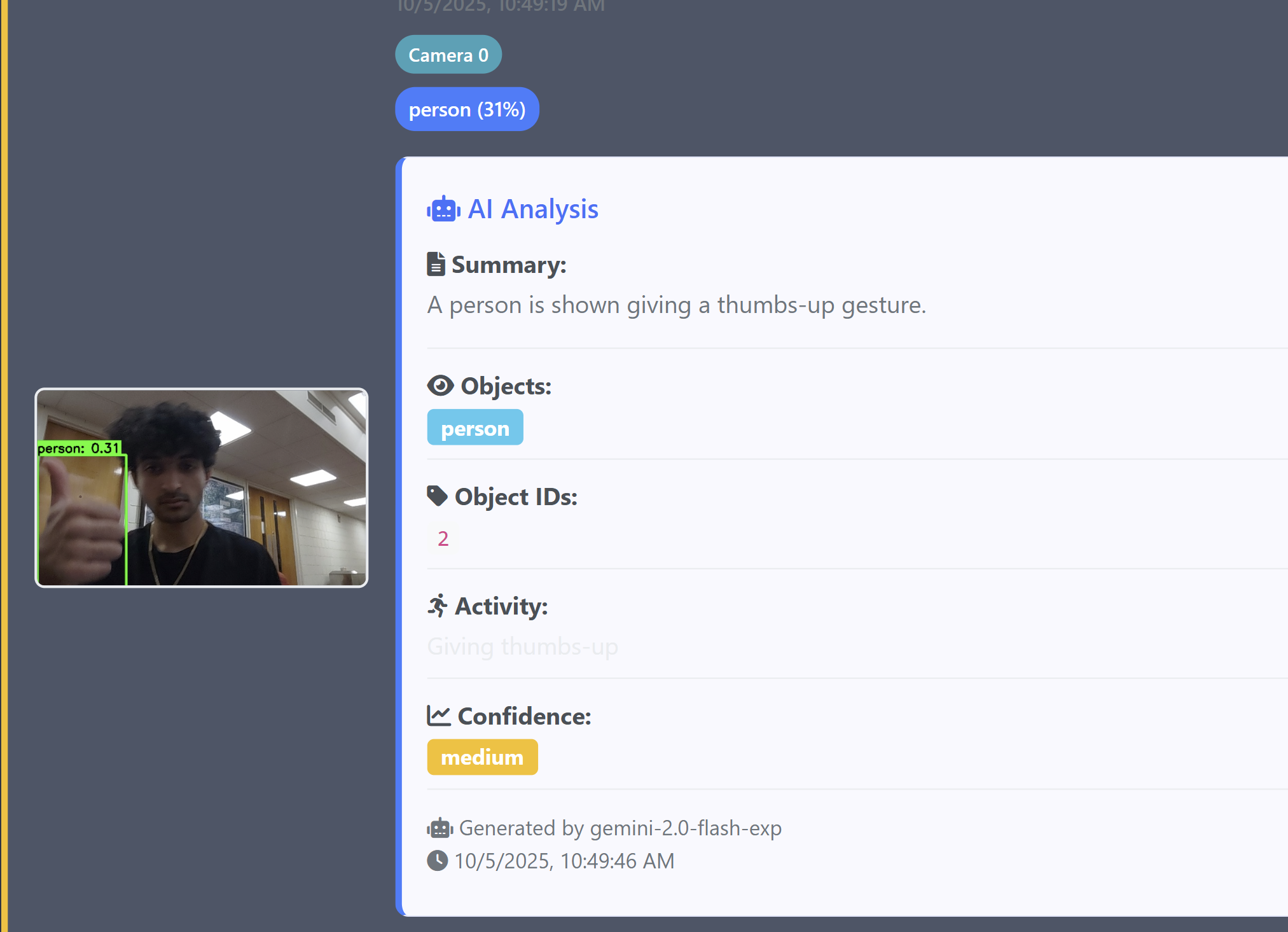
motion tracking demonstration
-
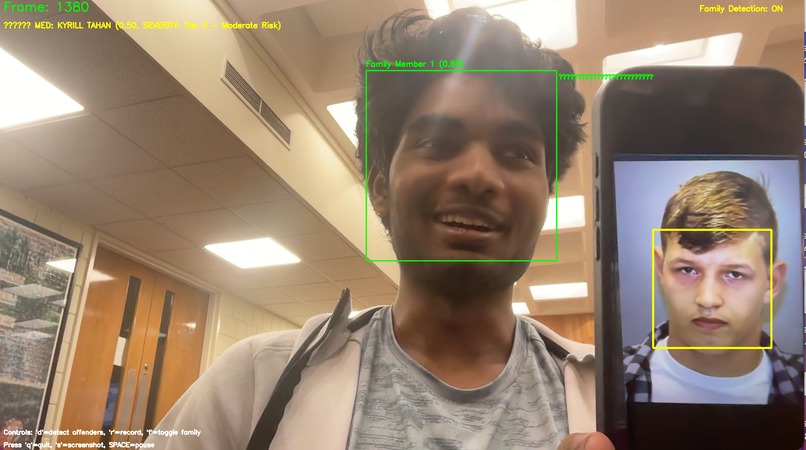
sex offender doxxing demonstration
About Sentri
Inspiration
The inspiration for Sentri came from the need for comprehensive, intelligent surveillance systems that can protect communities by identifying potential threats while maintaining privacy for family members. We recognized that traditional security cameras only provide passive monitoring without intelligent analysis. The goal was to create a system that could automatically detect and alert on registered sex offenders in real-time, while distinguishing between threats and family members, making neighborhoods safer through proactive AI-powered surveillance.
What it does
Sentri is a distributed multi-camera surveillance system that combines computer vision, face recognition, and AI analysis to provide intelligent security monitoring. The system automatically detects faces in real-time video streams, cross-references them against a sex offender database, and generates AI-powered activity reports. Key features include:
- Real-time Face Detection: Automatically identifies faces in video streams from multiple cameras
- Sex Offender Recognition: Cross-references detected faces against a comprehensive sex offender database with 17+ registered offenders
- Family Member Management: Recognizes and protects family members from false alerts
- AI-Powered Analysis: Uses Google Gemini AI to generate natural language reports of activities
- Distributed Architecture: Supports multiple camera clients across different machines
- Web Interface: Modern dashboard for monitoring, configuration, and alert management
- Vector Database Search: Semantic search capabilities to find similar events using natural language
How we built it
Sentri was built using a comprehensive tech stack combining computer vision, machine learning, and web technologies:
Backend Technologies:
- YOLOv8: Real-time object detection and tracking
- OpenCV: Computer vision and video processing
- Face Recognition: Facial feature extraction and matching using dlib
- Google Gemini AI: Natural language analysis and report generation
- ChromaDB: Vector database for semantic search
- Flask: Web application framework with WebSocket support
Frontend Technologies:
- HTML5/CSS3: Modern responsive web interface
- JavaScript: Real-time updates and camera controls
- WebSocket: Live video streaming and notifications
Infrastructure:
- Distributed Architecture: Multiple camera clients connected to central server
- Selenium Web Scraping: Automated data collection from sex offender registries
- SQLite Database: Local storage for face embeddings and offender data
- REST API: Comprehensive API for system control and data access
Data Collection:
- Automated web scraping of New Jersey State Police sex offender registry
- Successfully extracted 17 offenders within 5-mile radius with complete profiles
- Downloaded 10 offender mugshots for facial recognition database
Challenges we ran into
Technical Challenges:
- Anti-Bot Protection: The sex offender registry used DataDome protection that blocked traditional web scrapers. We overcame this by implementing Selenium with proper session management and respectful rate limiting.
- Face Recognition Accuracy: Balancing false positives and false negatives required extensive tuning of confidence thresholds and implementing multiple validation layers.
- Real-time Performance: Processing multiple camera streams simultaneously while maintaining real-time performance required optimization of the video processing pipeline and implementing efficient frame buffering.
- Distributed System Coordination: Managing multiple camera clients with different hardware capabilities and network conditions required robust error handling and automatic reconnection mechanisms.
Data Challenges:
- Limited Image Quality: Some sex offender mugshots were low quality or unavailable, requiring fallback strategies and manual verification.
- Privacy Compliance: Ensuring the system respects privacy while providing security required careful implementation of family member recognition and data retention policies.
Integration Challenges:
- AI Cost Management: Gemini API costs needed careful optimization through prompt engineering and selective analysis to keep operational costs under $0.0002 per analysis.
- Cross-Platform Compatibility: Ensuring the system works across different operating systems and hardware configurations required extensive testing and platform-specific optimizations.
Accomplishments that we're proud of
- Complete End-to-End System: Successfully built a production-ready surveillance system with web interface, distributed architecture, and AI integration
- High Accuracy Face Recognition: Achieved reliable face detection and matching with proper family member protection
- Cost-Effective AI Integration: Implemented intelligent AI analysis at under $0.0002 per report, making it affordable for continuous operation
- Comprehensive Data Collection: Successfully scraped and processed 17 sex offender profiles with 10 high-quality images
- Real-time Performance: Achieved real-time processing of multiple camera streams with live WebSocket updates
- Modern Web Interface: Created an intuitive, responsive dashboard with real-time notifications and comprehensive controls
- Robust Architecture: Built a distributed system that can scale across multiple machines with automatic error recovery
- Semantic Search: Implemented vector database search allowing natural language queries like "find suspicious activities"
What we learned
Technical Learnings:
- Computer Vision Integration: Gained deep experience in combining multiple computer vision technologies (YOLO, OpenCV, face recognition) into a cohesive system
- Distributed Systems: Learned how to design and implement distributed architectures with proper client management, load balancing, and fault tolerance
- AI Integration: Mastered the art of integrating large language models into real-time systems while managing costs and performance
- Web Scraping: Developed expertise in bypassing modern anti-bot protections using Selenium and proper session management
Project Management:
- Modular Development: Learned the importance of building modular, reusable components that can be easily integrated and maintained
- User Experience: Discovered how critical intuitive interfaces are for complex technical systems
- Performance Optimization: Gained insights into optimizing real-time video processing pipelines for production use
Ethical Considerations:
- Privacy vs Security: Learned to balance security needs with privacy protection, implementing family member recognition to prevent false alarms
- Responsible AI: Understood the importance of transparency and user control in AI-powered surveillance systems
What's next for Sentri
Short-term Enhancements:
- Mobile App: Develop iOS and Android applications for remote monitoring and push notifications
- Advanced Analytics: Implement behavior pattern recognition and predictive threat assessment
- Cloud Integration: Add cloud storage for event history and backup capabilities
- Enhanced AI: Integrate more sophisticated AI models for better activity classification and threat assessment
Medium-term Goals:
- Multi-Region Support: Expand sex offender database to cover multiple states and regions
- Integration APIs: Create APIs for integration with existing security systems and smart home devices
- Advanced Reporting: Implement automated incident reports with detailed timelines and evidence compilation
- Machine Learning Improvements: Train custom models on surveillance data to improve detection accuracy
Long-term Vision:
- Community Network: Create a network of Sentri systems that can share threat intelligence across neighborhoods
- Predictive Security: Develop predictive algorithms that can identify potential security threats before they occur
- Compliance Framework: Build tools to help communities ensure compliance with local surveillance laws and privacy regulations
- Open Source Initiative: Release core components as open source to enable community-driven development and transparency
Technical Roadmap:
- Edge Computing: Implement edge processing capabilities to reduce bandwidth and improve response times
- Blockchain Integration: Use blockchain for tamper-proof event logging and audit trails
- Advanced Encryption: Implement end-to-end encryption for all data transmission and storage
- Scalability Improvements: Design for deployment across large residential communities and commercial properties


Log in or sign up for Devpost to join the conversation.