-
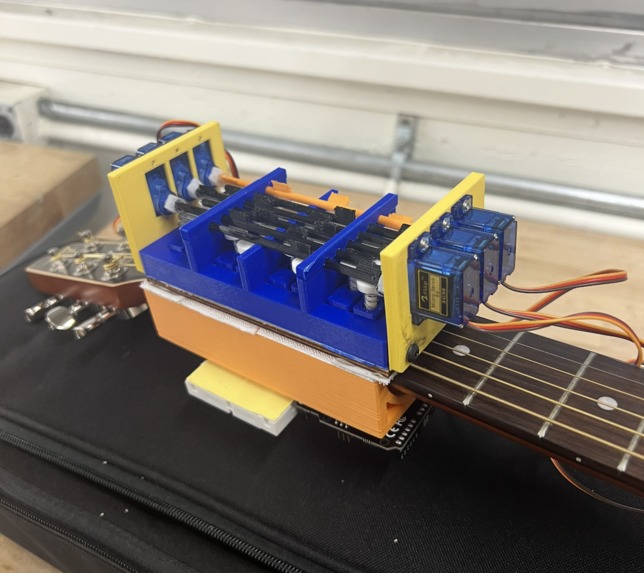
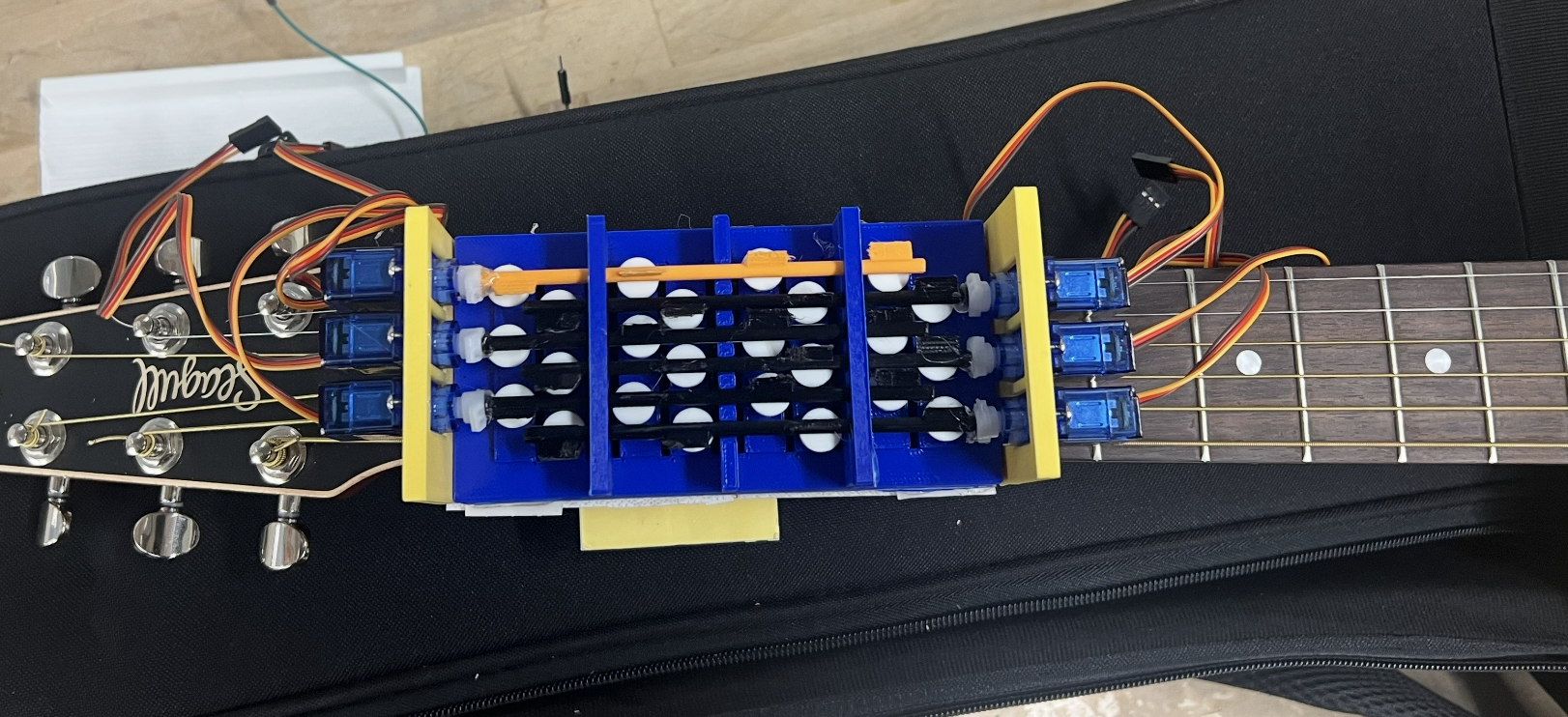
Main view
-
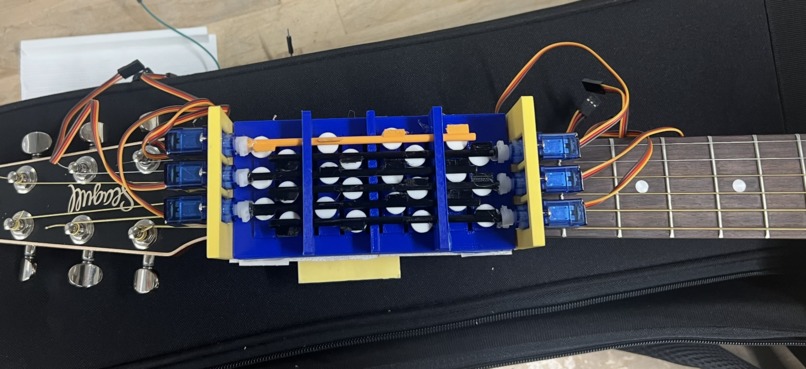
Top view
-
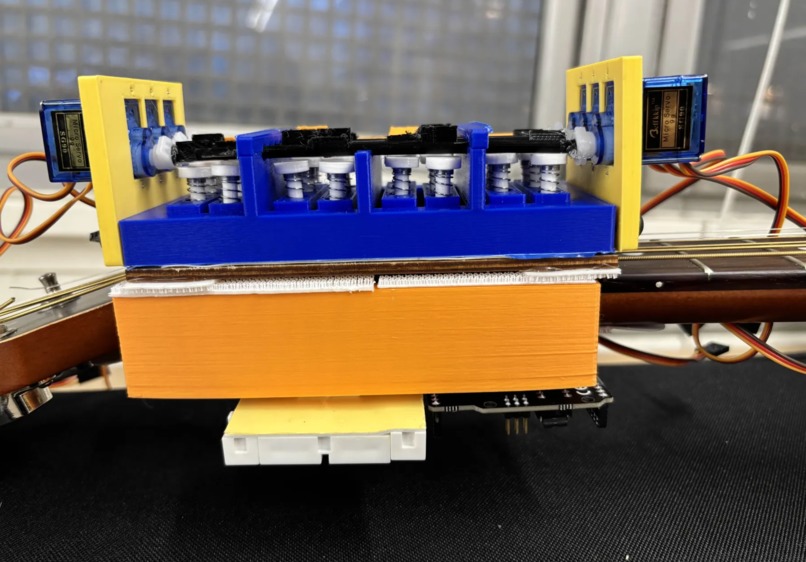
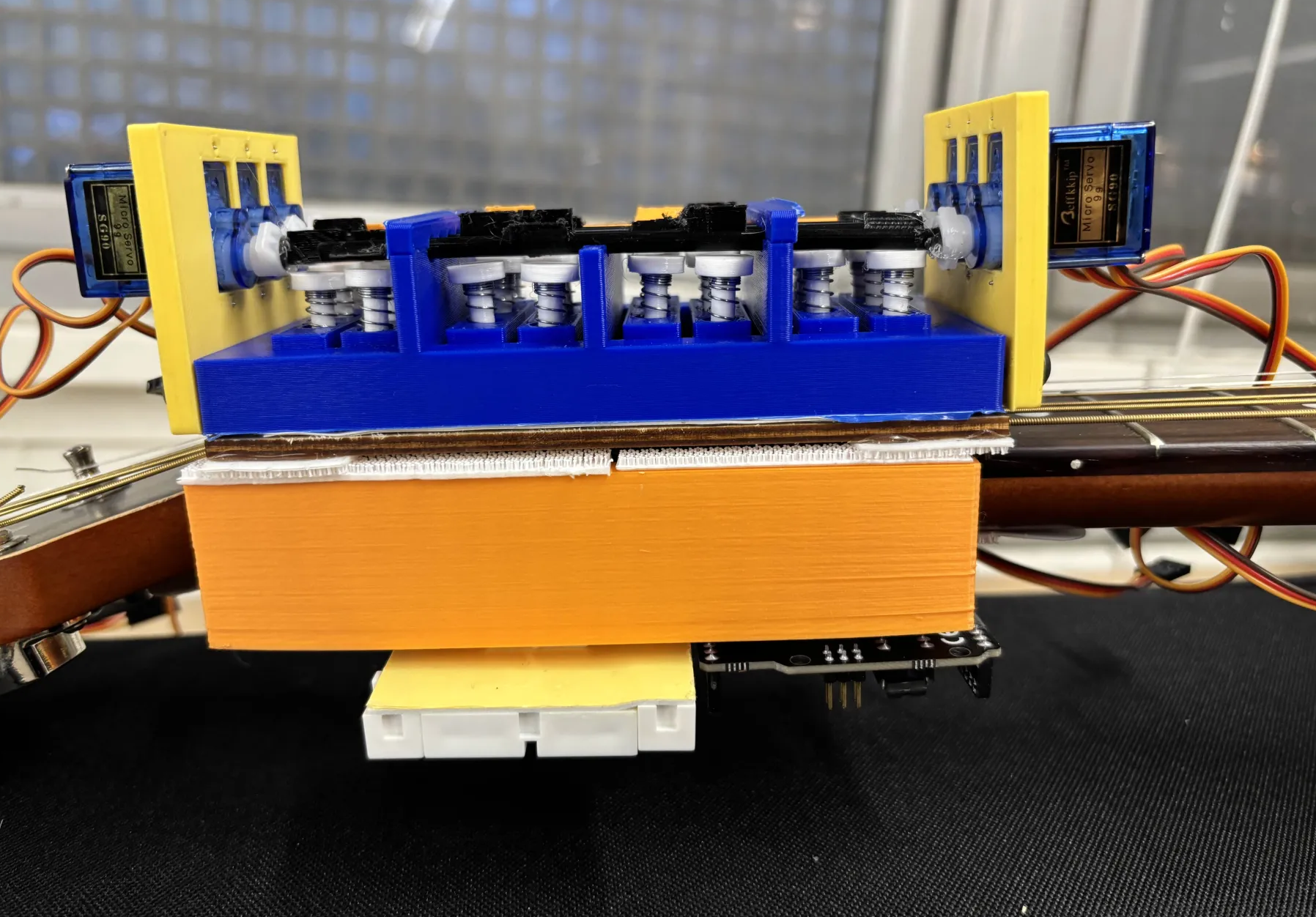
Side View
Inspiration
As musicians, we know how common physical or experience-related setbacks are for new musicians, especially guitarists. In fact, many guitarists experience some sort of finger or wrist pain when first starting (calluses need time to develop!). In order to get around these setbacks, we decided to design a mechanism with the purpose of automating this process to encourage access to guitar-playing no matter your circumstance. This device addresses multiple potential sources of struggle that a beginner musician may have. It eases the struggle of having to split your focus between both your hands, allowing you to practice the movements of just one; it provides a tool to visualize chords, which are often difficult for beginners to memorize; and it could be of assistance to mobility-impaired guitarists, that might not have the dexterity or ability to use both of their hands fully. We realized that we could address all this and more with Chord Clamp, a gadget to revolutionize music learning.
What it does
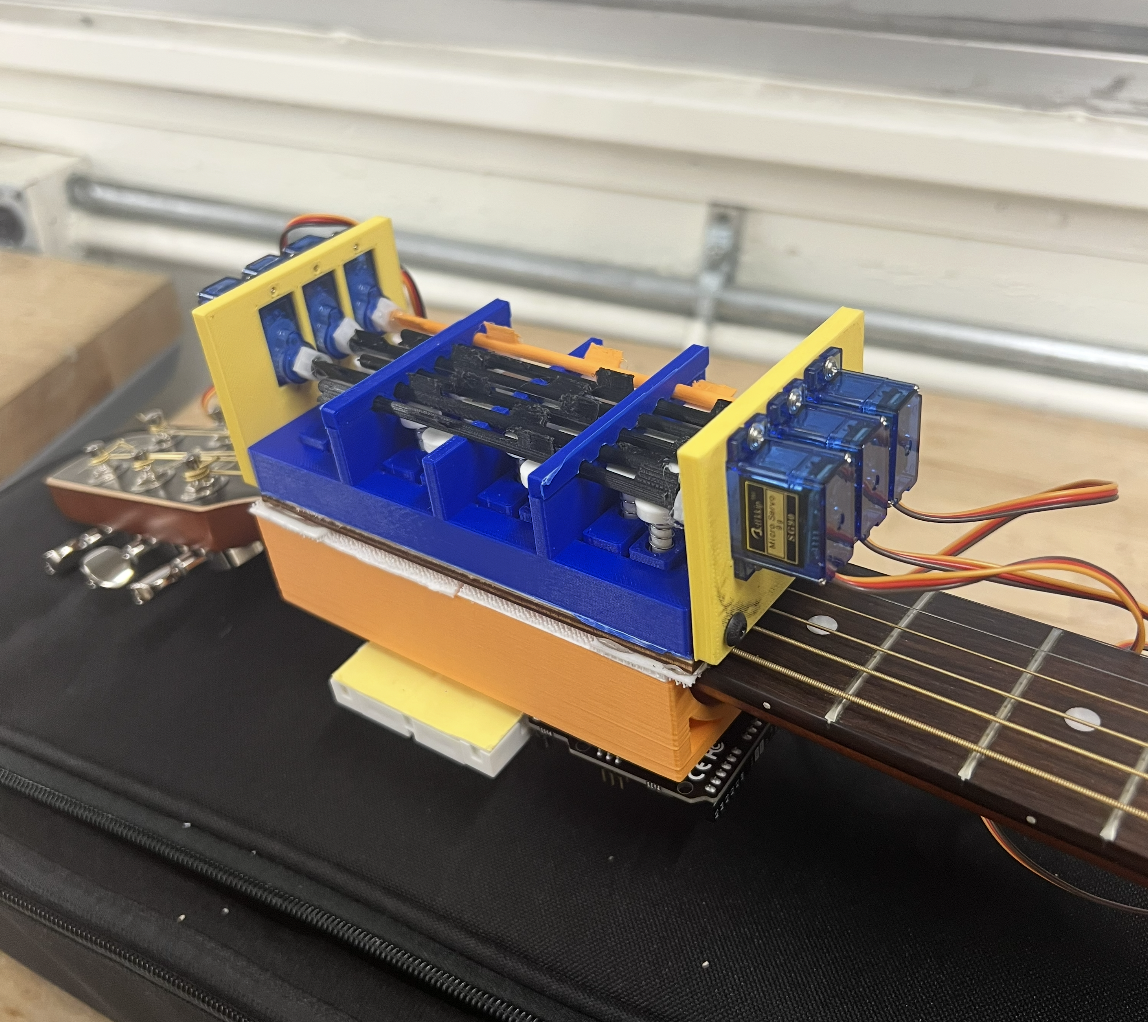
Chord Clamp mimics human fret fingering mechanics by automatically lowering pylons onto frets based on user-inputed chords. Everything is in the hands of the user -- Chord Clamps and You Strum.
How we built it
• For each string, there is an axle with a cam mechanism at staggered angles at different fret positions, so rotating across the 180 degrees of the servo means that for every 36 degrees, a different note is held. • Easy-Fitted Frame -- The frame is attached to the guitar with velcro, and can seamlessly be removed while also remaining incredibly sturdy. The 3D printed box holds every part effectively. • Using Arduino and C++, we created a custom command system that parses user inputs, and enables a variety of features such as playing a chord, adding chords to the score that you want to have autoplayed, printing out information about that score, and more. Commands are mostly straightforward single word inputs.
Challenges we ran into
• Creating high-precision movements in relatively tight space • Learning to CAD and 3D print every part/component in the device
What we learned
• Chord Clamp was a hardware intensive project, which was mostly outside of our expertise. To adapt to this new setting, we entered the project with an open mind and emphasized the inevitability of technical design setbacks.
What's next for Chord Clamp?
• Move away from the text based command line input system that we currently use to a far more intuitive GUI based app - either a mobile app or a desktop app that you could easily connect to via Bluetooth • Switch to using a Raspberry Pi or other system that would allow us to read from and write to files, making it so you could store scores or create them easily and play full songs easily. • Do testing to make specific pylons for each note, which would correspond to the string being placed and best replicate the sound wanted. Also we want to incorporate other quality of build changes such as shifting away from all pieces being made out of 3d printed plastic. This will give us more precision and smoothness.

Log in or sign up for Devpost to join the conversation.