-
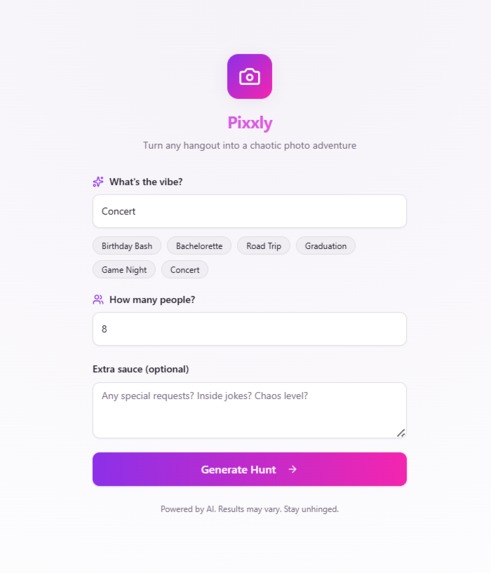
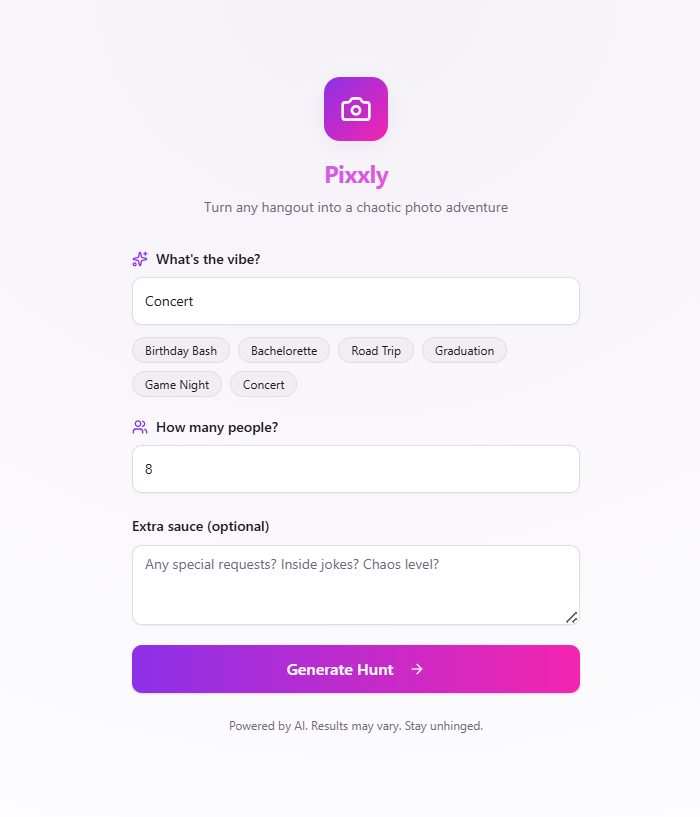
Homepage
-
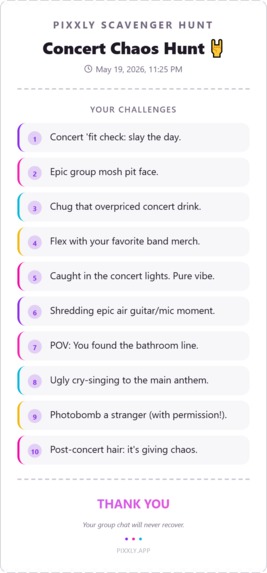
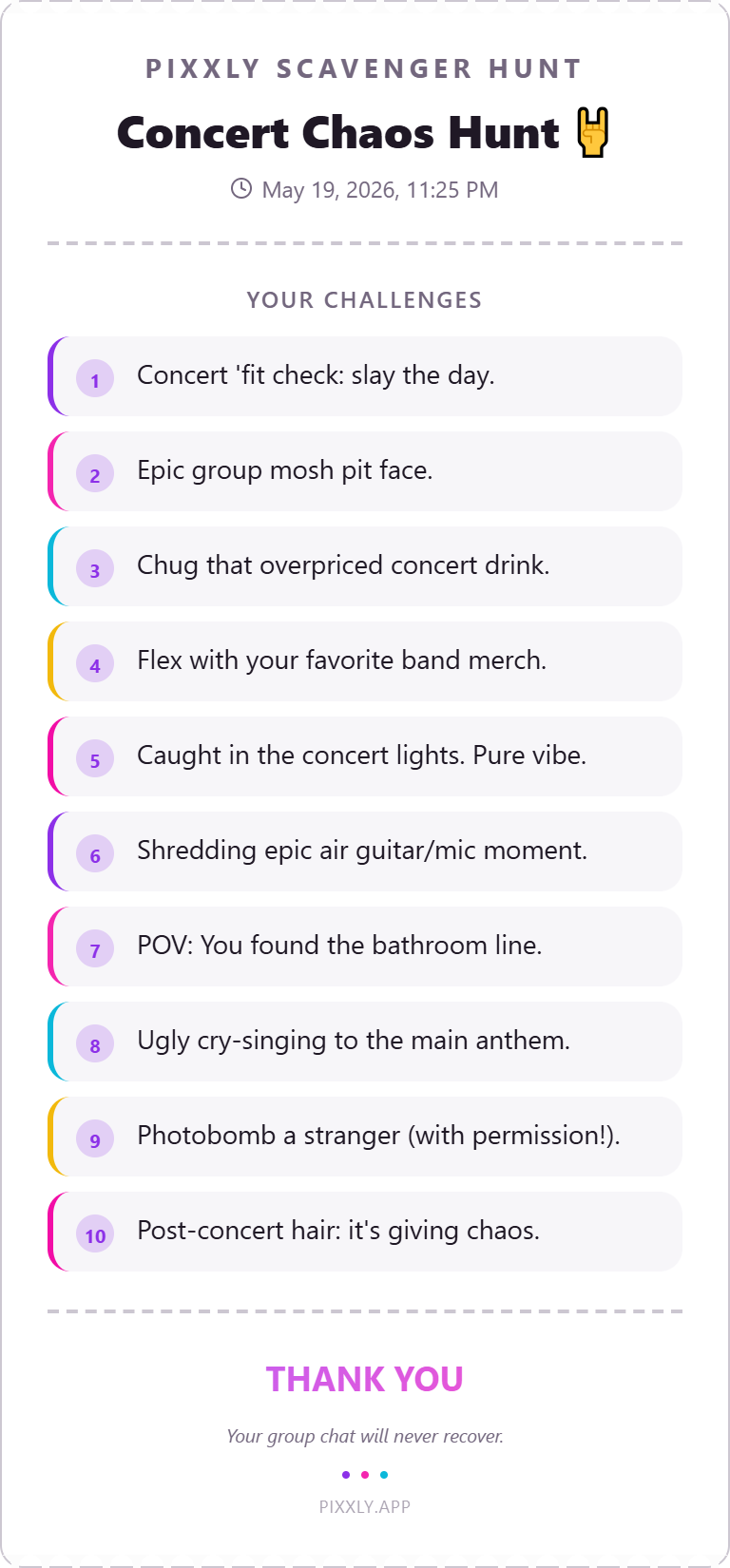
Concert receipt
-
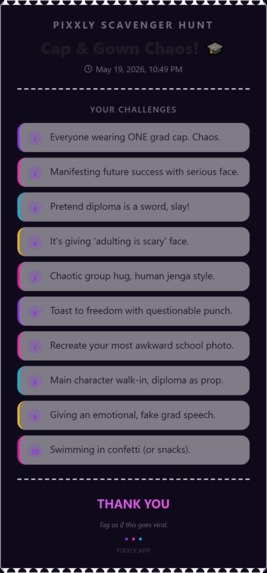
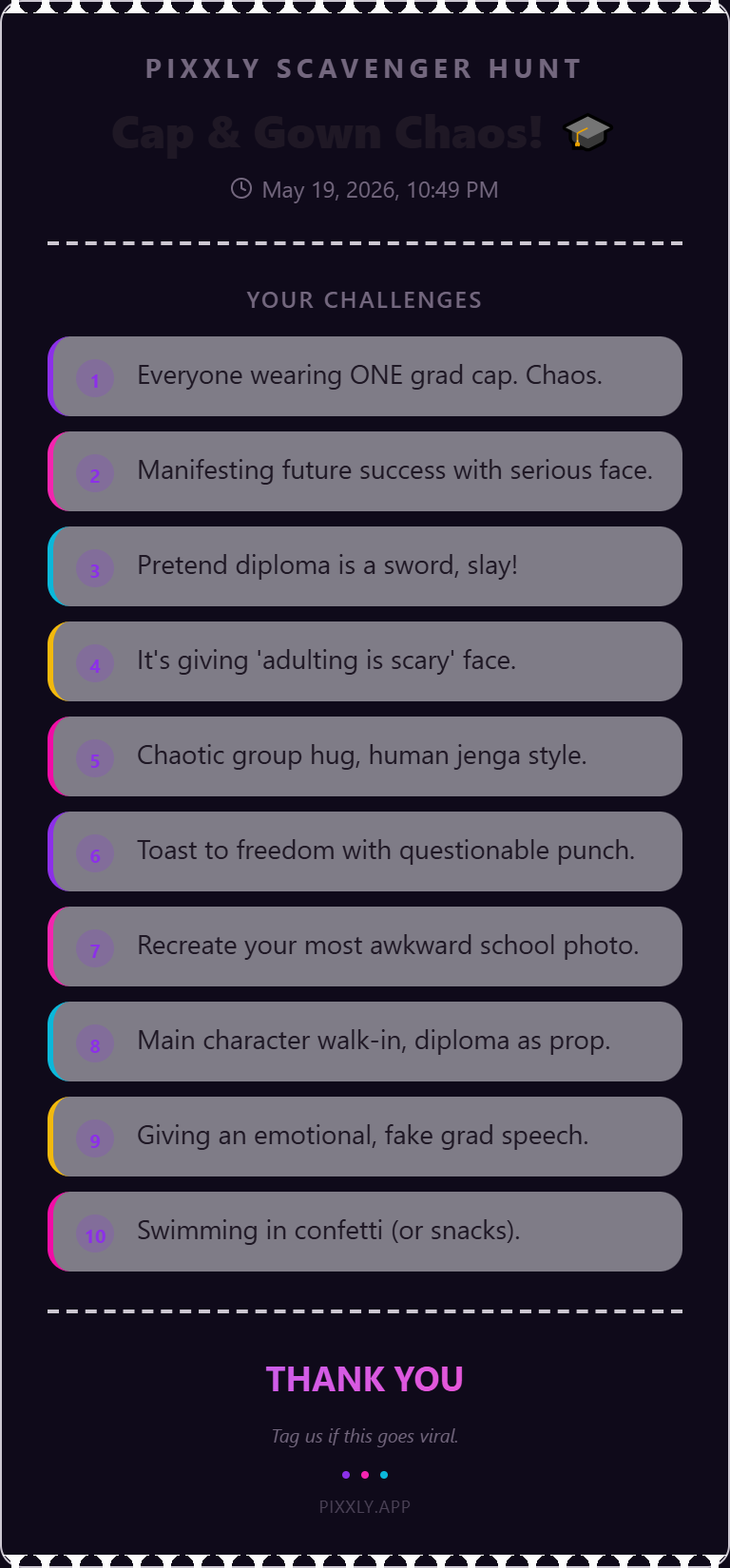
Grad receipt
PIXXLY
Group hangs have an activation energy problem: someone has to plan something, and nobody wants to be that person. Pixxly eliminates the planning entirely. You type a theme — "bachelorette in Vegas," "graduation rooftop," "chaotic friend group" — and in seconds you have 10 punchy, themed photo challenges printed on a shareable digital receipt, ready to drop in the group chat. No signup, no prep, no awkward "so what are we doing" energy. It turns any gathering into an instant game, and the receipt format makes the whole thing feel like a keepsake worth screenshotting and posting. Built because the best parties aren't planned — they're generated.
First, the core generation loop: describing the input form, the AI prompt structure, and the receipt-style output card in a single session so MeDo could scaffold the full flow from input → loading → results. Second, the visual design pass: iterating on the receipt card's purple/black branding, emoji headers, funny stats block, and random footer messages through multi-turn chat — refining the aesthetic until it looked like something worth screenshotting rather than a generic output card. Third, the export layer: a focused session on converting the DOM receipt card into a downloadable image using the Canvas API, handling mobile dimensions and preserving all the styling. Each phase built on the last, with MeDo holding the full context of the app across turns.
The most impressive feature MeDo helped me implement
The receipt card export. Getting a styled HTML/CSS component — with gradients, emoji, multi-column stats, and custom typography — to render faithfully as a downloadable image is notoriously fiddly. MeDo generated the full Canvas-based export pipeline: capturing the receipt element, scaling for high-DPI mobile screens, preserving the purple/black color scheme, and triggering the download — all without breaking the live display. The result is an image that looks like something a designer made, not a screenshot of a web app. That's the thing that makes Pixxly shareable rather than just functional.
Plugins or API integrations
Pixxly uses an LLM API call at its core — the theme, participant count, and optional description are packaged into a structured prompt that returns a JSON object with the hunt title, emoji, all 10 challenge prompts, and footer message in one shot. Requesting structured JSON (rather than freeform text) was key: it let MeDo wire the response directly into the receipt card renderer without any parsing fragility. On the client side, the Canvas API handles image export, and localStorage maintains session state so the receipt survives a page refresh without a backend. The whole stack is serverless — just a deployed frontend making a direct API call — which means zero cold starts and instant load times for a tool people open mid-party.
Built With
- medo

Log in or sign up for Devpost to join the conversation.