-
-
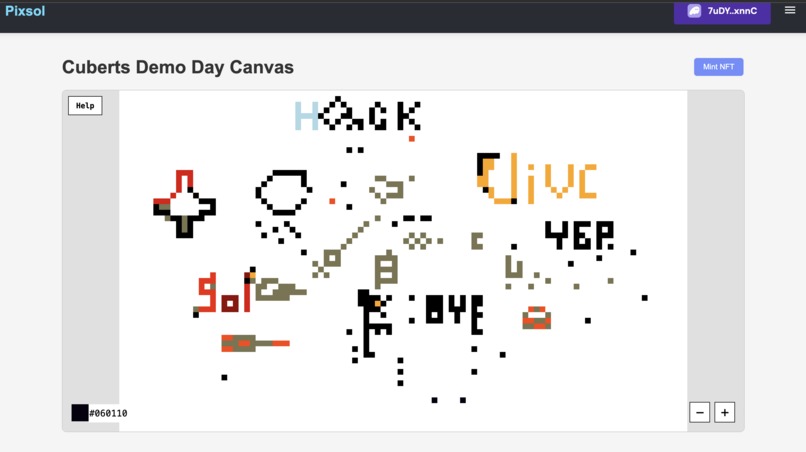
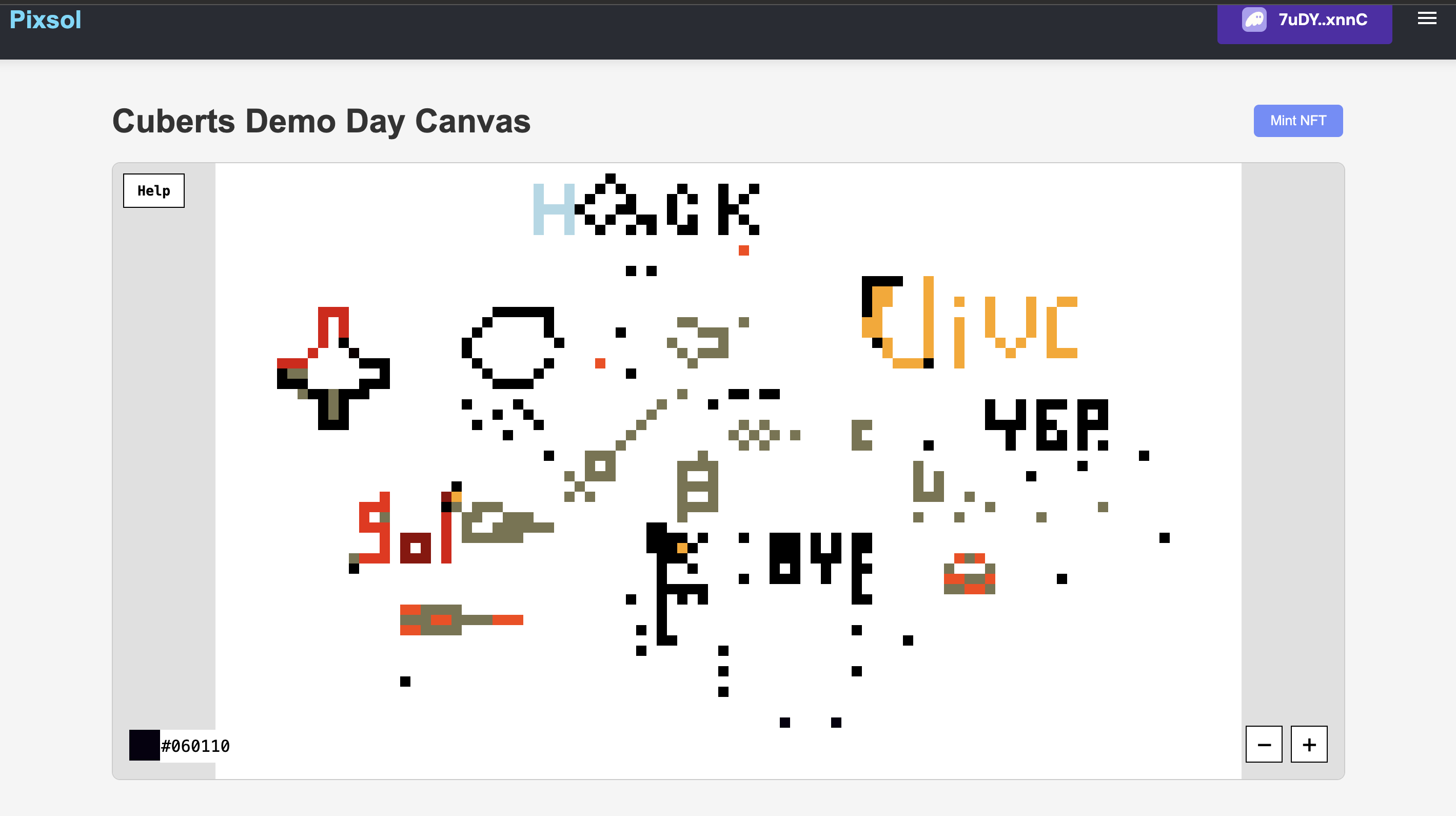
Canvas Pixel Grid
-
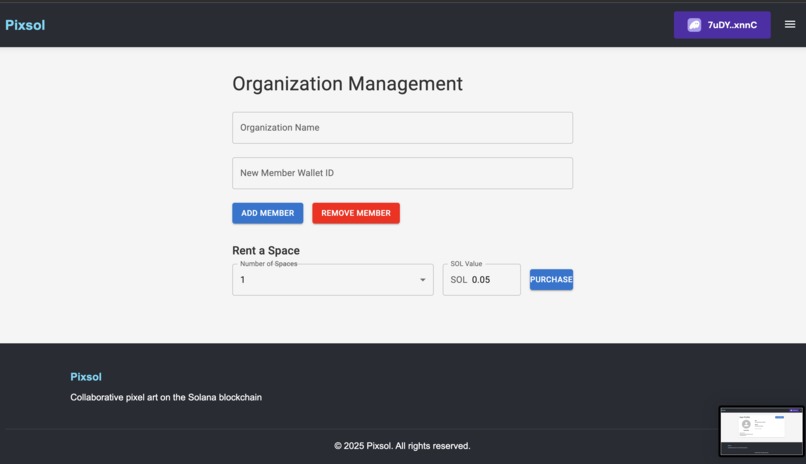
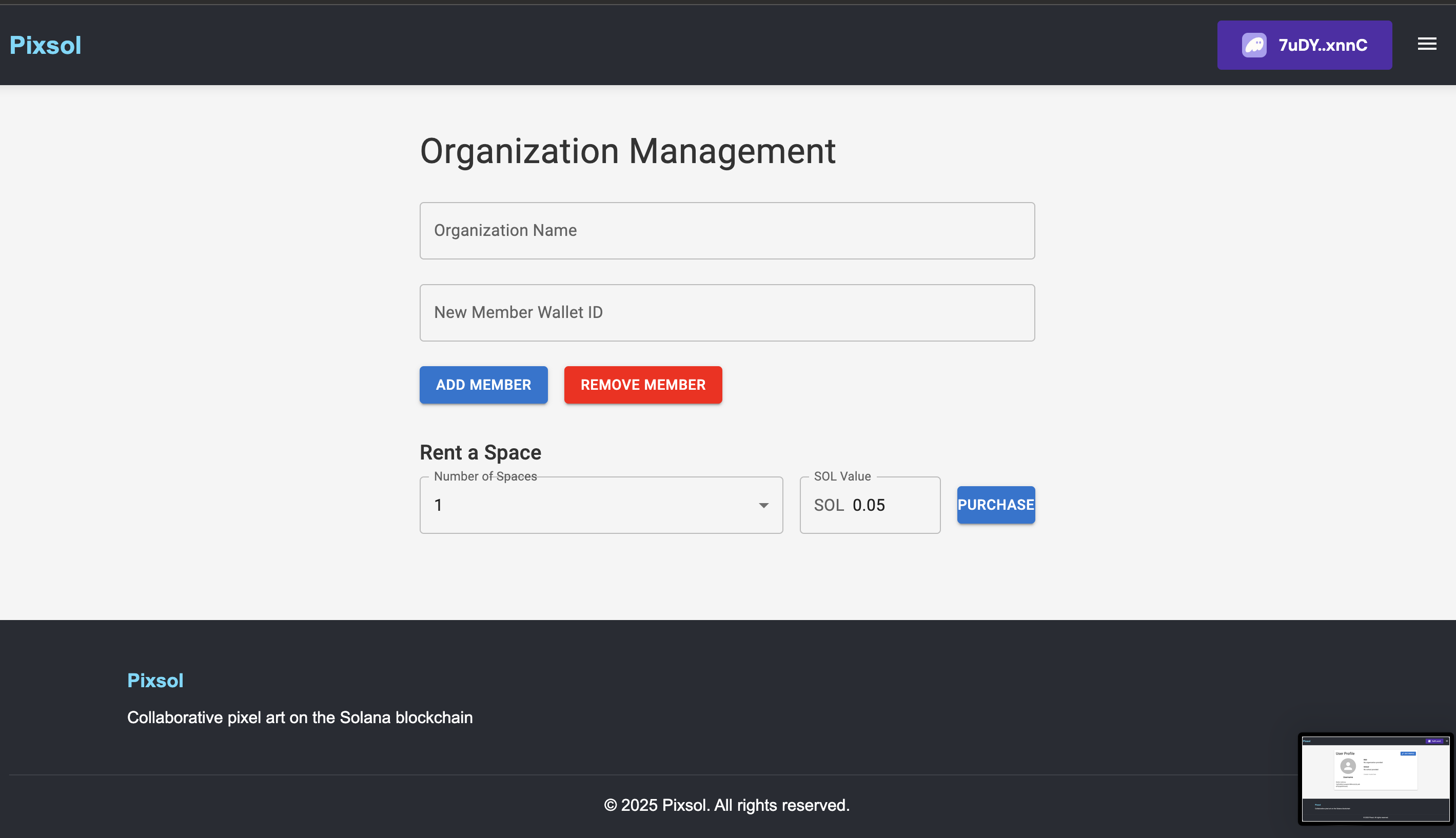
RSO Registration Page
-
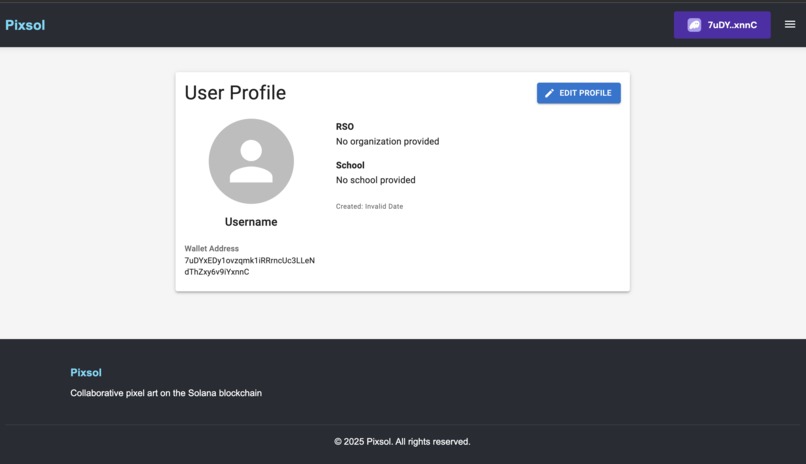
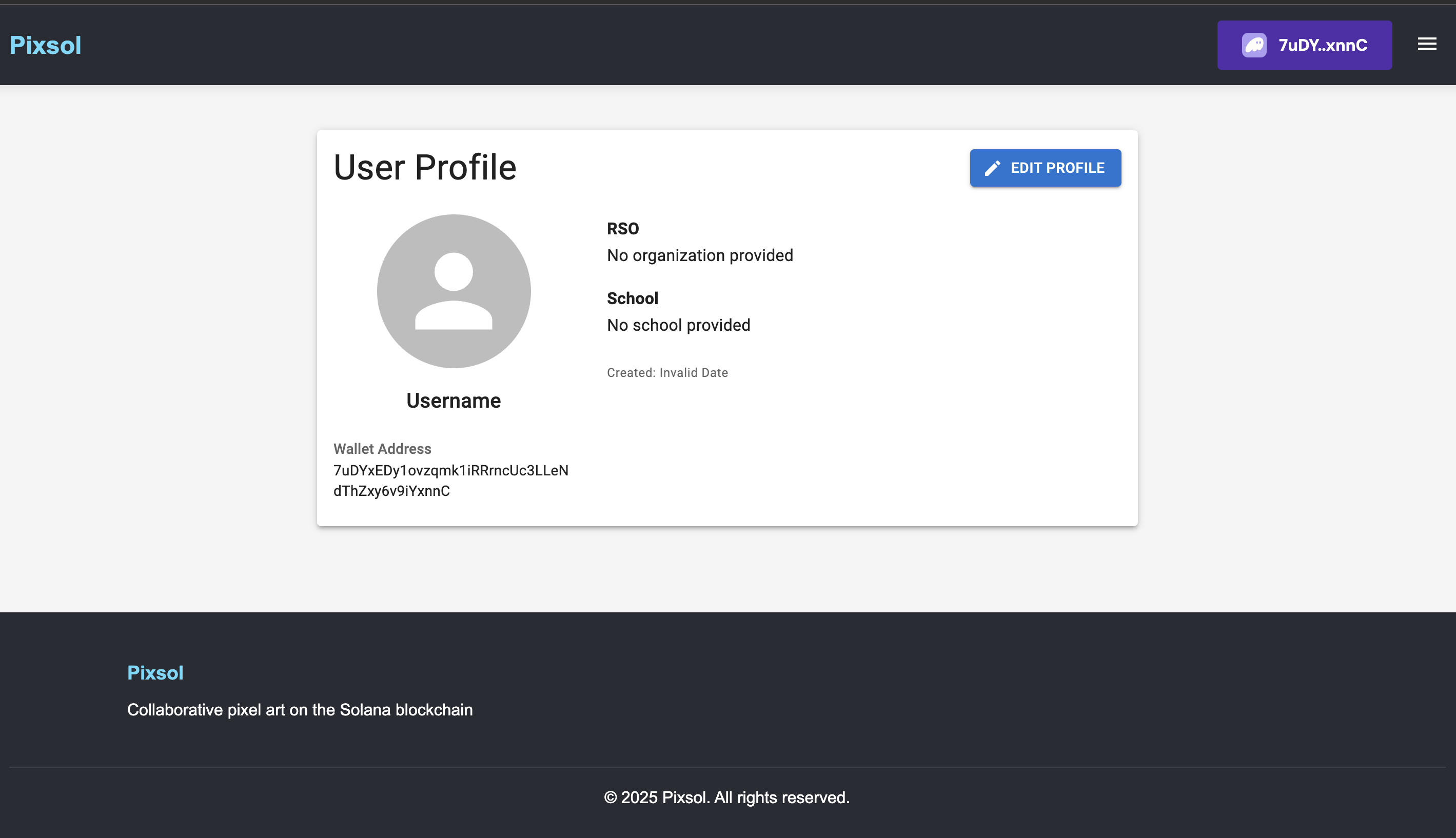
Profile Page
-
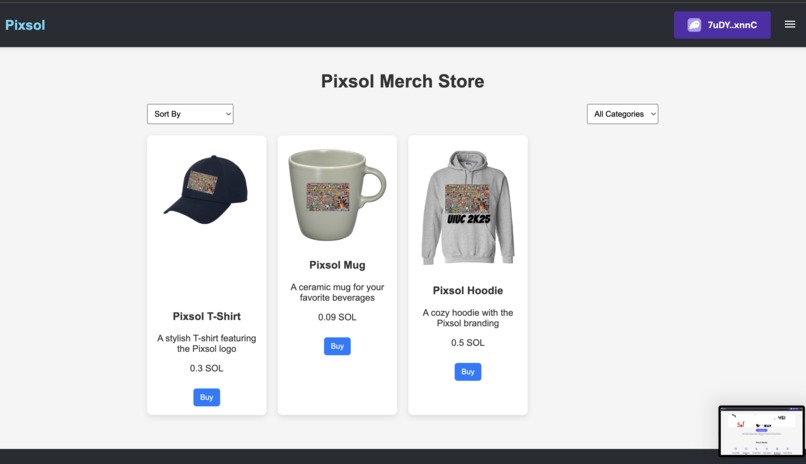
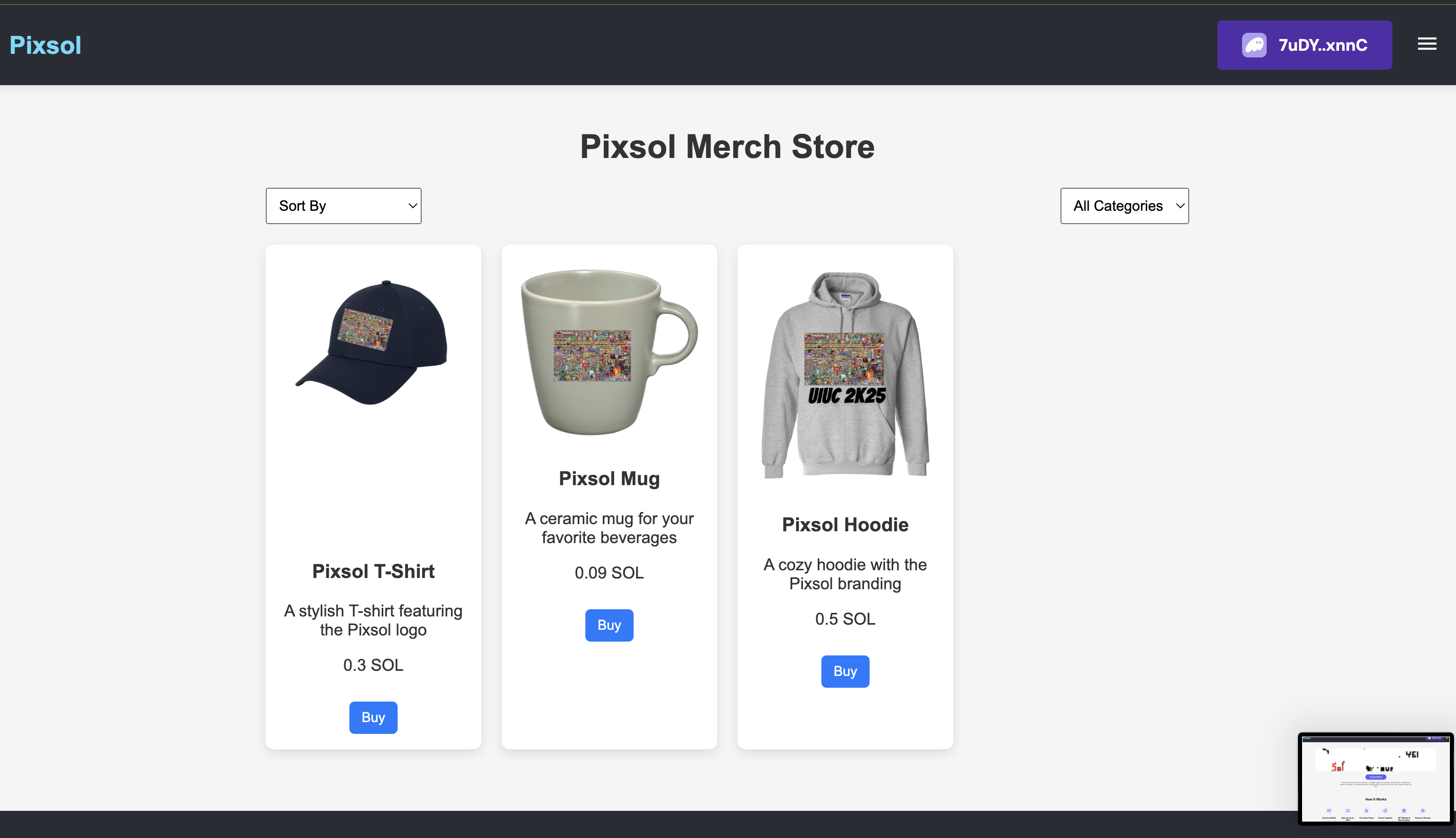
Merchandise Store Page
-
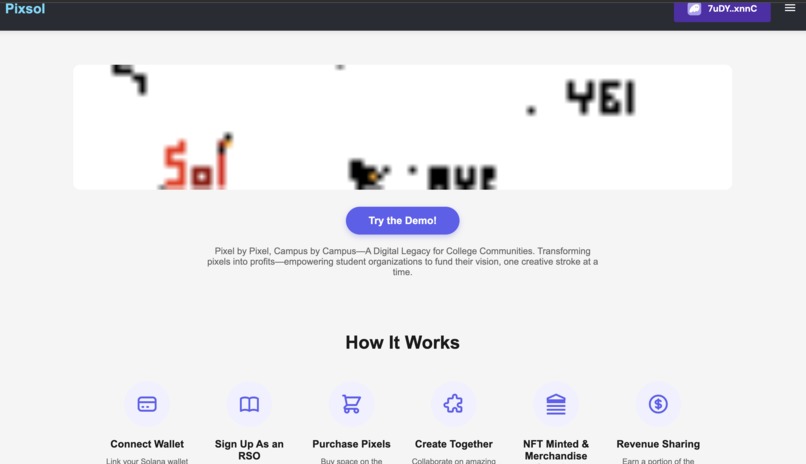
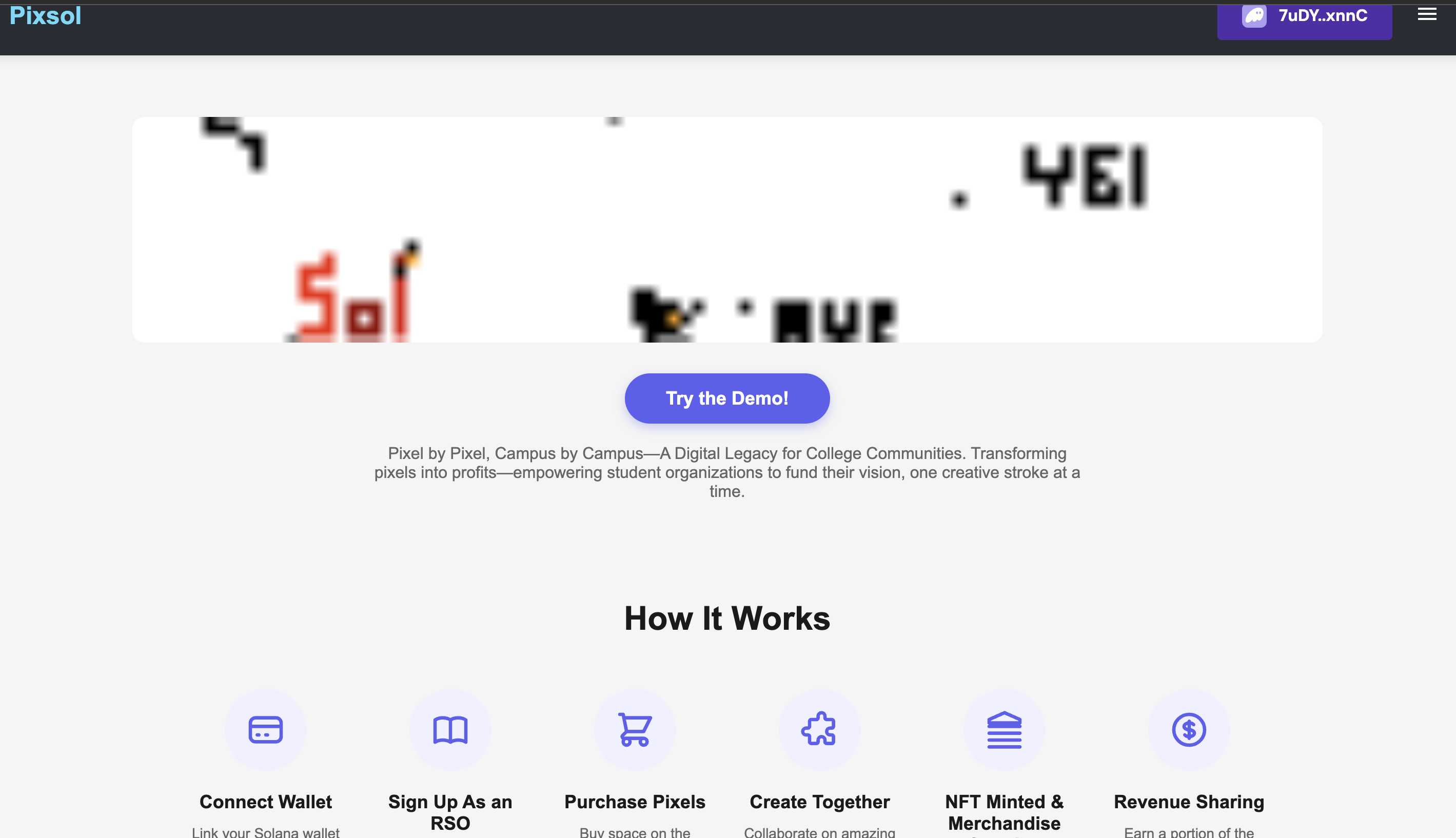
Home Page
PixSol - The Digital Canvas Powered by Communities
Inspiration
Imagine a digital canvas where every pixel tells a story—built not just by individuals, but by entire student communities. Inspired by the legendary r/place, PixSol takes that collaborative chaos and gives it purpose. Here, student organizations claim their space, users unleash their creativity, and together, they craft a masterpiece that lives beyond the screen. When the countdown ends, the canvas is immortalized as exclusive merchandise, with profits flowing back to the RSOs that helped shape it. It’s more than just art—it’s a movement where pixels fuel passion, creativity funds community, and every tap leaves a lasting impact.
What it Does
PixSol is a decentralized, interactive pixel canvas where students and organizations come together to create a living, evolving piece of digital art.
- Canvas Collaboration: Users log in to the web app and place pixels, shaping the canvas over time.
- RSO-Owned Spaces: Student organizations can rent sections of the canvas, giving them a unique area to express their identity.
- Immutable Finalization: After a set deadline, the canvas is locked in, preserving the final masterpiece.
- Merchandise Creation: The completed artwork is turned into exclusive merchandise—posters, apparel, stickers, and more.
- Revenue Sharing: Profits from the merchandise are distributed among RSOs based on the area they control, turning creativity into funding for student initiatives.
- Blockchain Integration: Leveraging Solana, all transactions, ownership, and contributions are transparent and verifiable.
PixSol isn’t just a digital art project—it’s a new way for students to make their mark, fund their communities, and leave a legacy.
How We Built It
PixSol is powered by a high-performance, decentralized architecture designed for real-time collaboration and secure transactions:
- Phantom for Authentication: Users connect their Solana wallets via Phantom, ensuring seamless, secure login.
- Redis for Speed: The canvas state is stored in Redis, enabling fast, real-time pixel updates with minimal latency.
- Solana Blockchain for Transparency: Every canvas modification and transaction is recorded on Solana, ensuring verifiable ownership and financial transparency.
- JavaScript Frontend: A sleek, intuitive UI built with JavaScript provides an interactive experience for users to place pixels and explore the evolving canvas.
- Go RPC Backend: The backend, built in Go, handles high-speed transactions, canvas updates, and interactions with the Solana blockchain for reliability and scalability.
By combining blockchain technology with a robust web architecture, PixSol creates a seamless, trustless, and engaging experience for students and organizations alike.
Challenges We Ran Into
Building PixSol came with its fair share of hurdles:
- Configuring Solana & Blockchain Integration: Setting up the Solana environment, handling smart contract interactions, and ensuring seamless transaction recording required deep blockchain expertise and debugging.
- Scalability with Redis: Designing a Redis-based system that allows thousands of users to update the canvas in real-time without conflicts was a major challenge. We optimized data structures and employed efficient concurrency management to ensure smooth pixel placements.
Accomplishments That We're Proud Of
- Lightning-Fast Latency with Redis: One of our standout achievements was building an ultra-low latency system backed by Redis. The canvas updates in real-time, even with thousands of users simultaneously placing pixels, ensuring a smooth, responsive experience for everyone involved.
- Blockchain Mastery: We dove deep into the Solana blockchain, learning how to configure, interact with smart contracts, and securely record transactions. This was a steep learning curve, but it’s been incredibly rewarding to integrate blockchain into a project with real-world impact.
- Remote Procedure Calls with Go RPC: We successfully implemented Go RPC to handle high-performance, remote procedure executions. This allows our backend to efficiently communicate with different parts of the system, ensuring seamless integration between the frontend, Redis, and Solana.
What We Learned
- Blockchain Fundamentals: We gained hands-on experience with Solana, learning about transaction recording, smart contract interaction, and blockchain environment setup. Understanding how decentralized systems work has been invaluable for building trustless applications like PixSol.
- Redis & Scalability: We learned how to use Redis to manage large-scale, concurrent real-time applications. We gained insights into data structures, caching strategies, and synchronization techniques to ensure a fast, scalable, and efficient system.
- Remote Procedure Calls with Go RPC: Working with Go RPC taught us how to execute procedures remotely in a performant manner. This was essential for creating a reliable backend that could handle multiple simultaneous users without compromising performance.
- Real-Time Web Applications: We learned the intricacies of building web applications that need to support live interactions with minimal delay. Balancing the need for fast updates with a seamless user experience gave us valuable insights into performance optimization and user interface design.
- Collaboration in a Distributed System: Building a platform that supports multiple users modifying the canvas at the same time taught us the importance of efficient synchronization and conflict resolution in distributed systems.
What's Next for PixSol
- Enhanced User Experience: We’ll focus on refining the user interface, adding more customization options for RSOs, and introducing features like custom pixel tools, advanced canvas editing, and better user interaction designs.
- Merchandise Expansion: Expanding our product offerings will be key. We plan to introduce new types of merchandise like limited edition items, digital collectibles, or even integrating with other platforms for global reach.
- Gamification & Community Features: Introducing a rewards system, user rankings, and new challenges for RSOs could bring more engagement and competitive spirit. This could also include community voting for feature ideas and canvas themes, creating a deeper sense of involvement.
Built With
- blockchain
- caffine
- css
- go
- html
- javascript
- redis
- rpc
- rust
- solana
- typescript


Log in or sign up for Devpost to join the conversation.