Inspiration
Every developer knows the sinking feeling of discovering an outage through an angry tweet or a lost client before internal monitoring even notices. Most monitoring setups are fragmented: one tool for uptime pings, another for cron jobs, separate services for status pages, and noisy alerts that wake you up over temporary regional hiccups. We wanted to build a unified platform that catches degraded performance early, eliminates false alarms with multi-location verification, and connects immediate detection with rapid incident resolution.
What it does
PixoMonitor is an end-to-end uptime monitoring and incident response platform designed for developers, DevOps engineers, and modern product teams.
Key capabilities include:
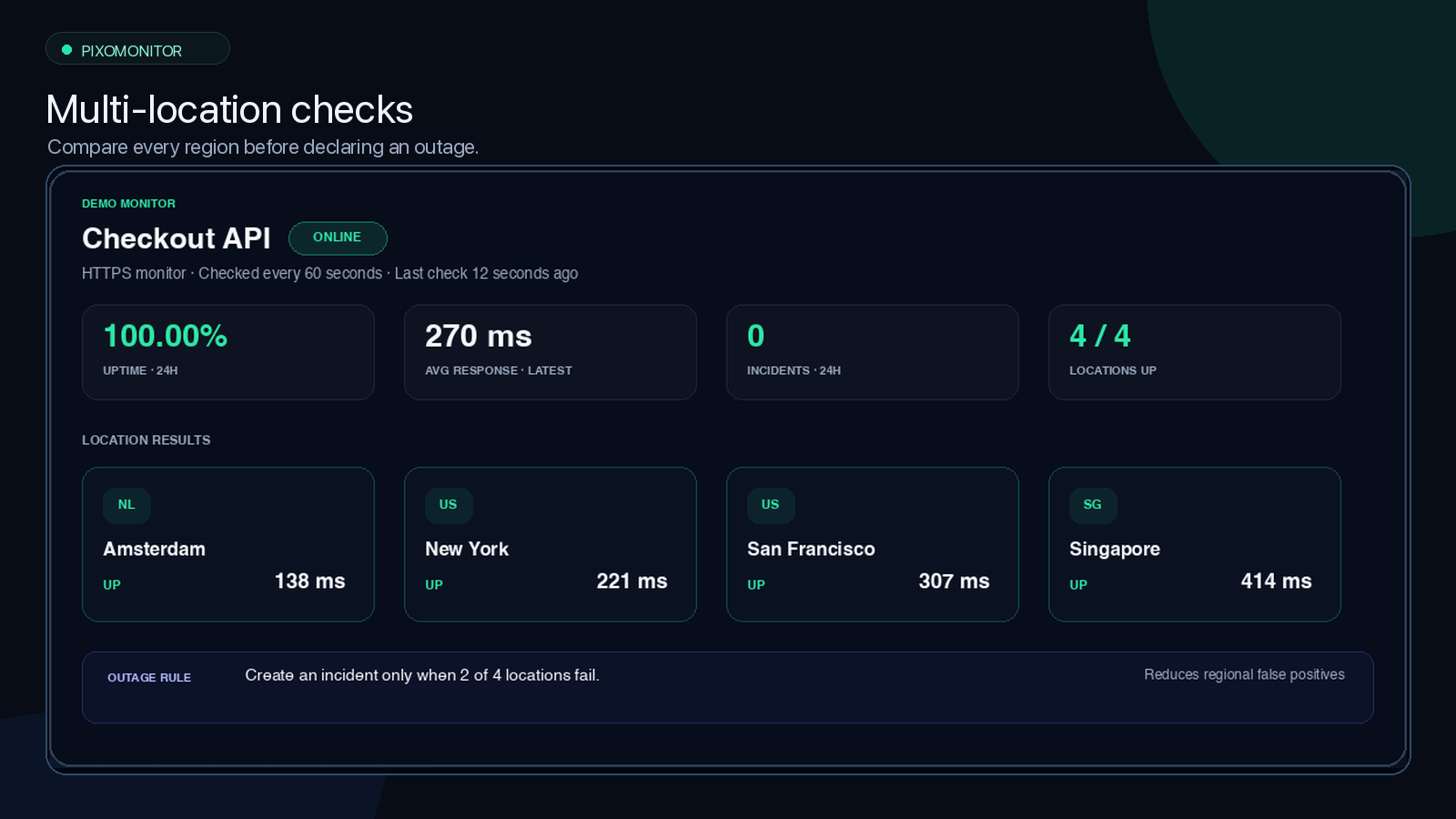
- Multi-location checks for websites, APIs, and WebSockets to distinguish regional network glitches from full outages
- Heartbeat tracking for cron jobs and background tasks to catch silent worker failures
- Automated SSL certificate expiry tracking to prevent unexpected security warnings
- Synthetic multi-step user journey monitoring to ensure critical flows like signup and checkout work reliably
- Instant alert routing via Slack, Discord, SMS, email, and customizable webhooks
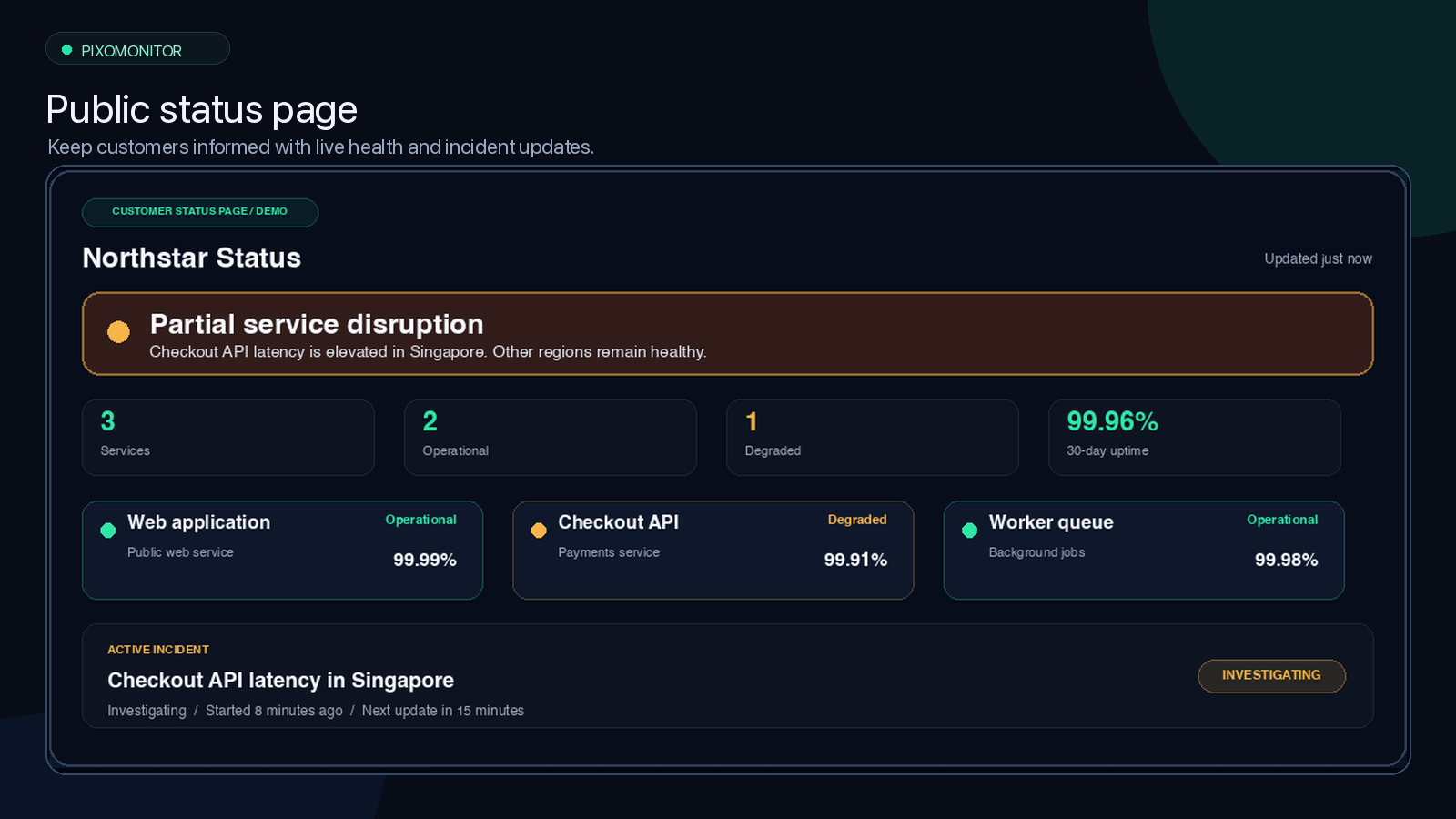
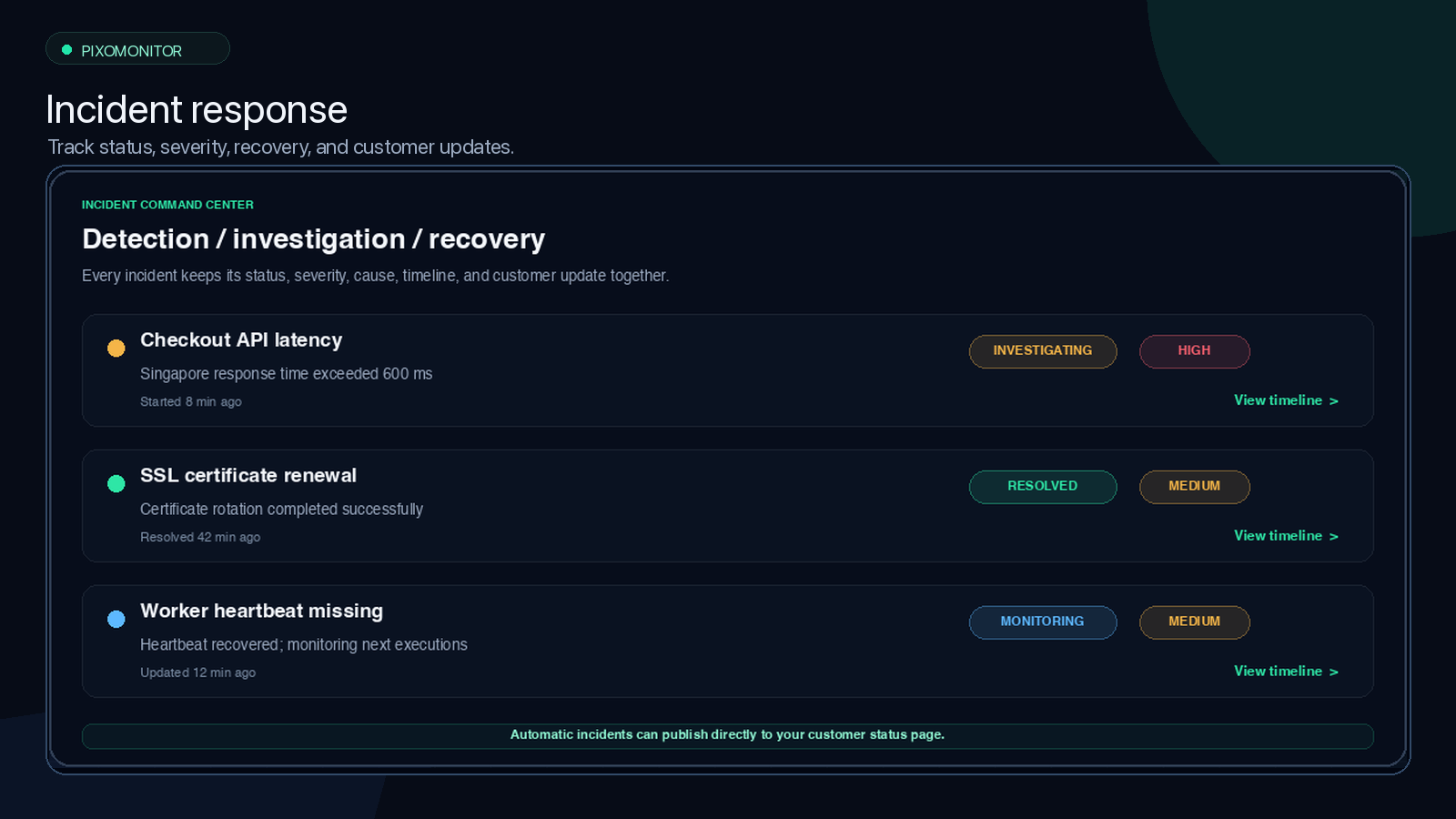
- Hosted public and private status pages for transparent incident communication and scheduled maintenance
- Native iOS access to monitor system health and acknowledge alerts directly on the go
How I built it
We built PixoMonitor around a distributed worker architecture focused on speed, fault tolerance, and minimal false positives:
- Distributed probe workers deployed across diverse geographic zones to execute parallel HTTP, TCP, SSL, and WebSocket checks
- A low-latency event processing pipeline that compares multi-node results before triggering alert escalation rules
- A streamlined backend handling scheduled cron telemetry and synthetic browser flows
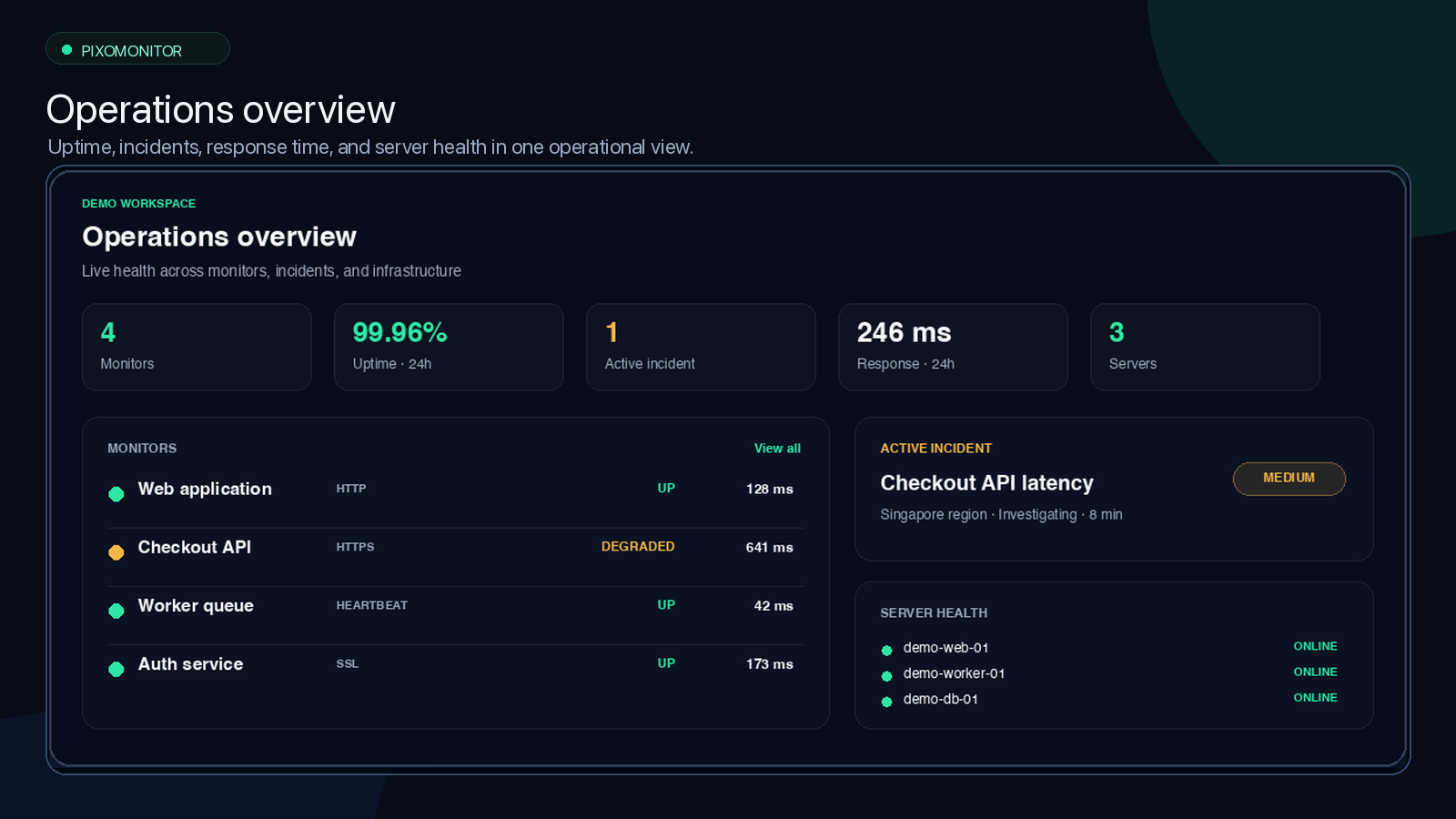
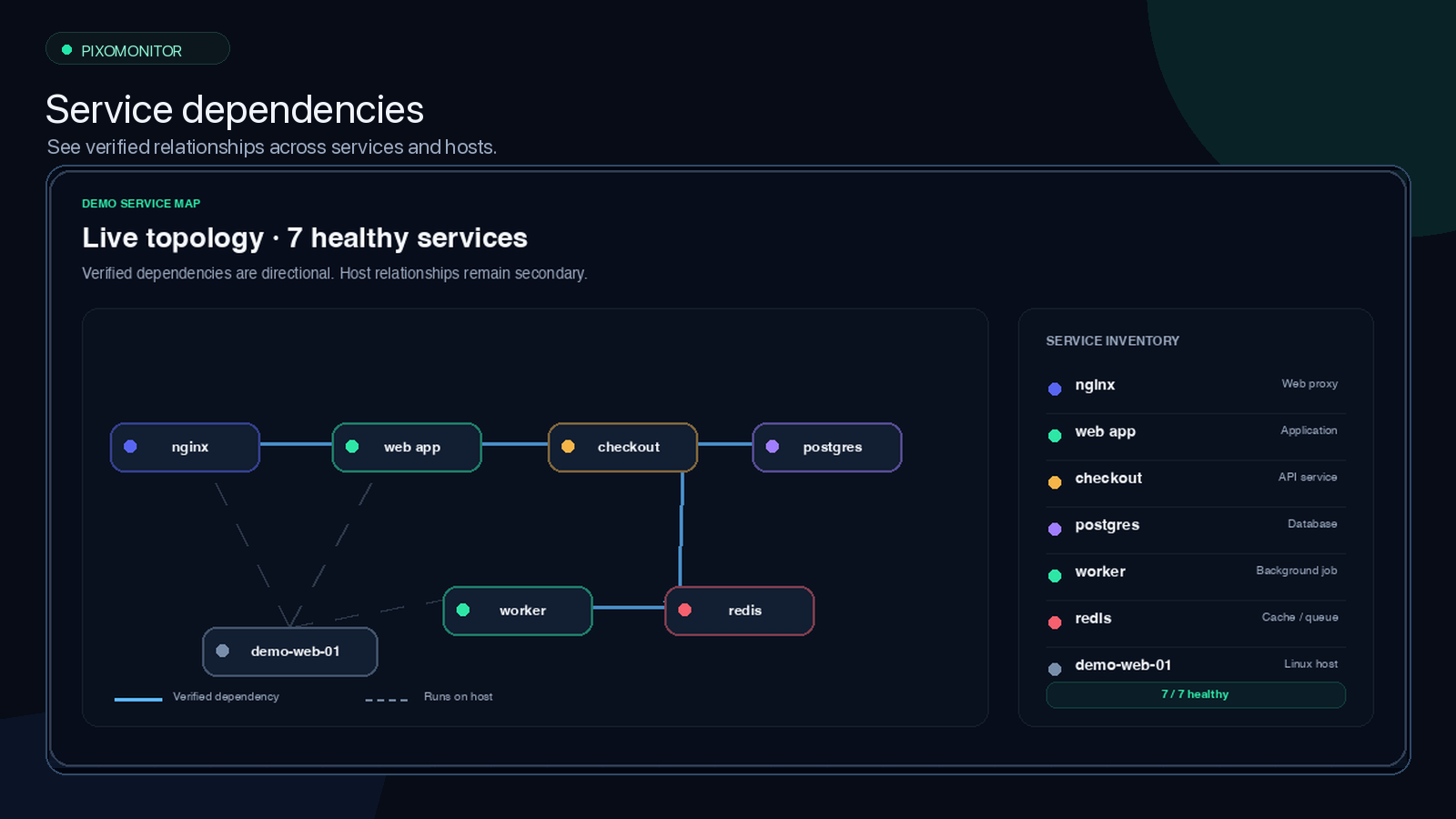
- Clean operational dashboards built with a modern, responsive web stack for swift incident response and dependency tracking
- Native mobile integration for quick on-call alert triage without opening a laptop
Challenges I ran into
- False alarm reduction: Handling transient network timeouts required building consensus logic across geographic checkpoints before escalating to high-priority channels like SMS.
- Synthetic transaction execution: Running headless multi-step user journey tests quickly and reliably without consuming excessive worker memory.
- Sub-second notification dispatch: Coordinating parallel webhooks, third-party messaging APIs (Slack, Discord), and telecom gateways during major traffic disruptions without bottlenecking the queue.
Accomplishments that I'm proud of
- Successfully delivering an all-in-one operational hub that replaces three to four separate dev tools.
- Keeping detection-to-alert latency down to a matter of seconds across global test locations.
- Launching reliable, branded public status pages that teams can configure in minutes.
- Offering a generous free tier with no credit card required so solo developers and startups can protect their uptime from day one.
What I learned
- Reliability engineering is as much about alert quality as it is about detection speed; alert fatigue causes missed incidents.
- Developers prefer actionable failure context (response headers, timing breakdowns, error traces) directly in the initial notification rather than having to dig through server logs.
- Multi-location validation is non-negotiable for web apps serving an international audience.
What's next for PixoMonitor
- Expanding global checkpoint regions to provide even more granular latency analytics.
- Introducing advanced team on-call shift scheduling and automated escalation tiers.
- Developing native Android incident response support alongside the existing iPhone application.
- Integrating deeper root-cause telemetry and performance benchmarking reports.
Built With
- nextjs
- postgresql
- tailwind
- vercel