Inspiration
Game development can be slow because developers often have to replay the same level again and again just to test small changes. For 2D platformers, even simple questions like “Is this jump possible?”, “Is this gap too hard?”, or “Where does the player keep dying?” can take a lot of manual testing. We wanted to build a tool that makes this process faster and more beginner-friendly.
What it does
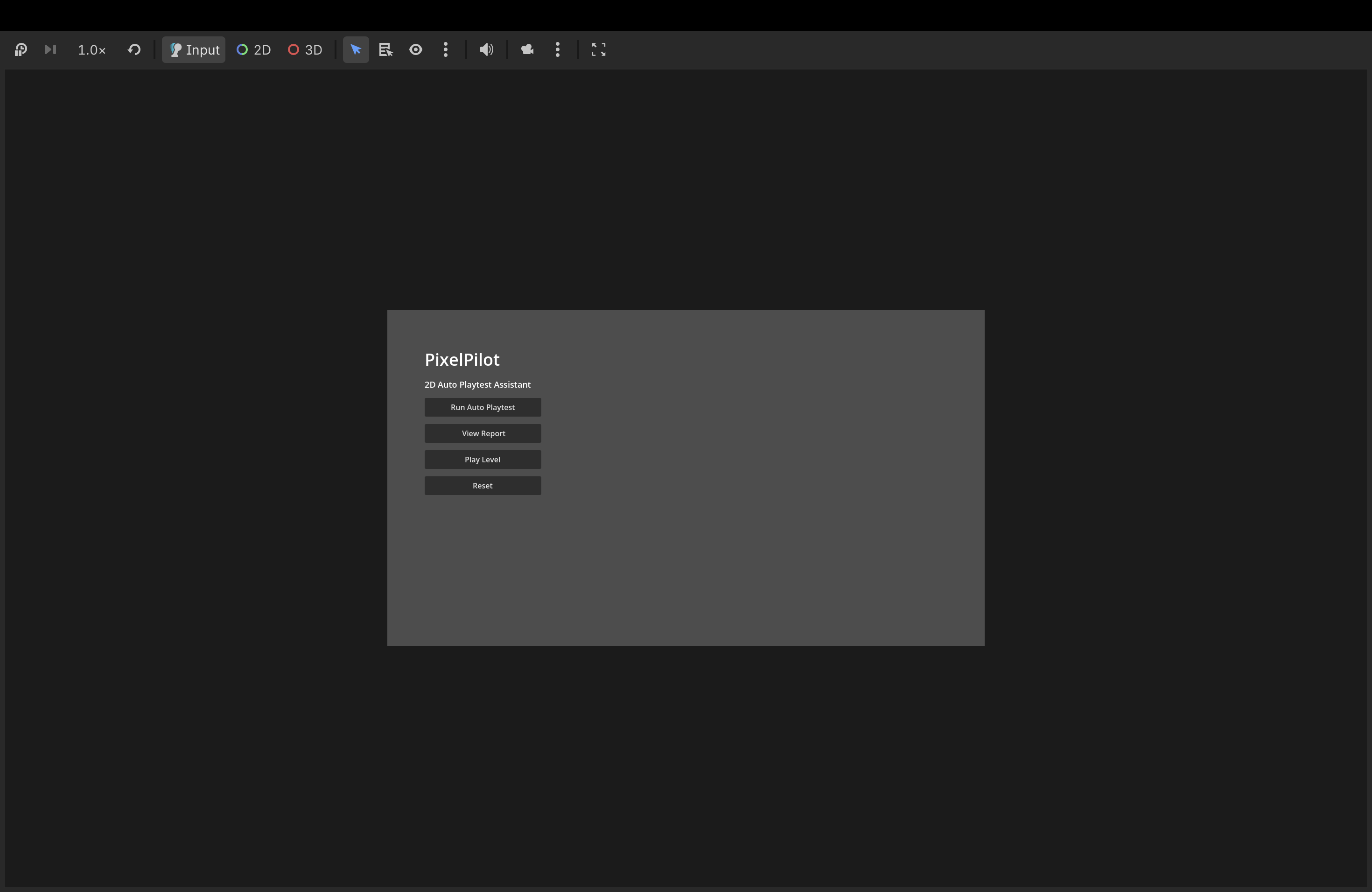
PixelPilot is a 2D auto-playtesting assistant built in Godot. It runs a bot through a platformer level for multiple attempts, tracks failures, resets after deaths, and automatically opens a playtest report.
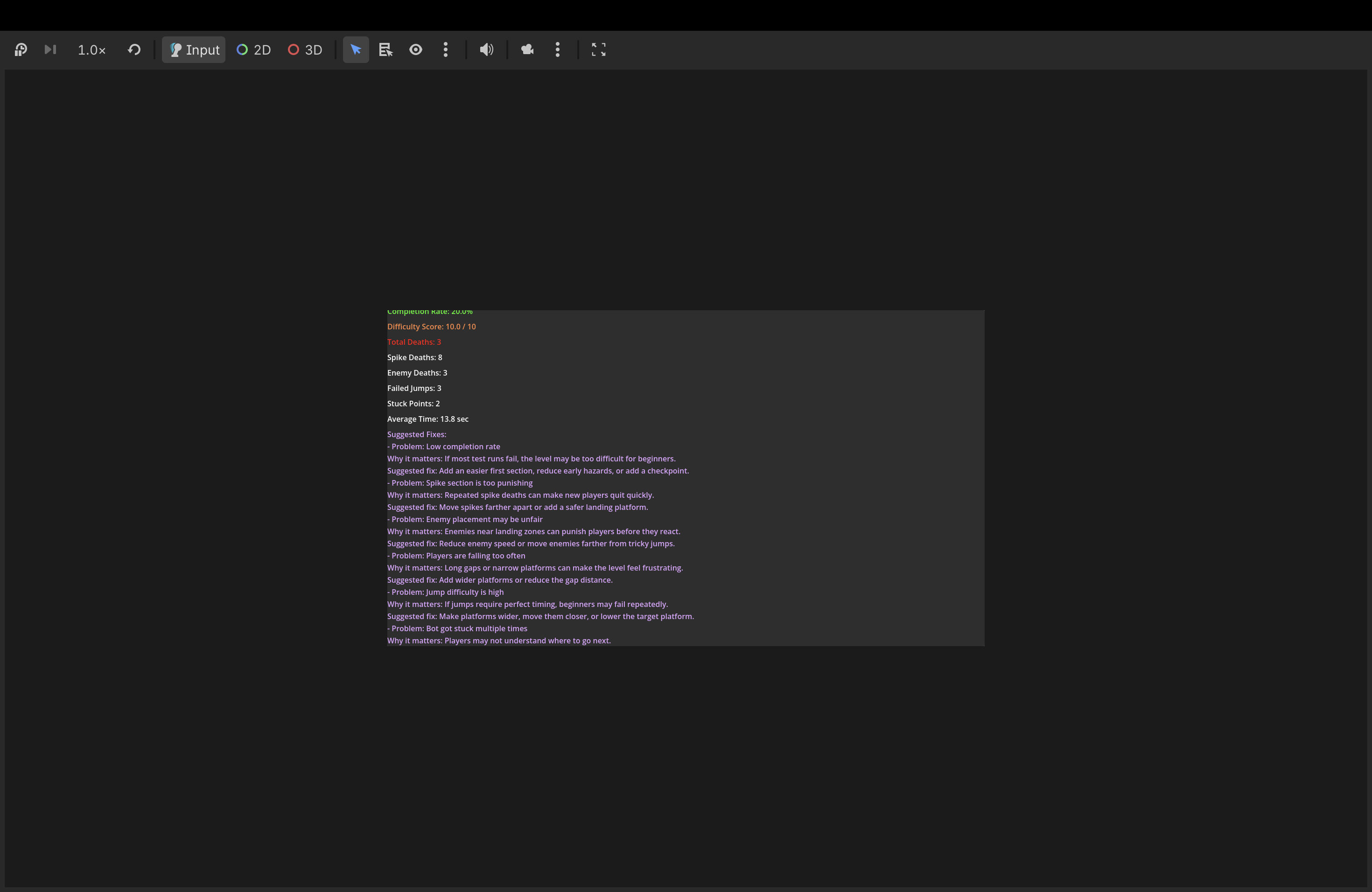
The report shows important feedback such as:
number of attempts number of deaths detected problem areas beginner-friendly suggestions
For example, if the bot repeatedly dies near a gap, PixelPilot suggests making the gap smaller or adding another platform.
How we built it
We built PixelPilot using Godot 4 and GDScript.
The project includes:
a 2D platformer test level an automated bot player an attempt loop that resets the bot after failure a report screen that appears after the playtest finishes a restart flow so the developer can run the demo again
We split the work between gameplay and reporting. Jada worked on the bot loop, level behavior, reset system, and report trigger. Diya worked on the UI, report screen, menu flow, and suggestion system.
Challenges we ran into
One challenge was making the bot behavior simple enough to build in a short hackathon timeframe, but still useful enough to show real playtesting value. We also had to coordinate our work in the same Godot project without overwriting each other’s scenes or scripts.
Another challenge was connecting the gameplay flow to the report screen. We needed the bot to run multiple attempts, collect results, and then move smoothly into the report without breaking the demo.
Accomplishments that we're proud of
We are proud that we built a working end-to-end demo. PixelPilot can start the level, run automated bot attempts, reset after failures, and show a report after the test loop finishes.
We are also proud that our project directly supports the hackathon theme by improving game development workflow and helping developers test and iterate faster.
What we learned
We learned how to organize a Godot project as a team, work with scenes and scripts, connect UI screens, and use GDScript to control gameplay flow. We also learned how important it is to keep the scope realistic during a hackathon.
Most importantly, we learned that a useful developer tool does not have to be huge. Even a focused tool that solves one repetitive problem can make the game development process much smoother.
What's next for PixelPilot
Next, we would like to expand PixelPilot with:
smarter bot movement difficulty scoring death and stuck-point heatmaps more detailed level feedback support for different 2D game types exportable playtest reports a full Godot plugin version
Our long-term goal is to make PixelPilot feel like a level design assistant that helps developers build better 2D games faster.


Log in or sign up for Devpost to join the conversation.