-
-
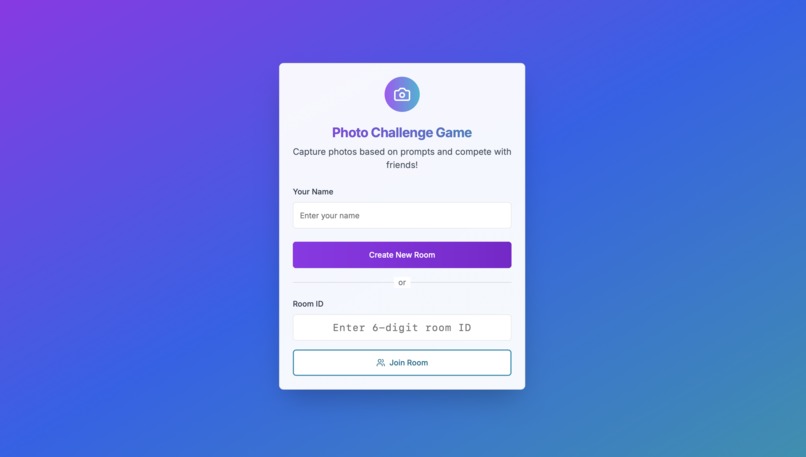
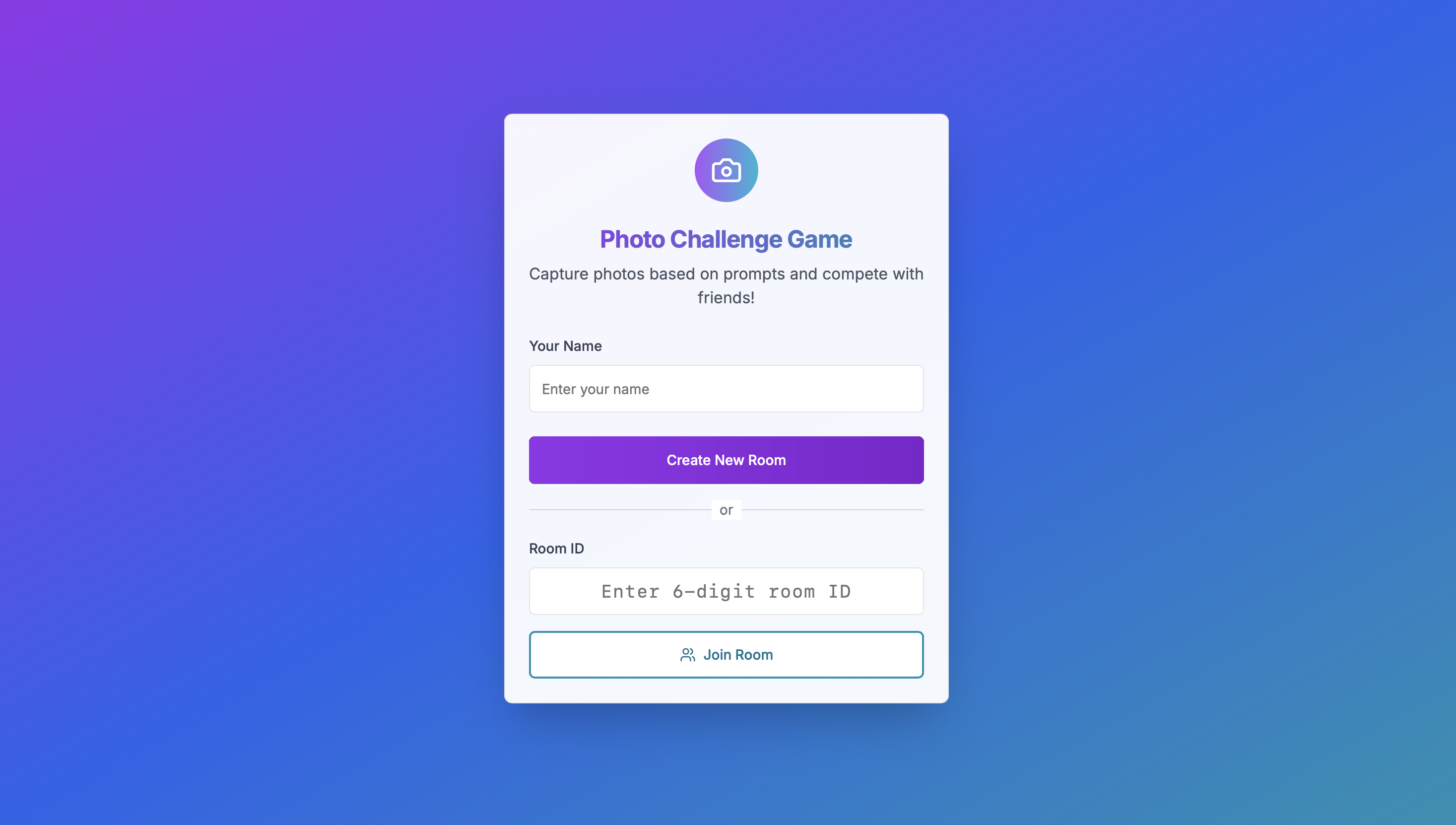
Creating a new room/joining a room
-
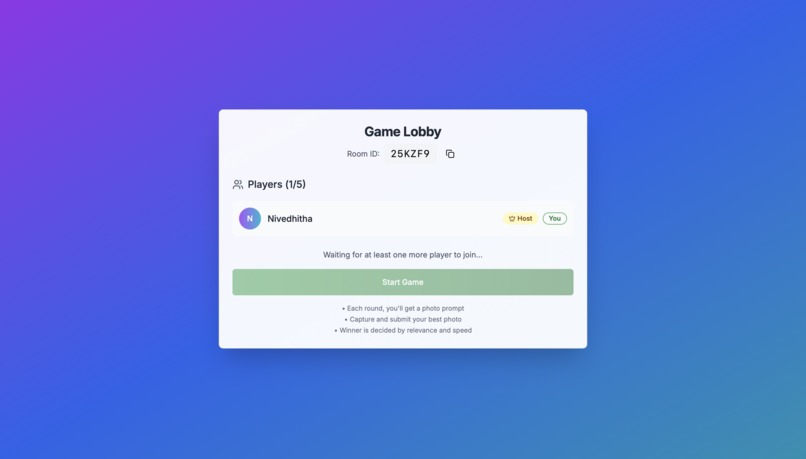
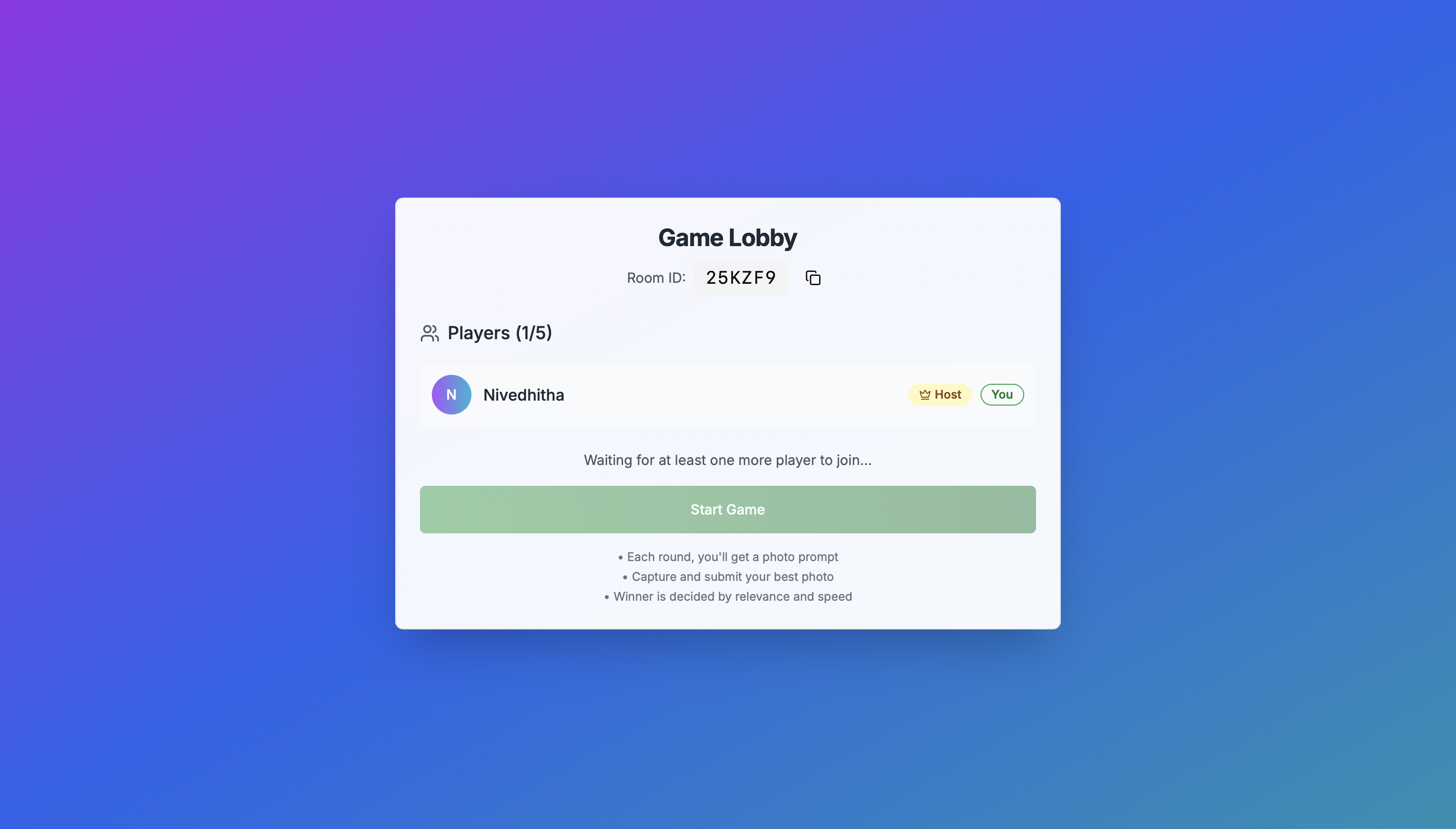
lobby space - waiting for players to join
-
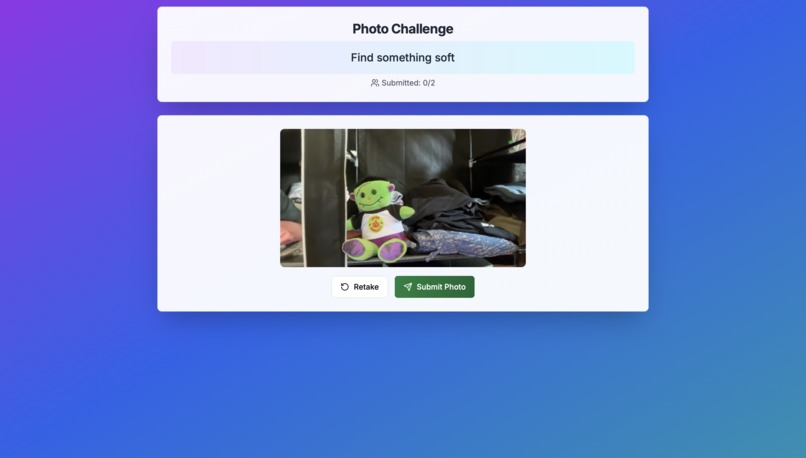
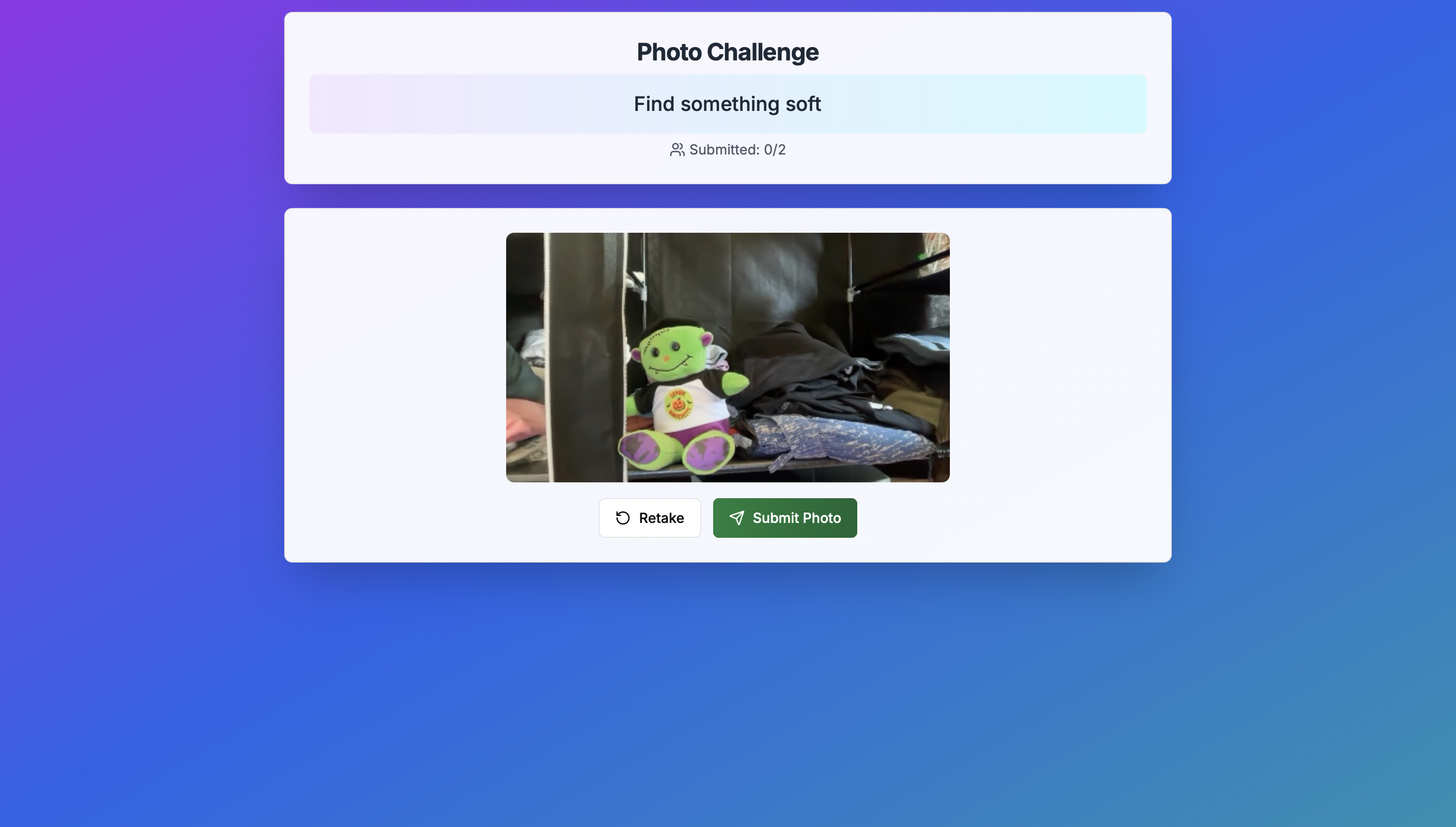
Image captured and sent to gemini
-
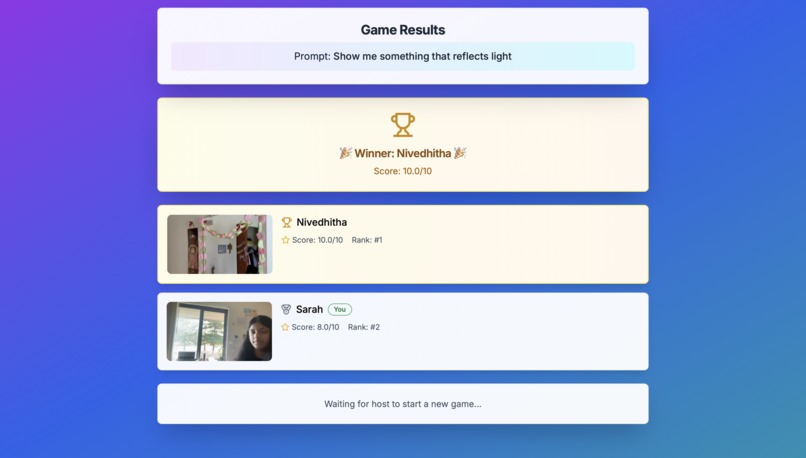
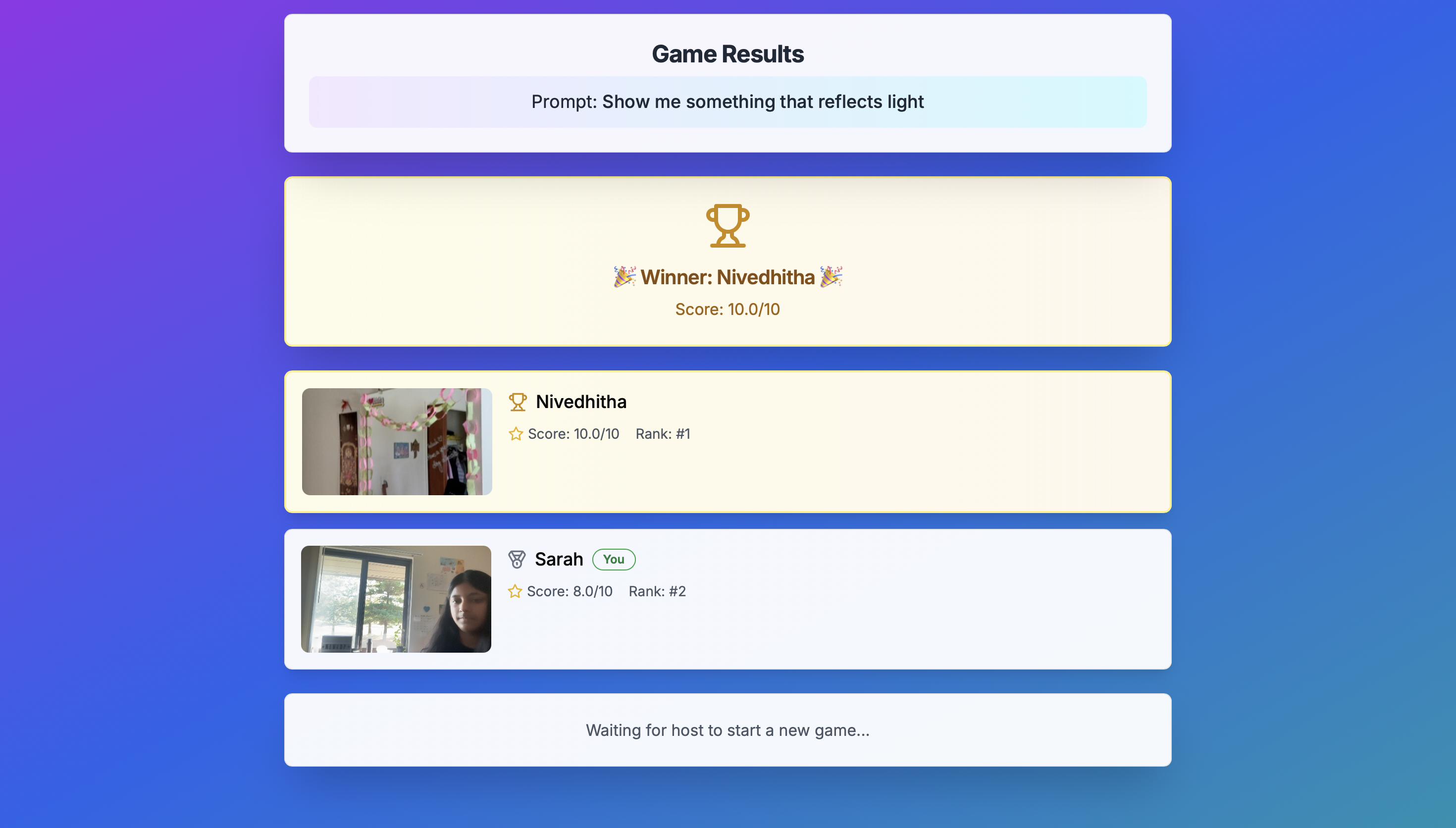
The winner is declared
Inspiration
We wanted to build something that didn’t just stay on screens but encouraged players to move, explore, and interact with the real world. With Gemini’s multimodal power, we saw a chance to merge AI with physical gameplay—creating a new kind of scavenger hunt where AI prompts drive real-time action and competition.
What it does
PixelHunt.ai is a multiplayer web app that turns Gemini into the engine of a real-life prompt chase. Players join a virtual room, Gemini generates a challenge like “find something red and hard”, and everyone races to find and capture objects in their environment. They upload their captures, Gemini evaluates submissions for accuracy, and our system ranks players by both relevance and speed. After each round, Gemini creates a new challenge, keeping the experience fresh and competitive.
How we built it
-Base Setup – Built the app with Next.js for fast, scalable web deployment. -Player & Room Management – Used a temporary JSON file as a lightweight database to store rooms, player states, and scores. -Frontend Capture – Enabled camera access in the browser so players can capture and upload images seamlessly. -Prompt Generation – Connected Gemini API to generate diverse, fun, and unpredictable prompts each round. -Image Analysis & Scoring – Sent player submissions to Gemini for multimodal evaluation and combined results with time-tracking logic for fair scoring. -Game Flow – Synced rounds across all players, displayed results, and cycled back to the next prompt dynamically.
Challenges we ran into
- Syncing multiple players in real time and handling race conditions.
- Managing player states with a temporary JSON file while keeping multiplayer consistent.
- Making Gemini generate prompts and evaluate responses in a smooth, connected loop.
- Limited API tokens, which made testing longer rounds challenging.
- Designing prompts that were fun, balanced, and not too vague.
Accomplishments that we're proud of
- Bringing the app online in real time with multiplayer support.
- Integrating Gemini to handle both prompt creation and visual decision-making.
- Managing all frontend tasks with the Gemini API (camera capture + scoring).
- Delivering a fully functional prototype that connects AI creativity with physical interaction.
What we learned
-Technical depth: How to build a real-time multiplayer flow using Next.js and lightweight state management. -Gemini usage: The API is fast, reliable, and makes it easy to combine text + vision in a single loop. Practicality: With just a few calls, we could get players moving and competing almost instantly. -Design insight: Balancing creativity and clarity in AI-generated prompts is key to keeping the game engaging. -Scaling ideas: Even a temporary setup can demonstrate how powerful multimodal AI can be in real-world games.
What's next for pixelhunt.ai
-Gemini Live Integration – Real-time interactive rounds where Gemini observes live video streams and judges actions directly, making it feel like playing with Gemini itself. -Action-based Challenges – Beyond objects: tasks like “do 5 leg stretches” where Gemini evaluates player movements via video. -Smarter Game Modes – Adaptive prompts that increase difficulty, collaborative team challenges, and theme-based hunts (e.g., nature, classroom, fitness). -Leaderboards & Social – Persistent rankings, streaks, and shareable highlights to make gameplay more community-driven. -Educational & Team-Building Uses – Applying the same mechanics for classrooms, corporate team-building, or fitness gamification.
Built With
- javascript
- json
- nextjs
- typescript


Log in or sign up for Devpost to join the conversation.