-
-
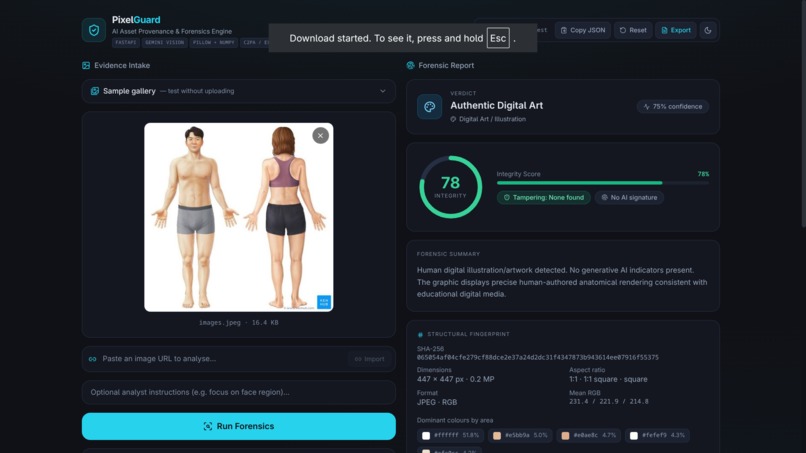
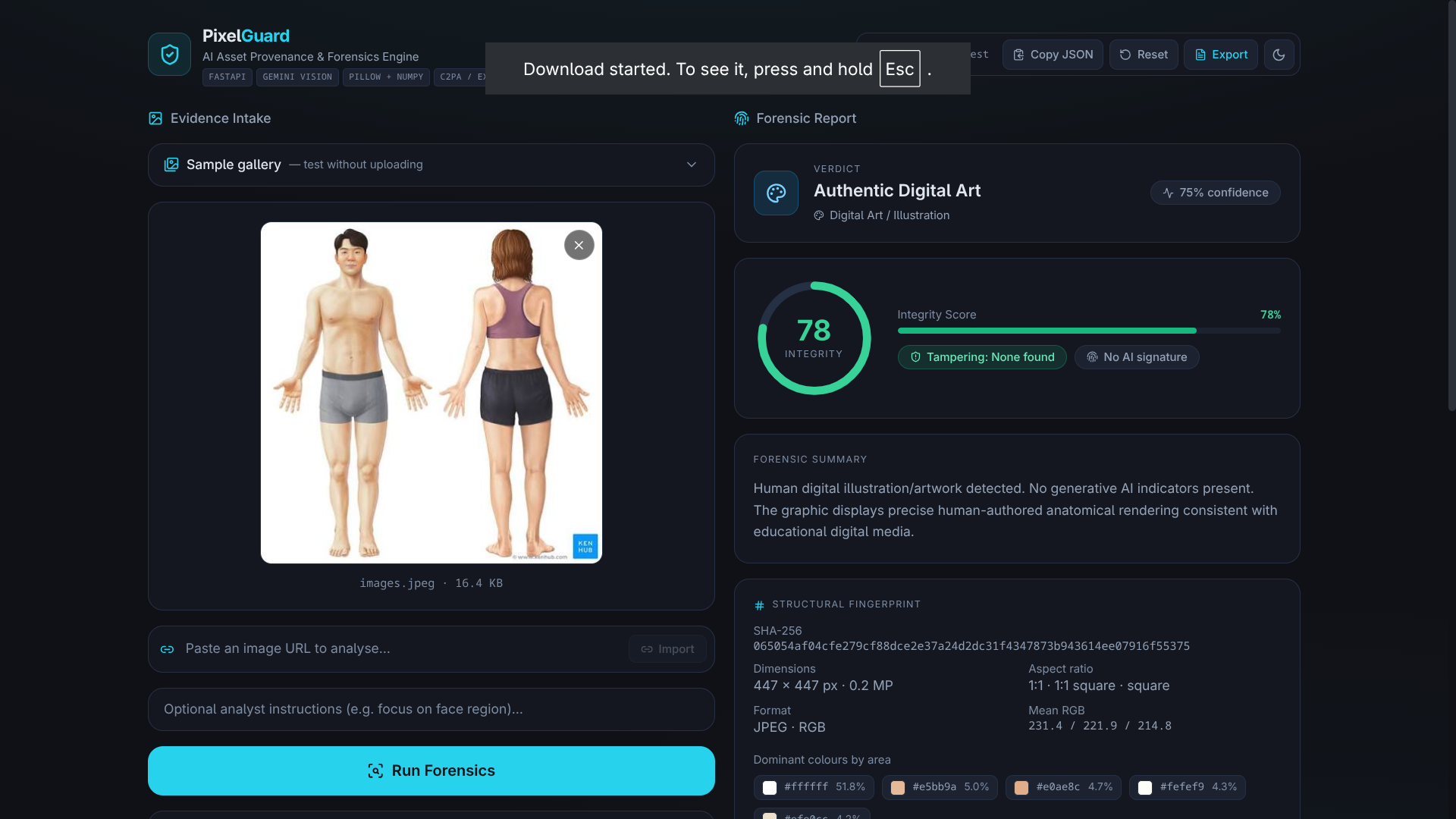
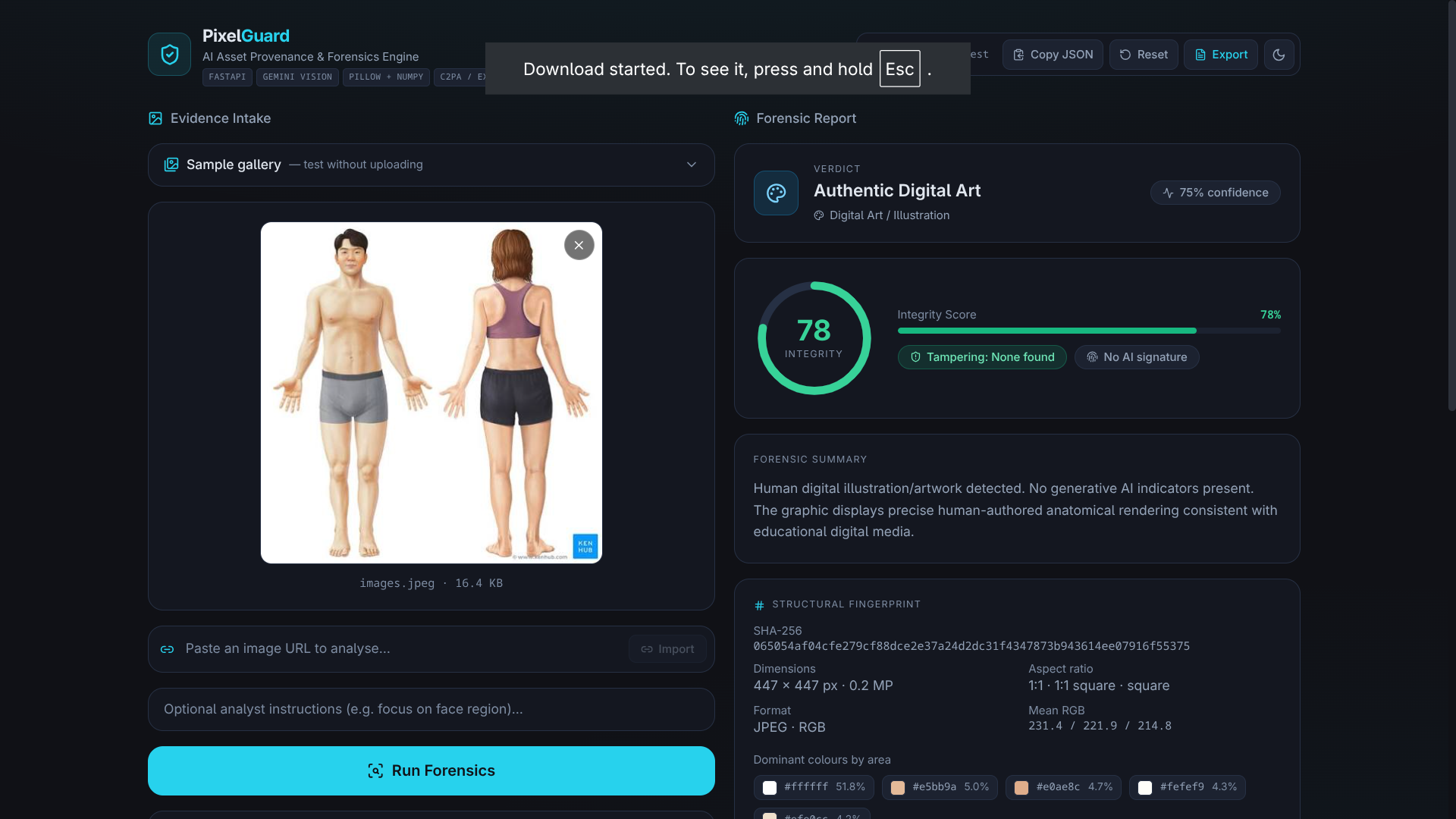
The engine distinguishes human digital art from AI synthesis. Our three-tier media classification provides clear provenance.
-
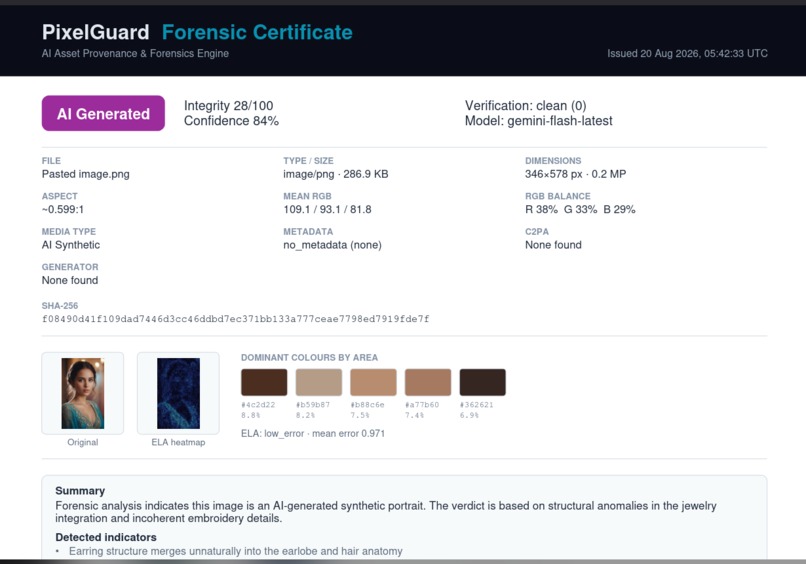
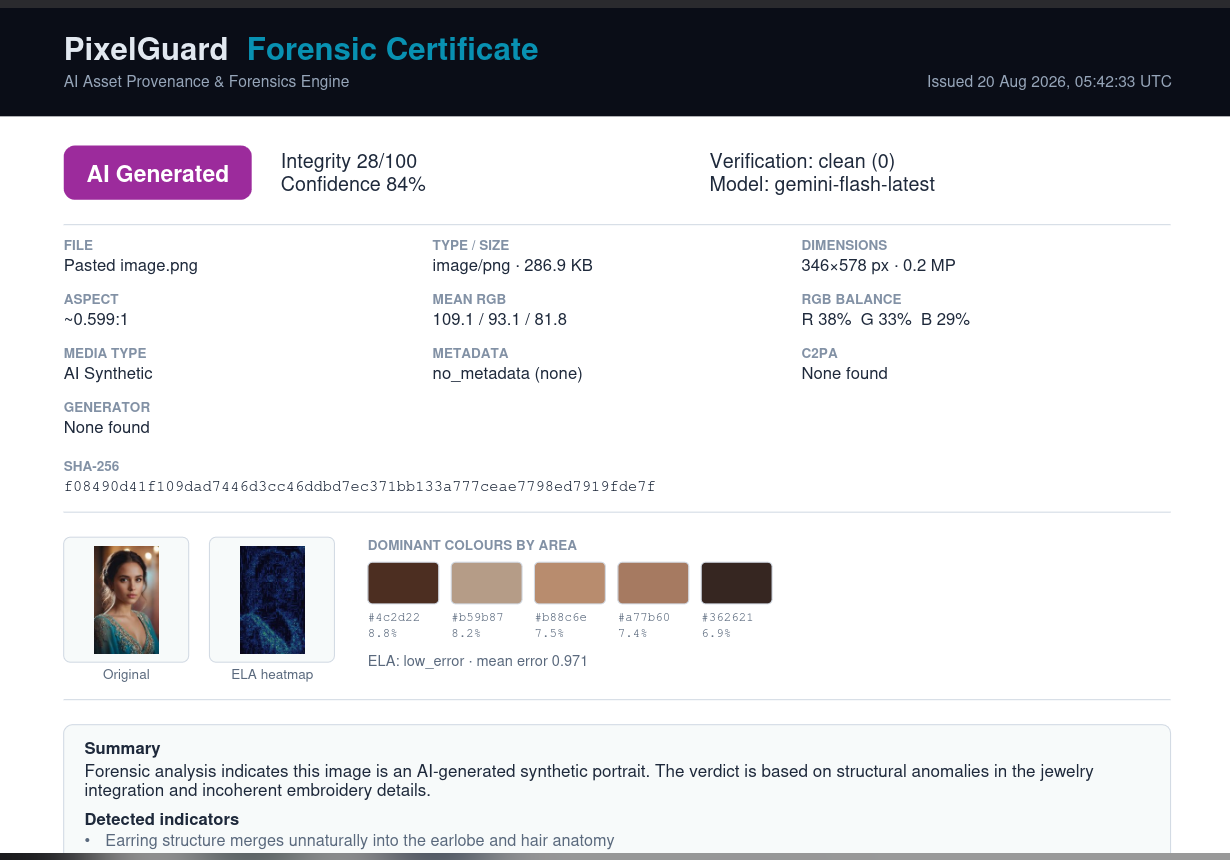
AI generation is confidently detected with an 84% score. Prelint guardrails surface structural flaws (e.g., ear anatomy).
-

Forensic intake is seamless. Paste a direct image URL from the web to import assets directly without downloading.
-
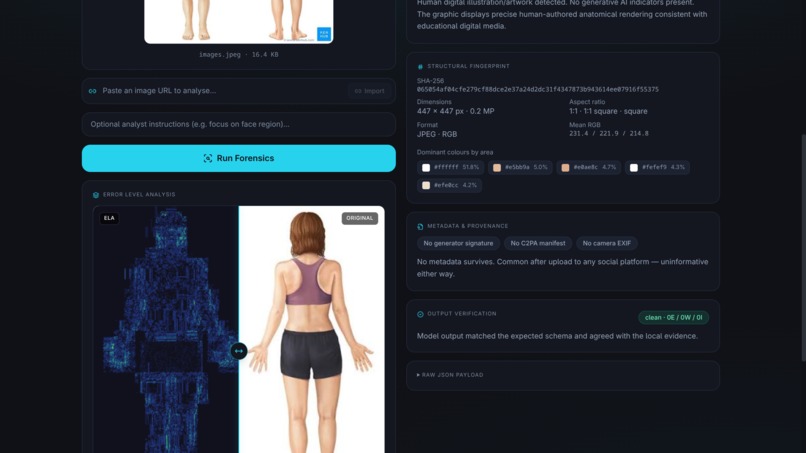
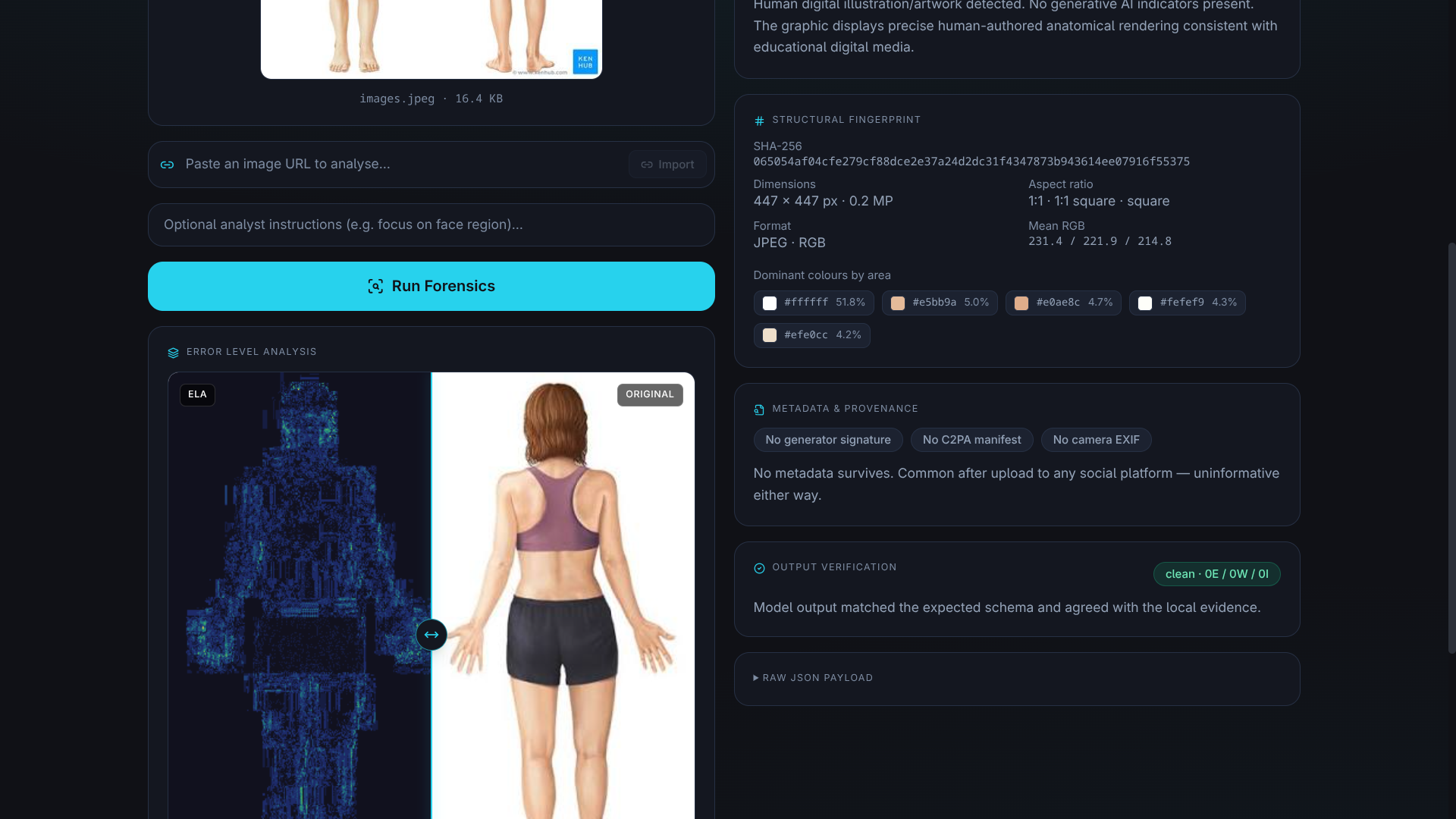
A mathematical compression difference map reveals hidden splices and edits using a live, interactive slider[cite: 6].
-
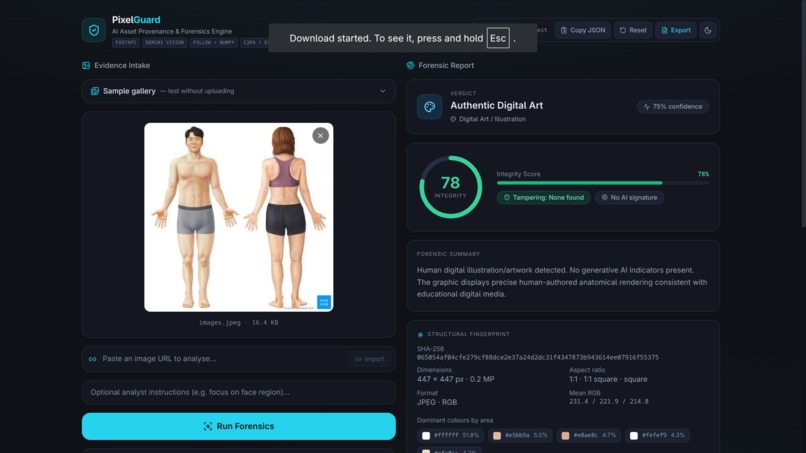
Export a verifiable 1-Page Forensic Certificate consolidated with C2PA metadata, or copy the Raw JSON Data payload.

PixelGuard: AI Asset Provenance & Forensics Engine
The Vision
In an era of ubiquitous generative media, the ability to verify visual authenticity is crucial. PixelGuard is an advanced enterprise engine designed not just to detect AI-generated content, but to establish immutable provenance and forensic integrity for digital assets. Our goal is to move beyond fragile metadata toward robust, persistent ownership and modification tracing.
How We Built It
PixelGuard utilizes a sophisticated dual-layer security pipeline:
- Invisible Frequency-Domain Watermarking: We implemented an image processing core (using PyWavelets and OpenCV) that embeds robust, 128-bit payloads directly into the Discrete Wavelet Transform (DWT) and Discrete Cosine Transform (DCT) bands of an image. This mathematical signature is invisible to the human eye but remains resilient against common processing attacks like resizing, compression, and cropping.
- Cryptographic C2PA Manifests: Alongside the pixel-level watermark, we integrate Content Credentials (via the C2PA standard), generating a signed JSON manifest that includes the creation timestamp, AI model details, seed, and author identity. This provides an audit trail that is mathematically linked to the image pixels.
- Real-Time Forensic Analysis: The user dashboard provides an inspection toolkit. Users can upload a suspected asset, and PixelGuard instantly performs a blind extraction of the frequency signature and verifies the cryptographic signature of the C2PA manifest. Crucially, the engine generates a spatial "differential heatmap," visually highlighting exact regions where the image was modified or tampered with.
Our stack leverages FastAPI for high-performance inference, PyTorch for forensic modeling, PyWavelets for signal processing, and React for the real-time interaction dashboard.
Challenges and Learning
Our main technical challenge was balancing robustness and imperceptibility. Making a watermark that survives heavy JPEG compression and cropping without creating visible artifacts required careful optimization of the DWT/DCT frequency bands and embedding intensity. We spent significant time calibrating the signal-to-noise ratio to find this balance. Furthermore, ensuring that real-time forensic extraction and tamper mapping ran under 200 milliseconds per asset was vital for usability, pushing us to optimize the mathematical transformations using NumPy and asynchronous processing.
The Future
PixelGuard is not a complete solution, but a major proof of concept. Our roadmap involves scaling this architecture to support robust video watermarking, developing native integrations for production-grade image generation APIs (like Midjourney and Stable Diffusion), and establishing a cryptographic certificate ledger for distributed provenance verification.

