Inspiration I'm a second-year CSE student. I have 3 deployed projects, 150+ open source PRs, and a GitHub that updates almost every day. But when I applied for internships, I was sending out the same 1-page resume as everyone else — generic bullet points, no real metrics, no proof of work. The problem isn't that students don't have skills. It's that their resumes don't show them.
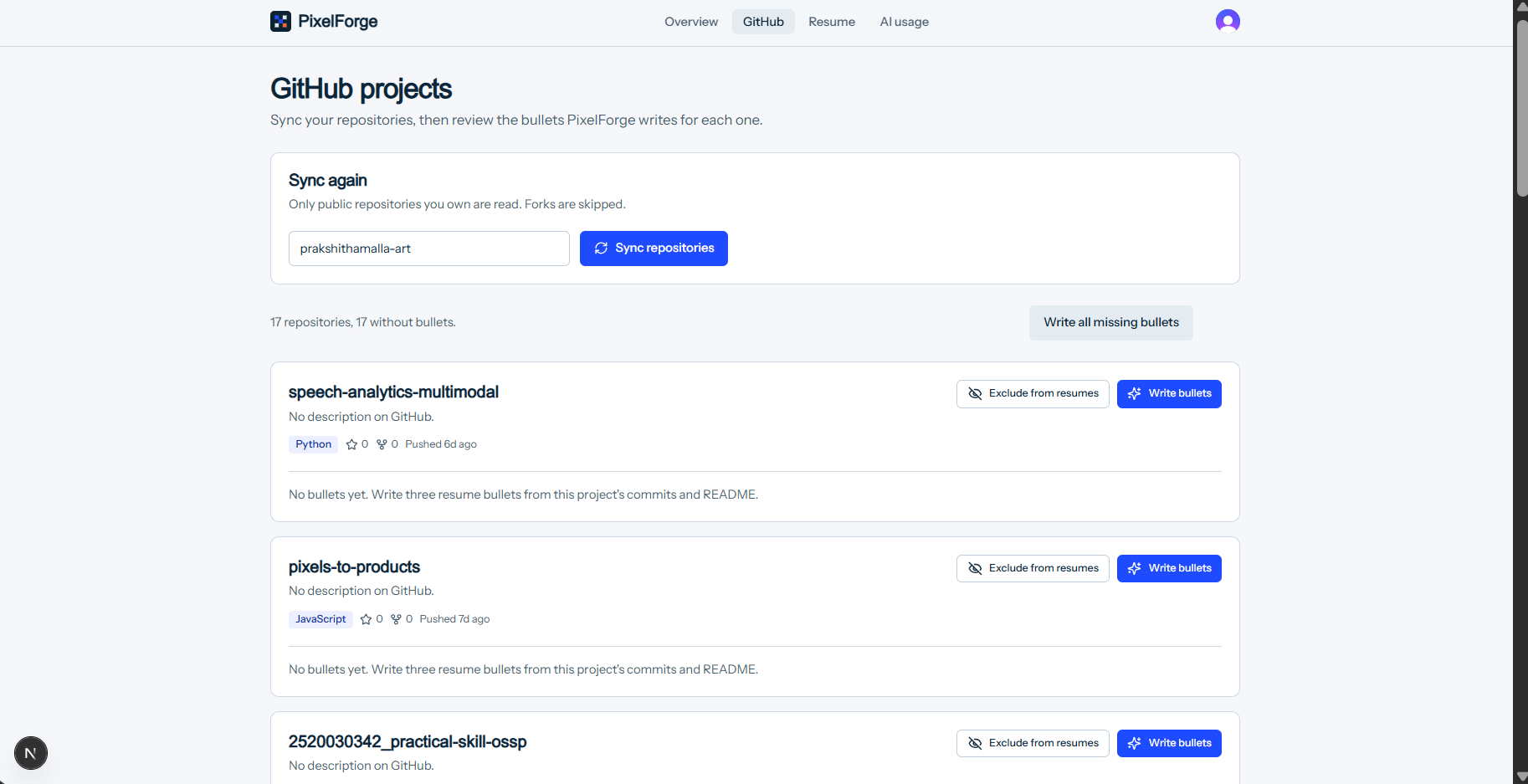
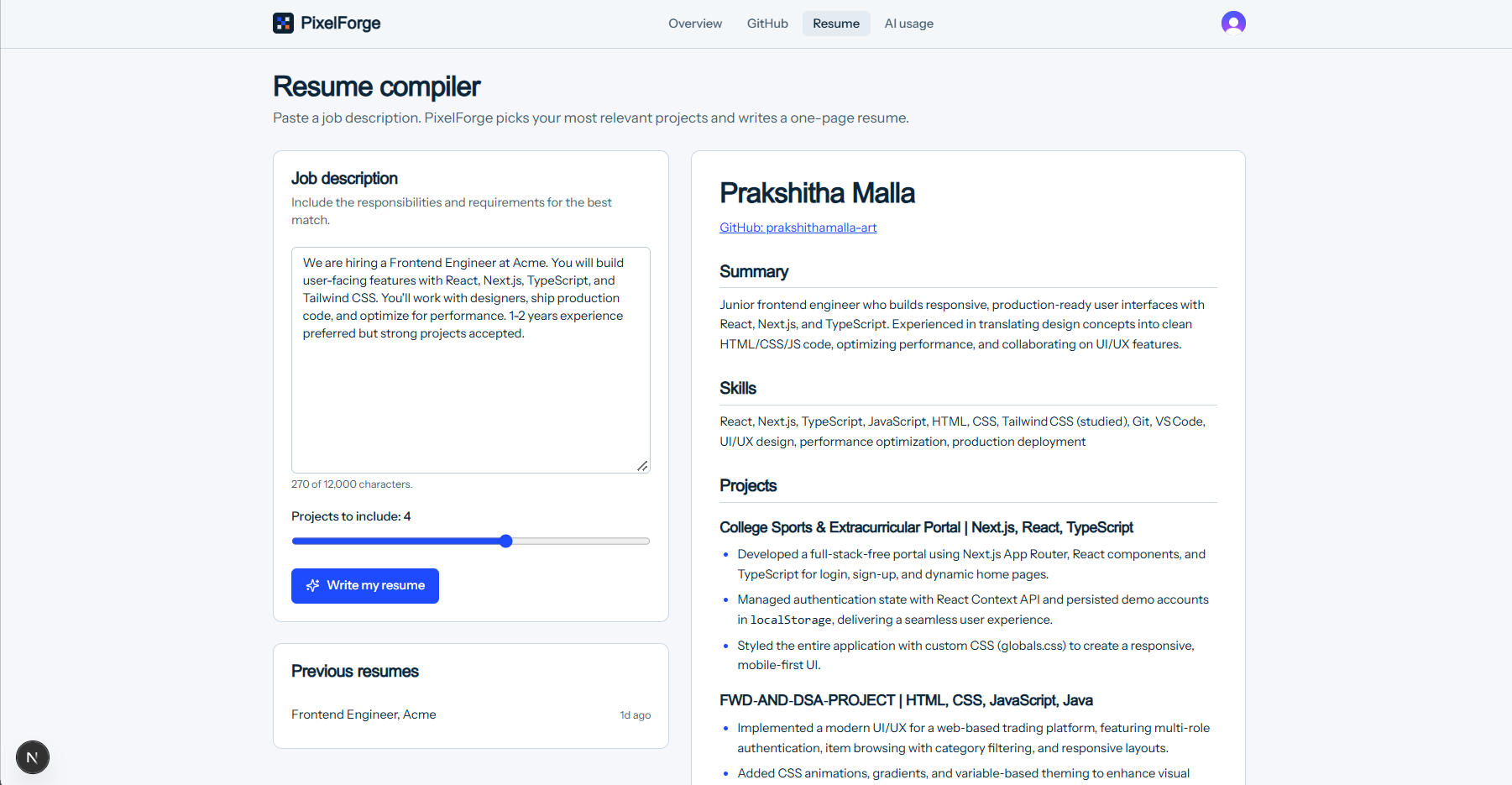
What it does PixelForge is a Live Developer Identity Platform. Instead of manually writing a resume, you connect your GitHub. PixelForge syncs your real work, extracts skills, and when you paste a job description, it generates a tailored 1-page resume in 30 seconds. It writes real bullets — "Reduced API latency by 40%" instead of "hardworking team player".
How I built it Frontend: Next.js 15, Tailwind CSS, Clerk for auth. Backend: FastAPI, PostgreSQL (Neon), SQLAlchemy. AI: Gemini 3.1 Pro + Groq (multi-model router with fallback). Embeddings: sentence-transformers for semantic matching.
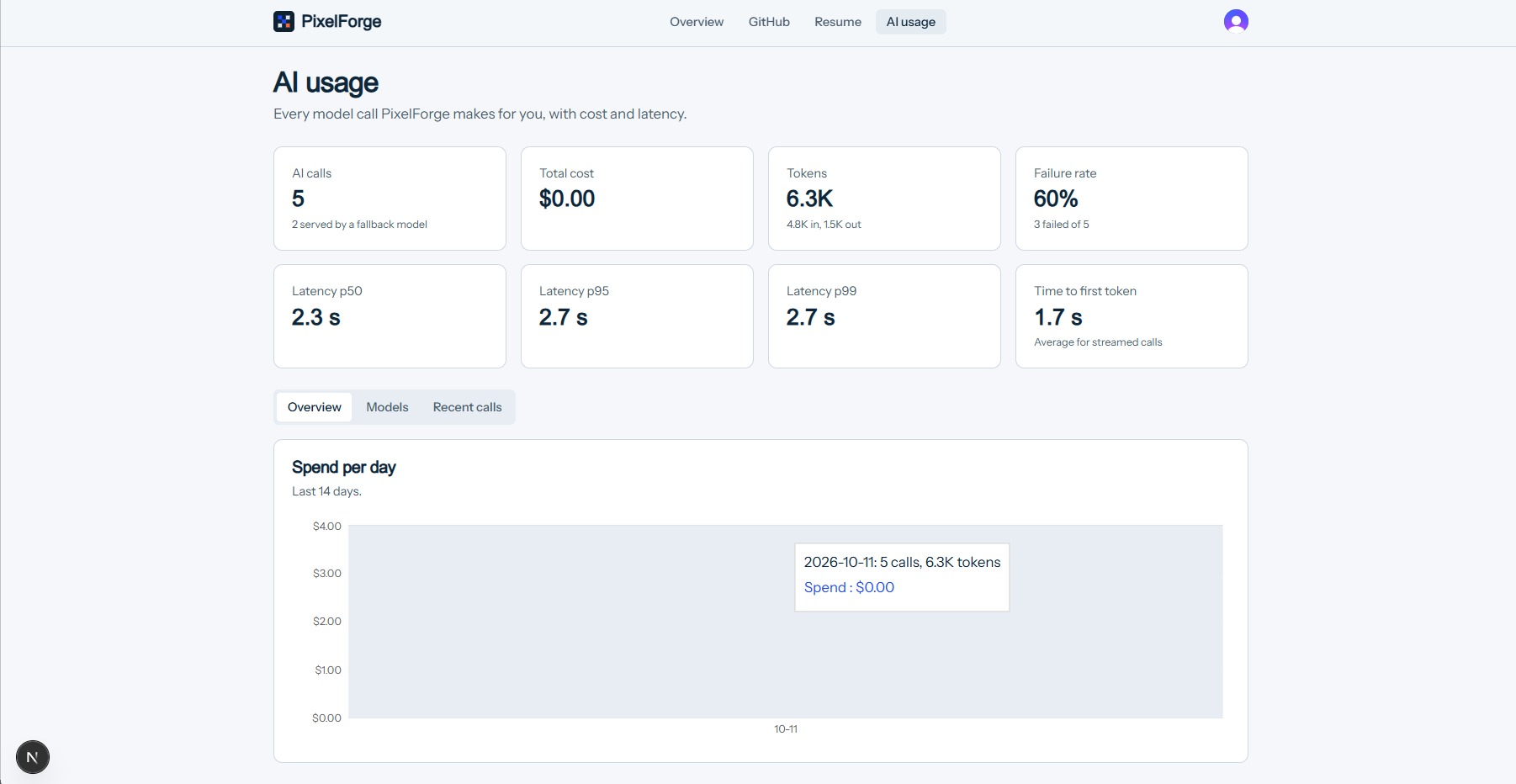
The AI layer uses a router that picks the best model per task. Every AI call is logged to an AI usage dashboard so the user can see cost, latency, and token usage.
Challenges
GitHub API rate limits — unauthenticated calls are capped at 60/hour. Added a token for 5,000/hour.
Semantic matching — matching repos to job descriptions needed embeddings, not keyword search.
Multi-model routing — building a fallback chain so the product doesn't break if one API goes down.
What I learned Building with real tools beats building in a sandbox. AI is a force multiplier. The AI wrote the boilerplate. I wrote the logic and made the product decisions.


Log in or sign up for Devpost to join the conversation.