Inspiration
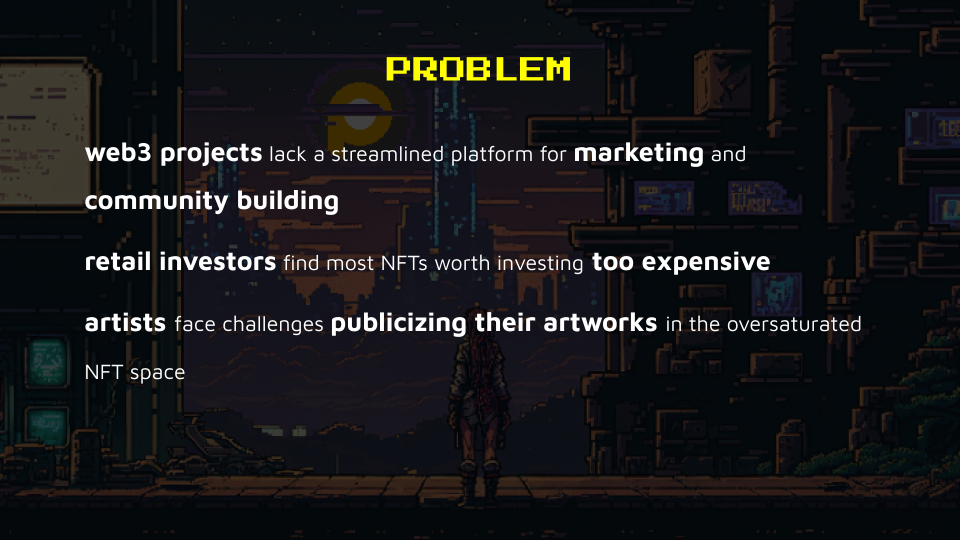
The inspiration behind Pixel Protocol is the need to explore and expand the utility of NFTs beyond visual art, addressing challenges in the oversaturated NFT space, lack of streamlined platforms for marketing and community building, and limited accessibility for retail investors.
- Explore and expand the utility of NFTs beyond visual art
- Address challenges in the oversaturated NFT space
- Create streamlined platforms for marketing and community building
- Improve accessibility and affordability for retail investors
What it does
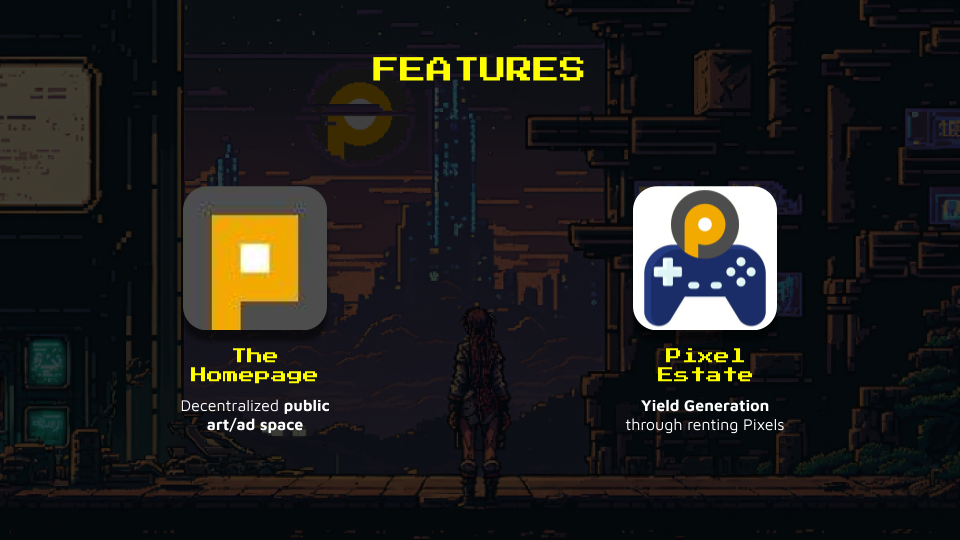
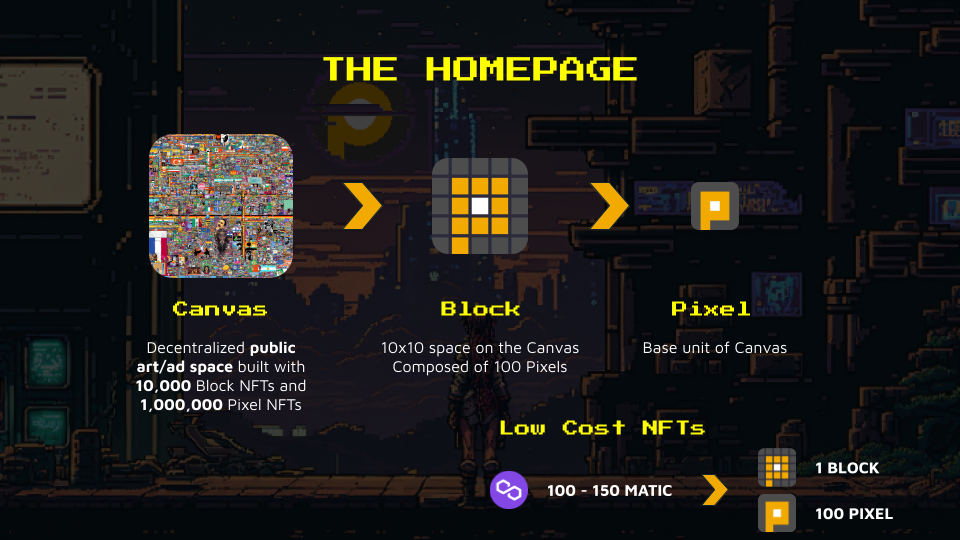
Pixel Protocol is a Web3 ecosystem powered by NFTs. It offers "The Homepage," a decentralized canvas where users can engage in public discourse, convey meaningful messages, and showcase art. The protocol facilitates community building, passive income through pixel rentals, fractional ownership of NFTs, and decentralized governance.
- Offers "The Homepage," a decentralized canvas for public discourse and showcasing art
- Facilitates community building, passive income through pixel rentals, fractional ownership of NFTs, and decentralized governance
How we built it
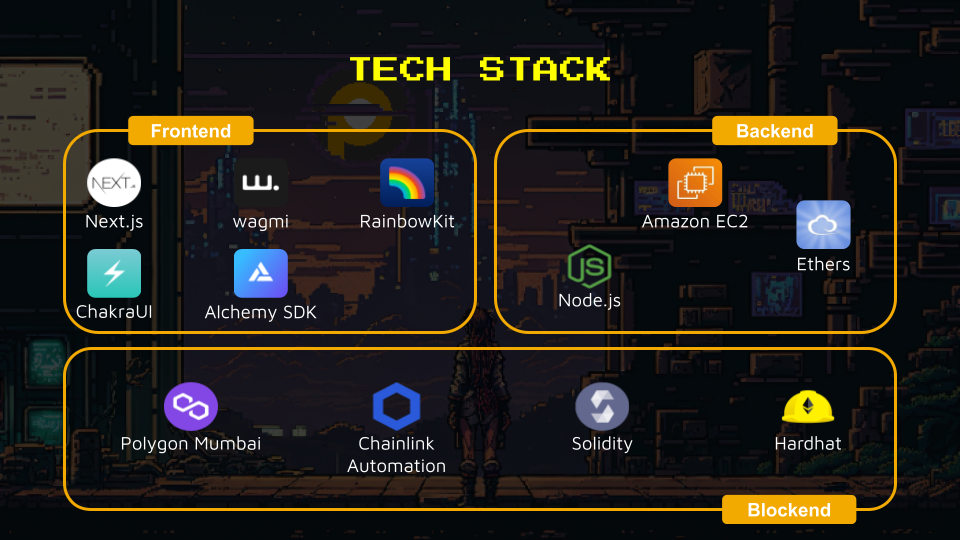
Pixel Protocol was built using a combination of technologies. The frontend was developed using Next.js and ChakraUI, connecting to the blockchain using wagmi, RainbowKit, and Alchemy SDK. The backend involves a Node.js application that queries on-chain color data using ethers and indexes them. The smart contracts were written in Solidity, tested using Hardhat, and deployed on the Polygon Mumbai testnet. Chainlink Automation was utilized for automating operations in the Pixel Estate system.
- Frontend: Next.js and ChakraUI
- Blockchain integration: wagmi, RainbowKit, and Alchemy SDK
- Backend: Node.js application querying on-chain color data using ethers
- Smart contracts: Written in Solidity, tested with Hardhat, deployed on the Polygon Mumbai testnet
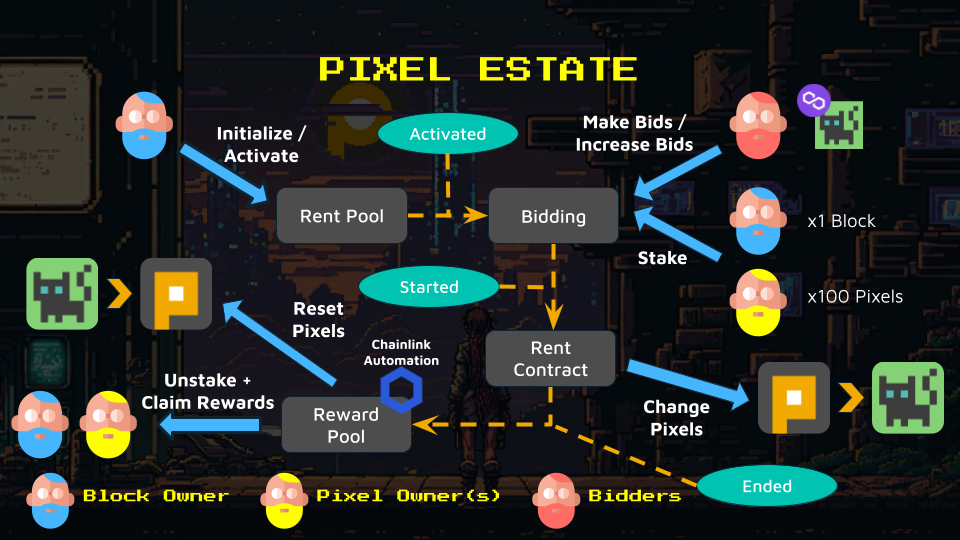
- Chainlink Automation used for automating operations in the Pixel Estate system.
_ How Chainlink Automation powers our DApp _
- Problem: Once the rent period ends, we want to remove the content created by tenant and replace it with the original content of the block.
- Solution: We utilize Chainlink Automation that is triggered in our smart contract once the condition is met (i.e. current date > end date). Our implementation of Chainlink Automation performs 3 different upkeeps:
- Change the state of the Rent Pool from “Ongoing” to “Ended”
- Calculate and store rewards to be distributed to the owners of Blocks and underlying Pixels
- Change the colors of the Pixels back to their original state
Challenges we ran into
During the development of Pixel Protocol, we faced several challenges. Some of the prominent challenges included addressing artwork publicity in an oversaturated NFT space, creating streamlined platforms for marketing and community building, and making NFTs more affordable for retail investors. Overcoming these challenges required careful planning, innovative solutions, and continuous iteration.
- Addressing artwork publicity in an oversaturated NFT space
- Creating streamlined platforms for marketing and community building
- Making NFTs more affordable for retail investors
Accomplishments that we're proud of
We are proud of several accomplishments with Pixel Protocol. Firstly, the successful deployment of the fully functional implementation of "The Homepage" and "Pixel Estate" on the Polygon Mumbai Testnet is a significant achievement. Additionally, the development of the rent pool system, the integration of Chainlink Automation, and the creation of a vibrant ecosystem for users to engage in community-driven art and passive income generation are accomplishments we take pride in.
- Successful deployment of "The Homepage" and "Pixel Estate" on the Polygon Mumbai Testnet
- Development of the rent pool system and integration of Chainlink Automation
- Creating a vibrant ecosystem for community-driven art and passive income generation
What we learned
Throughout the development of Pixel Protocol, we learned valuable lessons about the importance of addressing challenges in the NFT space, the significance of community building and marketing strategies, and the need for accessibility and affordability for retail investors. We also gained insights into the technical aspects of building a Web3 ecosystem, utilizing various technologies and tools, and ensuring seamless integration between frontend, backend, and smart contracts.
- Importance of addressing challenges in the NFT space
- Significance of community building and marketing strategies
- Need for accessibility and affordability for retail investors
- Technical aspects of building a Web3 ecosystem and integrating various technologies
What's next for Pixel Protocol
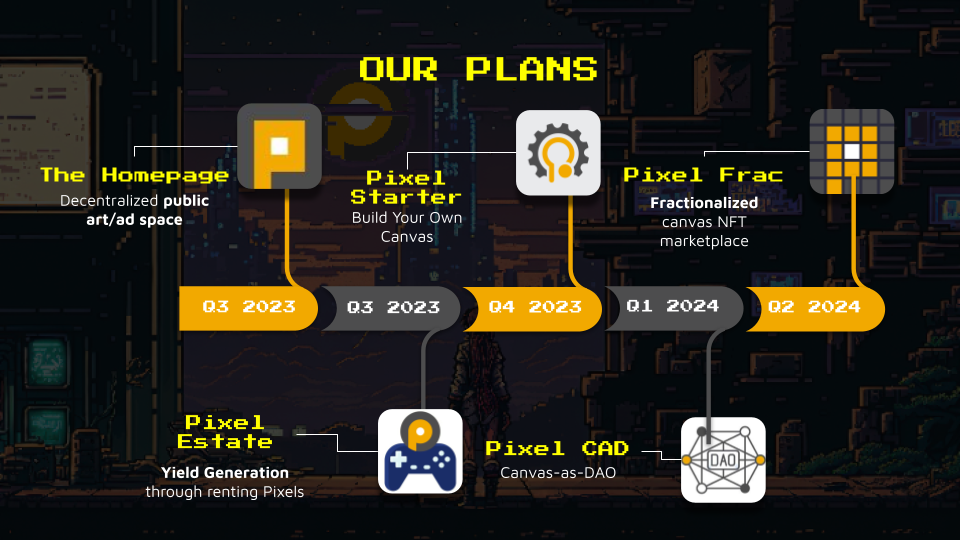
Moving forward, Pixel Protocol has an ambitious roadmap. The immediate plan is to launch on the Polygon mainnet and expand beyond "The Homepage" with the release of PixelStarter, a launchpad for custom canvases. In the following phases, PixelCad (Canvas-as-DAO) will be introduced for decentralized governance, and PixelFrac will provide fractionalization of NFTs. These developments aim to further democratize NFT ownership, enhance community participation, and revolutionize the way users engage with art and projects in the Web3 era.
- Launch on the Polygon mainnet
- Expand with PixelStarter, a launchpad for custom canvases
- Introduce PixelCad (Canvas-as-DAO) for decentralized governance
- Develop PixelFrac to provide fractionalization of NFTs
- Aim to democratize NFT ownership, enhance community participation, and revolutionize engagement with art and projects in the Web3 era
Built With
- amazon-cloudfront-cdn
- amazon-ec2
- chainlink
- chakra-ui
- ethers
- hardhat
- node.js
- rainbowkit
- react
- socket.io
- solidity
- wagmi

Log in or sign up for Devpost to join the conversation.