-
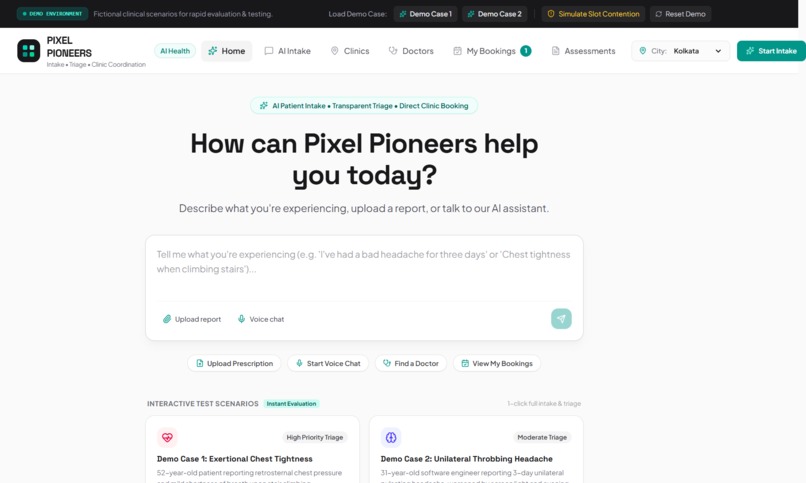
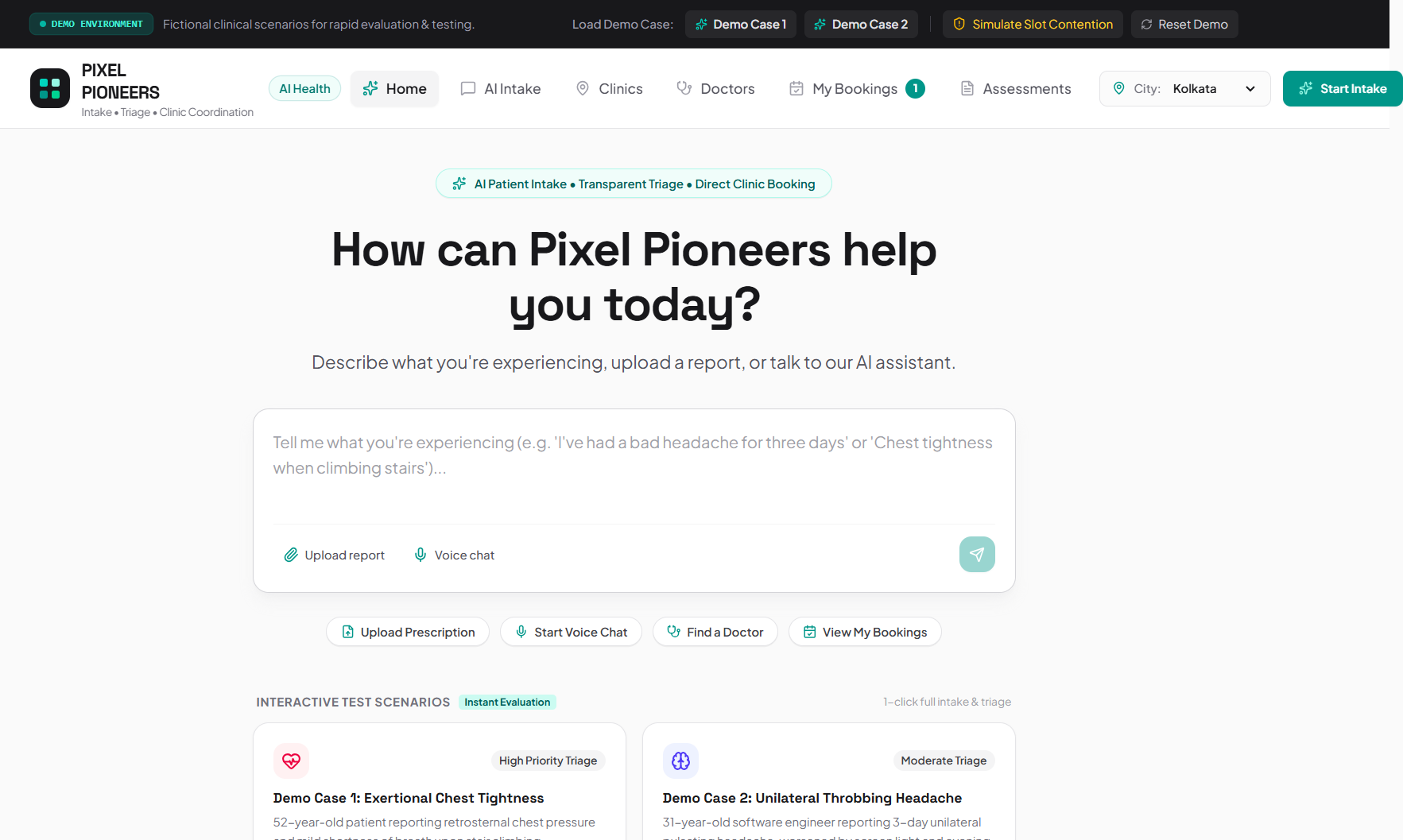
AI-powered patient intake through chat, voice, report upload, and direct doctor discovery
-
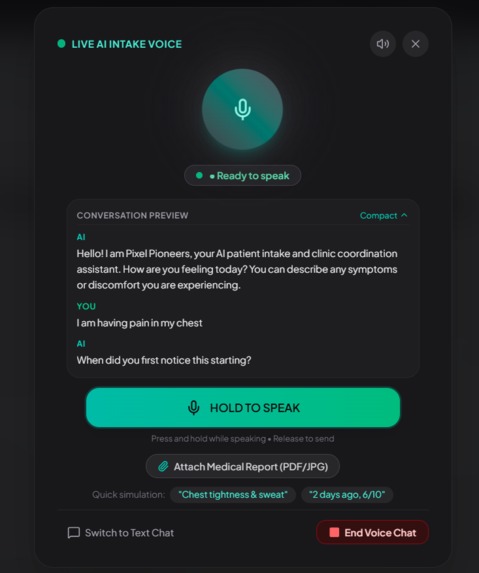
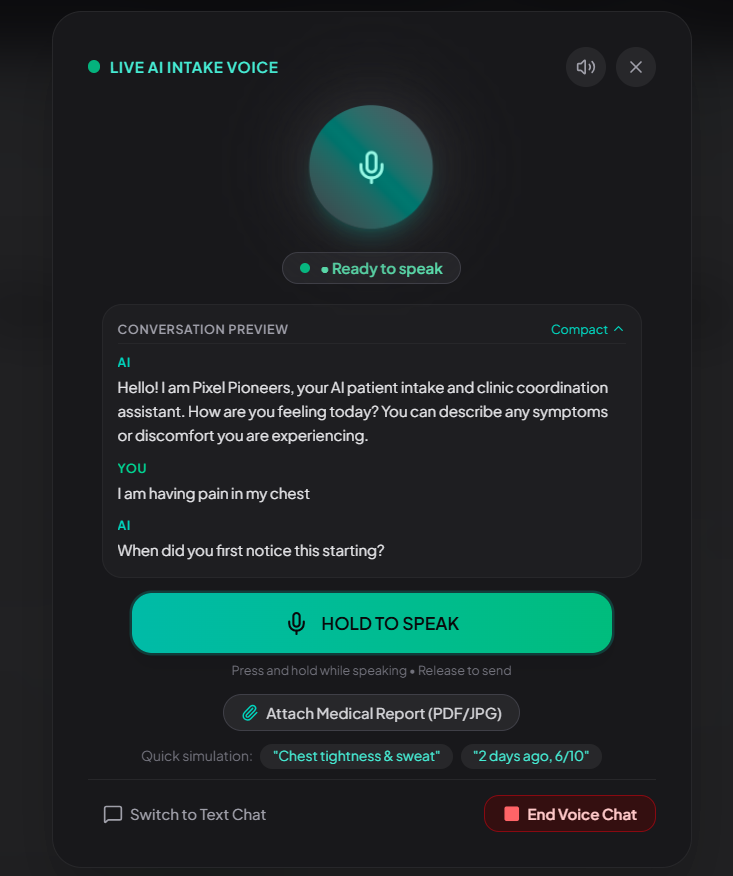
Natural voice-based patient intake with live conversation, transcription, and push-to-talk interaction.
-
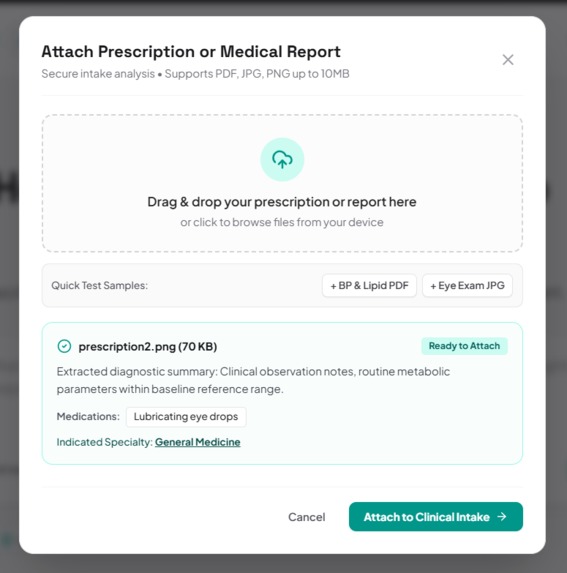
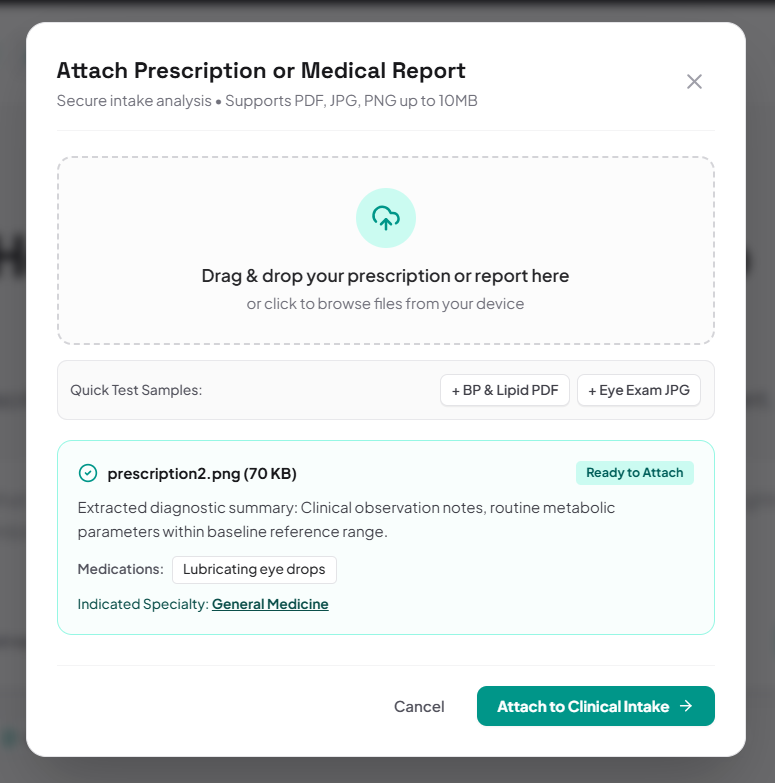
Upload PDF or image reports and let AI extract relevant information for clinical intake
-
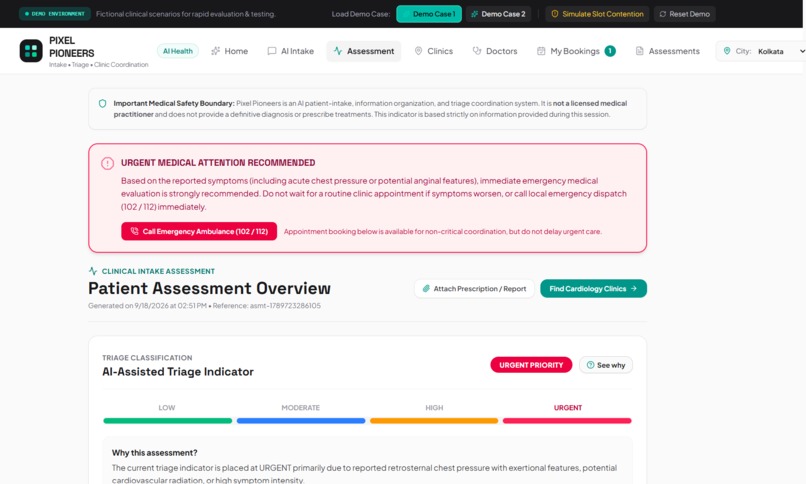
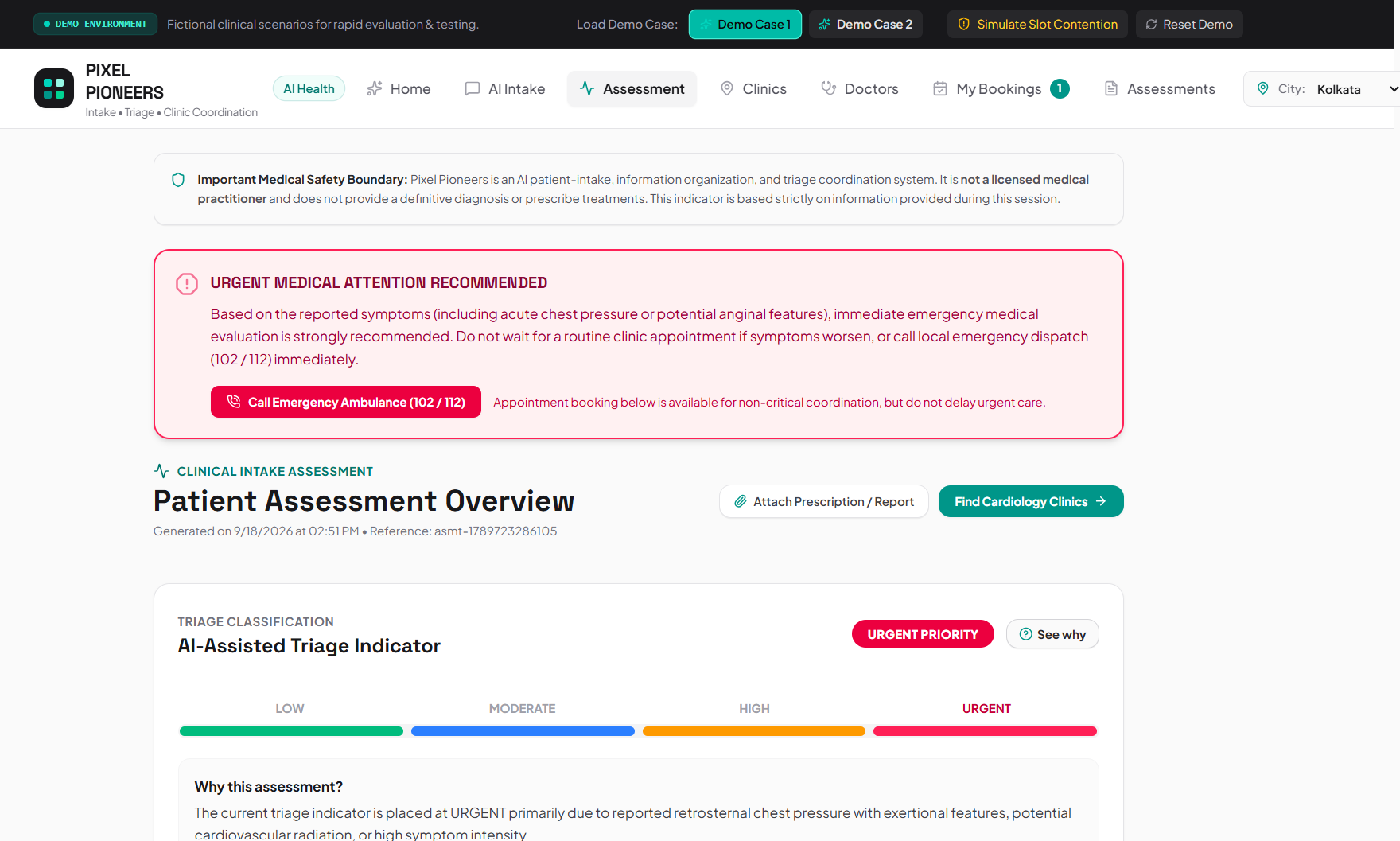
Transparent triage assessment showing risk level, emergency guidance, and the indicators behind it.
-
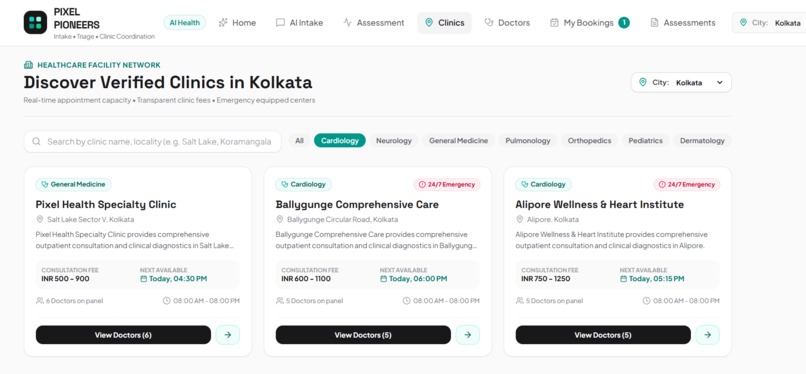
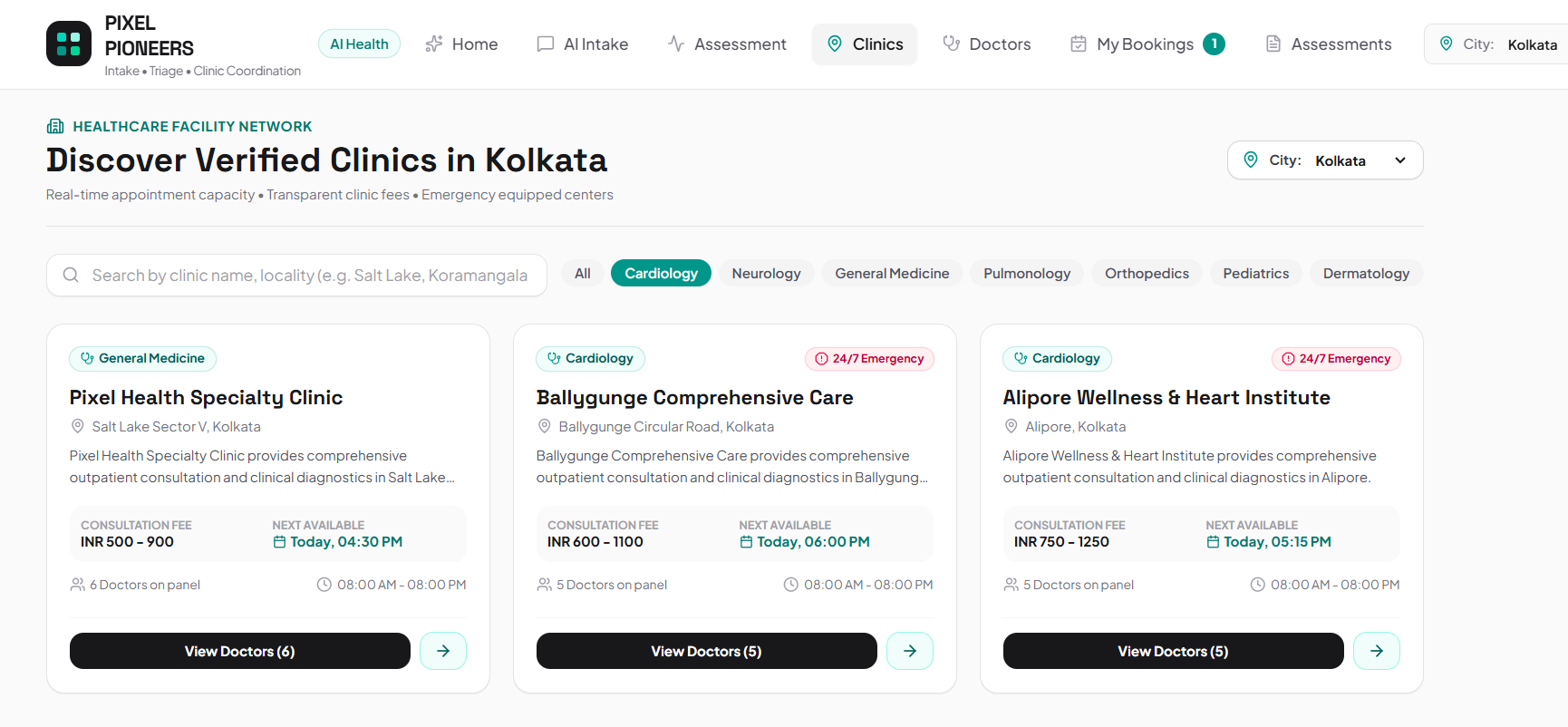
Discover clinics by specialty with real-time availability, consultation fees, and doctor capacity
-
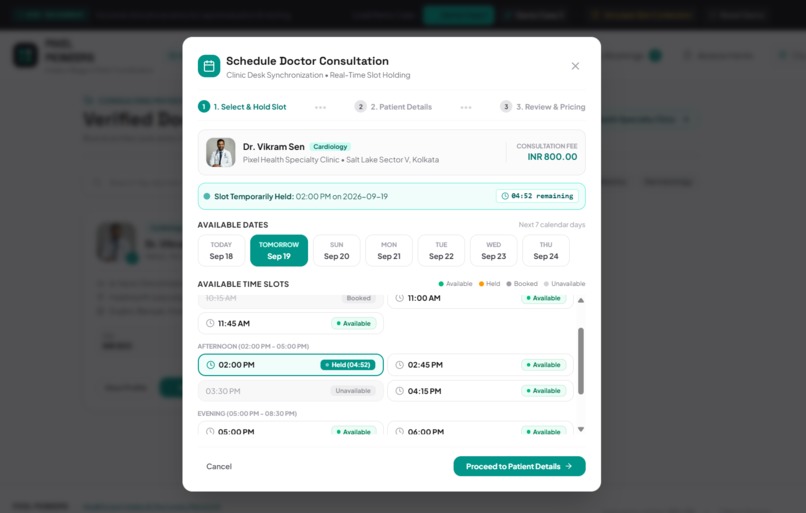
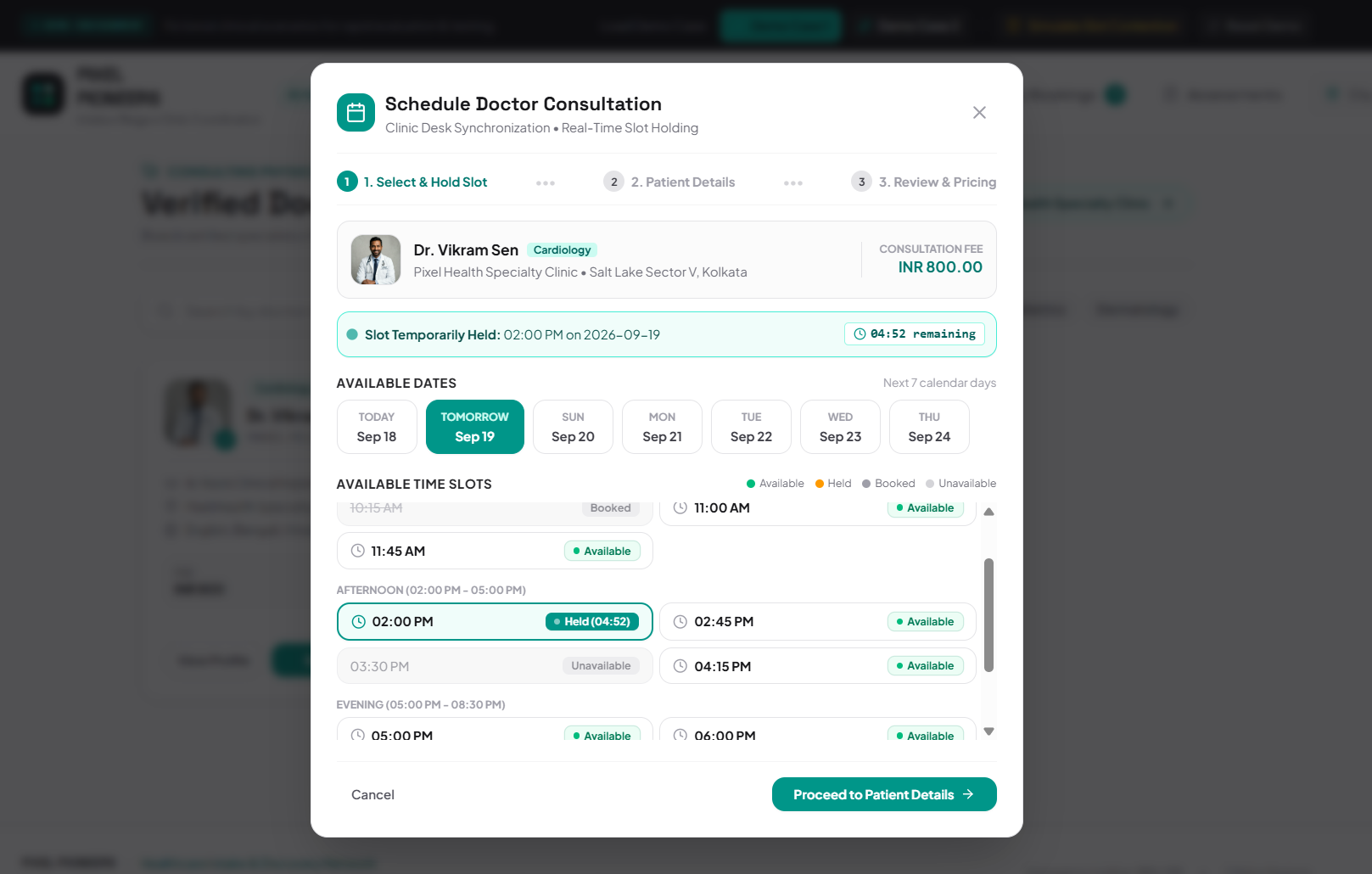
Real-time doctor availability with temporary slot holding before booking
-
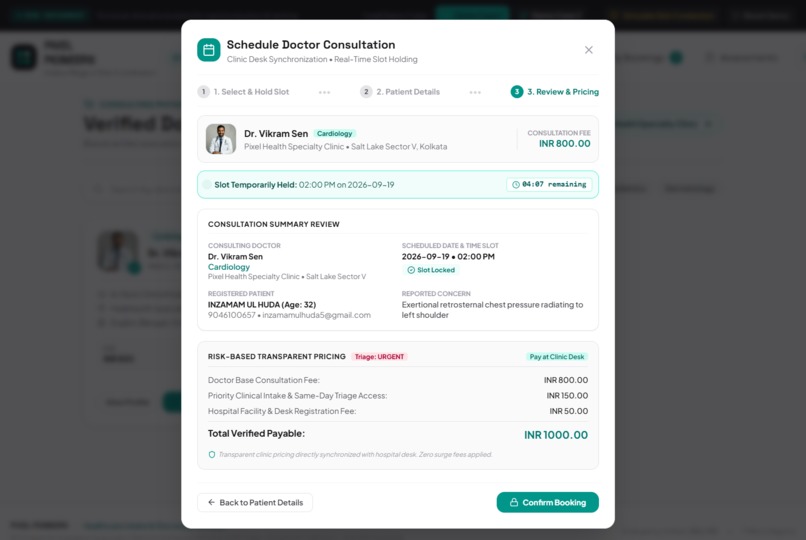
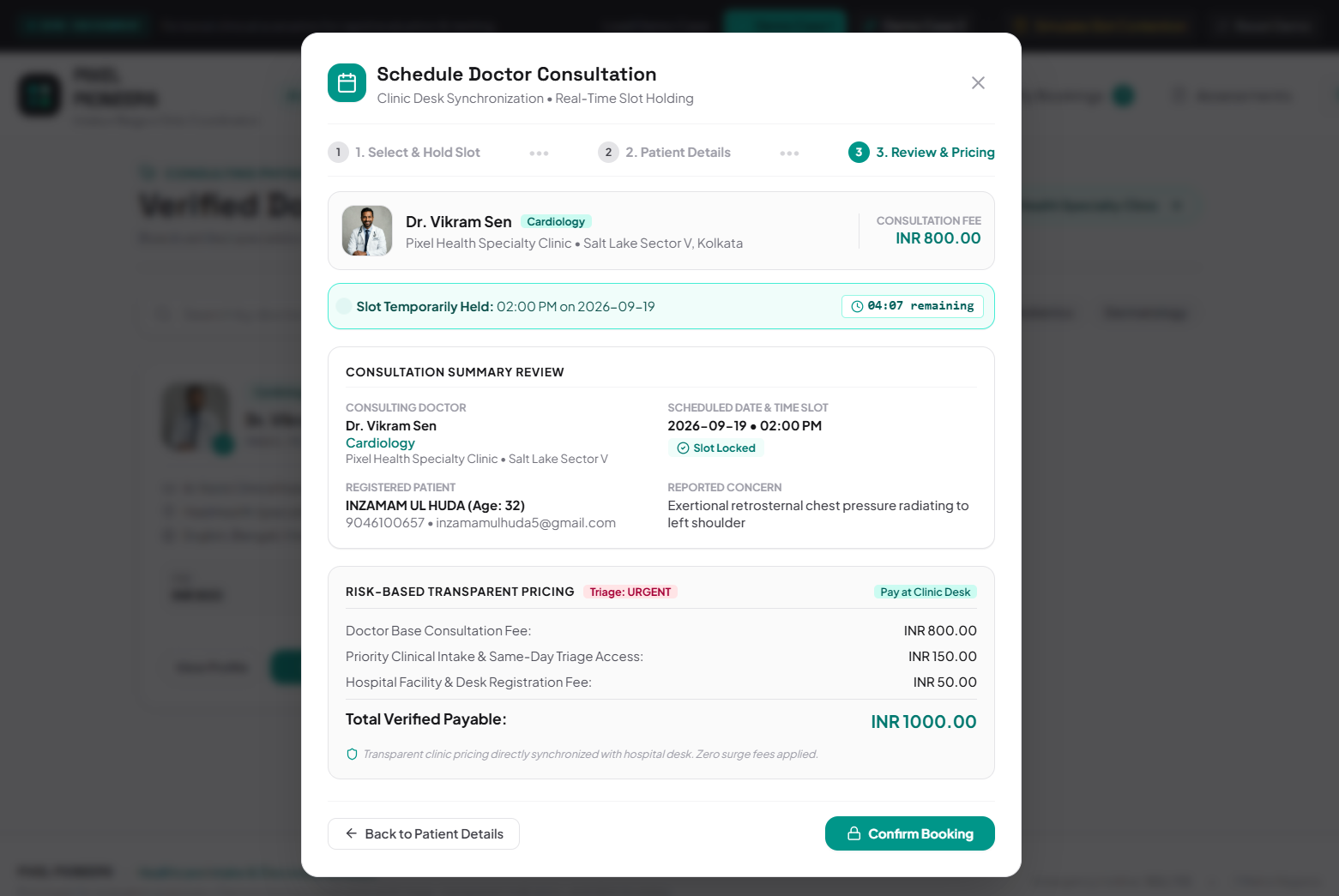
Review patient details, locked appointment slot, triage level, and transparent pricing before confirmation
-
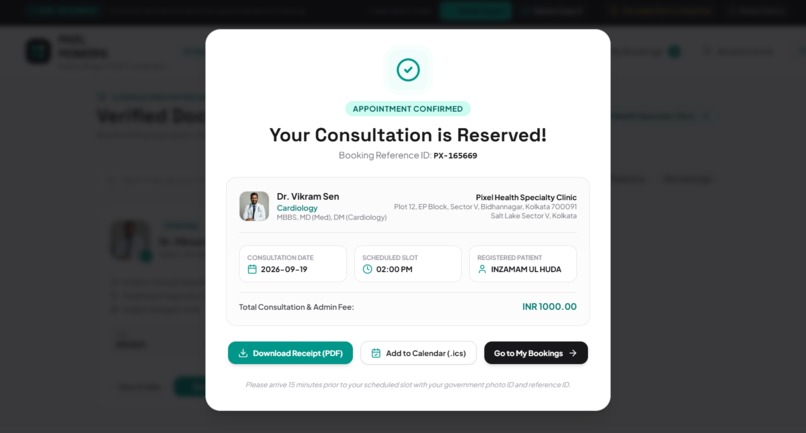
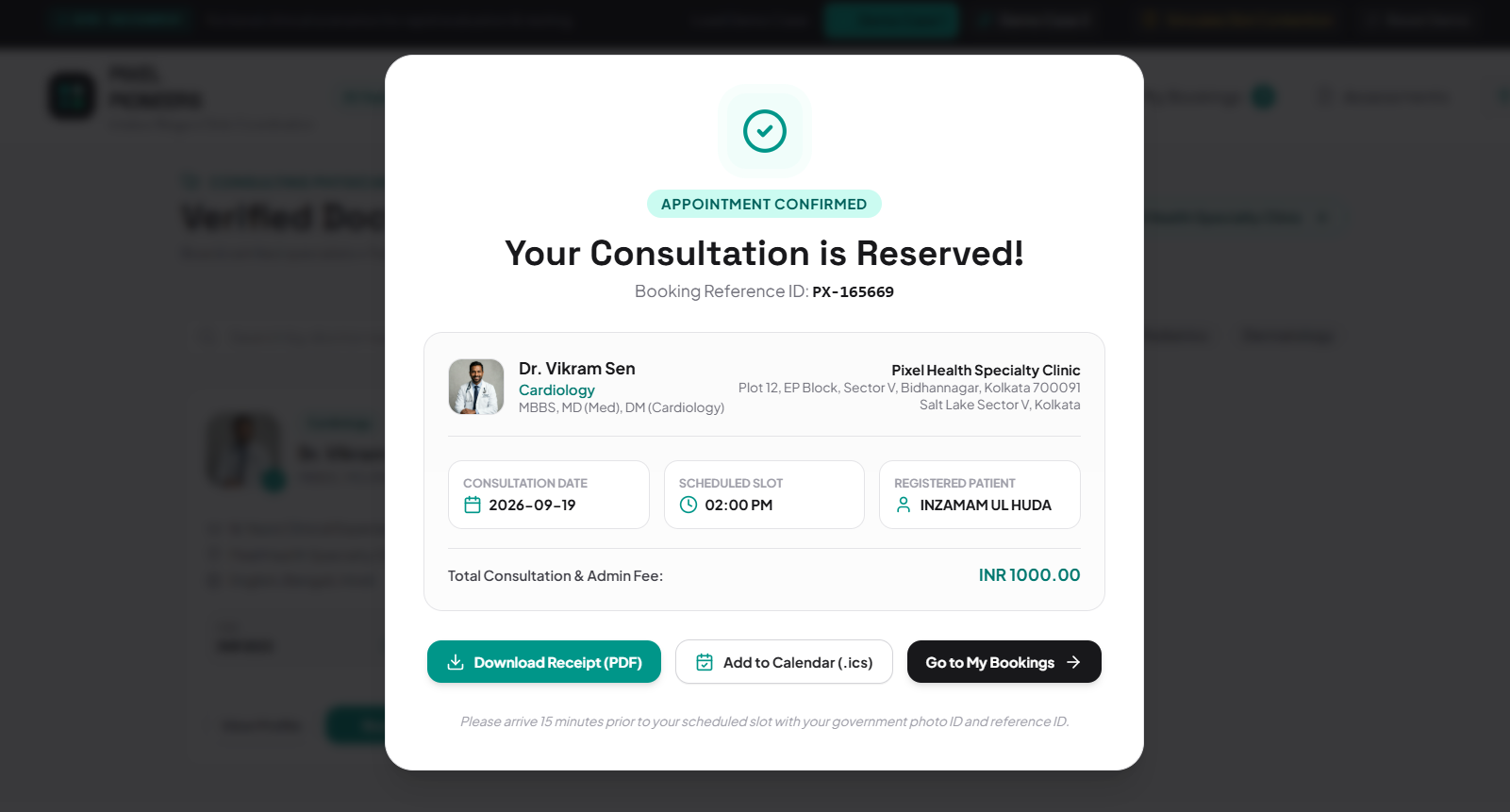
Confirmed consultation with booking ID, doctor details, scheduled time, and downloadable receipt
Inspiration
The idea started from a poster presentation one of my friends prepared for IEM HEALS. The first idea was very focused on Alzheimer’s disease. While discussing the problem, we started asking a simple question: what if a patient could explain what they are feeling, and instead of searching through many departments and doctors, an AI could help them understand where they should go and make the appointment easier?
We first discussed and got the direction approved by the Hack2Heals committee organisers. That gave us the confidence to take the idea further.
What started as an Alzheimer’s-focused concept slowly became a much broader healthcare platform. We realised that the same problem exists across many medical fields. A patient may know that something is wrong, but may not know which department to visit, which type of doctor to look for, or how to move from that first concern to an actual appointment.
That became the foundation of Pixel Pioneers.
What we built
Pixel Pioneers is an AI-powered healthcare intake and clinic coordination platform. A user can start by typing their problem, talking to the AI through voice, or uploading a prescription or medical report in PDF or JPG format.
The AI collects information in a structured way instead of simply giving a generic answer. It builds a patient summary from the conversation and uploaded documents, identifies the relevant medical specialty, and provides a transparent triage view showing which indicators matched and why.
From there, the experience continues into the practical part of healthcare. The user can explore clinics, doctors, available appointment slots, and transparent pricing, then reserve a slot and complete the booking process.
One part we focused on carefully was appointment availability. If one patient temporarily holds a slot, that slot is reflected for other users as well. The system distinguishes between available, held, booked and unavailable slots so that the booking experience feels closer to a real appointment system.
We also built demo cases so the complete idea can be tested quickly without needing real hospital infrastructure.
What we learned
The biggest learning for us was that building an AI application is not just about getting a model to generate text. The difficult part is connecting AI with a real user workflow.
We had to think about structured conversations, document analysis, voice interaction, realtime appointment availability, slot holding, booking states, pricing, mobile responsiveness, and error handling as one connected system.
We also learned that healthcare needs a different level of transparency. The AI should organize information and support the patient, but it should not pretend to be a doctor or make a definitive diagnosis. That shaped the way we designed the assessment and risk explanation.
How we built it
We built Pixel Pioneers as a modern web application with an AI layer for conversational intake and document understanding, a structured assessment system, clinic and doctor discovery, and a shared appointment booking system.
The prototype is designed so that demo data can be replaced by real hospital, clinic, doctor and appointment APIs later.
Our original concept was narrow and condition-specific. We intentionally expanded it into a general healthcare workflow so the same system can be applied across different medical specialties instead of solving only one condition.
For us, the main idea is simple:
A patient should not have to figure out the healthcare system before getting help from it.
Pixel Pioneers tries to make that first step easier by connecting conversation, reports, triage support, doctor discovery and appointment booking in one place.
Built With
- ai
- ai/ml
- appointment
- gemini
- generative
- healthcare
- react
- real-time
- studio
- systems
- technology
- typescript
- vercel
- vite
- voice


Log in or sign up for Devpost to join the conversation.