-
-
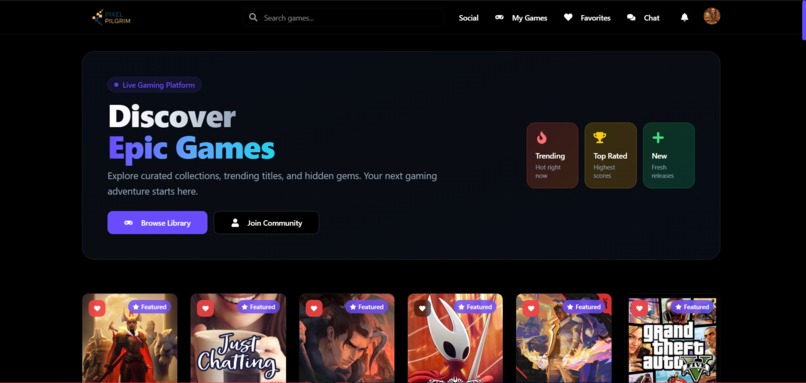
Homepage of "Pixel Pilgrim"
-

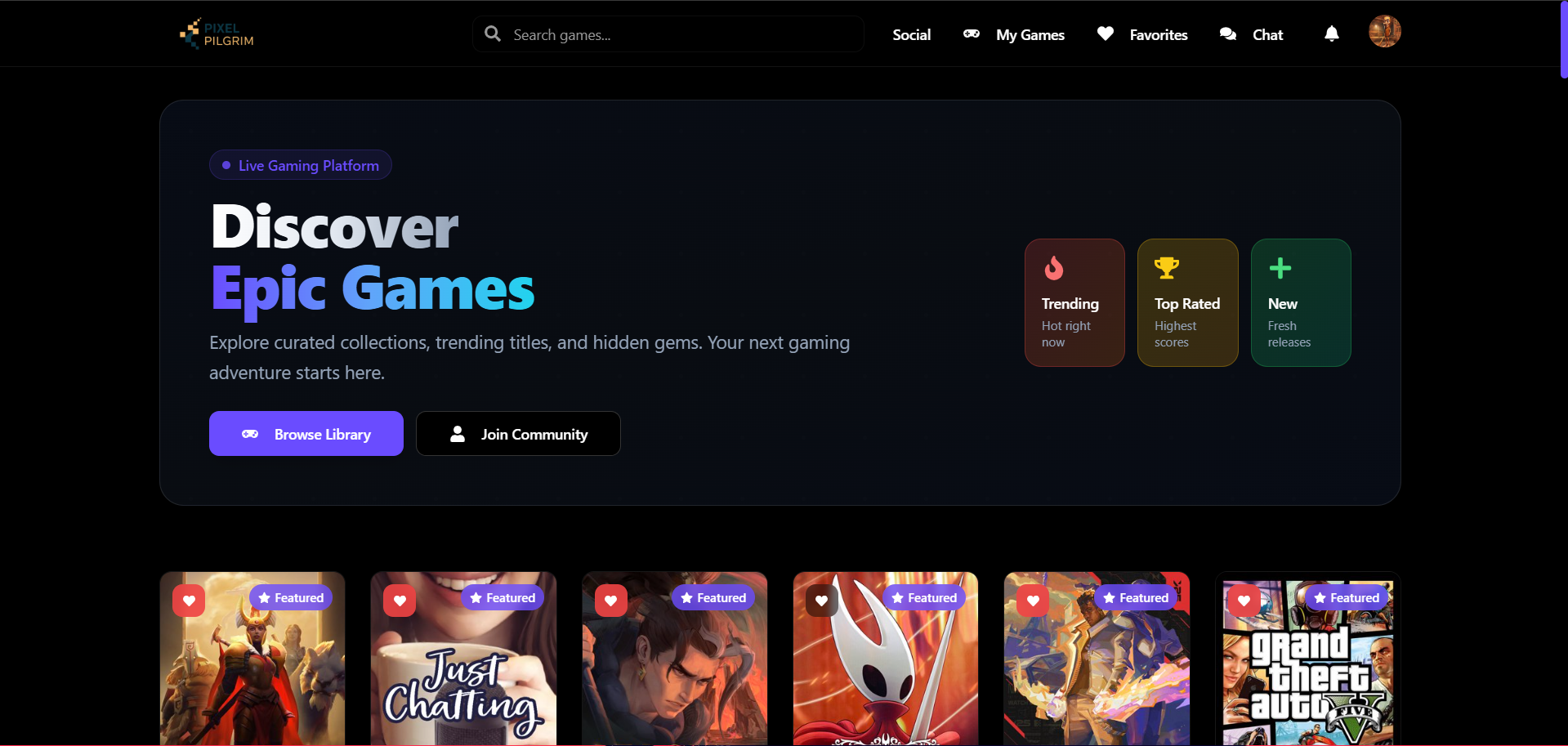
The landing page of "Pixel Pilgrim"
-



Inspiration The gaming community needed a unified platform that goes beyond simple game discovery. We were inspired to create a comprehensive gaming hub where users can not only find games but build meaningful connections, track their gaming journey, and engage with a vibrant community of fellow gamers through personalized profiles and social features.
What it does Pixel Pilgrim is a full-featured gaming community platform that combines game discovery with social networking. Users can browse 500,000+ games via RAWG and Twitch APIs, maintain personal game libraries with detailed tracking (status, ratings, notes, hours played), create unique profiles with customizable usernames, follow other gamers, write and share game reviews, engage in real-time chat and discussions, receive AI-powered game recommendations, and participate in an active community with activity feeds and social features.
How we built it We built Pixel Pilgrim using React 18 with TypeScript for type safety and modern development practices. The frontend leverages Tailwind CSS and Shadcn/ui for a polished, responsive design with Framer Motion for smooth animations. Firebase powers our backend with Firestore for data storage and Authentication for user management (email/password and Google OAuth). We integrated multiple APIs including RAWG for comprehensive game data and Twitch for live gaming trends. The architecture features modular services, efficient caching systems, rate limiting, and real-time updates.
Challenges we ran into Managing multiple API integrations while maintaining consistent data structures across RAWG and Twitch APIs required careful normalization. Implementing real-time features like chat and activity feeds while maintaining performance was complex. We faced challenges with Firestore rate limiting and had to implement sophisticated caching and rate limiting strategies. Creating a scalable user profile system with unique usernames and social features required careful database design. Optimizing the user experience with smooth loading states and responsive design across all devices was demanding.
Accomplishments that we're proud of Successfully integrated multiple gaming APIs into a cohesive platform with seamless user experience. Built a complete authentication system with both email/password and Google OAuth integration. Created a comprehensive game logging system that tracks detailed gaming statistics and progress. Implemented real-time social features including chat, activity feeds, and user following. Developed an AI-powered recommendation system for personalized game suggestions. Built a scalable, modular architecture that can easily accommodate new features. Achieved excellent performance with caching strategies and optimized Firestore queries.
What we learned Gained expertise in modern React patterns, TypeScript integration, and Firebase ecosystem management. Learned advanced techniques for API integration and data normalization across multiple sources. Discovered the importance of implementing proper caching and rate limiting for scalable applications. Understood the complexities of building real-time social features and community platforms. Mastered responsive design principles and modern UI/UX patterns with Tailwind CSS and component libraries.
What's next for Pixel Pilgrim We plan to expand social features with gaming groups and tournaments, implement advanced AI recommendations using machine learning, add mobile applications for iOS and Android, integrate with additional gaming platforms and services, develop creator tools for game developers and content creators, implement advanced analytics and insights for users, add support for game streaming and live sessions, create marketplace features for game trading and recommendations, expand internationalization with multi-language support, and develop API access for third-party developers to build on our platform.


Log in or sign up for Devpost to join the conversation.