-
-
The logo of InclusiDesign
-
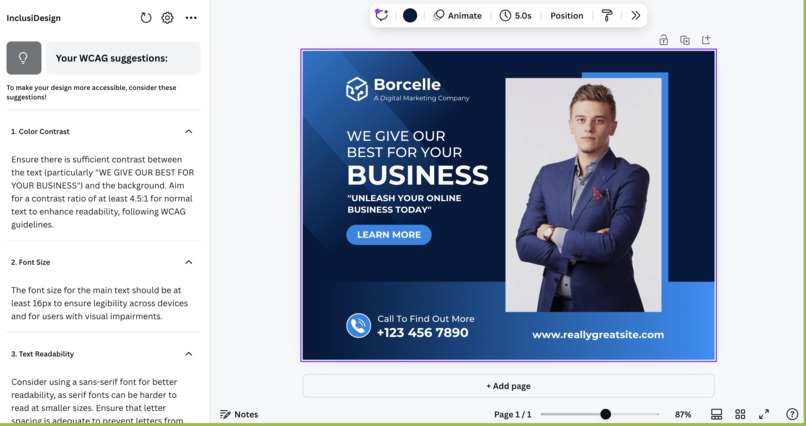
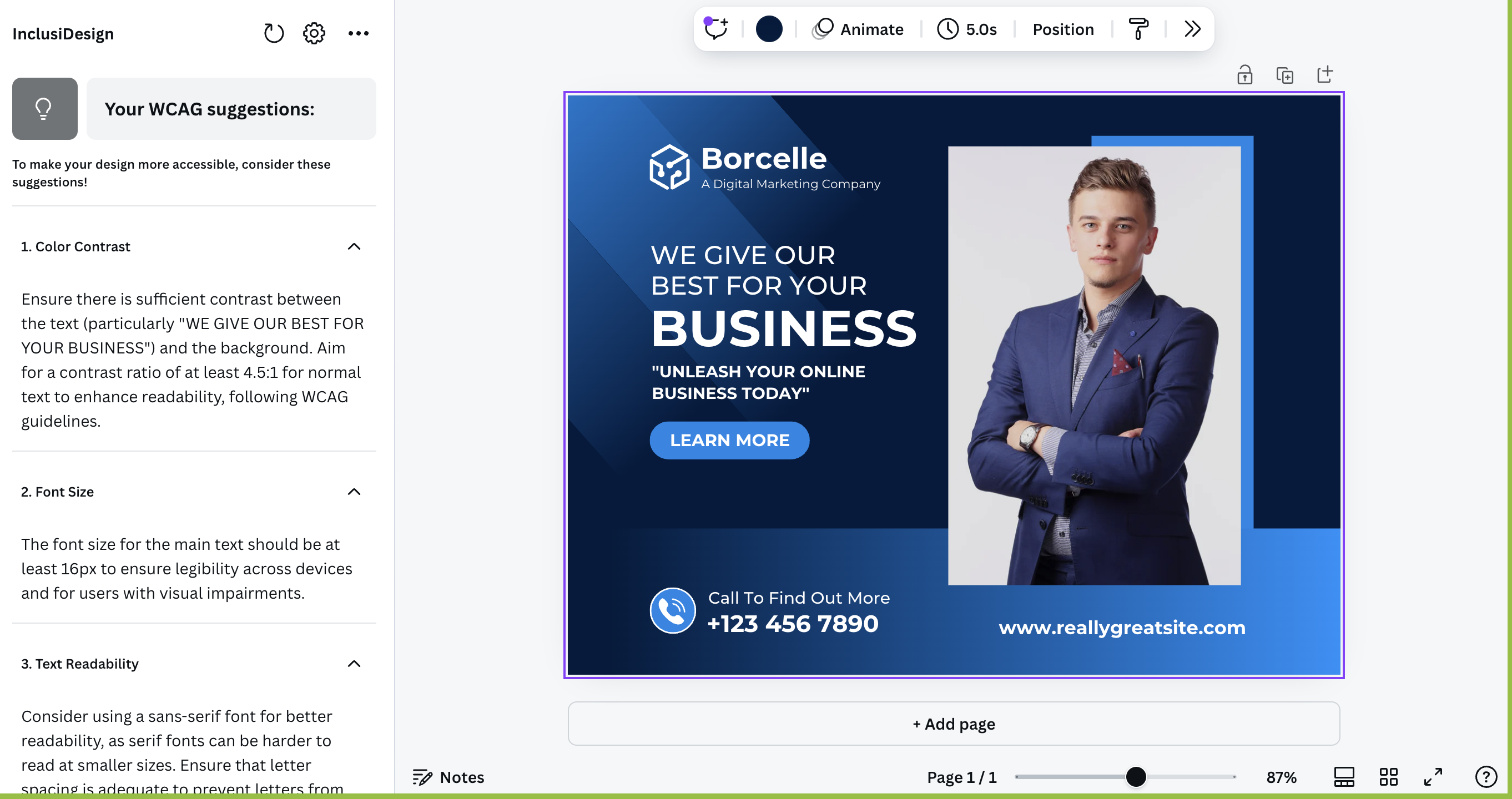
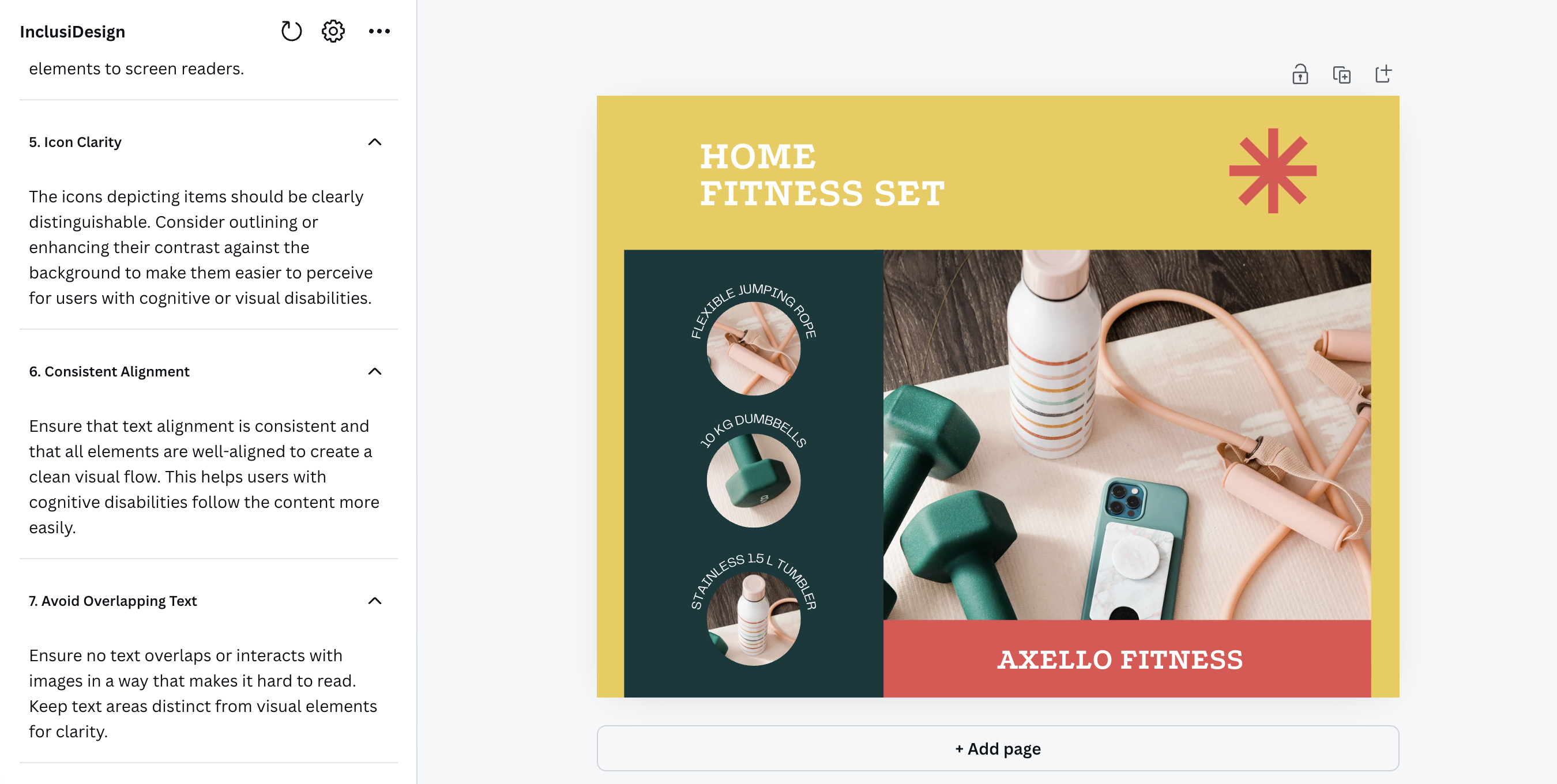
Easily export your designs and quickly receive accessibility feedback.
-
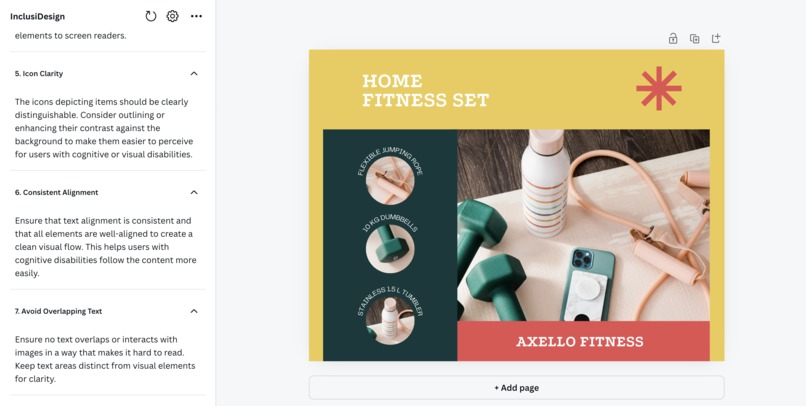
InclusiDesign can provide feedback on any type of Canva design; our goal was to provide as much flexibility as possible.
Inspiration
The inspiration for InclusiDesign came from the growing awareness of the importance of accessibility in all forms of communication, especially visual designs. We wanted to create a tool that not only empowers designers to make their work more inclusive but also ensures that everyone, regardless of ability, can engage with and appreciate these creations. Understanding the challenges faced by individuals with disabilities, we aimed to make accessibility a core aspect of design rather than an afterthought.
What it does
InclusiDesign analyzes Canva designs by providing tailored accessibility suggestions that enhance inclusivity and equity. By examining elements such as color contrast, text readability, and overall design layout, the app offers specific recommendations to improve the accessibility of any design. The goal is to make design accessible to all while maintaining creativity and aesthetic appeal.
How we built it
We developed InclusiDesign by combining advanced AI technology with well-established accessibility guidelines. At its core, GPT-4 analyzes exported design images, offering detailed accessibility suggestions. We used Express.js for the backend and React with TypeScript alongside Canva's App UI Kit for the frontend. Our goal was to create a seamless, user-friendly interface that integrates effortlessly with Canva, enabling users to enhance their designs without interrupting their creative flow.
Challenges we ran into
One of the biggest challenges we faced was accurately interpreting design elements from images and translating them into actionable accessibility suggestions. Ensuring that our app could analyze a wide variety of design styles while still providing meaningful feedback was another hurdle. Additionally, balancing the need for accessibility with the preservation of a design’s creative integrity required careful consideration and fine-tuning.
Accomplishments that we're proud of
We're proud to have developed a tool that bridges the gap between creativity and accessibility. InclusiDesign not only makes it easier for designers to create inclusive content but also raises awareness about the importance of accessibility in visual communication. Successfully integrating GPT-4 to analyze and provide specific, actionable feedback is another accomplishment we're proud of.
What we learned
Throughout this project, we learned the importance of empathy in design. Accessibility is not just a technical requirement but a fundamental aspect of good design that ensures everyone can enjoy and benefit from visual content. We also gained valuable experience in working with AI-driven tools and the complexities of image analysis.
What's next for InclusiDesign
The next step for InclusiDesign is to expand its capabilities by incorporating more advanced accessibility guidelines and enhancing its ability to provide suggestions in real-time. We also plan to develop a robust grading system that not only identifies issues but also suggests alternative design elements to help users make their designs both beautiful and accessible. Additionally, we're considering partnerships with accessibility organizations to further refine our tool and make it a go-to resource for designers everywhere.
Built With
- canva
- chatgpt
- express.js
- openai
- react
- typescript


Log in or sign up for Devpost to join the conversation.