-
-
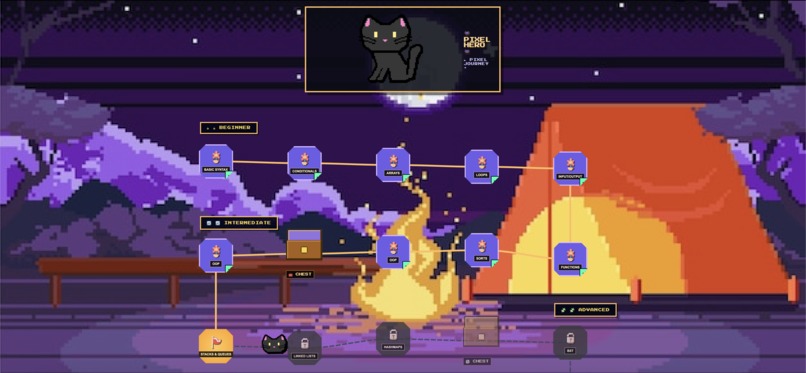
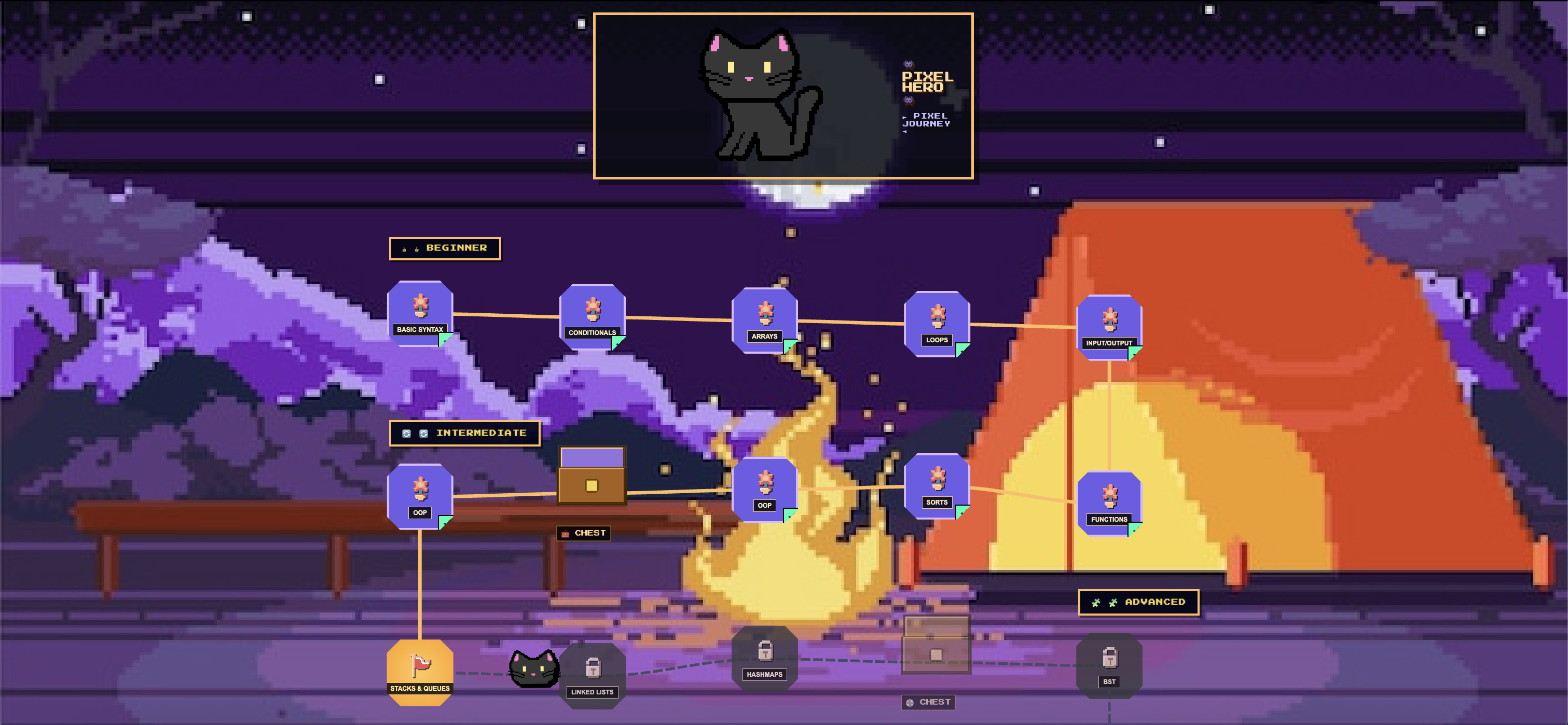
Intermediate Java screen; Spot the teen cat to symbolize the intermediate level! Flowers signify completed levels.
-
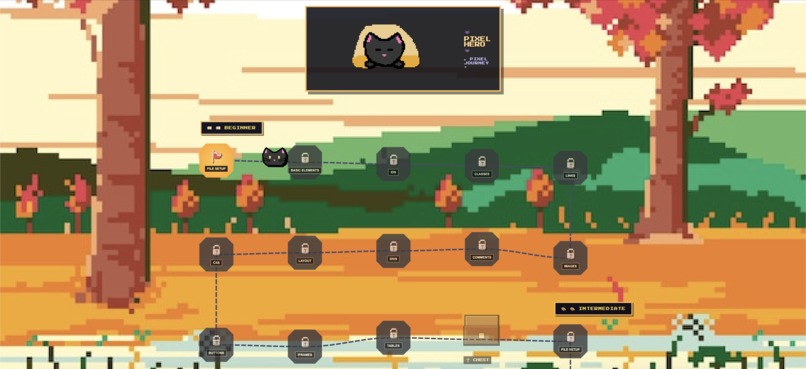
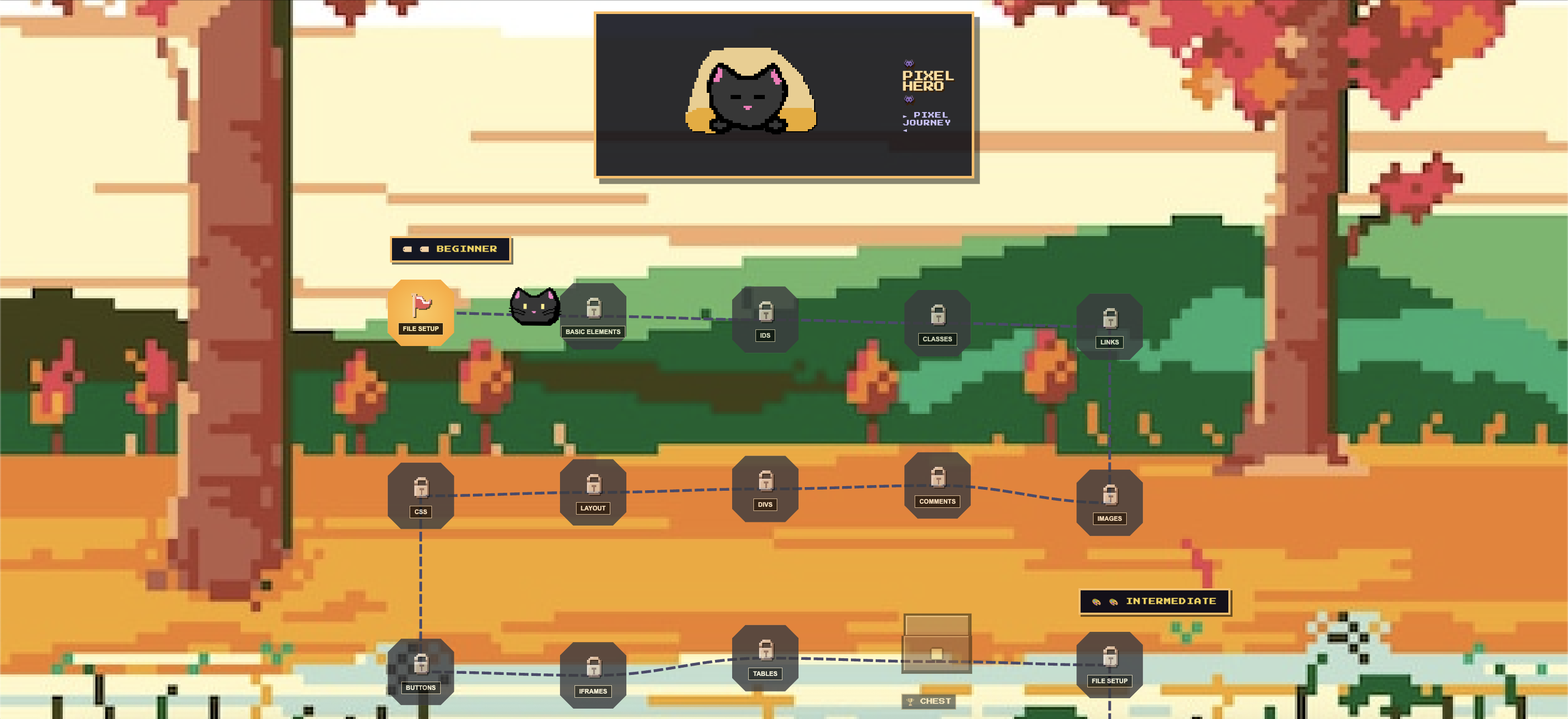
Beginner HTML screen; Sleepy baby kitten to represent the beginner levels.
Inspiration
We are a team of undergrads who teach CS & Data Structures! Our passion for CS education and experience working with students, reinforces our belief that learning computer science doesn’t have to feel intimidating or boring. Moreover, we wanted to create a solution that made CS education accessible to kids from all backgrounds and skill levels. Platforms like Duolingo have shown how powerful gamification can be for learning, while Tamagotchi-style virtual pets create emotional attachment and responsibility. We wanted to combine these ideas into something playful, nostalgic, and meaningful, especially for kids who are just starting their CS journey. By blending learning with caretaking, we aimed to make education feel less like a chore and more like a habit worth maintaining.
What it does
Pixel Paws is an interactive learning system that teaches computer science concepts through a gamified experience centered around a virtual pixel pet. Users answer daily CS practice questions, ranging from multiple choice and true/false to simple coding exercises, and their performance directly affects the well-being of their pet.
If users stay consistent and perform well, their pet becomes happier and more expressive. If they miss a day or struggle, the pet reflects that through its mood. The system also adapts to the user’s skill level, presenting questions based on past performance, similar to spaced repetition systems.
The experience bridges software and hardware: progress in the app is reflected on a physical Arduino-powered display, where the pet “lives.”
How we built it
We built Pixel Paws as a hybrid system combining software and hardware components.
On the software side, we developed a trivia-based learning platform that tracks user progress, daily participation, and performance across various CS topics. The system dynamically adjusts question difficulty and selection using performance-based logic, inspired by spaced repetition techniques like Anki.
On the hardware side, we used an Arduino connected to an LED display to render the pixel pet. We designed custom pixel art animations to represent different emotional states (happy, sad, neutral), which are triggered based on user activity and performance data.
Challenges we ran into
One of the biggest challenges was integrating the software system with the Arduino hardware. Ensuring smooth communication between the app and the physical display required careful planning and debugging.
We also faced design challenges in balancing education with engagement. Creating questions that are both beginner-friendly and meaningful, while also scaling in difficulty, was nontrivial.
Another challenge was designing expressive pixel art with limited resolution. Conveying emotion through a small LED display pushed us to be creative with simple visuals.
Finally, implementing an adaptive question system required us to think carefully about how to track performance and adjust difficulty in a way that feels fair and motivating.
Accomplishments that we're proud of
We’re especially proud of successfully combining a learning platform with a physical interactive device. The ability to see your progress reflected in a tangible, living “pet” makes the experience unique and memorable.
We also built a flexible question system that supports multiple formats and adapts to user performance, creating a personalized learning experience.
Additionally, we created a cohesive concept that blends nostalgia (retro pixel pets) with modern educational techniques, making CS learning more approachable and fun for younger audiences.
What we learned
Through this project, we learned how to bridge software and hardware in a meaningful way, especially when syncing user data with physical outputs.
We also gained experience in designing gamified learning systems—understanding how motivation, feedback, and progression affect user engagement.
On the technical side, we improved our skills in working with Arduino, managing state across systems, and designing adaptive algorithms for question selection.
Equally important, we learned how to scope a project that spans multiple domains while still delivering a cohesive user experience.
What's next for Pixel Paws
Next, we want to focus on greater accessibility by adding translation features which allow you to view the game in different languages! We want to expand the range and depth of CS topics as well, introducing structured learning paths that guide users from beginner to more advanced concepts.
We plan to improve the adaptive learning system by incorporating more sophisticated performance tracking and personalization.
And finally, on the hardware side, we’re interested in enhancing the device with a more polish and improving the display quality and animations.


Log in or sign up for Devpost to join the conversation.