Inspiration
Pixel Parcels: Cyber City was born from a desire to redefine the classic, passive simulation genre for the mobile standalone space. Inspired by retro-futuristic arcade landscapes and synthwave visual culture, I wanted to create a spatial real-estate game where players aren't just placing structures; they are actively manipulating physical data lines and utility streams to bring a dormant digital grid to life.
What it does
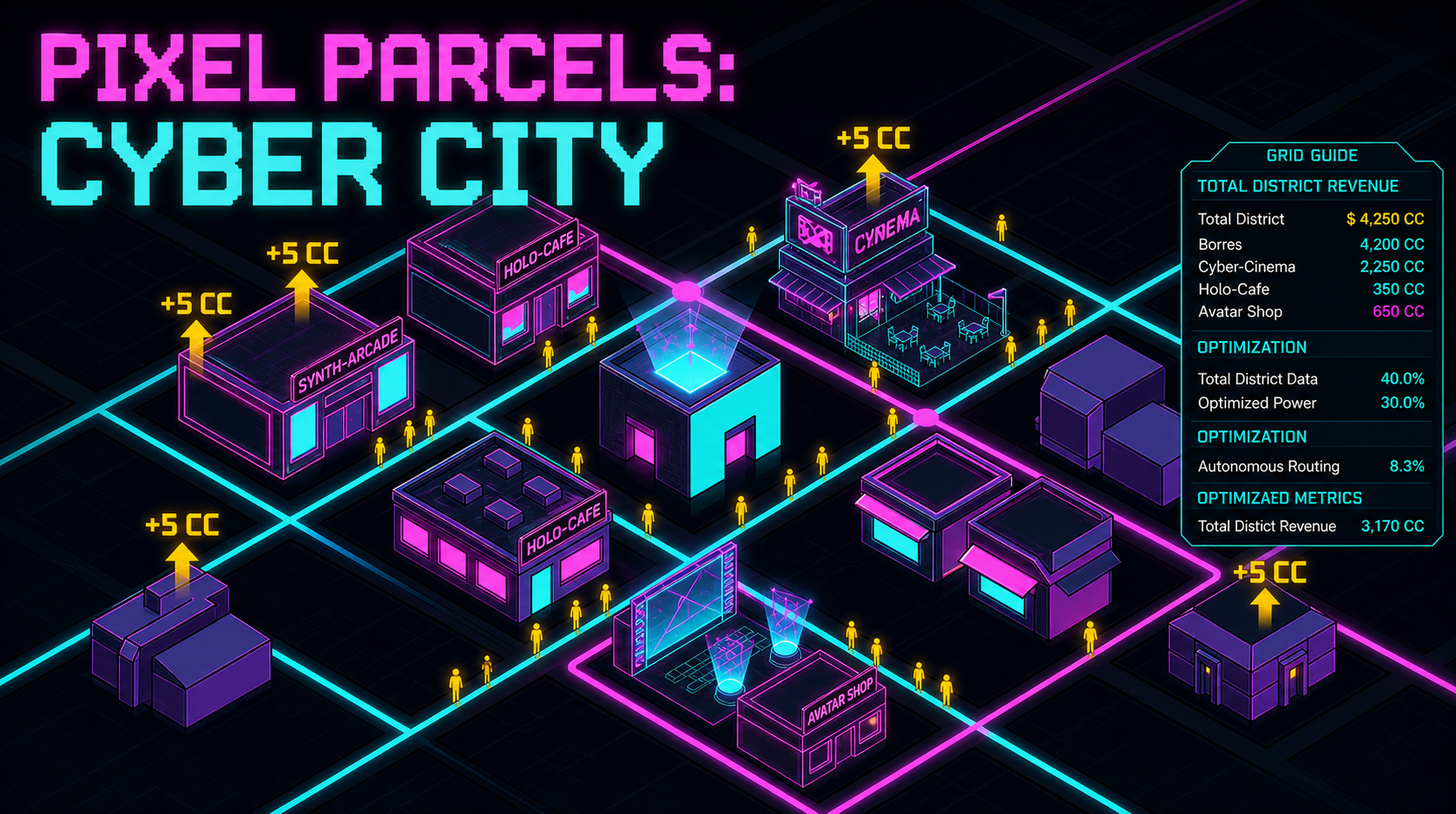
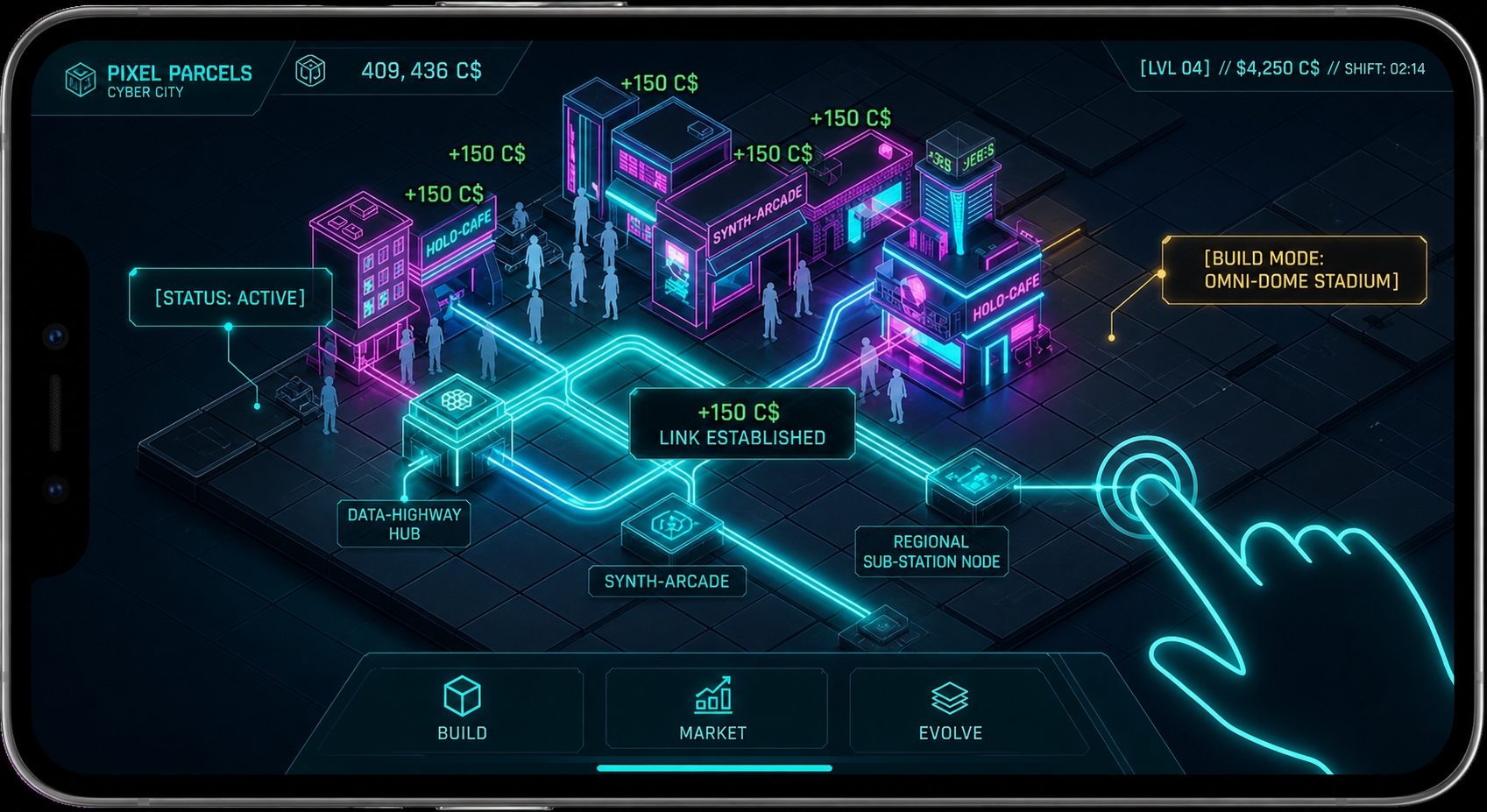
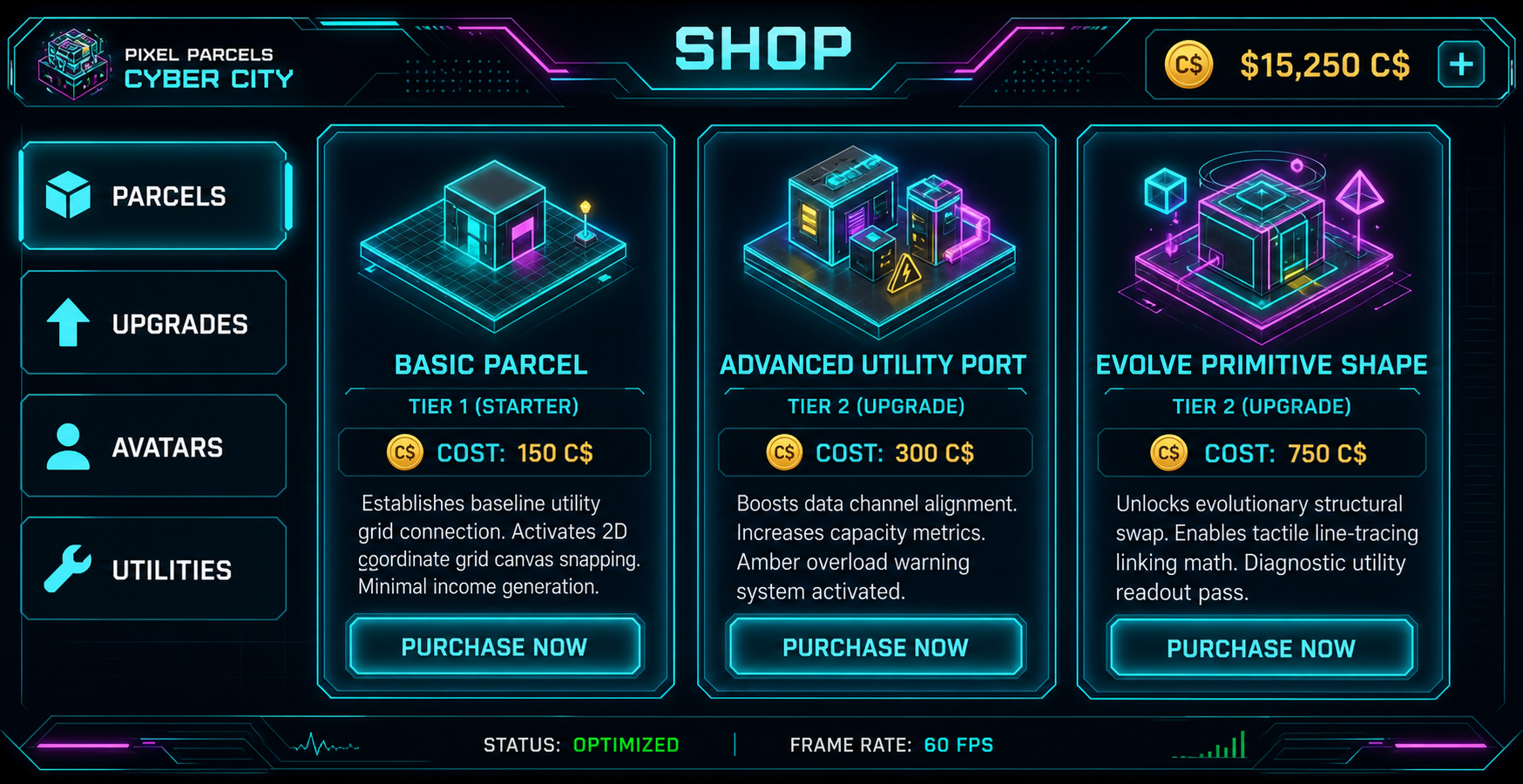
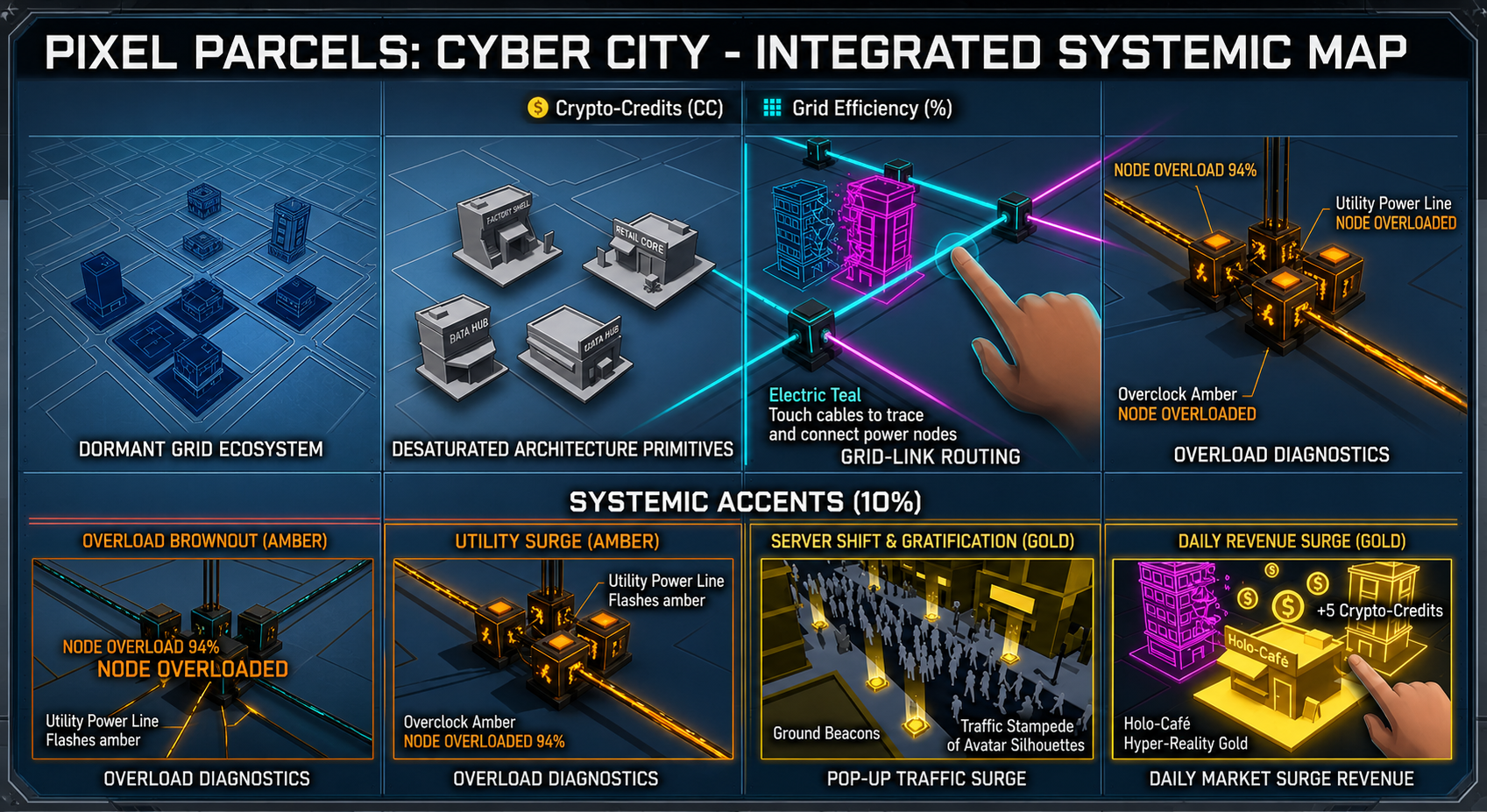
Set in a wireframe ecosystem, players step into the role of a Digital Grid Architect. Structures begin completely dark and unmonetized upon placement. By touch-swiping across the screen, players physically route Electric Teal data streams and Neon Magenta power grids from regional nodes to activate their parcels. The core loop balances tactical layout optimization against system overloads, dynamic line degradation, and a 24-hour shifting global market economy.
How we built it
The entire ecosystem was engineered from a mobile-first perspective. I developed a rigorous 60-30-10 color matrix to treat visual feedback as a direct mechanic, mapping out a strict 4-phase technical roadmap that eliminates infrastructure bloat while maximizing mobile performance. The entire pre-production loop was meticulously structured across four synchronized architectural pillars: a comprehensive Game Design Document, a high-density Player Journey Map, an actionable Production Plan, and an integrated Visual Concept Package.
Challenges we ran into
Designing a highly technical macroeconomic simulation within the absolute hardware constraints of standalone mobile viewports was an extraordinary challenge. I overcame potential performance bottlenecks by ditching high-density meshes for flat-shaded low-poly primitives, and solved cognitive friction by splitting the game into a dual-demographic system; acting as a cozy visual toy box for casual users, and a deep dropped-packet optimization puzzle for advanced players.
Accomplishments that we're proud of
I’m incredibly proud of achieving deep, multi-session structural complexity without relying on dynamic shadows or heavy texture pipelines. Every visual asset in the game serves a diagnostic utility, making the network state readable at a single glance.
What we learned
I’ve learned that severe technical boundaries breed the strongest design innovations. Restricting our visual real estate forced us to make every pixel, line link, and color transformation carry mechanical weight.
What's next for Pixel Parcels: Cyber City
The next phase introduces asynchronous player-to-player asset auctions and multi-tier credit trading markets, expanding our isolated grid network into a massive, interconnected platform ecosystem.
Built With
- figma
- google-docs
- markdown
- meta
- mobile-game-development


Log in or sign up for Devpost to join the conversation.