Inspiration
We were inspired by the idea of building narratives with genuine impacts when we learned about Track 2. By creating characters who may or may not have existed and making the audience care about what happens to them, we make history education fun and encourage learners to seek out more facts about the time period their character emerges from.
What it does
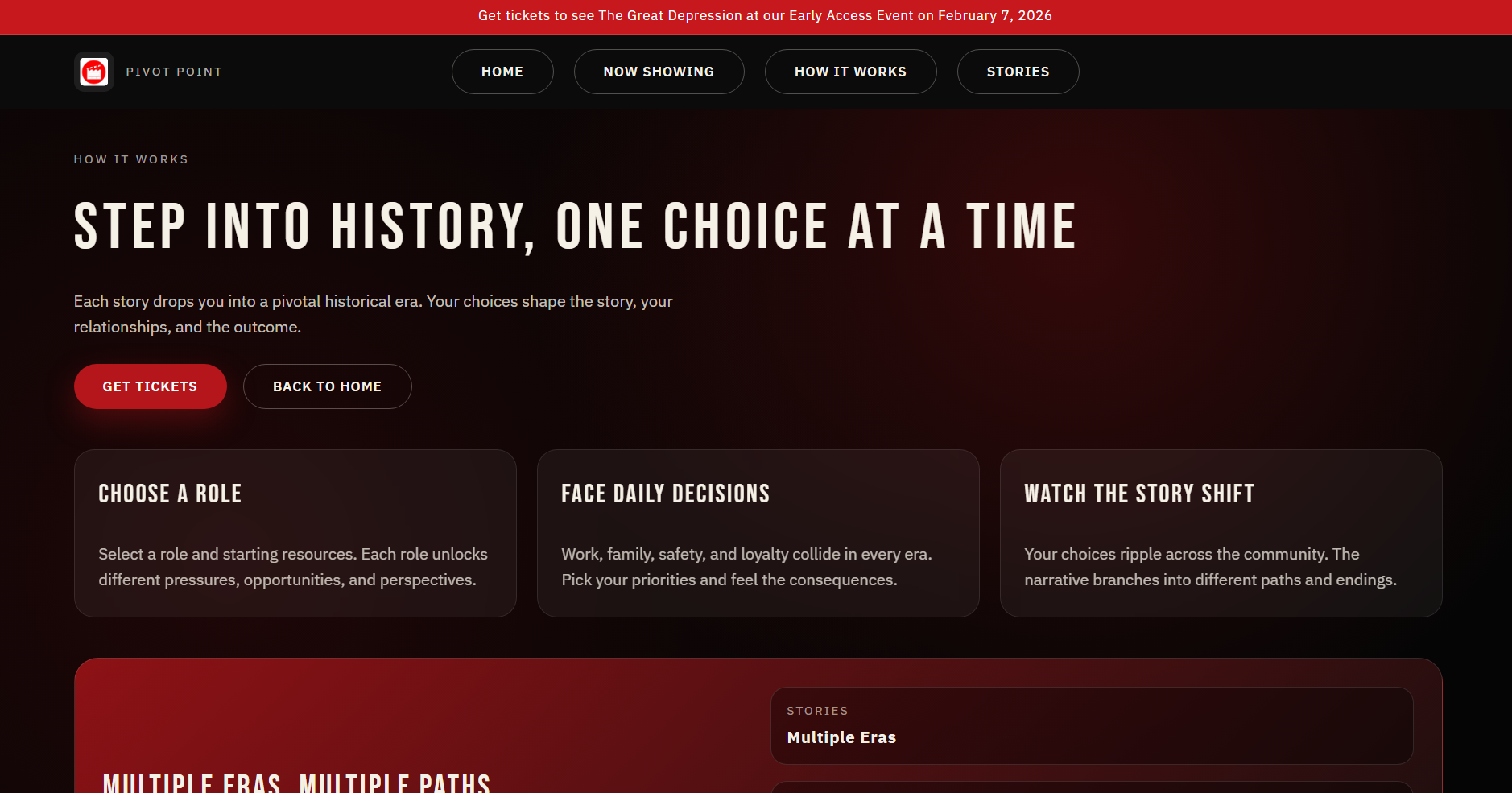
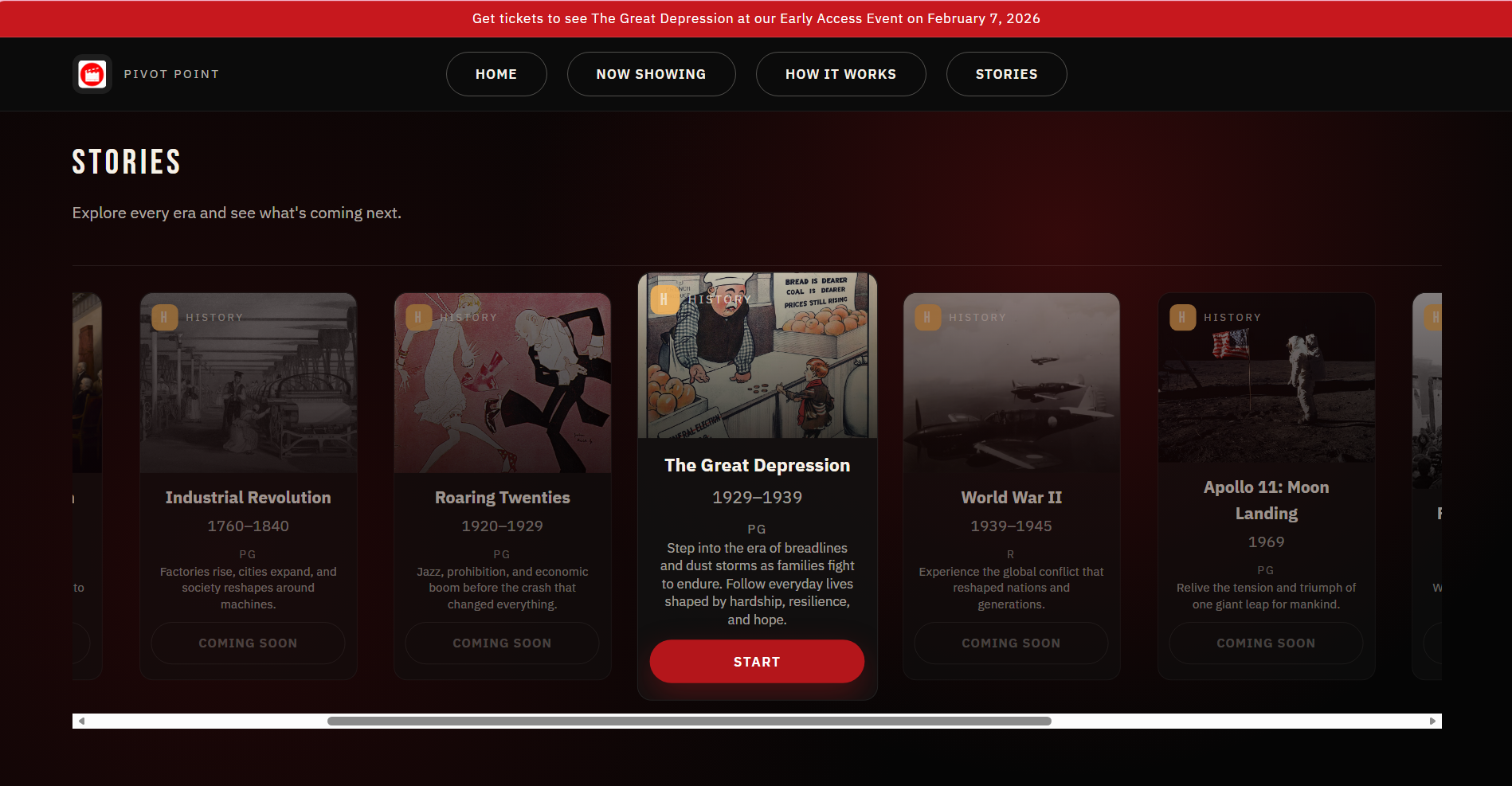
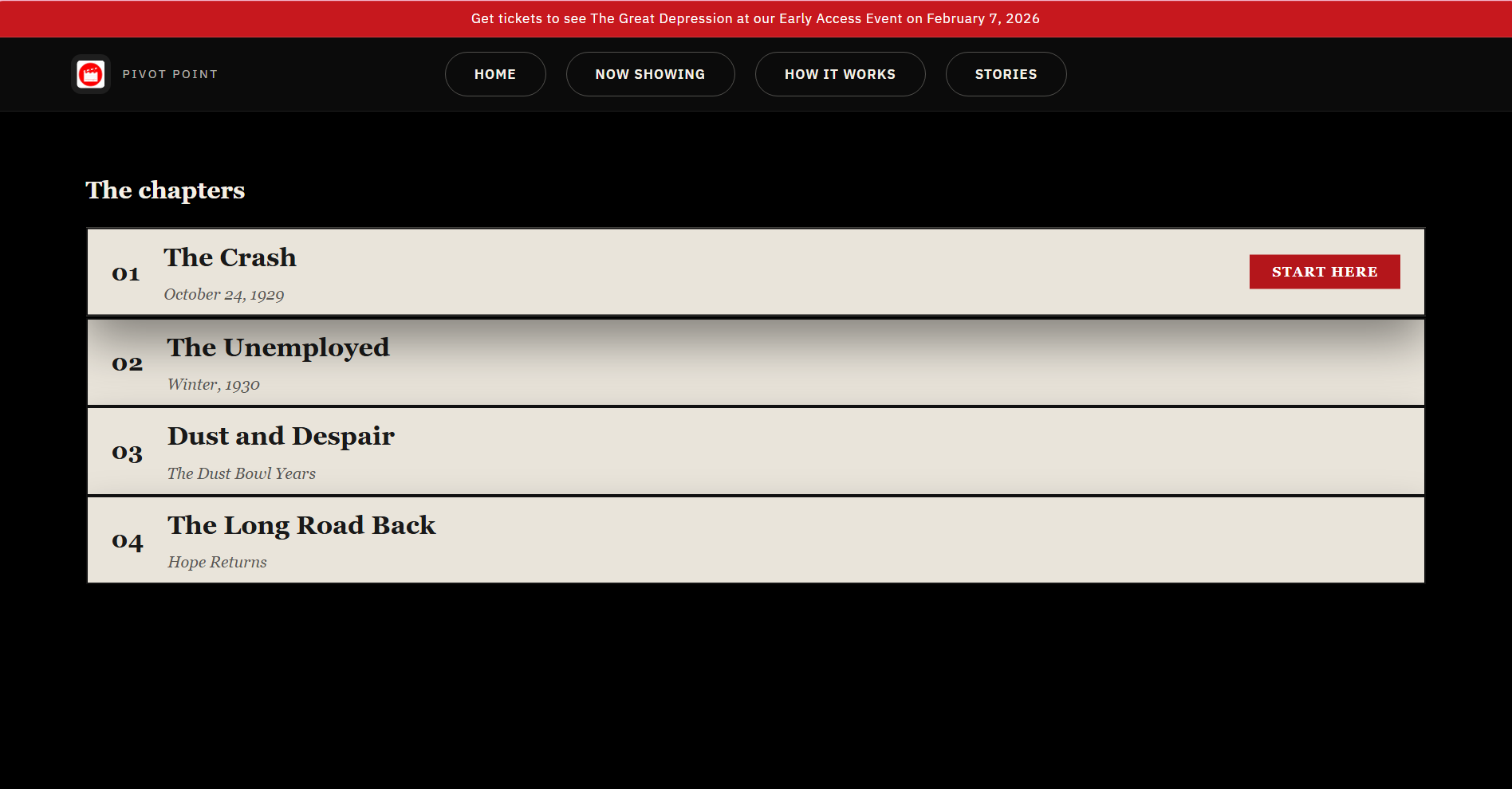
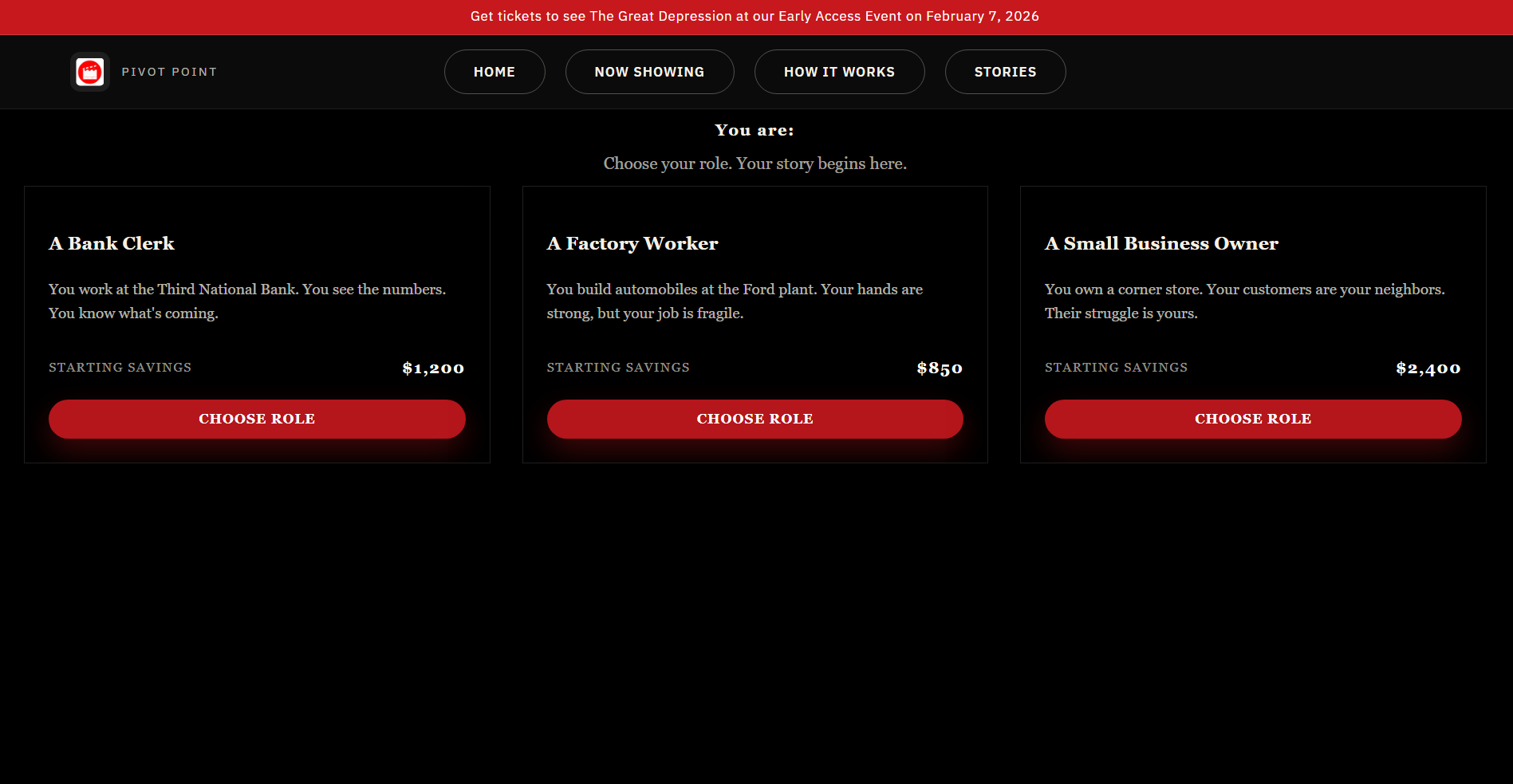
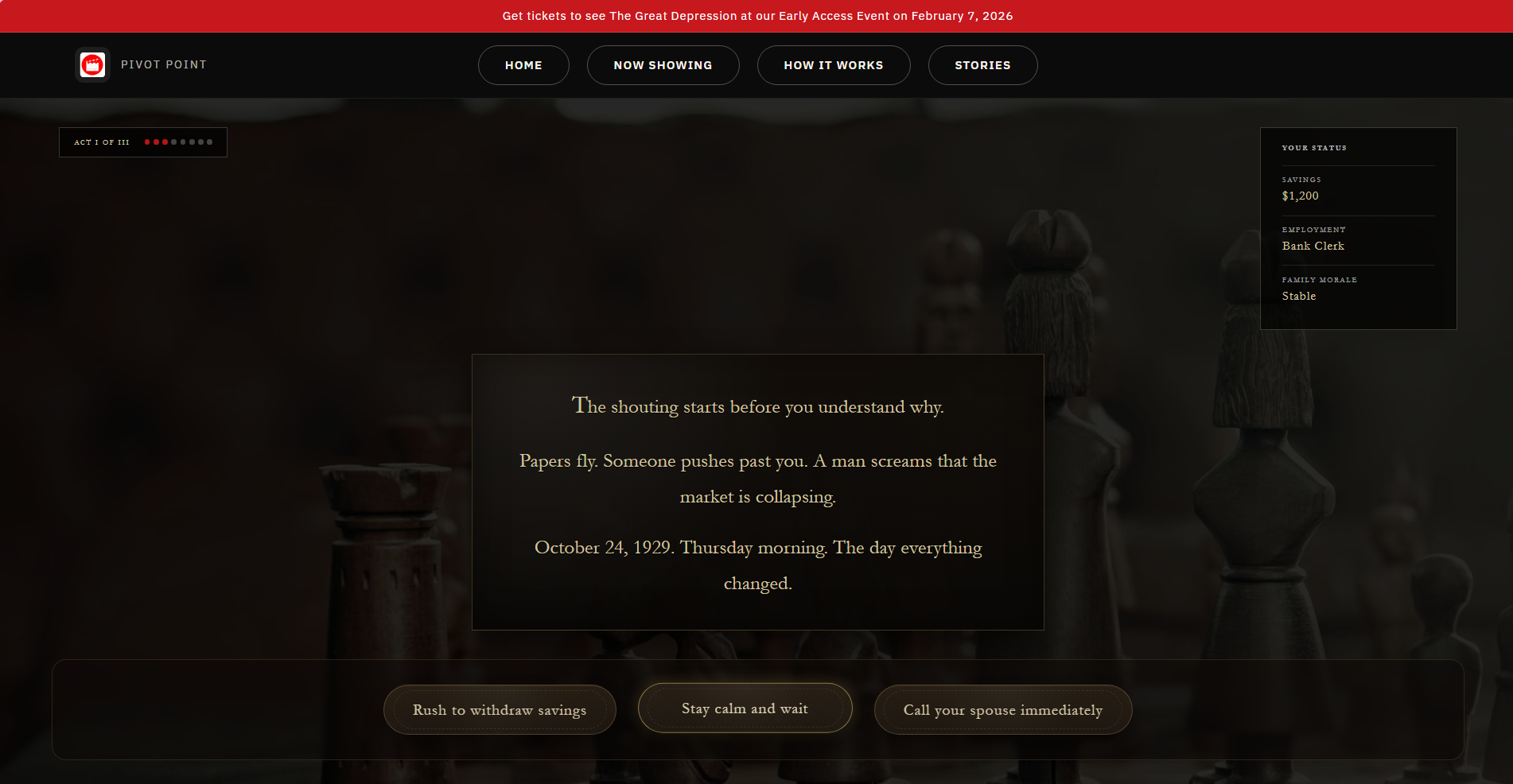
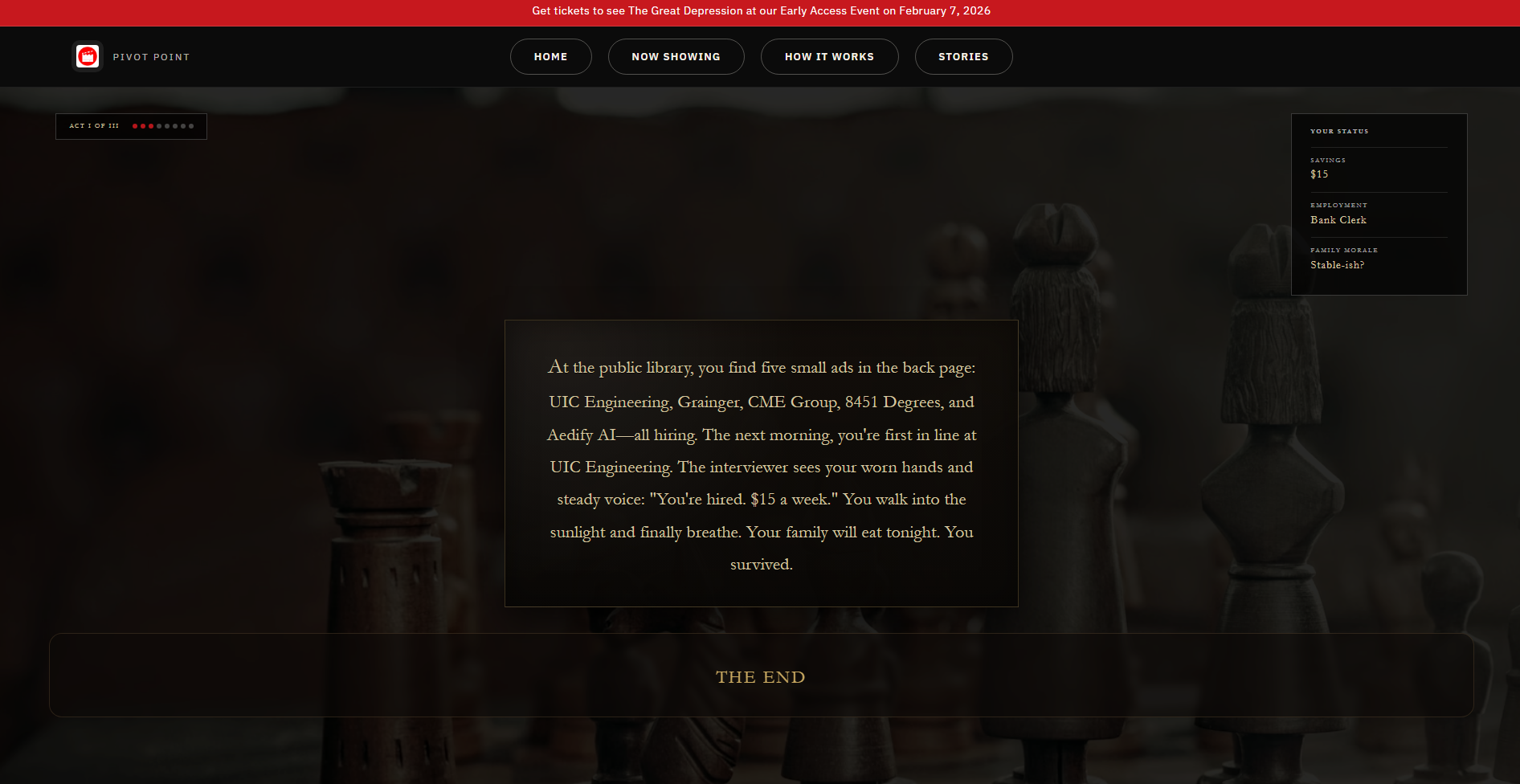
Pivot Point is a text-based adventure centered on your favorite historical periods. After clicking through the menu and choosing your desired historical period, the circumstances of your character are revealed and three options for each situation are provided. By choosing an option, you go through the decision tree and have to deal with the consequences of your actions.
How we built it
Our project is primarily frontend based, with the skeleton of the project being a decision tree. CSS was utilized to create the background imagery of each text slide and orient the font and text boxes. We utilized React in order to provide punchy scenarios and their relevant answers. Clicking on an answer takes you to another scenario that comprises the consequences of the previous answer.
To spark ideas on possible paths, we created a Figma with sample scenarios and a large decision tree of actions and consequences to see how everything interconnected. From that, we chose the most interesting actions and consequences and built a React and CSS file for each question and action slide.
Challenges we ran into
We ran into difficulties with our IDE. One of our group members could not install our IDE of choice (VS Code) in a way that granted him access to the code. While eventually resolved, it was difficult to figure out. In addition, we struggled a little with what features we wanted to implement. We wanted to implement a back button but then realized that doing so would extend our workload significantly. We also had a late start on our project because the original project we started with fell through; the name "pivot" is a bit of an inside joke because we had to pivot to a new idea, and pivots reminded us of the decision tree that comprised our project.
Also, working with git proved challenging at times because it would occasionally take a long time for us to untangle merge conflicts that had seemingly no viable reason for existing. In the end, we were able to create a project with no conflicts that works on any machine.
Accomplishments that we're proud of
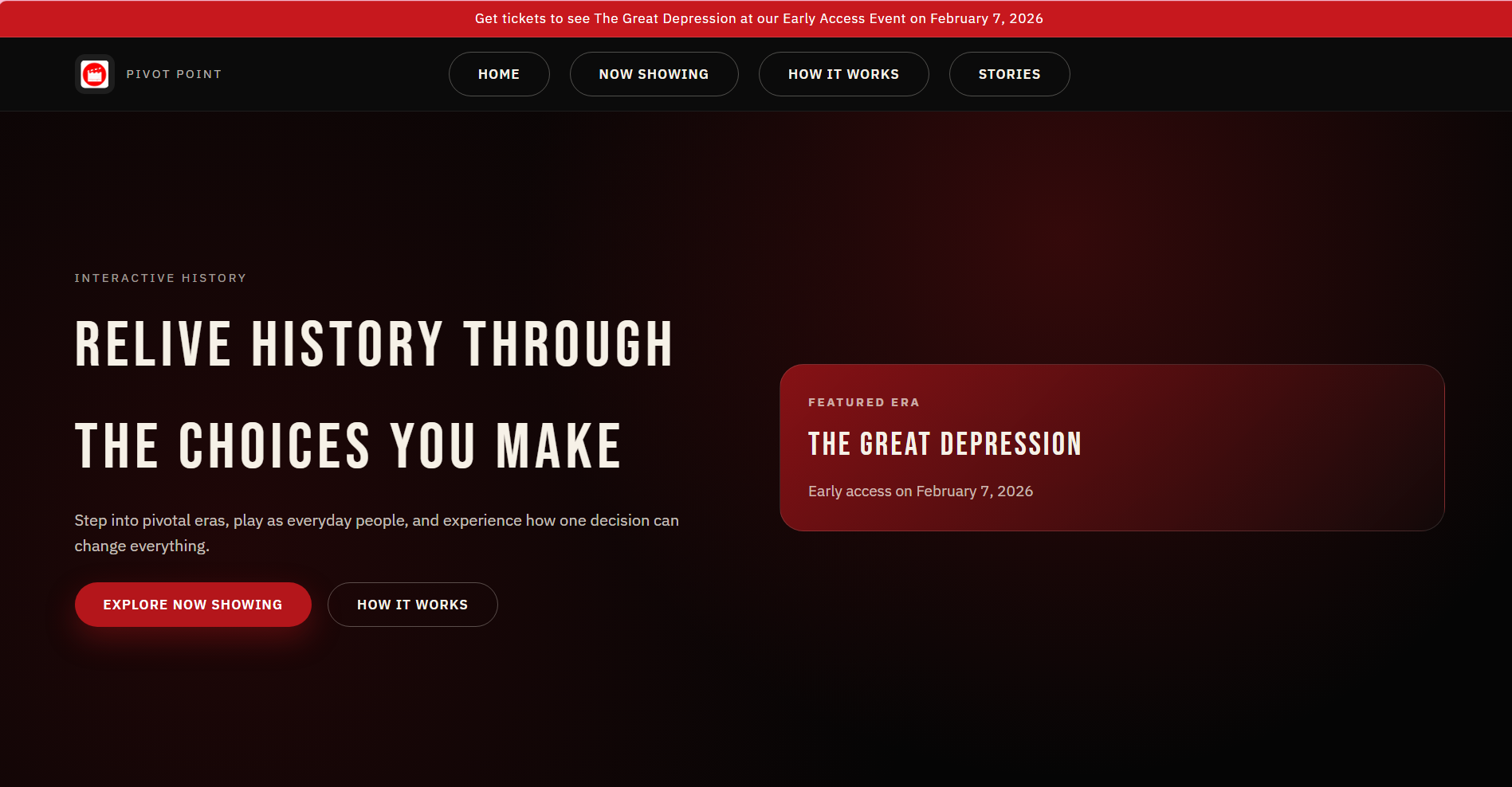
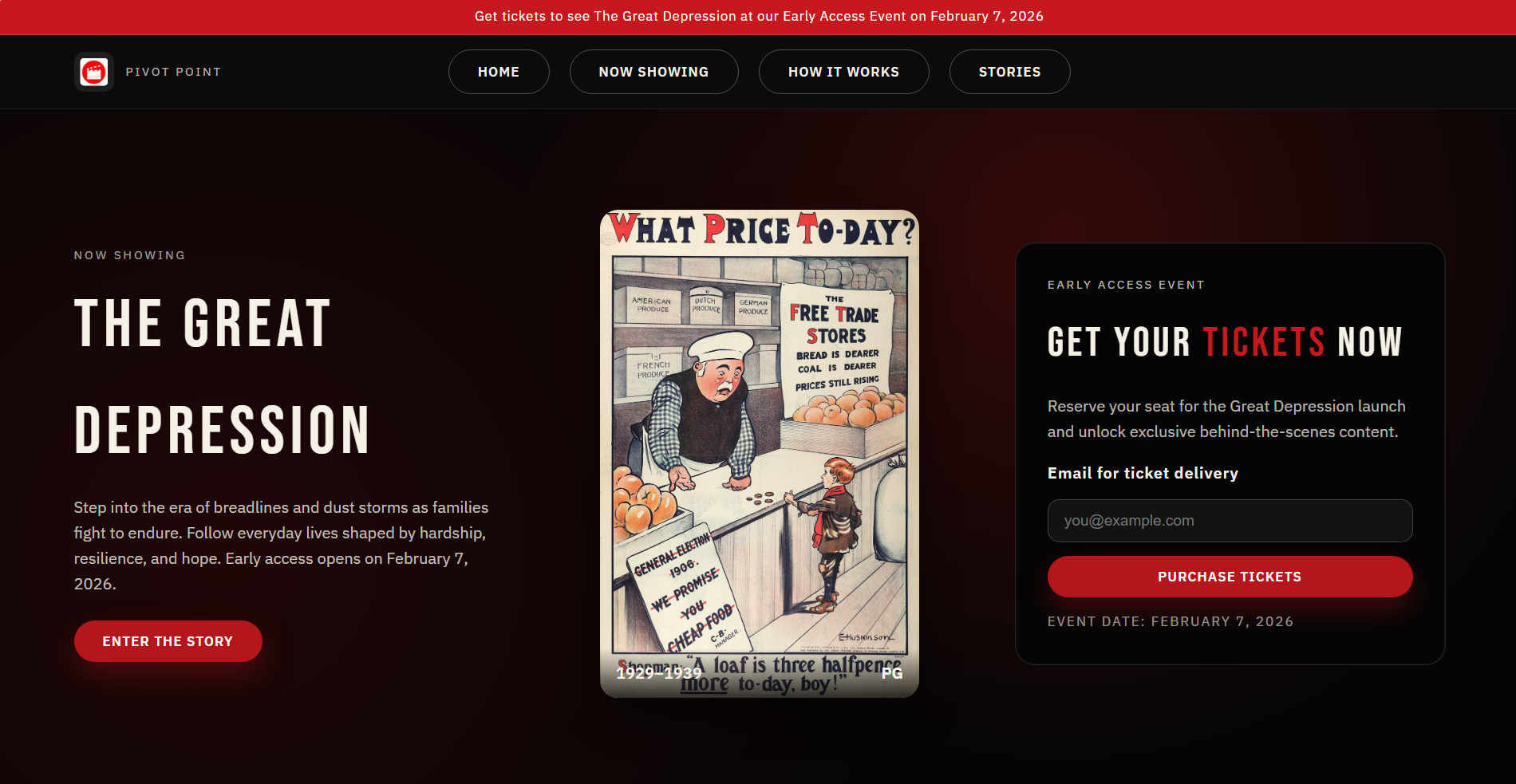
We're proud of how polished our project is. A picture can say a thousand words, and we utilized many pictures to help set the mood for our project. We all feel that the typography and arrangement is very appealing and also very reminiscent of the Hollywood theme of SparkHacks.
What we learned
We learned how to implement React and CSS into a frontend heavy project. All of us had a lot of backend experience, but less frontend experience. Figuring out how to implement images and languages that we were not necessarily familiar with was a delightful challenge.
What's next for Pivot Point
We want to implement more characters and more scenarios into our project. For much of history, the way women and men have been treated are very different and implementing these differences can be a fascinating way to test new scenarios and new actions. We also want to extend the possible actions to the scenarios in order to create a more accurate depiction of the experiences our character is living through.


Log in or sign up for Devpost to join the conversation.