-
Title
-
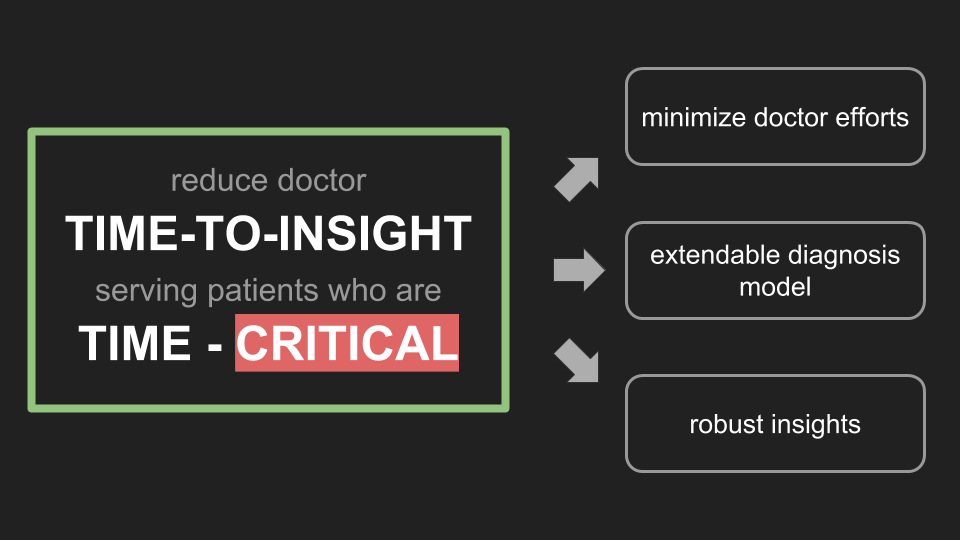
Design criteria
-
Our main output
-
Pipeline to output
-
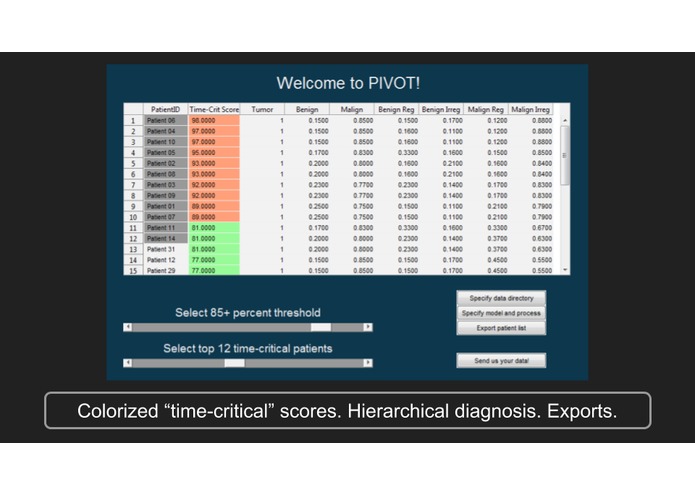
UI from doctor POV
-
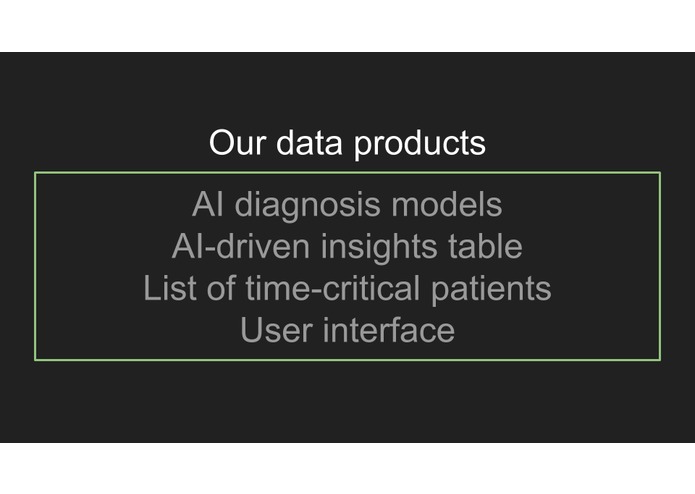
Products we actually can produce
-
What we'd like to talk about


Inspiration
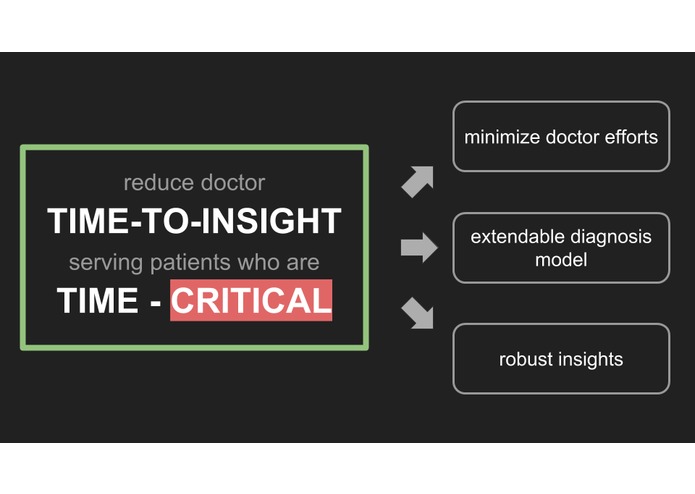
There are patients in hospital settings whose quality of life is unrecoverable without timely care (we call these patients time-critical).
What it does
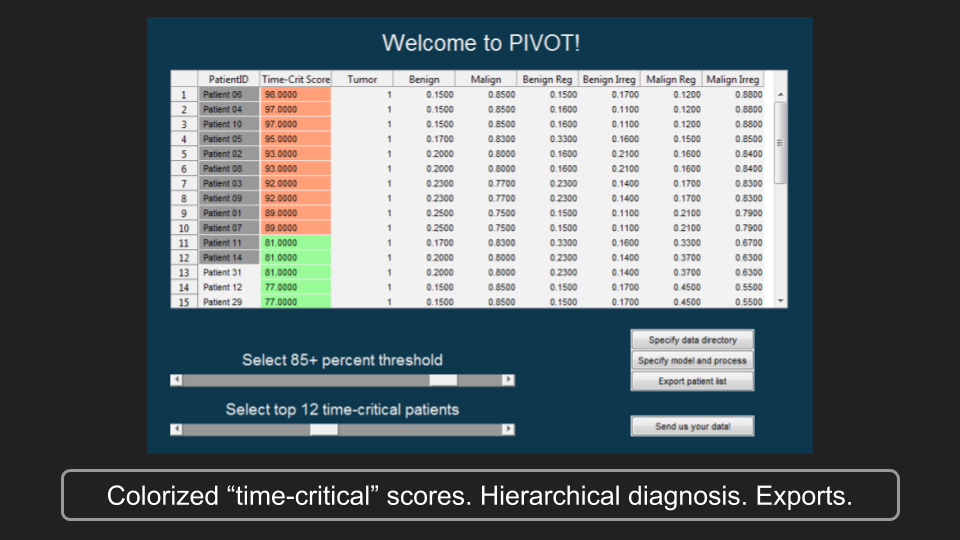
Leverages our trained artificial intelligence models to suggest nuanced diagnoses to doctors and to identify time-critical patients.
How we built it
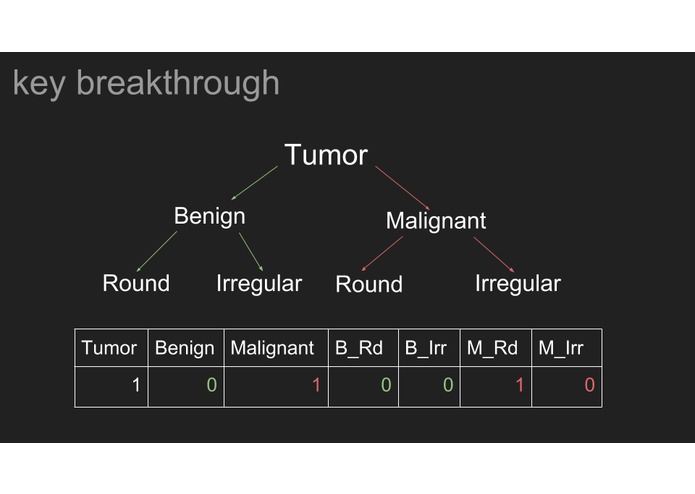
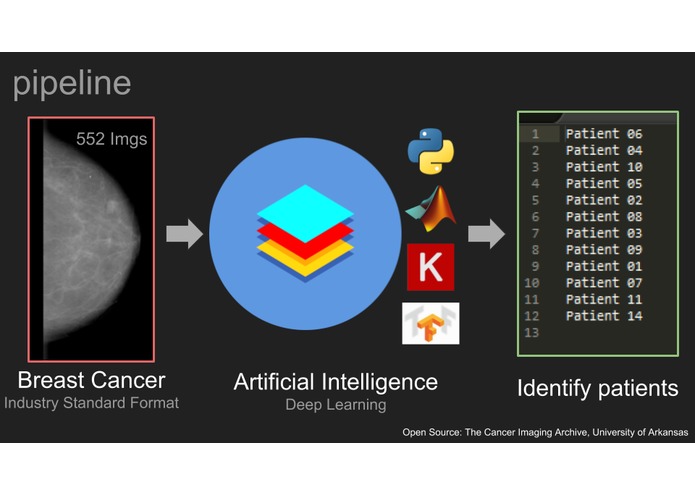
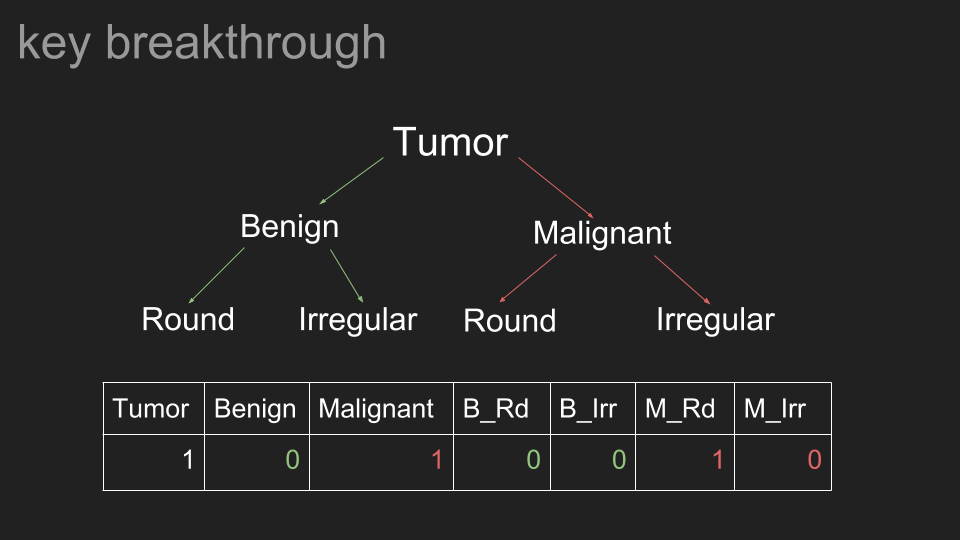
We found a dataset of breast cancer images in the industry-standard format. We preprocessed the images to make the artificial intelligence learning process tractable (remove noise). Then we trained several deepnet models to learn our custom diagnosis labels (presence of tumor, threat level of tumor, regularity of tumor shape) built from the dataset. These models are packaged into a no-nonsense front end that doctors can use to direct a disease-specific AI model to diagnose a set of new images and patients. We present the data in a format that highlights which patients are time critical. The UI also presents deeper insights that may guide tailored treatment.
Challenges we ran into
Restricted data volume. Lack of compute power for building the most-sophisticated AI. Poorly-constructed and non-informative datasets.
Accomplishments that we're proud of
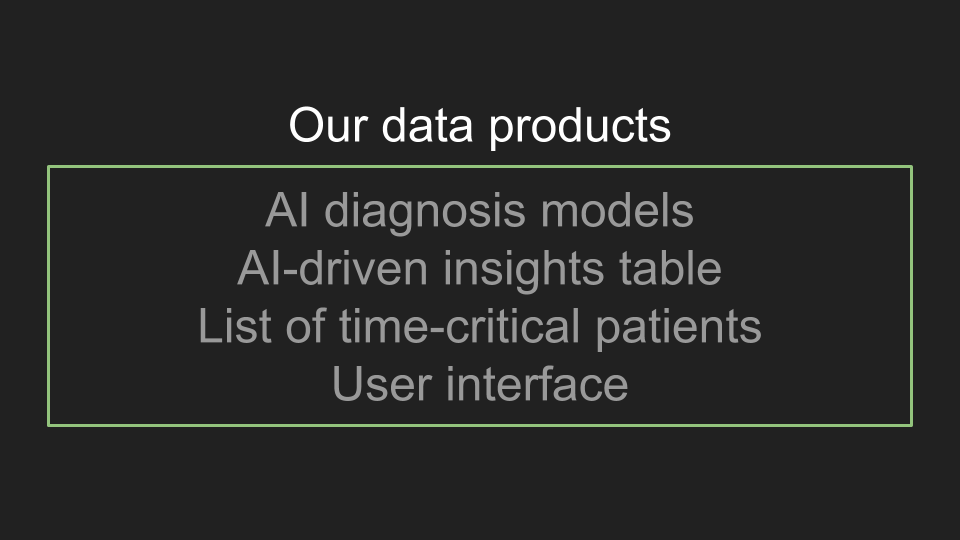
We fully completed a deep learning rapid prototype (data, preprocessing, training, analysis, decision-making, deployment). Our UI does come with models that are ready for inference. The UI also produces lists of time-critical patients.
In summary, we have a thing that actually outputs useful files.
What we learned
You never ever know if you have hit your ceiling on how well your AI can make decisions/predictions. So you just keep trying to get your AI to learn more.
What's next for PIVOT
Expand the collection of diseases that we analyze and build smarter AIs/networks. PIVOT may evolve to be just one tool in a toolbox for doctors. The vision is to facilitate the medical industry leveraging deep learning capability.
PS
We omit the code we use to facilitate preprocessing, training, and cross-validation. Those are trade secrets ;)


Log in or sign up for Devpost to join the conversation.