Inspiration
The interval between two buses is usually very long in the afternoon and in the weekend, and it is definitely necessary to let people know when their bus will arrive. The current solution is Google Map, but it is highly inaccurate and unreliable when estimating scheduled arrival time. It's unsatisfying to me, and many more students, workers, and the elderly. Since a convenient and comfortable public transportation system is such a crucial part of almost everyone's life, I propose that Port Authority should spend its budget on installing a GPS tracker for every bus, which is in fact not very expensive at all. With GPS data, it will be straightforward to track the buses on Port Authority's website.
What it does
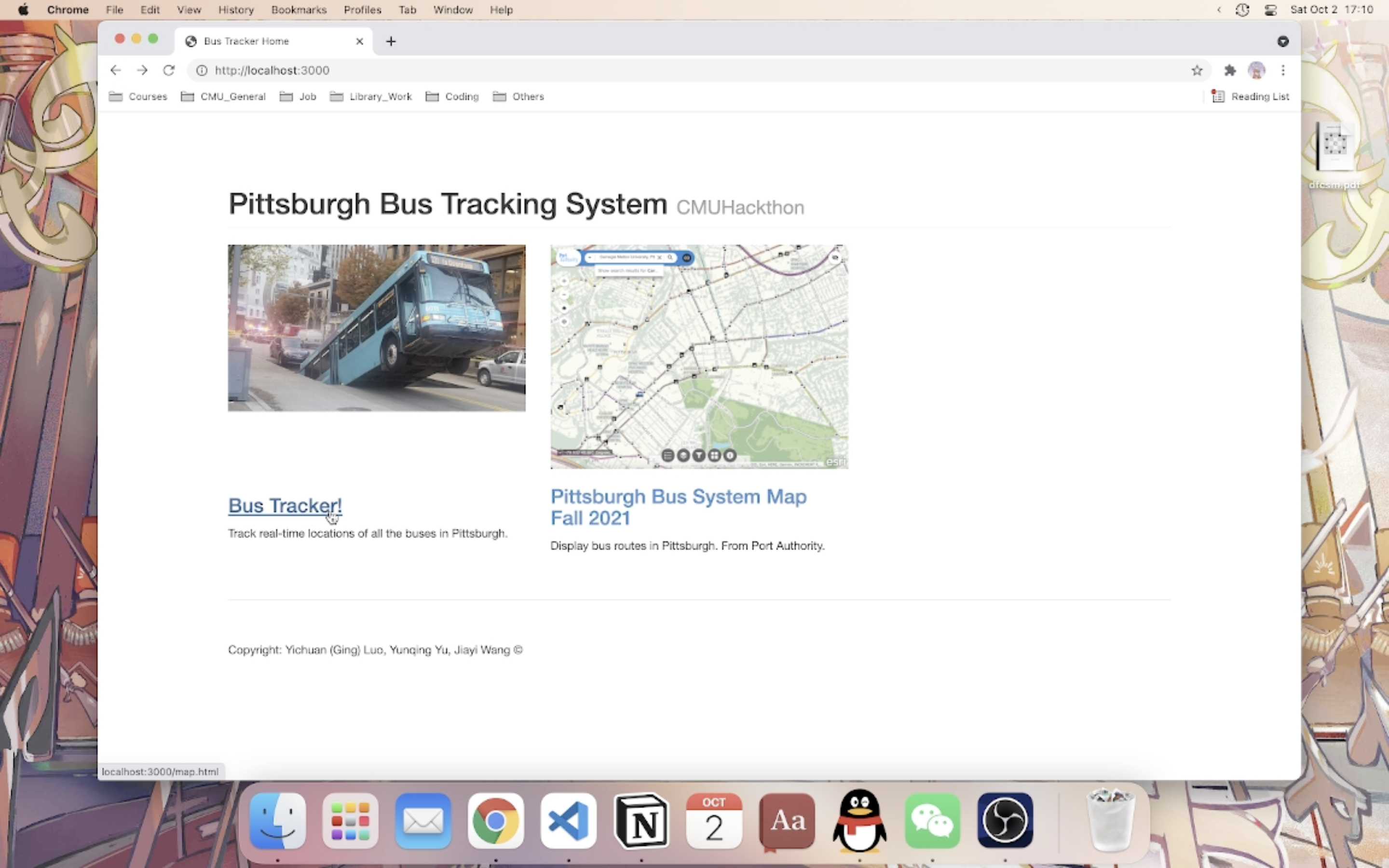
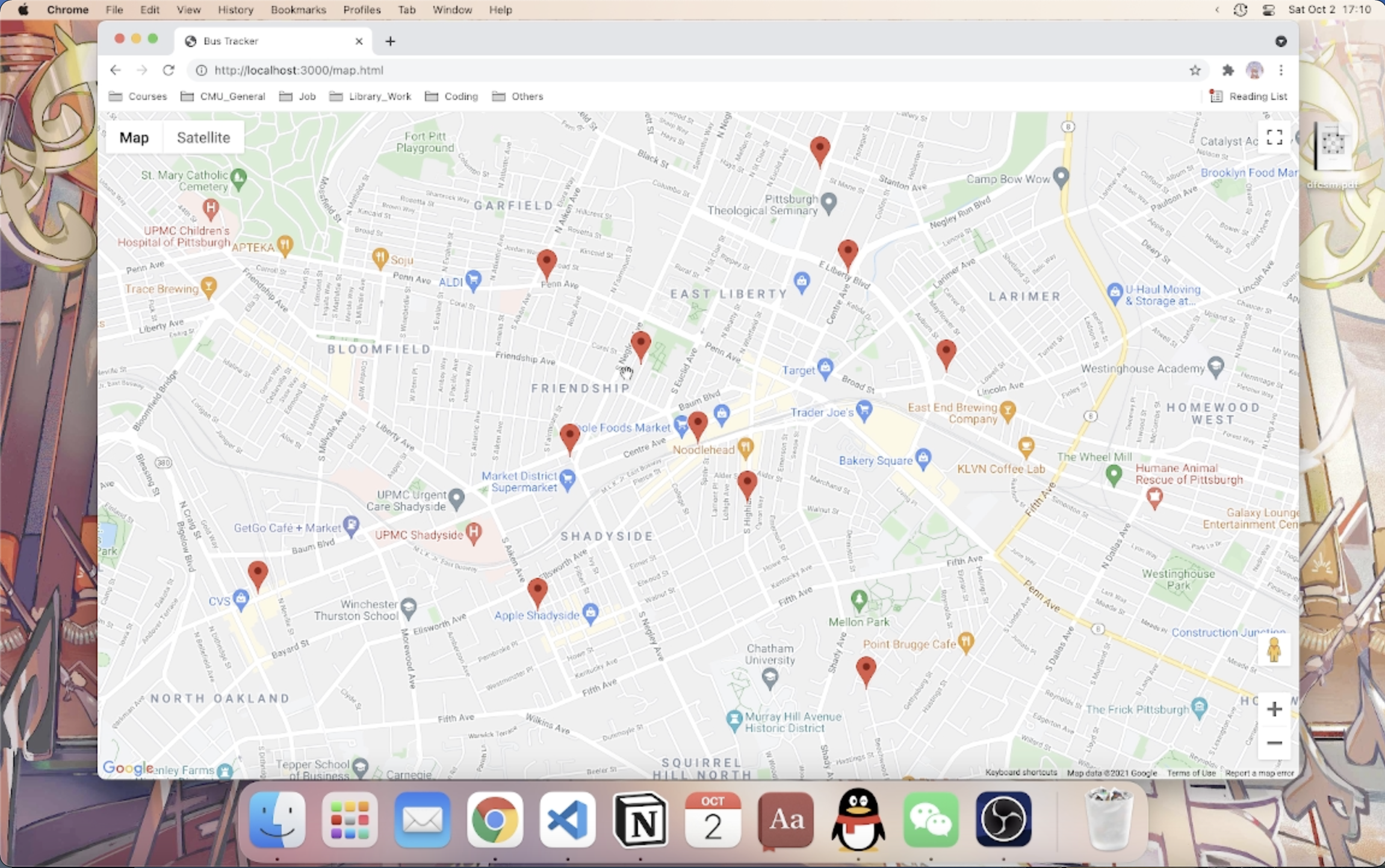
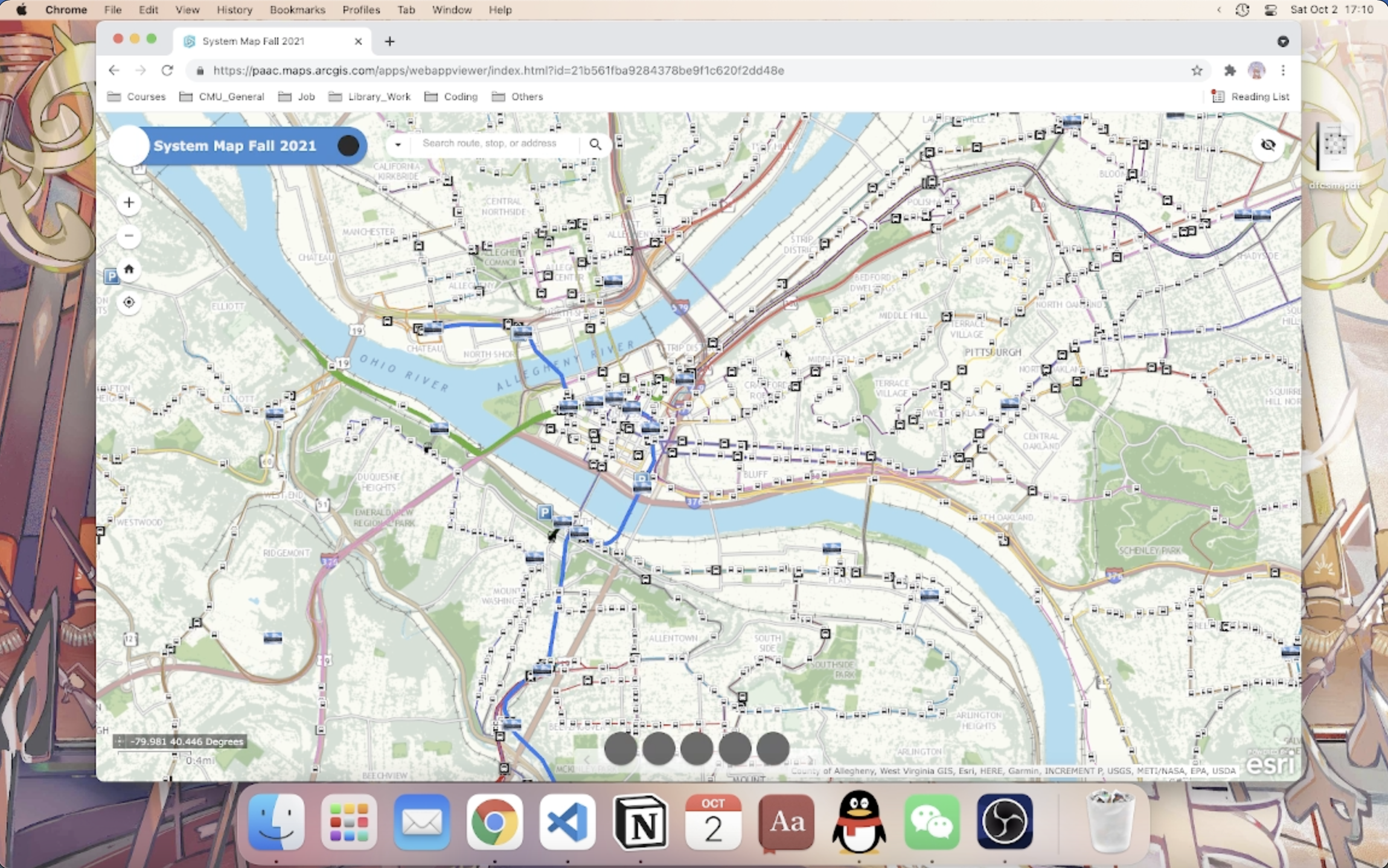
Show the real-time locations of all the buses in Pittsburgh on a web page. Also shows all the bus routes in fall 2021.
How we built it
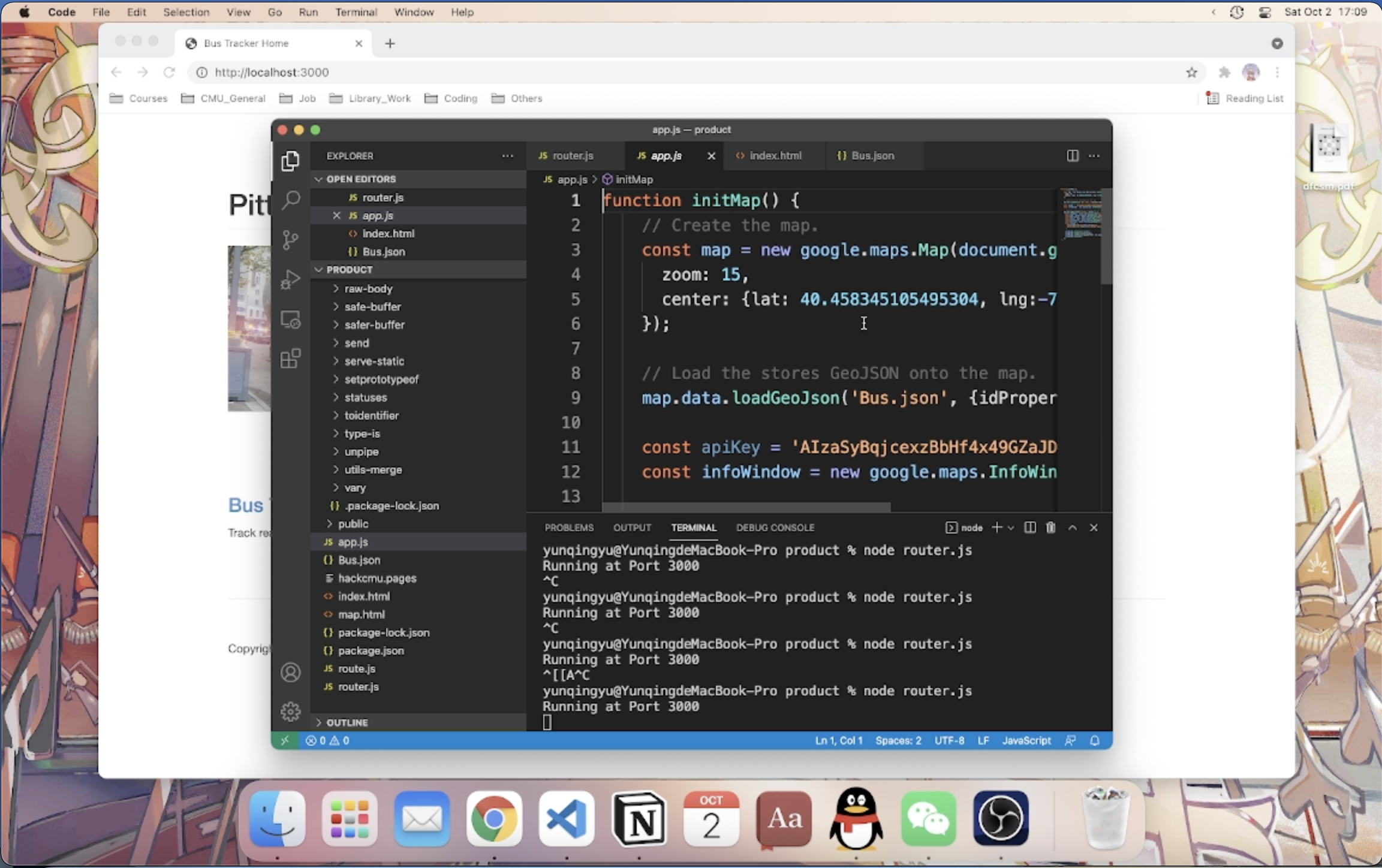
We simulate the GPS data using the GeoJSON, then display the location on a map. We use Express to set up the server, use Google Map API, and have a hotlink to Port Authority's Fall 2021 bus routes.
Challenges we ran into
It's our first time building a web server (Friday's tech talk is our first exposure.). We have a hard time figuring out what exactly we should write in .js, .json, .html, and .css files. But eventually, we made this tiny project. It's a fulfilling process.
Accomplishments that we're proud of
Build This Super Cute Website! Finish our first hackathon without quitting (we actually had a fight on that).
What we learned
Exposure to node.js, express framework, HTML language, JSON syntax. Learn how a website operates. Get some hackathon experience. Get the feel.
What's next for Pittsburgh Bus Tracker
Write a more mature structure of the website, write a proposal to Port Authority to persuade them to install GPS trackers on buses.

Log in or sign up for Devpost to join the conversation.