-
-
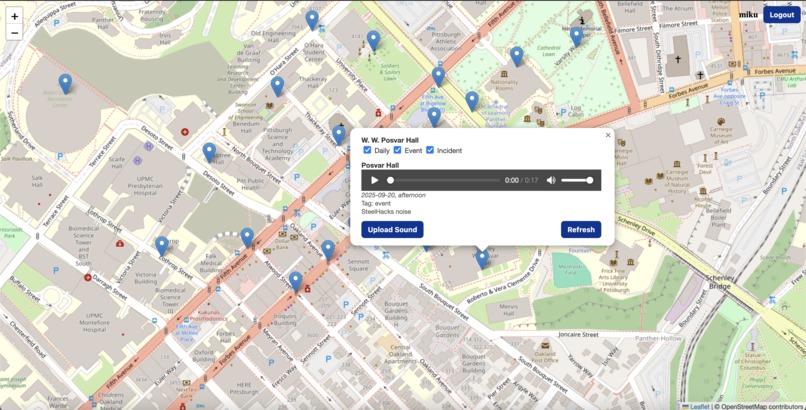
interactive map with audios
-
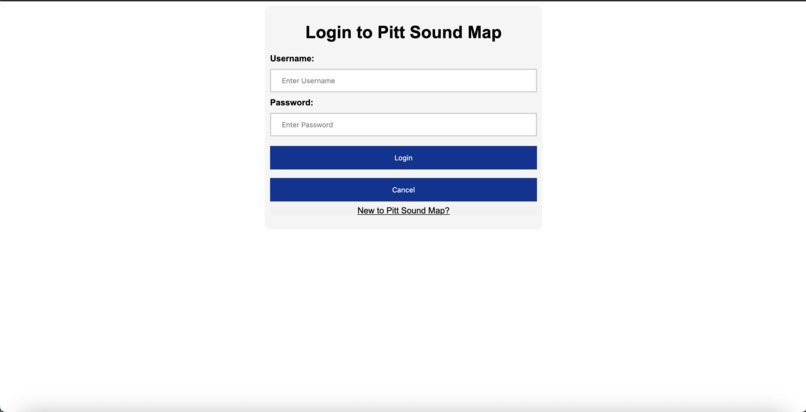
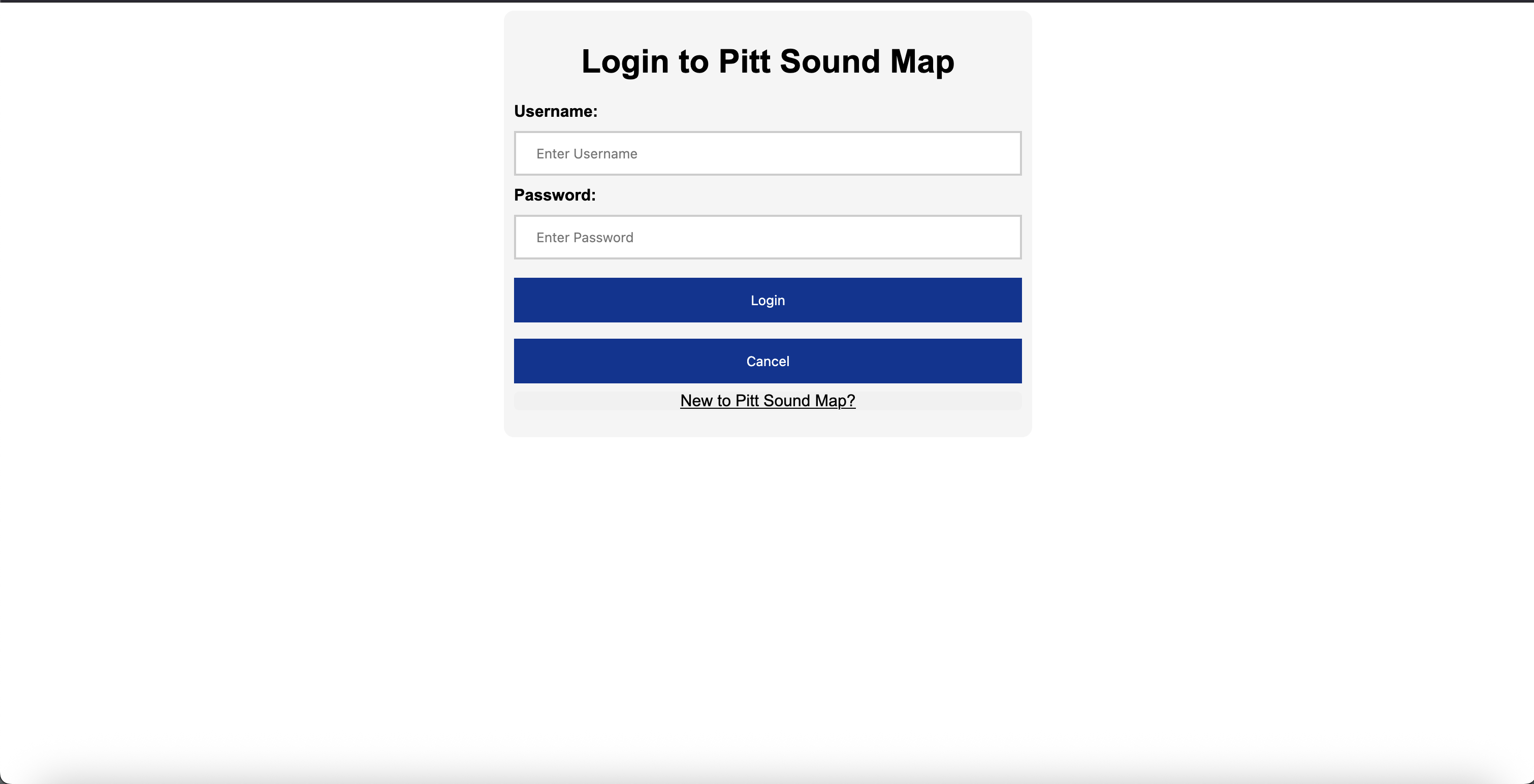
user login page
-
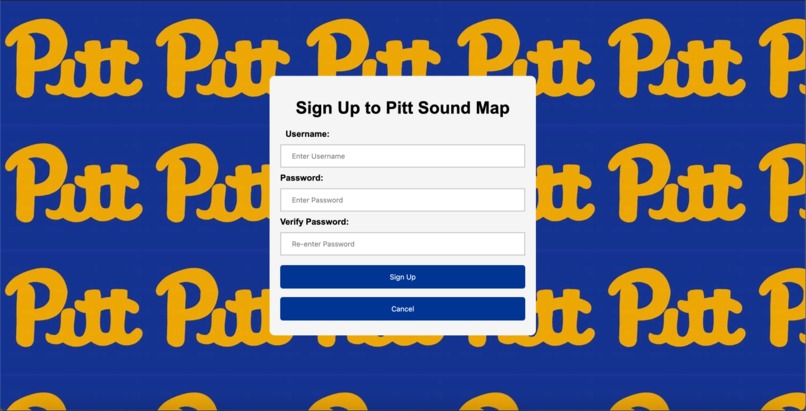
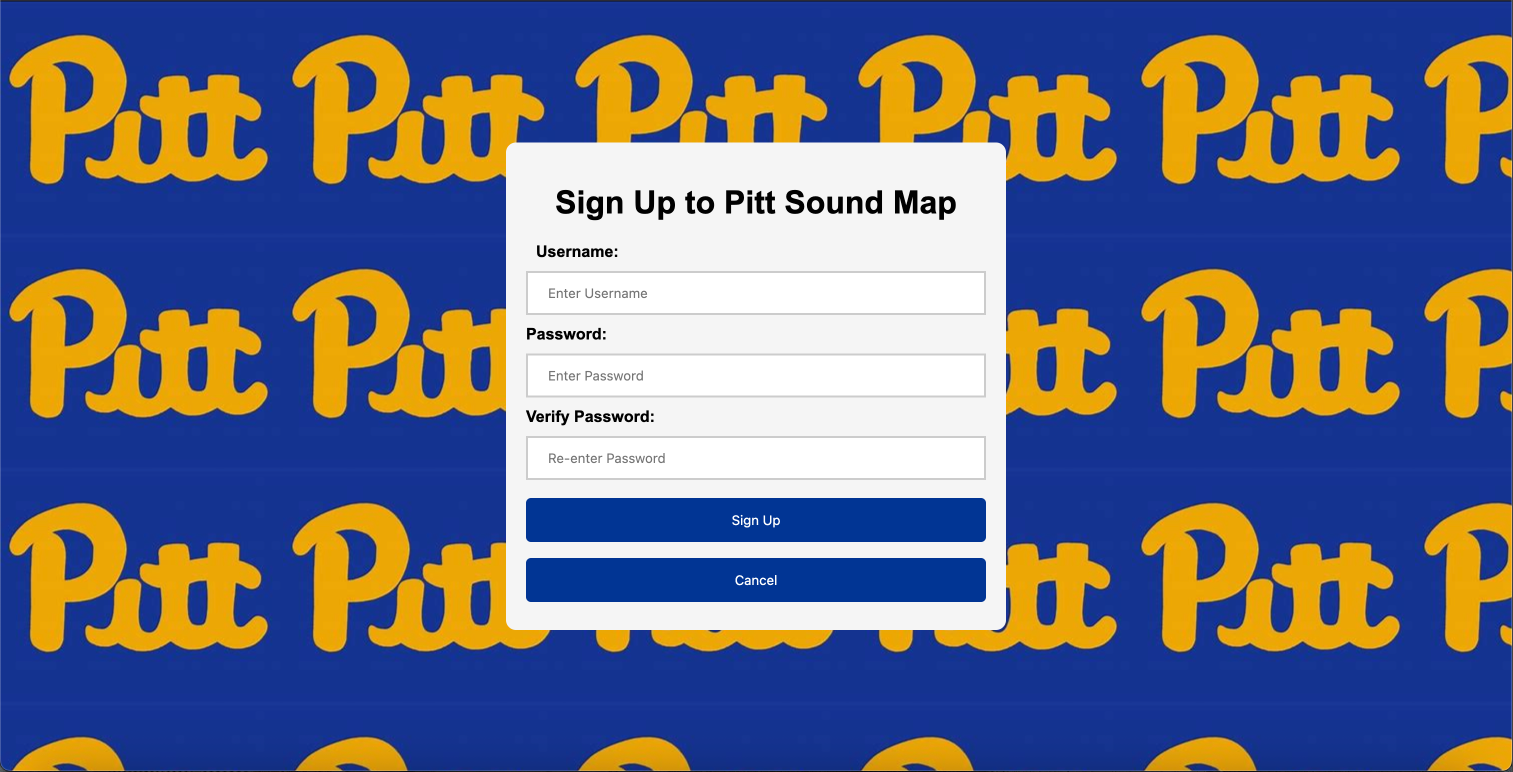
user sign up page
-
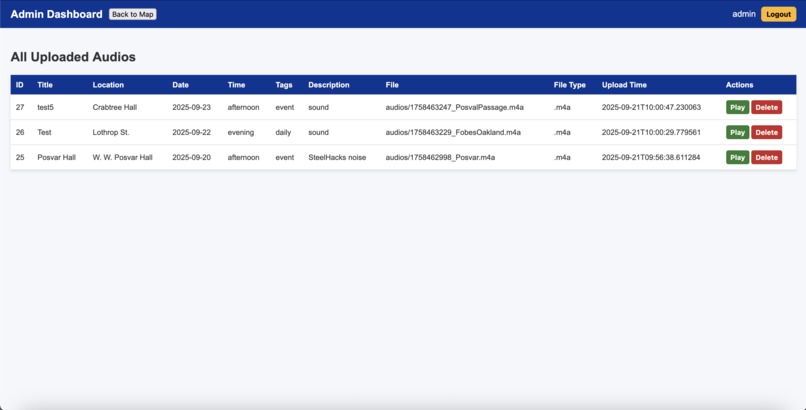
admin management page
-
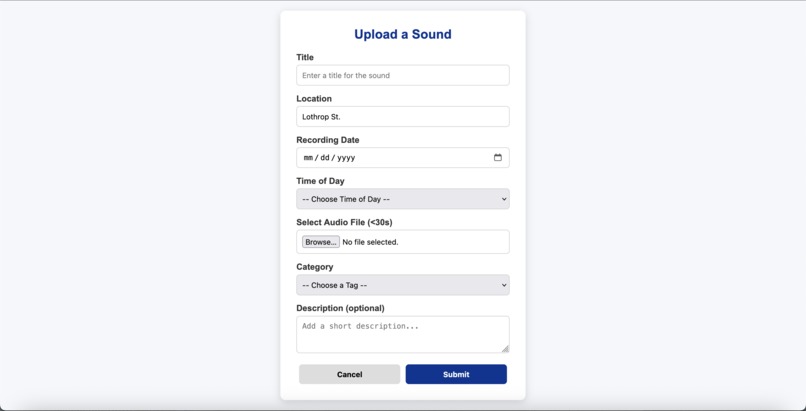
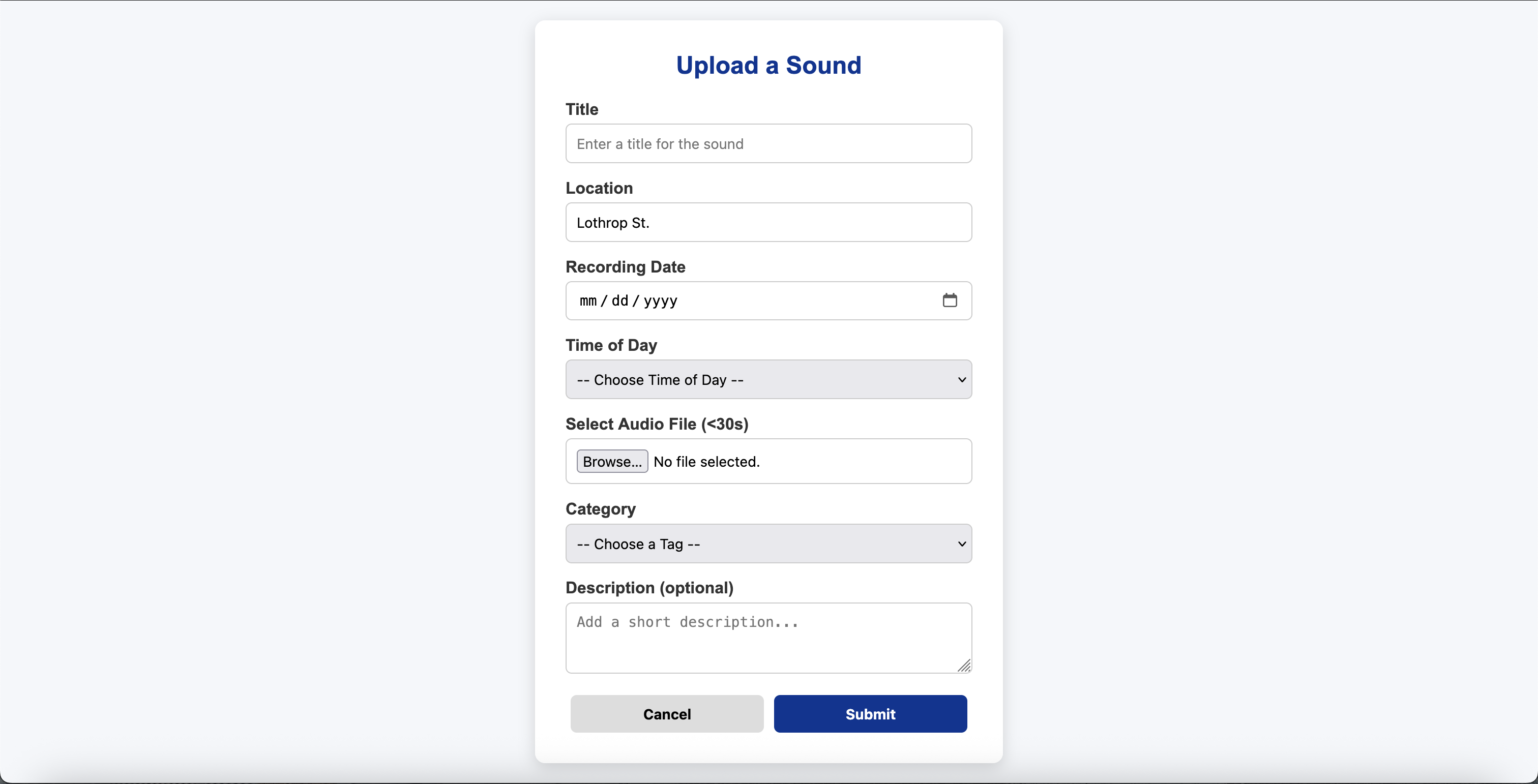
upload audio page


What is the inspiration
The cityscape is integral to the University of Pittsburgh and is arguably the best part as well. There are a number of ways to see the campus, whether it be through official Pitt websites or through Google Street View. However, those static images don’t really encompass what it feels like to be on the campus. We wanted to solve that problem by tackling another one of the senses: hearing. By focusing on sound, we allow students and alumni to experience Pitt in a non-traditional way.
What it does
The website allows users to upload sounds they hear at landmark areas of the University of Pittsburgh. The sounds can range from casual conversations of students to official virtual tours of the University. Users who want to hear the audio can then click on the location they want to immerse themselves in and sort the audios based on their preferences.
This adds a strong accessibility dimension: blind or low-vision students can preview the campus through audio getting a "Audio Google Street View" and evaluate the overall environment on campus, and alumni can relive cherished memories of Pitt through soundscapes that instantly take them back.
How we built it
We first split up into two teams, a backend team and a frontend team. The frontend team designed the main pages, including the map and login system, using HTML/CSS and JavaScript. The backend team built a PostgreSQL database to manage users and audio files, then exposed it through a FastAPI service. Once both halves were working, we integrated them to make the website fully functional.
Challenges we ran into
Integrating the backend with the frontend was our biggest challenge, as none of us had strong full-stack experience before this project. We had to communicate clearly and learn FastAPI quickly to combine the two halves.
Accomplishments that we’re proud of
We’re proud that the website has uses beyond its initial idea:
- Students can share their experiences.
- Prospective or blind students can explore Pitt through objective sounds, a complement to the pre-recorded explanations.
- Alumni can relive memories. Hearing the Cathedral bells, crowded WPU spaces, or quiet study spots can bring back the feeling of being on campus.
What we learned
We learned how to use FastAPI for the backend and SQL for database interaction, both of which were new to many of us. More importantly, we learned how accessibility expands the audience of a project, and how meaningful it can be for groups like alumni who want to reconnect or people with disabilities who need alternative ways of experiencing the campus.
What’s next for Pitt Soundmap
To make Pitt Soundmap more robust and inclusive, we plan to:
- Add email verification for uploads, improving moderation and trust.
- Implement a rating system, so the best audios rise to the top each day or week.
- Expand accessibility features with transcriptions for each audio, screen-reader compatibility, and filters to help users choose the types of sounds they want.
- Curate a “memory lane” feature for alumni, highlighting classic sounds of Pitt that evoke nostalgia and strengthen the bond with their alma mater. *Allow users to manage their submissions and edit their credentials.
- Deploy ML-powered audio screening processes to prevent redundancy or inappropriate data.


Log in or sign up for Devpost to join the conversation.