-
-
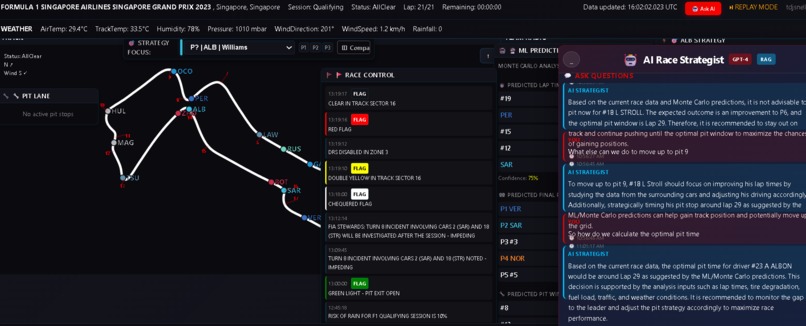
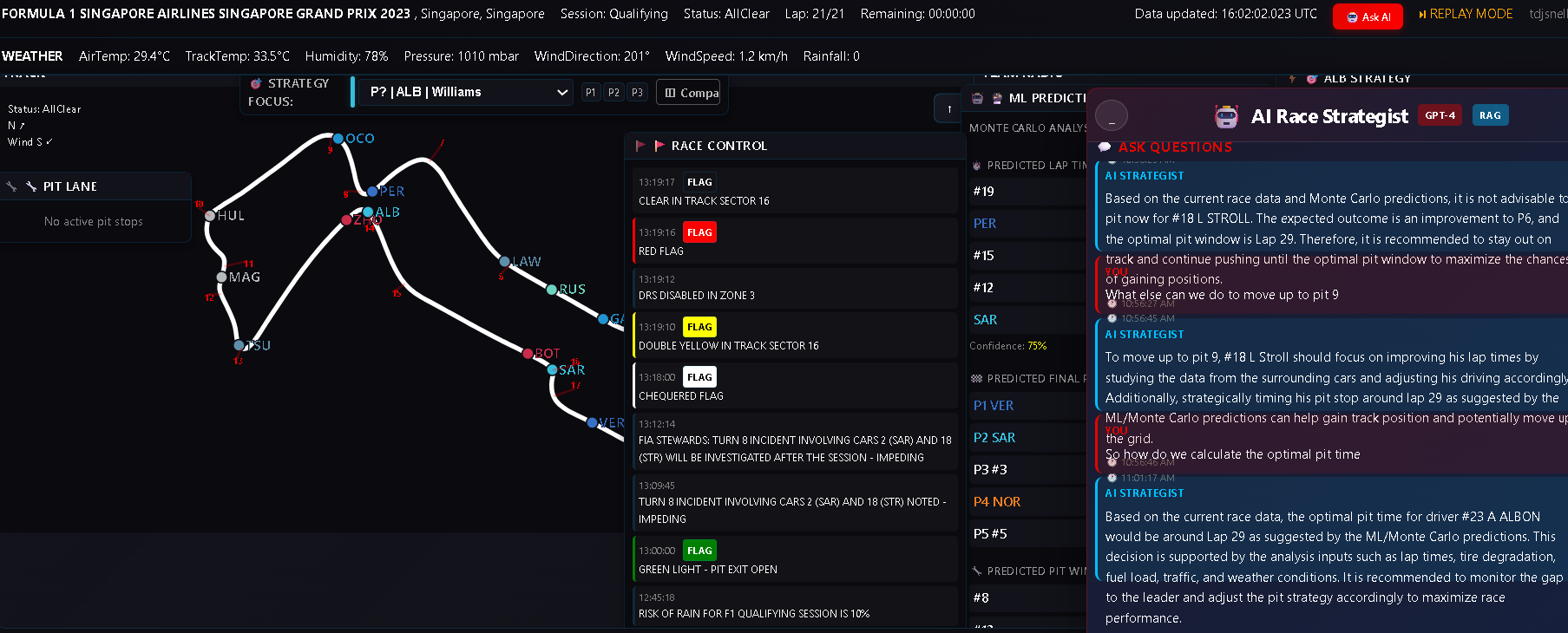
If you are confused about how we come up with specific values/predictions, our ai assistant can answer those questions.
-
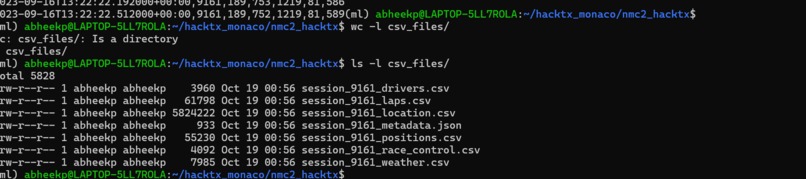
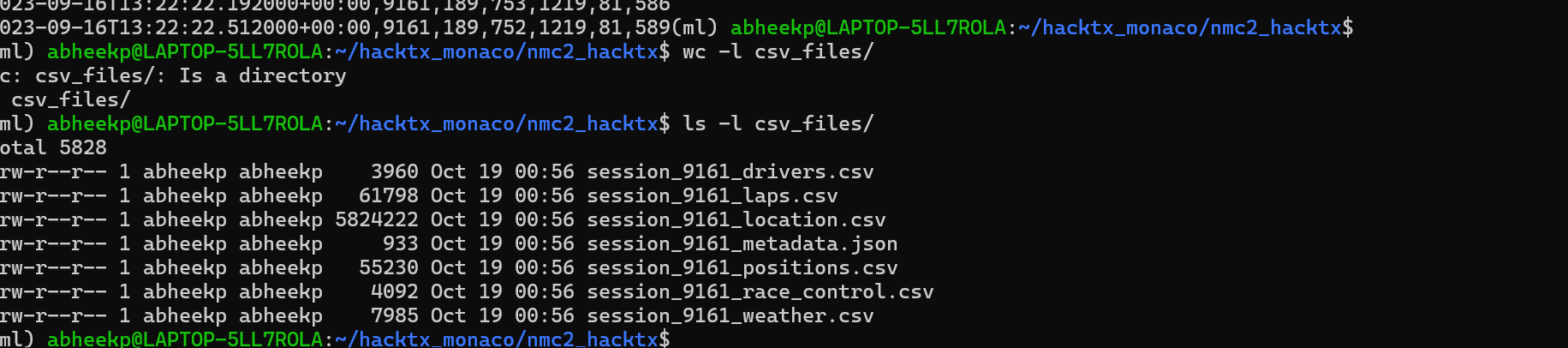
Web scraped data is stored in csv files which is used to perform predictions
What it does
PitSense is an AI-assisted F1 dashboard that turns live or historical raw telemetry into clear, trustworthy strategy calls in real time.
Core Capabilities
High-Performance Computing Engine
- Runs 100,000+ parallel Monte Carlo simulations across multi-core infrastructure
- Processes entire race datasets at 5x real-time speed using distributed computing
- Leverages CPU parallelization to deliver sub-second predictions during live races
Intelligent Strategy Translation
- Transforms complex tire degradation models, fuel calculations, and position forecasts into simple actionable commands
- Provides explainable confidence scores for every recommendation (e.g., "PIT NOW - 87% confidence")
- Generates win condition probabilities and lap-by-lap position gain/loss scenarios
Real-Time Decision Interface
- Intuitive dashboard displays AI-powered pit timing alerts, optimal strategy windows, and track heatmaps
- Integrated chatbot answers critical questions instantly (e.g., "Should we pit now?" or "What's our undercut window?")
- Designed for race managers coordinating split-second decisions with drivers at the wheel
Historical Analysis & Insights
- Archives entire race datasets with telemetry including car coordinates (X, Y, Z), speed profiles, throttle/brake inputs, and pit status
- Performs intensive Bayesian learning computations to extract competitor trends and performance patterns
- Surfaces optimal pit windows, tire strategy comparisons, and tactical opportunities that would take analysts hours to uncover manually
Target Users
- Race Engineers: Real-time strategy recommendations during live races
- Race Managers: Clear, defensible decisions for driver communication
- Strategy Analysts: Historical data mining for competitor analysis and future race preparation
- F1 Enthusiasts: Deep insights into race dynamics and team strategies
When scaled, PitSense ensures that petabytes of F1 data become clear, defensible decisions when milliseconds matter most.
Challenges We Faced
Latency vs. Accuracy Tradeoff
- Running 100,000+ simulations while maintaining sub-second response times required aggressive optimization of our Monte Carlo engine
- Solved by implementing multiprocessing pools and strategic caching of tire degradation models
Interpretability of Complex Models
- Raw simulation outputs were too complex for split-second decision-making
- Built an Explainable AI layer that ranks decision factors by impact score and translates probabilistic outputs into confidence-scored actions
Real-Time Data Integration
- OpenF1 API rate limits and data freshness posed challenges for live race scenarios
- Implemented intelligent caching with Bayesian updating to refine predictions as new telemetry arrives without re-running full simulations
Scalability Across Hardware
- Monte Carlo performance varied drastically between development machines
- Designed adaptive parallelization that automatically detects available CPU cores and distributes workload accordingly
What We Learned
HPC Fundamentals in Practice
- Gained hands-on experience with parallel computing architectures, discovering that doubling CPU cores doesn't linearly double performance due to communication overhead
- Learned to profile bottlenecks using timing metrics and optimize critical paths in simulation loops
Domain-Specific Model Design
- Deep-dived into F1 race physics including tire degradation curves, fuel load impacts (0.03s per kg), and pit stop time loss calculations
- Understood that accurate modeling requires balancing physical realism with computational efficiency
Human-Centered AI Design
- Realized that powerful algorithms mean nothing if engineers can't interpret results under race pressure
- Learned to design for explainability first, using ranked factor lists and natural language summaries instead of raw probability distributions
Real-Time System Architecture
- Discovered the importance of progressive updates and confidence intervals when working with streaming data
- Implemented Bayesian inference to continuously refine predictions without discarding prior simulations, making the system smarter as races progress


Log in or sign up for Devpost to join the conversation.