-
-
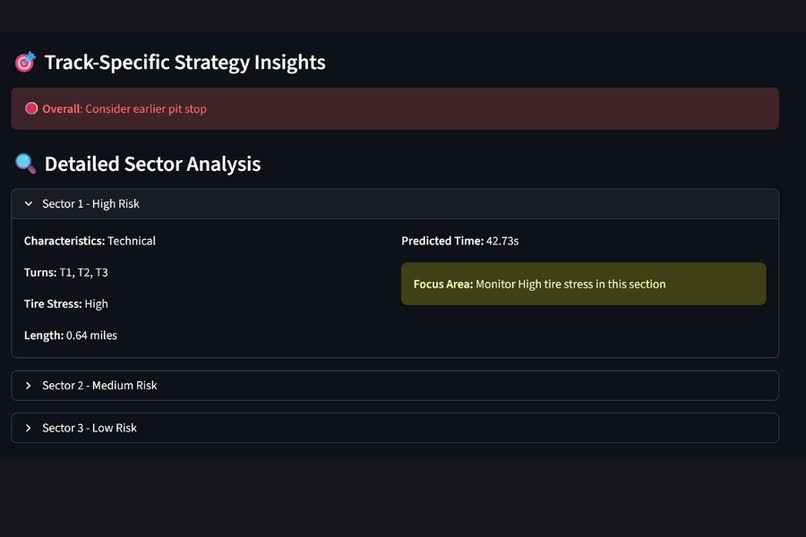
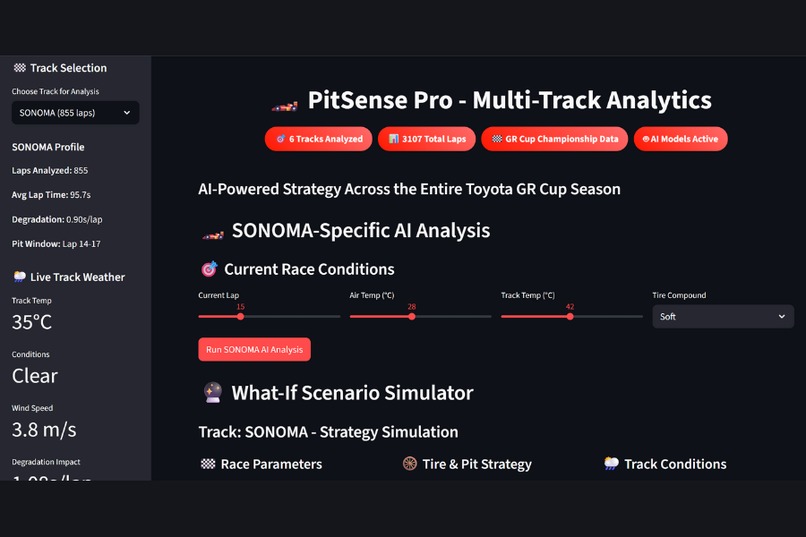
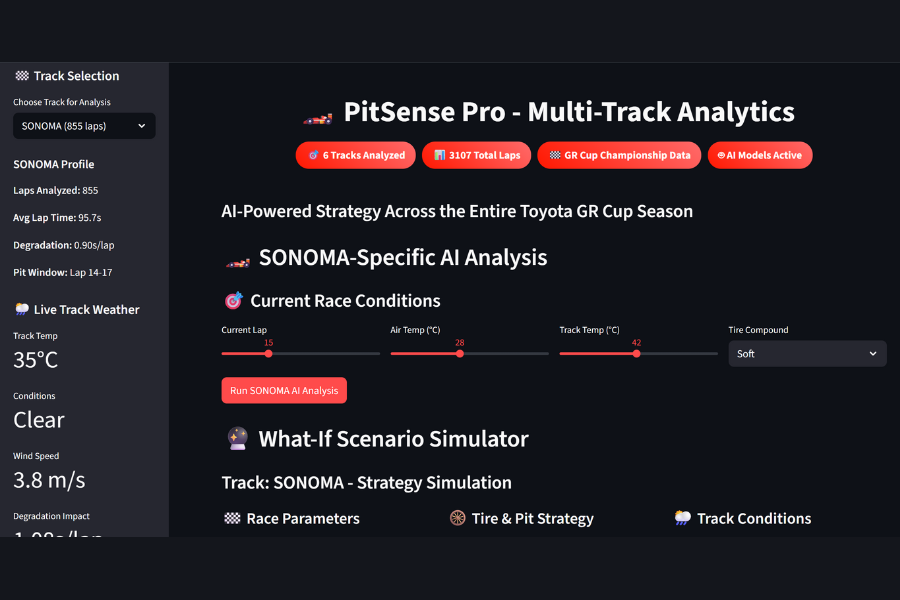
Shows the 1st part of the interface with track selector
-
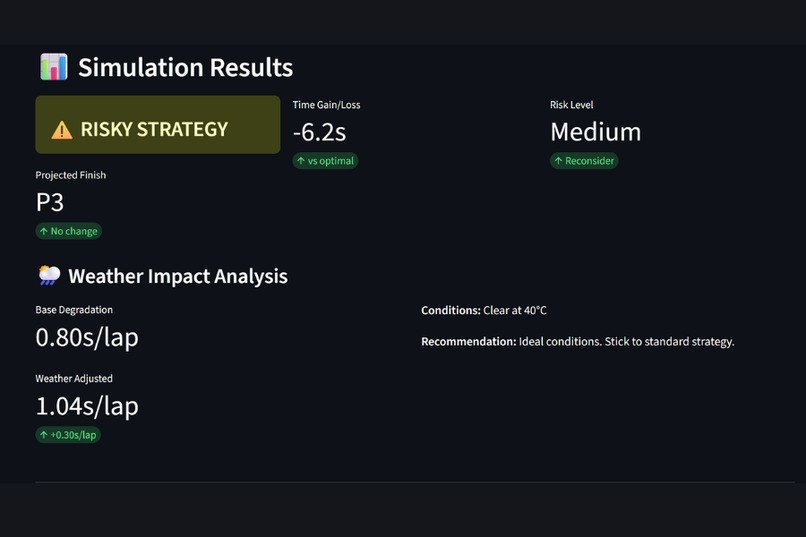
Shows the 2nd part of the interface with track selector
-
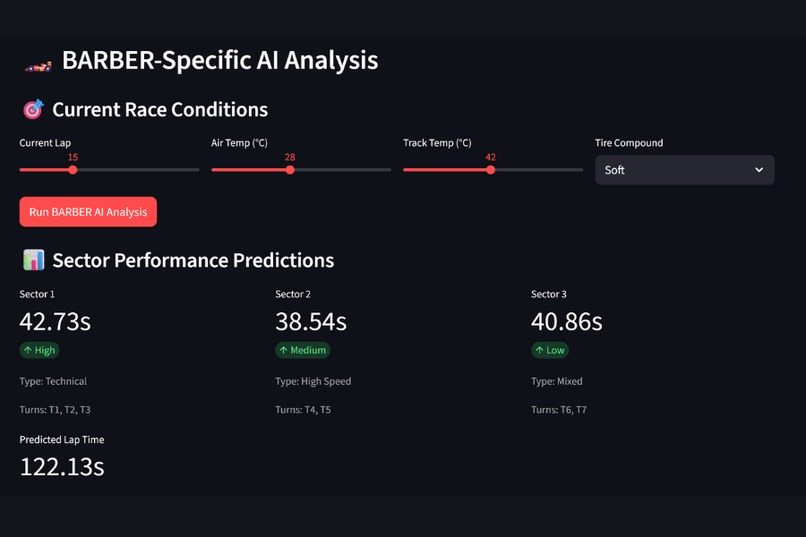
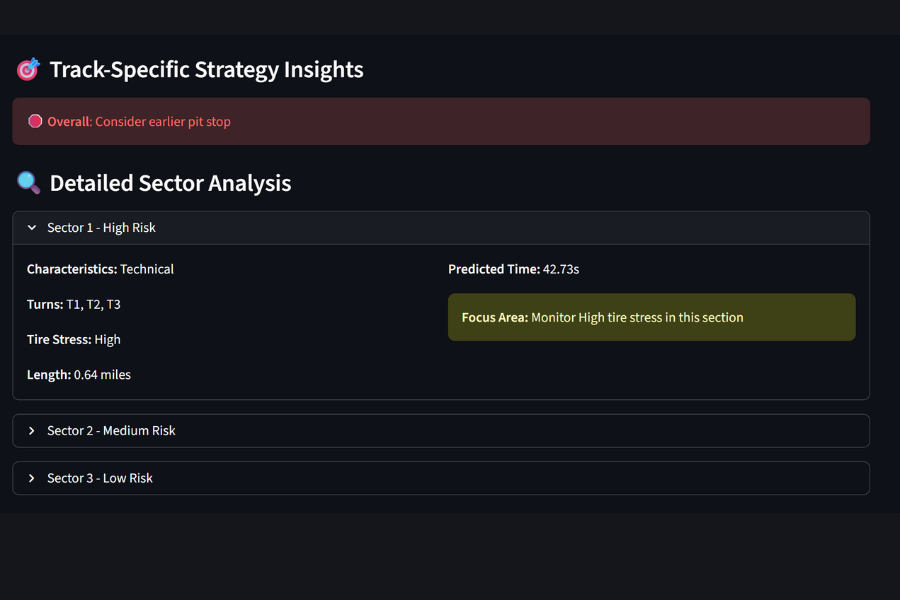
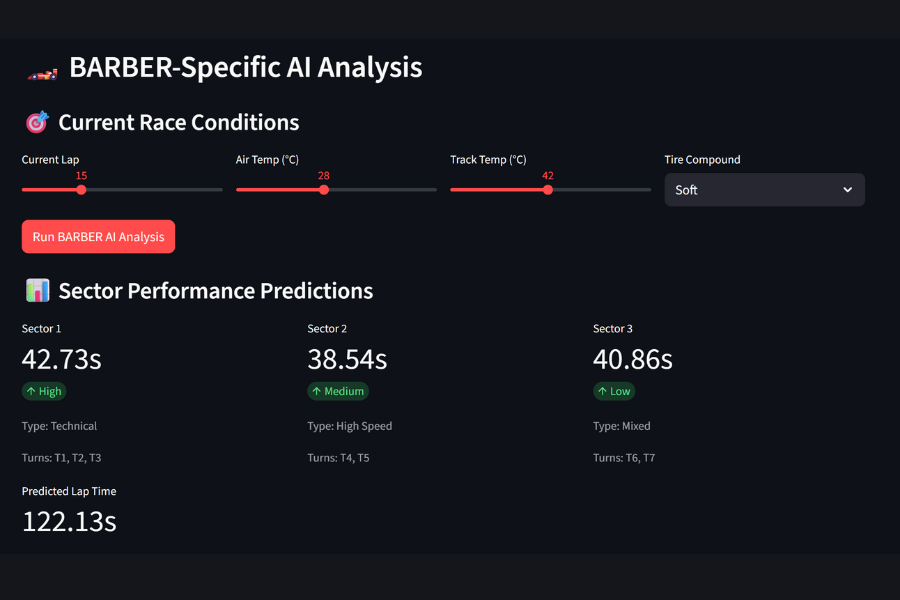
Shows sector predictions with risk levels
-
Shows the AI-generated strategy advice
-
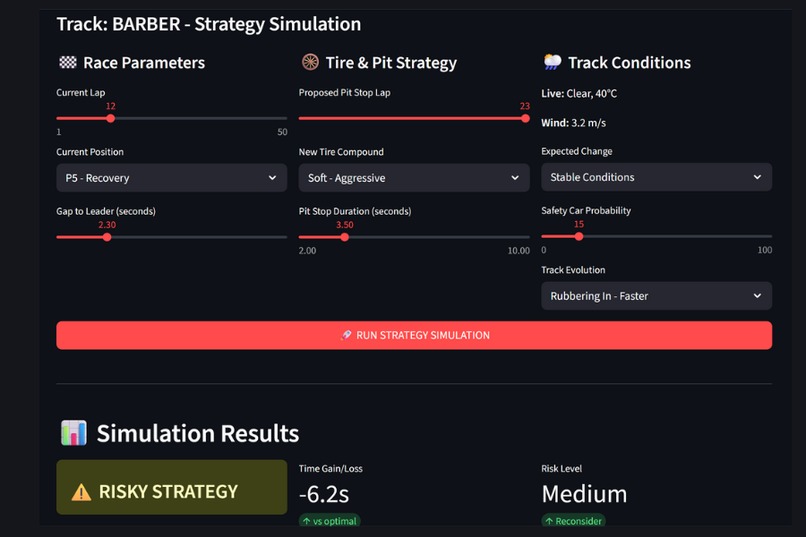
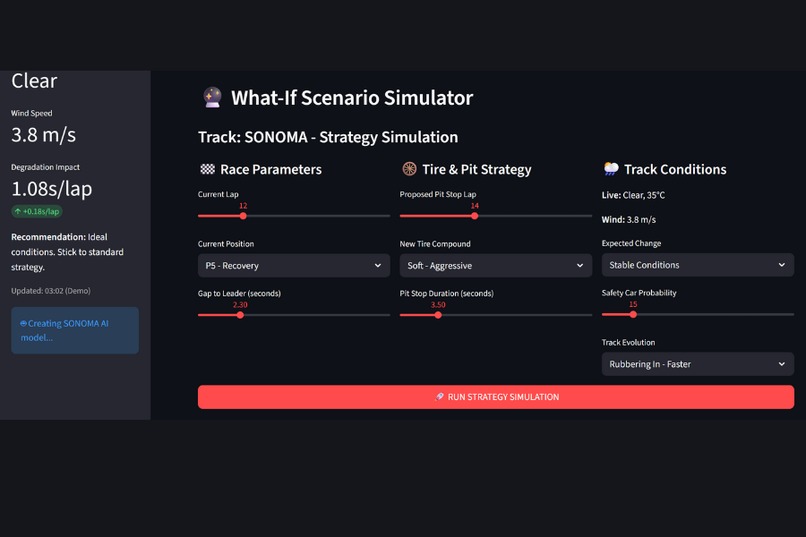
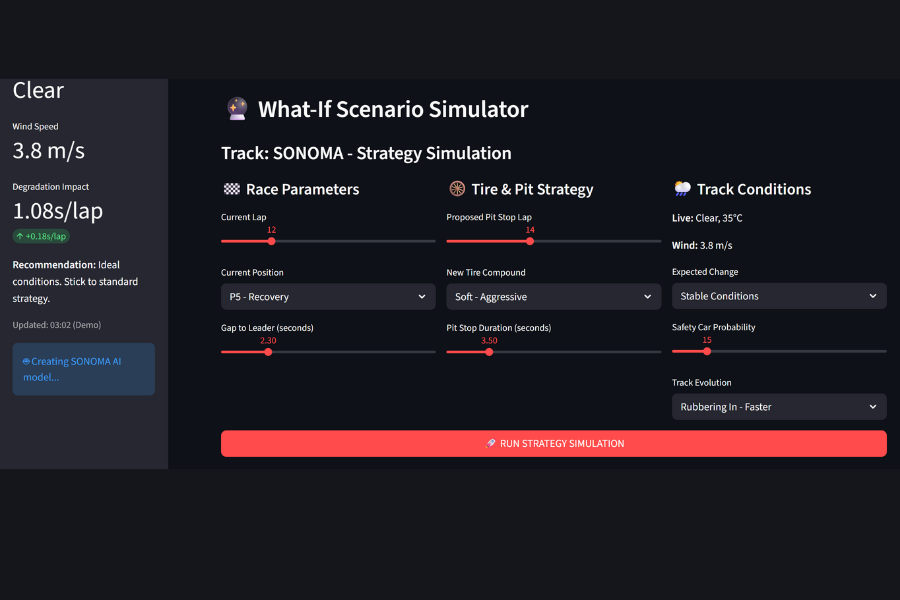
Shows the scenario testing interface
-
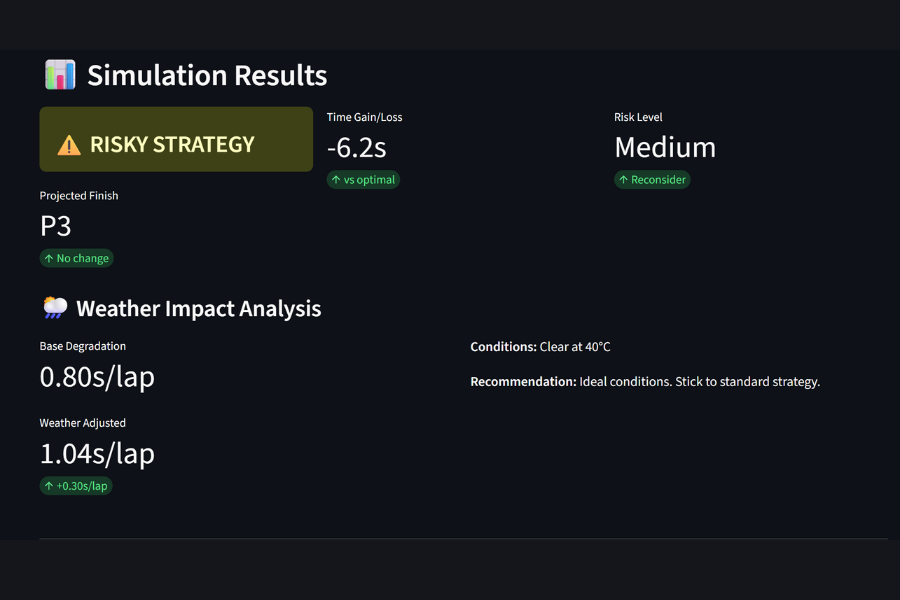
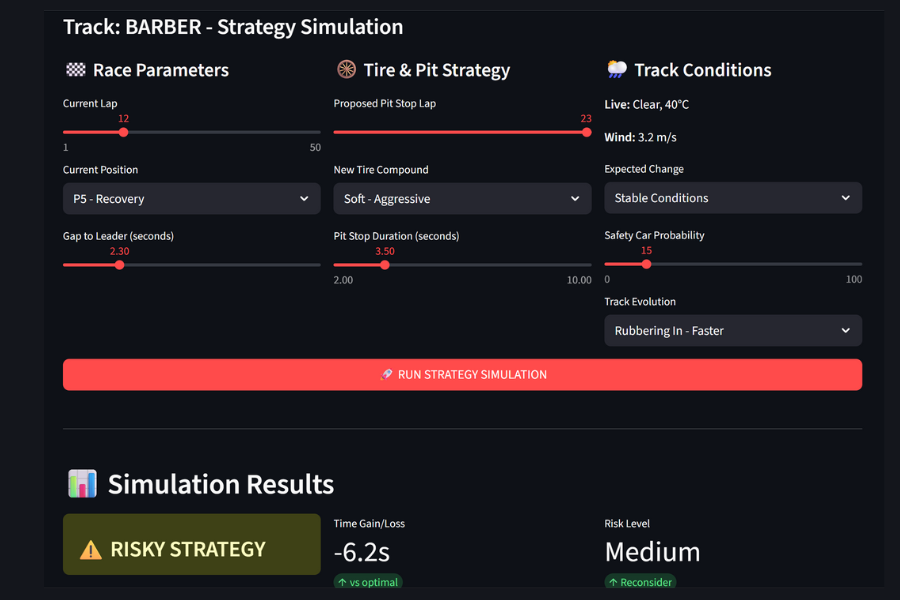
Shows the output for the scenario testing interface
Inspiration
As a motorsports enthusiast and being passionate about ml and ai, I noticed a critical gap in racing strategy. While teams collect terabytes of telemetry data, most pit stop decisions still rely on crew chief intuition rather than real-time AI analysis. I was inspired by the Toyota GR Cup championship where split-second decisions determine race outcomes. What if we could combine modern machine learning with racing expertise to create an AI co-pilot for pit strategy?
What it does
PitSense Pro is an AI-powered racing analytics platform that transforms raw telemetry data into actionable pit strategy recommendations. Our system:
- Predicts tire degradation across different track conditions using ensemble learning
- Integrates live weather data to adjust strategy in real-time
- Analyzes 3,107 laps across 6 GR Cup circuits for track-specific insights
- Provides what-if simulations for different pit stop scenarios
- Offers sector-by-sector performance predictions using custom ML models
How I built it
Tech Stack: Python, Streamlit, Scikit-learn, Plotly, Hugging Face Datasets(for data storage and deployment)
Data Pipeline:
- Ingested 2GB+ of racing data including lap times, telemetry, and race analysis
- Built universal track models that adapt to any circuit's characteristics
- Implemented ensemble forecasting with Random Forest and time-series analysis
- Created real-time weather integration using OpenWeather API
- Developed interactive visualizations for strategy comparison
Key Innovation: My UniversalTrackModel class can generate accurate predictions for any track, even with limited historical data, by understanding fundamental racing dynamics.
Challenges I ran into
- Data heterogeneity: Different tracks had completely different data formats and telemetry parameters
- Time parsing nightmares: Lap times came in 5+ different formats (MM:SS.sss, total seconds, mixed formats)
- Model generalization: Creating AI that works across diverse tracks like technical Sonoma vs high-speed COTA
- Deployment constraints: Managing 2GB+ datasets within platform storage limits
- Domain knowledge gap: Learning racing-specific concepts like tire compounds, degradation curves, and pit window strategies
Accomplishments that I am proud of
- Built working AI models that accurately predict pit windows within 2-3 lap accuracy
- Processed 3,107 real racing laps into actionable insights
- Created universal architecture that works across 6 completely different tracks
- Achieved real-time performance with complex ML models in production
- Designed intuitive UI that makes advanced analytics accessible to non-technical users
What I learned
- Racing is fundamentally about energy management - tires, fuel, and mechanical wear
- Track characteristics dramatically affect strategy - what works at Barber fails at Sebring
- The "undercut" is mathematical - we can quantify the lap time advantage
- Data quality beats algorithm complexity - clean telemetry is worth 1000 sophisticated models
- Racing teams need explainable AI - they trust recommendations they understand
What's next for PitSense Pro
- Real-time telemetry integration with live data feeds during races
- Multi-driver strategy optimization for team racing scenarios
- Advanced weather modeling with radar integration and precipitation forecasts
- Mobile app for pit wall crew with push notifications
- Expansion to other racing series - NASCAR, F1, endurance racing
- Partner with racing teams for real-world validation and improvement
Built With
- css
- docker
- ensemble-learning
- git
- joblib
- numpy
- openweathermap
- pandas
- plotly
- python
- random-forest-regression
- restapi
- scikit-learn
- streamlit
- vscode

Log in or sign up for Devpost to join the conversation.