-
-
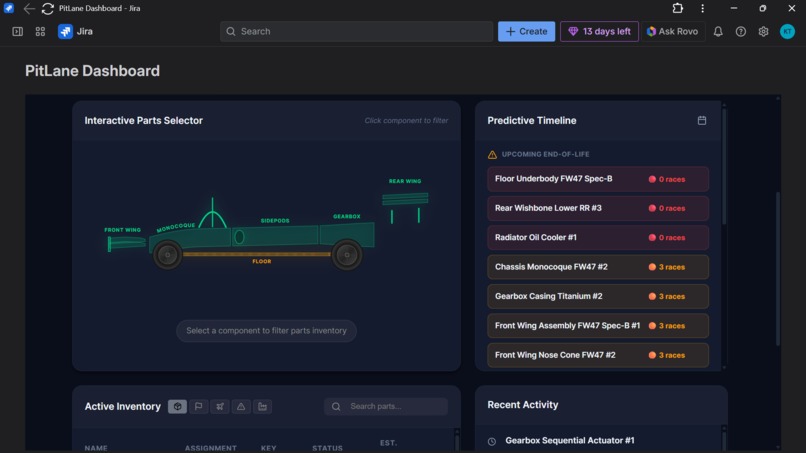
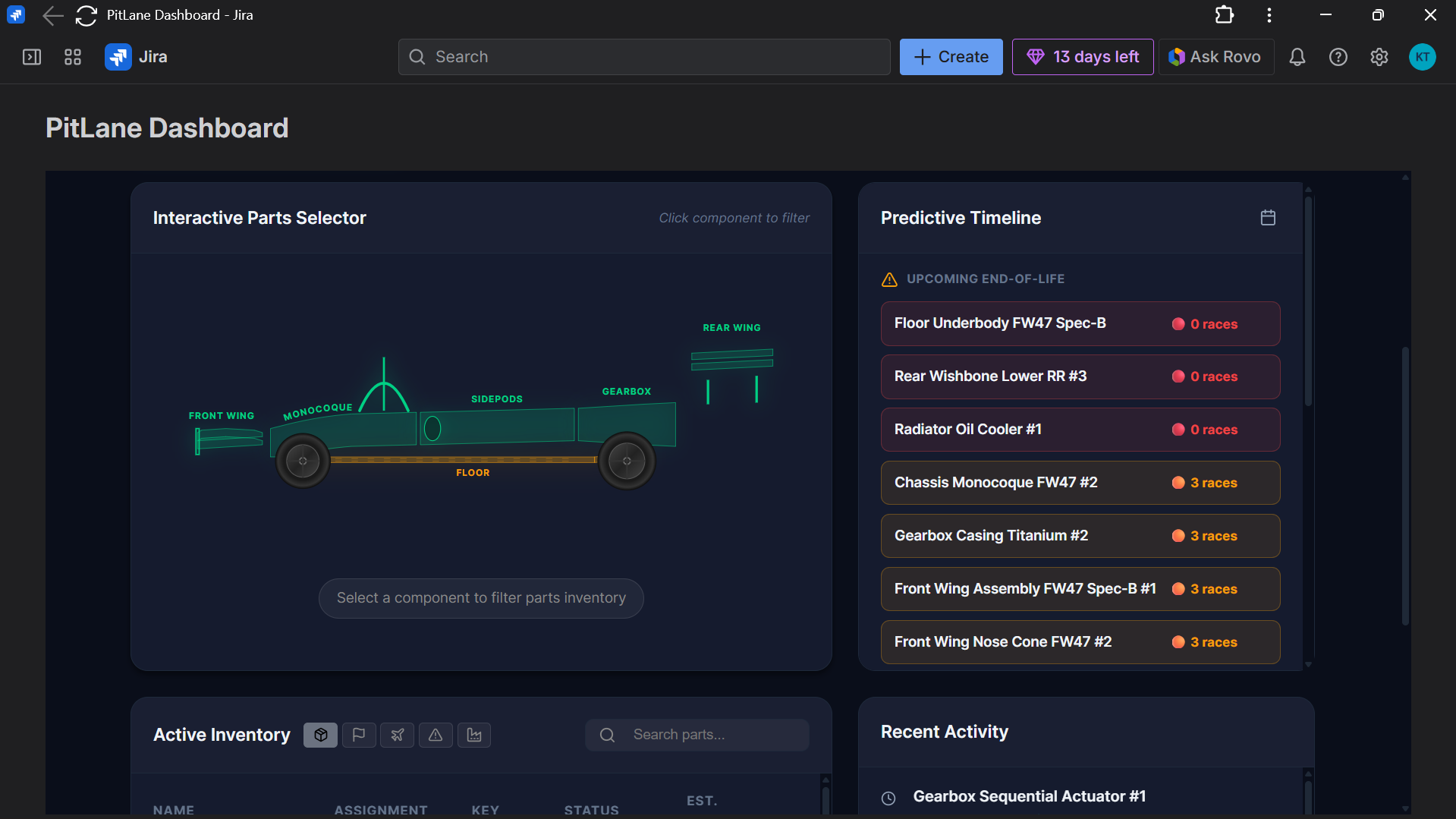
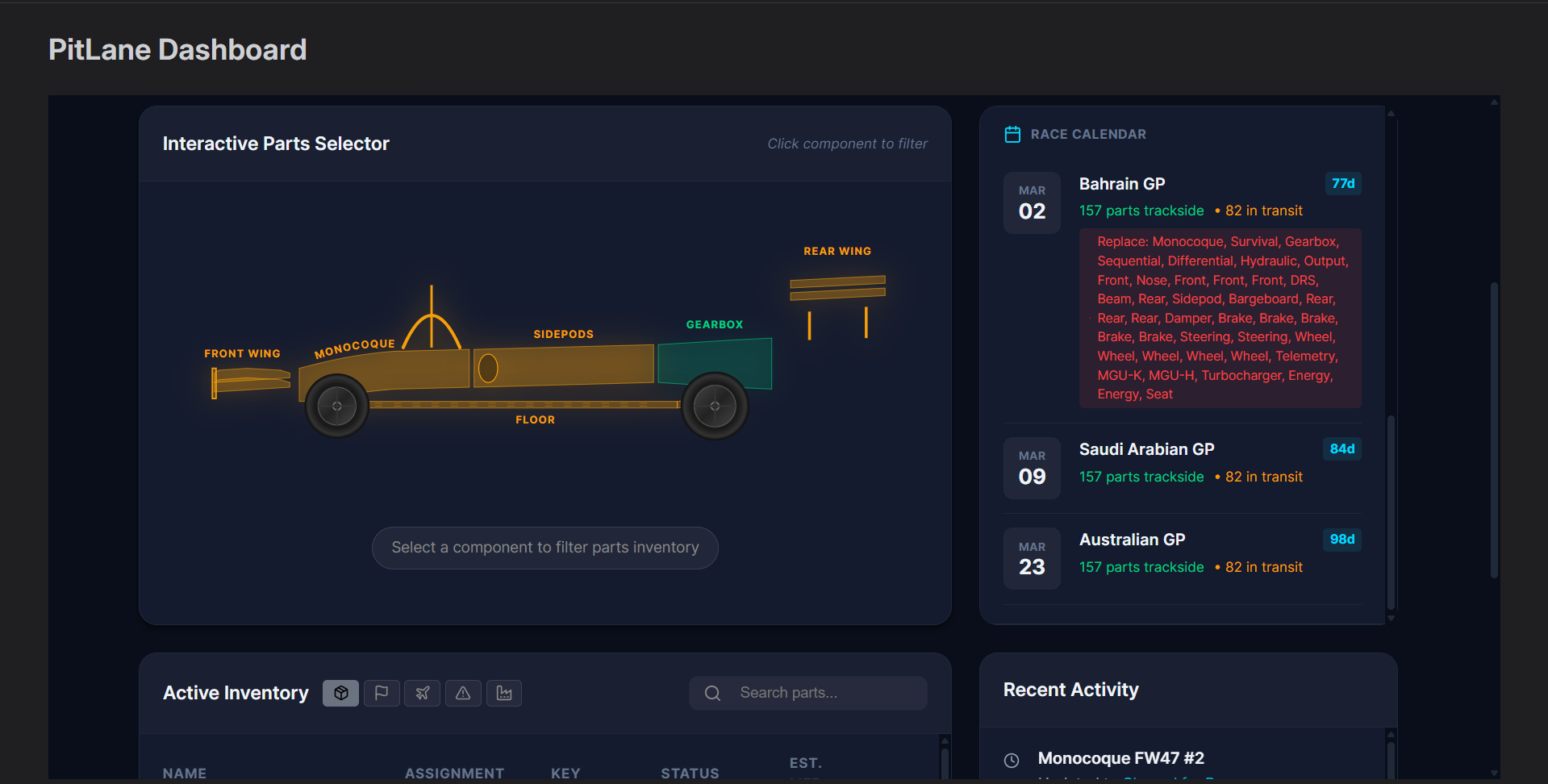
Mission Control: Real-time operational dashboard showing the FW47 fleet status, upcoming race logistics, and interactive part filtering.
-
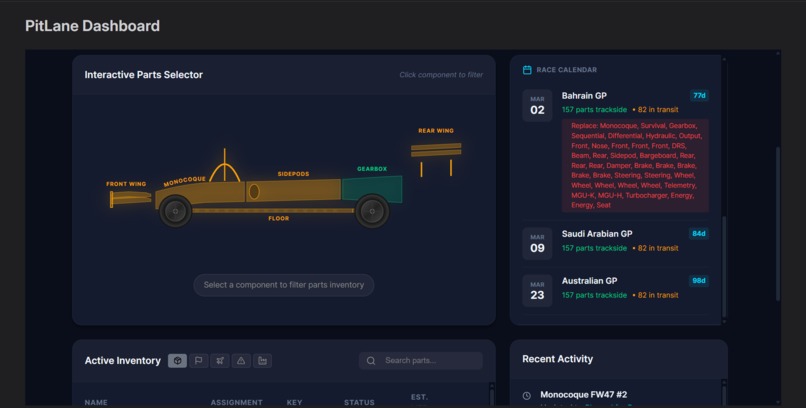
Mission Control: Real-time operational dashboard showing the FW47 fleet status, upcoming race logistics, and interactive part filtering.
-
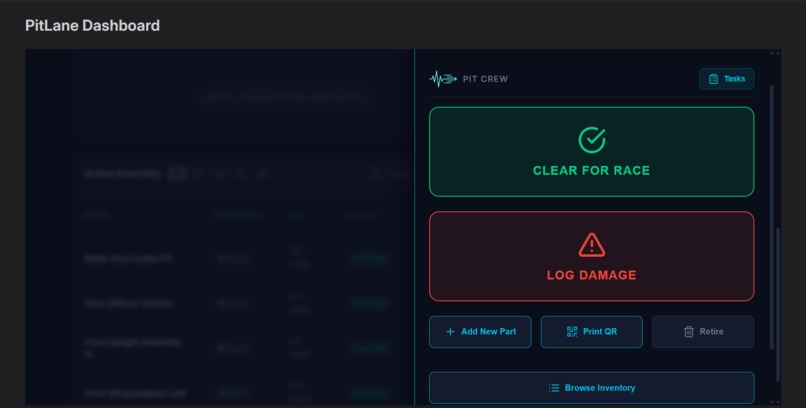
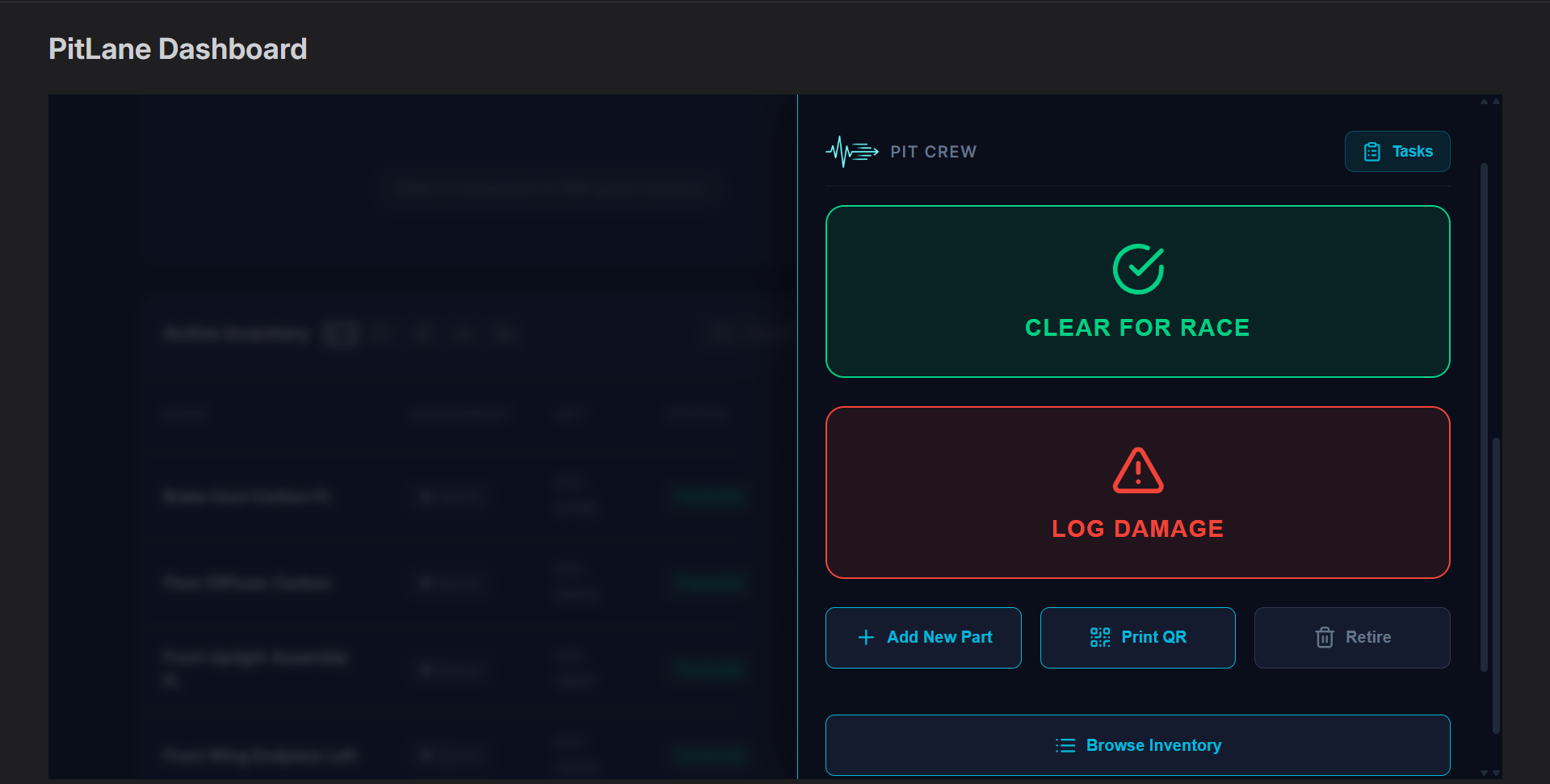
Trackside Operations: Mobile-first interface for pit crews to instantly log damage or clear parts for racing, syncing data back to garage
-
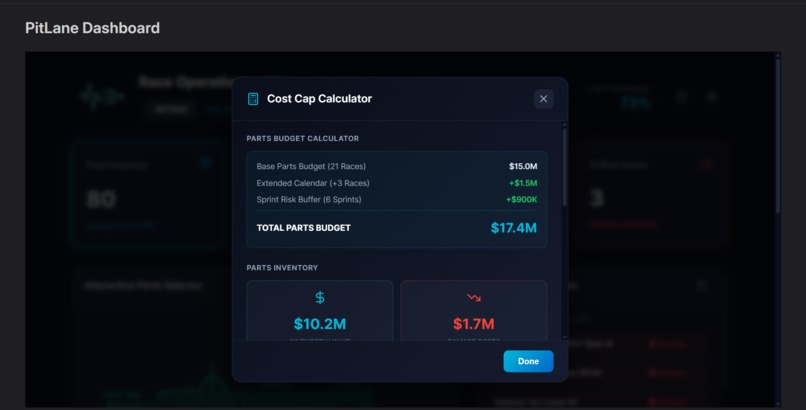
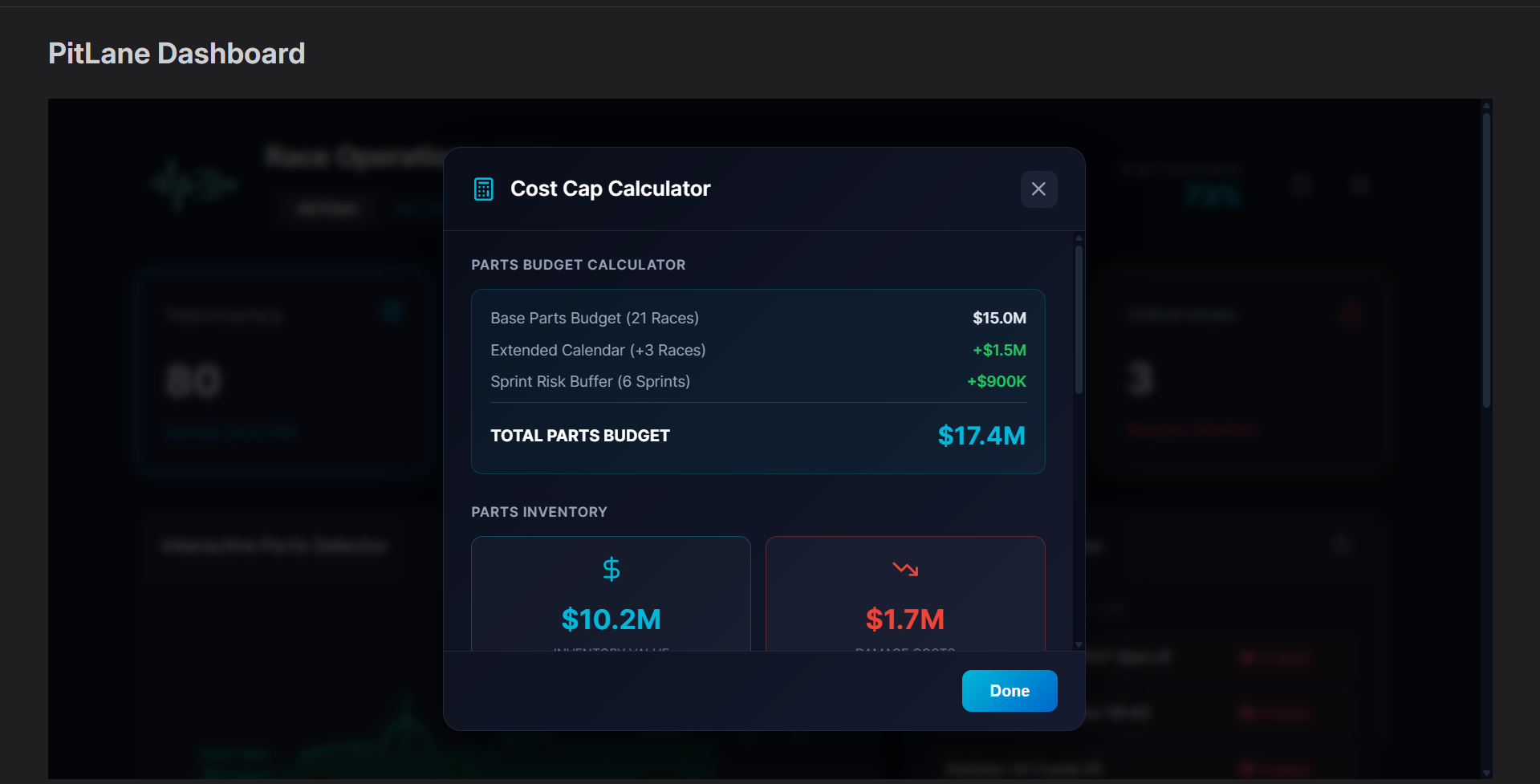
Cost Cap Calculator: Tracking the specific $15M Parts & Manufacturing budget. Visualizing how cumulative crash damage eats into funds.
-
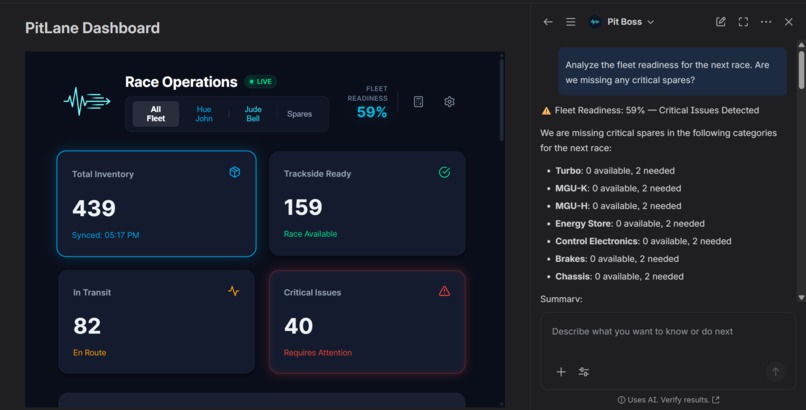
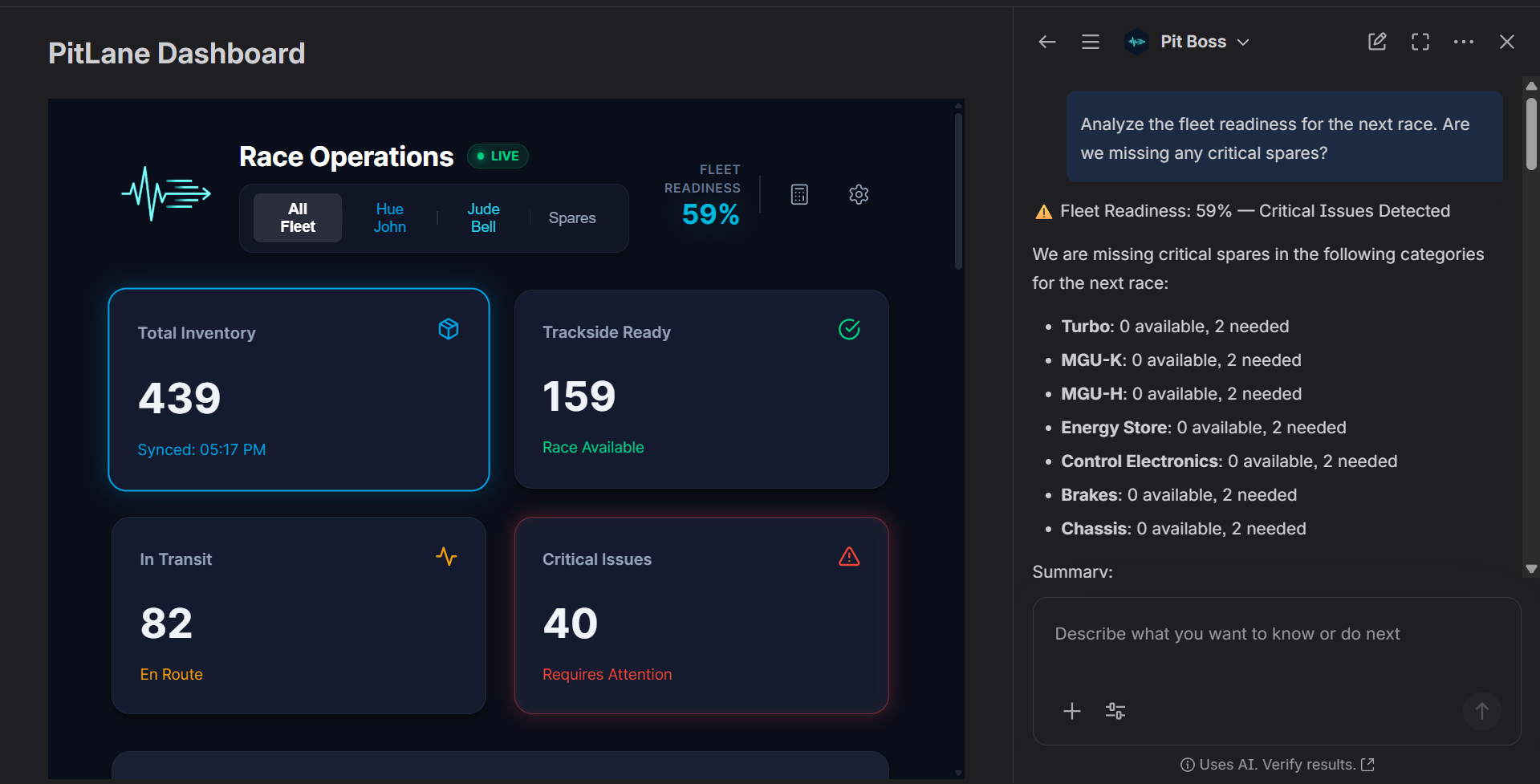
Rovo "Pit Boss" Agent: Active AI analysis of fleet readiness. The agent identifies specific component shortages for the upcoming Grand Prix.
-
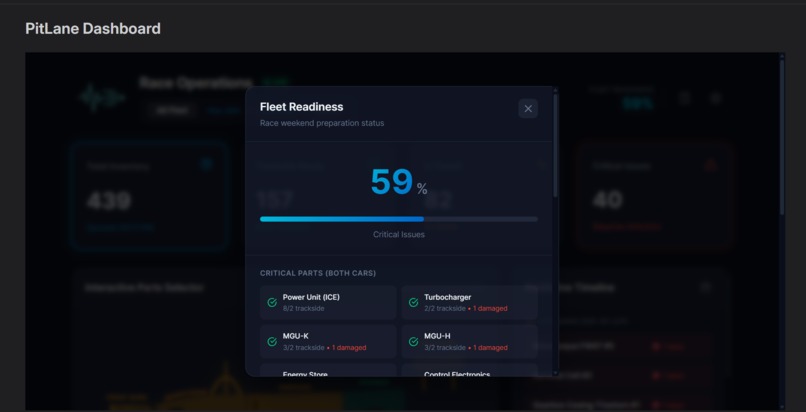
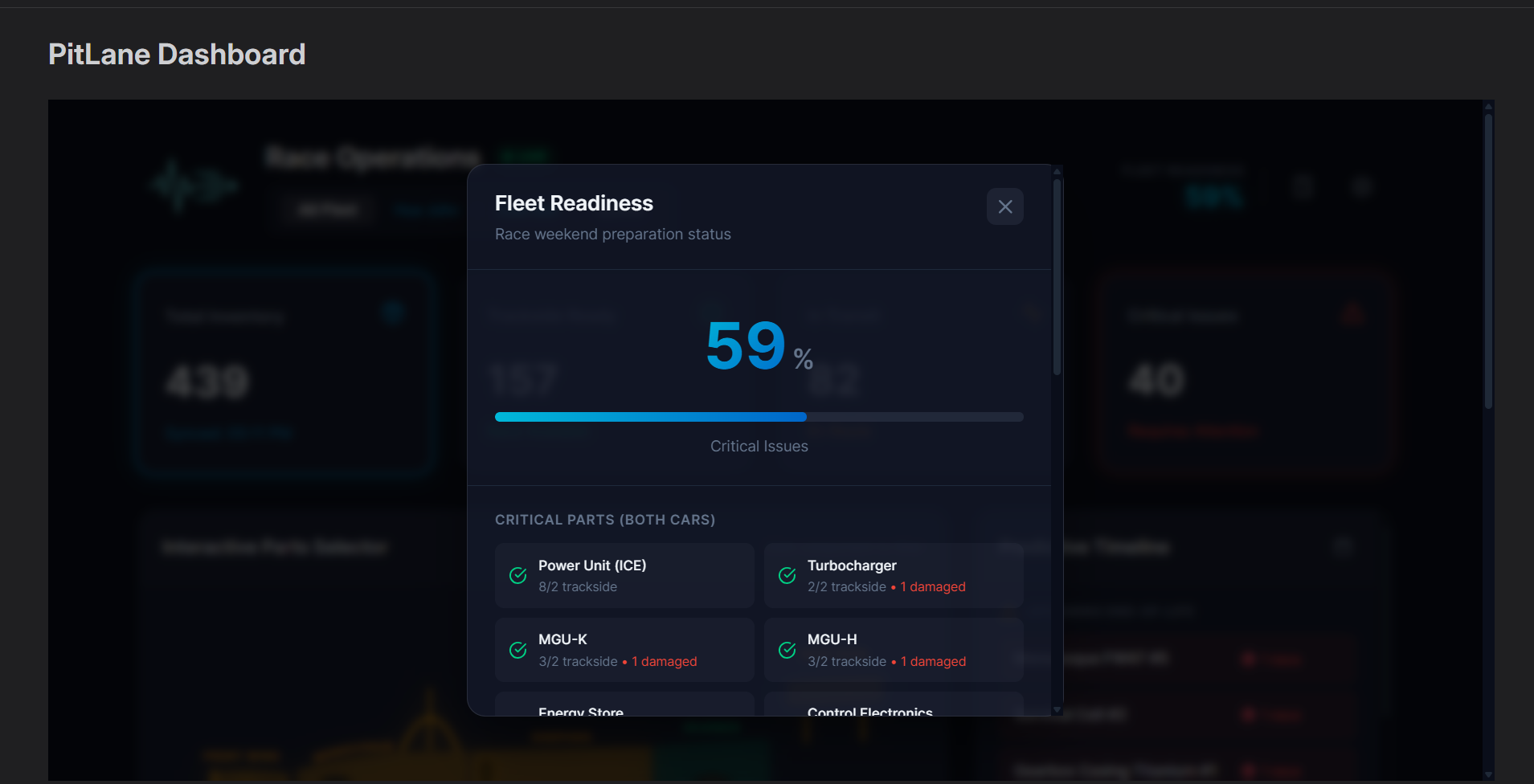
Fleet Readiness Engine: A weighted scoring algorithm that gives the a live "Go/No-Go" status for the race weekend based on parts coverage.
-
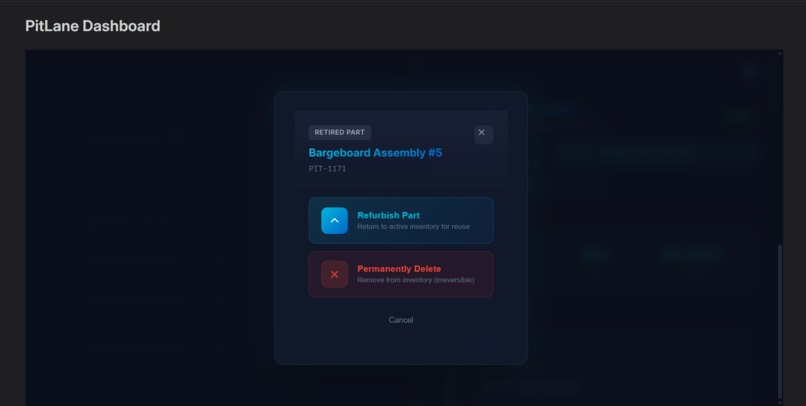
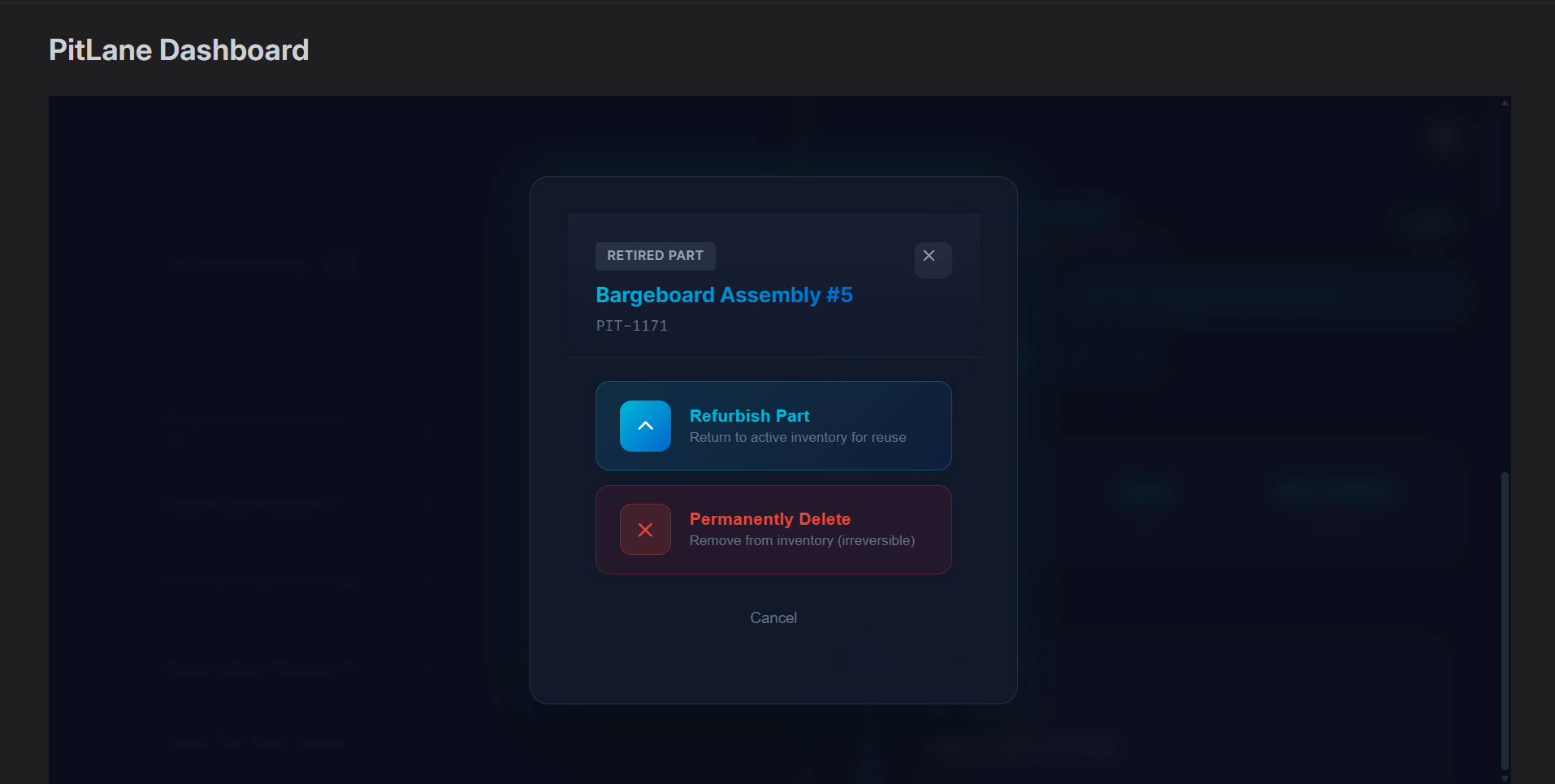
Strict audit protocols for retired parts (Refurbish vs. Delete) to prevent "Ghost Parts" from clogging the inventory ledger.
-
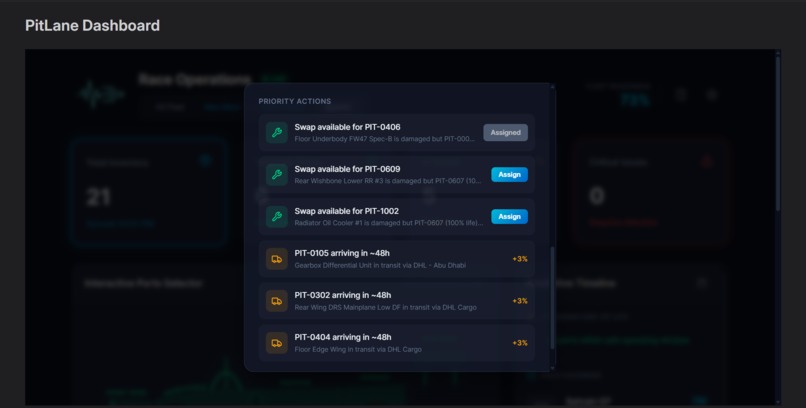
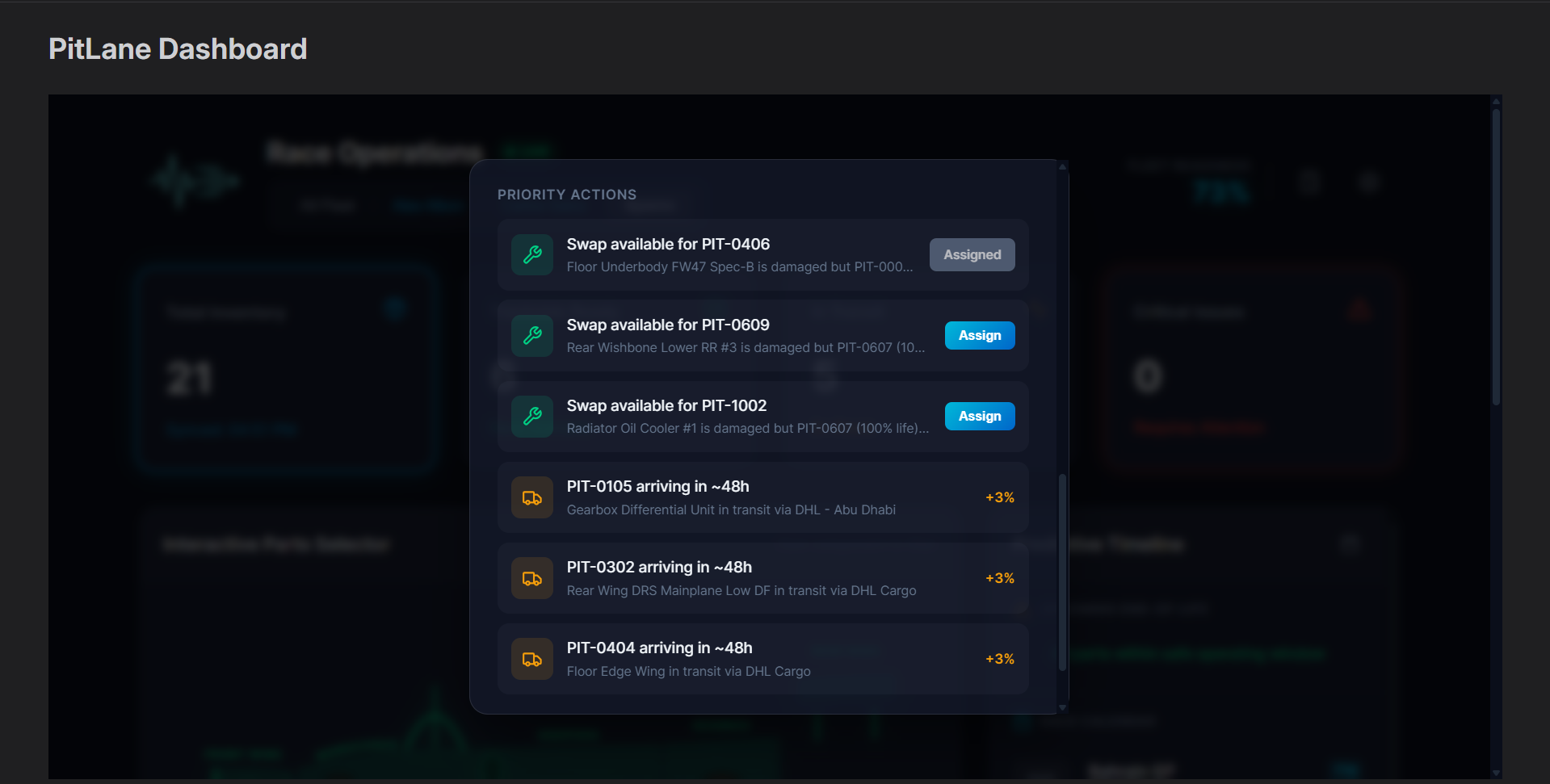
Smart Logistics: The system suggests "Swaps" when a part is damaged if a healthy spare is available, reducing manual decision fatigue.
-
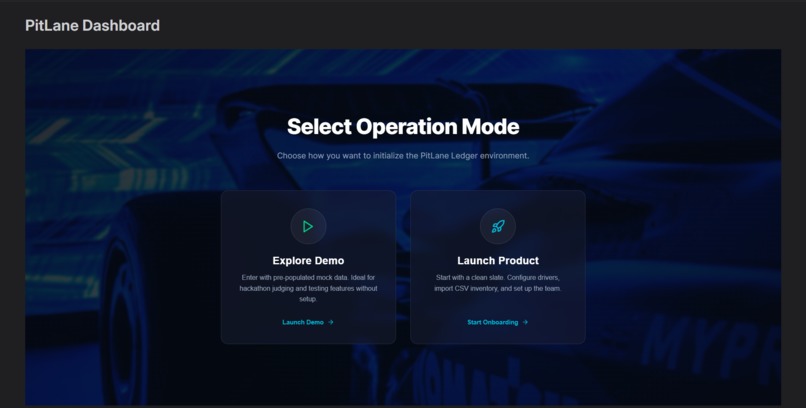
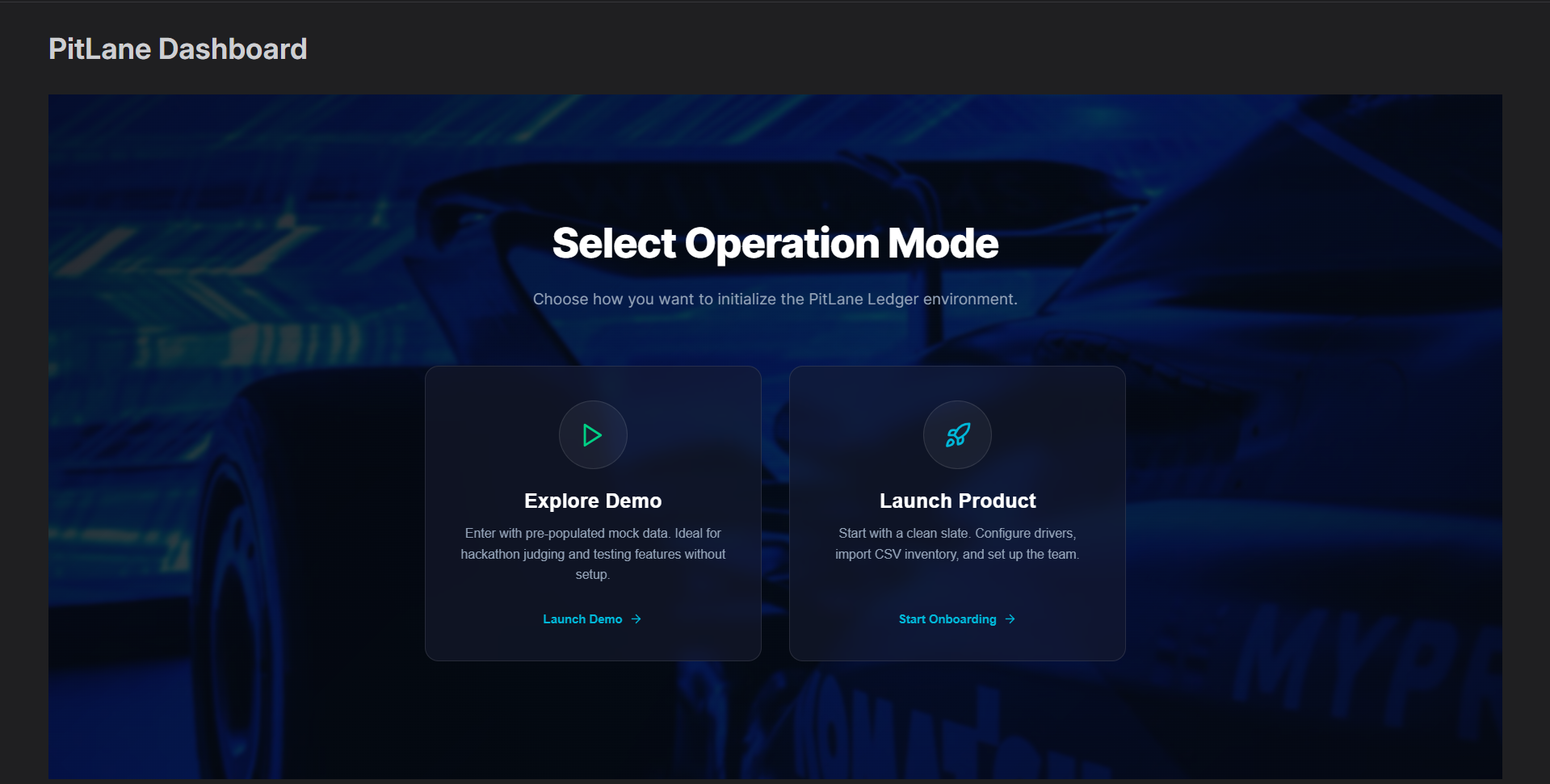
Dual-Mode Architecture: Select "Explore Demo" for instant mock data (for judges) or "Launch Product" for secure CSV onboarding (for teams).
-
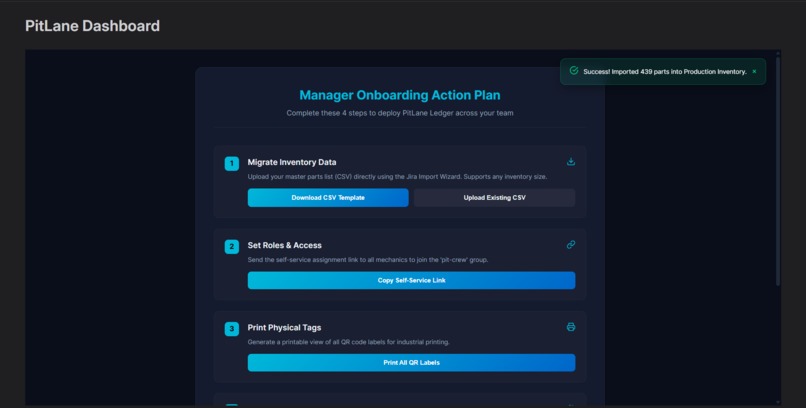
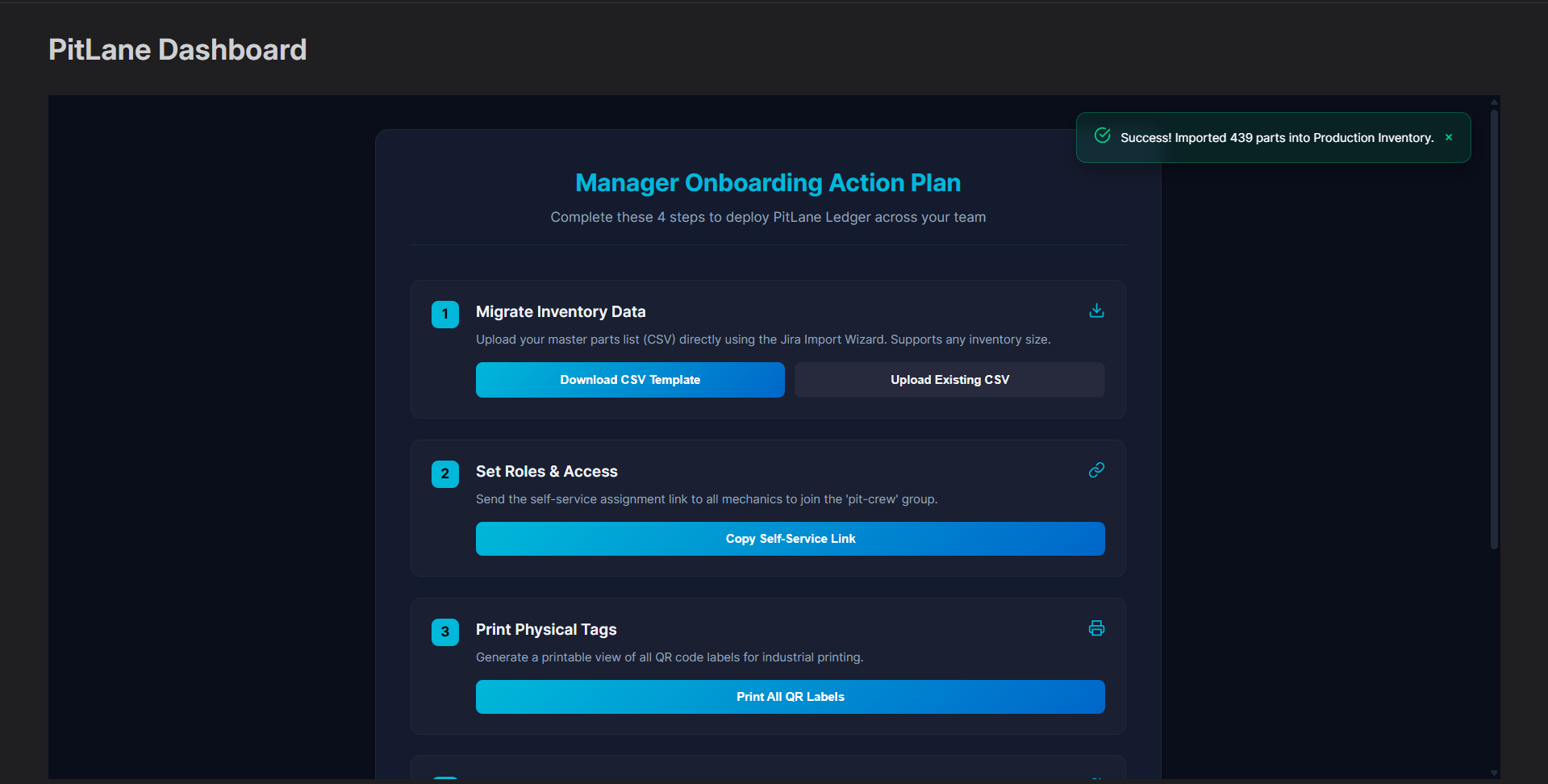
Enterprise Production Pipeline: A robust onboarding wizard that handles large-scale CSV inventory migration and role assignments.
-
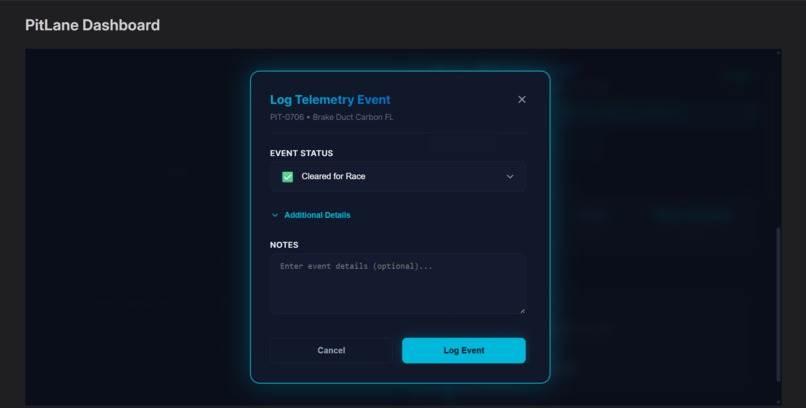
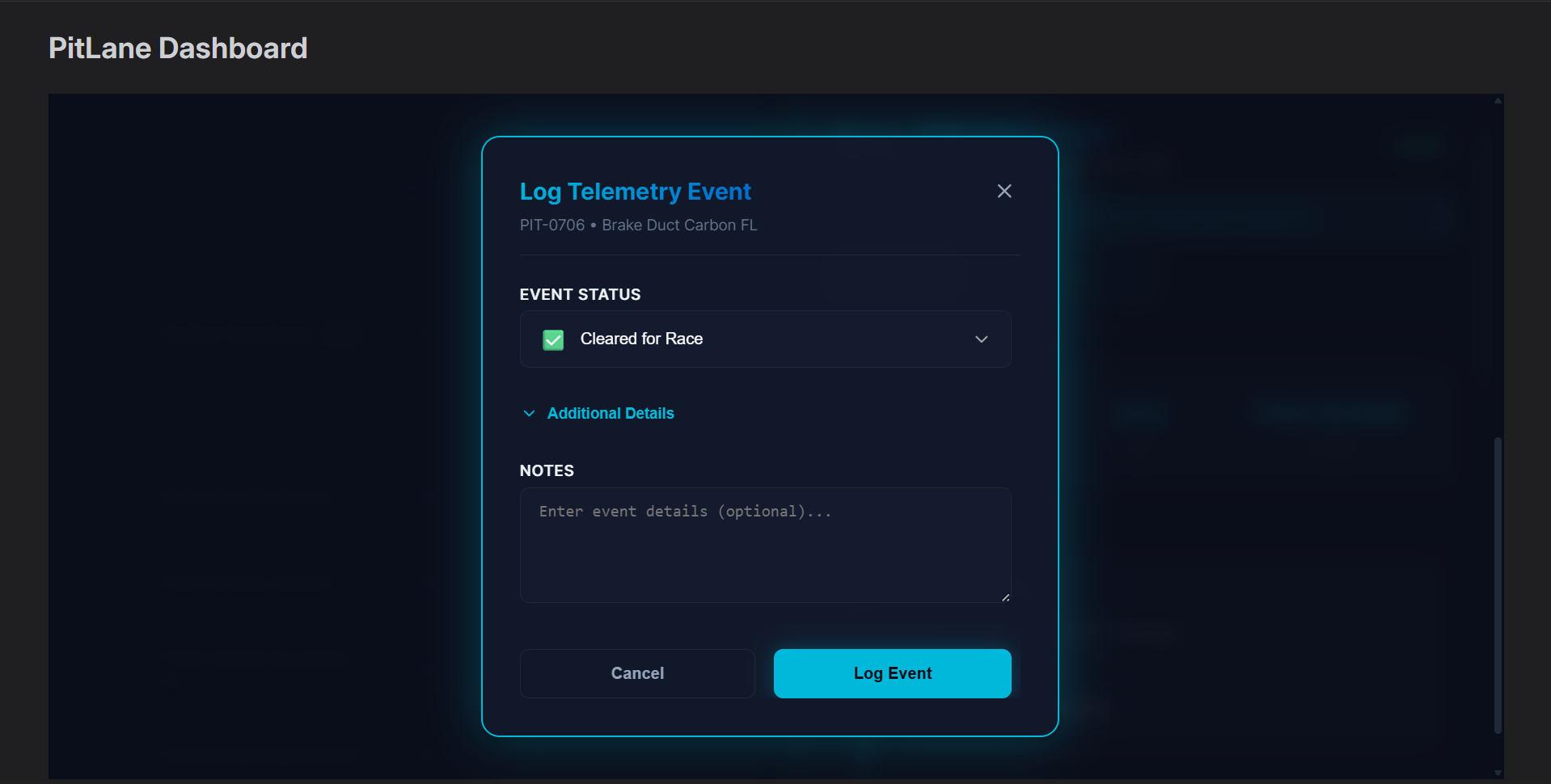
Capturing granular metadata (Status, Notes, Timestamp) for every part movement to ensure a complete audit trail.
-
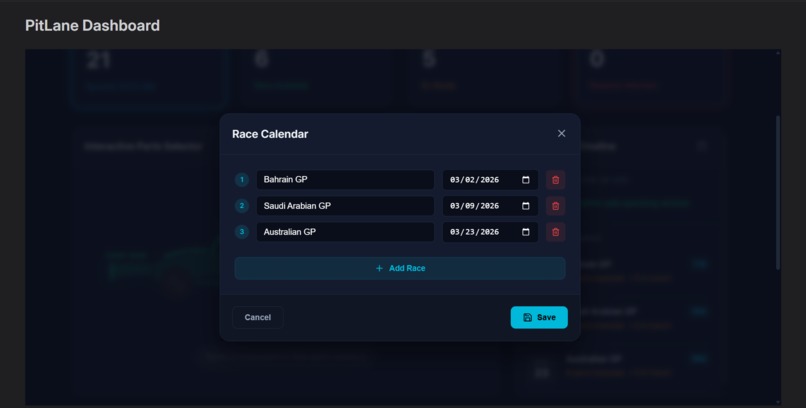
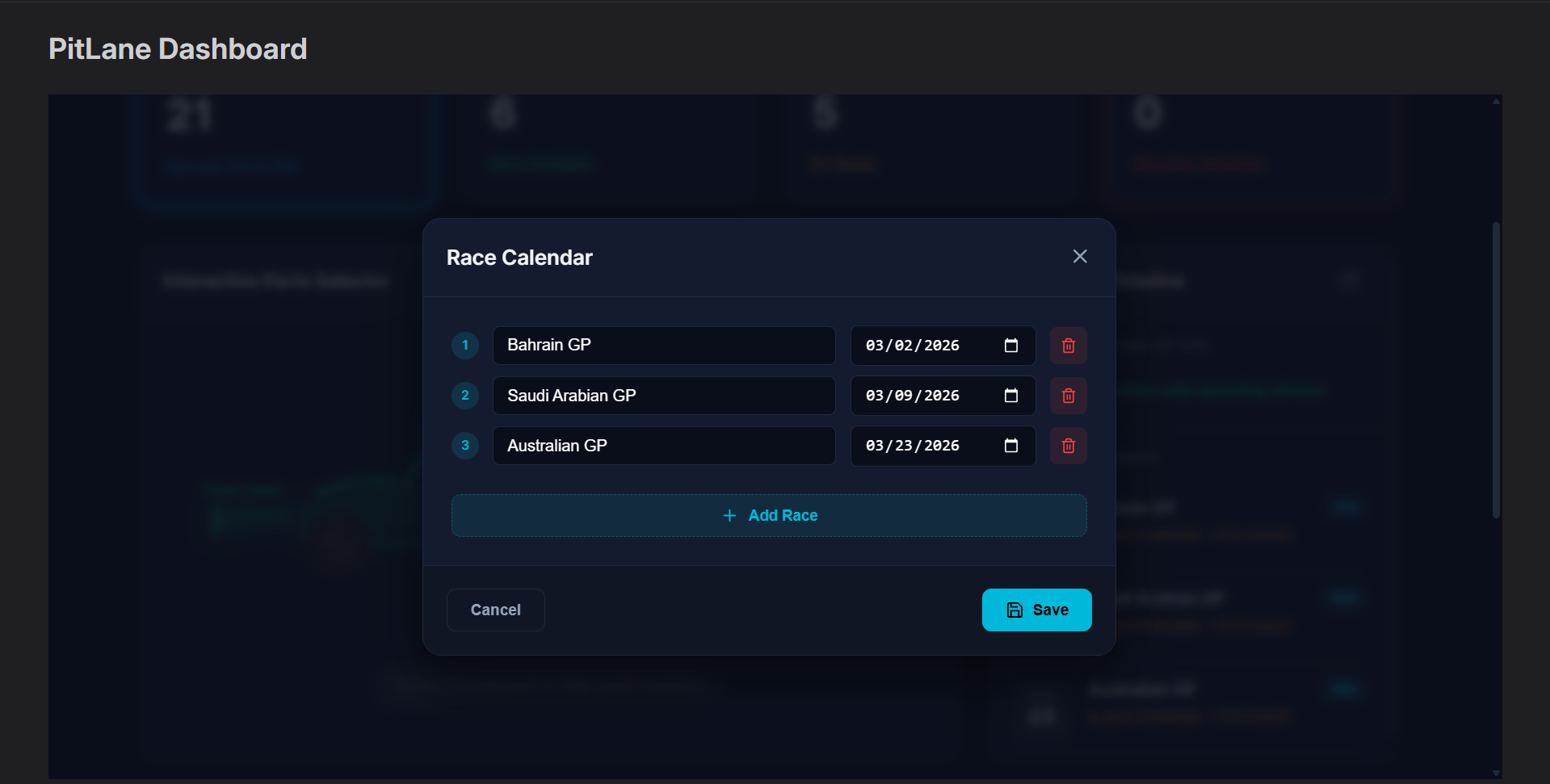
Configurable Race Calendar that drives the "Time-to-Event" calculations for part lifecycles.
-
Driver Configuration: Setup interface for configuring driver names, car chassis assignments, and primary component configurations.
Project Story
Inspiration: The "20,000 Lines of Excel" Crisis
The spark for PitLane Ledger came from a real-world crisis. At the 2024 Australian Grand Prix, Williams Racing faced a nightmare scenario: a practice crash damaged Alex Albon’s chassis, and the team had no spare available. The result? Logan Sargeant was forced to withdraw from the race.
"The team’s car build was being managed via 20,000 lines of Excel, making it nearly impossible to track shortages in real-time."— James Vowles, Williams Racing Team Principal
In the Cost Cap Era (where teams are strictly limited), logistics isn't just about moving boxes; it’s about survival. Every scrapped component eats into the specific Parts & Development Budget. We set out to build the inventory system we would want if Williams Racing hired us tomorrow: a secure, Atlassian Forge-powered nervous system that replaces spreadsheets with real-time compliance, readiness, and cost intelligence.
What It Does
PitLane Ledger transforms chaotic F1 logistics into a single "Mud-to-Boardroom" dashboard running inside Jira.
🔍 Parts Passport (Lifecycle Tracking) Every component carries a digital "passport" with full history through 8 stages: Manufactured → Quality Checked → In Transit → Trackside → Race Cleared → Damaged → Retired. It even tracks FIA usage limits (e.g., 4 Power Units per season).
📊 Fleet Readiness Dashboard A real-time "Go/No-Go" engine. It uses weighted scoring (Power Units > Steering Wheels) and checks spare coverage. If a part is damaged but a healthy spare exists, the penalty is reduced.
💰 Cost Cap Calculator (Tracks the Parts & Manufacturing Budget).
While the total FIA cap is $135M+, our system allows teams to set a customizable limit (e.g., **$15M** for parts). It monitors cumulative crash damage against this specific allocation, visualising exactly how trackside accidents eat into the funds set aside for upgrades.
🔒 Parc Fermé Mode A digital lock for the Post-Qualifying freeze. It physically prevents status changes in the database, ensuring the digital record matches strict FIA scrutineering rules.
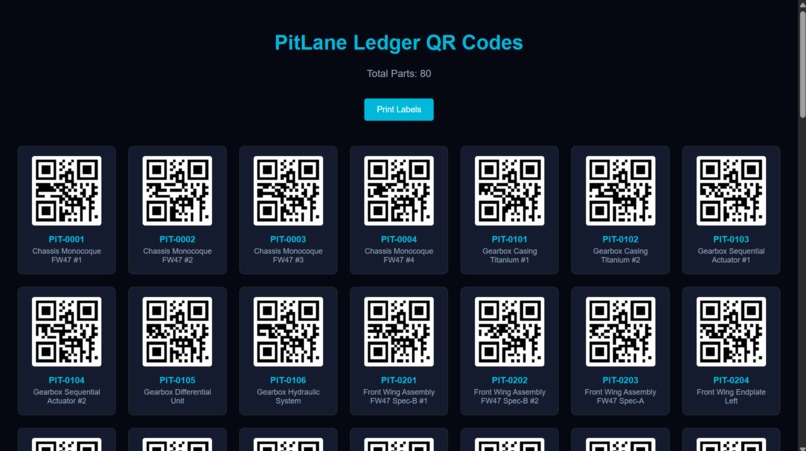
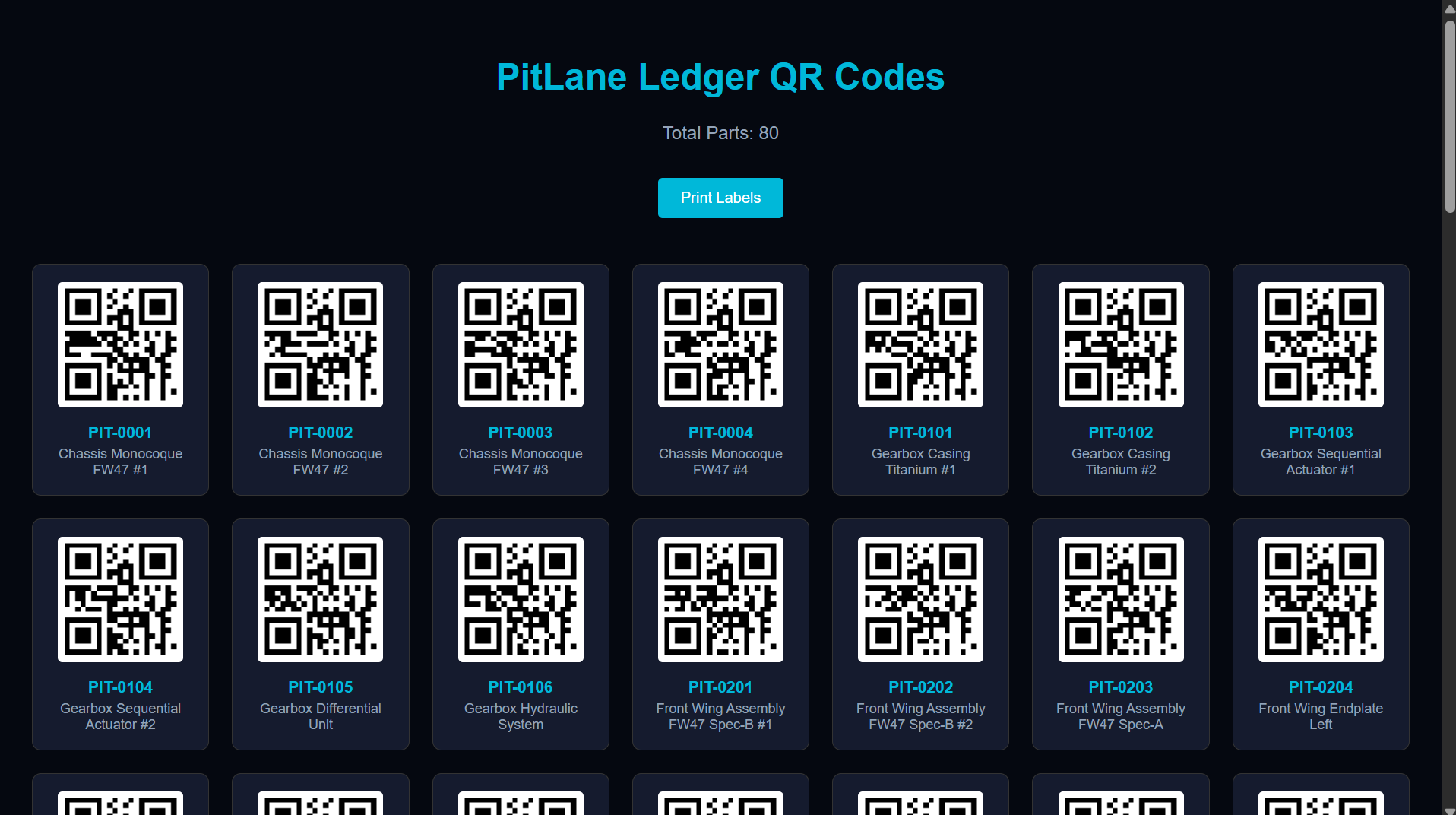
📱 QR Code Workflow A mobile-first scanning interface for the pit crew. Features a dual-engine scanner (Nimiq WebWorker + html5-qrcode fallback) for instant part identification, flash toggle, and bulk printing.
🤖 "Pit Boss" Rovo Agent The crown jewel. A specialised AI agent with 50+ custom actions. It allows natural language queries ("Are we ready for FP1?") but actively blocks safety violations ("STOP. You cannot assign a DAMAGED part.").
How We Built It
We architected PitLane Ledger as an enterprise-grade platform entirely on Atlassian Forge, prioritising security and UX.
System Architecture
+-----------------------------------------------------------+
|                    Atlassian Forge                        |
|  +--------------+  +--------------+  +-----------------+  |
|  | Jira Global  |  | Jira Issue   |  |  Rovo Agent     |  |
|  |    Page      |  |    Panel     |  |  "Pit Boss"     |  |
|  +------+-------+  +------+-------+  +--------+--------+  |
|         |                |                   |            |
|         +----------------+-------------------+            |
|                          v                                |
|              +-----------------------+                    |
|              |  Custom UI (React)    |                    |
|              |  Vite + Atlaskit      |                    |
|              +-----------+-----------+                    |
|                          v                                |
|              +-----------------------+                    |
|              |  Resolvers (index.js) |                    |
|              |  50+ Action Handlers  |                    |
|              +-----------+-----------+                    |
|                          v                                |
|              +-----------------------+                    |
|              |  Forge Storage API    |                    |
|              |  (Key-Value Store)    |                    |
|              +-----------------------+                    |
+-----------------------------------------------------------+
Technology Stack
| Layer | Technology |
|---|---|
| Platform | Atlassian Forge (Custom UI) |
| AI Agent | Atlassian Rovo (50+ Custom Actions) |
| Frontend | React 18 + Vite + Glassmorphism UI |
| Mobile | Nimiq Dual-Engine QR Scanner |
| Storage | Forge Storage API (Key-Value) |
Dual-Mode Architecture (DEMO vs PROD)To solve the challenge of judging vs. real-world use, we implemented two distinct modes:
DEMO Mode: Instantly generates 70+ realistic FW47 parts in browser session storage. Includes damage notes from actual 2024 race incidents (e.g., Spanish GP Albon contact). Zero setup required for judges.
PROD Mode: A robust pipeline that imports CSV inventory into persistent Forge Storage. Supports configurable driver names, race calendars, and per-part history tracking.
Challenges We Ran Into
Rovo Payload Extraction: Rovo actions send data payloads differently depending on the context (Sidebar vs. Chat). We had to engineer a robust "fallback chain" in our resolvers to capture the query context regardless of the source, ensuring the AI never failed silently.
The "Readiness" Algorithm: Defining "Ready" is complex. We iterated through 4 versions of the calculateFleetReadiness() function, eventually adding spare coverage bonuses and category weighting to mirror how a real Race Engineer thinks.
Mobile QR Reliability: Getting a high-performance camera stream inside the Forge iframe is tricky. We implemented a dual-engine approach (Nimiq as primary, html5-qrcode as fallback) and aggressive memory cleanup to prevent crashes on mobile devices.
Accomplishments We're Proud Of
50+ Rovo Actions: We didn't just bolt on AI. We built a comprehensive action library that can legitimately replace manual status checks.
The "Safety Stop": Seeing our Rovo AI agent successfully intervene and block a user from assigning a damaged part was a massive win. It proved that AI can be an active guardian.
Financial Viz: Successfully translating the dry, complex text of the FIA Financial Regulations into a live Cost Cap Dashboard that visualizes the "Cost of Crashing."
What We Learned
Domain Knowledge Matters: A generic inventory app fails in F1. By reading the 2024 Financial Regulations, we learned to build features that matter—like the "Parc Fermé" lockdown—proving that solving the specific user problem is key.
Forge is Production-Ready: Building the "Dual-Mode" architecture taught us how to push Forge's limits, balancing client-side speed (Demo) with server-side persistence (Prod).
What's Next for PitLane Ledger
Near-Term (Post-Hackathon)
Atlassian Marketplace Listing: Packaging for public distribution with proper documentation and enterprise support.
Multi-Team Support: Extending the data model beyond Williams to support any F1 constructor or customer team (e.g., Mercedes HPP).
Jira Automation Rules: Native triggers to auto-create sub-tasks when parts drop below life thresholds or approach FIA usage limits.
Bulk Operations: Enabling Pit Managers to select multiple parts for mass status updates or location transfers.
Mid-Term (2025 Season)
Live Telemetry Correlation: Connecting to AWS F1 data feeds to link part wear with actual session data (lap counts, G-forces, temperatures).
Confluence Race Briefings: Auto-generating pre-race documentation pages with fleet status, risk areas, and recommended actions for the crew.
Slack/Teams Integration: Pushing critical alerts ("Wing shipment delayed") directly to team communication channels.
Long-Term (Vision)
IoT Integration: Connecting to BLE beacons on trackside crates for automatic location updates as parts move through the paddock.
AR Mechanic Assistant: An Apple Vision Pro app that overlays torque specs, installation history, and warnings directly onto physical parts for mechanics.
Sustainability Dashboard: Tracking carbon footprint for logistics decisions (e.g., Air Freight vs. Sea Freight) to align with F1's "Net Zero 2030" goals.
Try It Out
🏁 >> Click Here to Install PitLane Ledger (Directly) <<
Built With
- atlassian-forge
- atlassian-rovo
- forge-storage
- html5-qrcode
- node-22
- react
- vite


Log in or sign up for Devpost to join the conversation.