Inspiration
What it does
How we built it
Challenges we ran into## Inspiration
PitchCraft was inspired by a common hackathon problem: teams often build strong projects but struggle to explain them clearly before submission time. A great demo can lose impact if the story is unclear, the problem is vague, or the presentation feels rushed.
Build Beyond is open-ended, so participants can create anything. That freedom is powerful, but it also means builders need a simple way to turn any idea into a strong project pitch. PitchCraft helps hackers organize their thinking, explain their work, and prepare a judge-ready submission faster.
What it does
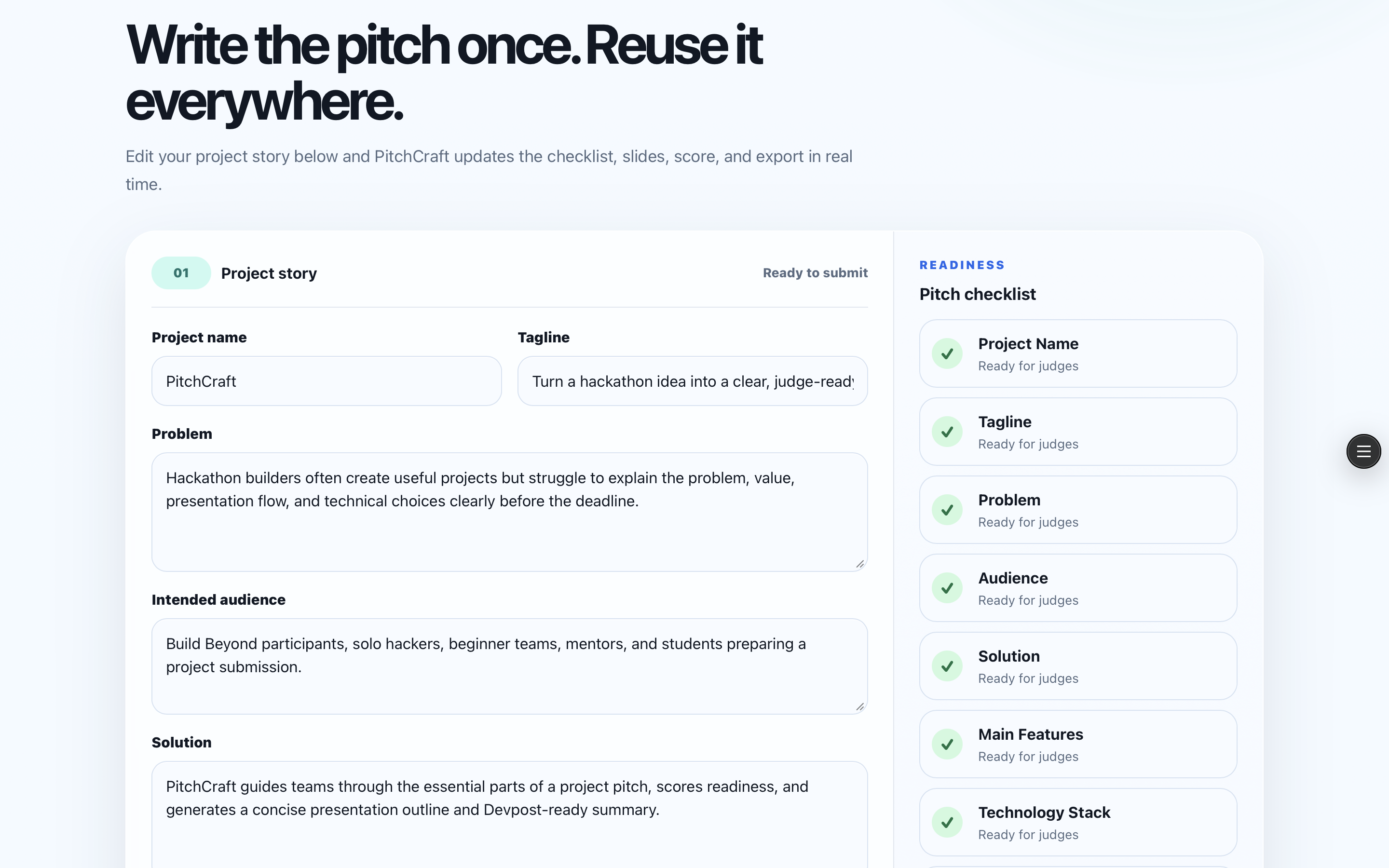
PitchCraft is a web app that helps hackathon participants create a polished project pitch.
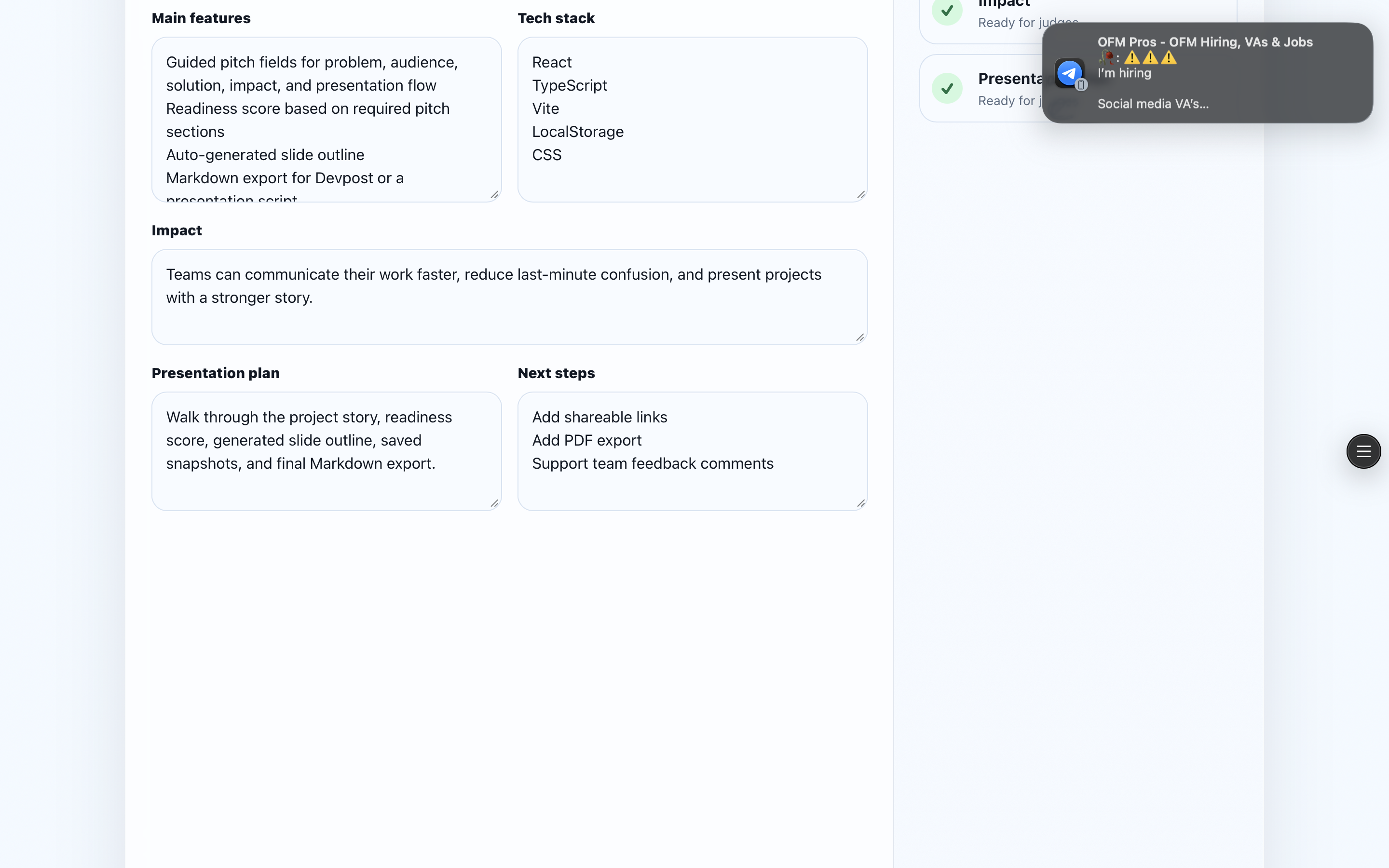
Users can enter:
- Project name
- Tagline
- Problem
- Intended audience
- Solution
- Main features
- Technology stack
- Impact
- Demo plan
- Next steps
The app then generates:
- A live pitch readiness score
- A checklist of completed and missing pitch sections
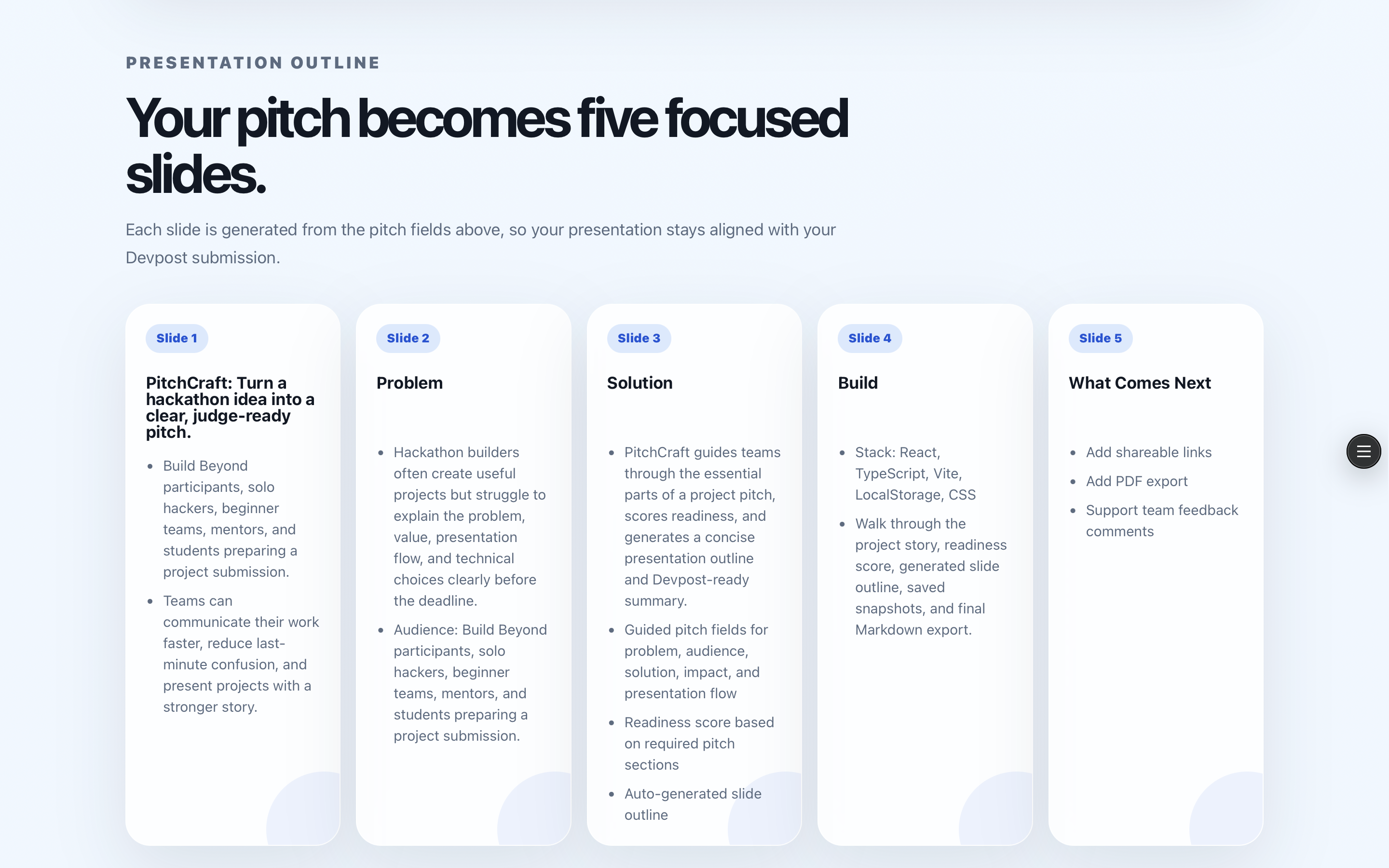
- A five-slide presentation outline
- Saved pitch snapshots
- A Markdown export that can be used for Devpost, speaker notes, or a project README
How we built it
PitchCraft was built with React, TypeScript, Vite, CSS, and browser localStorage.
The app uses a typed pitch domain model to keep the pitch logic separate from the UI. The core logic handles:
- Validating pitch sections
- Calculating readiness score
- Generating slide outlines
- Exporting Markdown
- Saving and loading pitch drafts locally
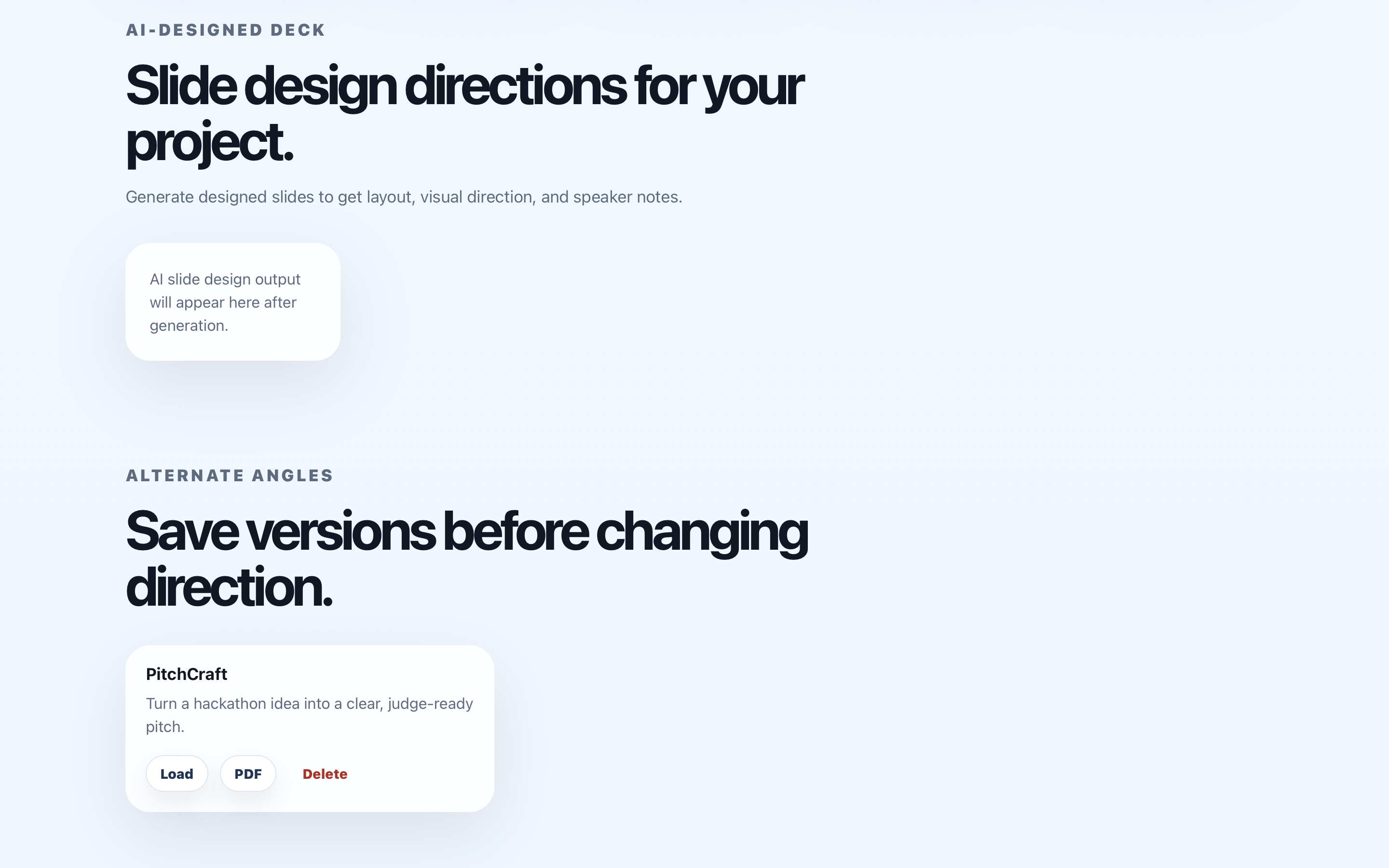
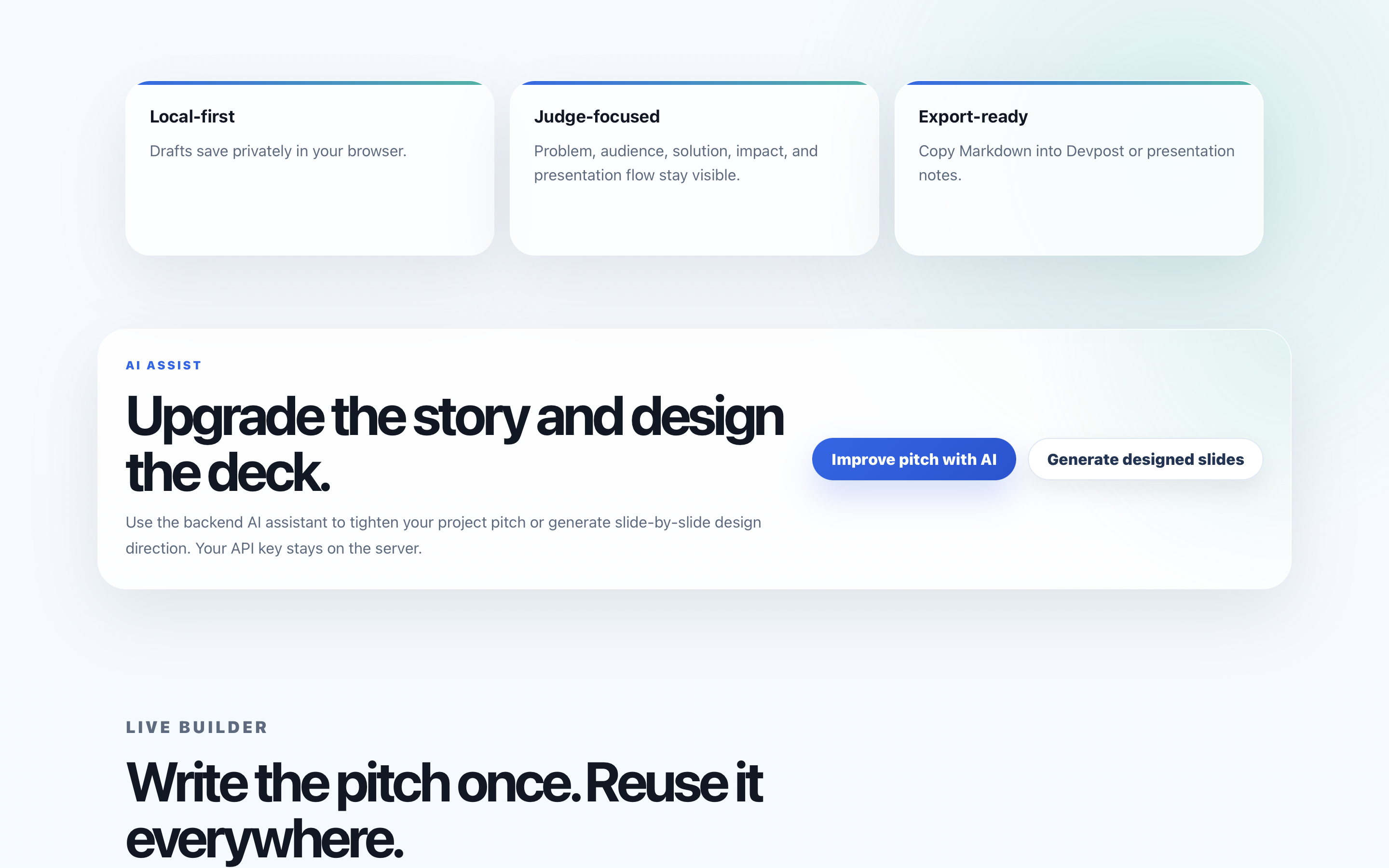
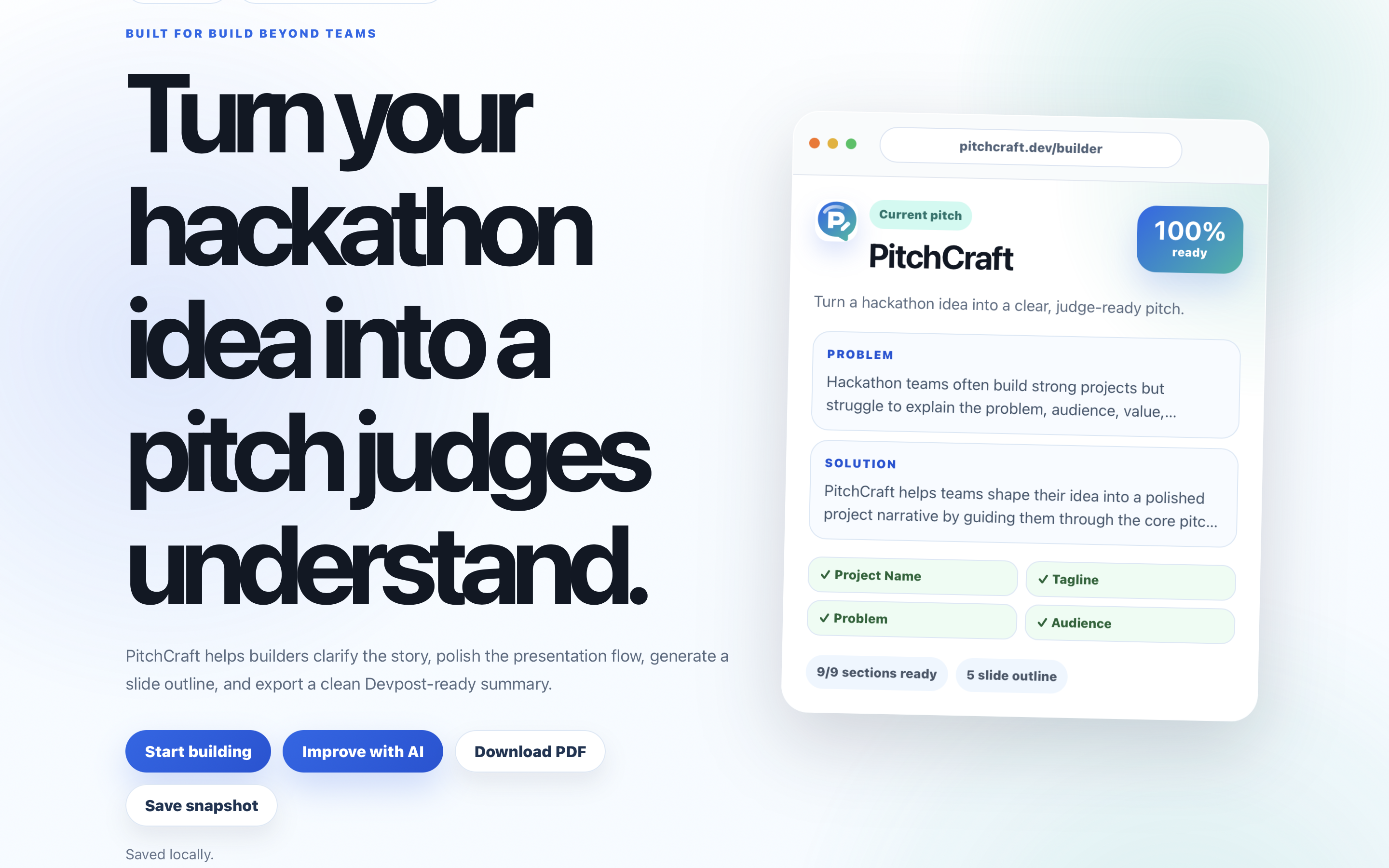
The frontend was designed as a polished website/web app experience, with a landing page, live product preview, builder section, slide showcase, snapshot system, and export section.
No fake APIs or simulated AI responses are used. Everything works locally in the browser.
Challenges we faced
One challenge was making the project feel useful without depending on a backend or external AI API. To solve this, PitchCraft uses rule-based logic and structured inputs to generate useful pitch materials honestly.
Another challenge was improving the UI so it felt like a real product website rather than a plain dashboard. The interface went through multiple iterations, including better branding, a custom logo, a polished hero section, and a cleaner embedded builder experience.
We also had to make sure exported content was practical for real hackathon submissions, not just placeholder text.
What we learned
We learned how important storytelling is in hackathons. A project is not only judged by what it does, but also by how clearly the team explains the problem, solution, impact, and demo.
We also learned how to structure frontend logic cleanly with TypeScript, keep UI state persistent with localStorage, and build reusable export functionality.
What's next
Future improvements could include:
- PDF export
- Shareable pitch links
- Team collaboration
- Presentation theme customization
- More pitch templates
- Feedback mode for mentors
- Export to Google Slides or PowerPoint
Accomplishments that we're proud of
What we learned
What's next for PithCraft
Built With
- app
- builder
- css
- devpost
- frontend
- hackathon
- localstorage
- oxlint
- pitch
- presentation
- productivity
- react
- typescript
- vite
- vitest
- web


Log in or sign up for Devpost to join the conversation.