-
-
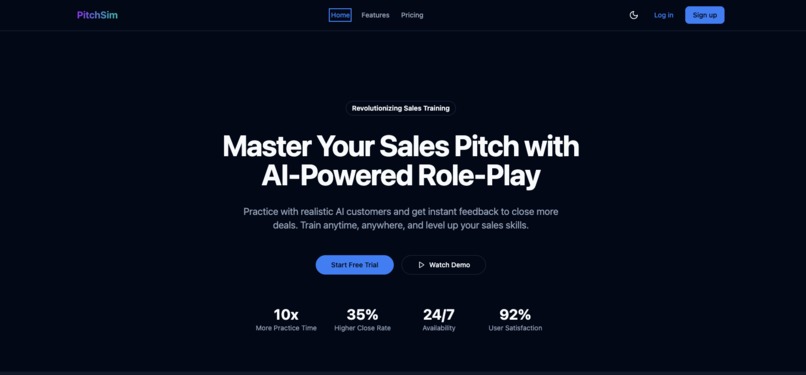
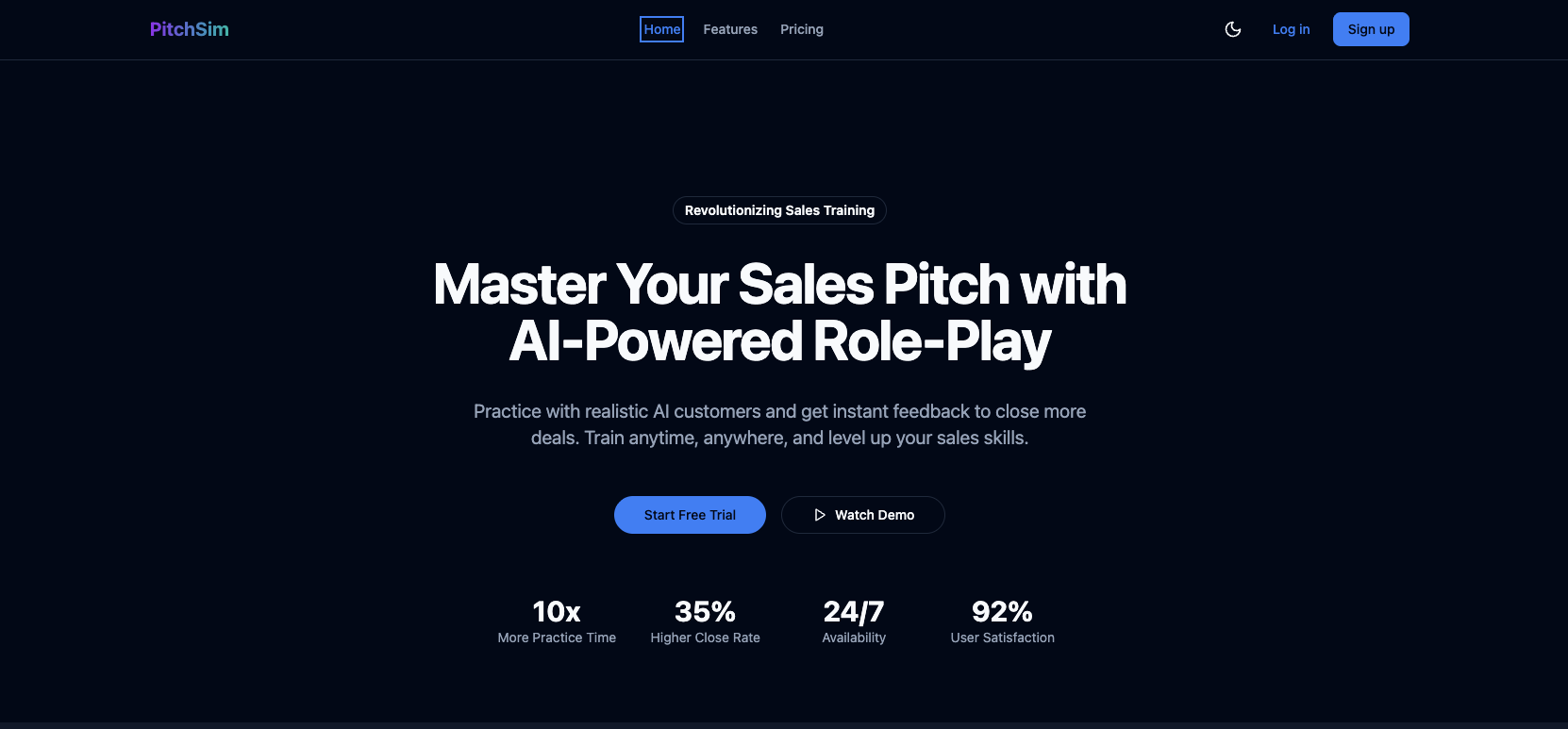
PitchSim Hero
-
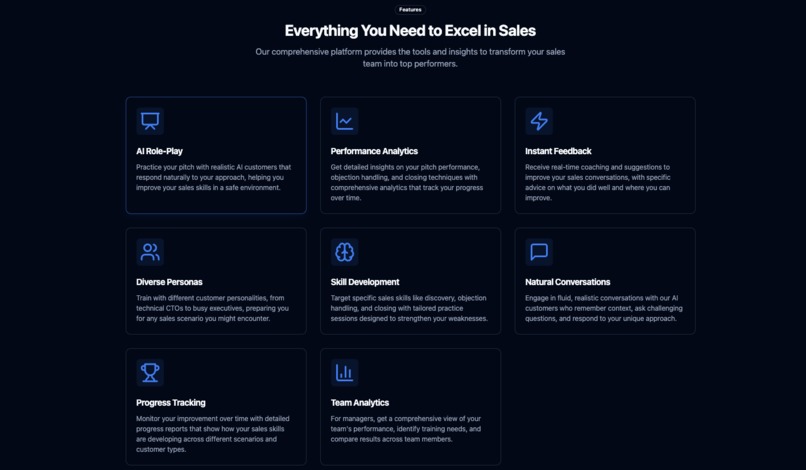
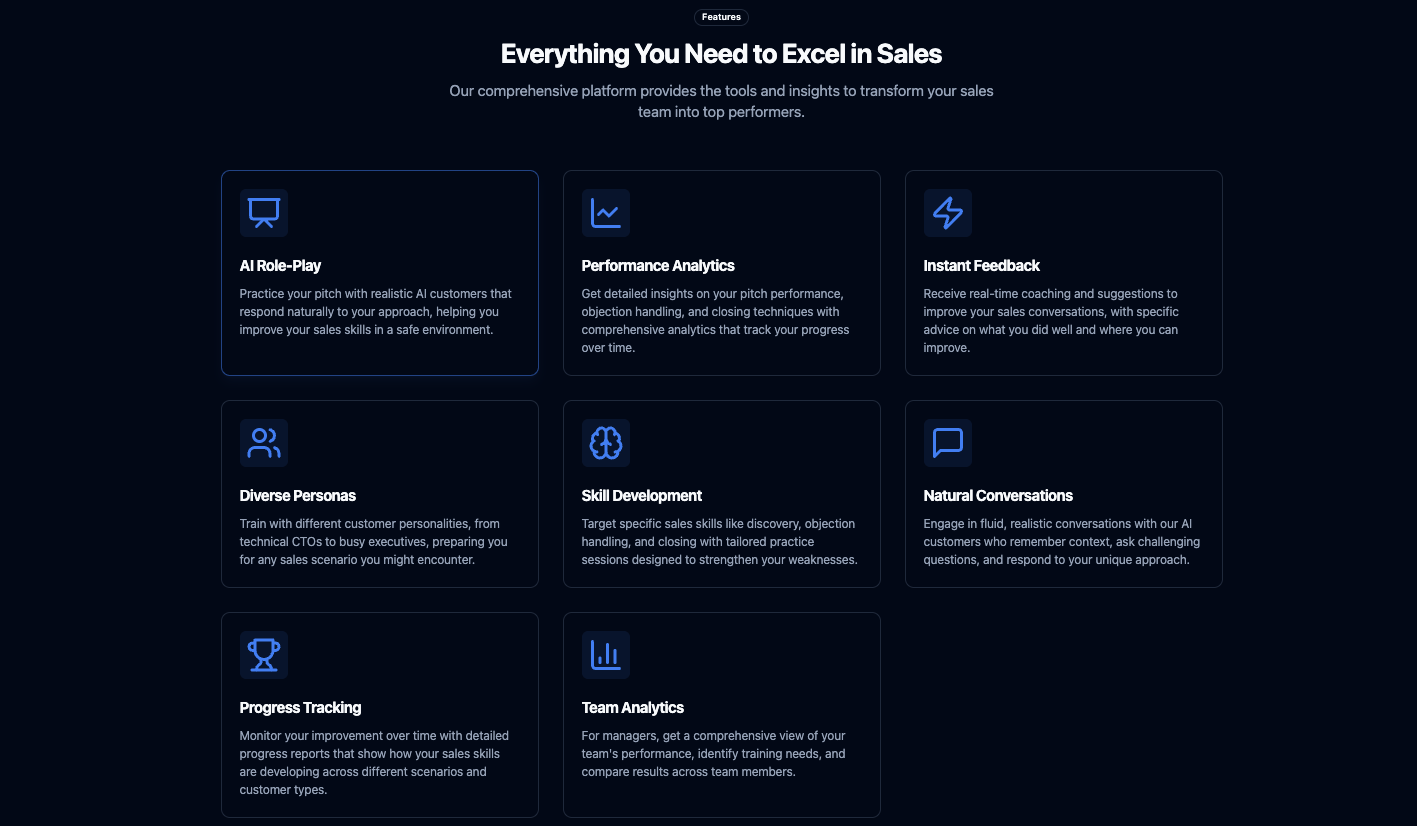
PitchSim Features
-
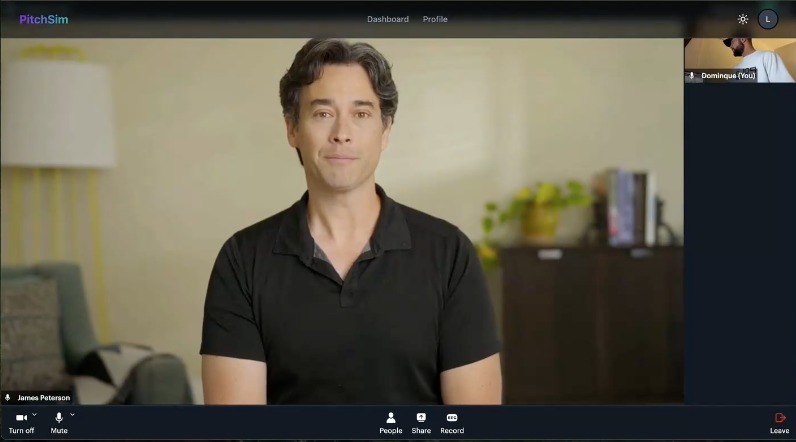
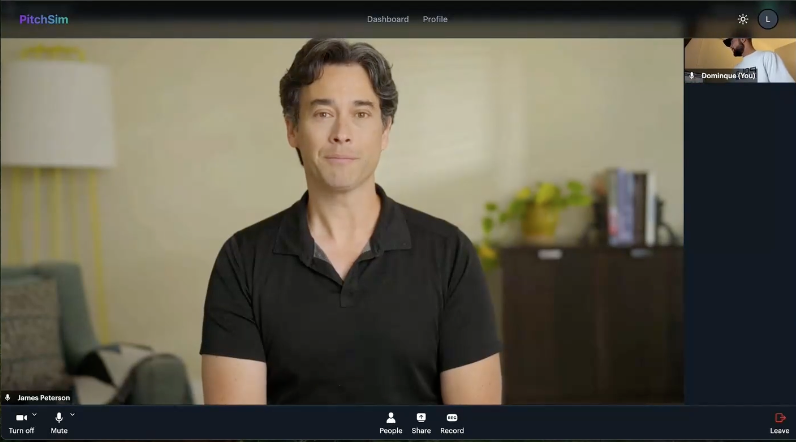
PitchSim In Action
💡 Inspiration
The inspiration for PitchSim came from conversations with fellow sales professionals who validated a frustrating reality: traditional sales training just isn't cutting it anymore. When I talked to my peers in sales, they all shared the same pain points - expensive coaches, awkward role-play sessions with colleagues, and feedback that comes too late to be useful.
But the real spark came when I saw the Tavus demo on YouTube with bolt.new. Watching that demo, I immediately realized the potential - what if we could create AI customers so realistic that sales reps could practice with them anytime, anywhere, and get instant feedback on their performance?
The combination of real market validation from sales professionals and seeing Tavus's incredible video AI capabilities made me realize we could build something that would genuinely revolutionize how people learn to sell.
🚀 What it does
PitchSim creates hyper-realistic AI customers that sales professionals can practice with in real-time video conversations. Here's what makes it revolutionary:
🎭 Intelligent AI Personas
- James Peterson (CTO): Technical, security-focused, asks about integrations and compliance
- Sarah Williams (CFO): Budget-conscious, ROI-focused, challenges costs and value propositions
- Mike Johnson (CEO): Time-pressed, strategic thinker, wants big picture outcomes
👁️ Real-Time Perception Analytics
- Eye Contact Tracking: Monitors camera engagement and confidence
- Confidence Analysis: Analyzes vocal tone and body language in real-time
- Speech Clarity: Scores pace, filler words, and articulation
- Engagement Metrics: Provides overall presentation effectiveness scores
🧠 Adaptive Conversation Flow
- AI adapts difficulty based on user performance
- Realistic objections tailored to persona and industry
- Dynamic tool calling for "company data" during conversations
- Natural turn-taking with advanced perception layers
📊 Performance Dashboard
- Session history with detailed scoring and improvement tracking
- Specific coaching recommendations based on performance
- Comparative analytics against industry benchmarks
- Progress visualization over time
💰 Complete Business Model
- Free tier: 1 conversation with basic feedback
- Starter ($49/mo): 10 conversations with standard personas
- Professional ($149/mo): 50 conversations with advanced perception metrics
- Enterprise ($399/mo): Unlimited conversations with custom personas
🛠 How we built it
Development Approach
The development process was a fascinating journey using modern AI-powered development tools:
Primary Development Environment:
- bolt.new as the main development platform - this was incredible for rapid prototyping and iteration
- Claude Code for command-line development tasks and complex logic
- Claude Sonnet 4 for planning prompts and architectural decisions
Design Inspiration: Taking cues from the Tavus demo, I focused on creating a clean, professional interface that would feel familiar to sales professionals while showcasing the AI video technology effectively.
Tech Stack
- Frontend: React 18 + TypeScript + Vite
- Styling: Tailwind CSS + shadcn/ui
- Backend: Supabase (Auth, Database, Edge Functions, Storage)
- Payments: Stripe with full subscription management and webhooks
- AI Video: Tavus CVI (Conversational Video Interface)
- Deployment: Netlify
Tavus Integration
We pushed Tavus to showcase its most advanced capabilities:
- Real-time CVI protocol for instantaneous video conversations
- Raven-0 perception analysis for body language and engagement metrics
- Custom personas with detailed personality profiles
- Advanced tool calling for dynamic responses during conversations
- WebRTC streaming for ultra-low latency video
Prompt Engineering Process
One of the most interesting aspects was learning to craft better prompts for Claude Sonnet 4 to help with:
- System architecture planning
- Complex feature implementation strategies
- Database schema design
- Integration patterns for Tavus and Stripe
😤 Challenges we ran into
1. Transitioning from bolt.new to Production
The biggest challenge was taking the project out of bolt.new and ensuring it would run in a production environment. While bolt.new was amazing for rapid development, getting all the dependencies, environment variables, and configurations working outside of that environment required careful attention to detail.
2. Learning Better Prompting Techniques
Initially, my prompts to Claude weren't specific enough, which led to generic solutions. I had to learn how to:
- Break down complex features into specific, actionable prompts
- Provide better context about the existing codebase
- Ask for implementation strategies rather than just code snippets
3. Supabase and Netlify Integration
Once I got the hang of sending better prompts and understanding the deployment process, Supabase and Netlify actually made deployment super easy. But the initial learning curve of understanding how to properly configure:
- Row-level security policies
- Edge functions for Stripe webhooks
- Environment variable management across platforms
4. Stripe Payment Integration Complexity
Building a complete subscription system with multiple tiers, webhook handling, and session management was more complex than expected. Getting the subscription logic right and ensuring proper security took significant iteration.
5. Real-Time Video Performance
Ensuring smooth video performance while integrating Tavus's perception analytics required careful optimization and testing across different browsers and network conditions.
🏆 Accomplishments that we're proud of
🚀 Complete Full-Stack Application
I'm incredibly proud of creating a full-stack SaaS application from scratch using modern development tools. Going from idea to working product with AI assistance showed me the power of combining human creativity with AI capabilities.
💳 Usage Tiers with Stripe Payments
Building a complete subscription system with multiple usage tiers and Stripe integration was a major achievement. Users can seamlessly upgrade from free to paid plans, and the admin panel provides full subscription management.
🎯 Real Impact for Sales Teams
Creating something that can genuinely help sales teams get real, instant feedback and coaching feels incredibly meaningful. This isn't just a demo - it's a tool that could actually improve people's careers and help them close more deals.
🛠 Modern Development Workflow
Successfully using bolt.new, Claude Code, and Claude Sonnet 4 together demonstrated how AI-powered development tools can accelerate the entire product development lifecycle when used strategically.
🎪 Production-Ready Features
- Working user authentication and authorization
- Real-time video conversations with AI
- Perception analytics and performance scoring
- Complete payment processing and subscription management
- Admin panel for user management
- Responsive design that works across devices
💡 What we learned
AI-Powered Development is Game-Changing
Using bolt.new and Claude fundamentally changed how I approach software development. The ability to rapidly prototype, iterate, and refine ideas with AI assistance accelerated development by an order of magnitude.
Prompt Engineering is a Critical Skill
Learning to write better prompts for Claude Sonnet 4 was essential. The quality of the output directly correlated with the specificity and context of my prompts. This is a skill that will be invaluable going forward.
Market Validation Matters More Than Perfect Code
Talking to actual sales professionals early in the process provided invaluable direction. Their feedback shaped the feature set and prioritization in ways that pure technical considerations never could.
Modern Development Tools Lower Barriers
The combination of Supabase, Netlify, and Stripe made building a production SaaS application incredibly accessible. What used to require weeks of infrastructure setup now takes hours.
Video AI Technology is Ready for Real Applications
Tavus's capabilities exceeded expectations. The quality and responsiveness of the AI video conversations opened up possibilities I hadn't initially considered.
🚀 What's next for PitchSim
Immediate Goals
- Achieve our financial targets by converting the demo into a revenue-generating business
- Get PitchSim in front of more sales people locally through networking events and sales team presentations
- Gather user feedback from early adopters to refine the product-market fit
Short-term Roadmap (3-6 months)
- Enhanced Analytics: Deeper insights into improvement patterns and skill development
- Custom Personas: Allow users to create personas based on their specific customer profiles
- Mobile Optimization: Ensure seamless experience on mobile devices for on-the-go practice
- Integration Capabilities: Connect with popular CRM systems like Salesforce and HubSpot
Medium-term Vision (6-12 months)
- Industry-Specific Training: Specialized modules for different sales verticals (SaaS, real estate, healthcare, etc.)
- Team Features: Multi-user accounts with manager dashboards and team analytics
- Advanced AI Coaching: Post-conversation analysis with personalized improvement recommendations
- Performance Benchmarking: Compare performance against industry standards and peers
Business Development
- Local Sales Community Outreach: Partner with sales organizations and training companies in our area
- Revenue Growth: Scale from initial users to sustainable monthly recurring revenue
- Product-Market Fit: Iterate based on real user feedback and usage patterns
- Expansion Strategy: Plan for scaling beyond our local market
Built With
- bolt.new
- claude
- claude-code
- netlify
- radix-ui
- react-18
- react-hook-form
- react-router
- recharts
- shadcn/ui
- sonnet4
- stripe
- supabase
- tailwind-css
- tavus-conversational-video-interface
- typescript
- vite
- zod

Log in or sign up for Devpost to join the conversation.