-
-

-
-
-
-
-
-
-
-
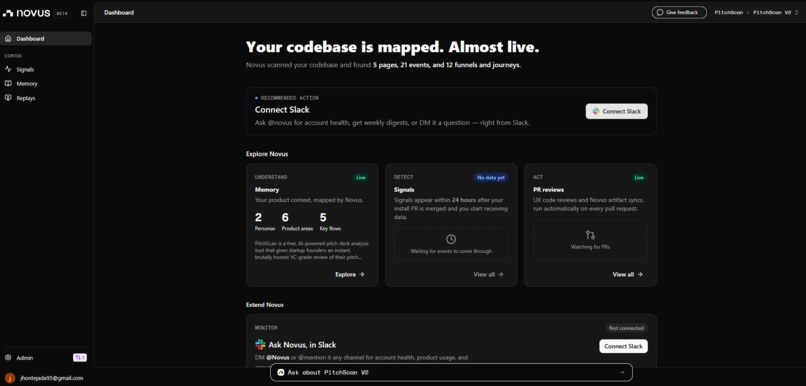
NOVUS DASHBOARD

Inspiration
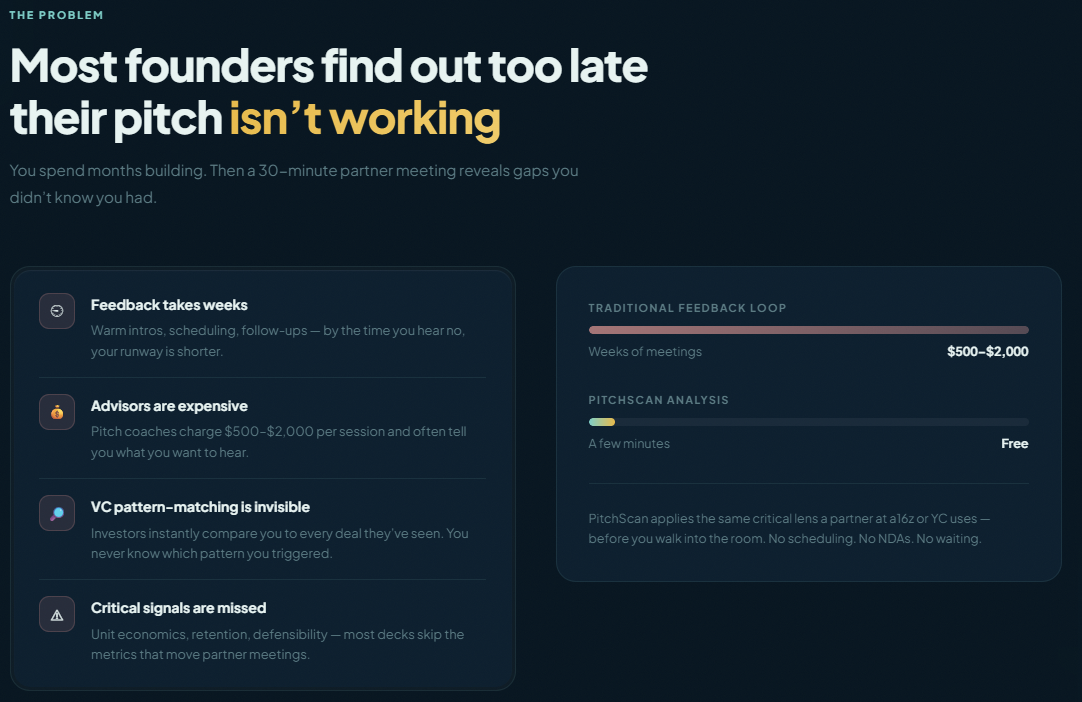
I've been in product long enough to have sat in rooms where decks get reviewed. The conversation rarely sounds like what founders imagine. It's fast, it's pattern-matching, and most decks don't survive the first 90 seconds.
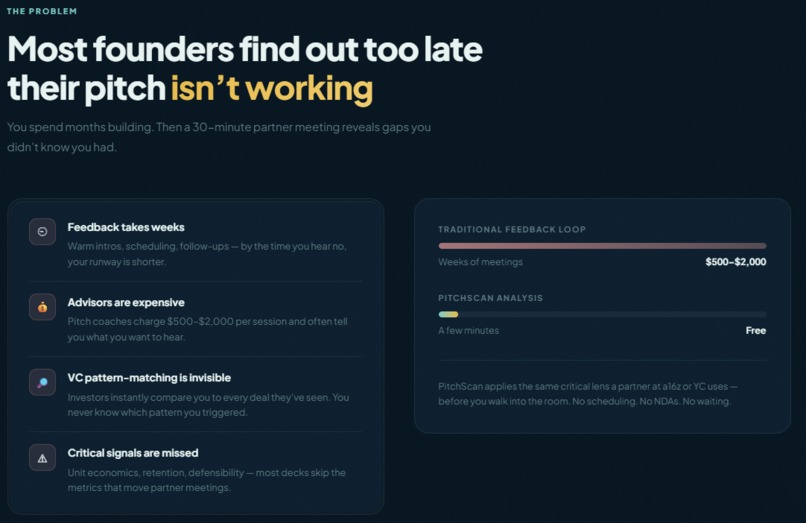
What bothers me isn't that investors pass — it's that founders never find out why. You spend three months obsessing over a deck, send it to 40 people, and get 38 silences and 2 polite "not a fit right now." No signal. No direction. Just the void.
I wanted to build the thing that tells you the truth before you send it.
What it does
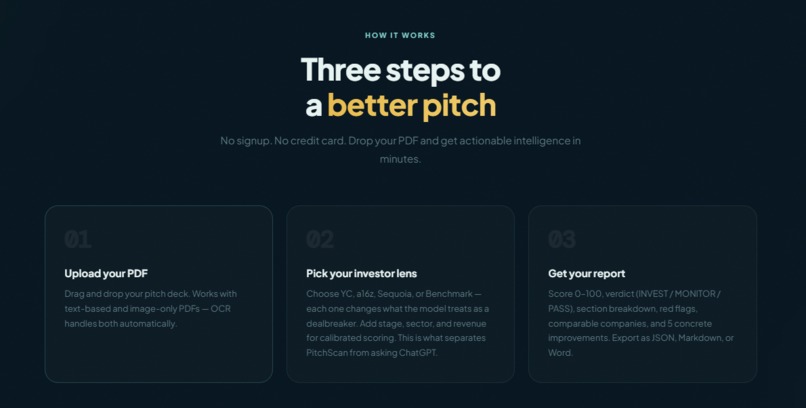
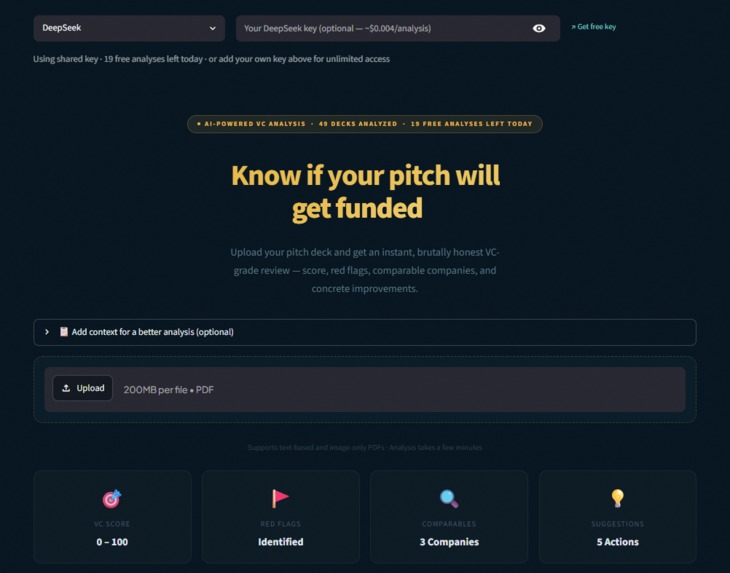
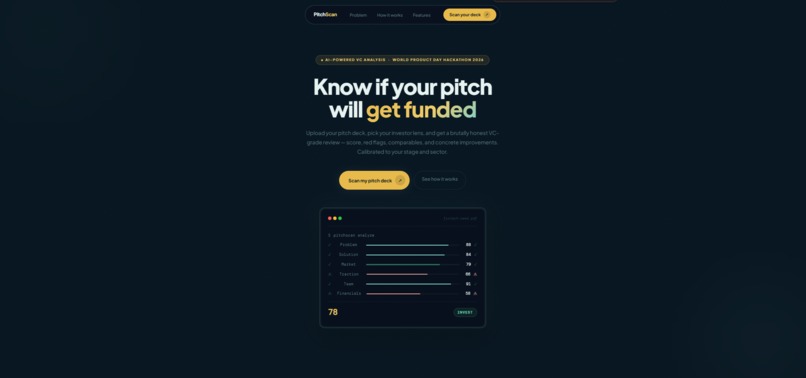
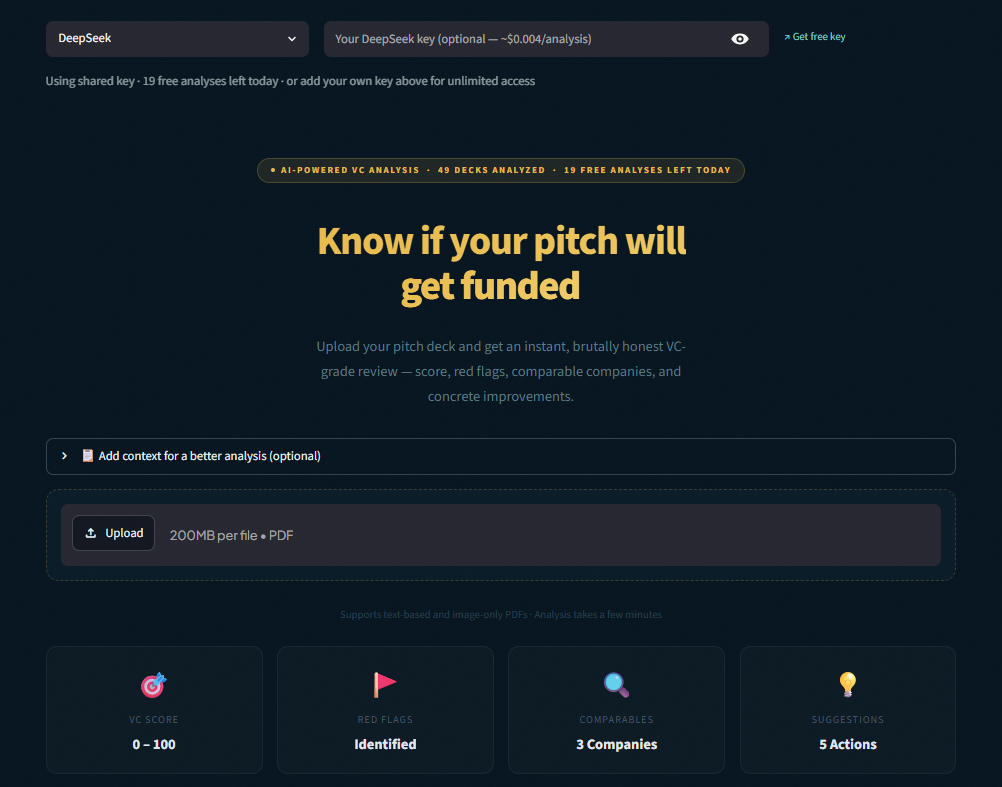
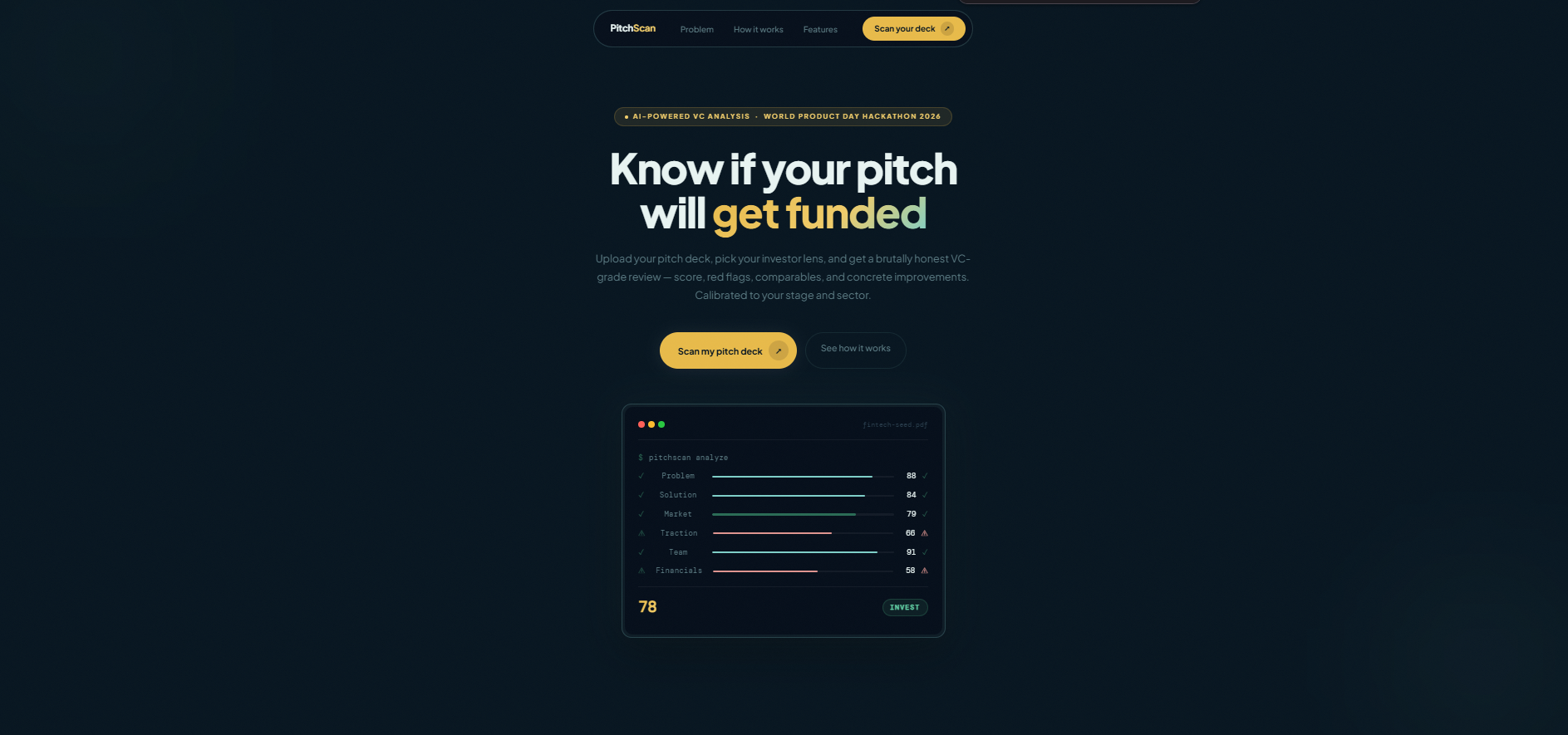
PitchScan reads your pitch deck and gives you the honest review you'd get from a senior partner — if they had the time, and if they owed you one.
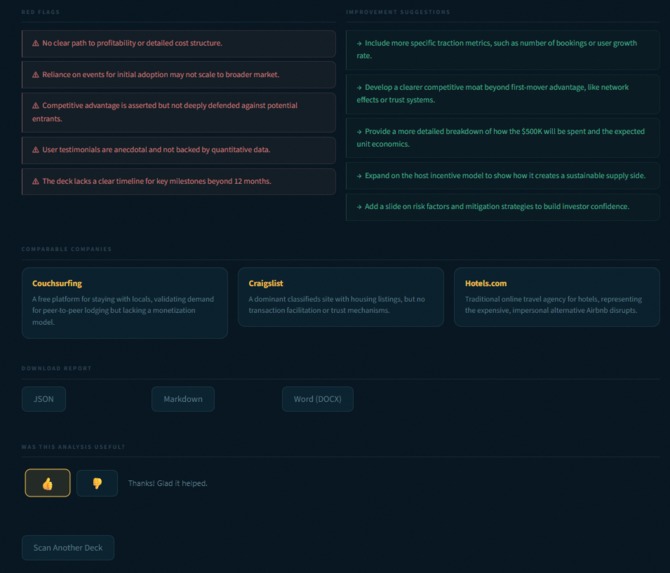
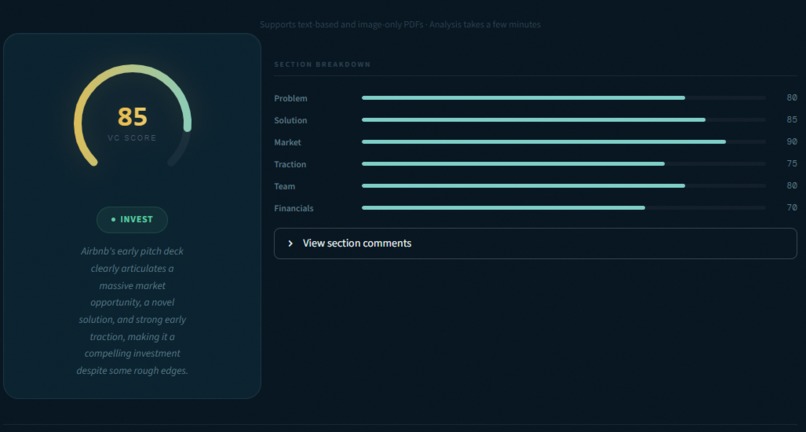
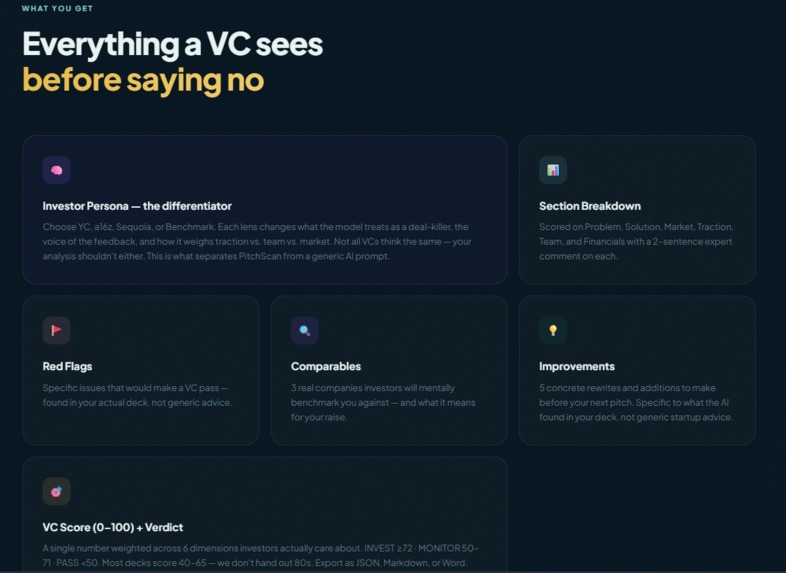
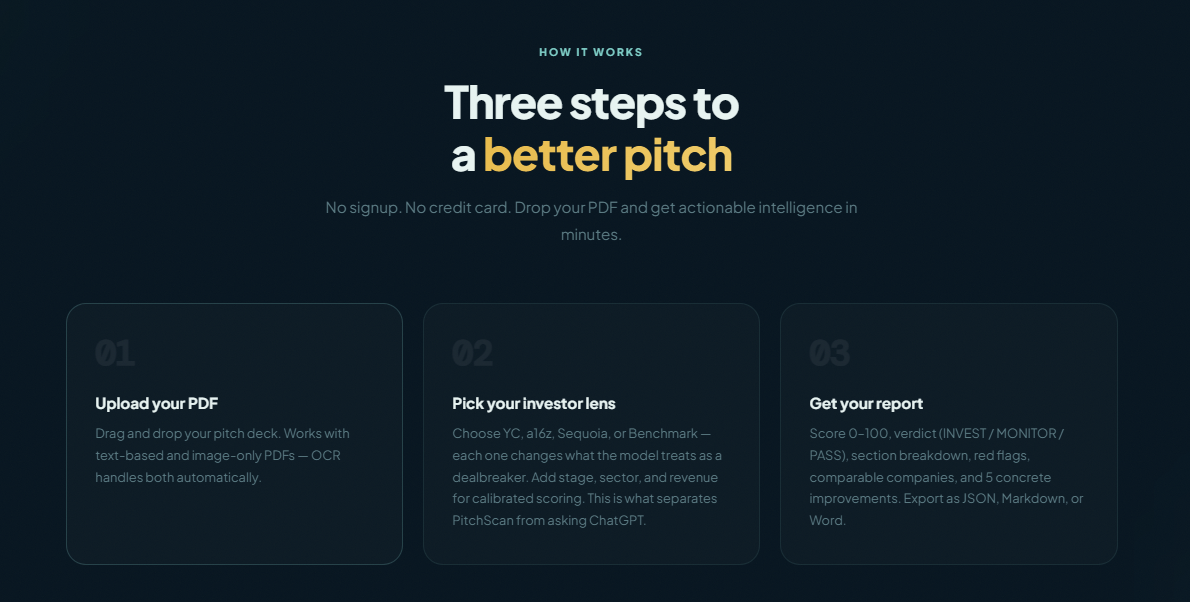
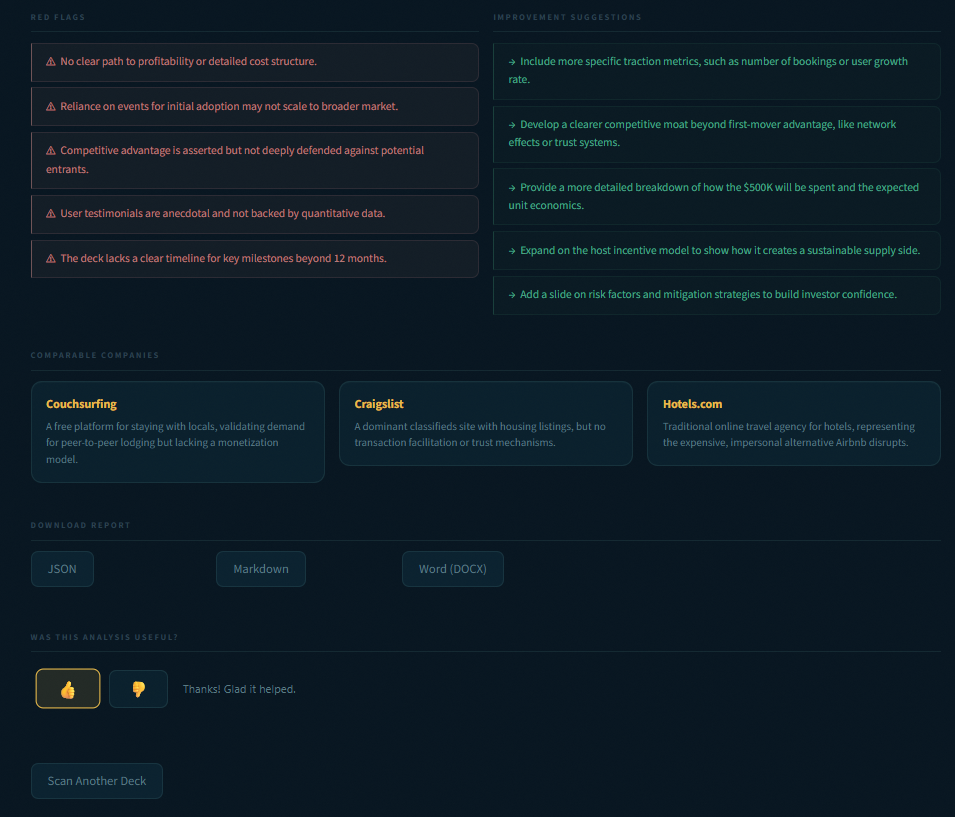
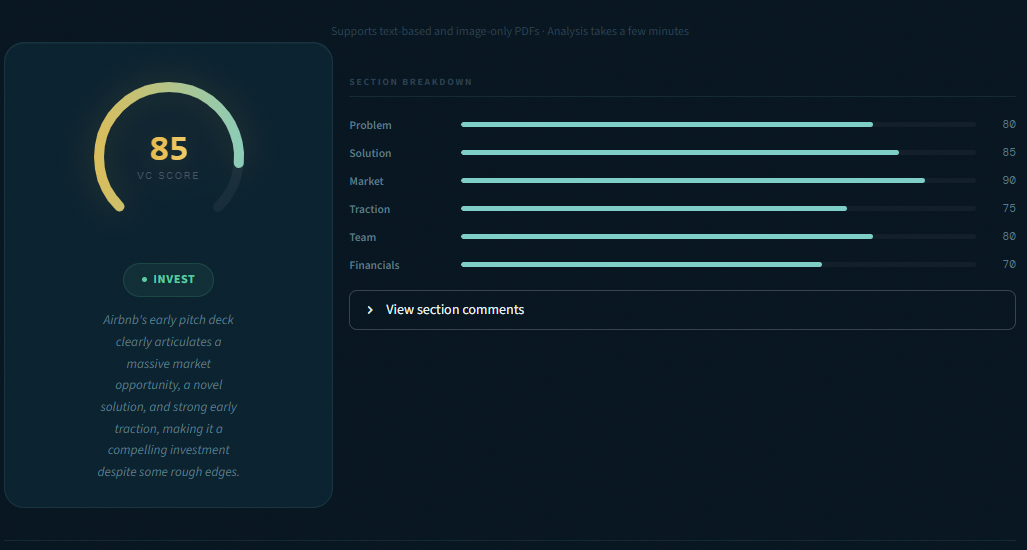
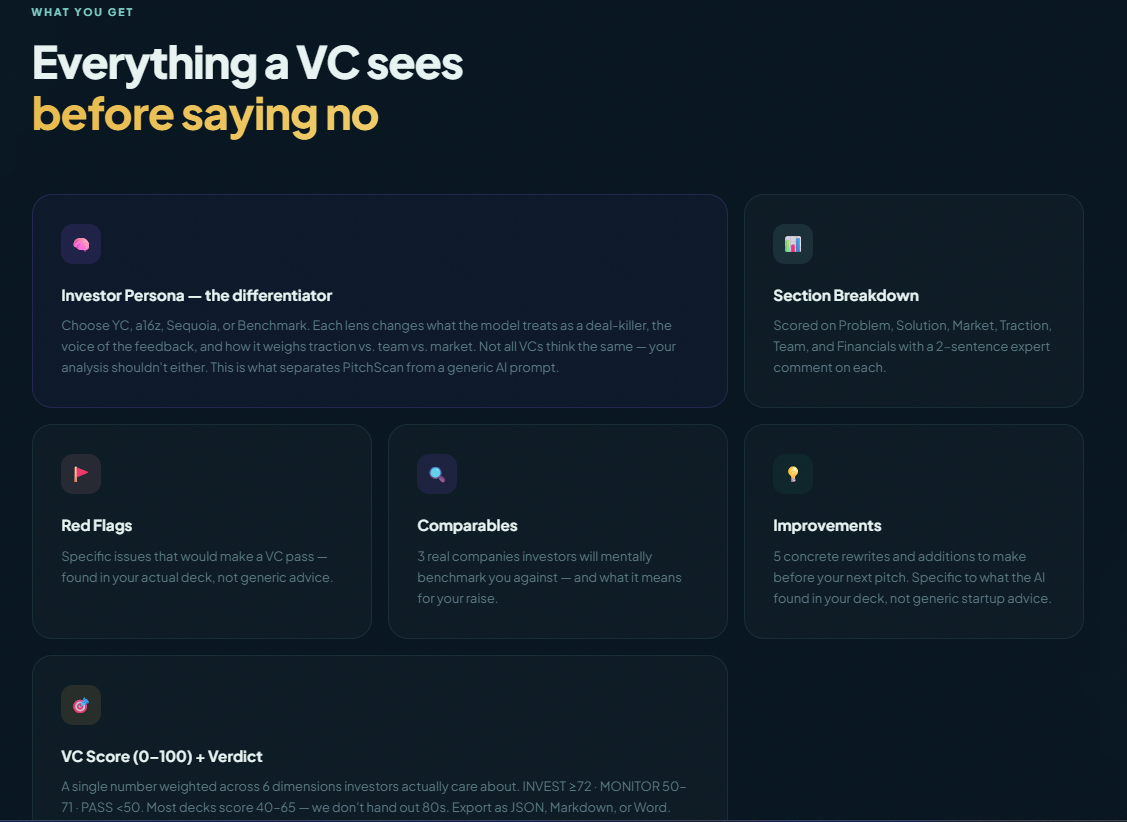
Upload a PDF. Get back a score from 0 to 100, a verdict (INVEST / MONITOR / PASS), a breakdown across the six sections every investor actually evaluates, the red flags they'd quietly note but never tell you, three comparable companies to contextualize where you sit, and five specific things you can fix before your next send.
It's not cheerleading. It's what a good mentor would say if they weren't trying to be nice.
How we built it
I'm a PM, not an engineer. This was built in 30 days using AI tools end-to-end — Claude for thinking through architecture and writing most of the code, DeepSeek for the analysis model, Streamlit to ship fast without a backend team.
The product decision I'm most proud of: forcing the model to return structured JSON instead of a paragraph. That single constraint is what makes the output feel like a real scorecard instead of a chatbot response. We also added OCR support because most real pitch decks are design-heavy files that text parsers can't read. If it doesn't work on the Airbnb deck, it doesn't work.
Challenges we ran into
The hardest part wasn't technical — it was figuring out what the output should actually feel like. VC feedback is blunt and specific. Getting the model to stop being diplomatic and start being useful took more prompt iteration than anything else.
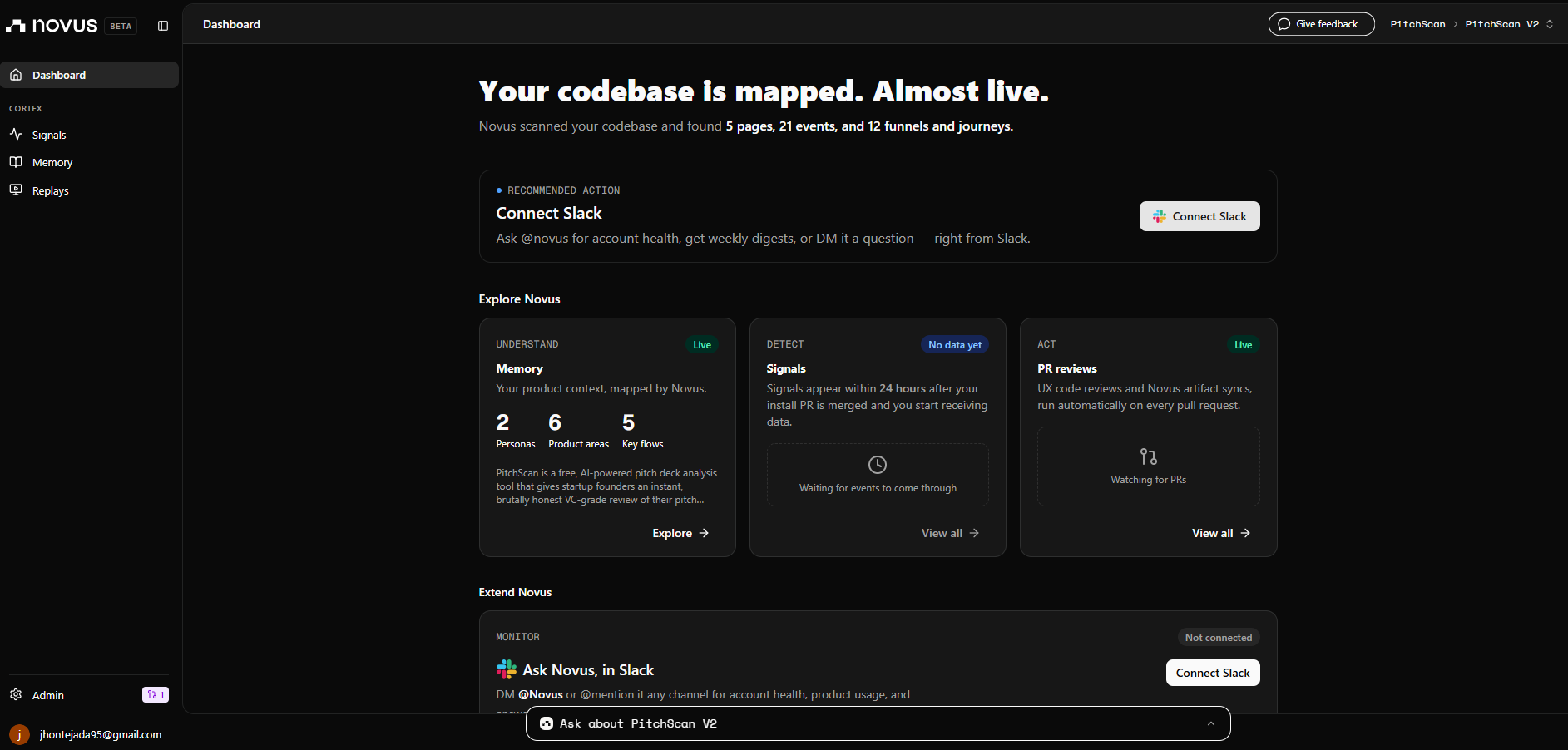
On the technical side: image-based PDFs, Python version conflicts on Streamlit Cloud, and getting Novus to fire correctly inside Streamlit's sandboxed iframe environment all cost real hours. Every "small" deployment issue compounds when you're racing a deadline.
Accomplishments that we're proud of
The OCR pipeline working seamlessly on image-heavy decks — the ones that actually matter. And honestly, the output quality. When you run a real deck through it and the red flags match exactly what a VC would think, that's the moment you know the prompt engineering worked.
Also: shipping it. Fully deployed, publicly accessible, works on mobile, handles edge cases. That counts.
What we learned
Shipping something real — even imperfect — changes how you think about building. The moment a stranger lands on your URL and actually uses it, you see the product completely differently than you did in your head.
I also learned that the best PM tools aren't the ones with the most features. They're the ones that give you one clear answer to one painful question.
PitchScan answers: will this deck get funded, and if not, why not.
What's next for PitchScan
Investor matching — not just "here's your score" but "here are 10 investors whose portfolio suggests they'd look at this." Cohort benchmarking so you can see how your deck scores vs. others in your sector. And a feedback loop: after you improve the deck, rescan and track progress over time.
The vision is simple: no founder should walk into a pitch without knowing exactly where they're weak.

Log in or sign up for Devpost to join the conversation.