-
-
product
-
product
-
product
-
product
-
product
-
product
-
landing
-
landing
Inspiration
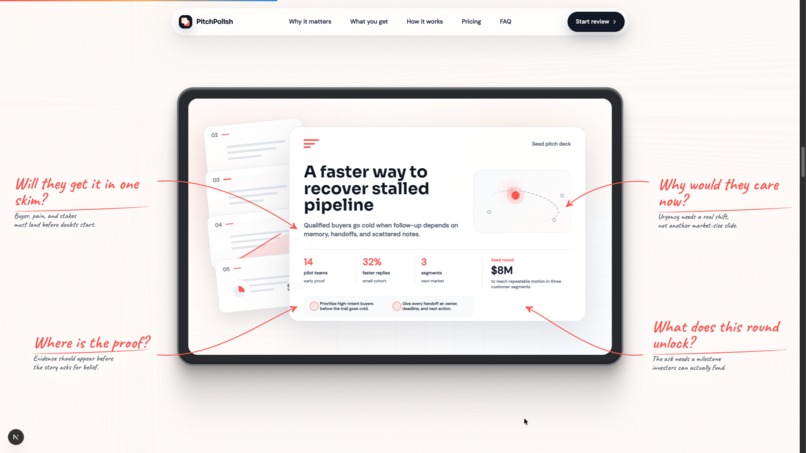
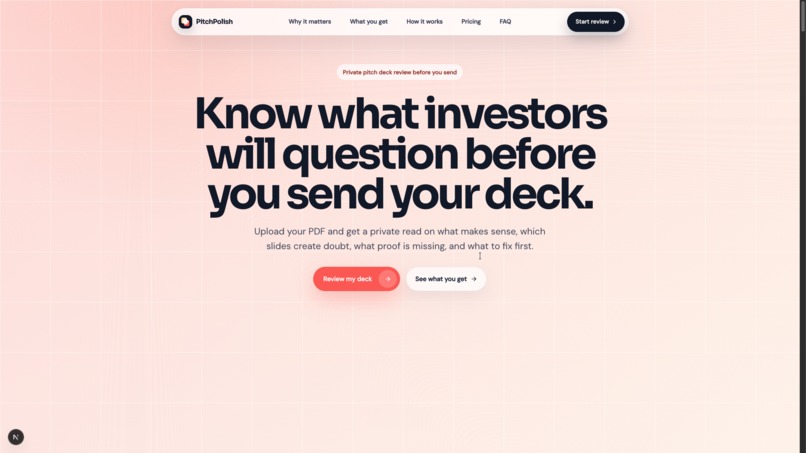
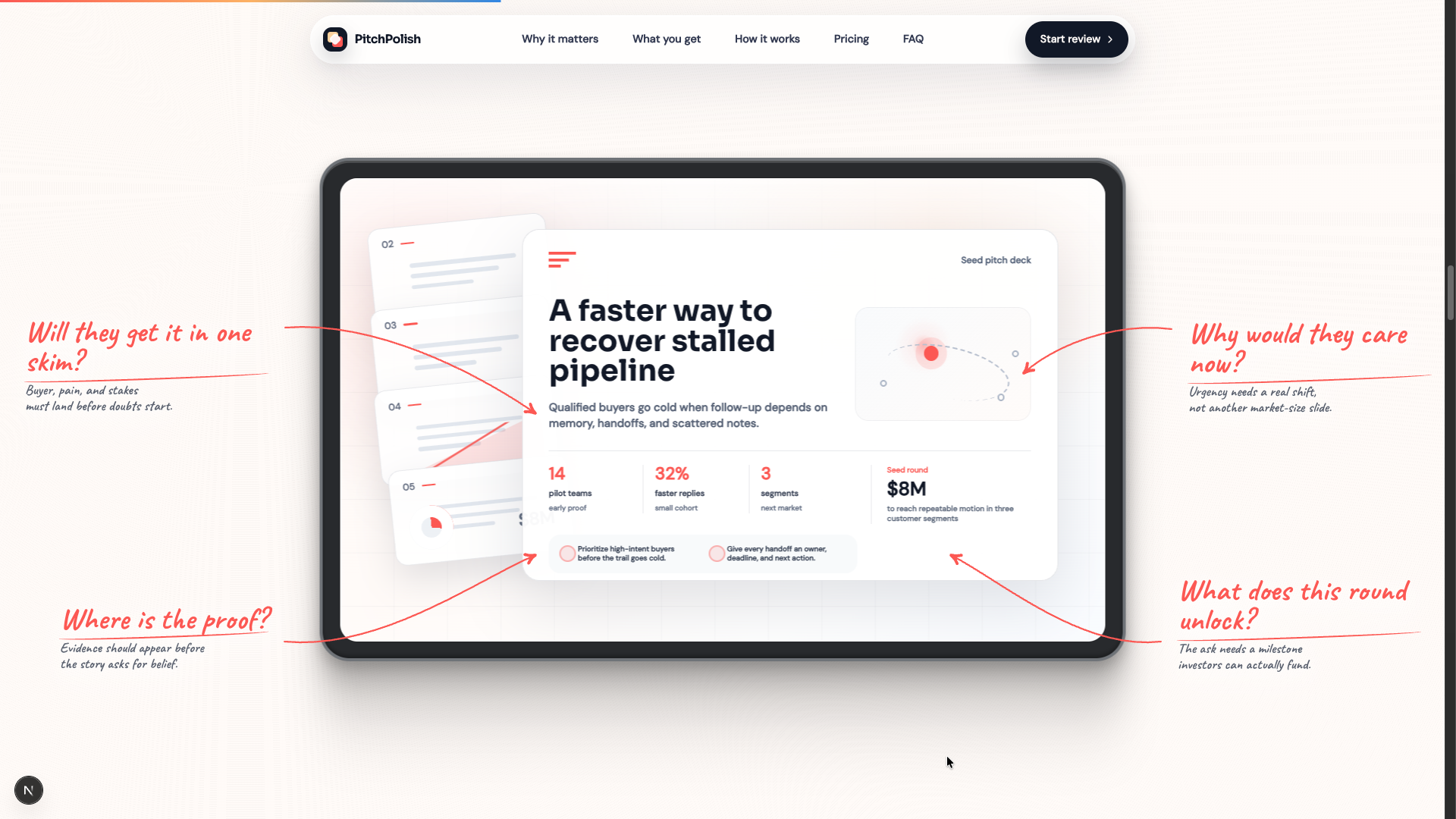
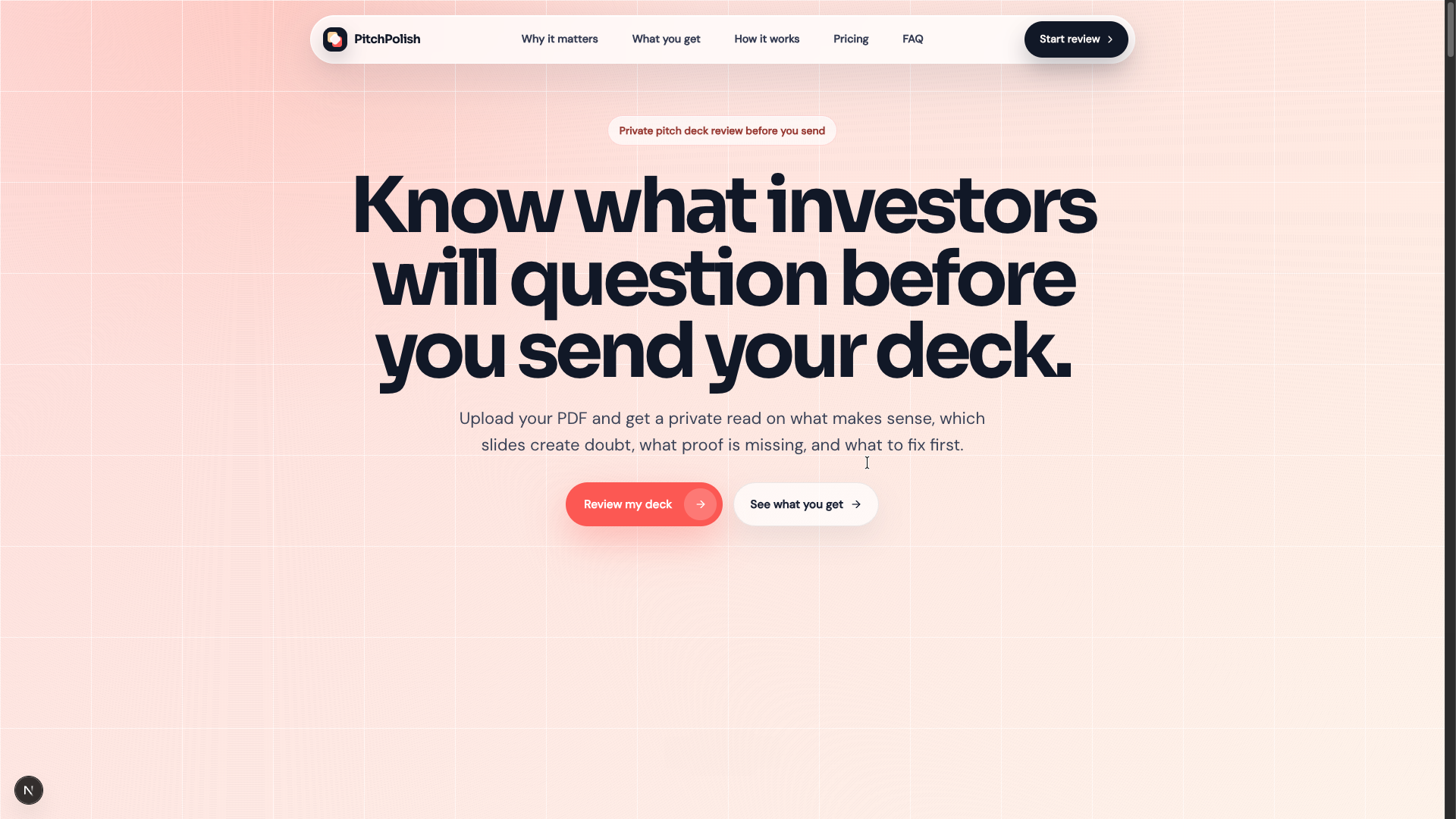
Founders know their businesses deeply, but investors only see what the deck proves in a few minutes. PitchPolish was inspired by that gap: helping founders see their pitch through an investor’s cold-read lens before sending it out.
What it does
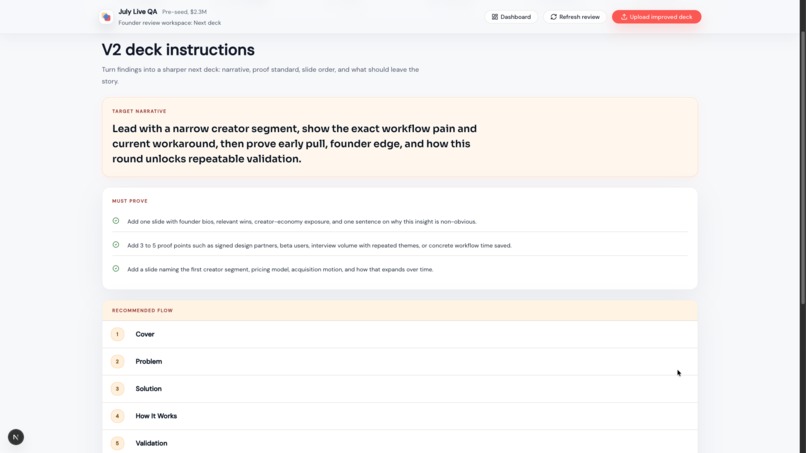
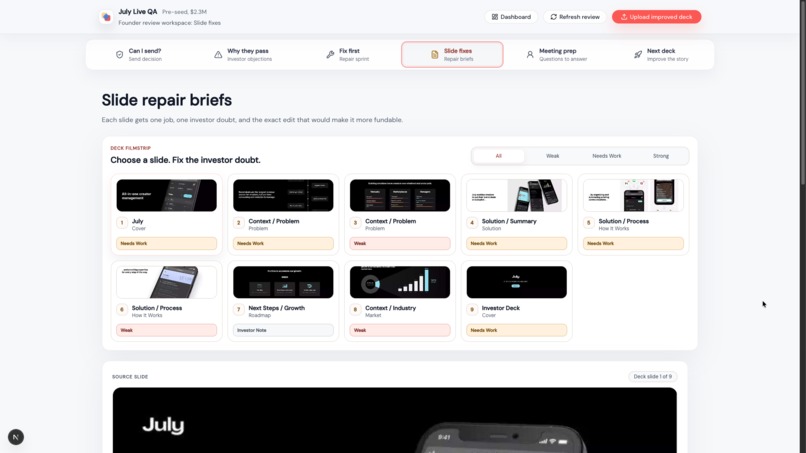
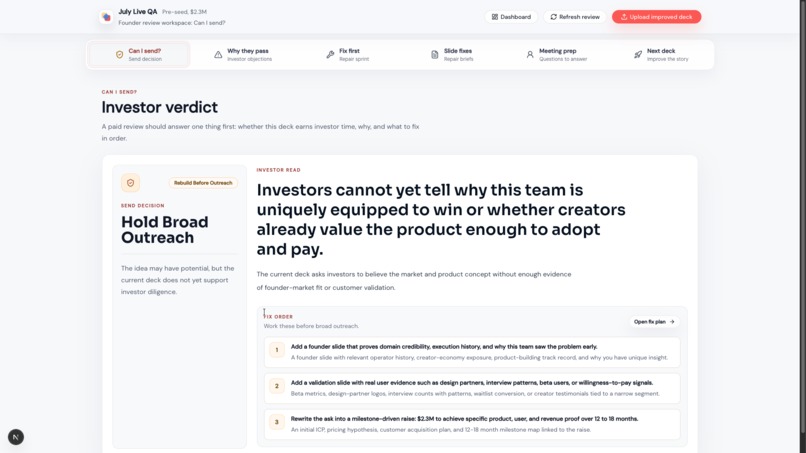
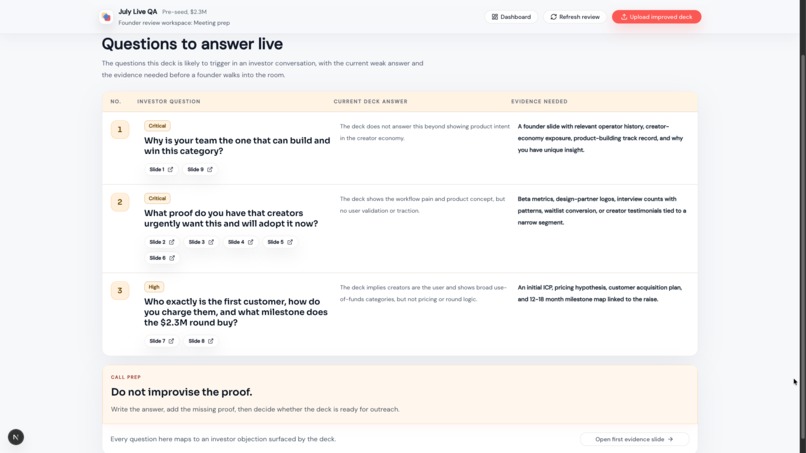
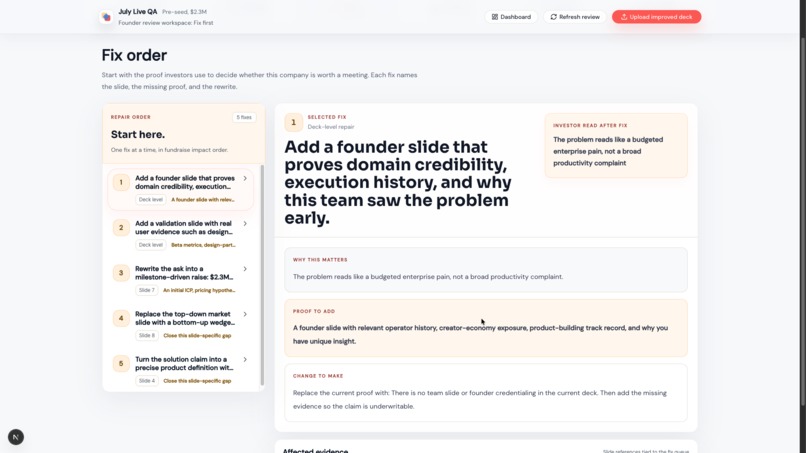
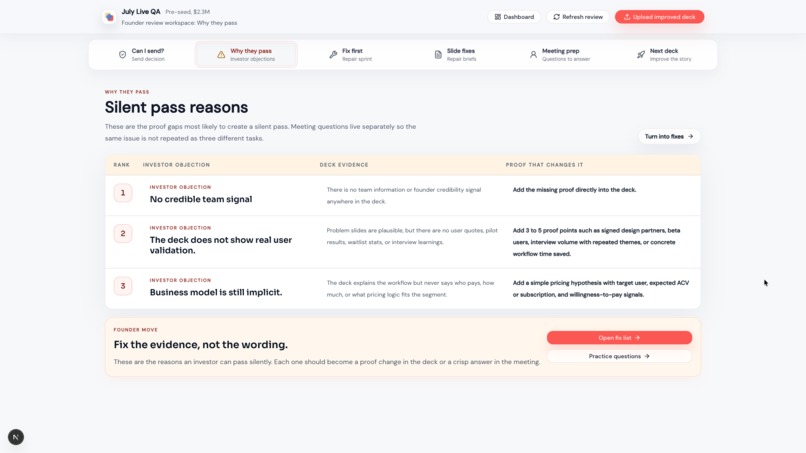
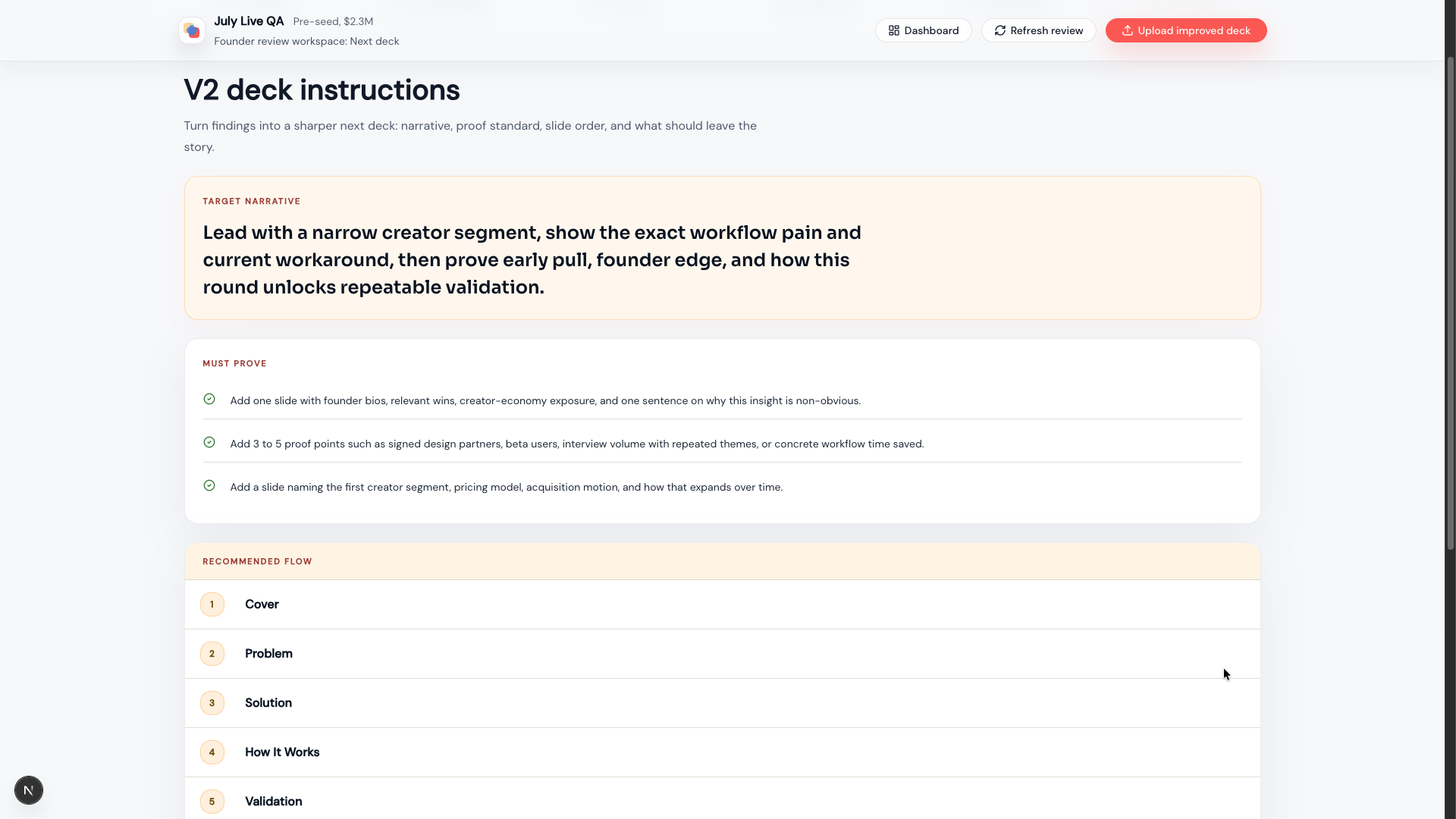
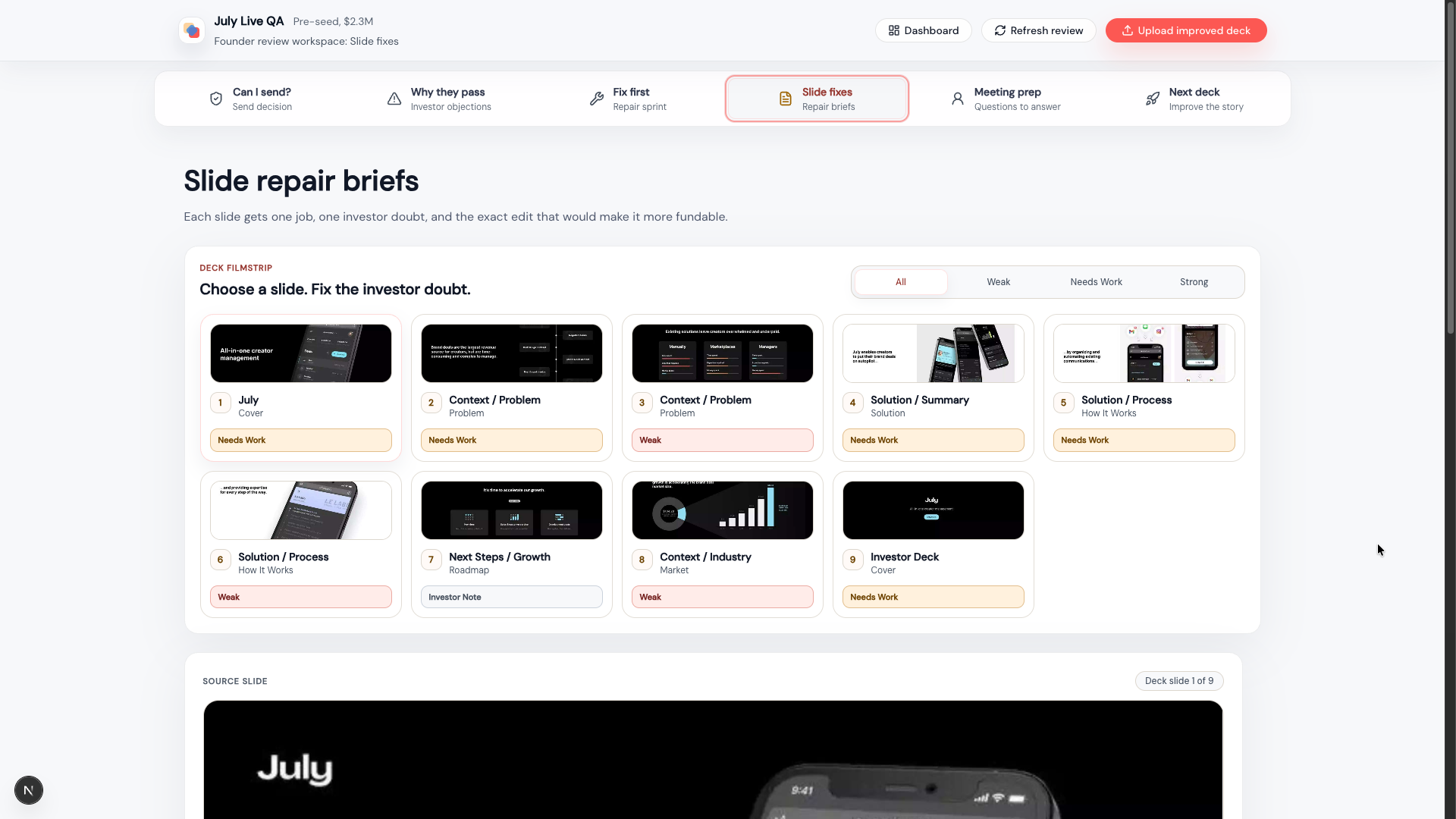
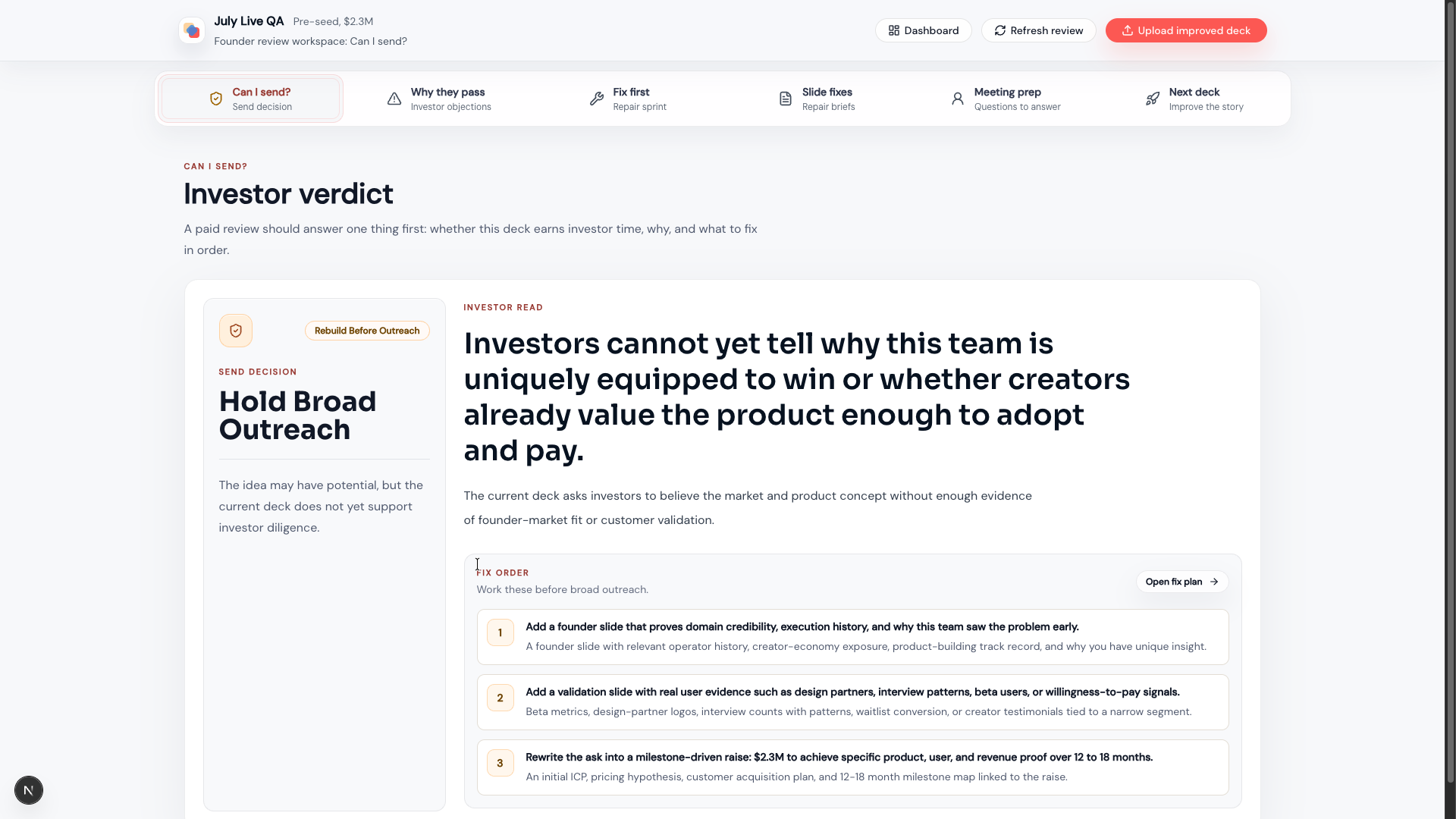
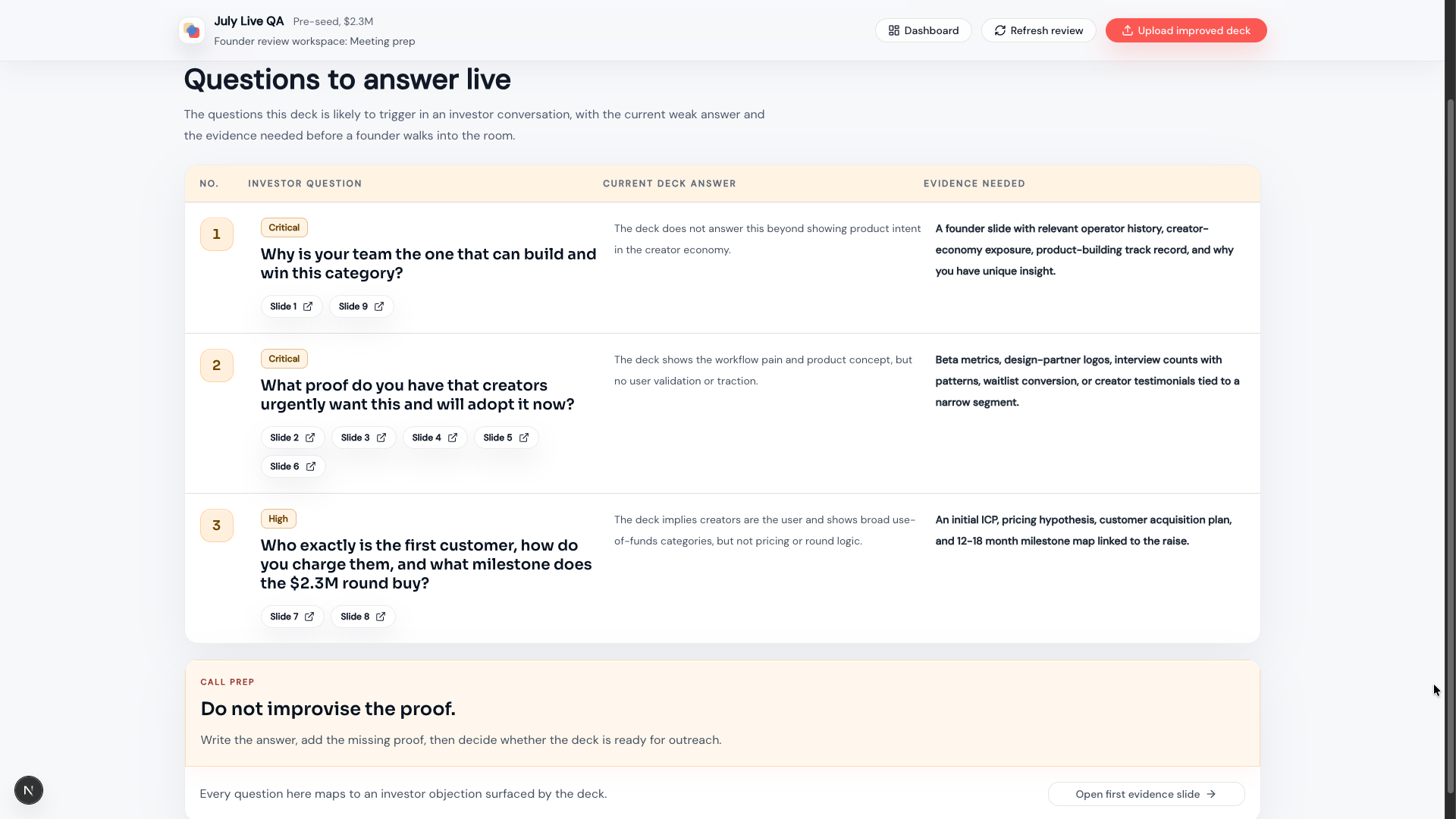
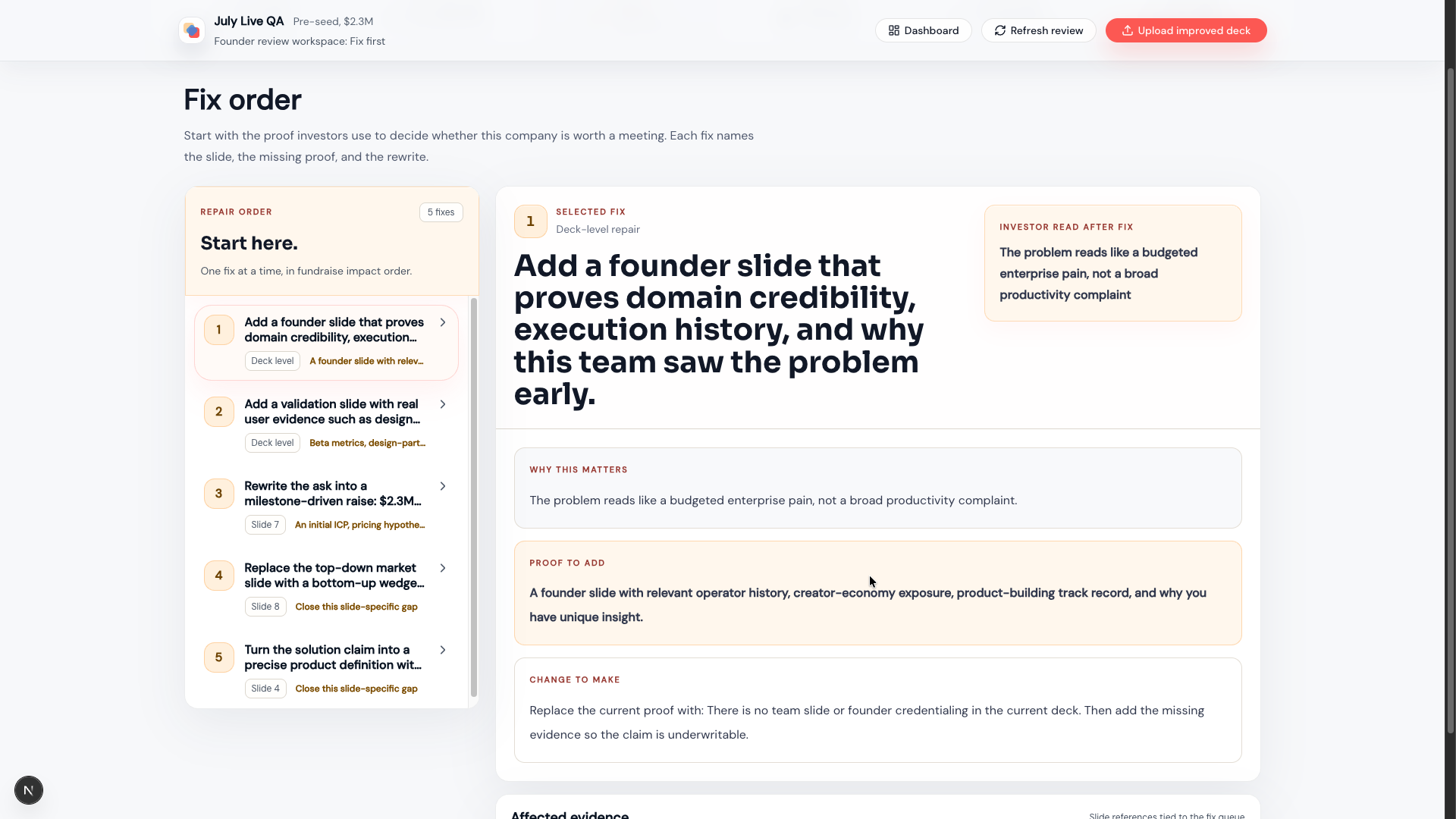
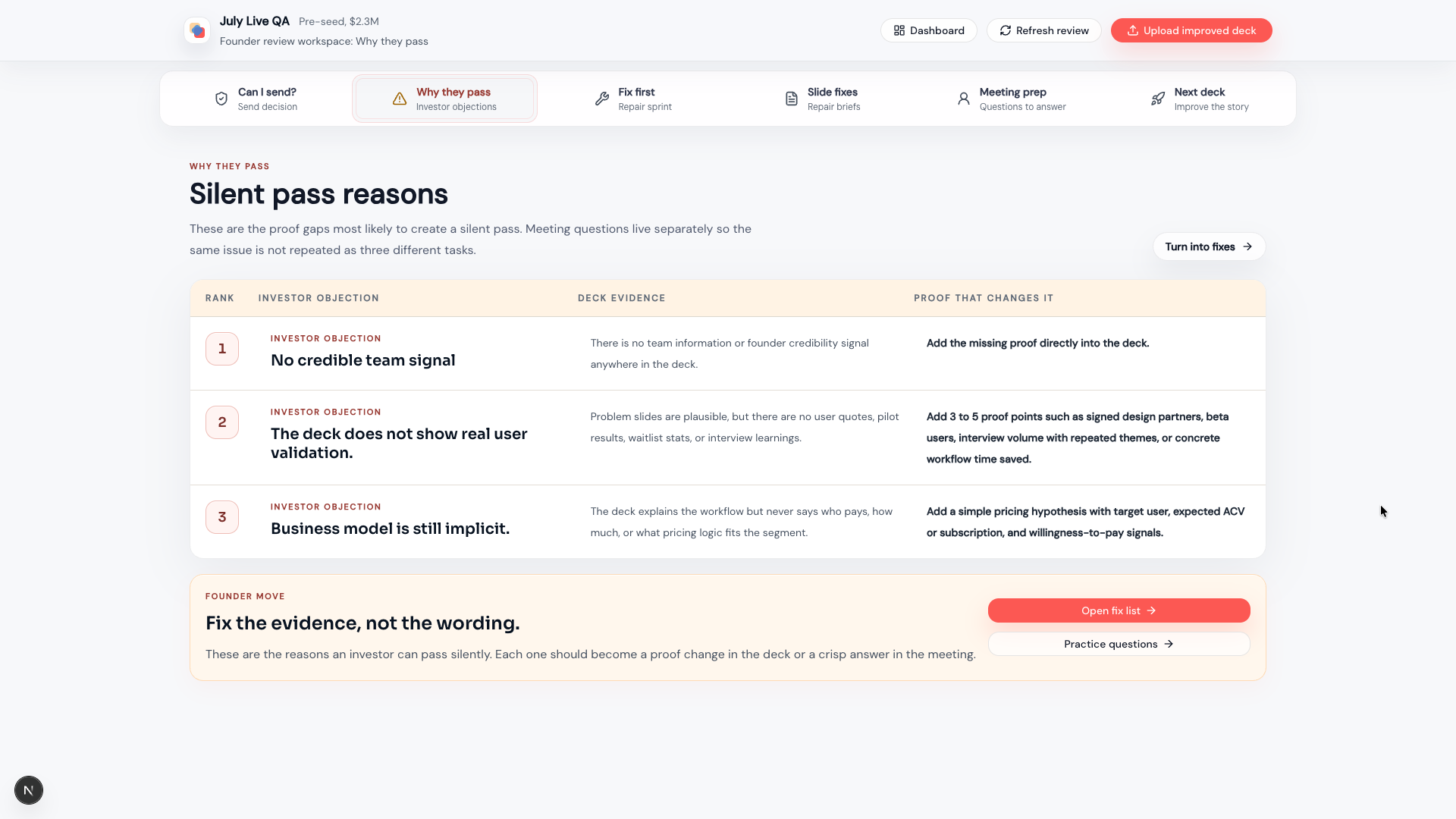
PitchPolish lets founders upload a pitch deck PDF, add fundraise context, and receive an investor-readiness diagnosis. It identifies likely pass reasons, evidence gaps, priority repairs, meeting-prep questions, and slide-specific guidance, without reducing the experience to a generic score.
How we built it
We built PitchPolish with Next.js, React, Tailwind, Supabase, PDF.js, and OpenAI.
The product extracts deck text and renders slides into private images, then runs a three-stage AI pipeline:
- Classify the deck’s structure and narrative.
- Deeply analyze each scoreable slide using stage-specific investor rubrics.
- Synthesize the evidence into a founder-friendly repair plan.
Reviews are protected by authentication, and presented through a responsive diagnostic workspace.
Challenges we ran into
The hardest challenge was making AI feedback reliable and useful rather than generic. We needed to keep analysis grounded in the actual deck, preserve structured output, and make sure the final advice reflected investor conviction, not surface-level design polish.
We also had to work within serverless execution limits for longer decks, protect private deck assets, avoid exposing storage URLs, and ensure payment verification happens before analysis begins.
Accomplishments that we're proud of
- Built an end-to-end deck-review workflow, from upload to investor-ready repair plan.
- Created a resumable three-stage analysis pipeline that handles up to 25 slides.
- Added progressive results, so users can see analysis advance rather than wait blindly.
- Kept private PDFs and slide images secure with authenticated access and proxy-based previews.
- Validated the analysis against multiple live deck fixtures and human-review benchmarks.
What we learned
We learned that founders don’t need more feedback, they need the right feedback in the right order. The most valuable output is not “your slide is weak,” but “this is where investor belief breaks, this evidence is missing, and this is the highest-leverage repair.”
We also learned that reliability needs product design as much as model quality: structured outputs, validation, retries, progressive writes, and clear error recovery all matter.
What’s next for PitchPolish
Next, we’re refining the launch experience: strengthening the landing-page story, polishing mobile and results flows, and improving failure handling and payments integration. We’ll also test with more founder-owned decks, validate cost and timing at scale, and continue calibrating the review quality against real investor feedback.
Built With
- next.js
- openai
- pdf.js
- react
- supabase
- tailwind

Log in or sign up for Devpost to join the conversation.