Inspiration
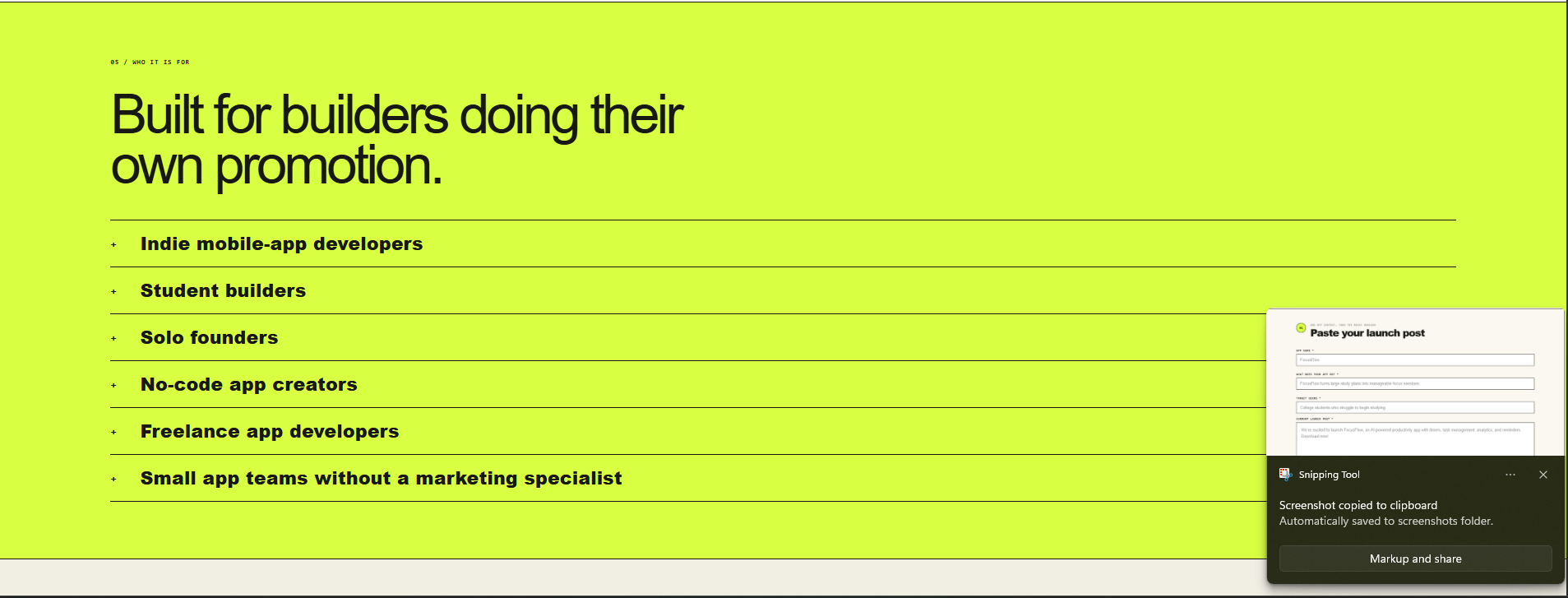
I’ve seen a weird problem happen again and again with indie developers.
Someone spends weeks building an app, fixes bugs at 2 AM, finally deploys it… and then launches it with a post like:
“Hey everyone, I built this app. Check it out!”
The product might actually be good, but the way it is introduced gives people almost no reason to stop scrolling.
And for a solo builder or student developer, hiring a marketer or copywriter just for a launch usually isn’t realistic.
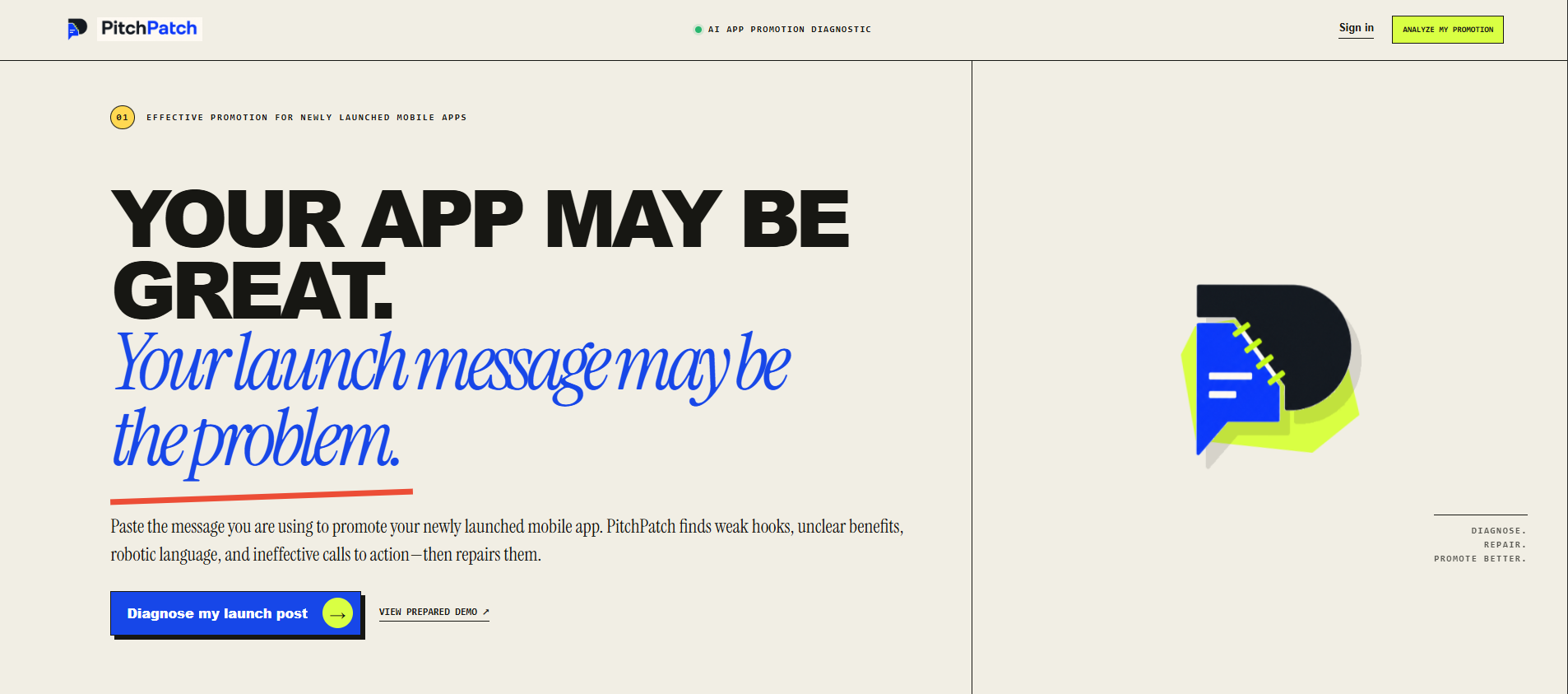
That was the idea behind PitchPatch.
I wanted to build something that doesn’t simply generate another marketing post. I wanted an AI that could look at what a builder has already written, figure out why it isn’t working, and help them improve it without removing their personality.
I had experimented with an earlier version of PitchPatch before this hackathon. For Pixel Forge, I wanted to push the idea much further and turn it from a simple pitch improver into an AI launch coach for builders.
What it does
PitchPatch takes your existing app pitch or launch copy and breaks it down across the things that actually matter:
- Hook
- Audience clarity
- Value proposition
- Benefits
- Trust
- Tone
- Call to action
Instead of immediately replacing everything with AI-written text, PitchPatch first shows you where the pitch is weak and why.
Then you can patch those problems.
The improved pitch can also be adapted for different platforms such as X, LinkedIn, Reddit, Instagram, or Product Hunt, because the same launch post usually doesn’t work everywhere.
The goal is simple:
Help good projects avoid bad launches.
How I built it
The hardest part of PitchPatch wasn’t generating text. AI can already do that.
The challenge was making the AI behave more like someone reviewing your launch strategy rather than just saying, “Here is an improved version.”
I structured the AI workflow so that it first analyzes the pitch, identifies specific weaknesses, scores important areas, and only then suggests improvements.
That separation between diagnosis and generation became one of the most important parts of the project.
I also focused heavily on the interface because I didn’t want PitchPatch to feel like another chatbot with a text box.
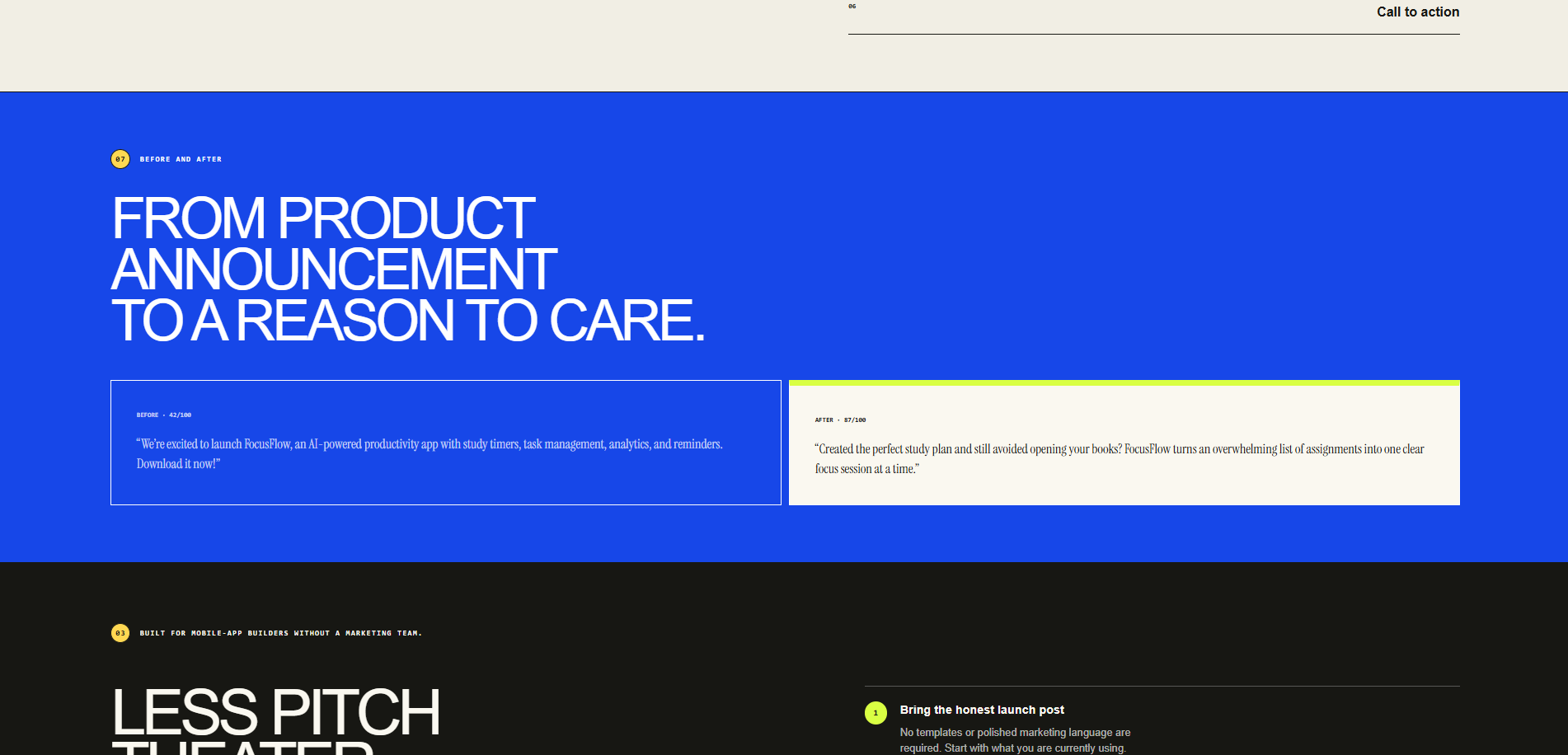
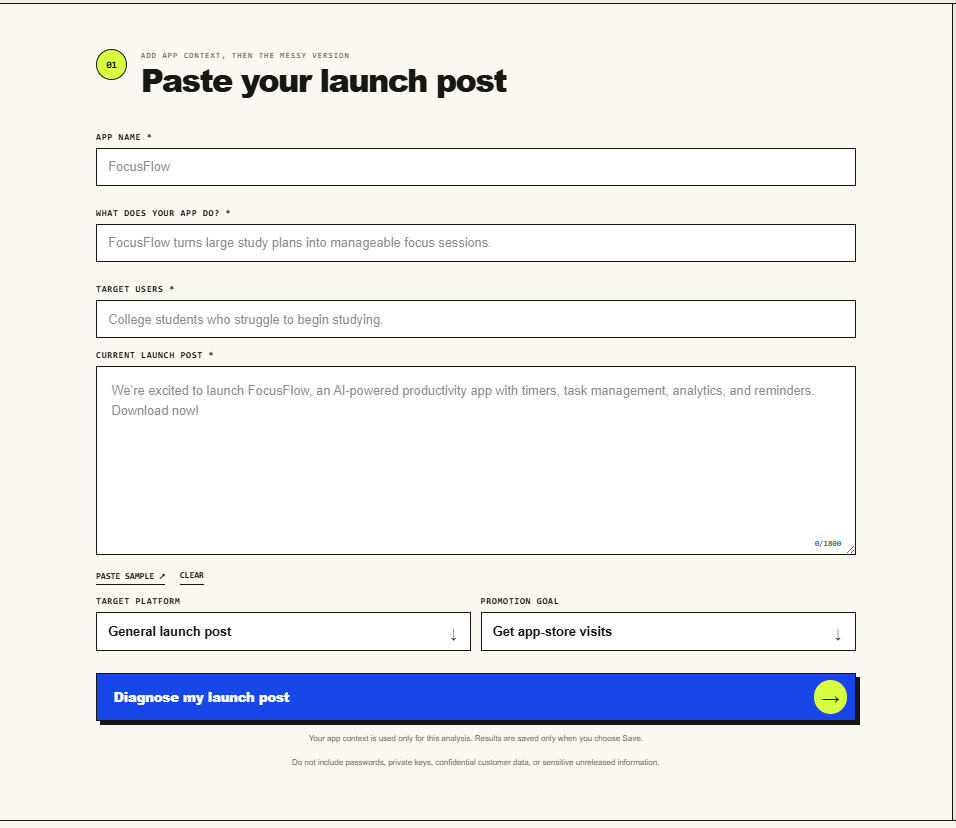
The experience is designed around seeing your original pitch, understanding what is wrong with it, applying patches, and comparing the result.
Challenges I faced
One surprisingly difficult problem was stopping the AI from making everything sound overly polished.
A developer might write something simple and personal, and an AI can easily turn it into something that sounds like a corporate advertisement.
That defeats the purpose.
So I worked on keeping the original meaning and voice while improving the parts that actually hurt the pitch.
Another challenge was deciding how much information to show.
Marketing advice can become overwhelming very quickly. PitchPatch needed to explain enough for the user to learn from the feedback without throwing twenty different recommendations at them at once.
Finding that balance between useful analysis and a simple experience took a lot of iteration.
What I learned
Building PitchPatch changed the way I think about AI products.
The most useful AI experience isn’t always one where the model does everything for you.
Sometimes it is better when AI helps you understand what is wrong, why it is wrong, and what you can do about it.
I also learned that prompt design alone isn’t enough. The product experience around the AI how results are structured, what the user sees first, what they can change, and how much control they havematters just as much as the model itself.
What's next
There’s a lot more I want to explore with PitchPatch.
The next step would be letting builders provide their website or app link so PitchPatch can understand the actual product before evaluating the launch.
I’d also like to add launch-history comparisons, audience-specific recommendations, and feedback that learns from how a builder prefers to communicate.
Long term, I want PitchPatch to become something you open before pressing Publish on a product launch.
Because building something good is already difficult enough.
Explaining why people should care shouldn’t be the reason it gets ignored.
Built With
- css
- css3
- framer
- html5
- javascript
- localstorage
- lucide
- motion
- next.js
- shadcn/ui
- tailwind
- typescript
- zod

Log in or sign up for Devpost to join the conversation.