-

PitchIQ
-

Find Podcasts
-
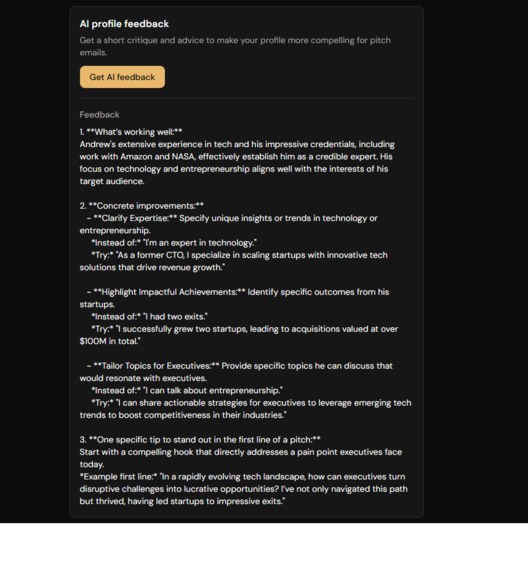
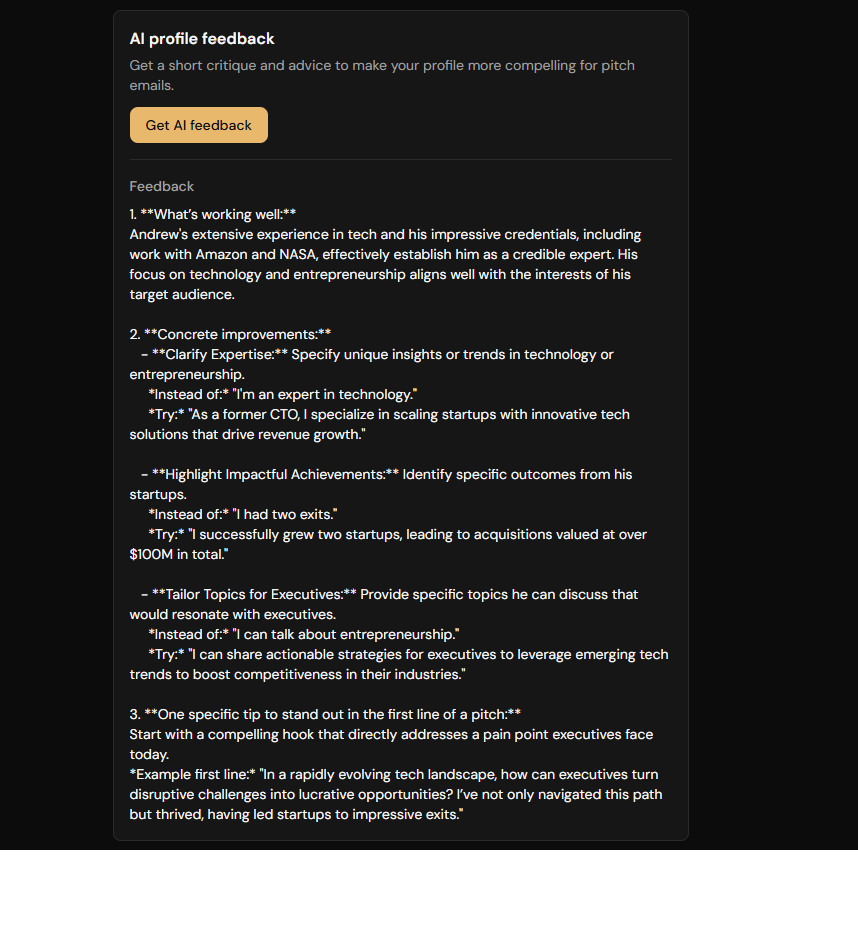
AI Profile Feedback
-
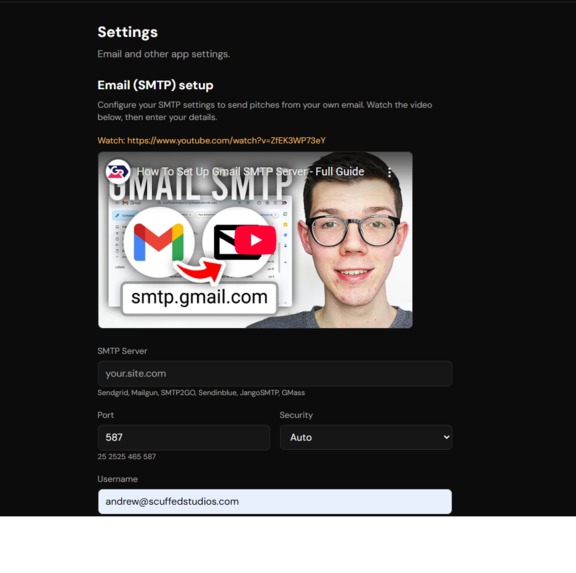
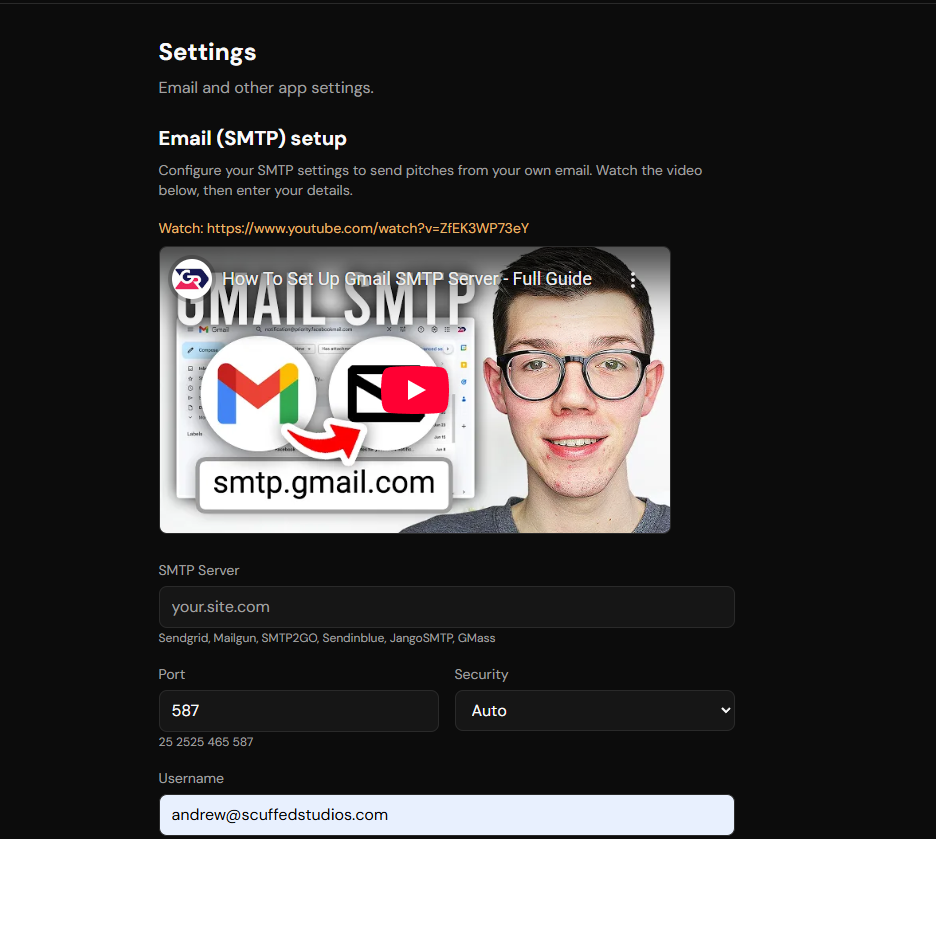
SMTP Setup
-
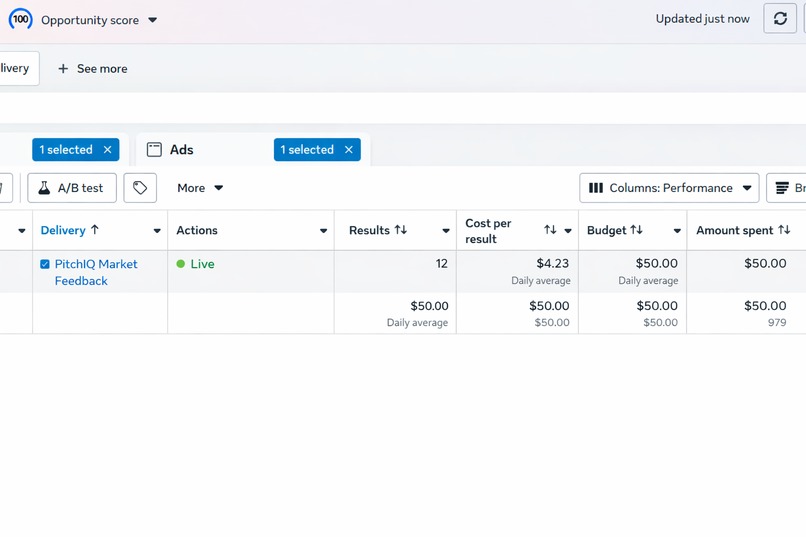
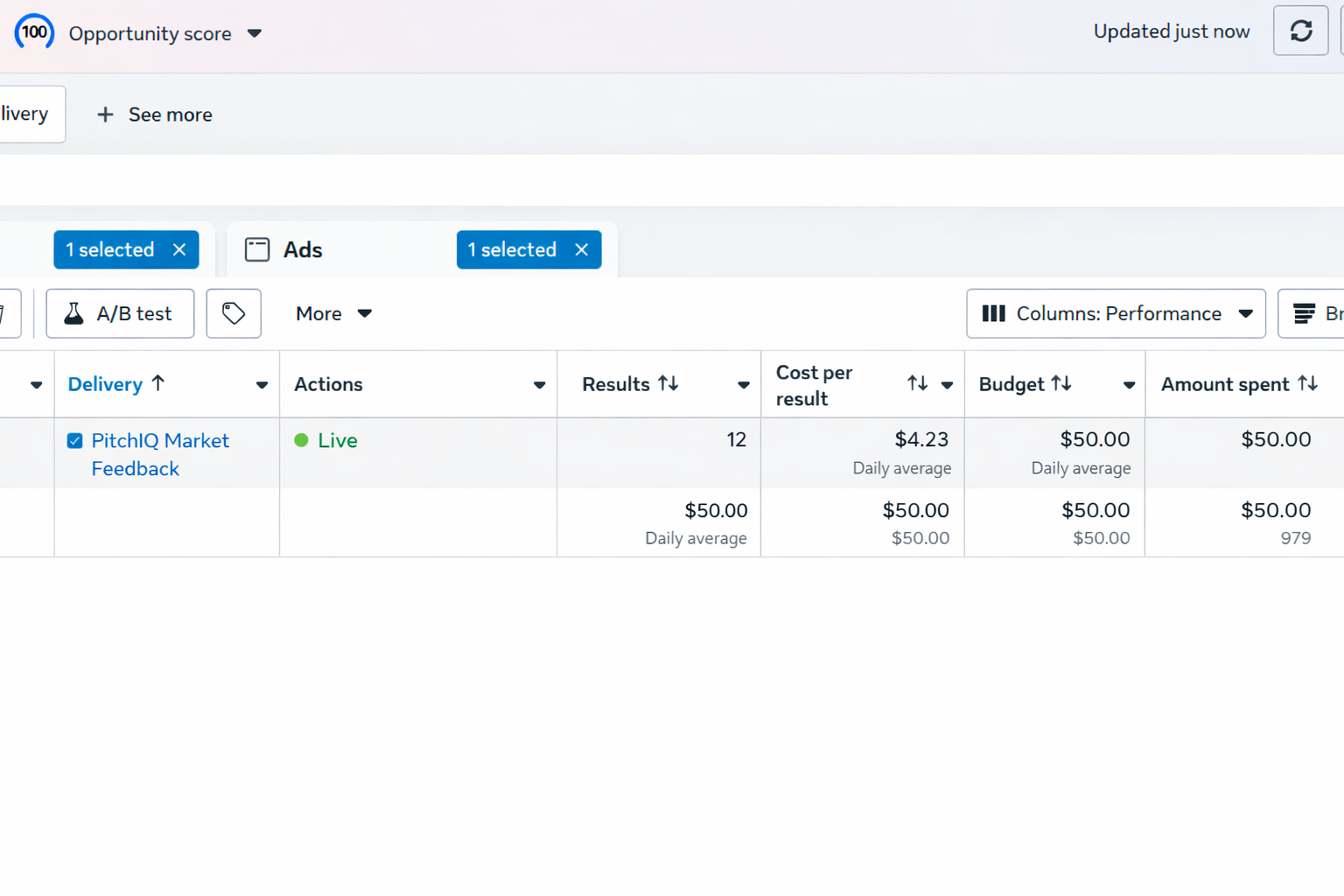
Meta Ad Campaign Results in 7 hours


Pitch Deck: https://gamma.app/docs/PitchIQ-cg9o594mcll40zj
Inspiration
Every founder, creator, and coach faces the same wall: how do I make people aware I exist? Social media takes 2-3 years. Cold outreach damages your brand. Paid ads require expertise and budget most early-stage builders don't have.
The answer elite growth hackers already know is borrowed-audience growth — getting introduced to someone else's engaged audience through podcast guesting and social collaborations. It's the fastest, most cost-efficient awareness strategy available. But the tools built to help are failing almost everyone using them.
The market leader charges $400/month, hides the price behind a 45-minute sales call, and still doesn't tell you why you're getting ignored. Worse, AI-generated pitches have become so prevalent that podcast hosts now have a delete reflex trained specifically to spot them.
We built PitchIQ because the problem isn't that outreach is hard. The problem is that outreach has gotten dumb.
What We Learned
The biggest insight was that every existing tool starts at Step 3 — writing the pitch. Nobody asks the most important question first: are you actually worth booking?
Most people aren't getting ignored because of bad pitches. They're getting ignored because of bad positioning. A bio that leads with a job title instead of a specific, compelling value proposition gets deleted before the pitch is even read. We learned that fixing the person's positioning before they send anything is the highest-leverage intervention in the entire outreach funnel — and nobody had built it.
We also learned that borrowed-audience growth is not a podcast-specific problem. The same intelligence layer that coaches a founder to get booked on podcasts applies equally to VC intro outreach, press pitching, and social media collaboration requests. Podcasts are the beachhead. The TAM is everyone who needs an audience to know they exist.
How We Built It
PitchIQ is built on a Next.js frontend with a Node.js backend, PostgreSQL via Supabase, and the GPT 5.2 API as the AI engine. Emails route through the user's own SMTP domain — never a shared platform IP pool — protecting their sender reputation.
The four core intelligence layers are:
- Profile IQ — AI audits your bio, expertise framing, and LinkedIn profile before you send anything, identifies why hosts would ignore you, and rewrites your positioning with specific suggestions
- Match IQ — Smart discovery across 3M+ podcasts filtered by topic, audience size, and booking fit
- Pitch IQ — Personalized pitch generation grounded in each show's recent episode content and host communication style
- Follow-Up IQ — Automated contextual follow-up sequences that trigger if no response is received, sending in the same thread and sounding human
Infrastructure cost runs $200/month per 10,000 users, enabling a $29/month price point with near-zero marginal cost per additional user.
Challenges
The podcast database was the highest-risk technical dependency. Access to a quality, current database of podcast contact information required navigating multiple API options with different coverage, pricing models, and data freshness — all under hackathon time pressure.
Profile IQ prompt engineering required significant iteration. Getting Claude to produce feedback that felt genuinely diagnostic rather than generic — feedback specific enough that a user immediately recognizes their own weak spots — took careful prompt design and testing against real profiles.
Scope discipline was the hardest non-technical challenge. PitchIQ has a clear roadmap into VC outreach, press pitching, and social collaborations. Building none of that while keeping the architecture modular enough to support it later required deliberate restraint under competitive hackathon pressure.
Built With
- next.js
- node.js
- postgresql


Log in or sign up for Devpost to join the conversation.