-

The prepping page
-

The voting page
-

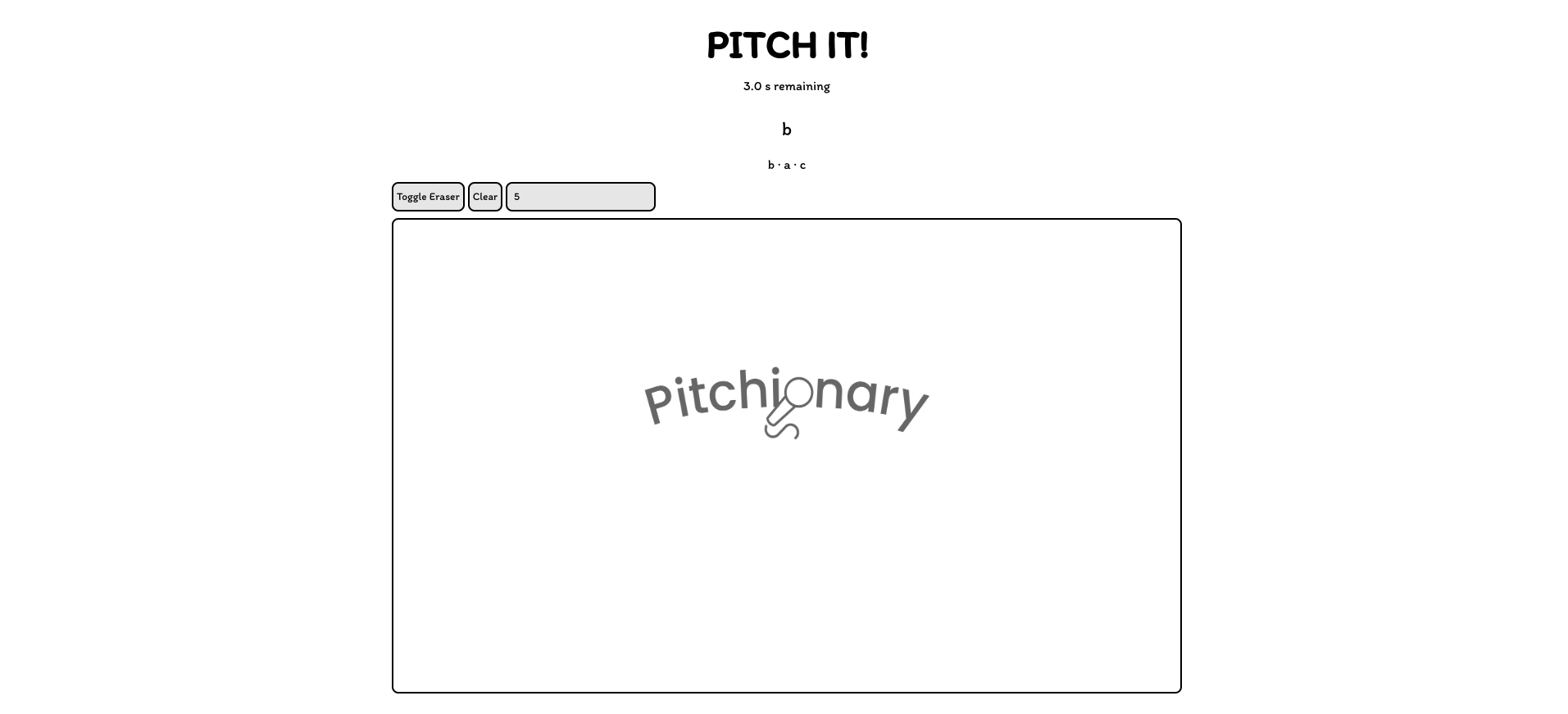
The drawing/pitching page
-

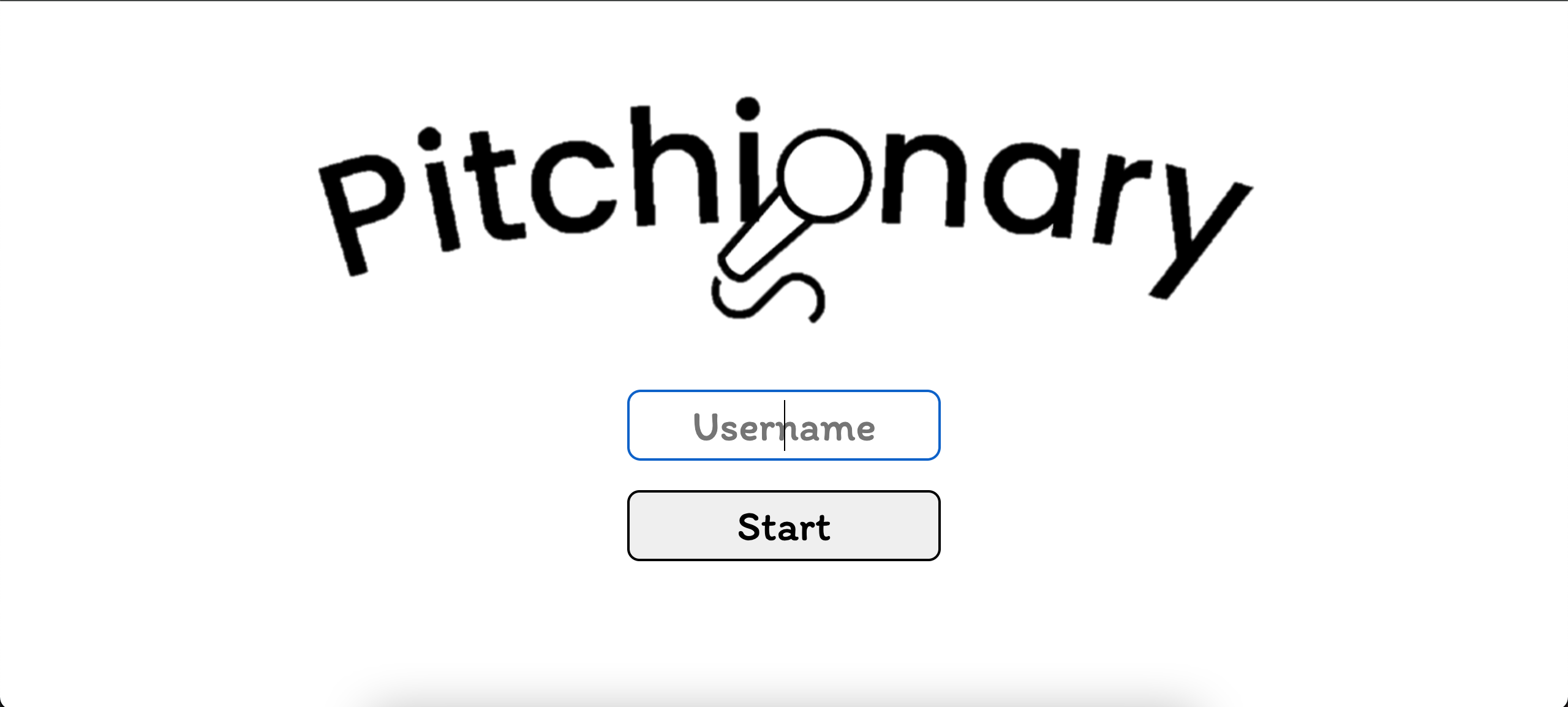
The joining page/starting page
-

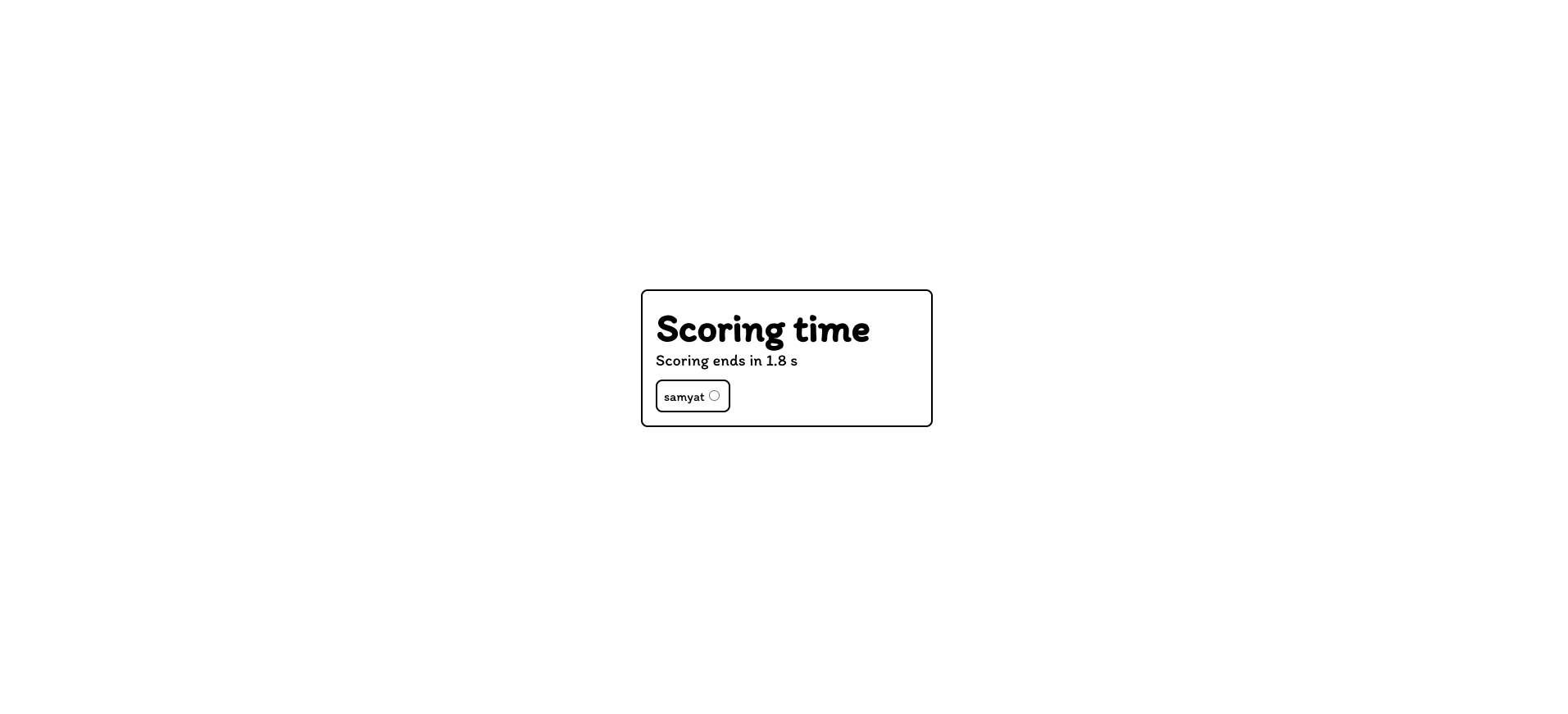
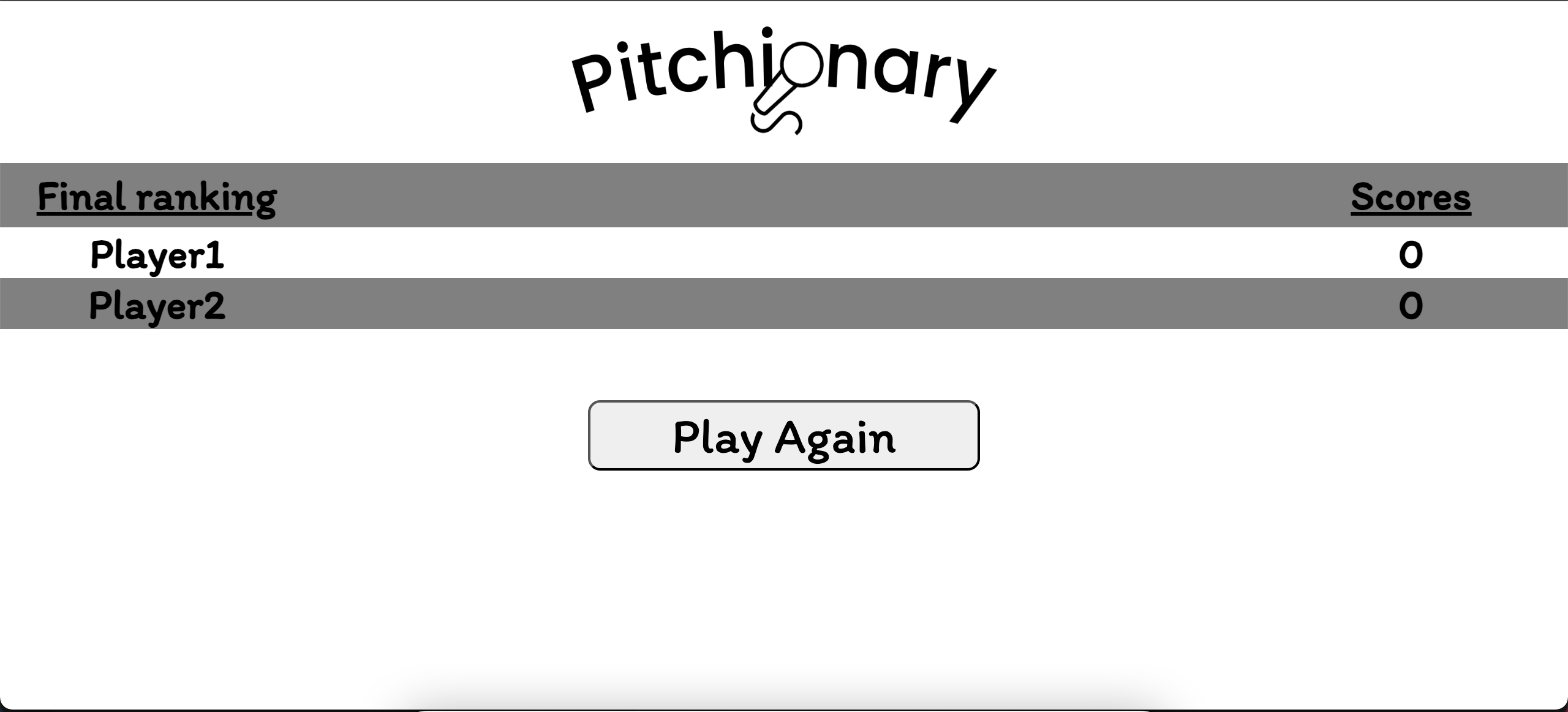
The score ranking page
-

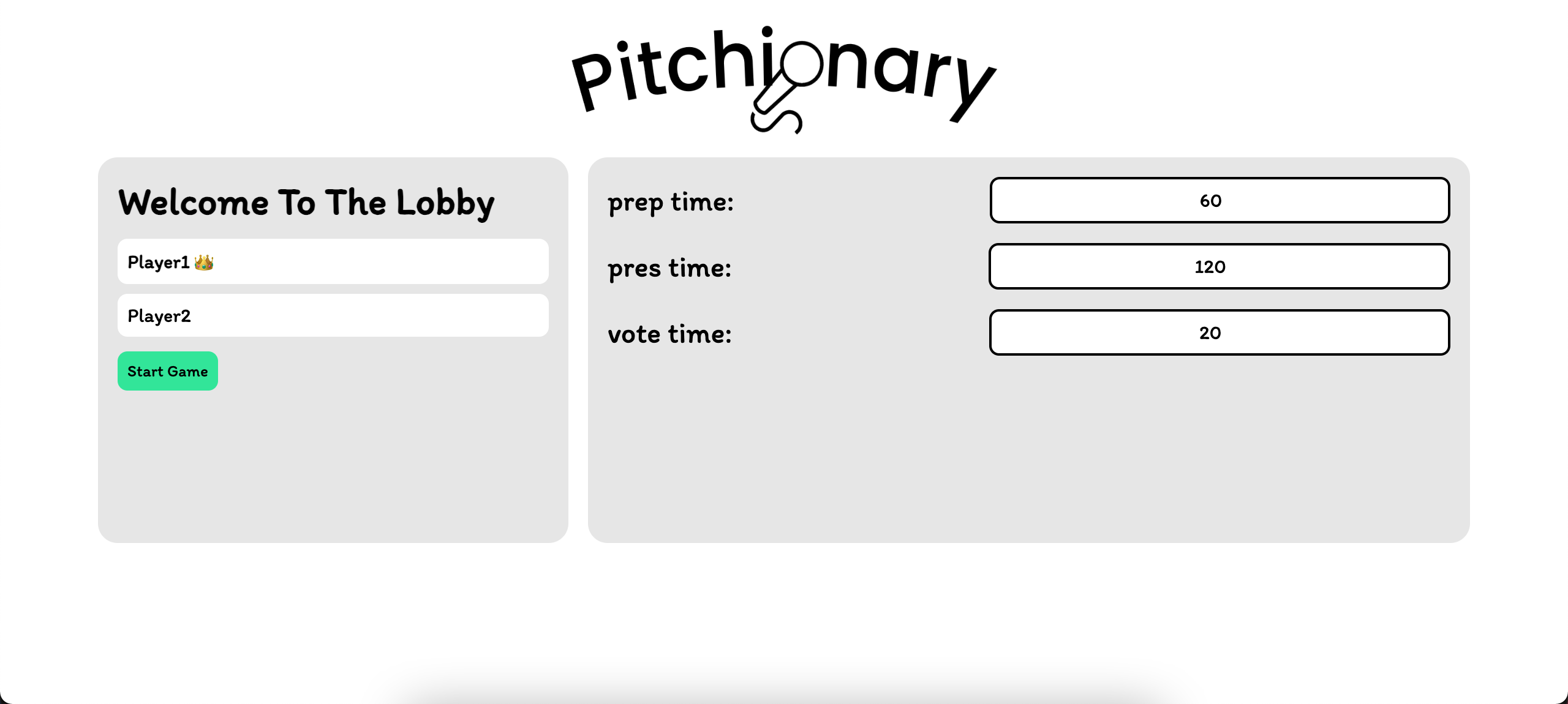
The lobby page for the host
-

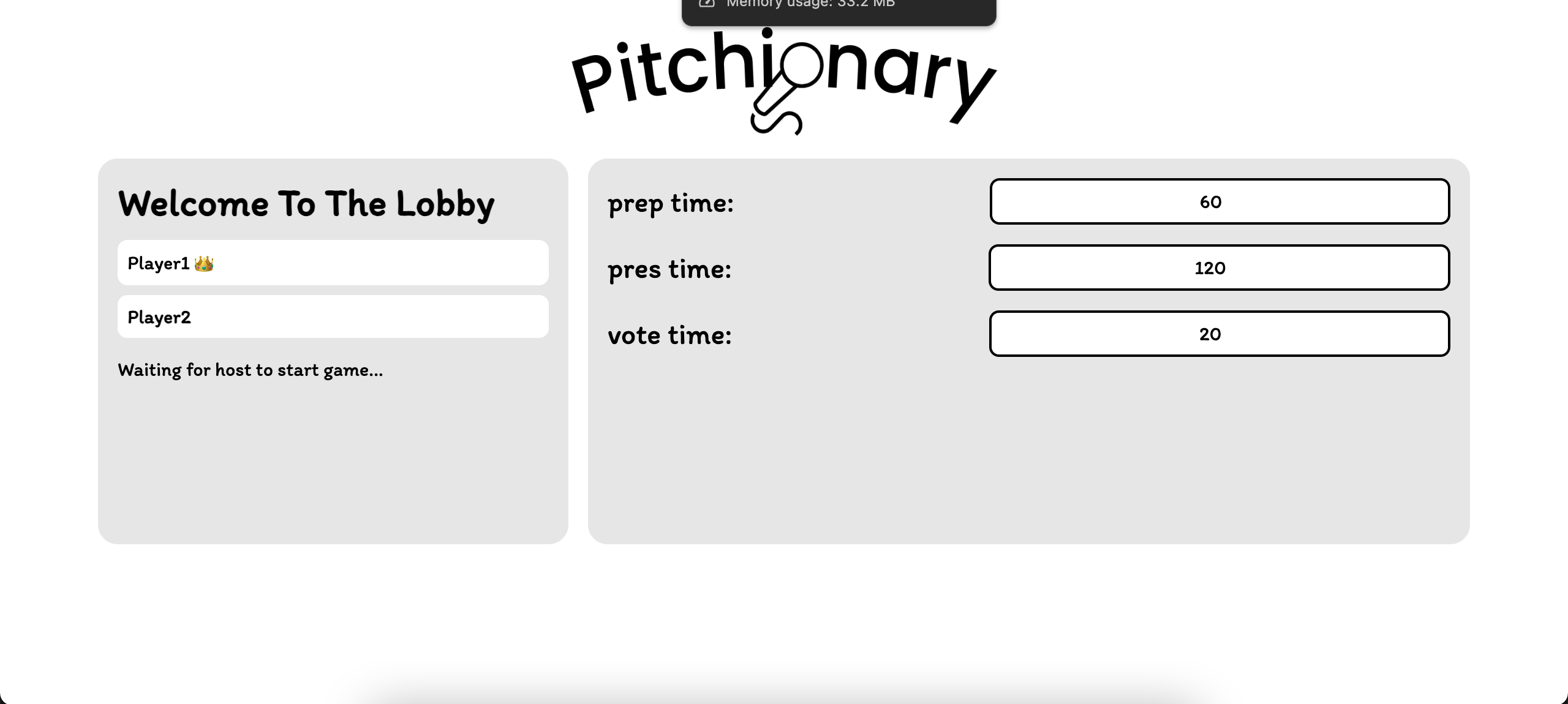
The lobby page for the other players

Inspiration
The name says a lot -- a party game like the charades-inspired Pictionary, but spun with such a twist that it's instead a hugely replayable ideation and communication challenge. Our general theme at Hack the Hill II was "Self-Improvement", so we thought -- why not make an essential skill accessible to everyone with an online multiplayer game?
What it does
The big "Why?" at the centre of our hack is: We want to make honing public speaking skills easy, authentically social, and fun -- for everyone. How we're going to do that felt natural -- with a party game, of course! The flow of the app goes a little something like this:
Friends or strangers get together and hop on the lobby.
Host starts the game. Theme and constraints for the pitches are revealed.
Time is given to everyone to prepare their pitches.
In random order, players must pitch an imaginary product or service that fits with the theme and satisfies the content or speech constraints given earlier. They can draw on a virtual canvas to do so.
Players each vote for the best other pitch.
Score is kept, and repeat!
How we built it
We built the app using a Typescript Express server with socket.io for WebSockets and used React for the frontend.
Accomplishments that we're proud of
Being a team of more inexperienced hackers (two of us are first-timers), we were super proud at the rapid learning we did when it came to new technologies and concepts. We had to move our initial ideas and implementation plans a bunch (the numerous scribbled-out flowcharts and diagrams will testify) to surmount -- and if we couldn't, work around -- many obstacles and limitations.
But our greatest pride is in our teamwork. We didn't know each other until Thursday night, and we had an incredible time. While it wasn't exactly blood, sweat, and tears (okay, maybe a bit of sweat), difficulties were for sure present, and we pulled through with a satisfying conclusion.
What we learned
Through this project we learned to make use of Typescript for type safety in our server and client code and the web socket protocol to send and receive information from and to the server. We learned how to dynamic data systems with a lot of state and ensure code validity. We learned to create iterative pages with React and inline CSS. Additionally, we learned to effectively present a product that we are proud of.
What's next for Pitchionary
To improve on Pitchionary we will be developing skill pathways, which target learning a particular aspect of public speaking such as poetry, rhetoric, storytelling, terminology. In addition, looking to the future we will be a suite of games targeted at improving peoples lives and making the process easier, social, and accessible.

Log in or sign up for Devpost to join the conversation.