-
-
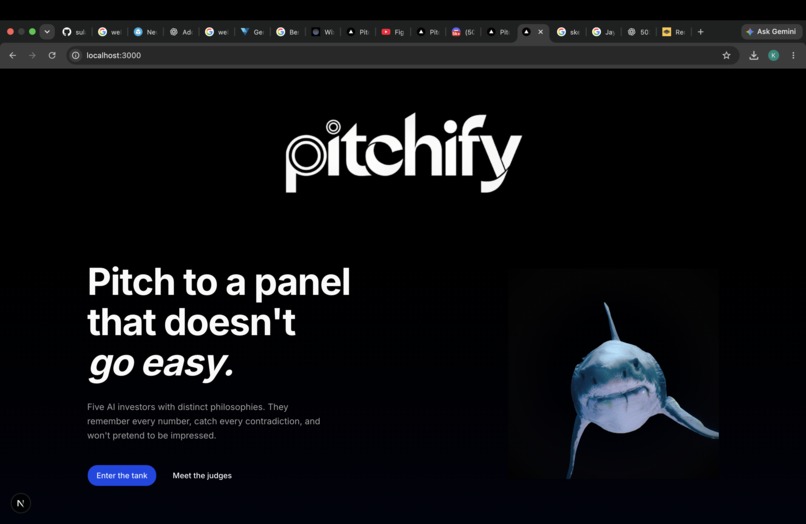
Landing page
-
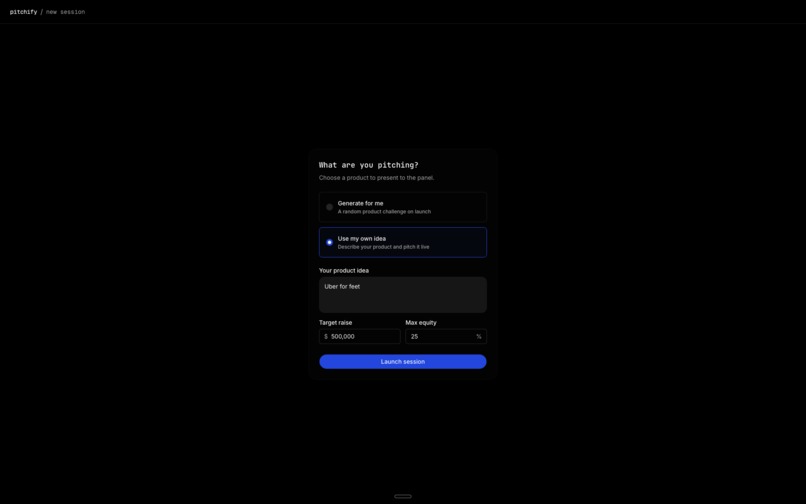
Product input
-

Product generation
-
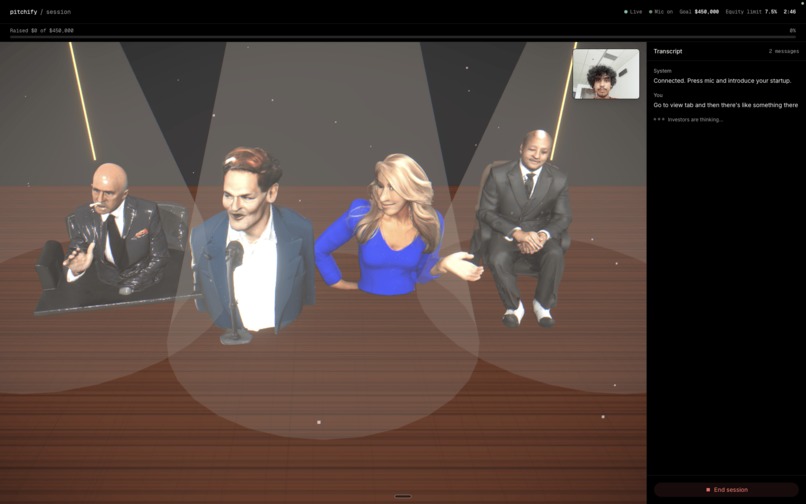
Judging panel
-
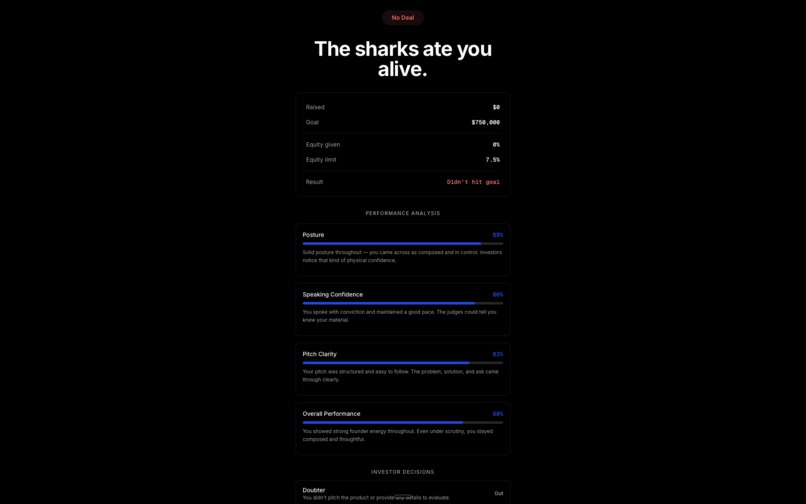
Summary


Inspiration
Our inspiration came from the popular television show Shark Tank and our shared passion for entrepreneurship and startups. We wanted to recreate the rush and excitement of pitching innovative ideas while giving users a realistic environment to practice their communication and presentation skills.
What it does
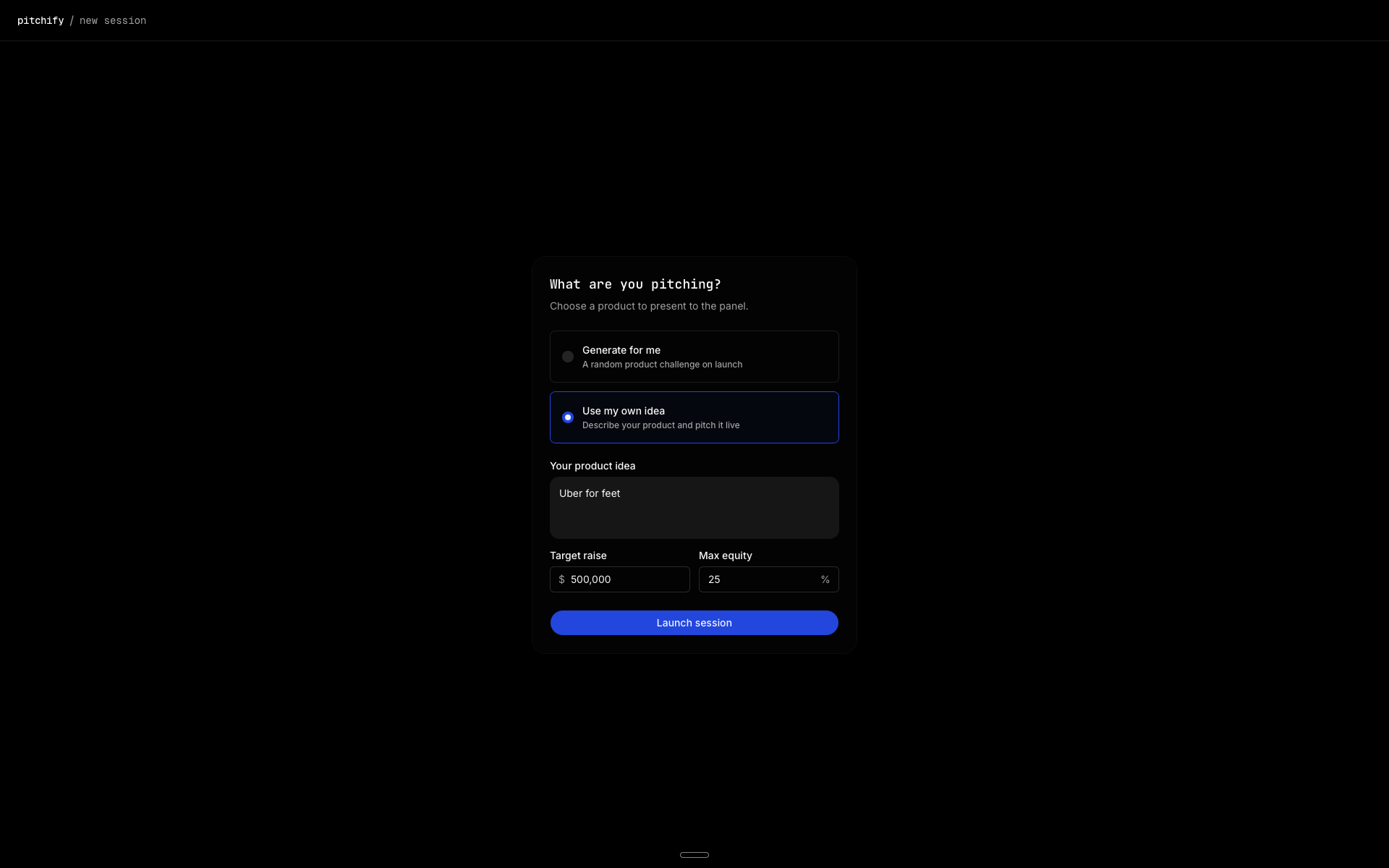
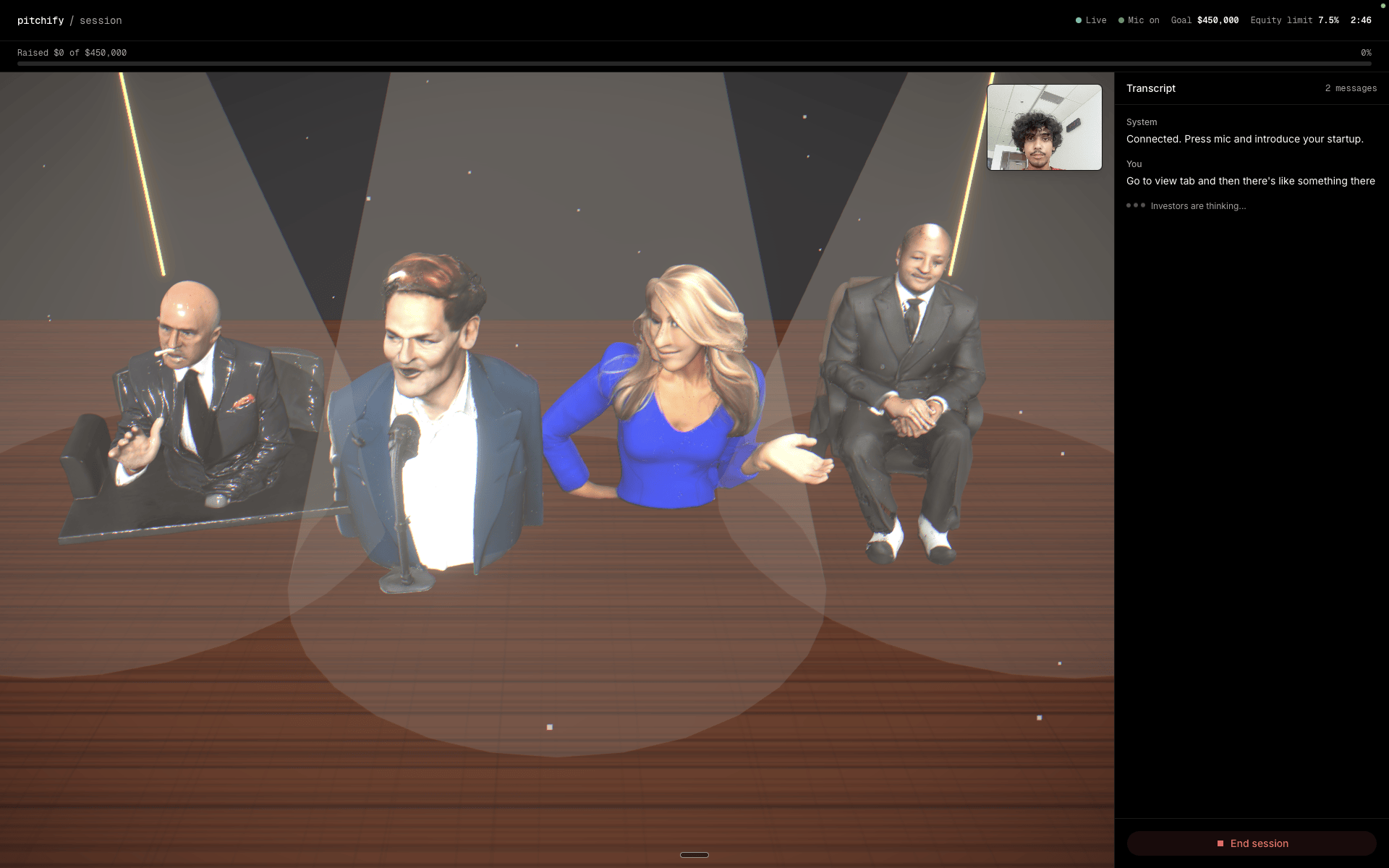
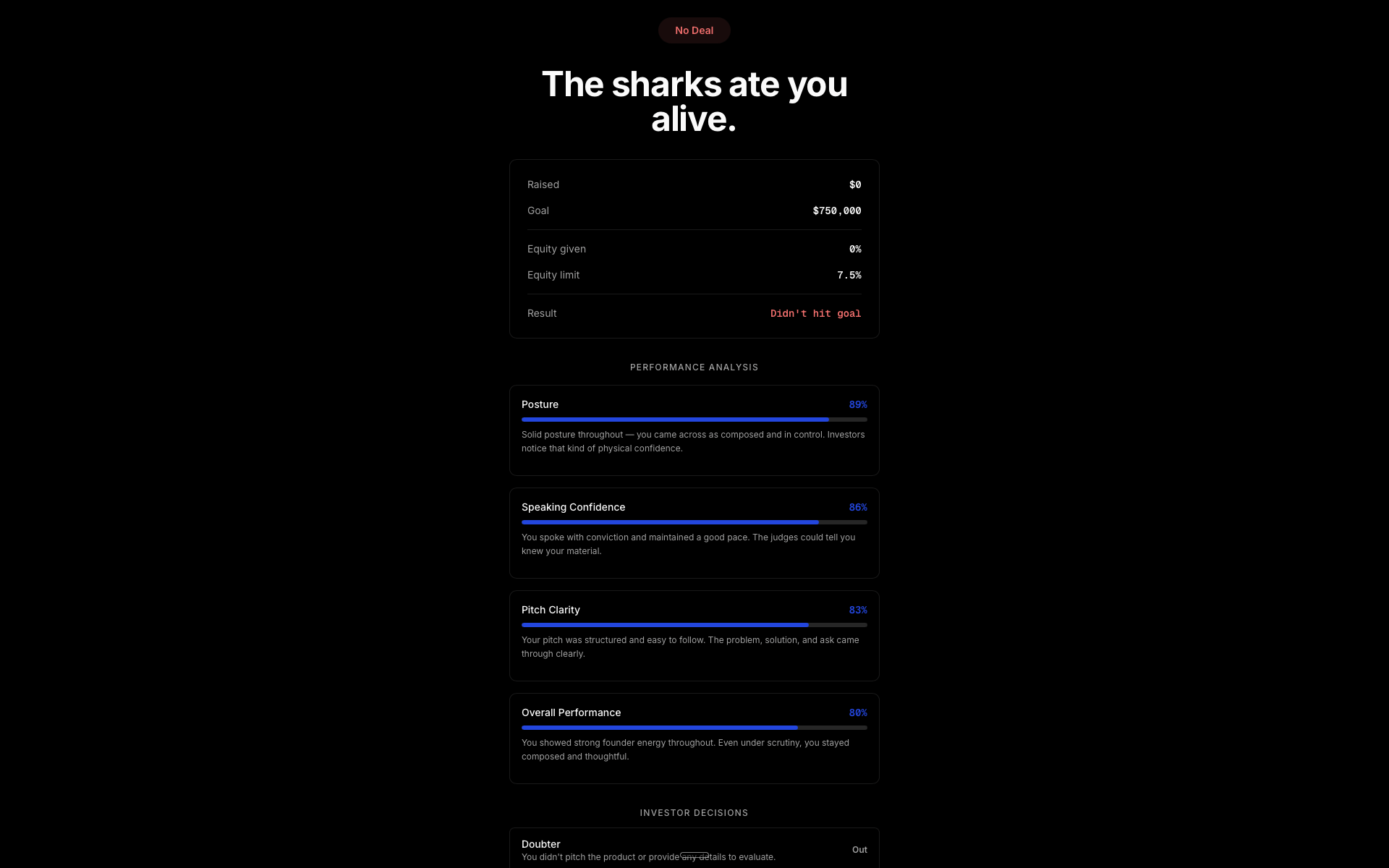
Pitchify is an AI-powered platform that helps users improve their pitching, public speaking, and communication skills. Users can start by either pitching their own startup idea or choose from AI-generated startup concepts. Once the session begins, they have three minutes to deliver their pitch to secure a certain funding amount to a panel of four parallel running AI-powered judges, each with a distinct personality and questioning style focusing on factors of a business . The judges take turns asking realistic follow-up questions, challenging the user from different perspectives: such as financial questions, logistical questions and engineering questions which create an engaging and authentic pitch experience. On top of all of this, our platform uses openCV to scan for hand movement, posture and tone then runs it into gemini to analyze, which effects the judges final decision on funding. The data ran through gemini gives a summary of the posture, speaking confidence and pitch clarity to compose an overall performance score.
How we built it
We built the frontend using Nextjs, React, TypeScript, and CSS allowing us to create a fast, responsive, and a visually appeasing user interface. React's component-based architecture enabled us to rapidly develop reusable UI elements, while TypeScript improved code reliability through static type checking and made collaboration easier by reducing bugs and improving maintainability.
For the backend, we used Python to orchestrate the application's logic and manage communication between our services. In addition, we integrated Gemini API to power our AI investors, giving it a prompt to define each agents personality and questioning style. We also used Vercel to host our application.
For our AI agents, we integrated several technologies We used Fish Audio for realistic voice generation and text-to-speech capabilities, allowing our judges to communicate naturally with users. We used Meshy to generate custom 3D models for each of our AI personality, and used Three.js to build and render the digital stage where these virtual judges could interact with users.
Challenges we ran into
We have encountered several challenges. To start our real time voice models often had longer processing times than expected, which affected the responsiveness of the pitch. We also faced integration issues between the frontend and backend, requiring a huge amount of time debugging to ensure smooth communication between all our components.
Another challenge was working with image generation models, as many popular models experienced high demand, which caused frequent interruptions and access limitations. In addition, setting up the 3D models for the judges was a difficult process especially setting them up in the perfect position, which required significant troubleshooting.
Finally, designing the personalities of the AI judges was a major challenge. We spent time engineering and refining prompts to ensure each judge had a distinct personality, asked relevant questions, and provided realistic feedback that matched the experience we wanted to create.
Accomplishments that we're proud of
One of our biggest accomplishments was successfully creating multiple AI judge agents with unique personalities, allowing users to experience realistic startup pitch evaluations similar to a real-world investor panel. The process was both as difficult as satisfying.
We are also proud of integrating various technologies together, including AI models, voice synthesis, custom 3D models, and real-time rendering, to create an engaging user experience. Despite the technical challenges, we were able to bring our vision of an interactive virtual pitch room to life.
What we learned
Throughout the development of Pitchify, we learned how to integrate multiple AI-powered technologies together to create a cohesive and interactive experience. We gained a deeper understanding of prompt engineering by designing distinct AI personalities that could consistently provide meaningful questions and feedback. We also learned the importance of optimizing communication between different services, especially when working with real-time voice generation, computer vision, and AI models.
Beyond the technical skills, we learned the importance of rapid prototyping, teamwork, and adapting to unexpected challenges. Building a project with many moving parts required us to constantly test, debug, and iterate on our ideas. This experience showed us how powerful AI can be when combined with thoughtful user experience design, allowing us to create tools that feel more engaging, personalized, and realistic.
What's next for Pitchify
Moving forward, we want to continue improving Pitchify by making the judging experience even more realistic and personalized. We plan to expand the AI judges with more specialized personalities and industries, allowing users to practice pitches for different fields such as technology, healthcare, finance, and sustainability.
We also want to enhance the feedback system by providing more detailed performance analytics, including improvements in body language, speaking patterns, confidence, and pitch structure over time. In the future, Pitchify could become a complete AI-powered communication coach, helping entrepreneurs, students, and professionals build the skills needed to confidently present their ideas in real-world situations.
Built With
- css
- fastapi
- gemini
- javascript
- nextjs
- opencv
- python


Log in or sign up for Devpost to join the conversation.