-
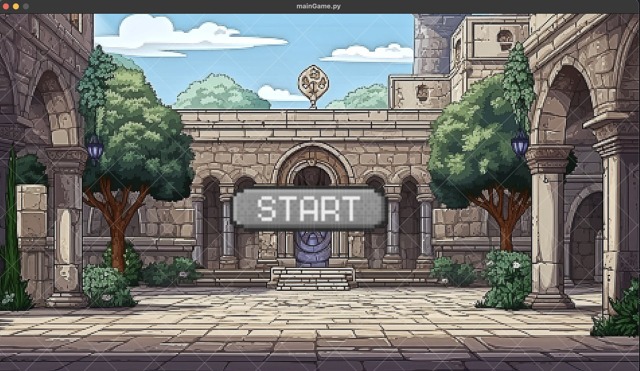
Start Screen
-
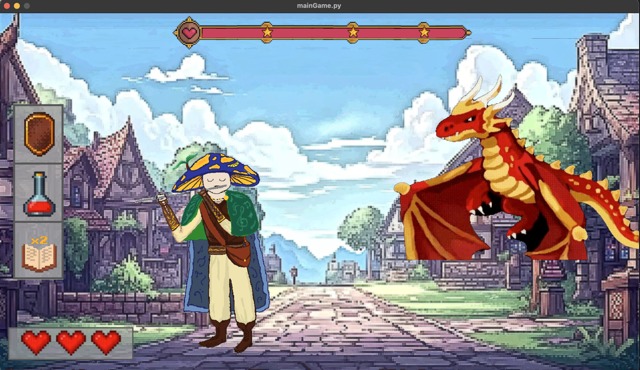
Main Game Screen
Inspiration
We were inspired by helping people to learn instruments easier through a game.
What it does
Takes a song and converts it to individual notes; stores the notes in a csv file which is then given to the game (pyglet) to be displayed to the users as they have to play each note in order to defeat the dragon and win the game.
How we built it
We built the main gameplay loop in python using pyglet. The music to note conversion was done through detecting the hz in the audio and converting that to the corresponding note live. We have implemented the SpotifyAPI to allow users to choose their own range of songs to train with.
Challenges we ran into
Implementing the note conversion proved to be difficult as there was a lot of background noise being picked up and thus a lot of stray notes were being detected. Furthermore, the SpotifyAPI proved to give us some difficulties throughout the project. Finally, when we attempted to bring each aspect of the game together, it did not work as smoothly as we expected.
Accomplishments that we're proud of
We overcame a lot of difficult challenges throughout the process. For example being able to detect mostly accurate notes for input and being able to then display the required notes to the user on screen was difficult but in the end we managed to achieve this. Furthermore, we had to sacrifice some planned features of the game in order to get a working prototype before the deadline, however, we plan to revisit this project soon and implement the other features.
What we learned
We learned to do more research into how to achieve certain things such as noise suppression. We also learned the importance of managing our time and delegating tasks to different people who are more confident in different fields.
What's next for Pitch Quest
We plan to come back to Pitch Quest in the near future to add the features which we unfortunately had to sacrifice this time.


Log in or sign up for Devpost to join the conversation.