Inspiration F1 is the pinnacle of data-driven sports, where strategies are won or lost in milliseconds. I was inspired by the intense pressure on the pit wall, where humans must synthesize massive spreadsheets of telemetry into split-second decisions. I wanted to build a partner, not just a tool: a native AI engineer that speaks the language of racing.
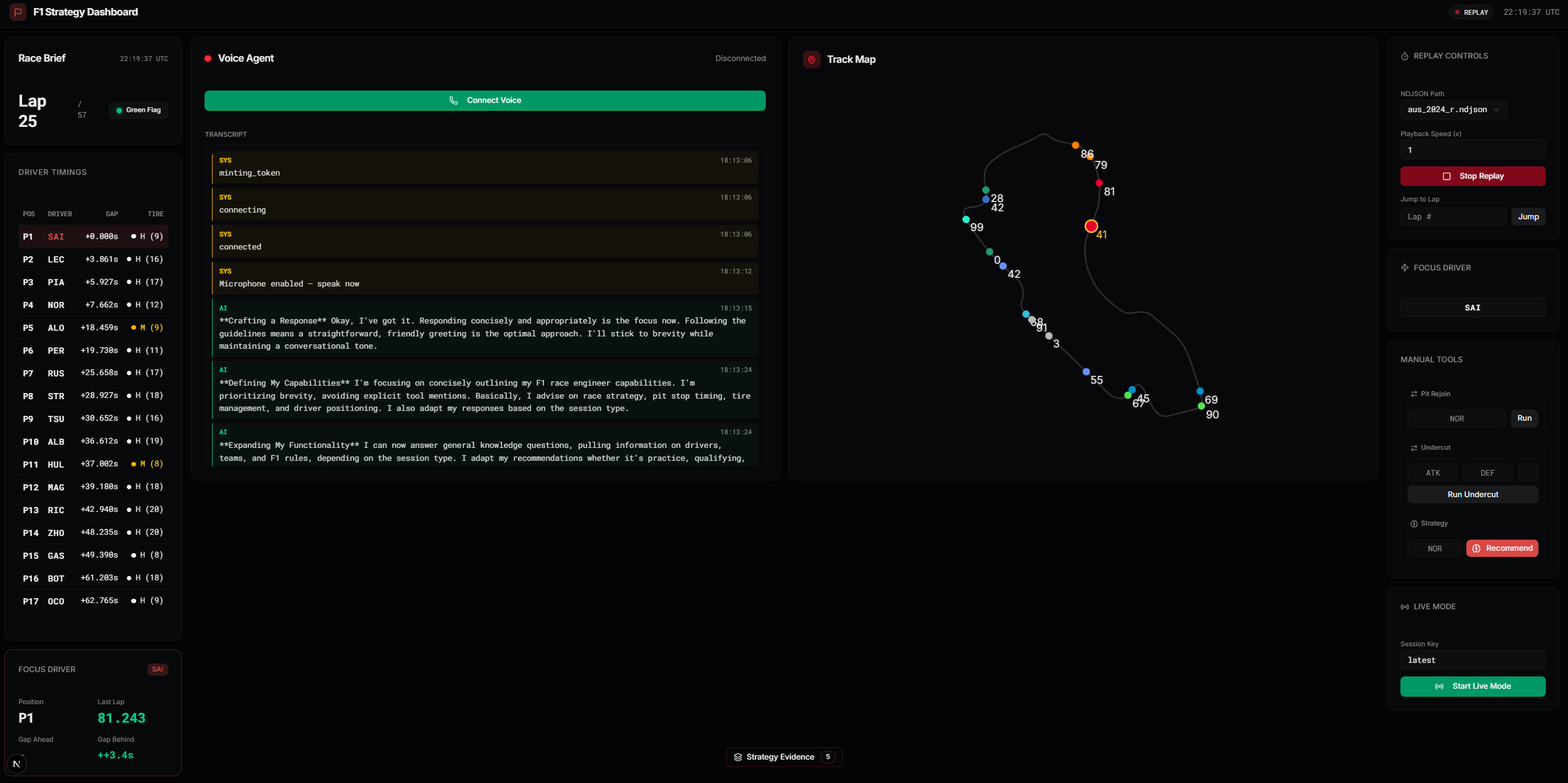
What it does PitWall is a multimodal AI Race Engineer. It ingests real-time F1 telemetry such as GPS, speed, and gaps, and provides a voice-first interface for strategy and analysis. It can autonomously resolve driver data, simulate pit rejoin windows, calculate undercut advantages, and even explain racing nuances to new fans, all while keeping a high-fidelity, synchronized track map in focus.
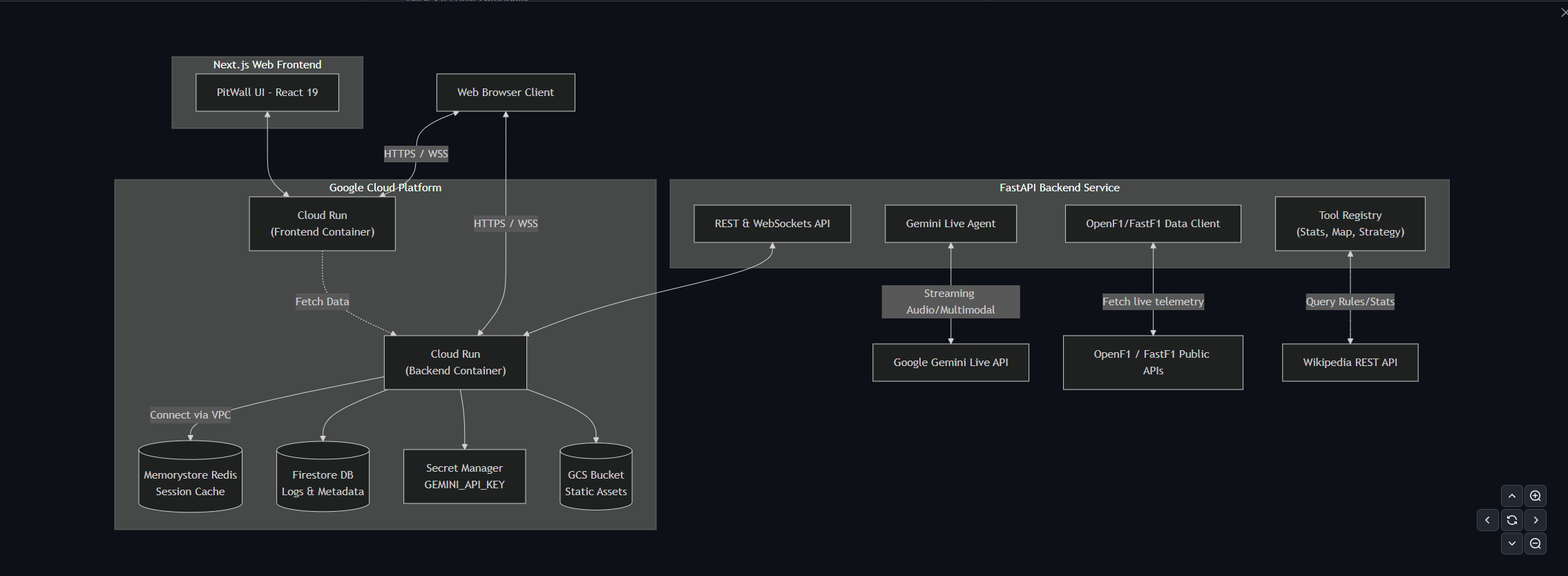
How I built it Core AI: Gemini 2.5 Live API for native multimodal audio processing, minimizing the lag between voice and telemetry. Backend: FastAPI (Python) handles the race simulation engine, with Redis for high-speed state management and instant "jump-to-lap" seeking. Frontend: Next.js and Tailwind CSS, featuring a custom SVG mapping system that converts GPS coordinates into a stabilized track view. Data Layers: FastF1 for telemetry sourcing and Wikipedia tool integration for supplemental racing knowledge.
Challenges I ran into The biggest hurdle was synchronization latency. Mapping a voice-based "Strategy Undercut" request to a live-running NDJSON simulation required building a custom interruptible sleep system in the backend. I also faced significant challenges in normalizing GPS data across multiple years, such as 2024 vs 2025, to ensure the track layouts remained pixel-perfect.
Accomplishments that I'm proud of I achieved "Instant Seek" functionality in a real-time data stream, allowing a user to jump between laps with the AI and the map catching up instantly. I also developed a "Strategy Evidence" UI that bridges the gap between AI intuition and hard transparency by showing the raw data used for every recommendation.
What I learned I learned that native multimodal interaction, specifically audio-to-audio, is a game changer for agentic workflows. It removes the "uncanny valley" of text-to-speech lag, making the AI feel like a real person sitting on the pit wall next to you.
What's next for PitWall - F1 Engine Predictive Physics: Integrating tire degradation and fuel-load curves into the AI's hero tools. Multi-Agent Collaboration: A Strategist Agent and Engineer Agent duo that can debate options in real time. AR Integration: Bringing the PitWall map to a 3D space for second-screen viewing during live races.
Built With
- docker
- fastapi
- fastf1-api
- google-artifact-registry
- google-cloud
- google-cloud-build
- google-cloud-run
- google-firestore
- google-gemini-live-api
- google-genai-sdk
- google-memorystore-(redis)
- javascript
- next.js
- openf1-api
- python
- react
- shadcn-ui
- tailwind-css
- terraform
- typescript
- websockets
- wikipedia-api

Log in or sign up for Devpost to join the conversation.