-
-
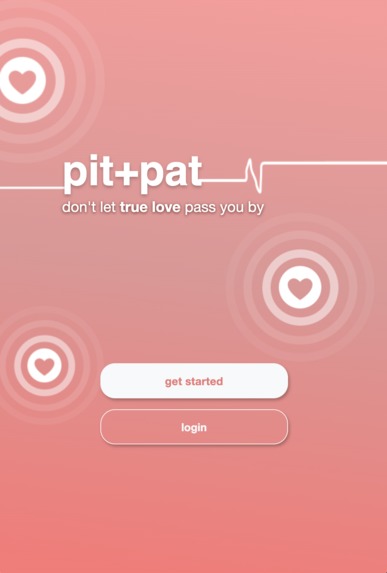
Welcome Page
-
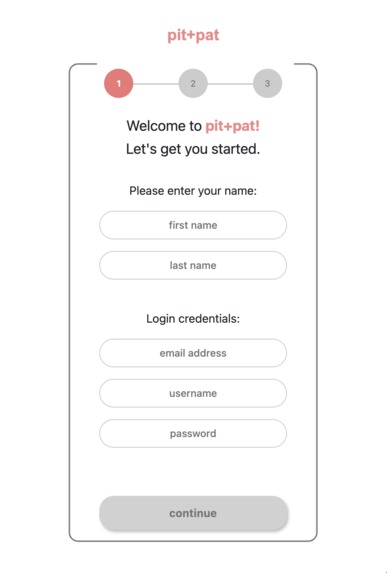
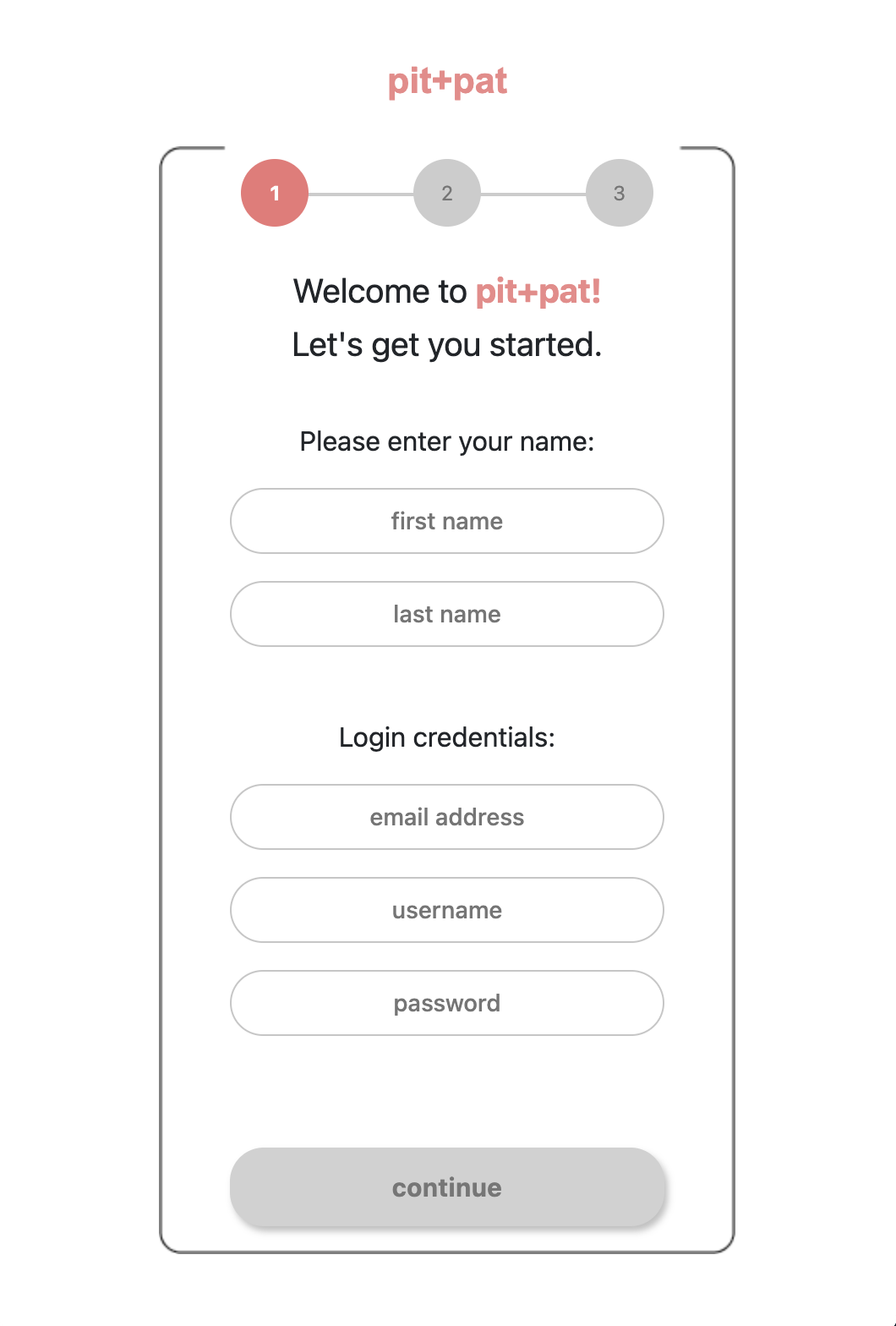
Sign Up
-
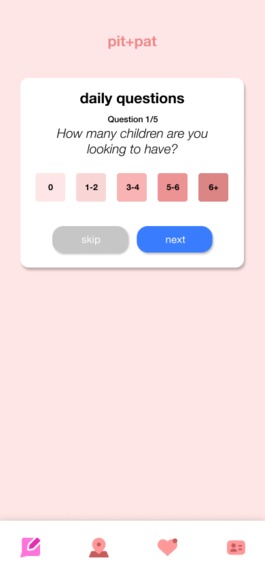
Daily Questions
-
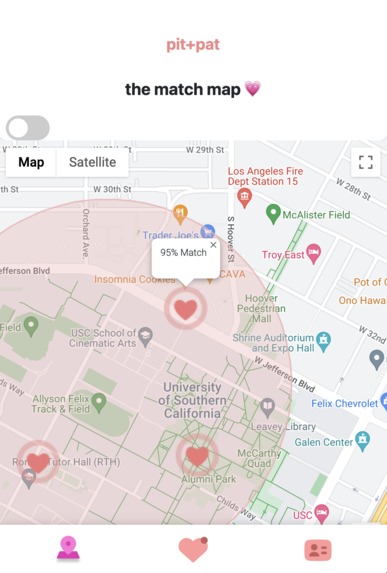
Proximity Map
-
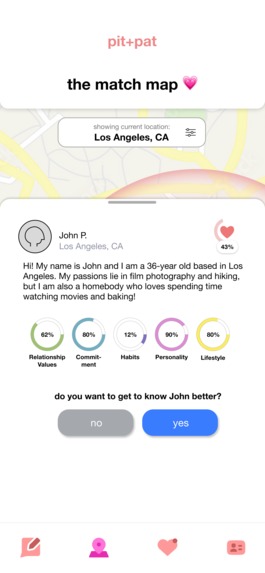
Match Map
-
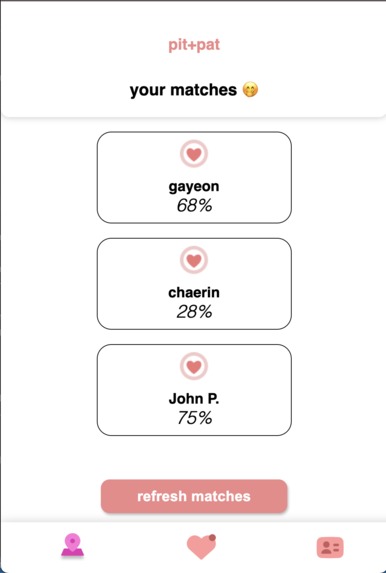
Matches
-
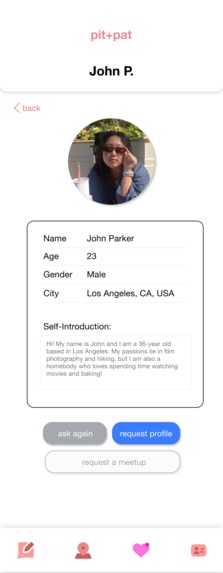
Profile



Inspiration
Dating culture in today's society is very much based on immediate attraction and tension, and as young adults who are soon to graduate college, we realized that the lack of intentionality in today's dating culture would pose a problem for the future of young adult relationships. Thus, we set out to create an application that allows users to not only reflect upon their own personal values and life goals, but match with others who share these values.
What it does
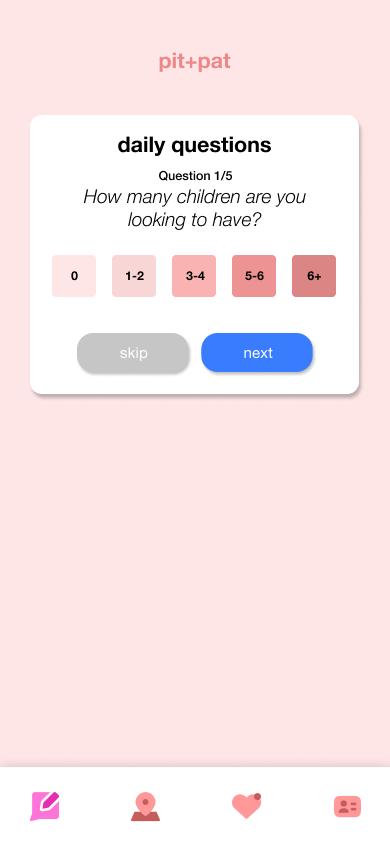
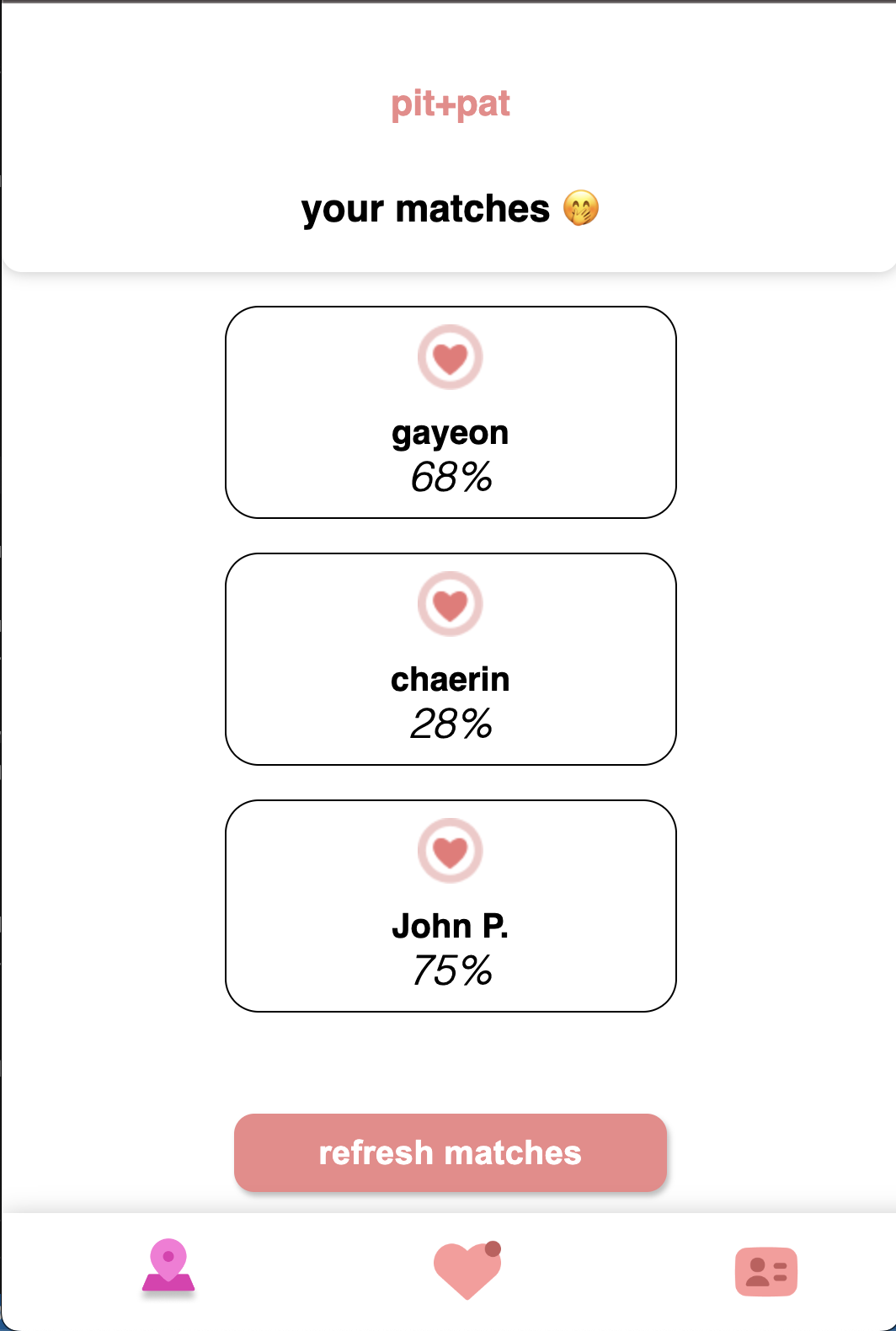
- A built-in algorithm allows users to match according to their input categories including: personality, family expectations, culture, and more.
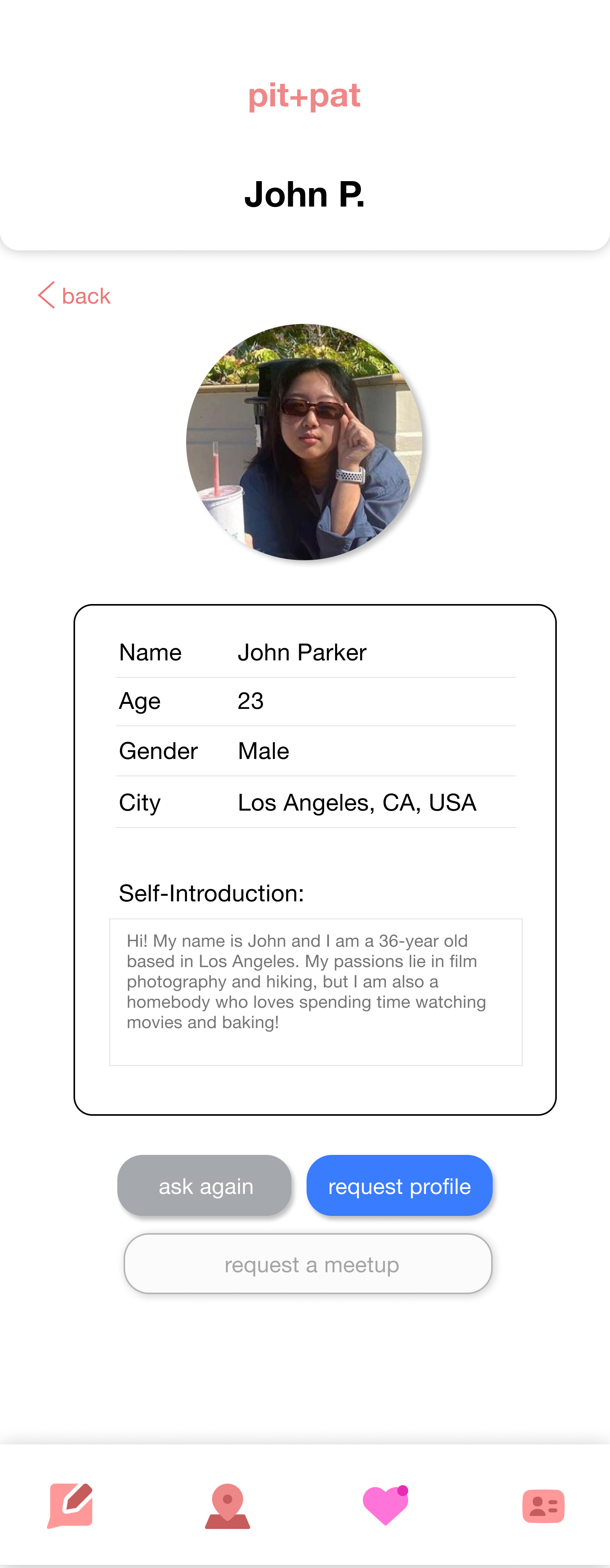
- When location services are turned on by the user, users can opt to receive notifications if there is a 85% or higher match within a 500 meter radius from their current location. The app then takes the users through 3 different stages, where they are allowed to advance to a higher stage if they like the qualities of their match, or reject the match at any step of the process. If both users advance through all 3 steps, the app will set them up on a date where they will have the opportunity to meet.
How we built it
Rachel Yoo designed the app through Figma, Chaerin Sung and Ashley Song developed the front-end with HTML and CSS, and Gayeon Jang developed the back-end with Google Maps API, JavaScript, and Firebase.
Challenges we ran into
When we deployed the app through firebase, our browsers kept blocking us from accessing it, so we were unable to deploy it online. The 24 hour time frame was tight to finish the full-stack app we envisioned. As an example, our back-end developer had a hard time balancing database management and coding the algorithm. She was able to finish most of the functionalities she envisioned for the database, but couldn’t build a complex algorithm to match users. Furthermore, because our vision was to code a functional app- and web- based platform, there were many pages for the front-end developers to code, and with great amount of detail.
Accomplishments that we're proud of
First of all, we are proud of our product concept. Not only does pit+pat reflect a lot of values all four of our teammates share, but it was a very fun idea that we were able to see come to life. Secondly, we are proud of the complexity of the product itself, as it is a product that has not been thought of previously. We had to create an algorithm to calculate the compatibility percentages, and we had to come up with a UI design that fits the themes and messages of the app. It was an incredibly difficult product to complete in the short amount of time we had, but we are so proud of how much we got done and how well everything came together.
What we learned
We learned how to navigate issues and work together as a team. It was definitely difficult to create a steady work flow given each of our respective roles and the extended work time. However, over the course of the development of our project, we came to respect each of our respective sets of expertise and communicate effectively. Not only that, but we grew in our respective skills in developing, such as effective use of APIs, firebase, Bootstrap, CSS animations, positioning, and more. We believe this was an incredible opportunity for us to apply our creativity and technical skills into the real world.
What’s next for pit+pat
We can see pit+pat eventually growing to become a powerful tool that helps facilitate more meaningful human engagement. We hope to accomplish this by incorporating a more comprehensive and possibly AI-powered, self-learning algorithm that allows users to find more accurate compatibility matches. We hope to better incorporate our filter system to ensure our users do not match with people they do not share Core Values with. In order to accomplish this, we hope to better consolidate our API’s and databases, more specifically Google Maps, to add features such as proximity calculation and compatibility markers. In addition, with intentionality at the forefront of our mission, we seek to add a chatting feature where users are able to draw out more meaningful responses from their matches.


Log in or sign up for Devpost to join the conversation.