Inspiration
I started this project because everyday life creates a surprising number of things that need to be handled. Letters arrive, conflicts need to be resolved, documents must be found, and even personal ideas—such as learning how to grow tomatoes in a garden—can require a plan, validation, notes, and help throughout the process.
Today, this information ends up scattered across notebooks, printed pages, photographs, PDF files, browser tabs, and long chat conversations. I already scan and store important documents securely, but finding the right detail later is still difficult. Searching across PDFs, scans, notes, and previous explanations is not a smooth experience.
ChatGPT can already help with many individual questions, but long chats become difficult to navigate. Important information gets buried, previous decisions are hard to locate, and the same context often needs to be explained again. I wanted a more structured, continuous, and private workspace for real-life matters.
What Pismo po Ludzku does
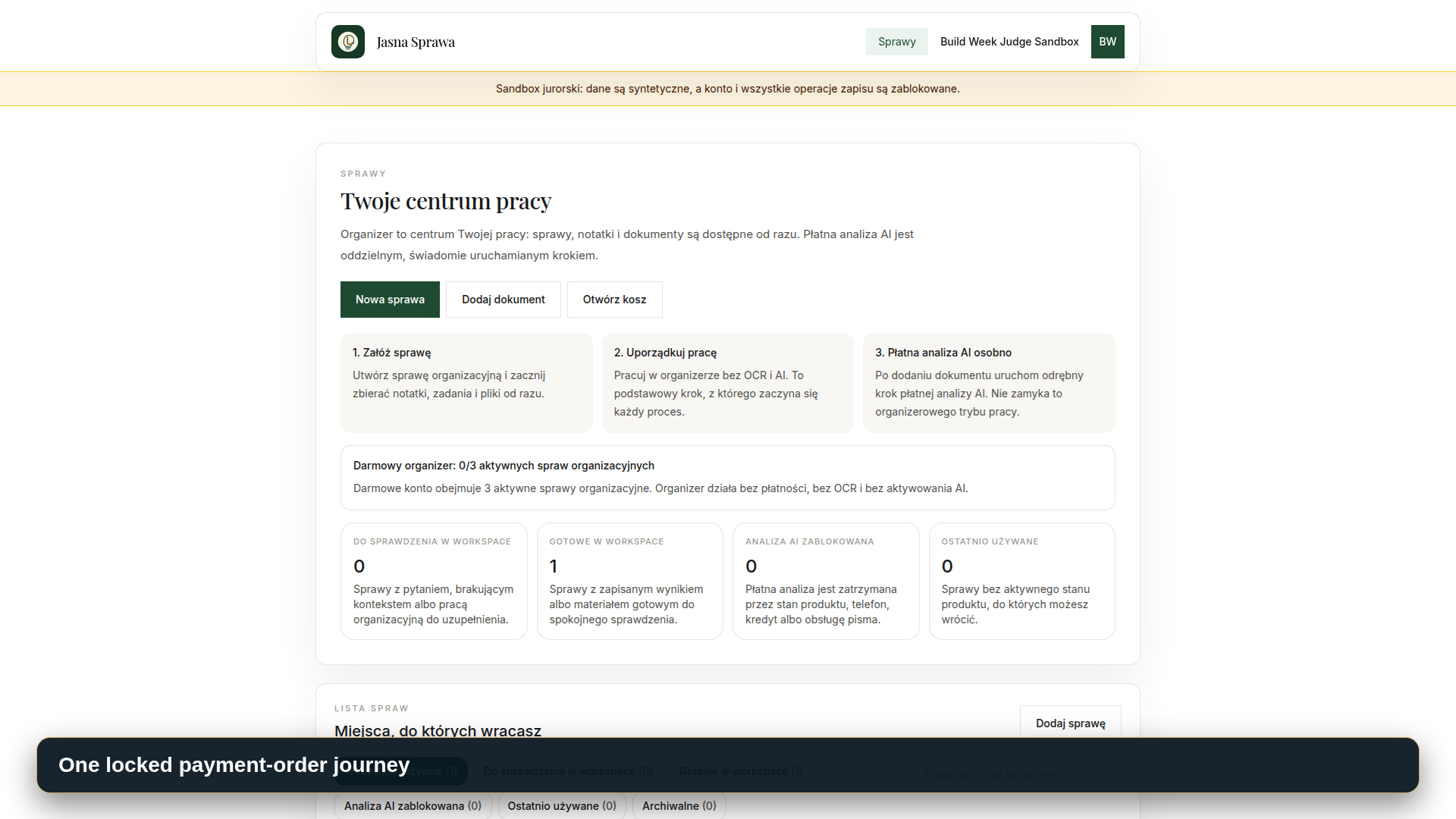
Pismo po Ludzku organizes each matter as a separate workspace. A user can keep documents, scans, photographs, notes, source material, explanations, plans, and tasks together instead of rebuilding the context every time. For Build Week, I focused on one difficult and common example: understanding a Polish court payment order.
The demonstrated journey turns a synthetic document into:
- a plain-language explanation,
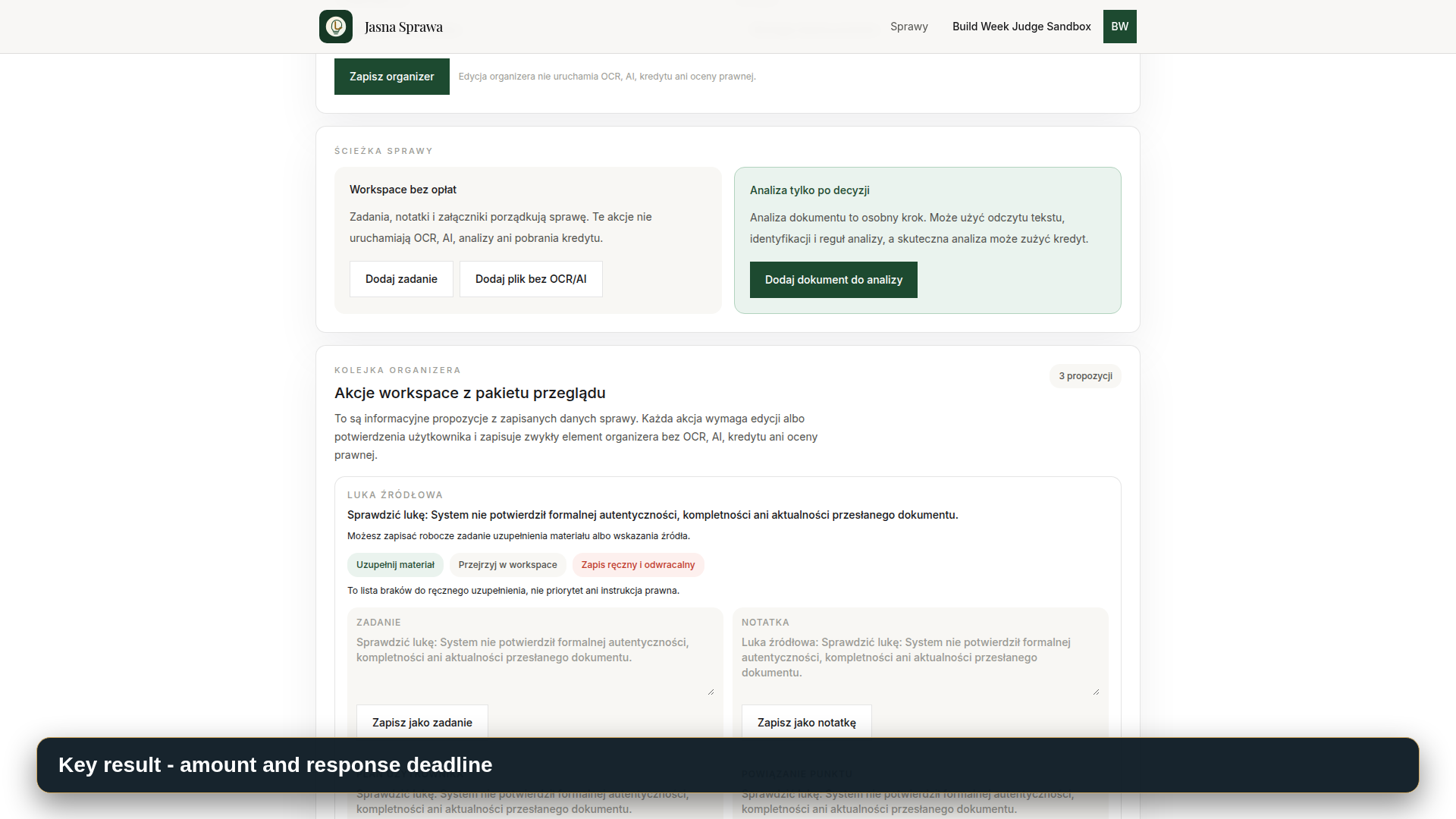
- the important amount and response deadline,
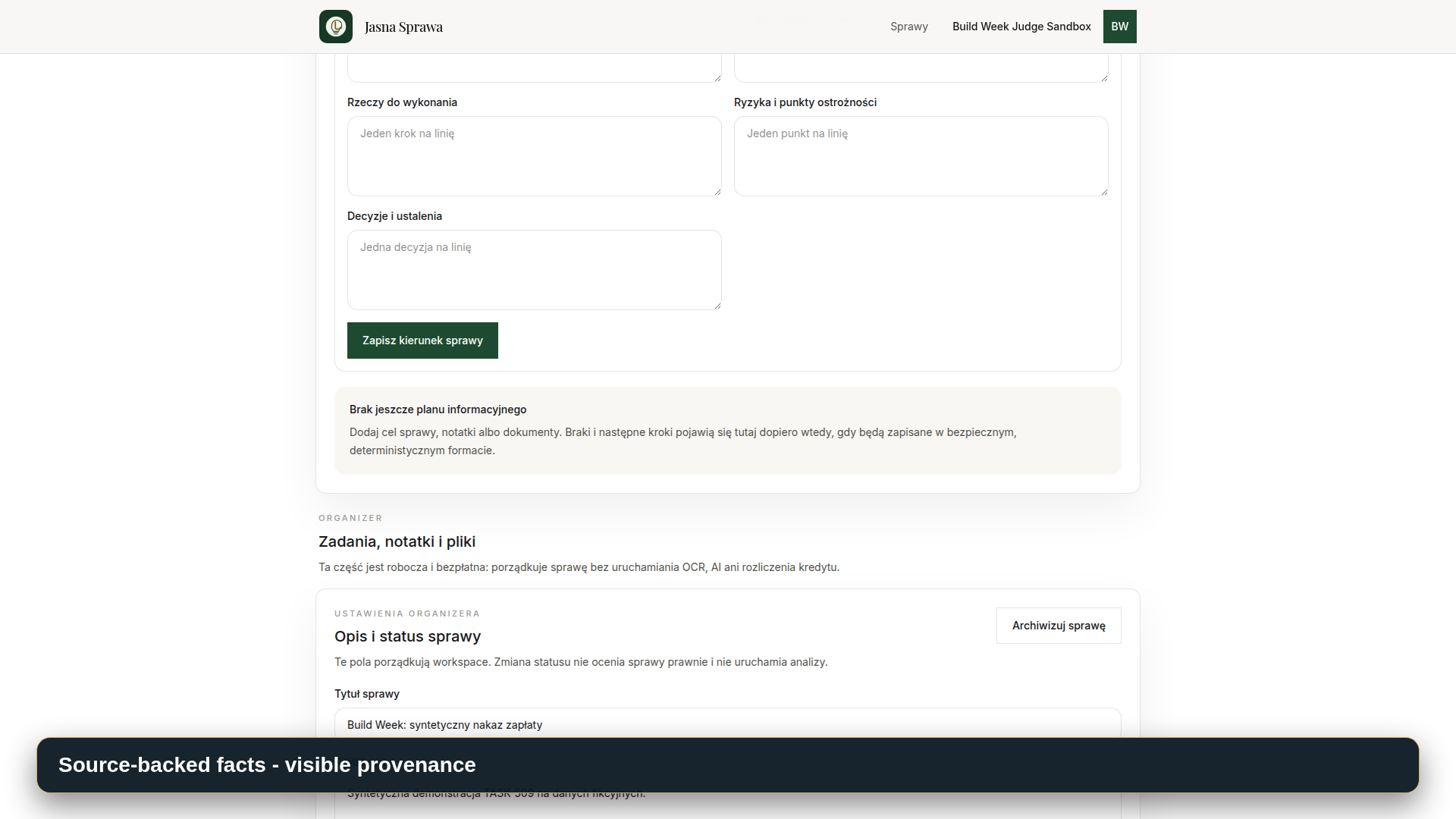
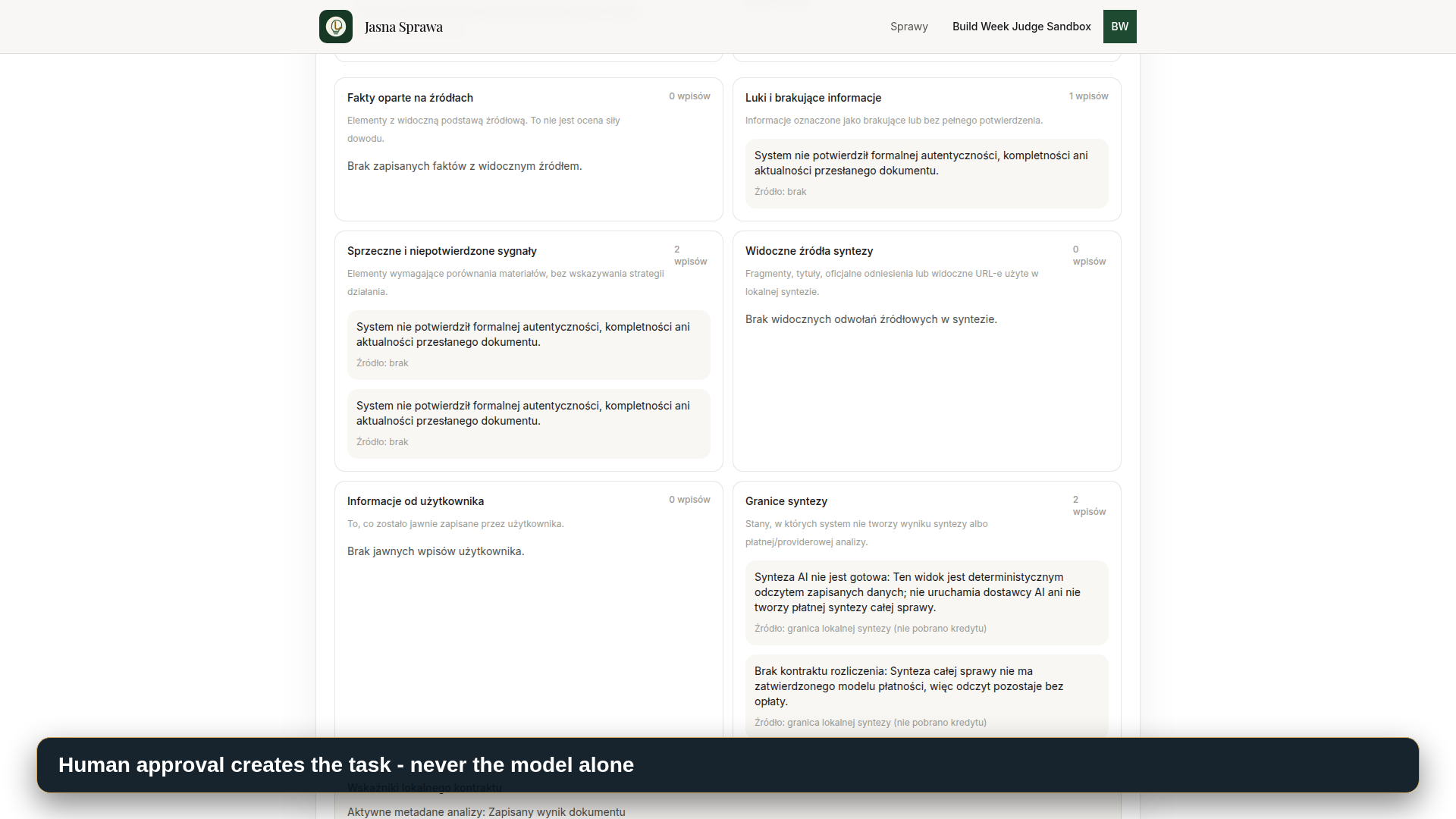
- facts linked to visible source fragments,
- a structured action plan,
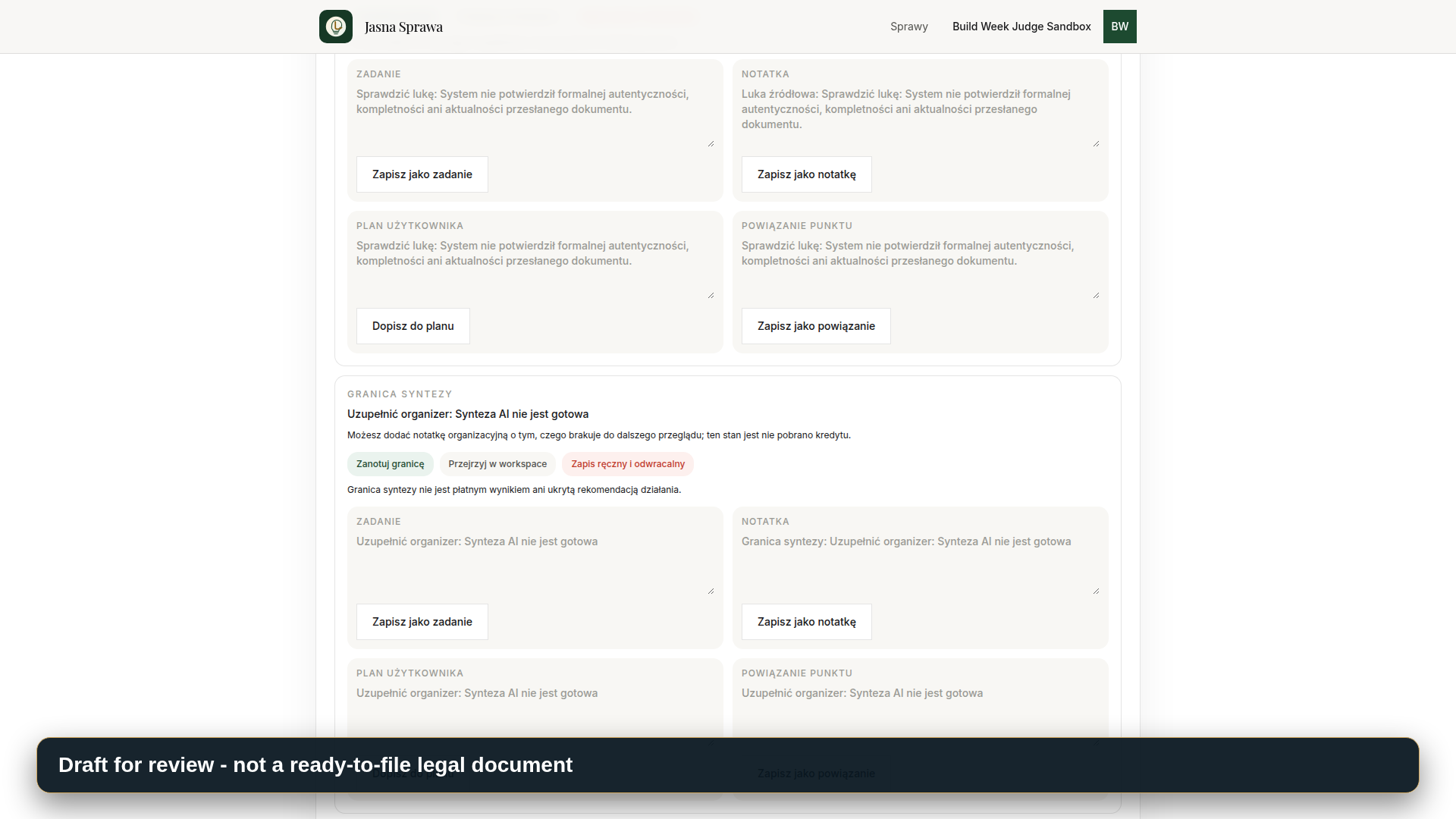
- a provisional response draft requiring review,
- and a task created only after explicit human approval.
The purpose is to reduce stress and make difficult information easier to navigate. The application is an informational aid. It does not replace a lawyer or professional judgment.
Why structure matters
A normal AI chat is useful for answering a question, but a real matter can continue for weeks or months. New documents appear, facts change, decisions are made, and completed steps need to remain visible.
Pismo po Ludzku treats the matter itself—not the chat—as the main object. AI assistance, documents, evidence, notes, and actions remain connected to that matter. This creates continuity and makes it easier to return later without starting again from an empty prompt.
It also allows source material to remain visible. Instead of presenting an AI answer as unquestionable truth, the interface shows where important facts came from and separates evidence from interpretation.
What I built during Build Week
The broader organizer and document workspace existed before the competition. During Build Week, I created a focused and reproducible demonstration around a synthetic Polish payment order.
The new work includes:
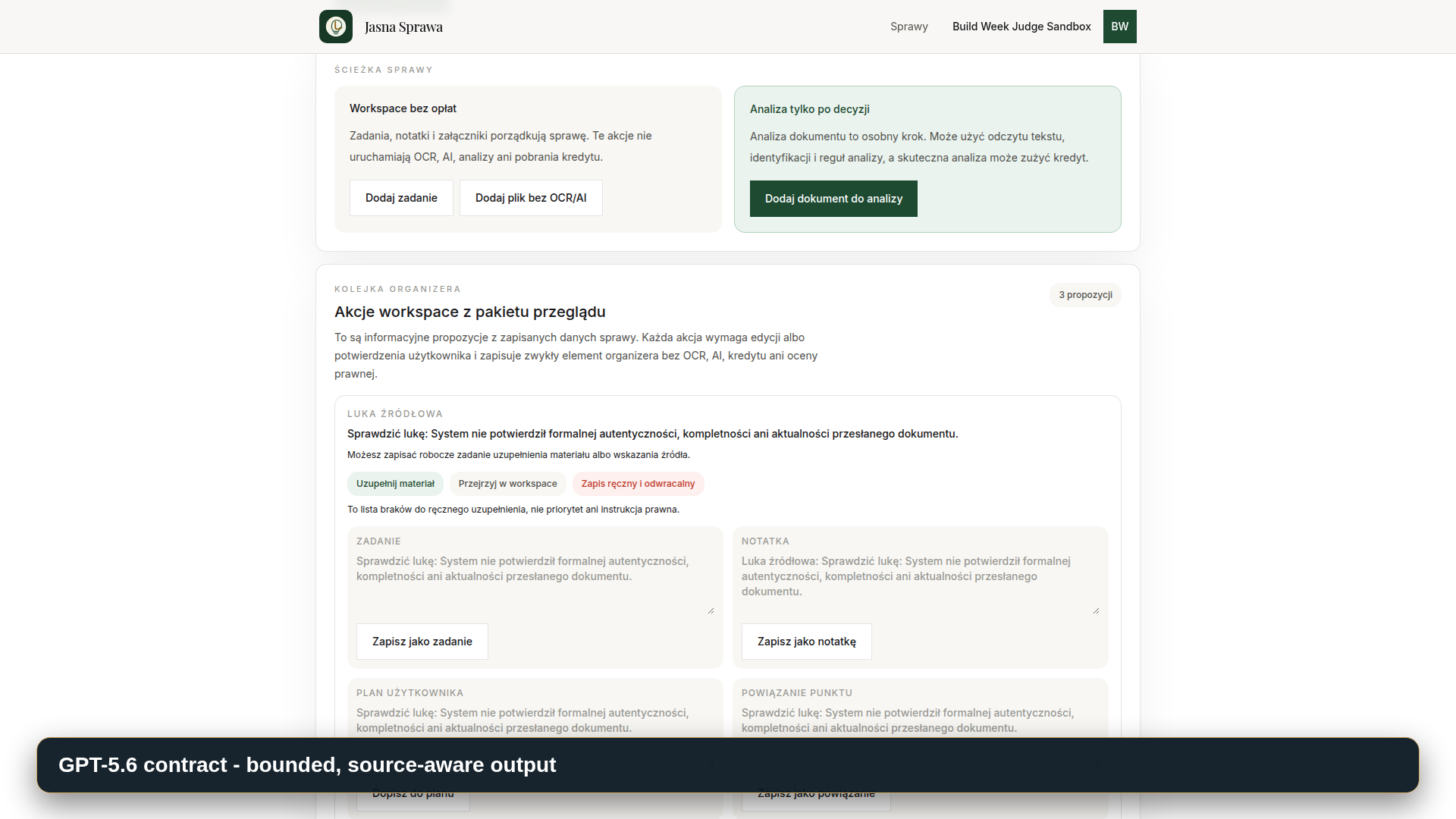
- a bounded GPT-5.6 Responses API integration,
- checks requiring generated results to reference supplied sources,
- deterministic local OCR for the synthetic document,
- explicit human approval before an AI proposal becomes a task,
- a server-enforced read-only judge environment,
- a sanitized private repository for judges,
- privacy and packaging tests,
- and a reproducible English demonstration video.
The public sandbox contains synthetic data only. Judges can inspect the stored result, but uploads, account creation, mutations, billing, and provider calls are blocked by the backend.
How I used Codex and GPT-5.6
Codex helped me divide the Build Week idea into bounded tasks and work through them systematically. I used it to implement backend and frontend changes, design tests, review privacy boundaries, diagnose problems, and compare possible production approaches.
I still made the product and safety decisions. In particular, I chose to use only synthetic competition data, keep OCR local, require human approval for actions, prevent paid model calls during judging, and present the application as informational rather than legal advice.
GPT-5.6 is integrated through a fail-closed Responses API contract. The application expects a bounded, source-aware result. Missing references, invalid structures, disabled providers, and unsuccessful requests do not silently become accepted output. The public demonstration replays a stored deterministic result conforming to the same product contract, so judges do not need an API key or credits.
The hardest part
The hardest part was making the AI components interpret documents without inventing facts.
OCR is imperfect, formal language can be ambiguous, and a model can produce a confident, plausible explanation that is not actually supported by the document. I did not want the application to generate a generic summary and present it as truth.
I therefore treated source grounding as part of the product contract. Important facts remain connected to immutable source spans. Generated explanations and plans must provide valid references to the supplied material. The interface distinguishes confirmed evidence from interpretation, and invalid or ungrounded output fails closed instead of being silently accepted. Human approval remains necessary before a proposed action becomes a task. This does not eliminate every possible model error, but it makes the system more transparent, testable, and honest about uncertainty.
What I learned
I learned that reliable document AI is not mainly about producing fluent text. It is about controlling context, preserving provenance, validating references, exposing uncertainty, and refusing to accept unsupported output.
I also improved the way I cooperate with GPT-5.6 and orchestrate longer development work. I became better at defining bounded tasks, testing the actual risk of a change, diagnosing problems from evidence, and looking for solutions that could eventually support a production system rather than only a quick prototype.
What's next
I am most proud that I decided to take on the challenge and continue building this application. I believe that, when completed, it can help many people handle difficult everyday matters with less stress and more clarity.
The next steps include broader document support, controlled production OCR, better global search, monitoring, quotas, cost controls, and carefully reviewed AI activation. Professional review will remain important for matters that require it, while the application can make the underlying documents and public information easier to understand and organize.
Built With
- alembic
- codex
- fastapi
- ffmpeg
- gpt-5.6
- javascript
- kokorotts
- openai
- pytest
- python
- react
- responsiveapi
- sqlalchemy
- sqlite
- tailscale
- tesseract

Log in or sign up for Devpost to join the conversation.