-
-
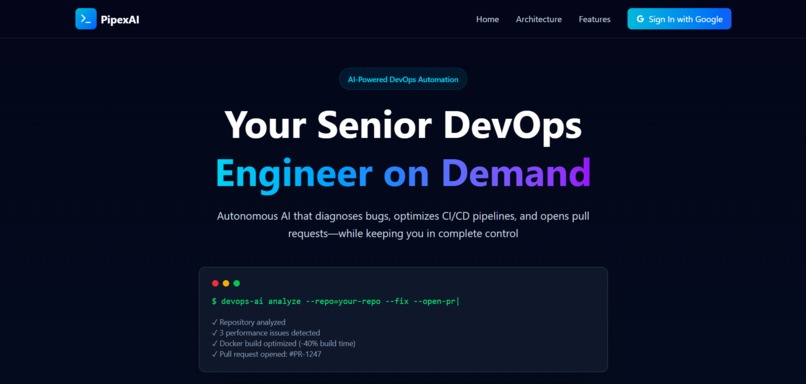
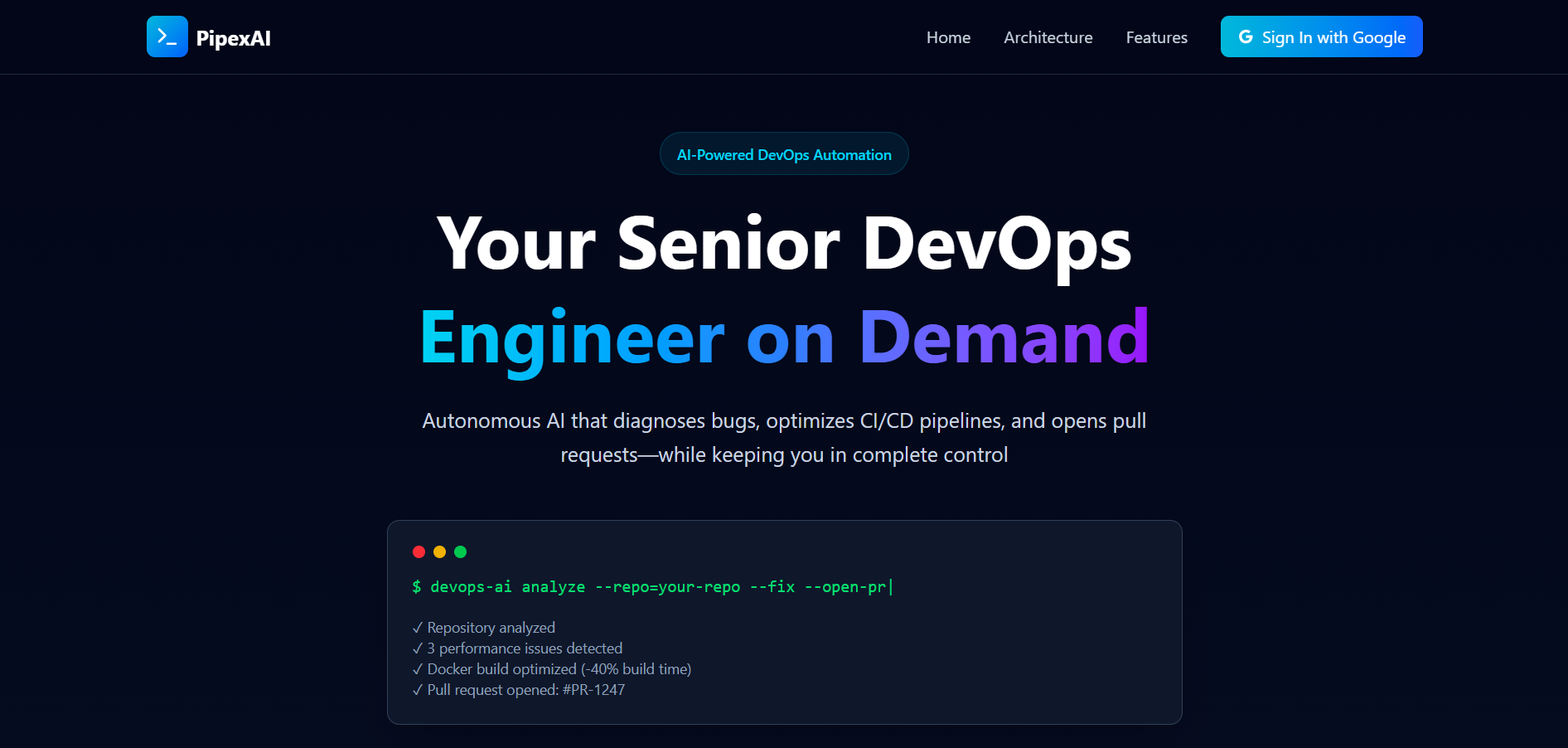
Autonomous AI that diagnoses bugs, optimizes CI/CD pipelines, and opens pull requests while keeping you in complete control
Inspiration
As a developer, I’ve spent a lot of time context-switching between debugging errors, reviewing pull requests, fixing CI/CD failures, and deploying updates often under tight deadlines. I noticed that while AI tools exist, most of them either stop at suggestions or take too much control away from the developer.
What it does
Listens to GitHub events via webhooks in real time Diagnoses bugs and CI/CD failures automatically using AI Generates fixes and optimizations and opens pull requests Keeps developers in full control with review-before-merge workflows Reduces manual debugging and speeds up delivery
How we built it
I built the project using the MERN stack, with a strong focus on automation and transparency. GitHub Webhooks listen for events such as failed CI runs, new commits, or pull request updates. When triggered, the backend fetches repository context using the GitHub API. Gemini analyzes the issue, diagnoses potential bugs or pipeline inefficiencies, and generates code or configuration fixes. The system creates a new branch, applies the changes, and opens a pull request automatically. A dashboard allows developers to review the diagnosis, proposed fixes, and PR details before merging. Every action is logged and clearly explained, ensuring developers understand why the AI made each decision.
Challenges we ran into
A major challenge was ensuring safe autonomy. Giving an AI permission to open pull requests required strict validation, scoped GitHub permissions, and clear action boundaries. Another challenge was handling noisy or incomplete signals from CI failures — not every failure has a straightforward fix, and the AI needed to reason carefully with limited context. Time constraints also pushed me to focus on building a reliable end-to-end workflow instead of overengineering features, especially within a hackathon environment.
Accomplishments that we're proud of
Built an autonomous, event-driven AI that diagnoses issues and opens pull requests in real time Kept developers fully in control with clear, human-in-the-loop approvals Automated CI/CD troubleshooting to reduce debugging time Delivered a complete working system within hackathon constraints
What we learned
Through this project, I learned a lot about: Designing autonomous AI agents that react to real events rather than manual prompts Using GitHub webhooks to build event-driven systems that respond instantly to code changes Leveraging the GitHub API to programmatically analyze repositories, create branches, and open pull requests Building human-in-the-loop systems, where AI takes initiative but developers retain final approval One key takeaway was that autonomy is not about removing humans from the loop — it’s about reducin
What's next for PipexAI
Self-improving intelligence — enabling the AI to learn from merged pull requests and past decisions to continuously improve future diagnoses and fixes. Predictive issue detection — identifying potential bugs or CI/CD failures before builds break by analyzing commit patterns and historical signals. Custom rule engine — allowing teams to define organization-specific coding standards, pipeline rules, and architectural patterns that guide the AI’s decisions. Expanded platform support — extending repository and workflow integrations beyond GitHub to platforms like GitLab and Bitbucket. Advanced analytics & ROI insights — providing dashboards that quantify time saved, issues prevented, and overall engineering efficiency gains.


Log in or sign up for Devpost to join the conversation.