-
-
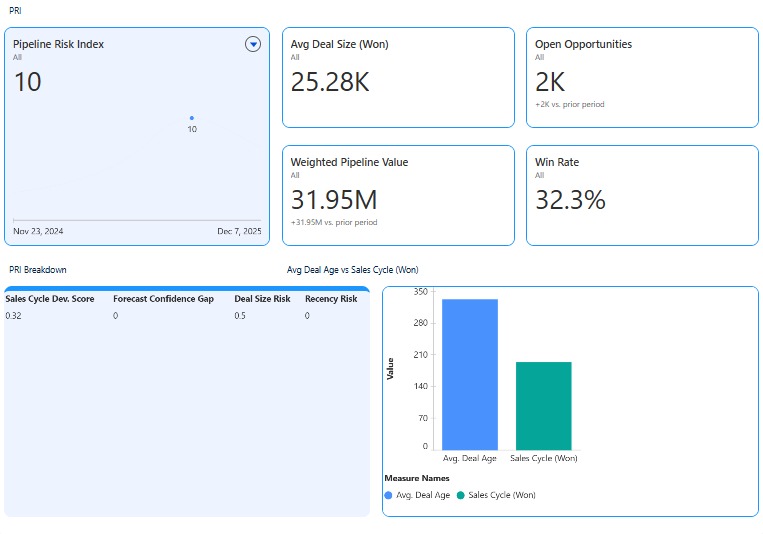
Tableau Next - Pipeline Performance Dashboard
-
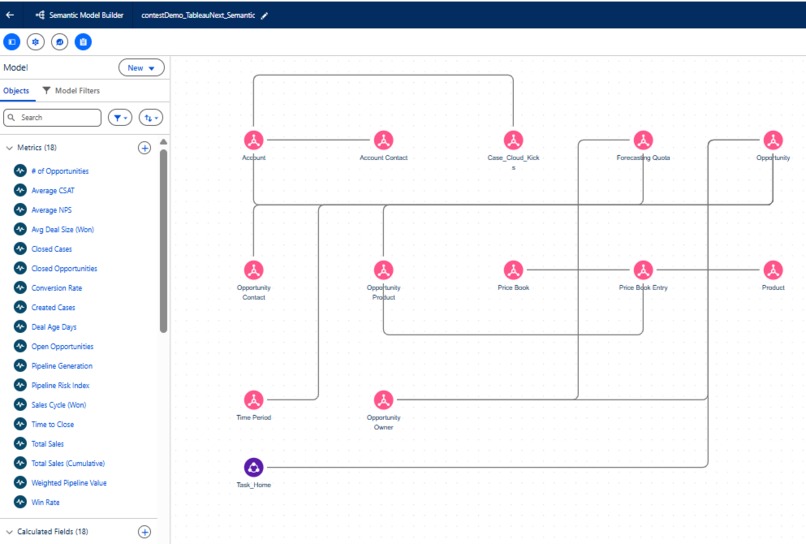
Salesforce Org - Semantic Model
Inspiration
This project was inspired by a common challenge in sales analytics: while CRM platforms capture rich opportunity data, teams often lack a trusted, reusable way to interpret pipeline health and deal risk consistently. Metrics such as win rate, sales cycle, and forecast value are frequently redefined across dashboards, leading to misalignment and reduced confidence in analytics.
With Tableau Next’s semantic layer embedded in the Salesforce platform, I saw an opportunity to demonstrate how governed metrics and semantic modeling can elevate analytics from static reporting to actionable insight...without requiring users to leave their existing workflow.
What it does
This solution demonstrates how Tableau Next’s semantic layer can be used within Salesforce to deliver governed, reusable pipeline and risk metrics that help teams assess opportunity health, forecast confidence, and expected revenue.
How we built it
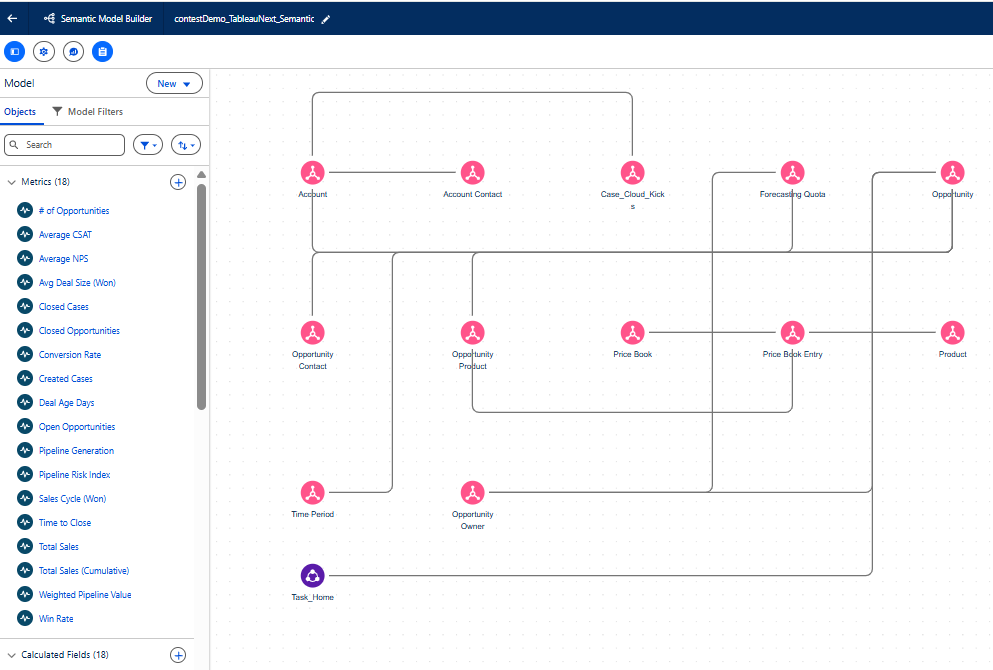
The solution is centered on an opportunity-centric semantic model within Tableau Next. Key steps included:
- Defining governed semantic metrics such as Weighted Pipeline Value, Win Rate, Sales Cycle (Won), and Total Sales.
- Designing a Pipeline Risk Index (PRI) composed of multiple interpretable components (sales cycle, deal size, forecast, and recency signals).
- Implementing metrics directly in the semantic layer so they can be reused consistently across dashboards.
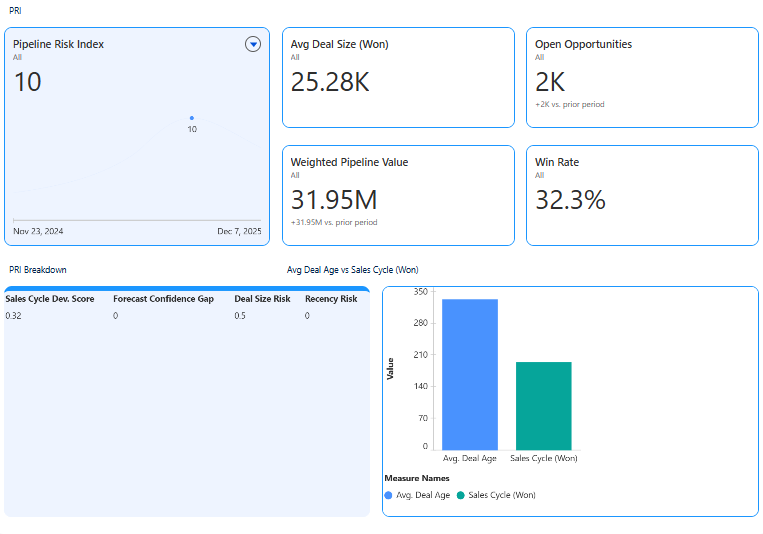
- Creating a Tableau Next overview dashboard that surfaces these metrics in a concise, decision-oriented layout.
- Documenting representative calculation logic in a public GitHub repository to support transparency and explainability.
The result is a dashboard experience that connects semantic modeling to real-world pipeline analysis inside Salesforce.
Challenges we ran into
One challenge was navigating preconfigured org data constraints, including limited sample activity data and existing object relationships. This required adjusting metric inputs while preserving semantic intent.
Another challenge was balancing analytical rigor with simplicity - ensuring that composite metrics like the Pipeline Risk Index remain understandable and actionable rather than opaque.
These constraints ultimately strengthened the design by emphasizing adaptability, clarity, and governance over complexity.
Accomplishments that we're proud of
This project allowed me to extend prior experience with traditional Tableau development and Salesforce CRM analytics into Tableau Next’s semantic-first architecture.
Key accomplishments include:
- Translating established Tableau and Salesforce reporting practices into a governed semantic modeling approach using Tableau Next.
- Designing reusable, opportunity-level metrics that remain consistent across analytic views.
- Implementing a composite Pipeline Risk Index that balances analytical rigor with interpretability.
- Adapting to existing Salesforce org constraints while preserving semantic intent and business relevance.
- Delivering a complete end-to-end solution, from semantic modeling through dashboard design and documentation.
This work reflects both continuity with proven analytics practices and growth into modern, semantic-driven analytics workflows.
What we learned
Building this solution deepened my understanding of:
- How Tableau Next’s semantic layer enables metric reuse, governance, and explainability
- Practical considerations when working with Salesforce Data Cloud objects and data streams
- The importance of modeling analytics around business questions first, rather than around individual visualizations
I also gained hands-on experience adapting metric logic to align with existing object models and available data, reinforcing the value of flexible semantic design.
What's next for Pipeline Metrics Overview Dashboard
With additional time and expanded object availability, engagement and activity signals could be incorporated to further enrich opportunity-level risk scoring possibly including activity/event trends and metrics.
Built With
- cloud
- data
- github
- salesforce
- tableau

Log in or sign up for Devpost to join the conversation.