Inspiration
Oil and gas pipelines are the lifelines of modern energy but even small leaks can cause massive environmental harm, economic loss, and safety hazards. Inspired by the vision of sustainable technology and smart infrastructure, We wanted to create an AI-driven monitoring system that helps detect leaks early, using satellite imagery. The project aligns with the Intelligent Planet Hackathon’s vision of using AI for environmental safety and planetary health, supporting the goals of Vision 2030 for smart and sustainable technologies.
What it does
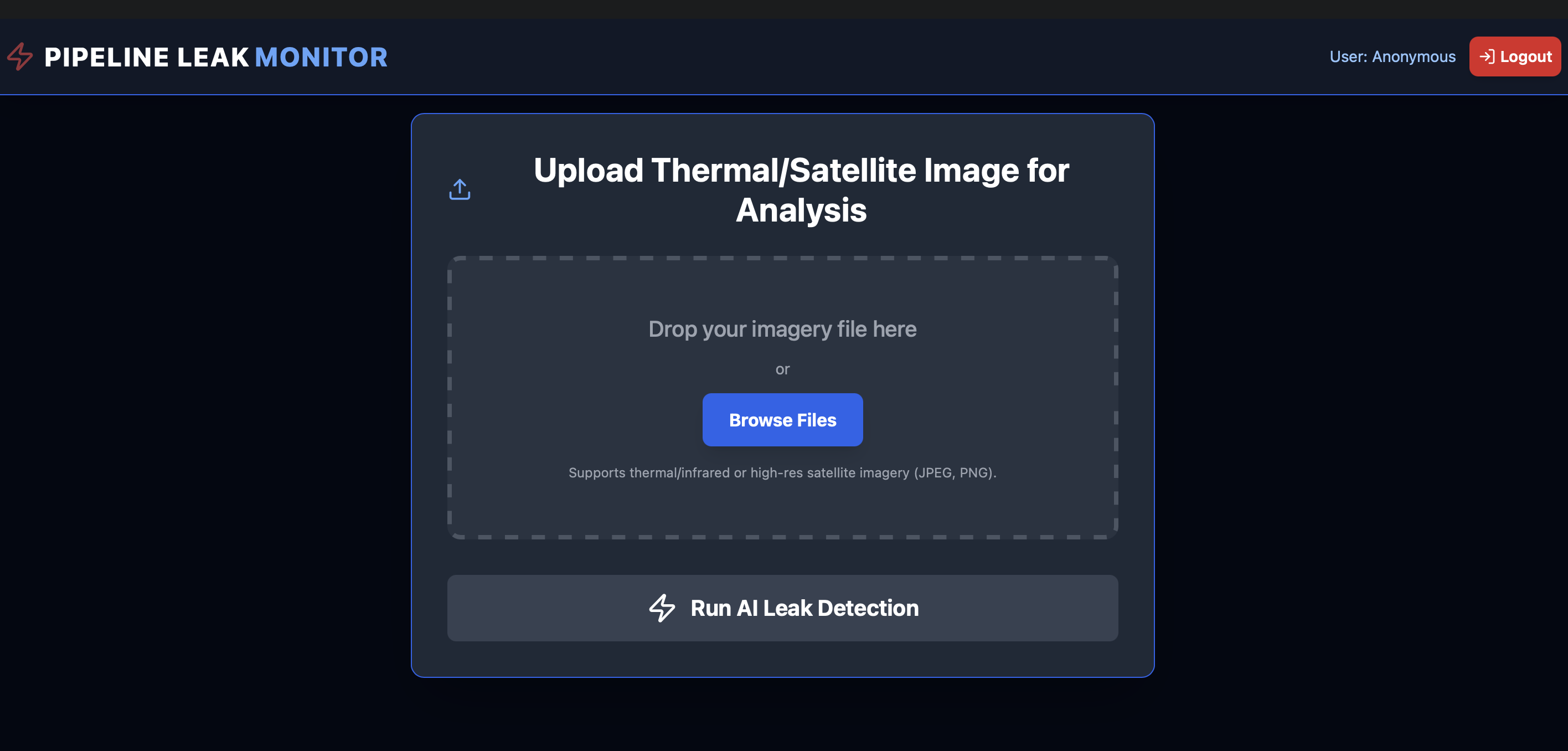
AI-powered Image Analysis: The system analyzes satellite images to detect unusual heat signatures, color anomalies, or shapes that may indicate potential pipeline leaks. Structured AI Detection Report: After analysis, it generates a structured AI Detection Report showing results such as: Leak status (e.g., “No anomaly detected” or “Possible leak detected”) Approximate location Reason for detection (e.g., heat spike near pipeline route) Confidence level of the result AI Chatbot Assistant: Integrated AI chatbot allows users to ask about results, get explanations, and troubleshoot issues directly within the app. Secure Login / Signup System: Users can create accounts, log in securely, and manage their uploads and results. Interactive Map View: Displays the approximate leak location visually, making it easier to assess affected areas. Visual Result Dashboard: Highlights detected regions on the uploaded image and summarizes findings in a user-friendly interface.
How we built it
AI Model: Developed using Google Gemini AI Studio to analyze satellite images for unusual heat or shape anomalies indicating possible leaks. AI Chatbot: Integrated a Gemini-powered conversational assistant to help users interpret reports, get explanations, and resolve queries. Frontend: Designed and implemented directly in Gemini AI Studio, featuring an intuitive interface with image upload, analysis results, and chatbot interaction. Map Integration: Added an interactive map view to visualize detected leak locations and provide a clear geographical reference. Authentication: Included a login/signup system with secure session management for controlled access to analysis features. Testing & Hosting: Fully prototyped and tested on Google AI Studio.
Challenges we ran into
- Achieving accurate detection from thermal and satellite images without false positives caused by natural heat variations.
- Integrating multiple features like upload, chatbot, map smoothly within Gemini AI Studio’s environment.
- Ensuring the chatbot delivered clear, structured, and helpful responses without being too technical.
- Handling map visualization and coordinate rendering for detected leak areas.
- Managing user authentication and session flow reliably inside AI Studio.
Accomplishments that we're proud of
Built a fully functional AI-powered web app within Gemini AI Studio. Successfully integrated image analysis, chatbot, authentication, and map visualization in one platform.
What we learned
- The importance of prompt engineering in guiding multimodal AI systems for visual analysis.
- How to merge AI, web technologies, and environmental data for real-world use cases.
What's next for PIPELINE LEAK MONITOR
- Integrate real-time satellite and sensor feeds for continuous monitoring.
- Enhance AI accuracy by training with real-world pipeline datasets.
- Add multi-language support.
- Deploy publicly on Firebase Hosting for global access.
- Expand the model to detect other environmental anomalies, like gas flares, oil spills, or land temperature shifts.
Built With
- ai-studio
- gemini
- google-cloud
- vertex-ai


Log in or sign up for Devpost to join the conversation.