-
-
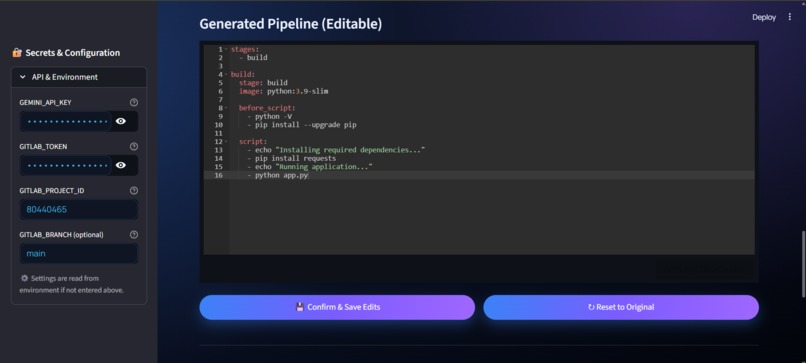
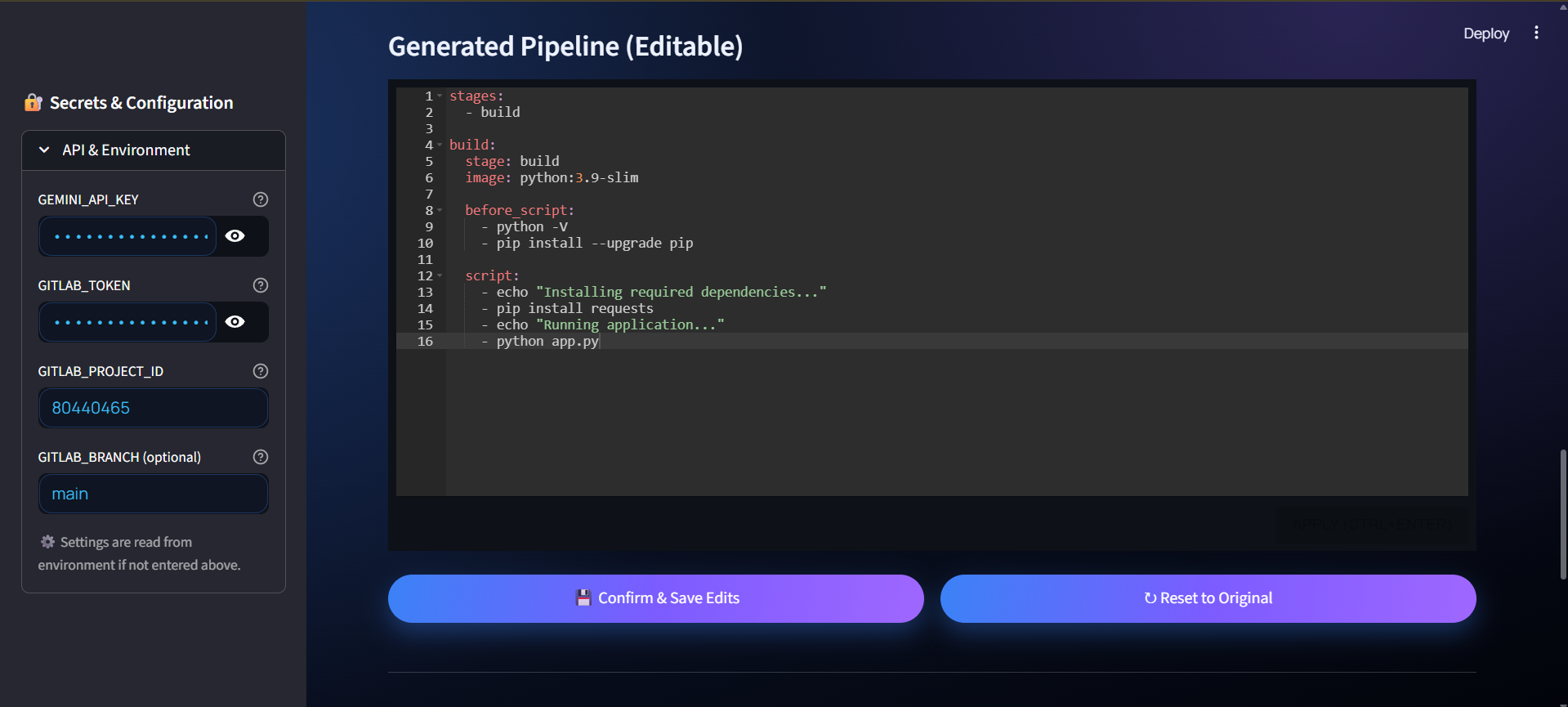
GENERATED PIPELINE FIX
-
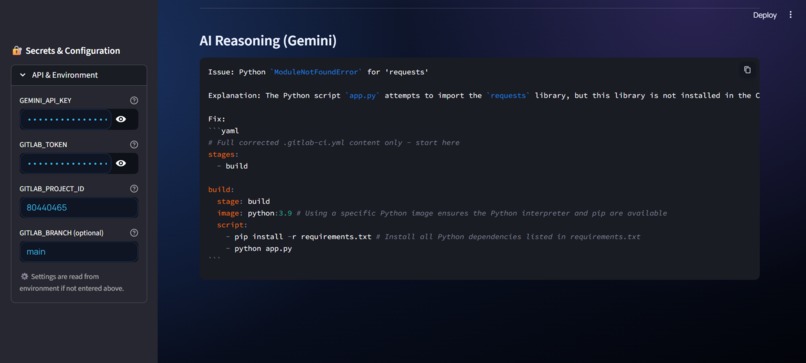
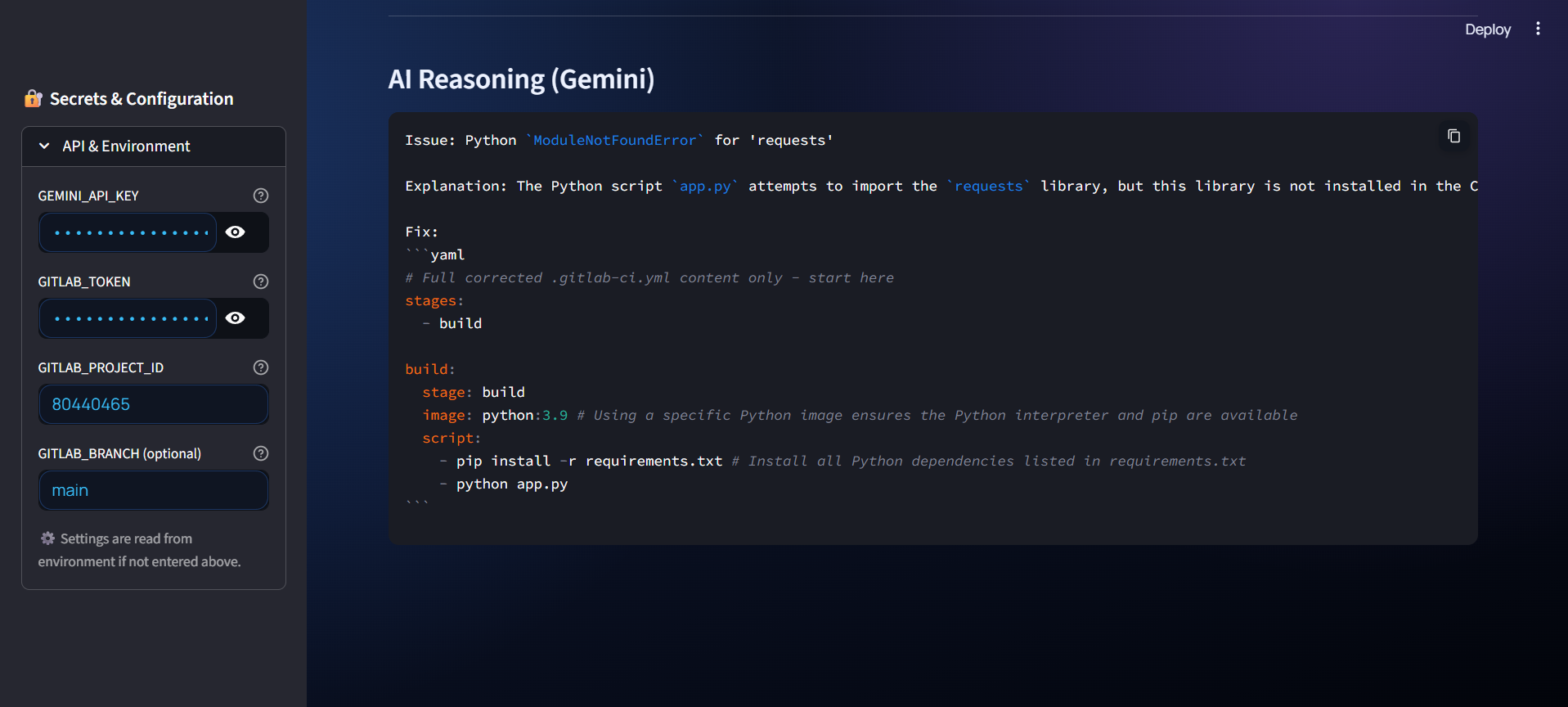
GEMINI AI REASONING
-
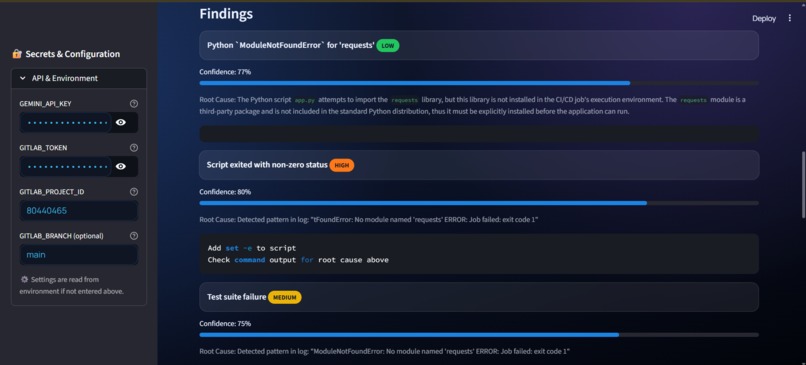
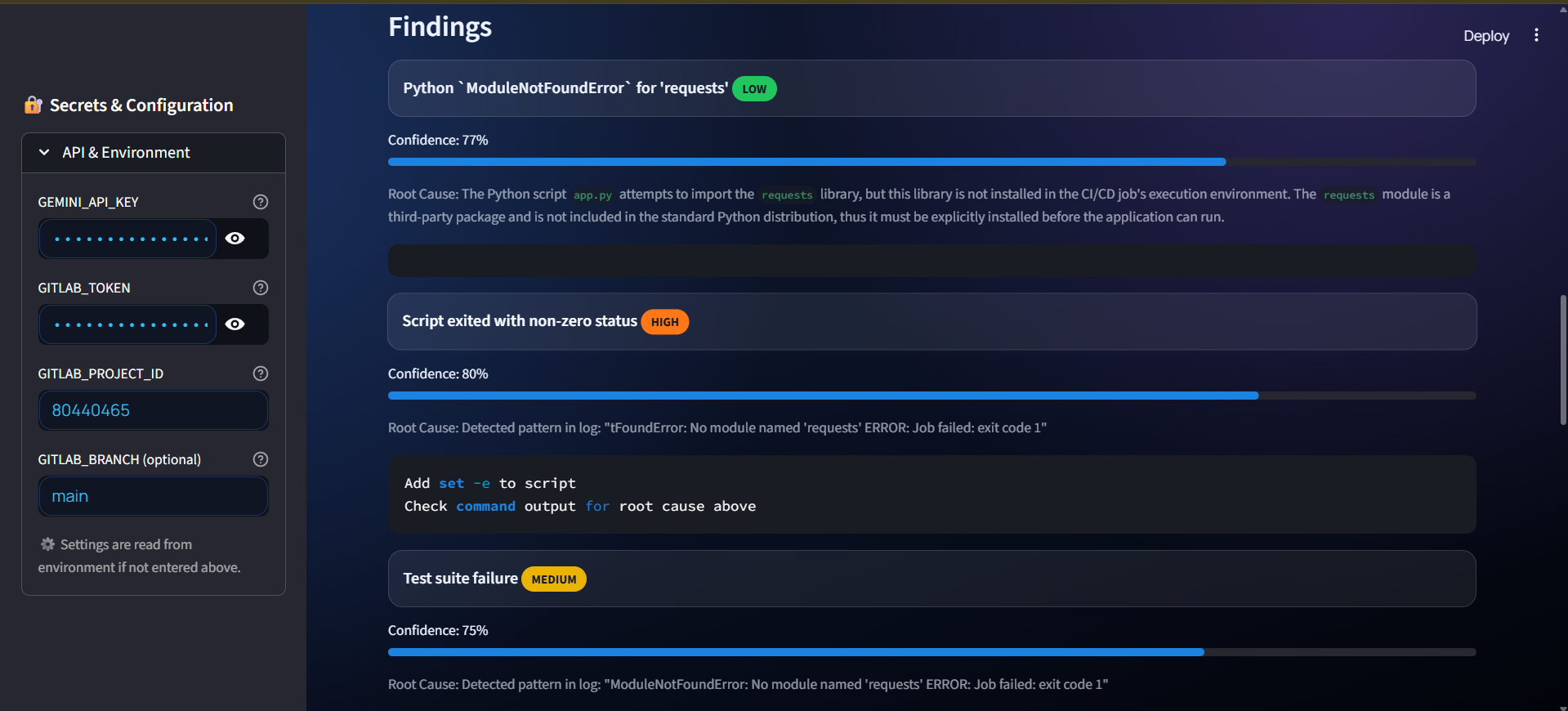
ERROR FINDINGS
-
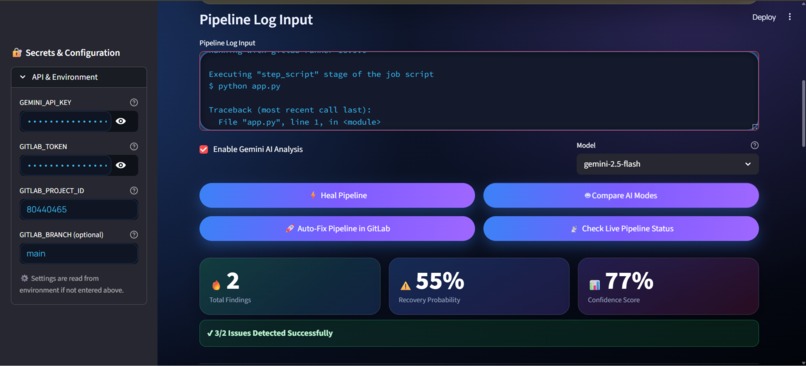
PASTED ERROR LOG
-
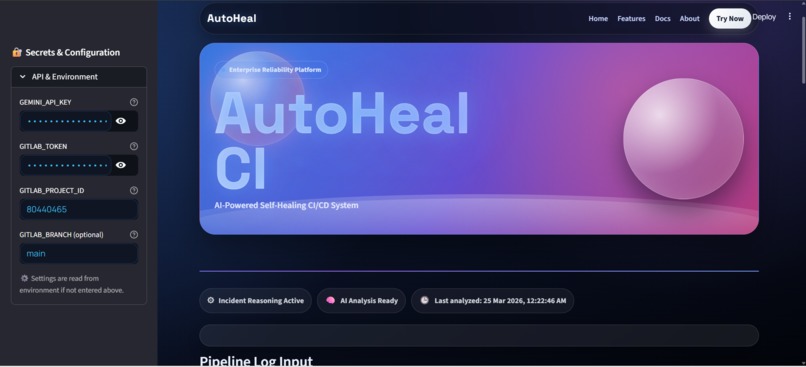
APP DASHBOARD - ENTRY PAGE
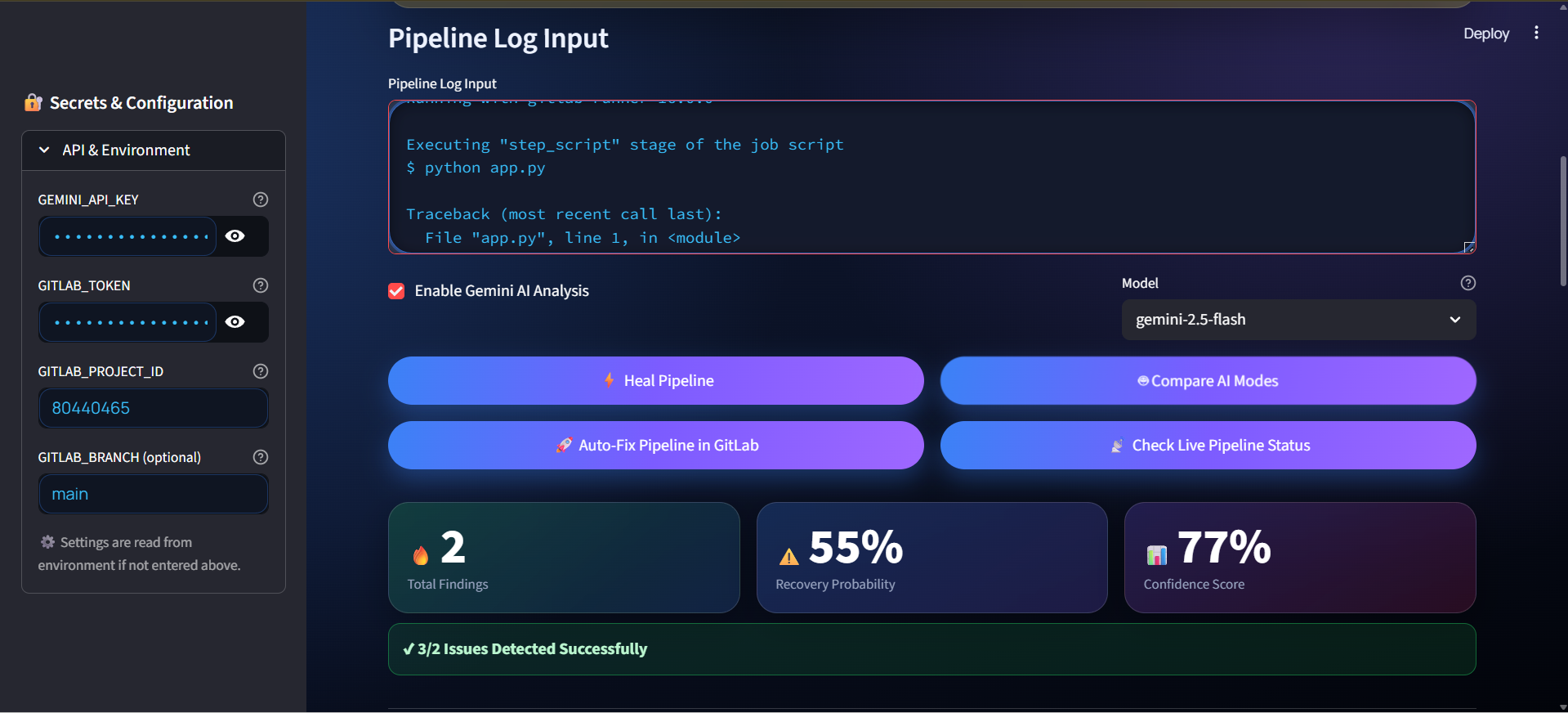
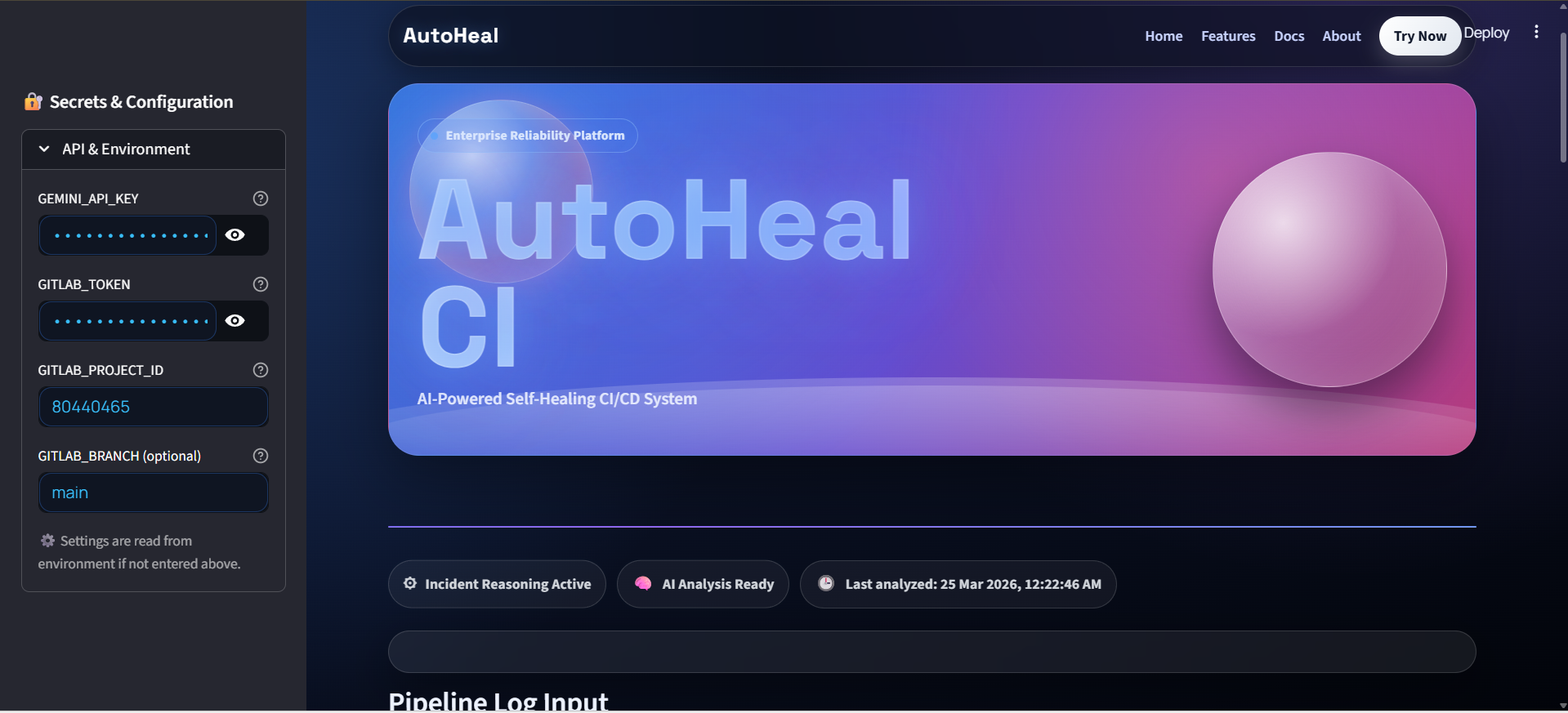
Inspiration:
Modern software development has evolved so much that,writing code is no longer the hardest part at all.
Fixing broken CI/CD pipelines : Developers spend countless hours debugging failures caused by small misconfigurations, missing dependencies, or environment mismatches. These issues are repetitive, frustrating, and slow down entire teams.
We asked a simple question: "What if pipelines could fix themselves?"
That idea led to "AutoHeal CI" — an AI-powered DevOps agent that doesn’t just detect problems, but actively resolves them.
What it does / Functionality of the Application:
"AutoHeal CI" is a self-healing AI agent that:
- Detects CI/CD pipeline failures
- Analyzes raw logs to identify root causes
- Generates a fully corrected
.gitlab-ci.yml - Validates fixes before applying them
- Automatically pushes changes and re-triggers pipelines
Instead of developers debugging manually, the system acts as an "autonomous debugging teammate".
How we built it:
We designed AutoHeal CI as an "event-driven AI agent system":
- Trigger : Pipeline failure
- Input : CI logs + pipeline configuration
- Processing : AI-powered root cause analysis
- Output : Validated pipeline fix
- Action : Create branch → open merge request → trigger pipeline
Tech Stack:
- Python (core engine)
- GitLab APIs (automation & pipeline control)
- Gemini AI (log analysis & fix generation)
- YAML validation (safe pipeline generation)
- Streamlit (interactive dashboard)
The system also includes:
- Retry & fallback logic for API failures
- Atomic file updates with backup recovery
- Structured AI prompting for reliable outputs
Challenges we ran into:
Building a reliable autonomous agent was not straightforward.
- Log ambiguity : CI errors vary widely and are often unclear.
- Accurate mapping : Translating errors into correct fixes required careful prompt engineering.
- Safety concerns : Preventing invalid or harmful pipeline updates.
- Reliability : Handling API limits (e.g: rate limits) without breaking the workflow.
We solved these by adding:
- Structured response parsing
- YAML validation layers
- Fallback mechanisms
- Safe write + rollback systems
Accomplishments :
- Built a full working self-healing CI agent.
- Automated the complete workflow.
- Failure → Diagnosis → Fix → Deployment.
- Reduced debugging time from minutes/hours → seconds.
- Designed a system that prioritizes safety and reliability.
learnt:
- How to design "autonomous AI agents", not just chatbots.
- Integrating AI deeply into DevOps workflows.
- Building event-driven systems that take real actions.
- Importance of guardrails and validation in AI systems.
What’s next for AutoHeal CI:
We see this as the beginning of " self-healing software systems ".
Next steps include:
- Learning from past fixes to improve accuracy.
- Supporting complex, multi-stage pipeline failures.
- Integration with monitoring tools for proactive fixes.
- Multi-agent workflows for end-to-end DevOps automation.
Vision
AutoHeal CI is not just a tool —it’s a step toward a future where:
- Pipelines fix themselves.
- Systems recover automatically.
- Developers focus only on building.
Basically, " From debugging pipelines → to shipping faster "


Log in or sign up for Devpost to join the conversation.