-
-
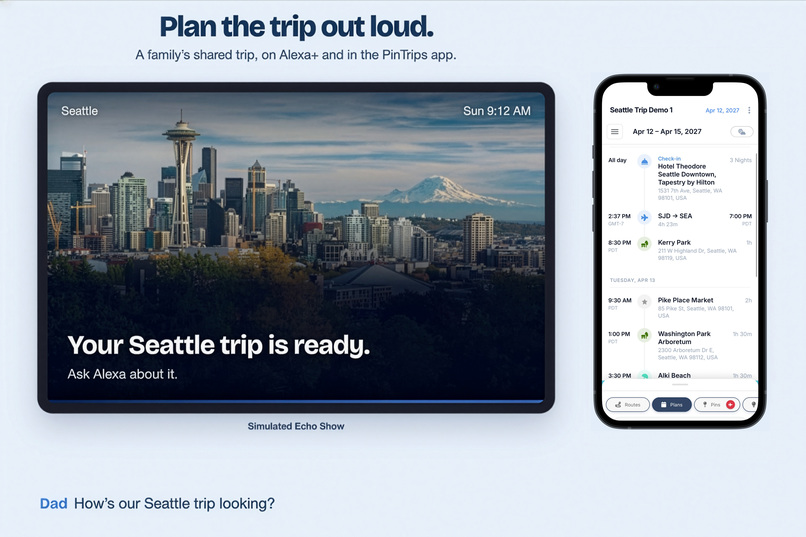
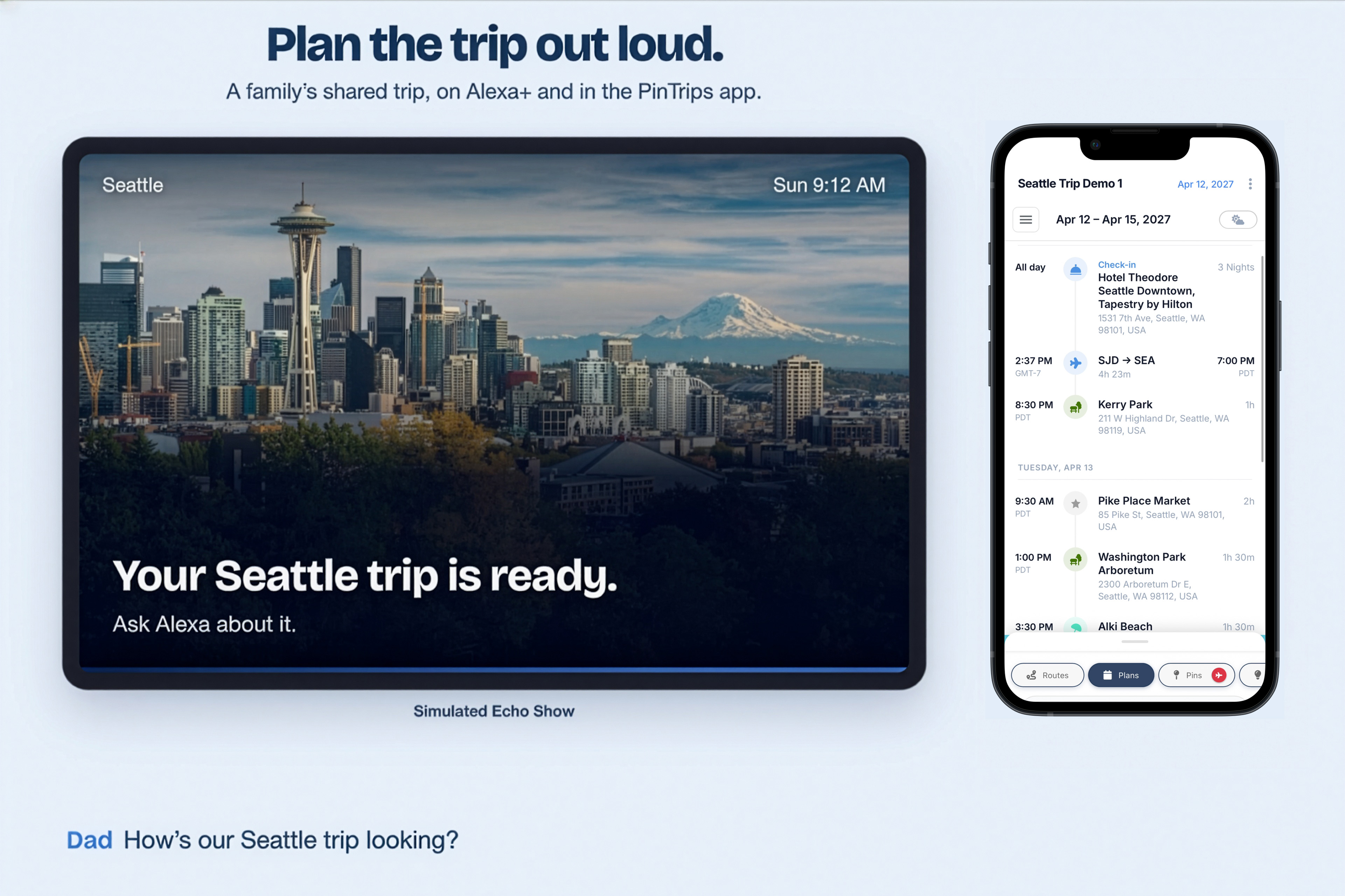
Plan a shared family trip by voice on Alexa+, and every change appears at once in the PinTrips app on everyone's phone.
-
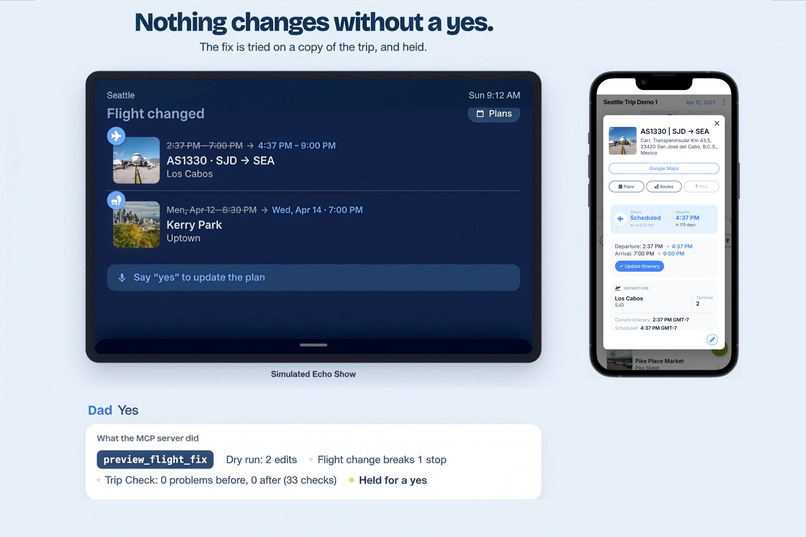
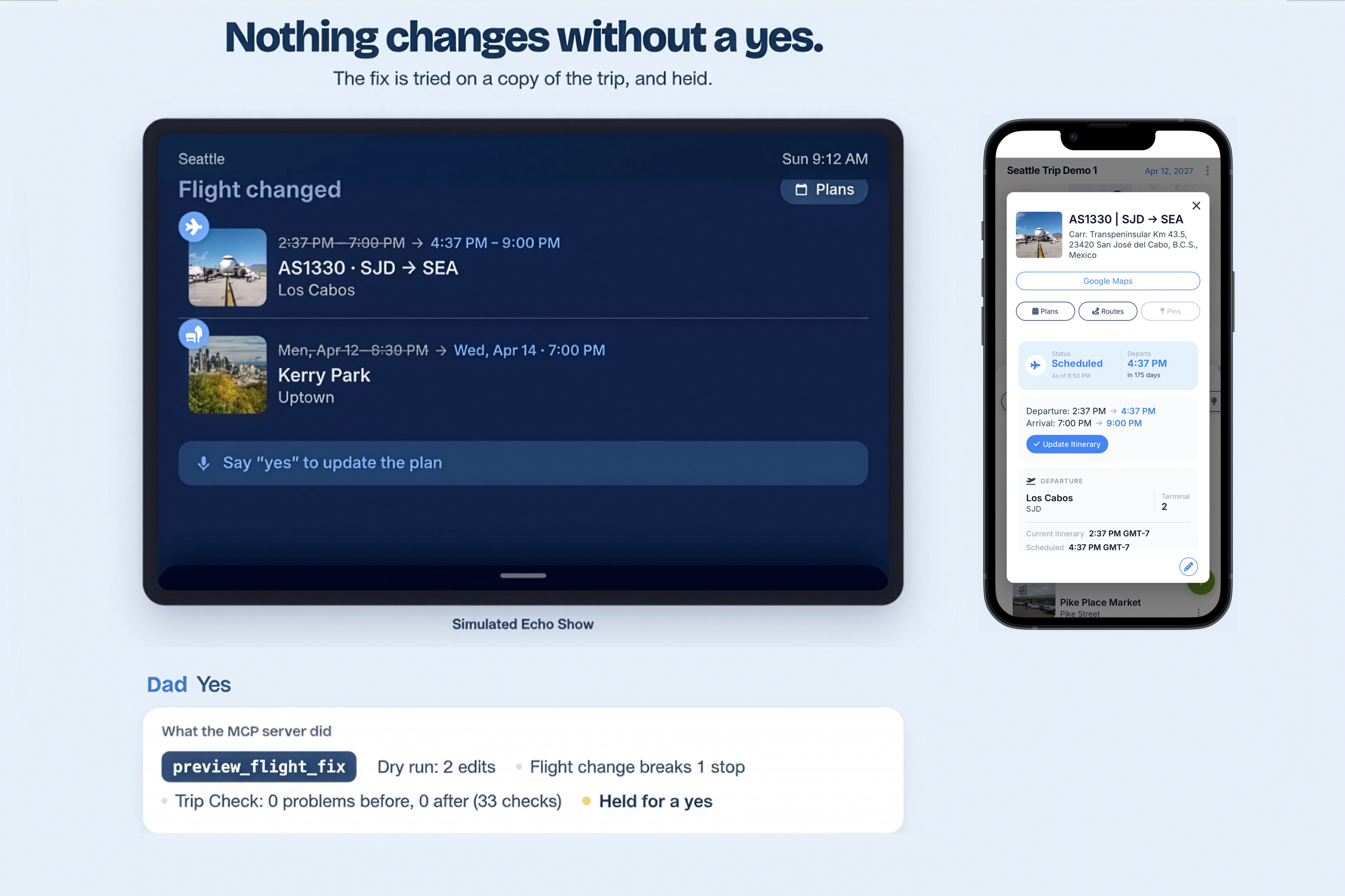
Alexa can fix the plan when a flight is late. Each fix is tried on a copy of the trip, checked, and saved only after a yes.
-
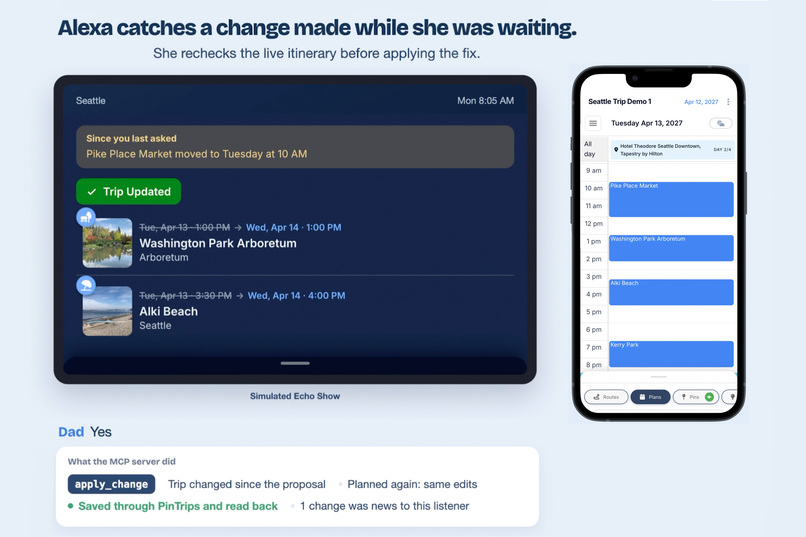
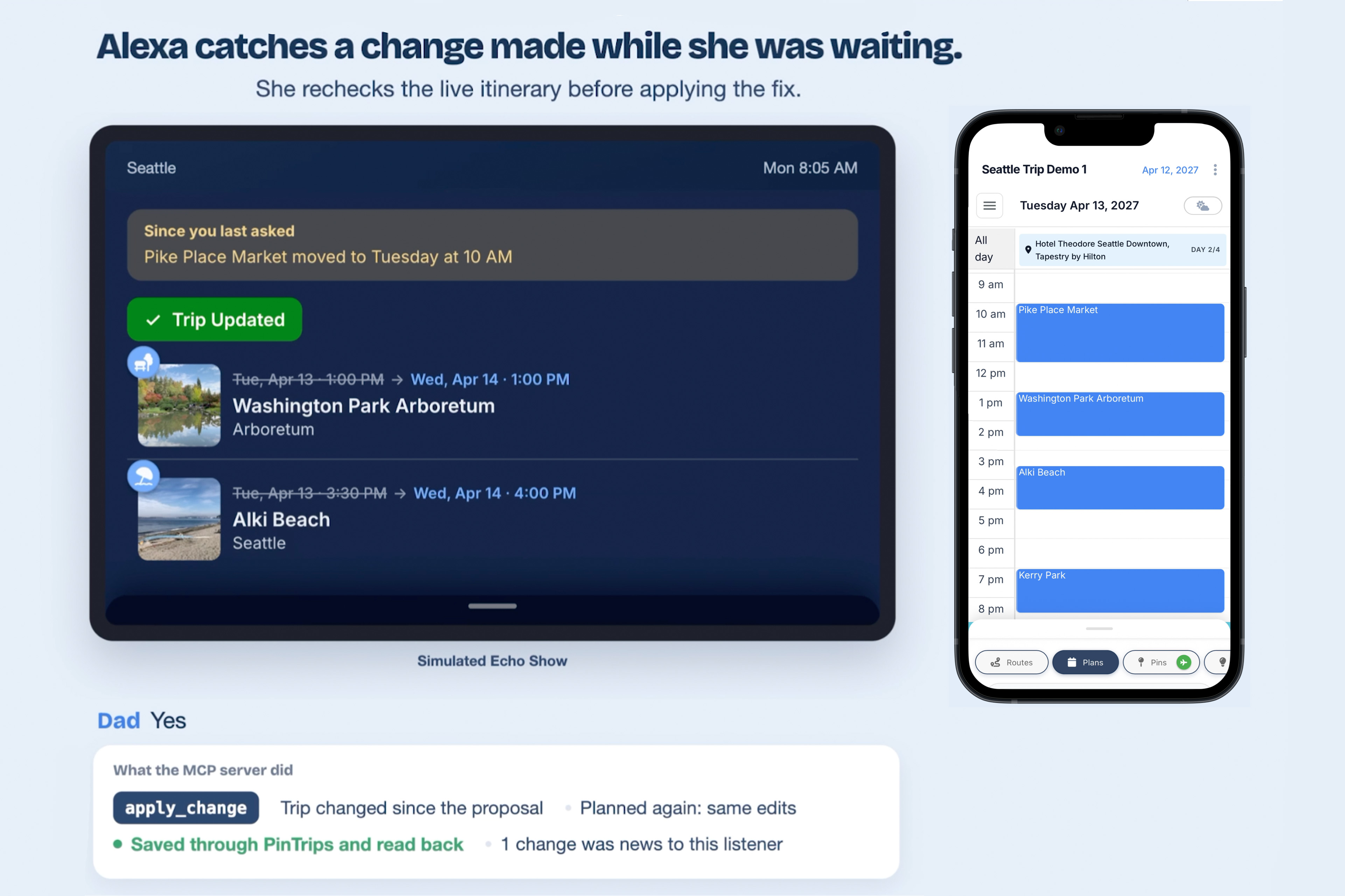
If someone changes the trip in the app while Alexa waits for a yes, she checks the fix against the trip as it is now before saving.
-
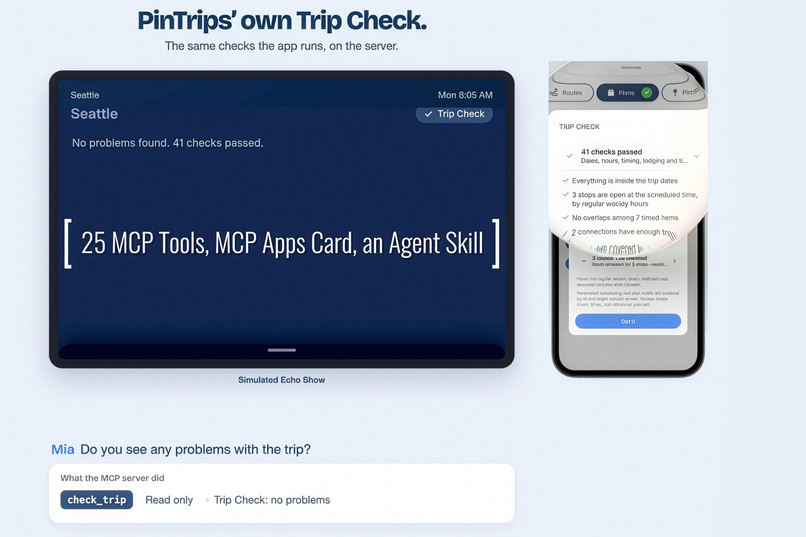
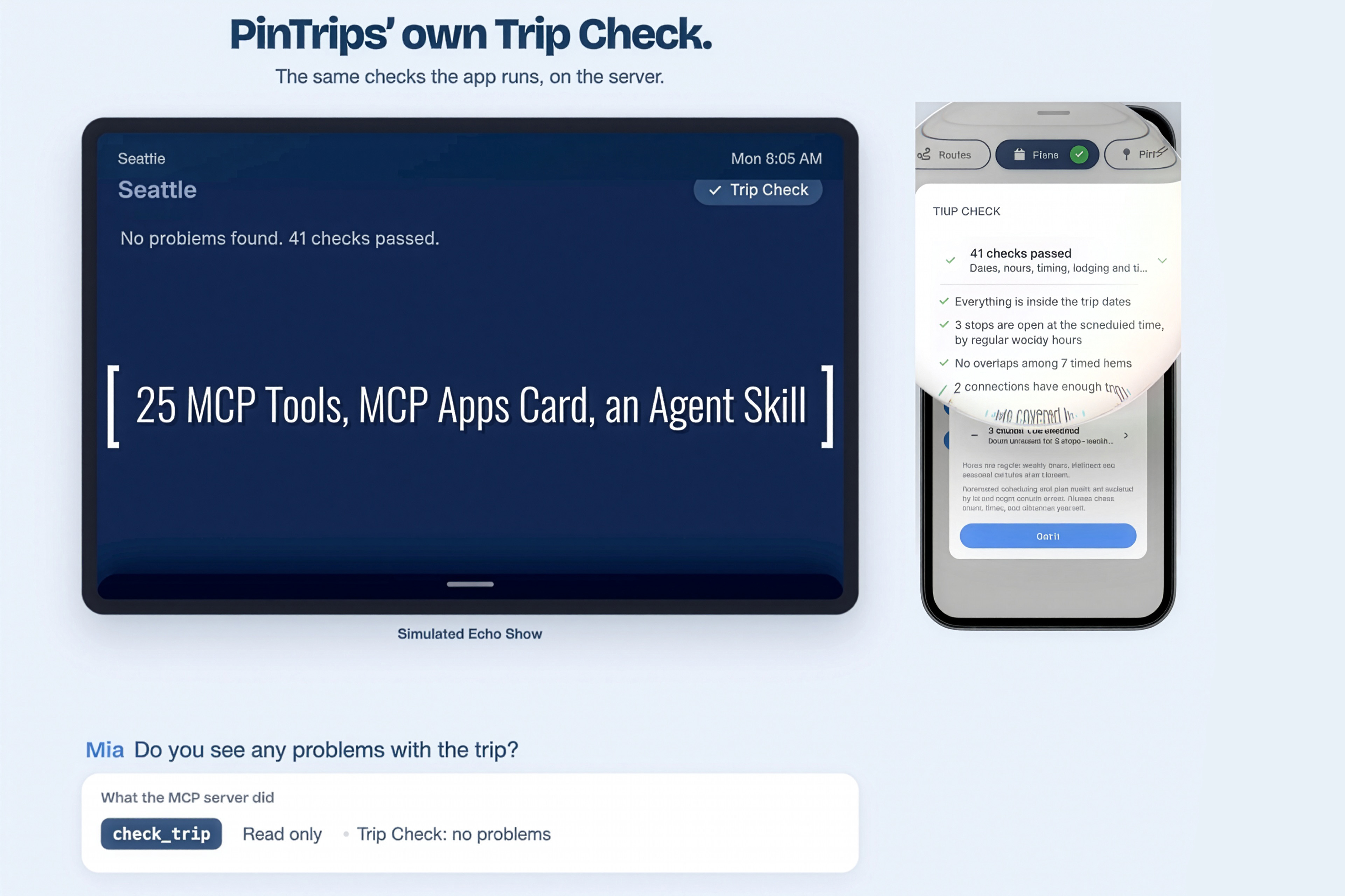
Alexa can check the whole plan with PinTrips' Trip Check, the same validation the app runs, and shows any problems on screen.
-
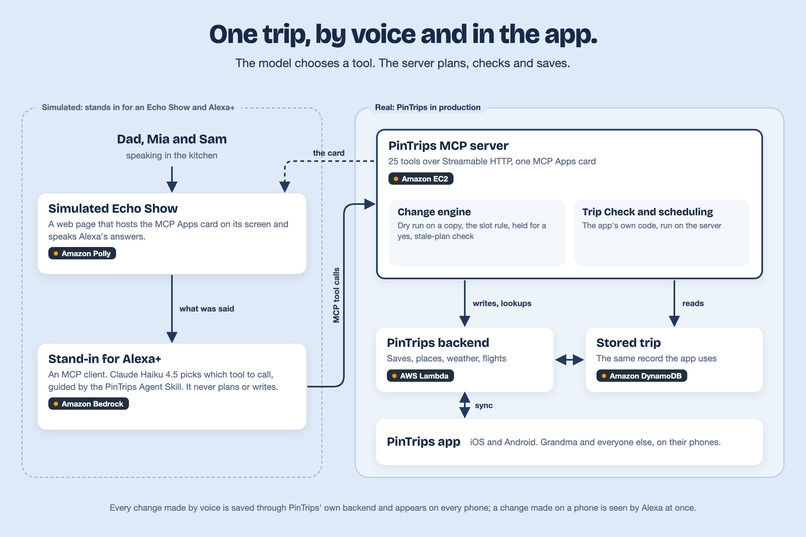
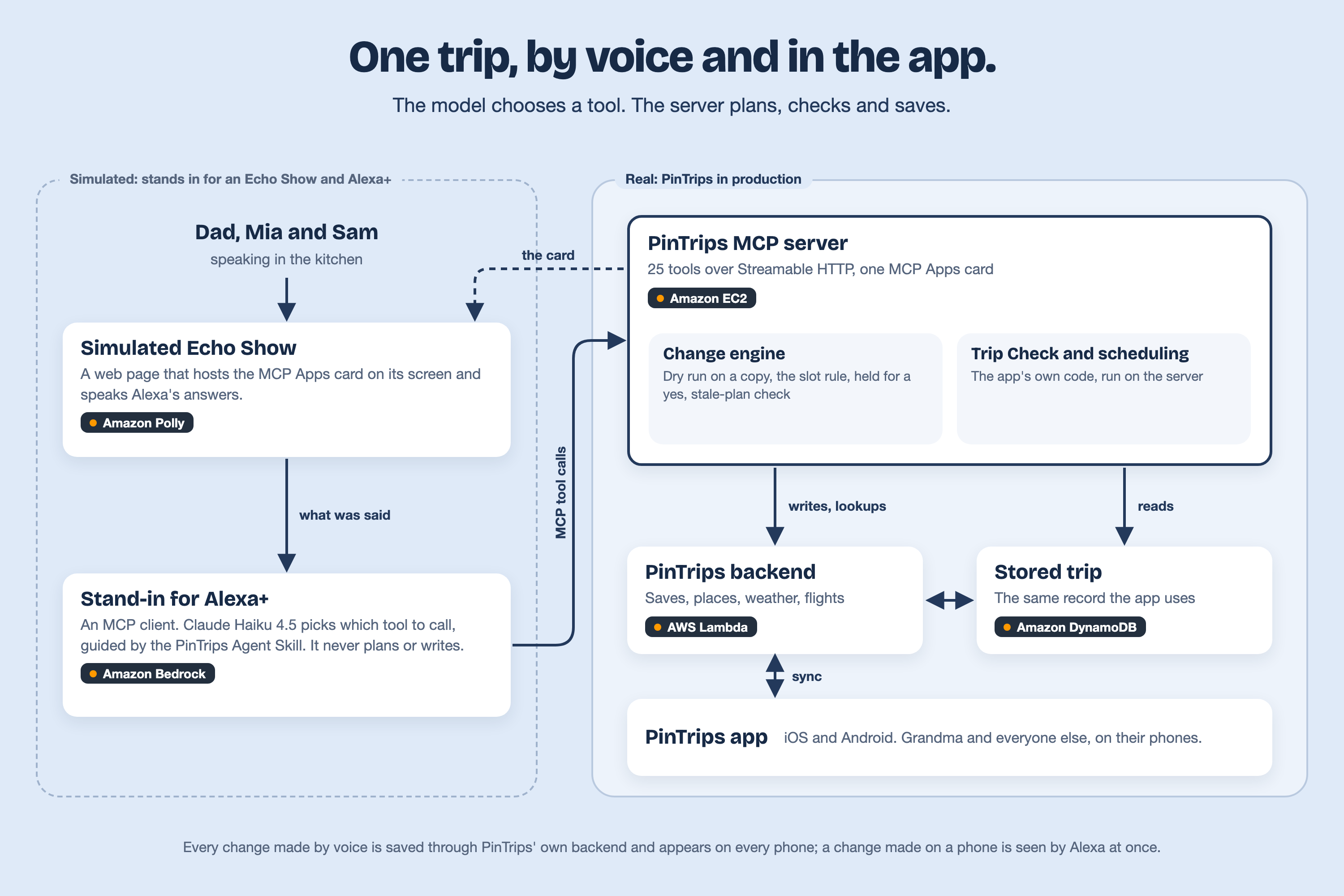
The model only chooses a tool. The PinTrips MCP server plans, checks and saves through the app's own backend on AWS.
Inspiration
I've enjoyed developing my weather skill, Big Sky, for Alexa, along with many other Alexa skills. Recently, I built and launched PinTrips, a mobile app for real-time collaborative travel planning.
The Alexa+ hackathon offered an opportunity to bring these two areas of work together. I was particularly interested in what would happen if Alexa could do more than answer questions about a trip—if it could participate in planning, recognize changes made by different people, and help keep a shared itinerary working as circumstances change.
What it does
PinTrips brings collaborative travel planning to Alexa+. Family members can discover places, suggest activities, vote, and build a complete travel itinerary by voice. Changes to the shared trip appear in the PinTrips mobile app (iOS and Android) in real time.
Alexa monitors flight status, weather forecasts, and business hours, and checks itineraries for travel-time and scheduling conflicts. When problems arise, it can propose adjustments, determine whether they work, and explain the changes. Schedule modifications are checked and require the traveler's approval before being saved.
Because Alexa is a shared household device, different people can participate in planning the same trip across conversations. Alexa keeps track of what each person has already heard and brings them up to date on changes made by others—including changes made directly in the PinTrips app or suggestions contributed by friends outside the trip.
How we built it
We built a self-hosted MCP server with 24 tools connected to PinTrips' existing AWS backend. The tools handle trip information, place discovery, voting, itinerary modifications, flight and weather information, and planning checks.
Changes follow a propose–validate–approve–commit workflow. Proposed modifications are evaluated against a copy of the itinerary, checked for problems, and explained before being saved. Version checks prevent stale proposals from overwriting changes made by others.
With no available way to connect a development MCP server directly to Alexa+, we built a browser-based simulator using an MCP client, Amazon Bedrock, and an Echo Show-style display.
The simulator connects to the real server and application. Only the Echo Show interface and selected weather and flight events are simulated.
Challenges we ran into
The biggest challenge was developing for Alexa+ without being able to test against Alexa+ itself. We couldn't find a way to connect our MCP server to an Echo or an official simulator, and documentation was limited for MCP Apps rendering and speaker identification.
Speaker identity was particularly important because voting and personalized change notifications depend on knowing who's talking. We implemented a mechanism using tool arguments and MCP metadata, but couldn't verify how Alexa+ would provide that information.
Bedrock response latency was another issue. Initial requests could take over a minute; a warm-up mechanism reduced subsequent response times substantially.
The application also needed to handle simultaneous changes from different people and devices without losing updates or acting on outdated itinerary information.
Accomplishments that we're proud of
The integration works with a real application, not a simulated backend. Every approved change is saved to an actual PinTrips trip and appears in the iOS app.
We're particularly pleased with the multi-user behavior. Alexa can track changes across conversations and devices, recognize which participant is speaking, and report relevant updates without repeatedly announcing information someone has already heard.
The planning workflow is another accomplishment: Alexa can move beyond identifying a problem to proposing a concrete itinerary change, checking its feasibility, and obtaining approval before making it.
What we learned
The most interesting lesson was that conversational interaction becomes substantially more useful when it's connected to shared, persistent state.
Unlike a conventional chatbot, Alexa operates in a household where different people may interact intermittently, while others are changing the same information through entirely different interfaces. Keeping those interactions coherent requires more than conversation history.
We also learned that an agent's ability to take action makes validation and approval more important, not less. The challenge isn't simply enabling Alexa to change an itinerary; it's making sure those changes are sensible, current, and authorized.
What's next for PinTrips for Alexa+
First, real Alexa+. We'll connect the MCP server when developer access becomes available, test on actual Echo devices, and add account linking so each person's voice connects to their own PinTrips account.
From planner to travel agent. Today Alexa plans and repairs a trip. Next, it books one. "Find us a flight to Lisbon on the 12th" will let travelers compare options by voice and on screen. Alexa will explain what it's proposing and what it costs, and nothing will be purchased without approval. Flights, hotels, restaurant reservations, and tickets will become part of the shared trip, with their confirmations available to everyone.
A whole trip from one sentence. "Plan five days in Lisbon in May" can already suggest places and build a workable itinerary using PinTrips' existing planning engine. The next step is letting Alexa create the trip itself. With account linking and account management in place, travelers will be able to go from a single spoken request to a complete trip in their own PinTrips account.
Alexa speaks first. Today Alexa reports a delayed flight when someone asks about the trip. Next, it will alert the household when a disruption occurs, with a proposed adjustment ready for approval.
At home and away. Plan together on an Echo Show, check the itinerary on the go, and pick up the conversation wherever you left off. The shared trip and each person's history follow them across devices.
The goal is for Alexa to be a full member of the group planning the trip: one who also does the booking, watches the flights, and never loses track of who knows what.
Built With
- alexa-plus
- amazon-bedrock
- amazon-cloudfront
- amazon-cognito
- amazon-dynamo
- amazon-ec2
- amazon-lambda
- amazon-polly
- caddy
- claude
- css3
- docker
- express.js
- google-places
- html5
- javascript
- mcp
- node.js
- open-ai
- zod

Log in or sign up for Devpost to join the conversation.