-
-
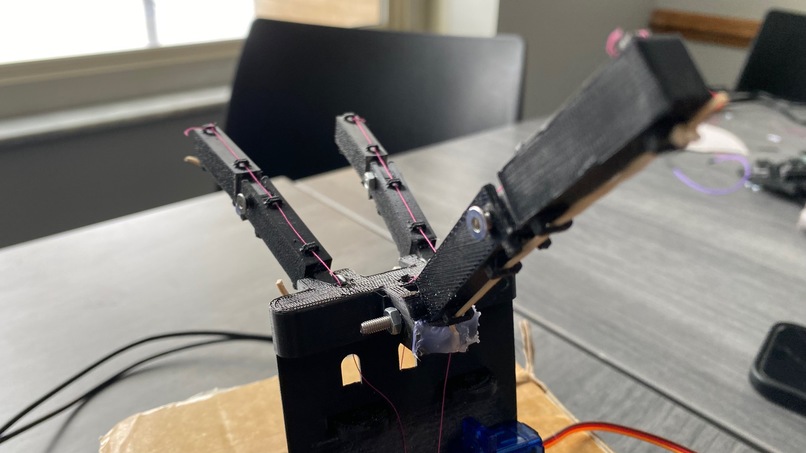
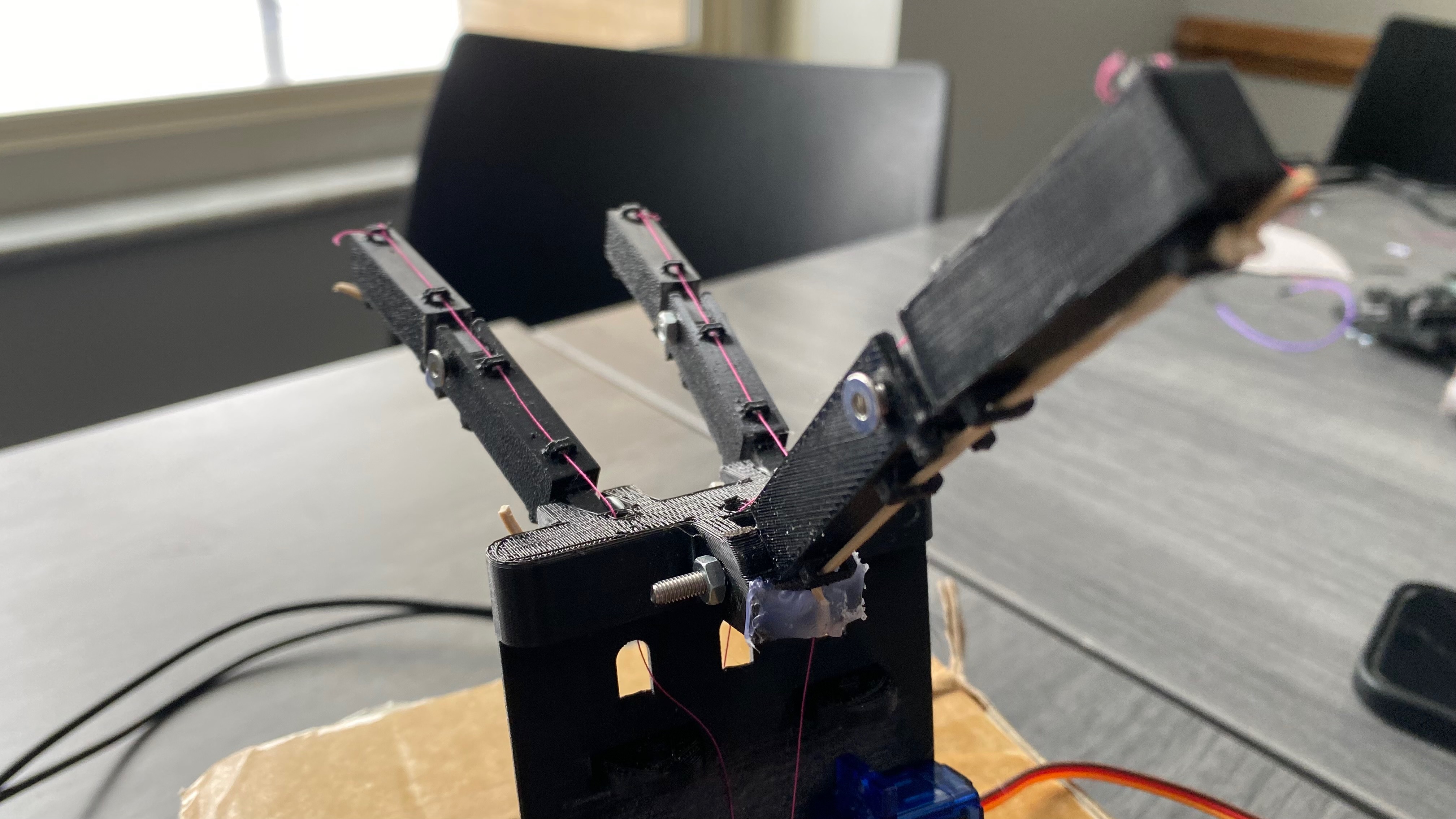
Palm Plate and Fingers
-
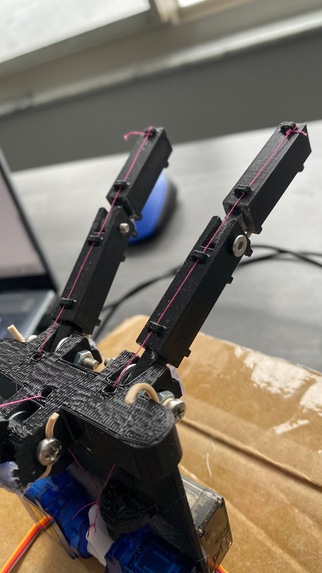
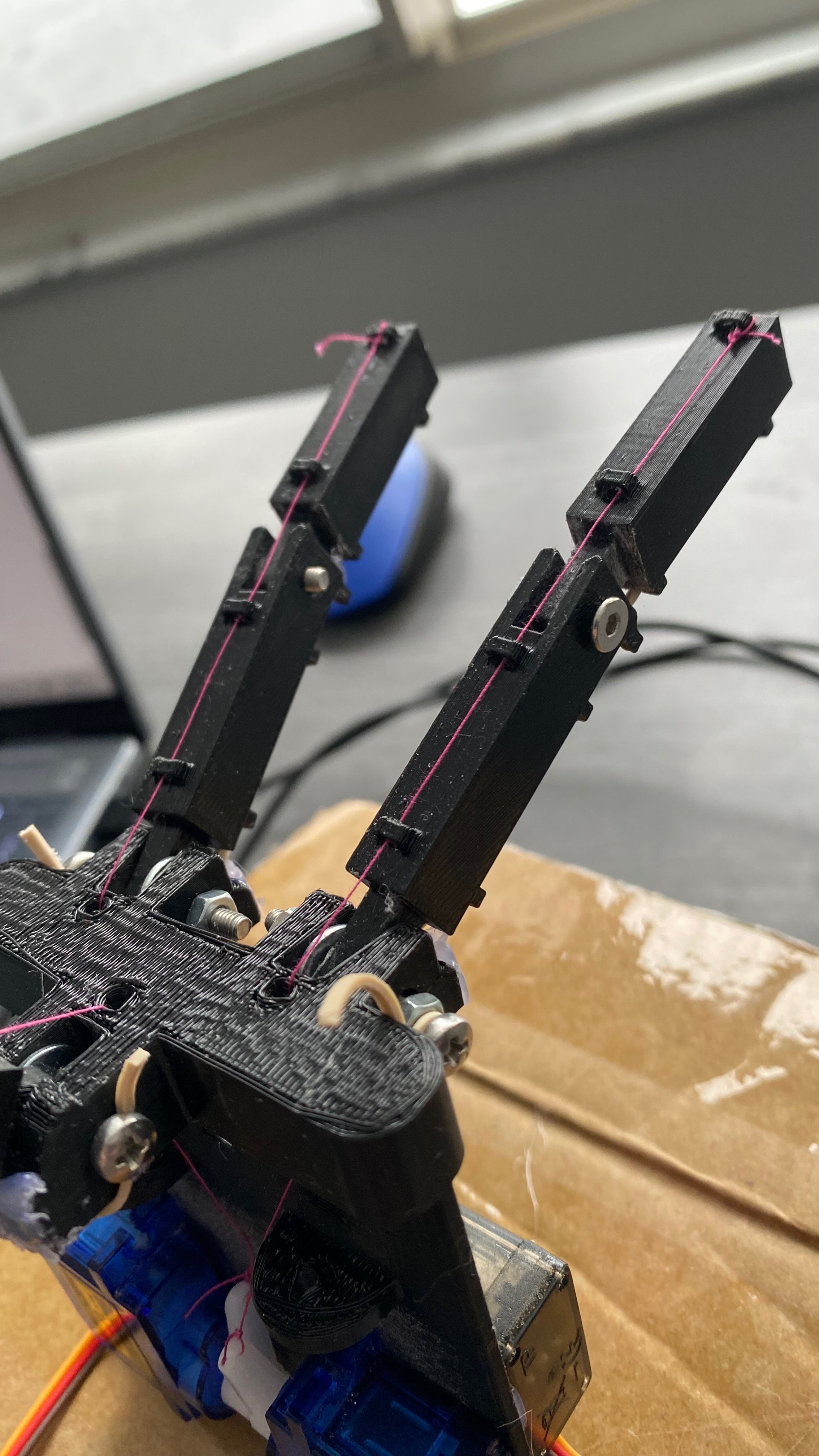
Finger Joint
-
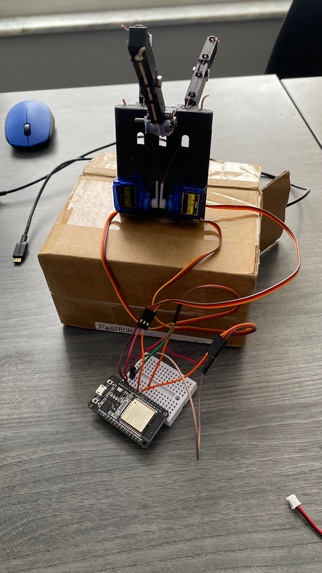
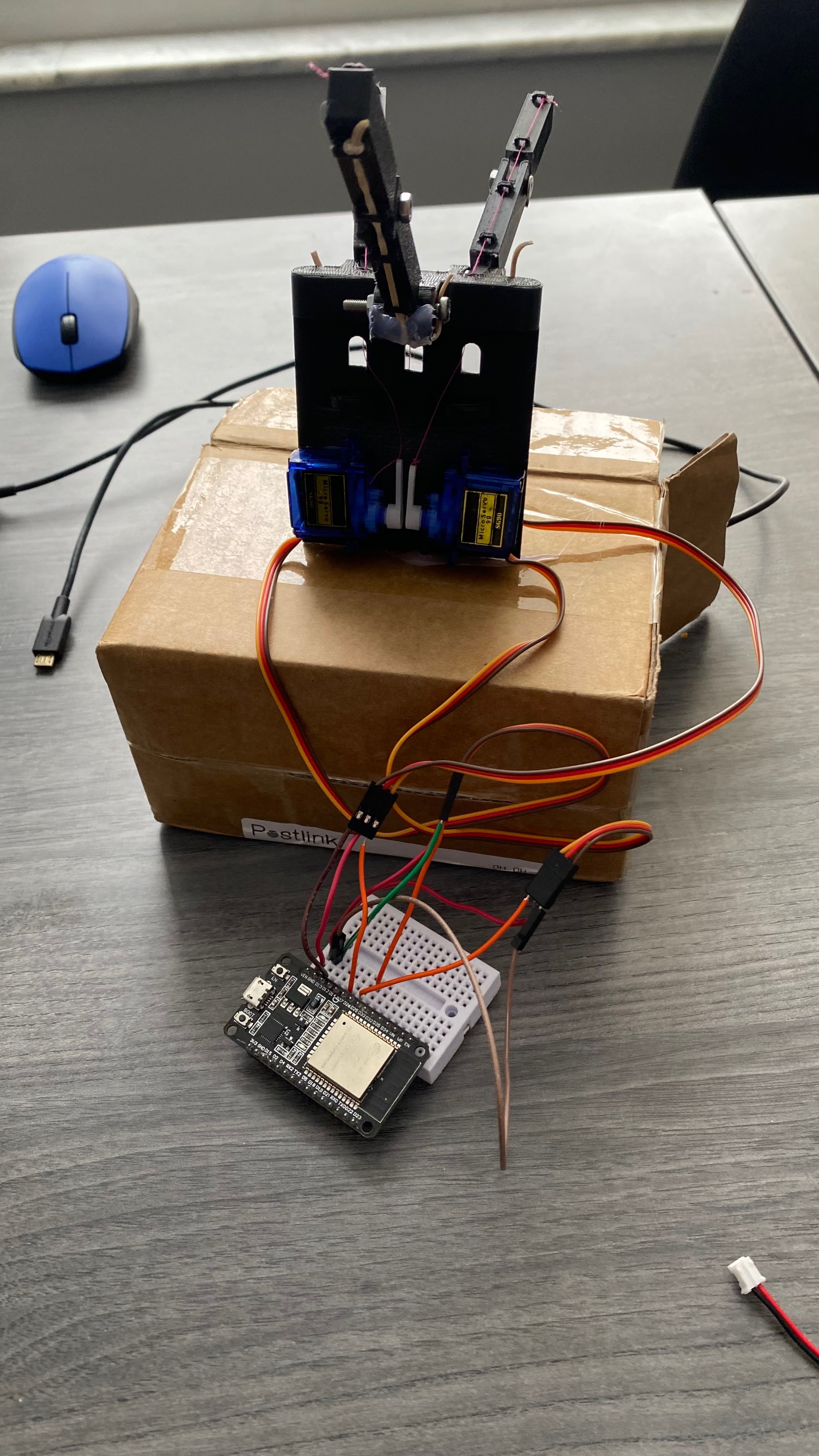
Full Hand Assembly and Receiver
-
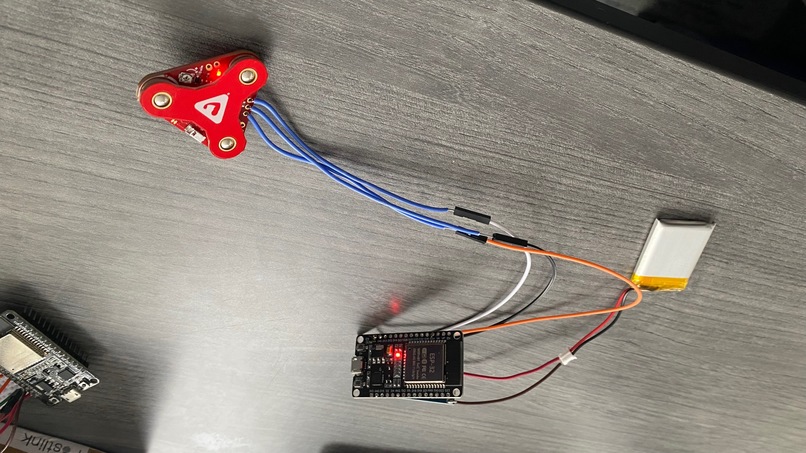
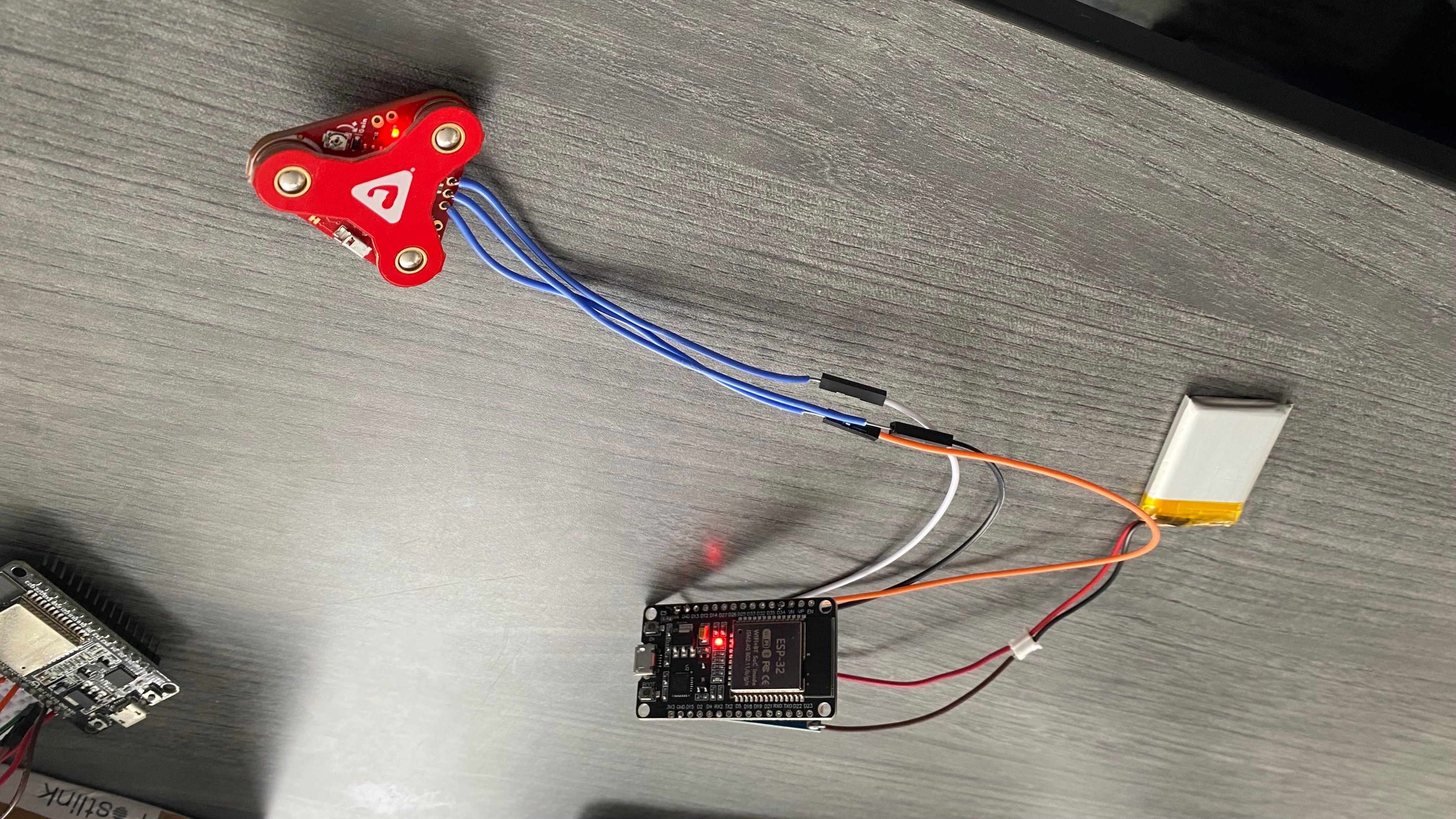
Muscles Sensor and Transmitter
Inspiration
My time in the medical field as an EMT has made it apparent to me that robotic prosthetics are impossibly expensive for the average person to take advantage of. I believe that as an engineering student it should be my mission to create technology for the benefit of everyone, so we decided to create a prosthetic for less than $10.
What it does
It is a robotic hand controlled via muscle signals. The muscle sensor is wireless and can be placed on most major muscle groups in the body, making it possible for virtually anyone, regardless of ability, to control the hand. Furthermore, since the sensor can transmit the muscle signals over the internet it is possible to control the hand remotely from anywhere with an internet connection. This could be useful for medical tasks in remote regions where skilled hands are needed but not available.
How we built it
We used 3d design software to model the hand and to figure out the kinematics. Then, we 3d printed the parts and assembled the frame. We used sewing thread (what was available in the Think box) to allow the servos to control the fingers. Then through iterative coding we creating the code that actually communicates with the muscle sensor and controls the servos.
Challenges we ran into
Since we had a very short timeline, and the thinkbox closed Saturday afternoon due to weather, we had to create simplified 3d models to 3d print. This also meant that we only got a few tries to get the physical design perfect.
Accomplishments that we're proud of
We are proud we were able to get the kinematics working properly and deliver a functioning prototype
What we learned
Coding is much harder than we expected and it and the weather in Cleveland is no joke
What's next for Pinocchio
Testing the hand to accomplish real tasks like griping and lifting and better software
Built With
- 3dprinting
- arduino
- autodesk-fusion-360
- c
- esp32
- kinematics
- myography
- servo
- soldering
- solidworks

Log in or sign up for Devpost to join the conversation.