-
-
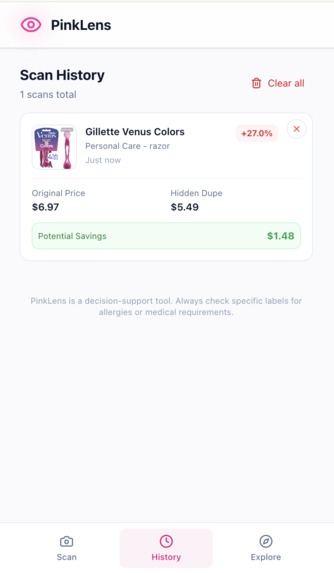
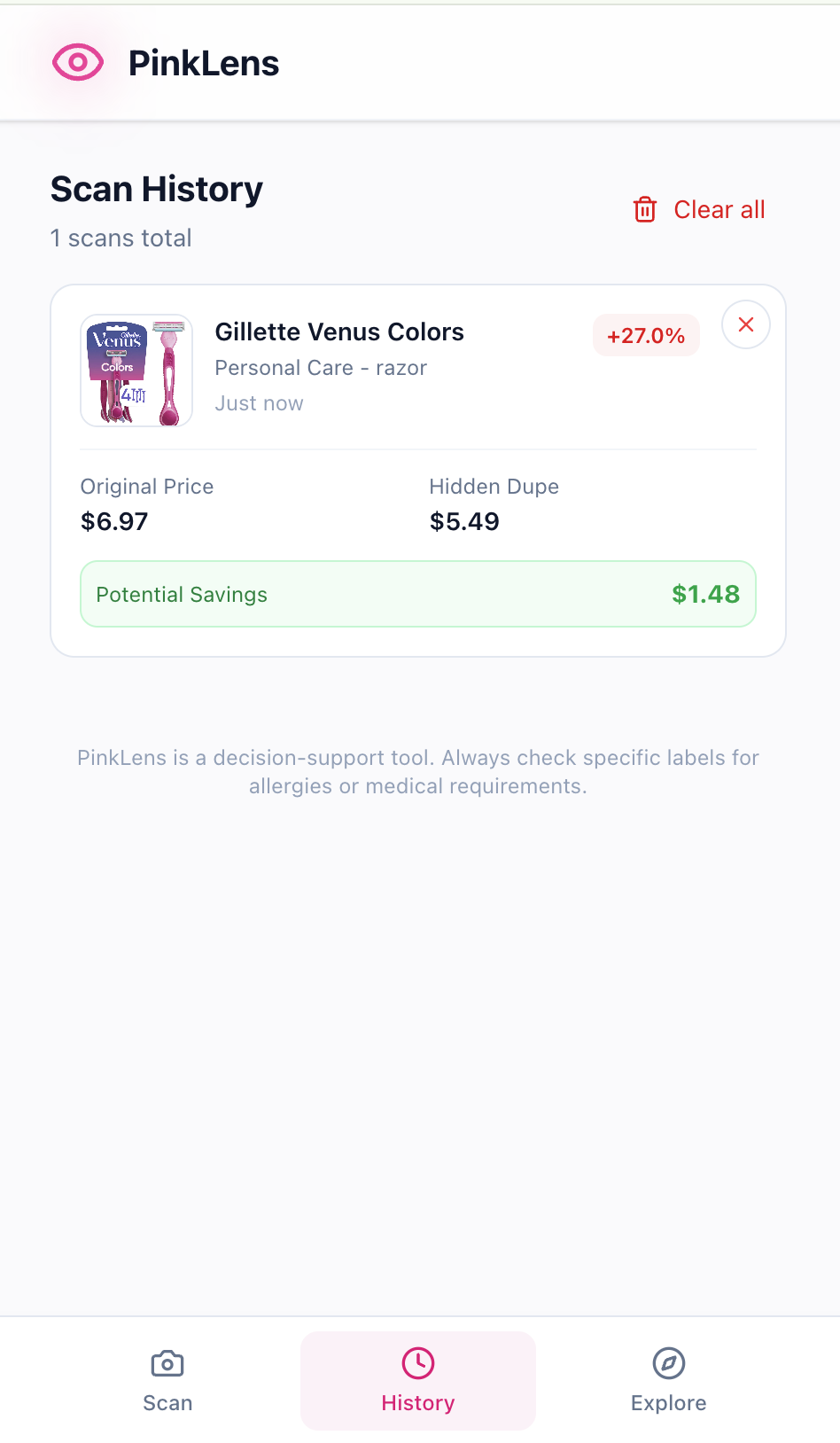
History Page
-
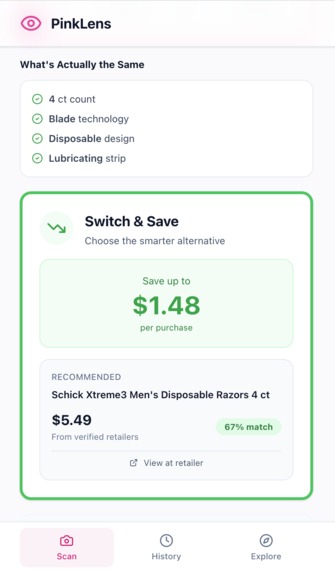
Analysis Result Page - Part 2
-
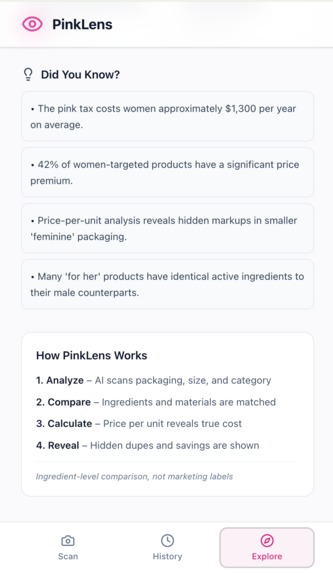
Explore Page - Part 2
-
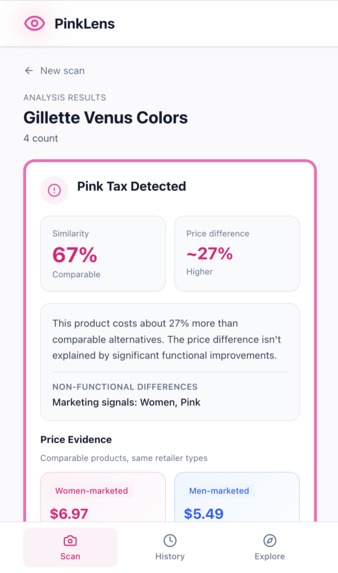
Analysis Result Page - Part 1
-
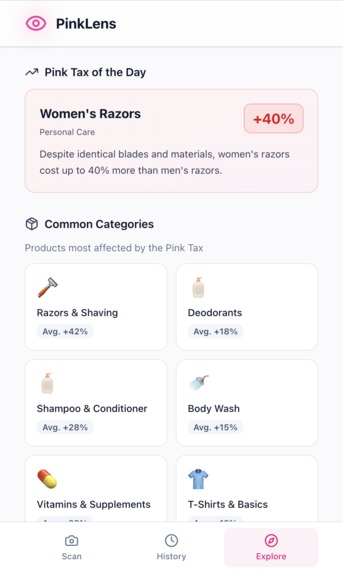
Explore Page - Part 1
-
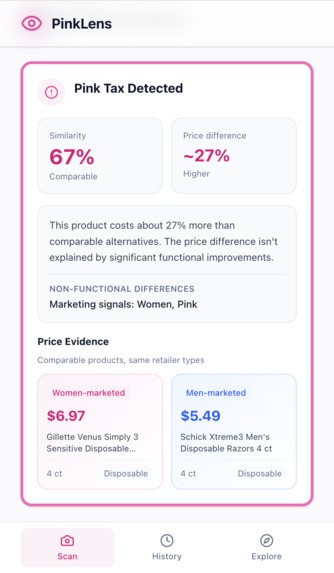
Analysis Result Page - Part 1
-
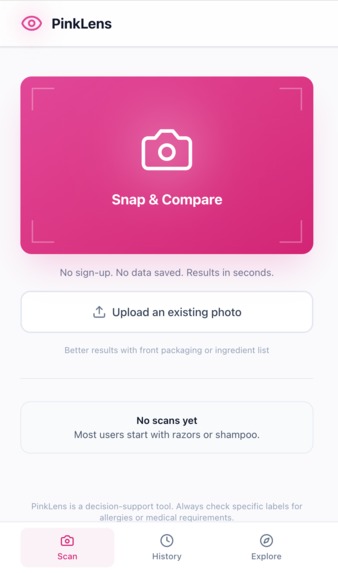
Scan Page
Inspiration
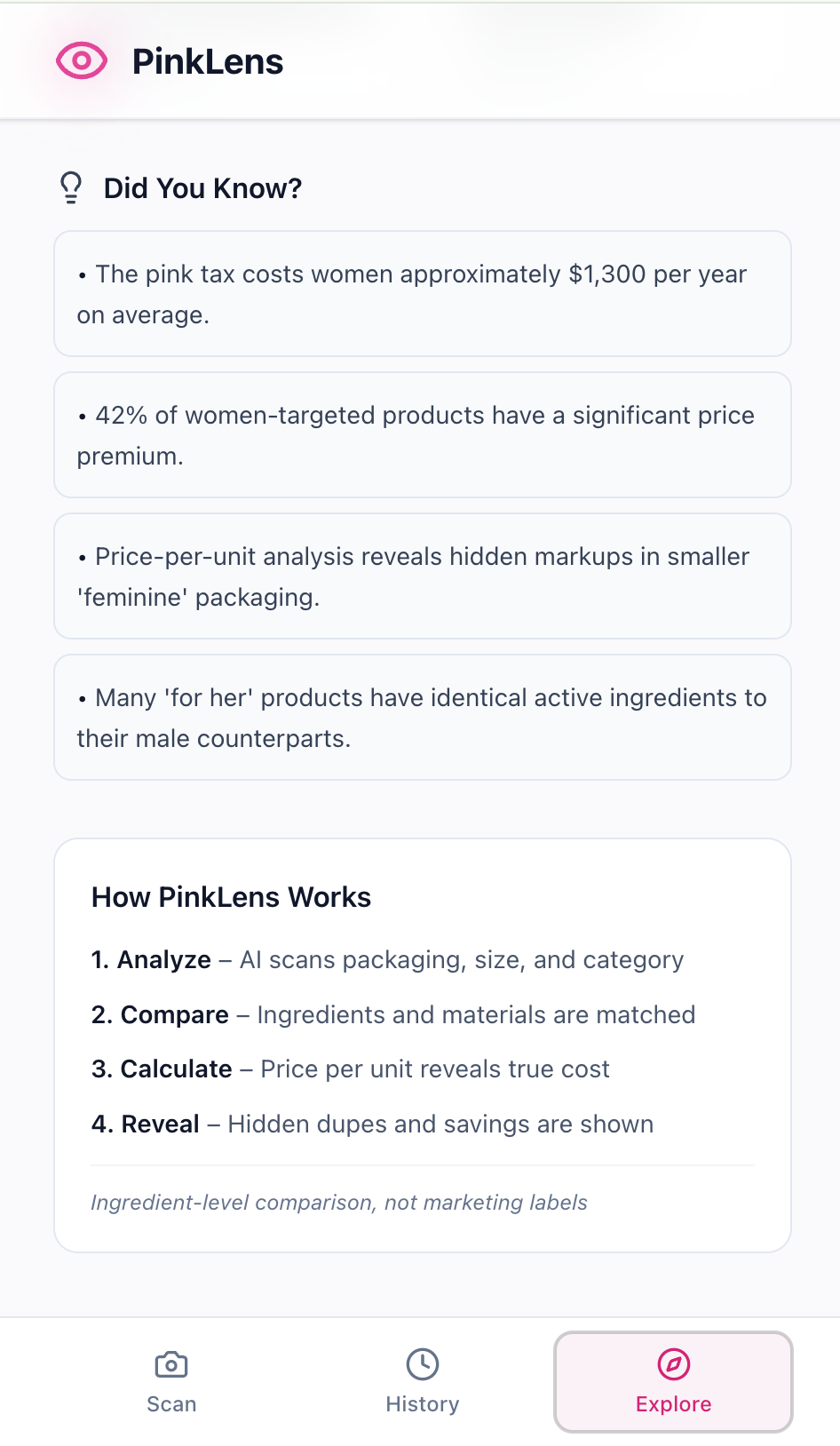
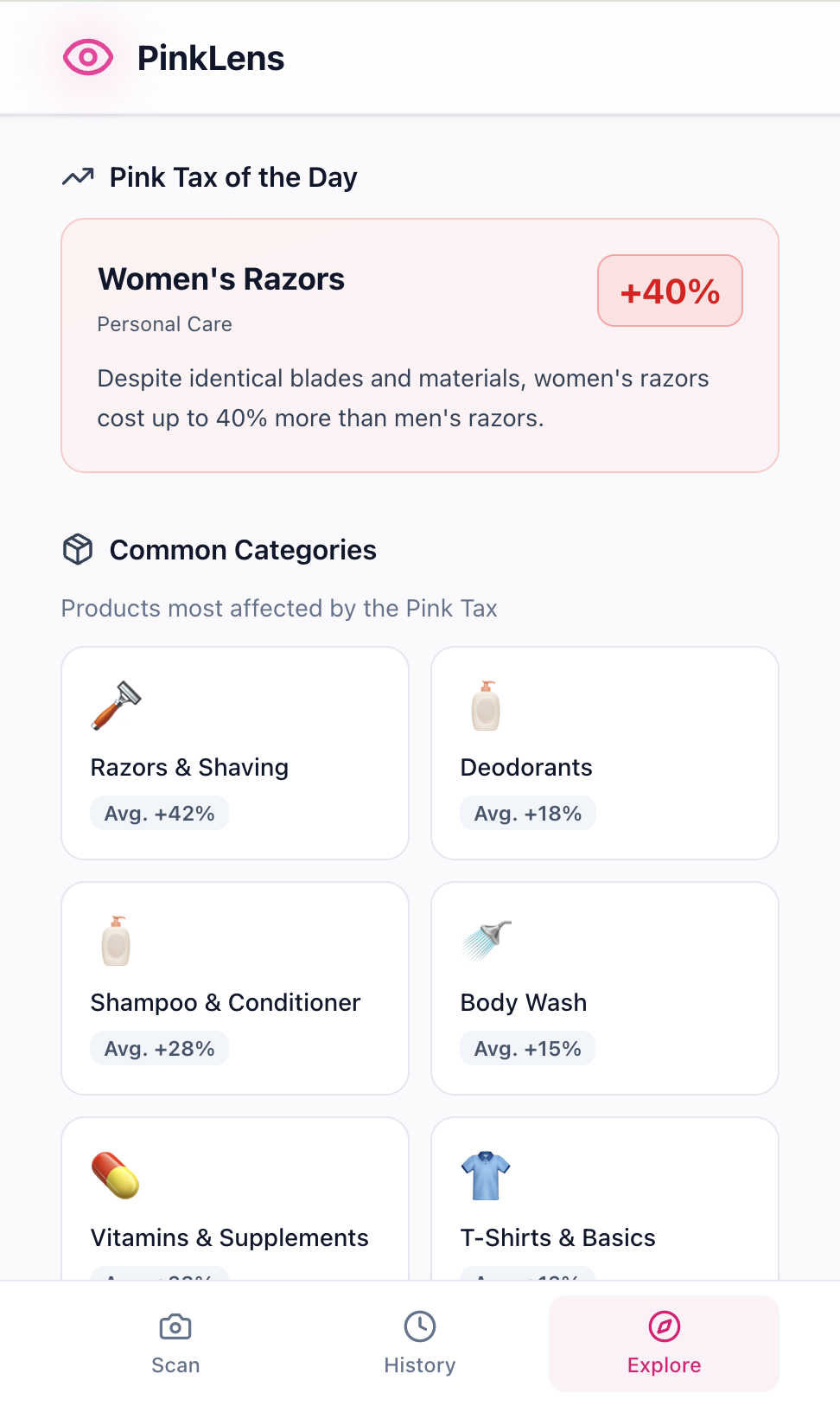
PinkLens was inspired by the everyday experience of noticing that products marketed toward women often cost more than nearly identical alternatives marketed toward men. Although the "Pink Tax" is widely discussed, it remains difficult for consumers to identify when it is actually happening during real purchasing decisions. We wanted to create a tool that makes this bias visible, understandable, and actionable in the moment.
What it does
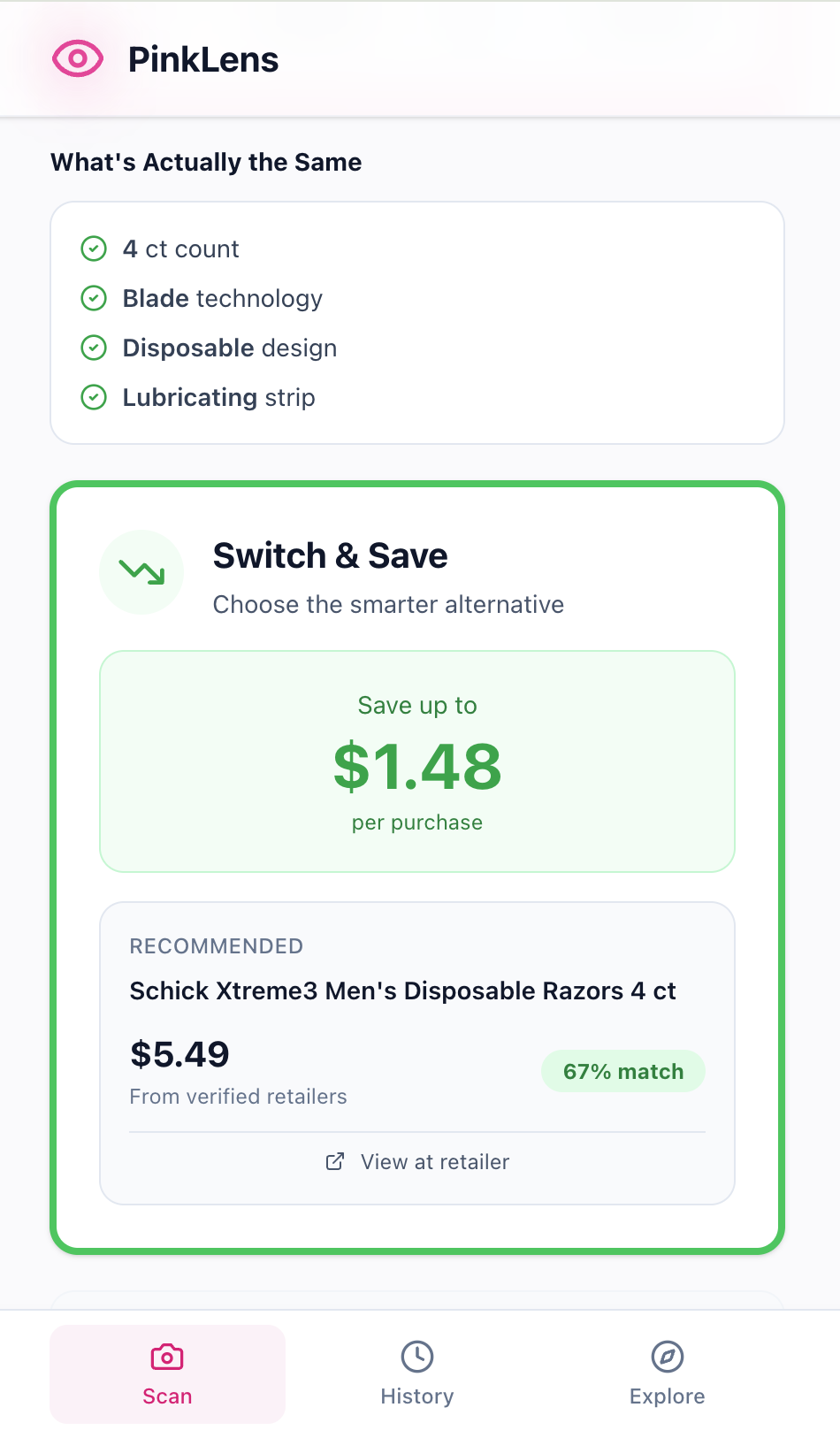
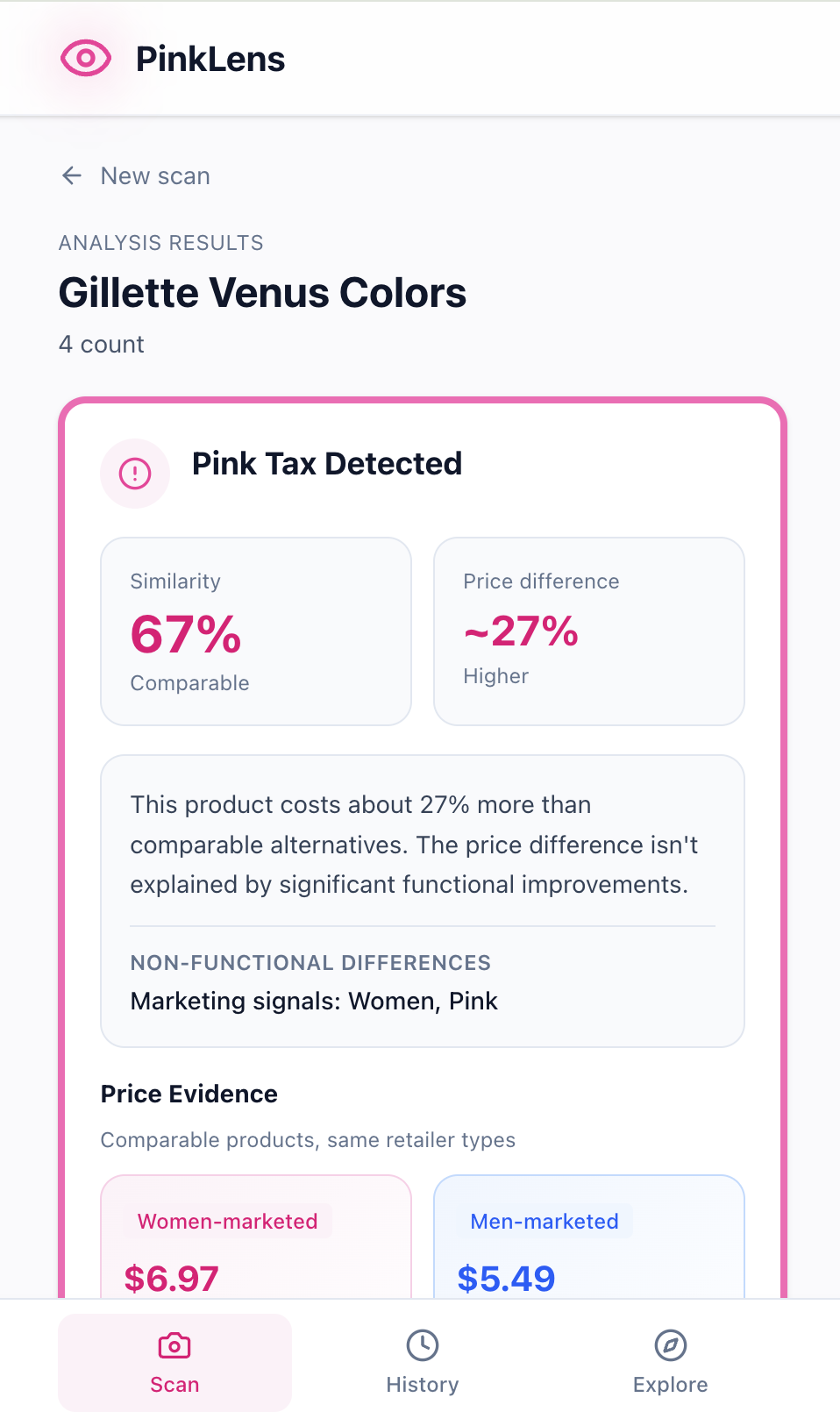
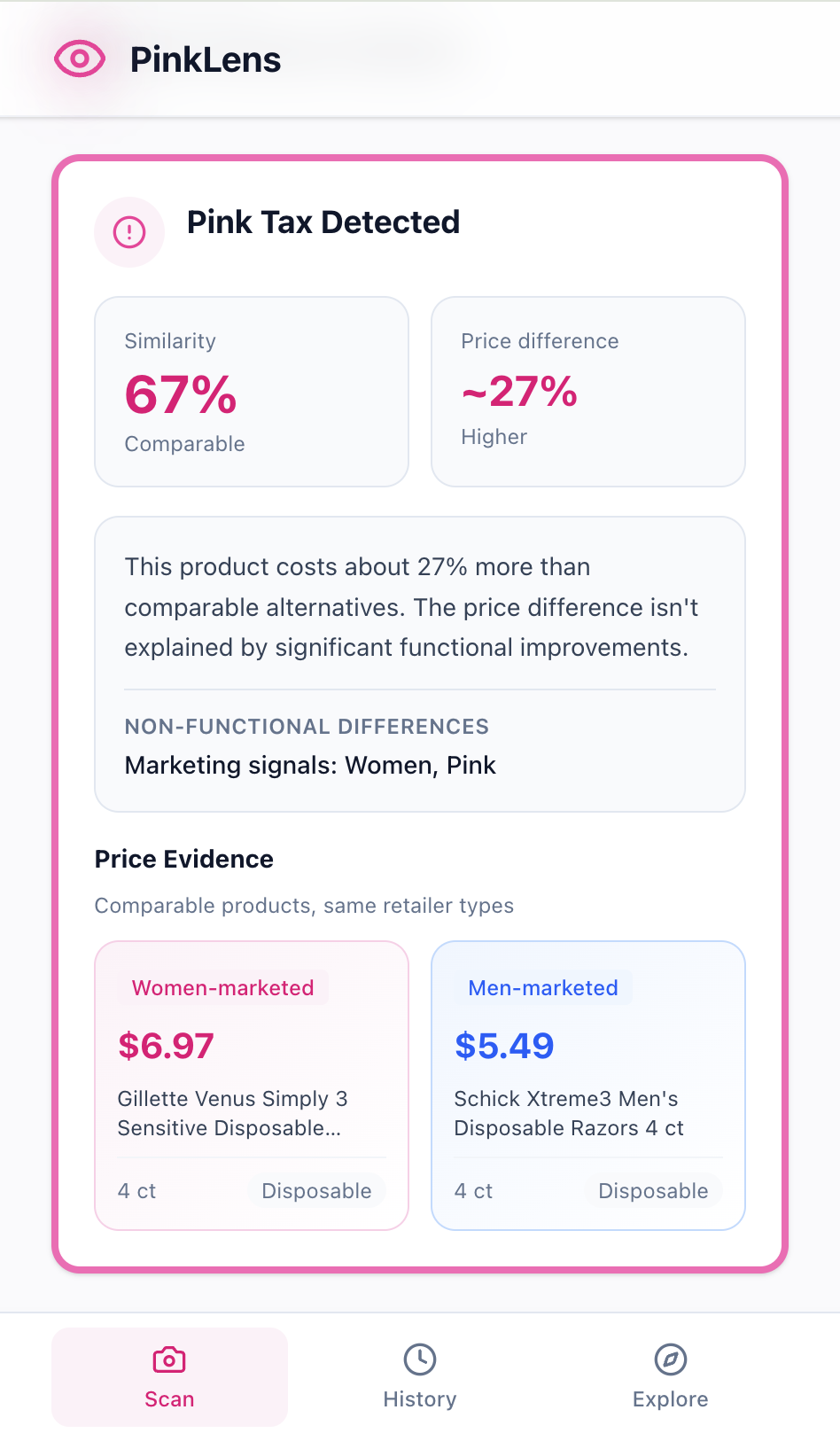
PinkLens helps users detect potential gender-based pricing by analyzing product information, marketing language, and price data. By comparing similar products and identifying gendered marketing signals, the app provides a clear verdict along with an explanation, allowing users to better understand whether a price difference may be influenced by the Pink Tax.
How we built it
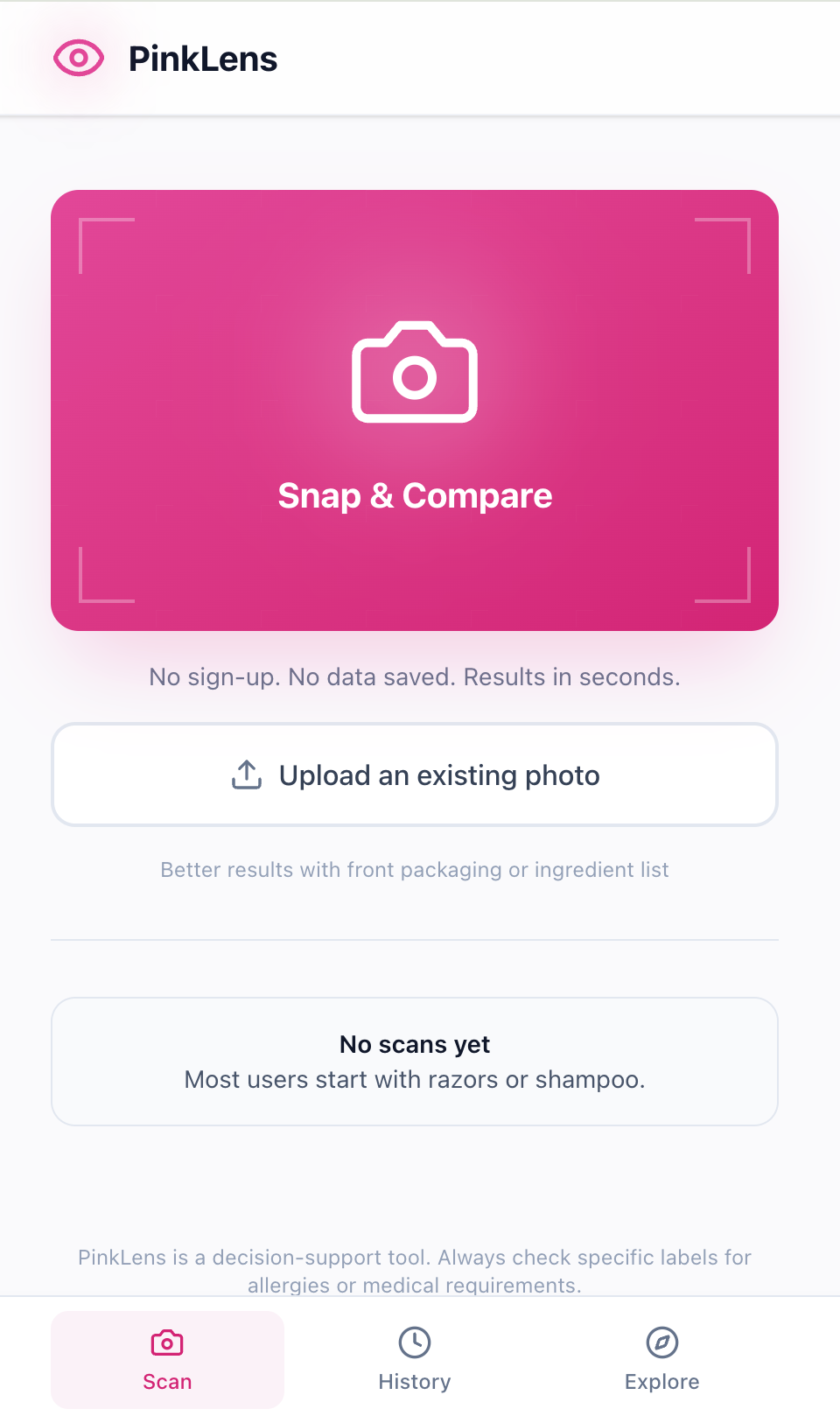
We built PinkLens as a mobile-first application with a lightweight frontend focused on clarity and usability. The backend integrates a generative AI API to extract key product attributes, detect gender-based marketing cues, and generate user-facing explanations. This approach allows PinkLens to move beyond simple price comparison and provide interpretable insights.
Challenges we ran into
One major challenge was handling incomplete or inconsistent product data, which can affect the reliability of price comparisons. We also needed to ensure that AI-generated insights remained transparent and responsible, avoiding overconfident claims. Time constraints during the hackathon required rapid iteration and careful prioritization of core features.
Accomplishments that we're proud of
We are proud of building an end-to-end working prototype that combines social impact with practical AI. In a short time, we created a system that not only detects potential pricing bias but also explains its reasoning in a user-friendly way, making a complex issue accessible to everyday consumers.
What we learned
Through this project, we learned how to design AI-driven systems that prioritize explainability and user trust. We also gained experience balancing technical ambition with usability and ethical considerations, especially when applying AI to sensitive social issues.
What's next for PinkLens
Next, we plan to expand product coverage, improve data quality, and refine our confidence scoring to provide even more reliable insights. We also aim to explore partnerships with consumer advocacy groups and continue evolving PinkLens into a tool that empowers more informed and equitable purchasing decisions.

Log in or sign up for Devpost to join the conversation.