-
-
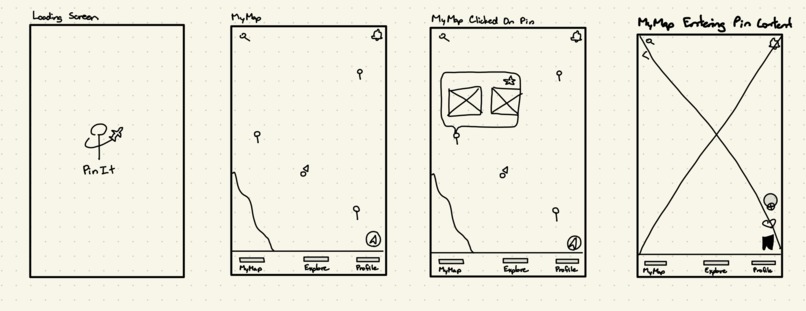
sketch of wireframe
-
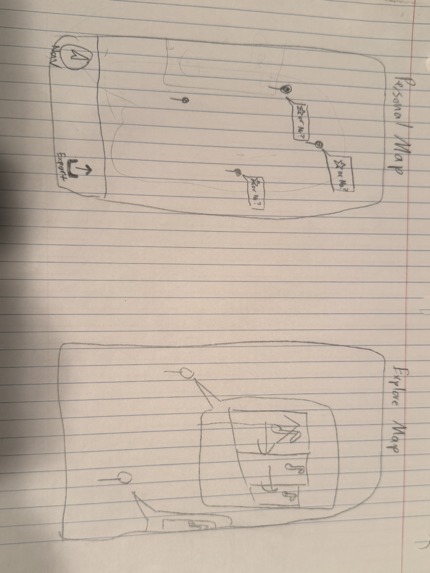
Sketch
-
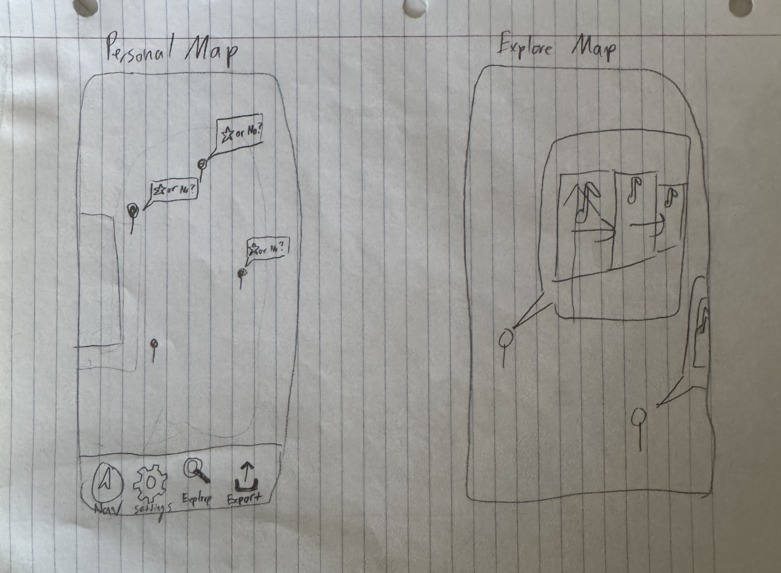
Sketch
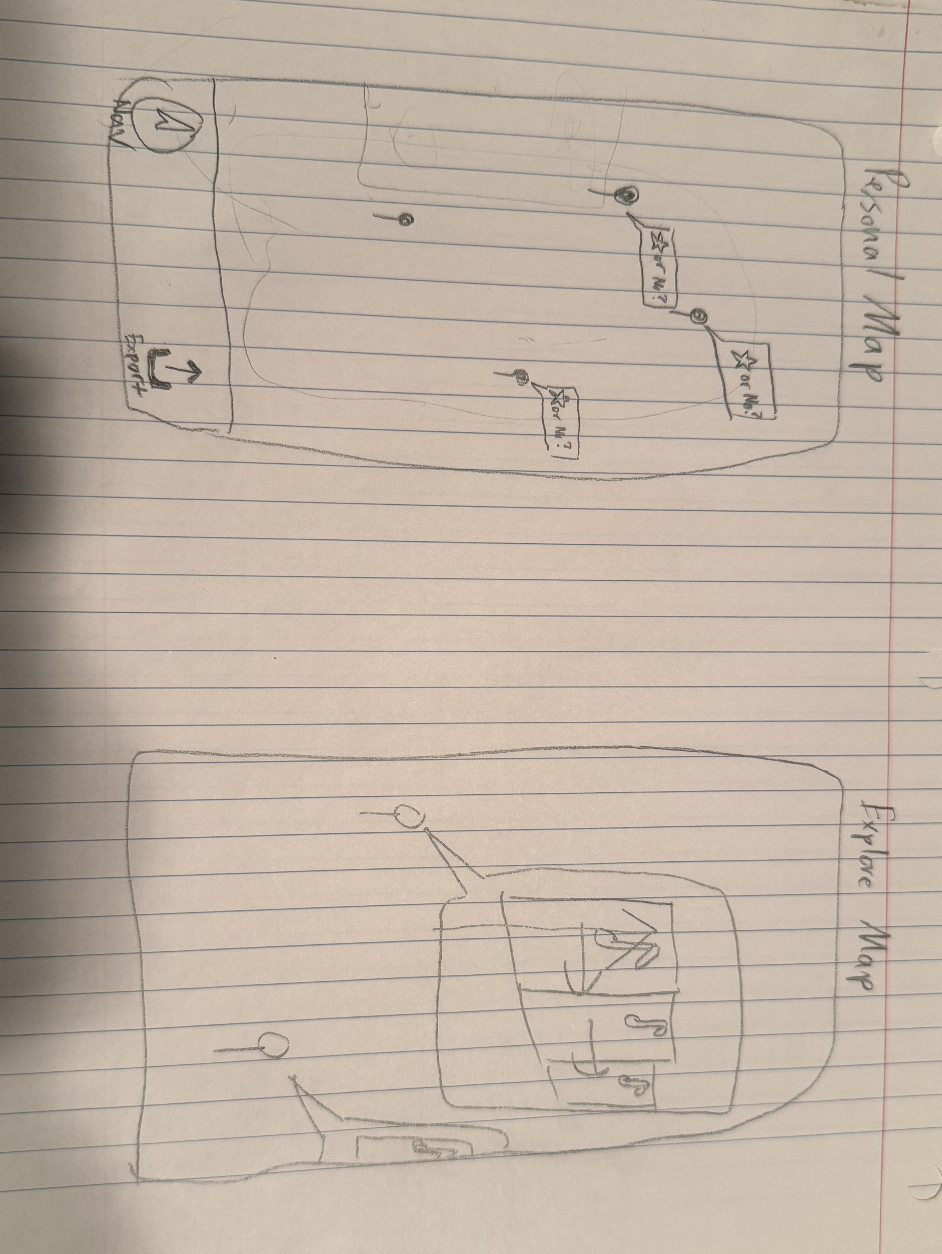
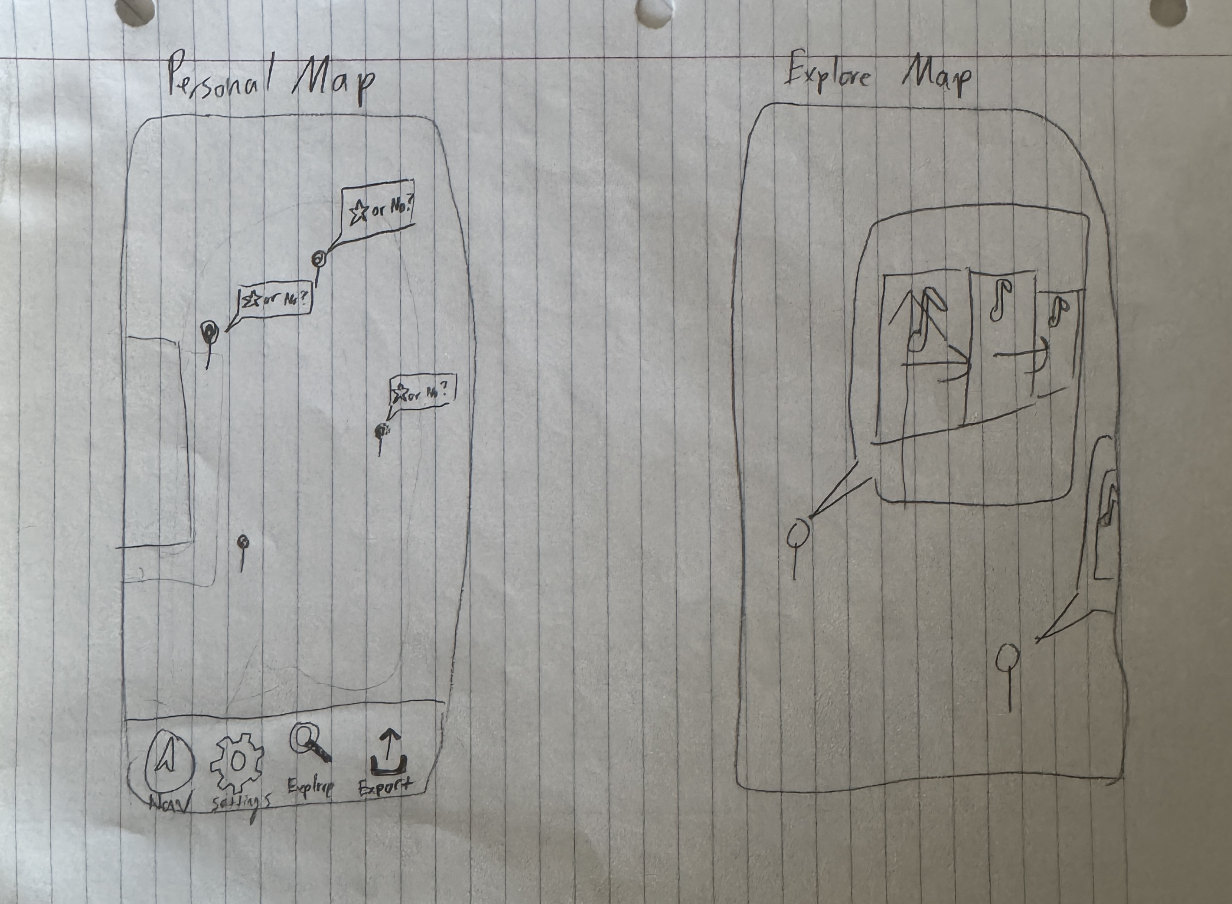
IN-PERSON.
Inspiration
Our inspiration came directly from the designathon prompt—reimagining how we interface with the world—by focusing on a powerful yet underutilized technology: geovisualization. While emerging tools like AI and AR are gaining traction, we noticed that location-based interfaces remain overlooked, especially in how they connect to user-generated content. As a team of Gen Z travelers ourselves, we reflected on a shared friction we face when planning trips: we either surrender control to rigid tour guides or piece together our own plans by manually saving and sorting through dozens, if not hundreds, of TikToks and Reels. This process is tedious, disjointed, and often lacks the context needed to build a cohesive itinerary.
In fact, data backs this up. A study by Priceline Press Center found that it takes the average person 16 hours (the equivalent of two full workdays) to plan and book a trip. For Gen Z and Millennials, that number jumps by over 30%, surpassing 20 hours. Furthermore, Gen Z travelers spend 67% more time researching hotels and accommodations compared to Boomers. There is clearly a gap between how we, as Gen Z, want to experience travel planning and how it currently works.
What’s more, traditional review systems have increasingly lost trust. In unfamiliar environments, such as navigating restaurant reviews in Japan, it is nearly impossible to tell genuine local insights apart from surface-level tourist praise. Social proof is everywhere, but it is scattered, unverified, and often difficult to interpret. As a result, planning a trip becomes a fragmented and stressful experience, especially for first-time travelers who may not have the cultural knowledge to filter through all the noise. What should be an exciting part of the journey ends up feeling like a chore.
This is why we created PinIt. Our goal is to turn user-generated content into a geovisual interface that feels intuitive, social, and exploratory. By mapping content directly to real-world locations and allowing users to save, organize, and optimize their pins, PinIt transforms scattered inspiration into a cohesive and personalized journey. Throughout this journey with PinIt, we hope to make travel planning feel less like work and more like the beginning of the adventure.
What it does
PinIt is a travel app that transforms user-generated content into a personalized, map-based planner. Users can explore locations through curated content, save places as pins to their personal map ("MyMap"), and generate optimized travel itineraries. Starred pins receive priority in route planning, making trip organization both visual and customizable.
How we built it
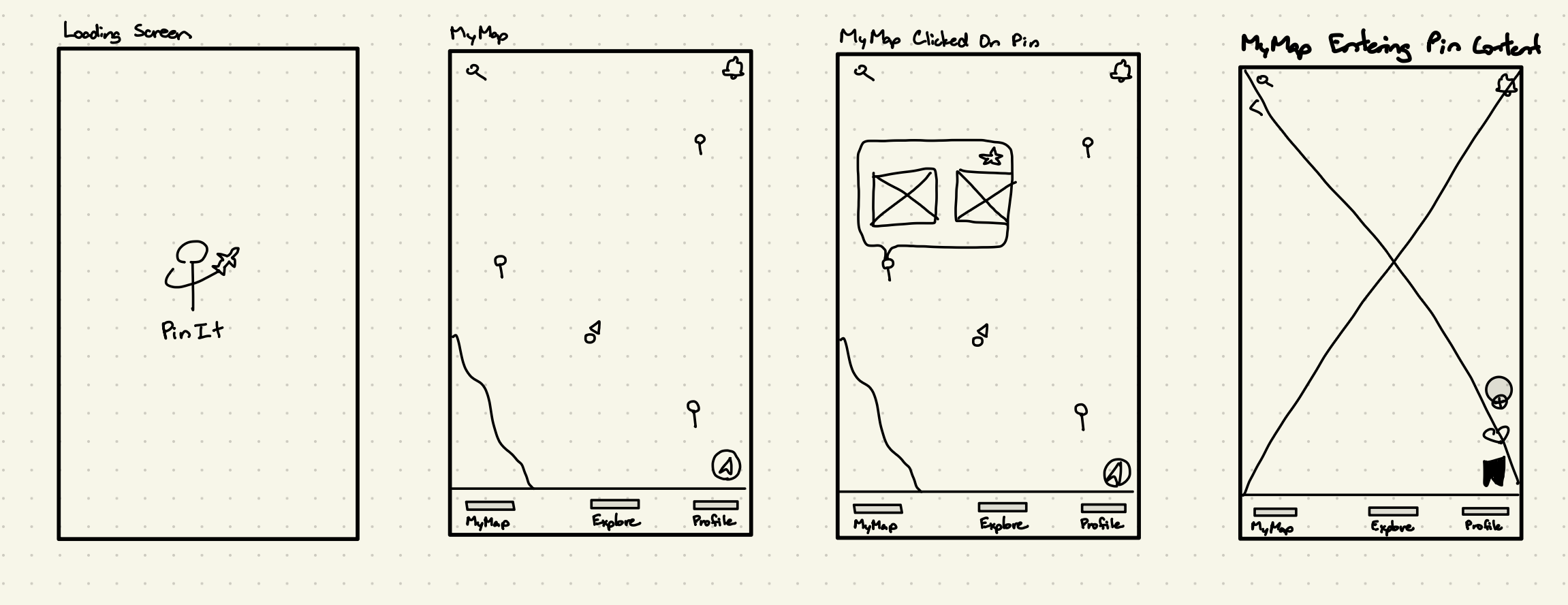
After finalizing our idea, we began by sketching out the core design and mapping the user journey through the app. This helped us visualize the essential features and interactions. We then translated our sketches into a wireframe, which served as a structural blueprint to organize the app’s layout and user experience without the distraction of visual design. Building on this foundation, we created a high-fidelity mockup to bring the interface to life with polished visuals and branding. To showcase our vision, we animated the user flow to present a clear and compelling representation of our MVP (minimum viable product).
Challenges we ran into
One of the biggest challenges our team faced was our lack of experience with Figma. Going into the designathon, none of us had used the tool before, and this was everyone’s first Designathon. As a result, we spent a significant amount of time learning the basics and adjusting to the interface. Early on, we ran into common beginner pitfalls, such as not layering elements correctly, neglecting to name our components, and struggling with constraints and auto-layout. These issues made collaboration and revisions more difficult until we refactored our workflow midway through. Despite the steep learning curve, this experience helped us develop as a team and grow a much stronger understanding of design best practices by the end of the project.
Accomplishments that we're proud of
We're proud of how we turned a complex idea into a tangible, interactive MVP, especially considering non of us have design experienceor prior experience in Figma. Learning the tool from scratch while under time pressure motivated us to collaborate efficiently, divide responsibilities thoughtfully, and support each other through the learning curve. Along the way, PinIt developed a strong visual identity and creative branding that we truly believe in. PinIt for us has become more than just a prototype—to us, it felt like a real product with both purpose and personality.
What we learned
Throughout this project, we gained a strong understanding of the full design process, from initial ideation to delivering a polished product. Starting with just a rough concept, we learned how to take a big vision and break it down into actionable steps, using wireframes, prototypes, and ongoing iteration to refine our ideas. Since none of us had used Figma before, we had to learn the tool on the fly. This helped us develop both technical skills and a better sense of design structure and organization. We also learned the value of collaboration under a tight deadline. With limited time, we had to communicate clearly, divide responsibilities based on our individual strengths, and trust one another’s creative input. Because our team ended up having a multitude of different personalities, it became clear how much stronger a project becomes when each team member brings something different to the table. Throughout the duration of this designathon, we learned how to work through new experiences, stay adaptable, and turn a shared idea into a clear, engaging user experience.
What's next for PinIt
The space of transforming user-generated content into a geovisual experience is full of potential, and we see exciting opportunities for PinIt’s future. One key direction we’d love to explore is integrating AI-powered personalization. As user-generated content has disrupted traditional travel planning and reduced reliance on travel agencies, there’s a growing need for intelligent systems that can help users c`ut through the noise. By using AI to learn individual preferences such as travel style, budget, pace, and interests, PinIt could dynamically recommend pins, adjust itineraries in real time, and surface content that feels truly relevant to every individual. We also envision PinIt expanding to include features like collaborative trip planning, offline pin access, and gamification to make PinIt a comprehensive and social travel companion.

Log in or sign up for Devpost to join the conversation.