-
-
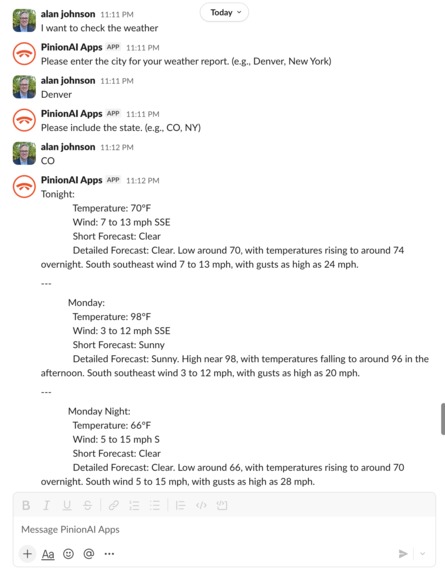
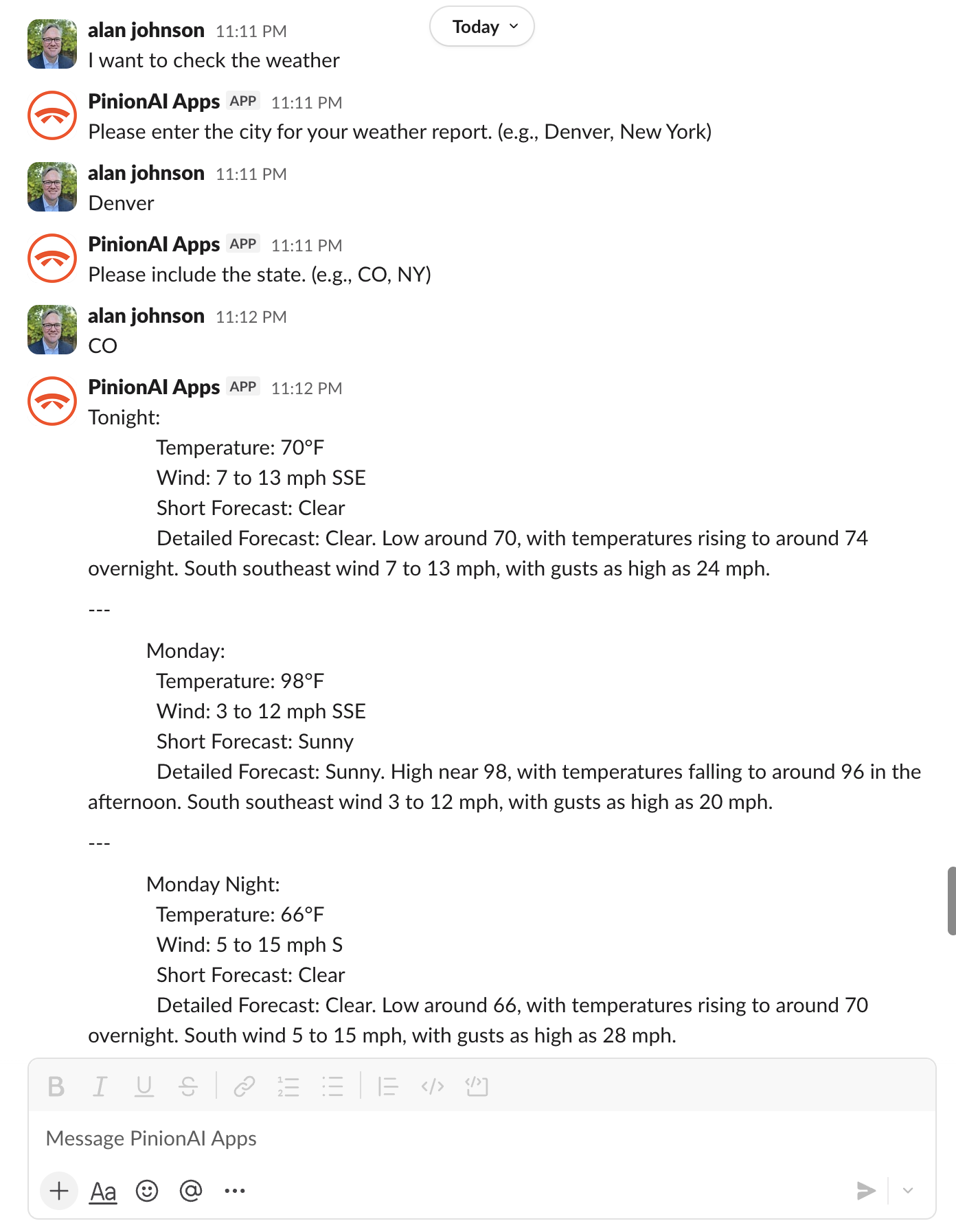
Getting information via MCP
-
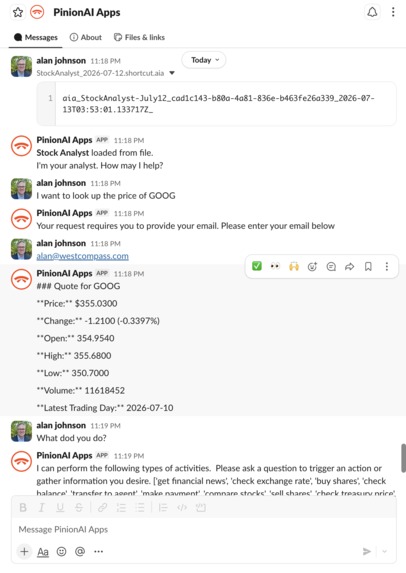
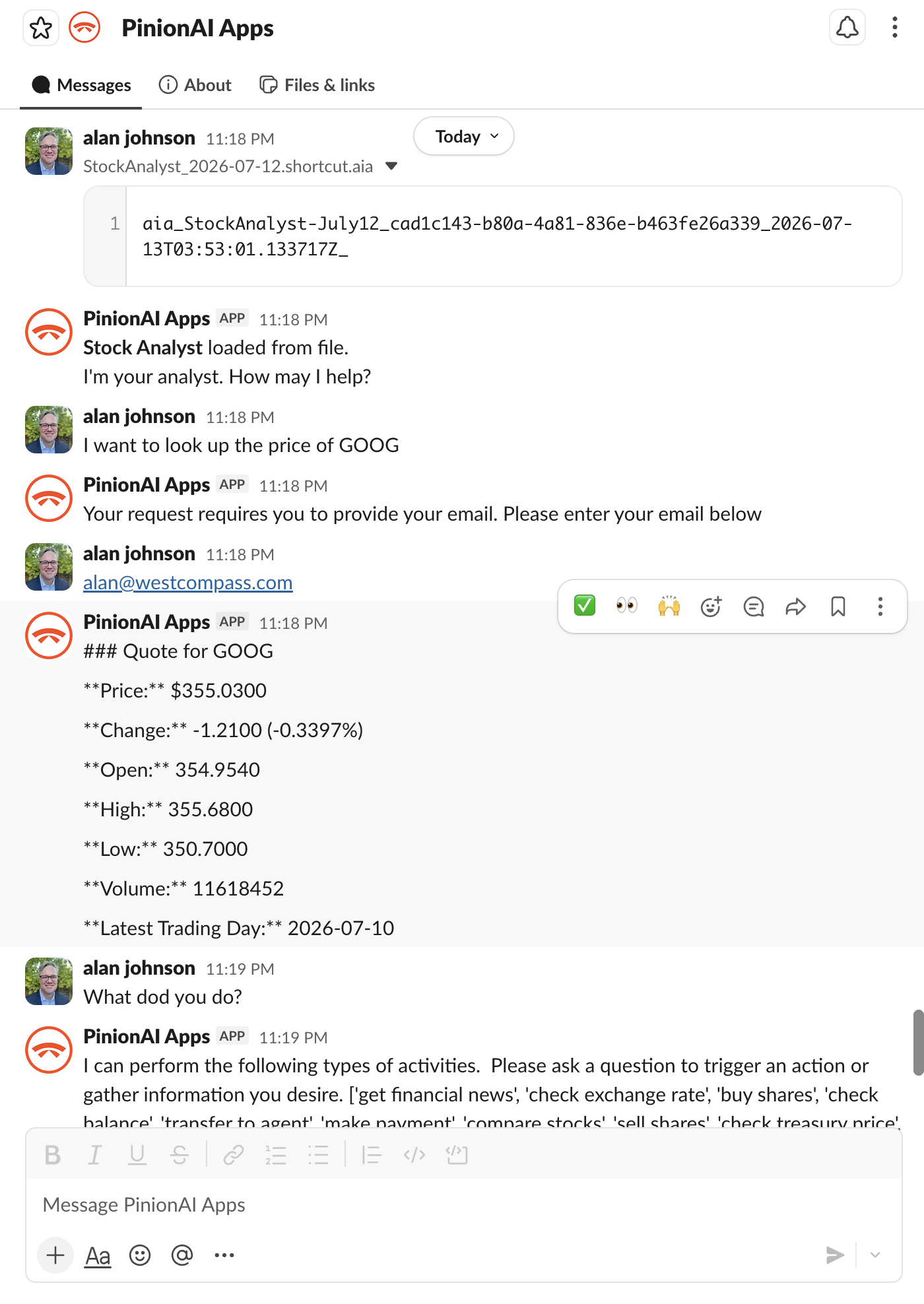
AI Agent file loaded to run stock analyst agent
-
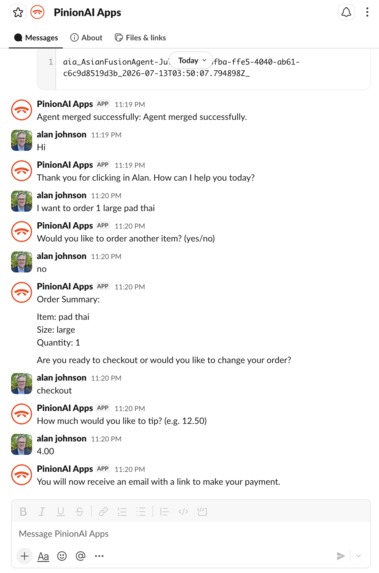
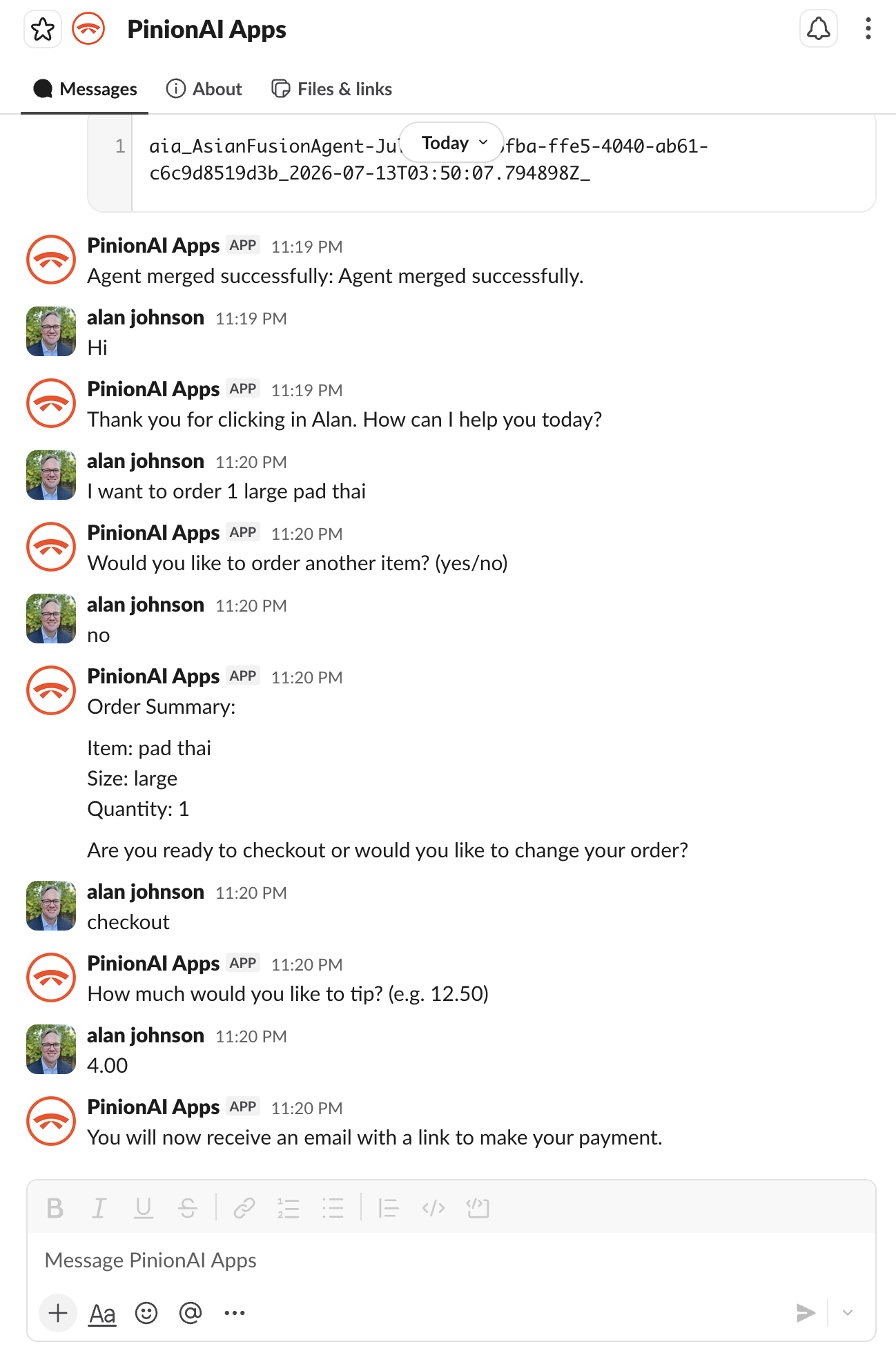
AI Agent file loading to run restaurant ordering process
-
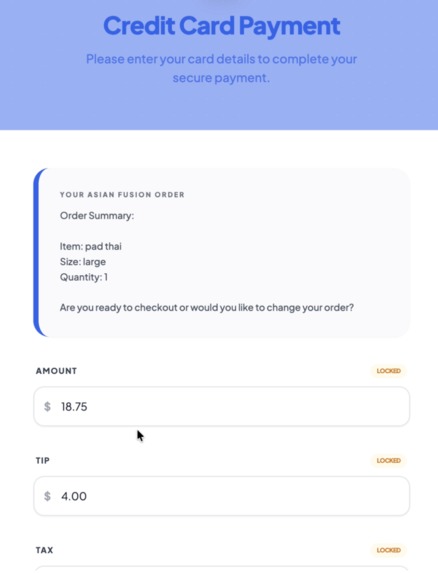
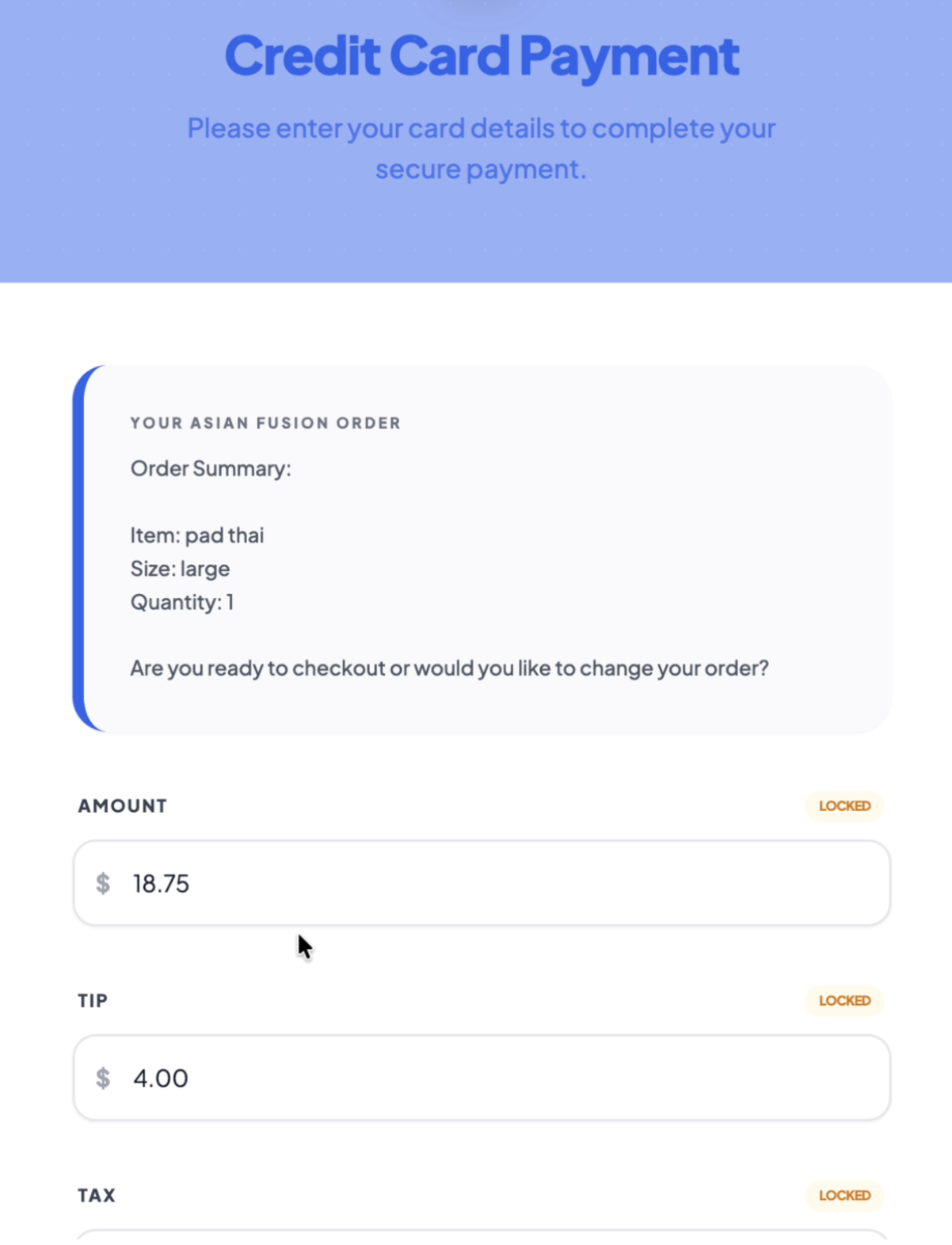
Credit card form example delivered by AI via Slack
Inspiration
Exploring the AI landscape, we quickly realized the tools were not capable of performing actions, of integrating with existing business technology or apps, and were not close to having any meaningful authentication or business privacy. AI Tools themselves could not be deterministic, controlled or harnessed in a way that a business needs. We loved the idea of PinonAI, an opinionated, controlled AI solution that works seamlessly with existing business software, communicates specifically on topics the business desires, performs actions, provides information and offers privacy and security built in. Most importantly, it is easy to author, version, deploy, and doesn't require development resources to take advantage of the LLMs and AI capabilities.
What it does
PinionAI loads into Slack as a client agent app. While chatting to AI agents via Slack, the underlying system offers a number of authoring tools to low code configure and orchestrate AI, mostly targeting business activities, customer support and educational products. Secure and private, it features agents that can be delivered as encapsulated AIA files, or loaded as urls. Agents can perform all manner of complex, deterministic integrations suited for business use cases, and even Zero Knowledge Form authoring and AI-based delivery for eforms, docs and credit card payments. It offers seamless integration with API, MCP, A2A, Databases, RAGs and provides backend control of intents, prompts, models, deterministic rules, delivery and more. It is both an AI-first solution, but also offers live handoff to a human agent if desired by a client.
How we built it
We built it from the ground up as a controllable system starting with core business database design forward to dynamic variable creation and scoping, deterministic control over AI, extensibility, integration and security in mind. Low code backend business flow authoring, generates AI agents which run independently in technology that installs our PinionAI python library. Agents can be served specifically, or can be loaded and interpreted by dropping encapsulated AIA files right into Slack. The studio authoring environment (PinionI studio) is written in python. The underlying database is in PostgreSQL. The API interface for AI client interactions is written for speed in golang. FormBuilder and Form servers are Node JS. The AI Agent clients (like versions for Slack, Streamlit, CLIs, etc.) operate independently once the agent is loaded, but all leverage the PinionAI python library. All server side elements run in containers, and are designed for cloud and on-prem possibilities.
Challenges we ran into
AI struggles with precise deterministic output that business needs. We have enabled the prompts, intents, variables, models and action groups to be completely open for editing to the businesses, allowing them to tweak every capability for their specific flows.
Accomplishments that we're proud of
We have created a tremendously capable cloud or on-prem based AI solution. Along the way we have created AI-based form authoring and delivery, an AIA file format for easy distribution of new AI-based product types. Via our PinionAI python library and agent design, we have the flexibility to drop the functionality into any number of technologies which can run independently.
What we learned
We have learned a tremendous amount, digging into ever growing AI capabilities, models, solutions and structuring a truly flexible, enterprise capable system.
What's next for PinionAI Slack App
We would like to see the PinionAL Slack App be an easy conduit for business to command their operations with designed actions, generate important information for internal and external consumption, and reach out to customers with forms, payment request and other actions. We see Slack as perfect conduit for users to perform work activities, gather information and deliver information to their customers in the same way as they may speak with a co worker.

Log in or sign up for Devpost to join the conversation.