-
-
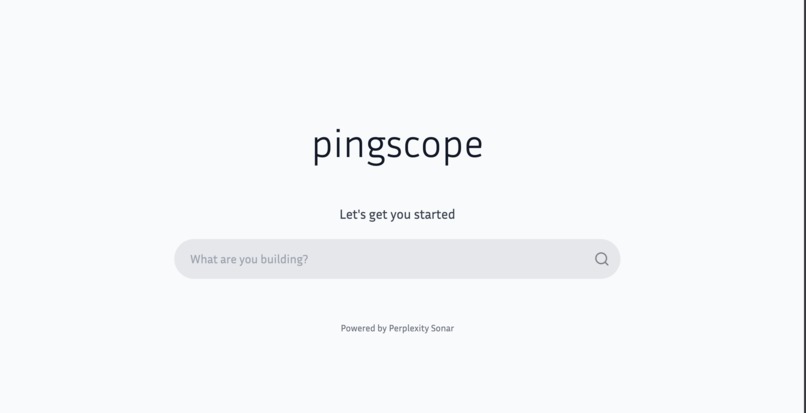
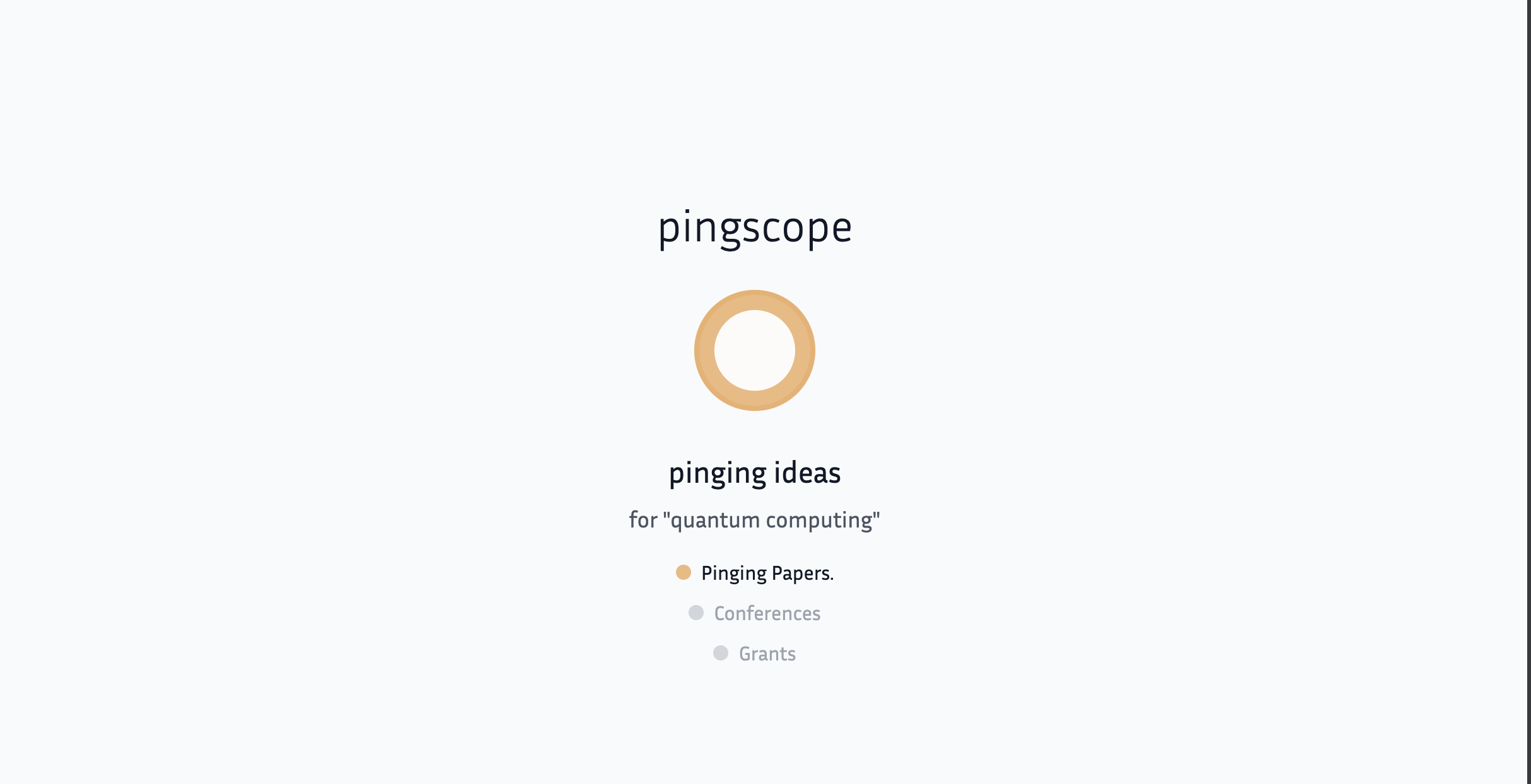
Front page
-
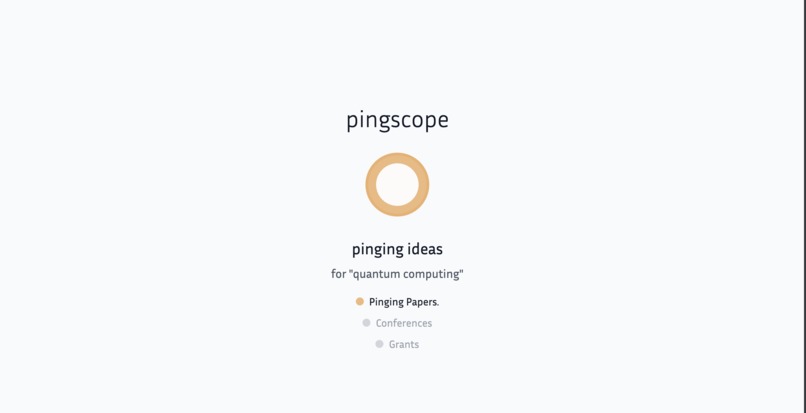
Searching page
-
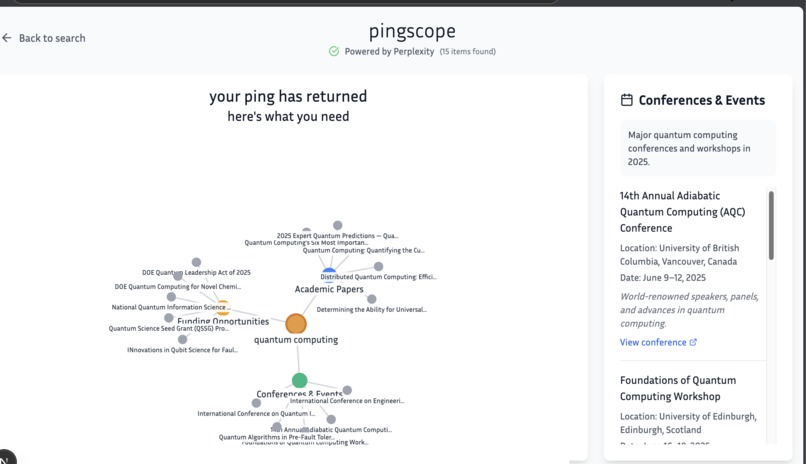
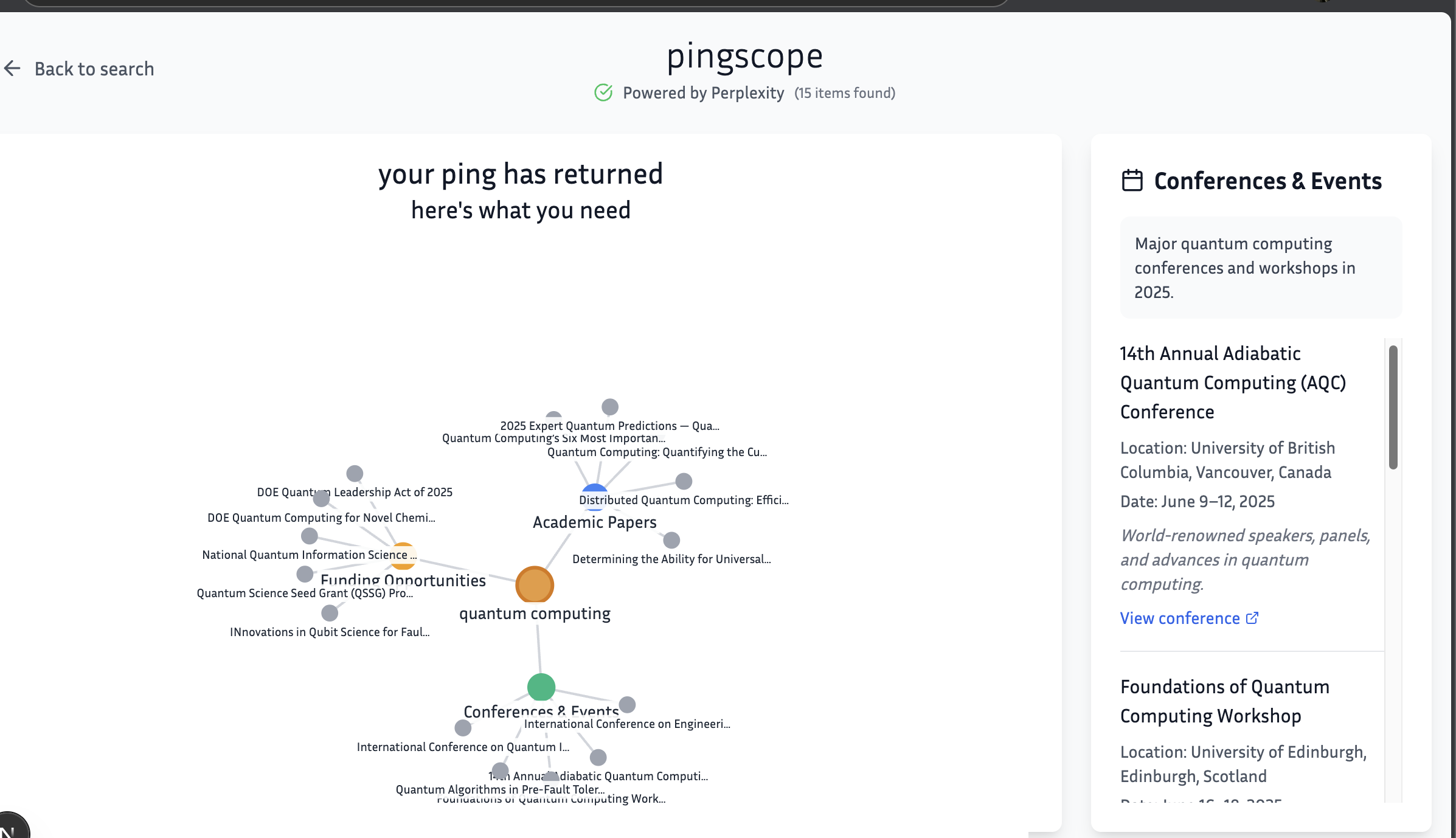
Results page
Inspiration
As researchers and students, we've all been there - spending hours jumping between Google Scholar, conference websites, and grant databases just to get a basic overview of a research topic. We'd open dozens of tabs, bookmark everything, and still feel like we were missing important pieces. We thought: "What if AI could do this tedious work for us?" That's how PingScope was born; from our own frustration with scattered research discovery.
What it does
PingScope is like having a smart research assistant that never gets tired. You type in any research idea (like "quantum computing" or "climate change"), and it automatically finds:
- Recent papers:The latest research and publications
- Upcoming conferences: Where you can present your work or network
- Available grants: Funding opportunities for your research
Everything gets organized into a beautiful interactive graph where you can click around and explore connections. No more endless tabs or scattered bookmarks!
How we built it
We built PingScope using modern web technologies that we love:
- Next.js and React for the frontend because we wanted it to be fast and responsive
- Perplexity's Sonar API for getting reliable, structured research data
- MongoDB to store search results so users don't have to wait for the same searches twice
- Tailwind CSS for making everything look clean and modern
- React Force Graph for the cool interactive visualization that makes exploring research fun
Our app makes three separate AI calls (papers, conferences, grants) and combines them into one comprehensive view.
What we learned
AI Integration: We learned how to work with the Perplexity API, including handling failures and optimizing prompts for both quality and cost.
User Experience: Research tools don't have to be boring! Good design and smooth interactions make a huge difference in how people engage with academic content.
System Architecture: Building reliable systems means planning for failure. Our multi-provider approach taught us the importance of redundancy.
Real-world Testing: Nothing beats testing with actual research topics. We discovered edge cases and improved our prompts by using the tool ourselves.
What's next for PingScope
Smarter Connections: We want to add AI-powered relationship detection between papers, conferences, and grants to show how they connect.
Personal Research Dashboard: Save your searches, track deadlines, and get notifications about new papers in your field.
Collaboration Features: Share research discoveries with your team and build collaborative research maps.
More Data Sources: Integrate with arXiv, IEEE, and other academic databases for even more comprehensive results.
Mobile App: Take your research discovery on the go with a native mobile experience.
Citation Analysis: Show citation networks and impact metrics to help evaluate research importance.
The goal is to make PingScope the go-to tool for anyone starting research in a new area, whether you're a student, professor, or industry researcher.


Log in or sign up for Devpost to join the conversation.