-
-
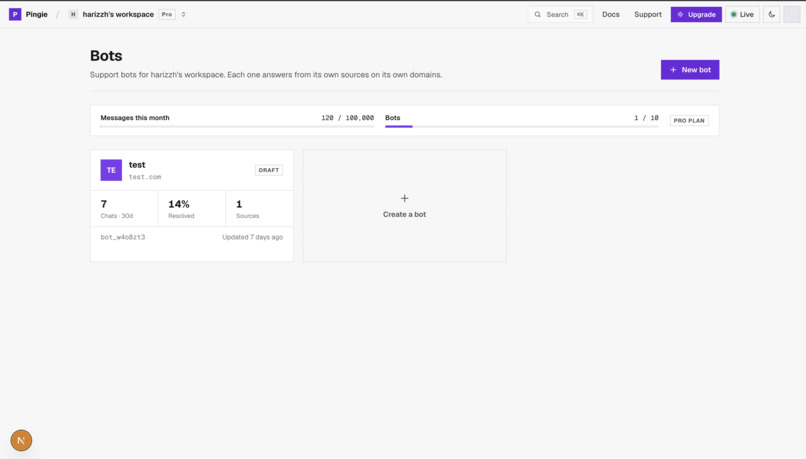
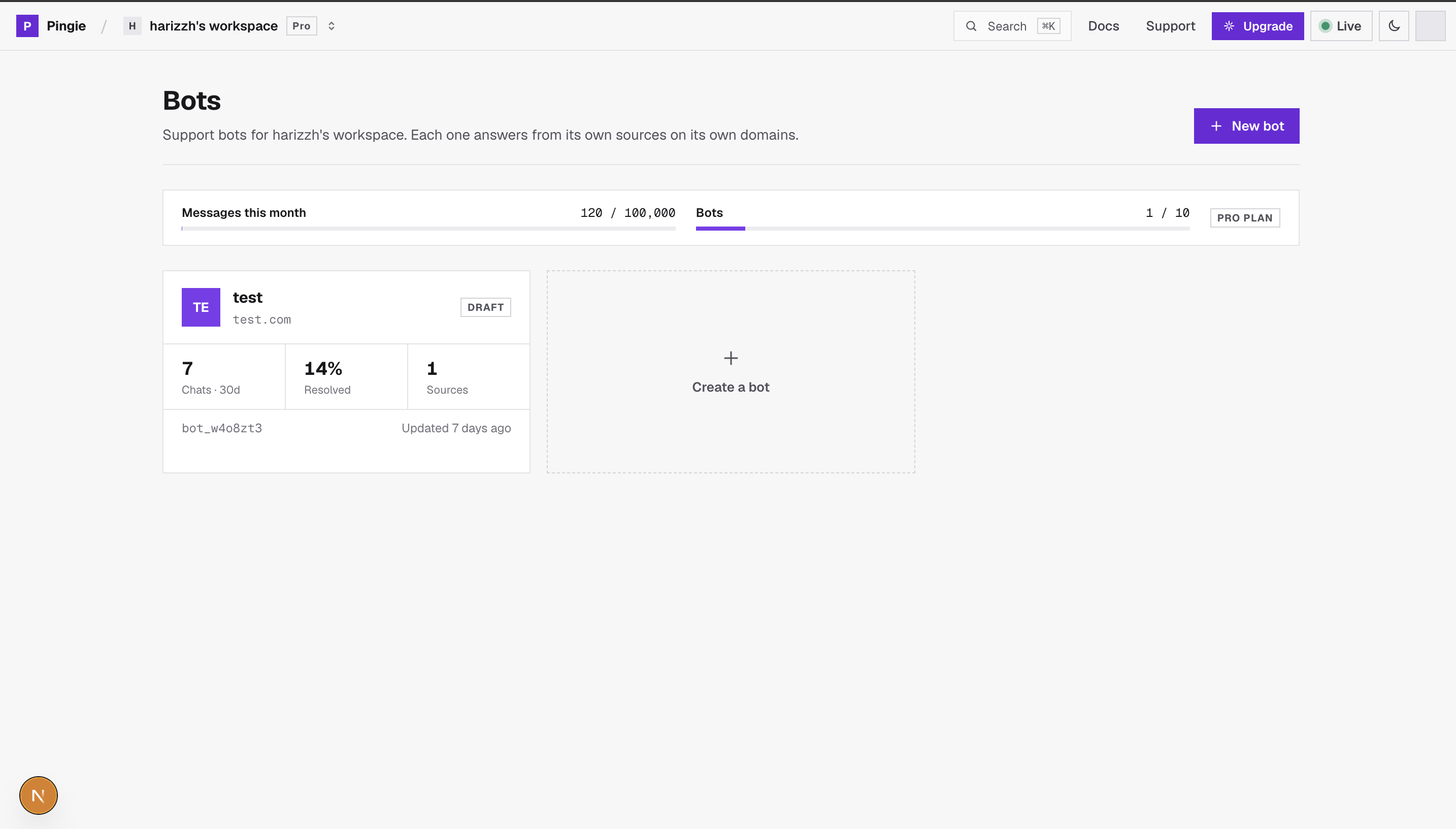
Workspace
-
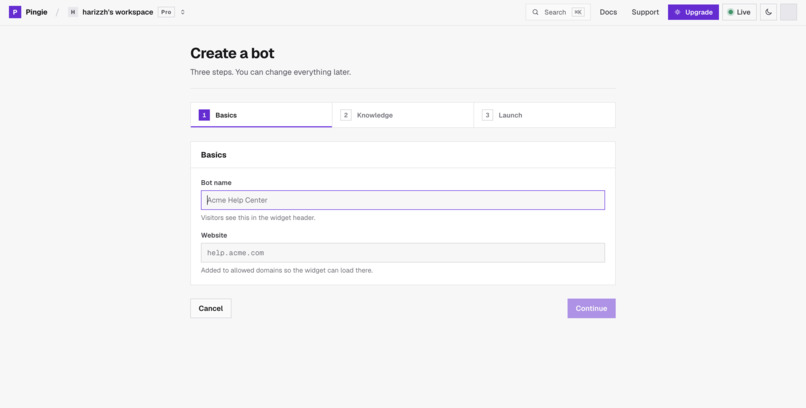
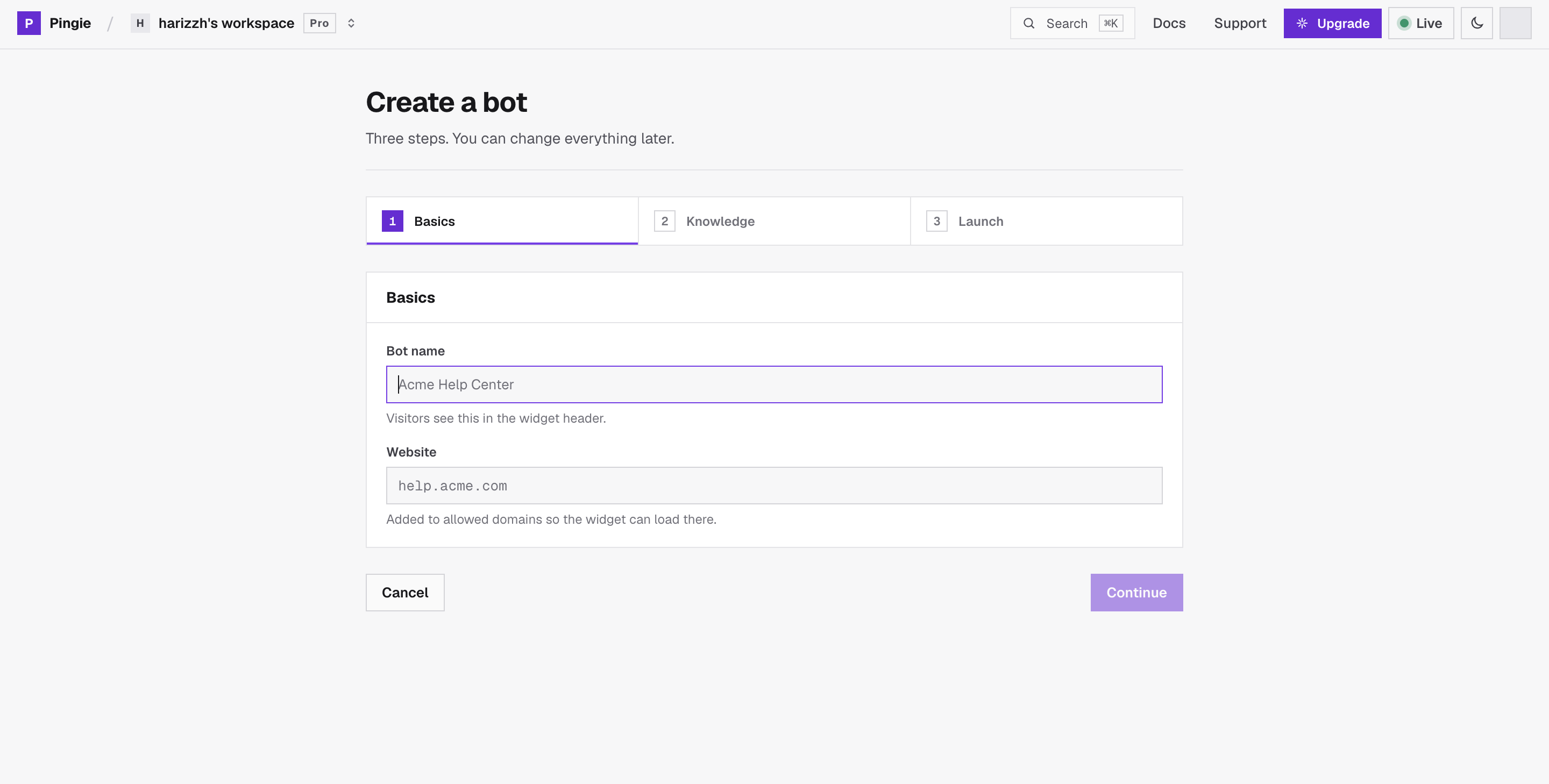
Bot Creation
-
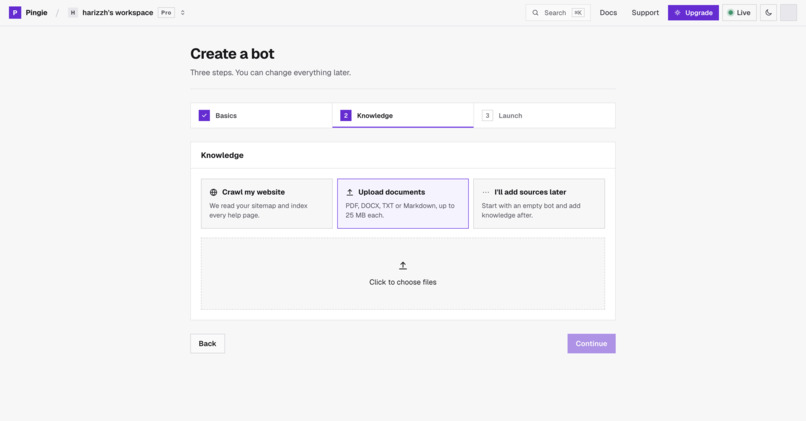
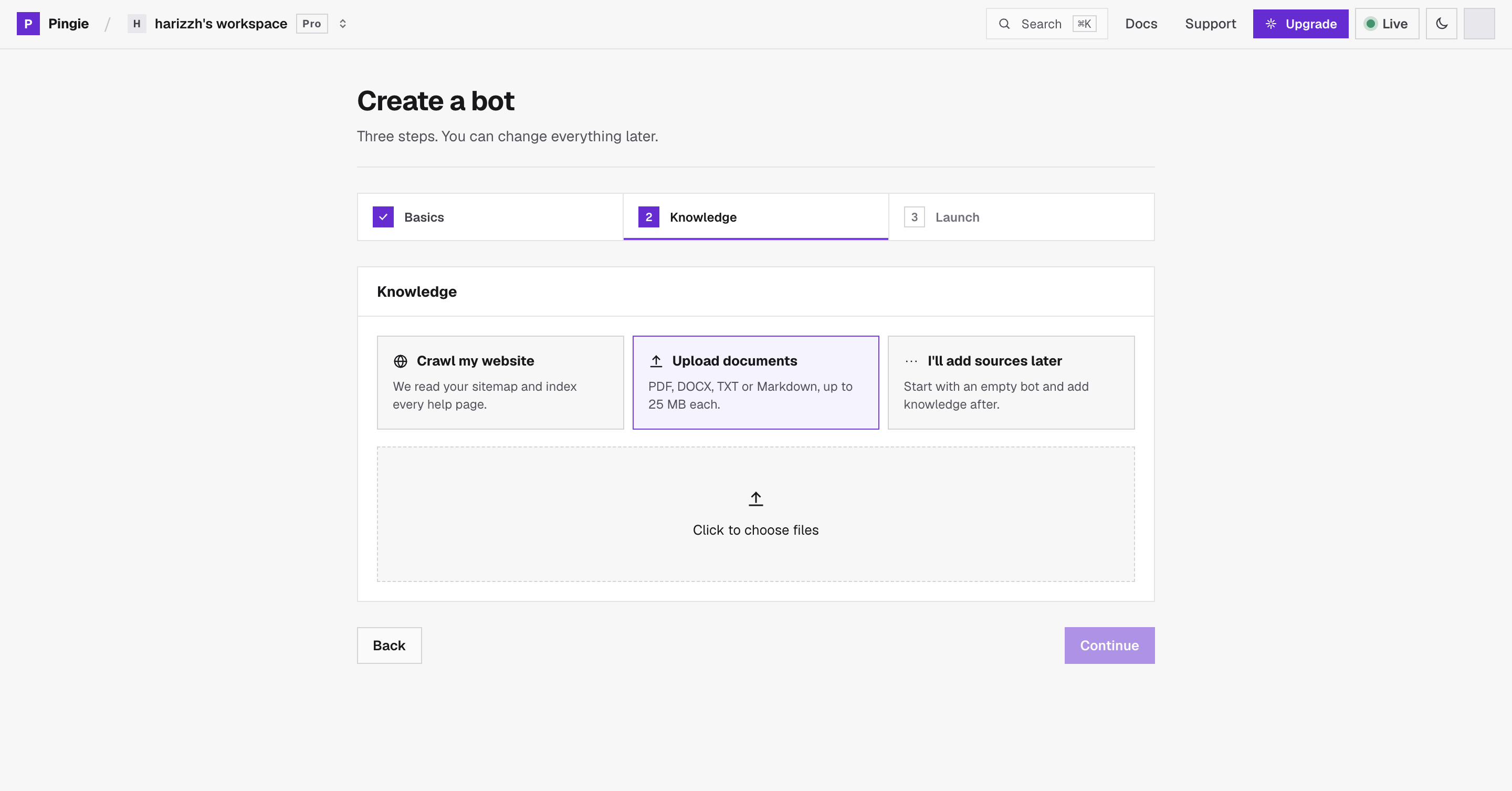
Uploading knowlege
-
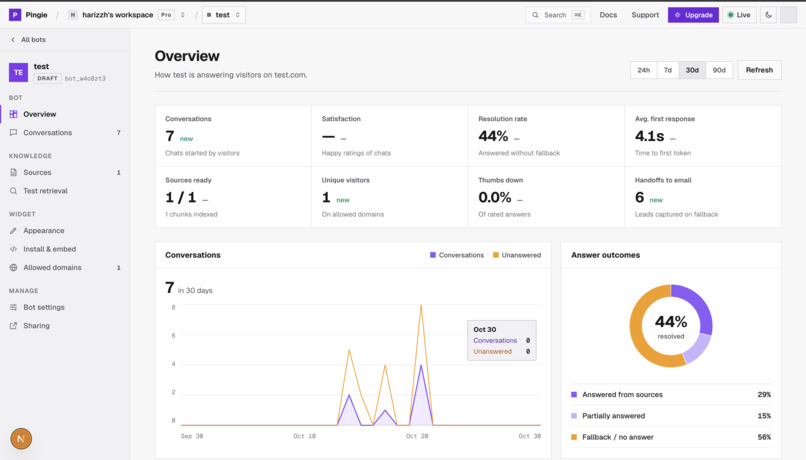
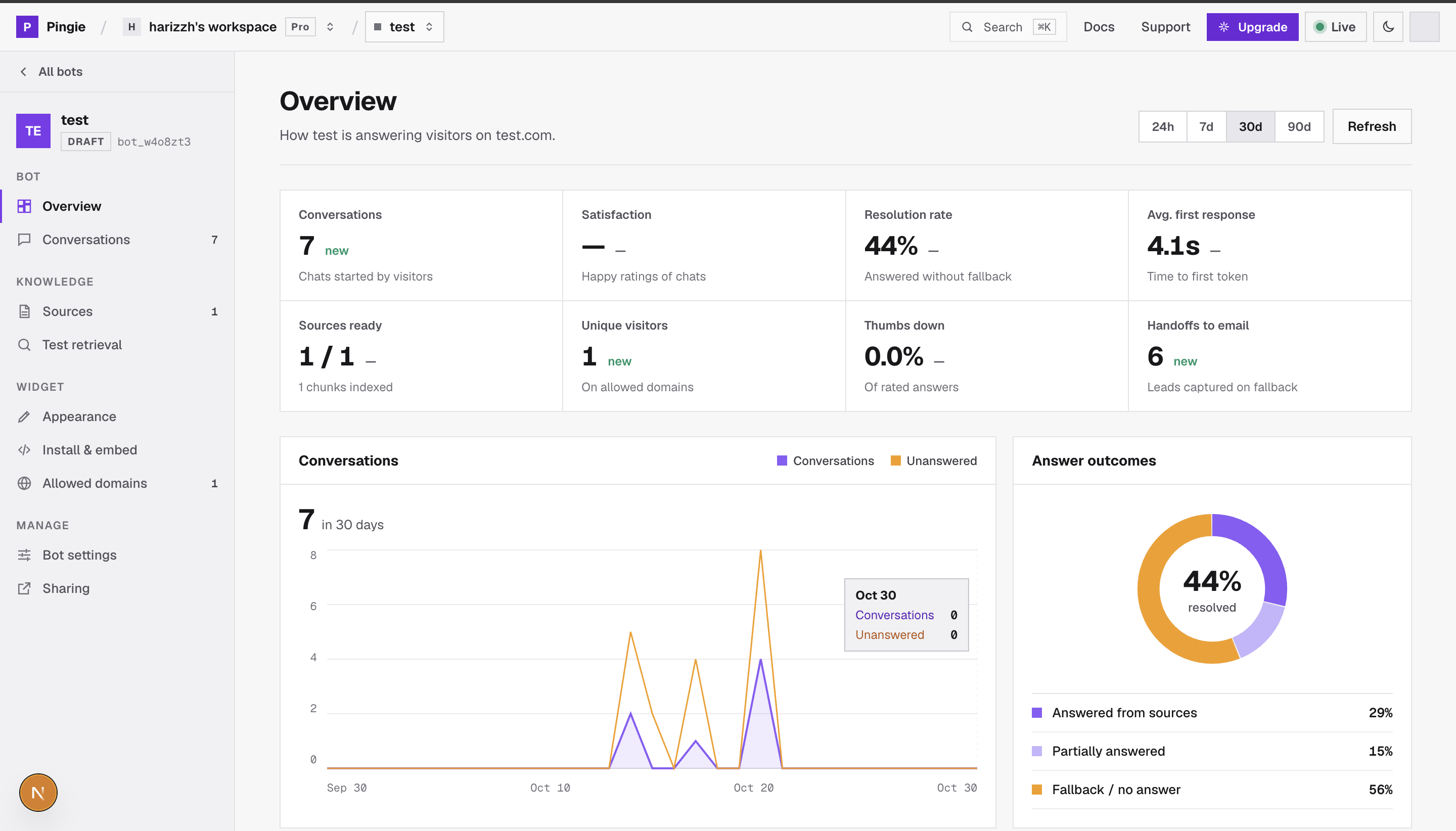
Overview
-
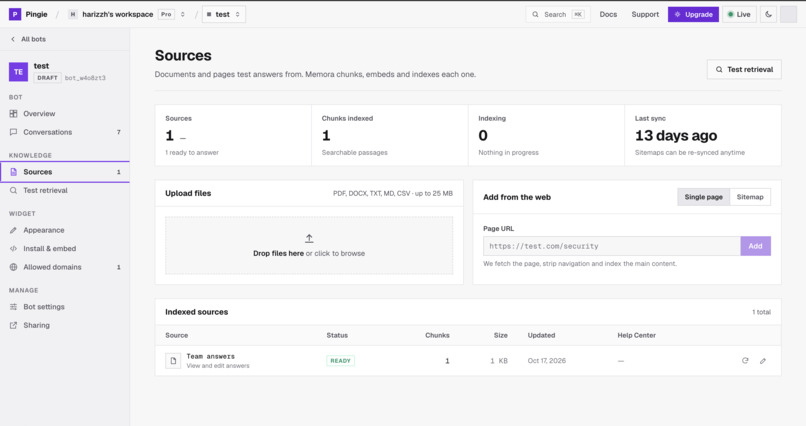
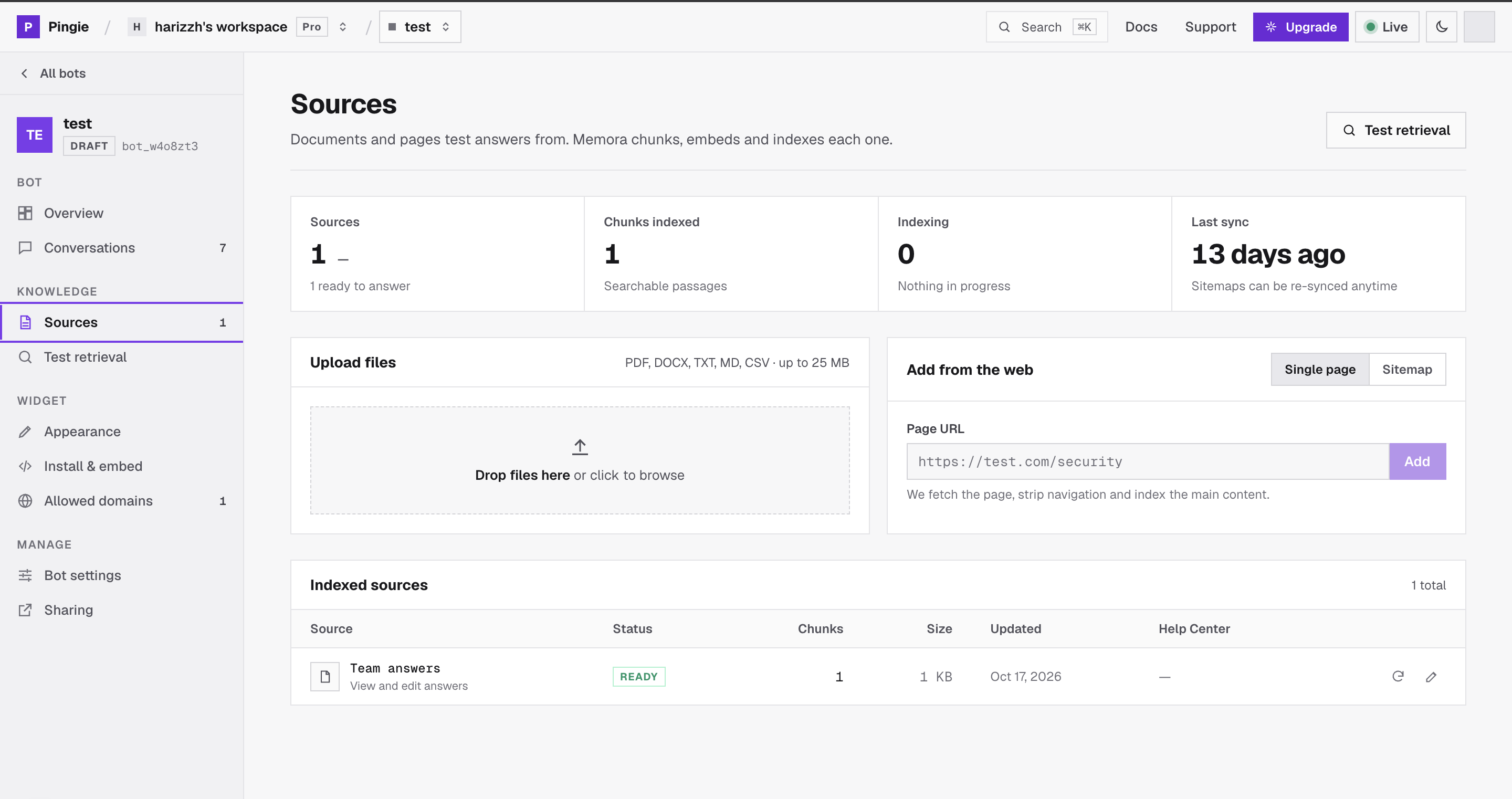
Source Mapping
-
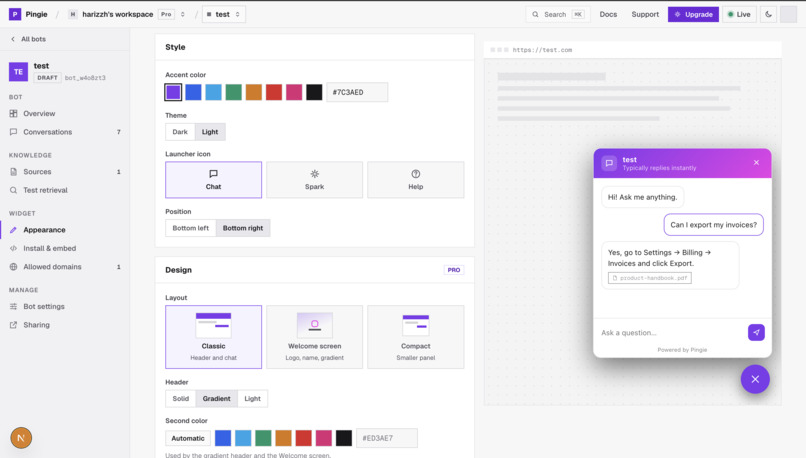
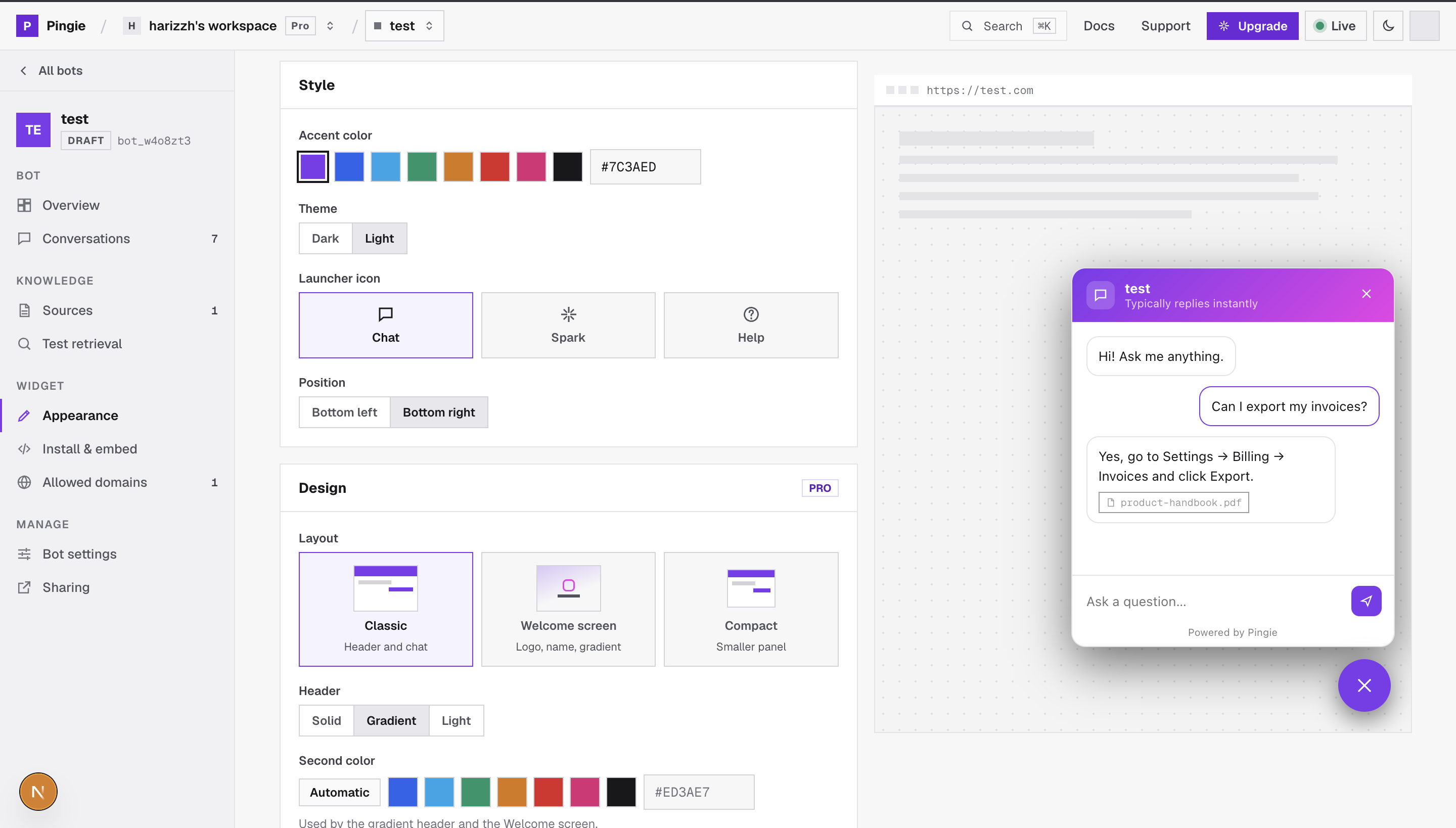
Bot Appearance
-
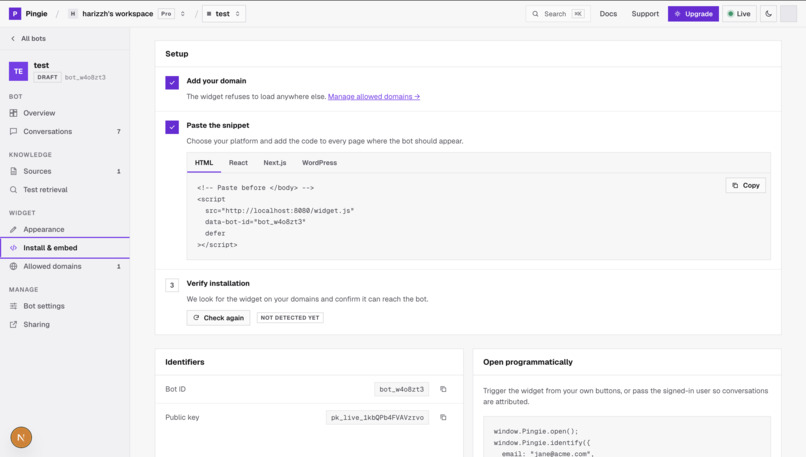
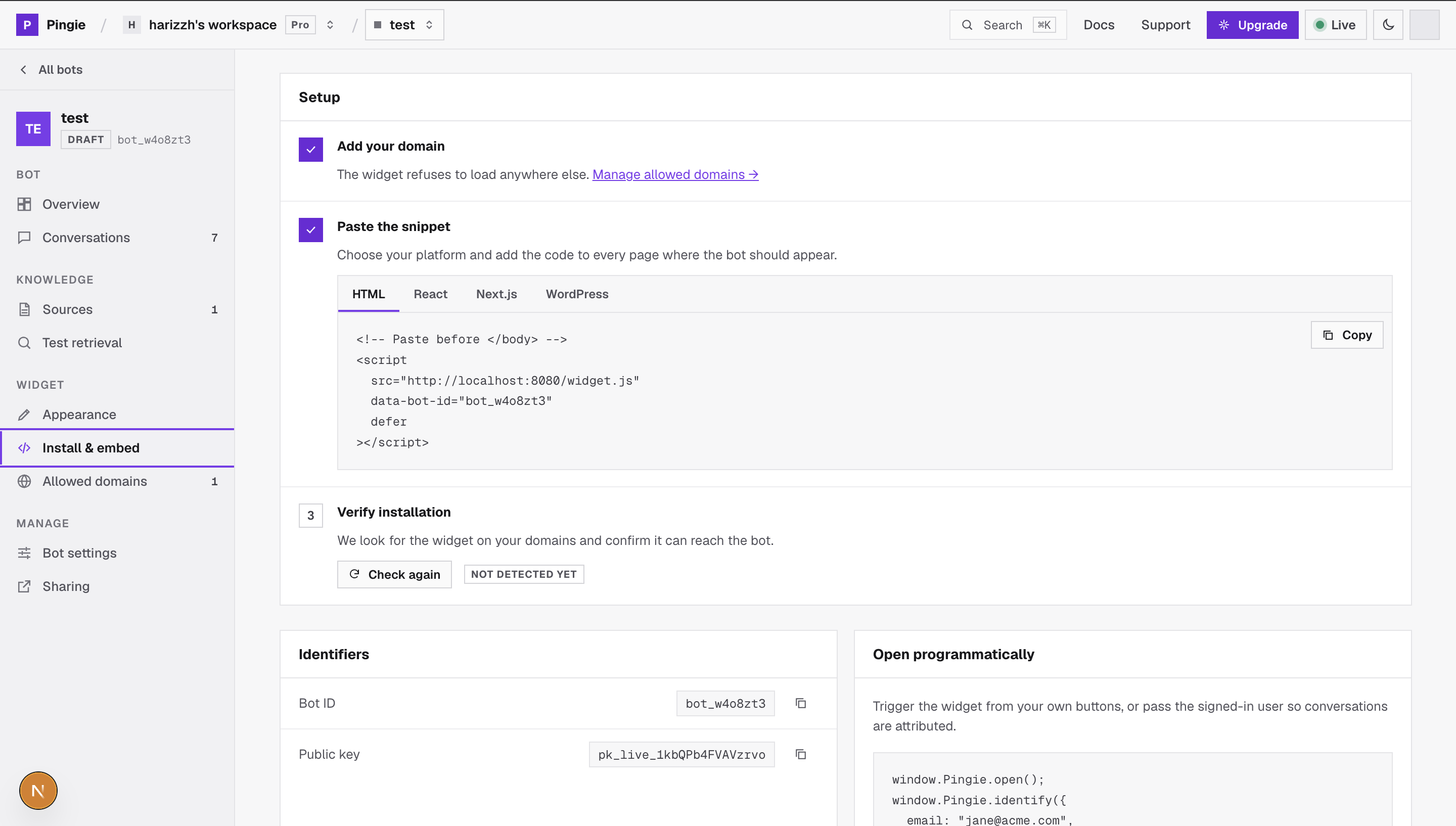
Install and Embed
-
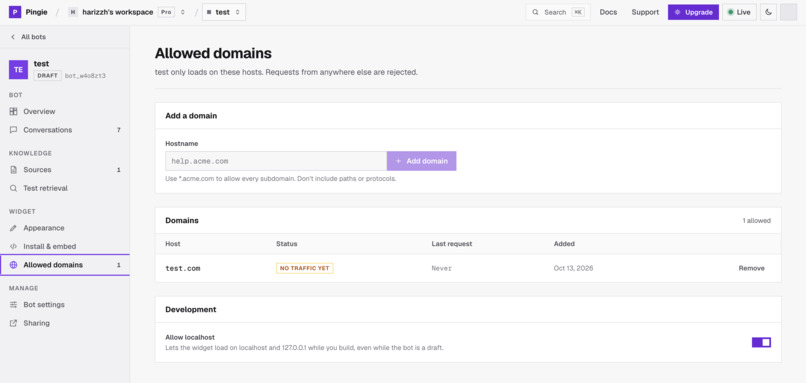
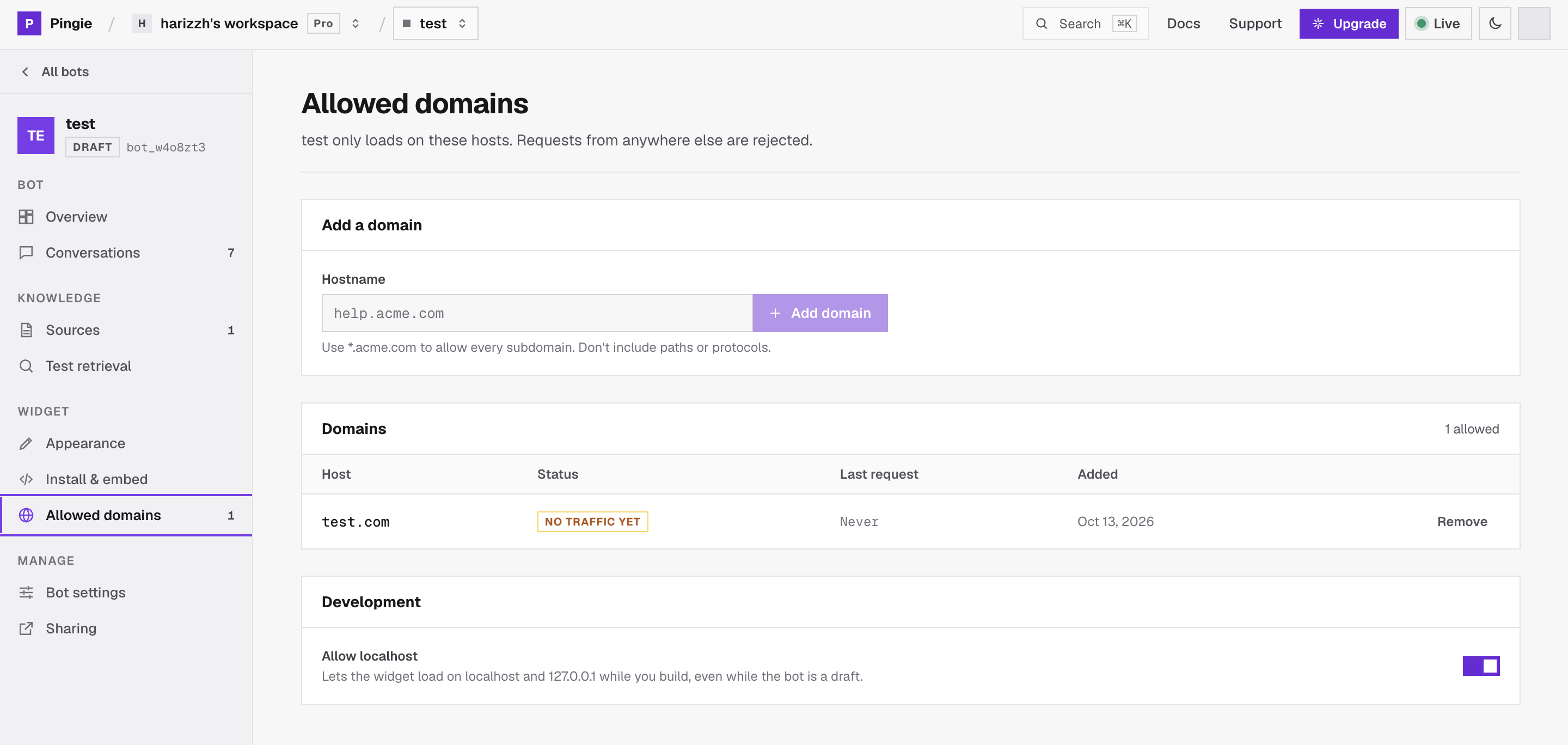
Allowed Domains
-
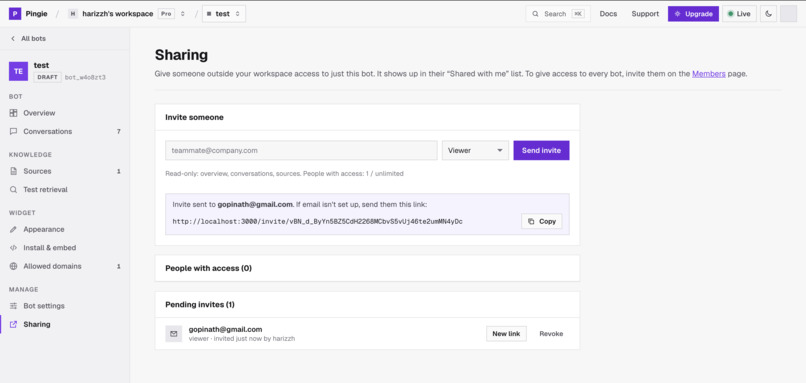
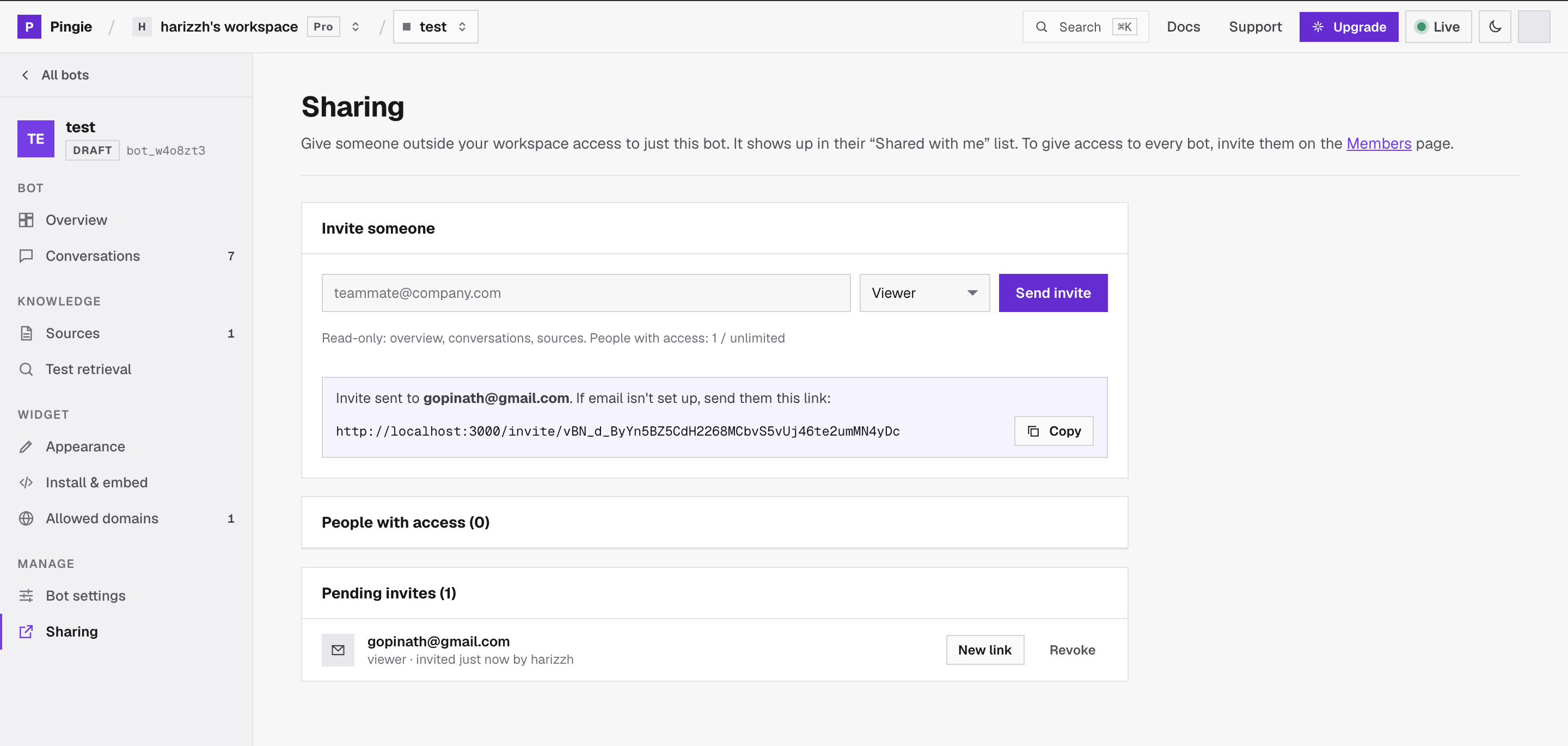
Workspace sharing
-
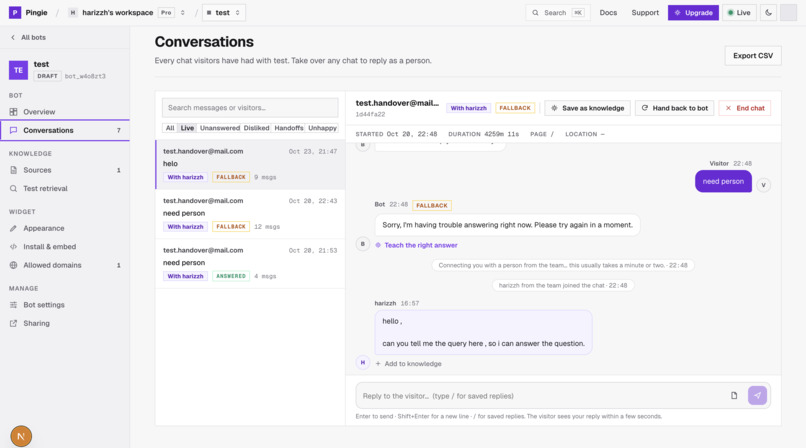
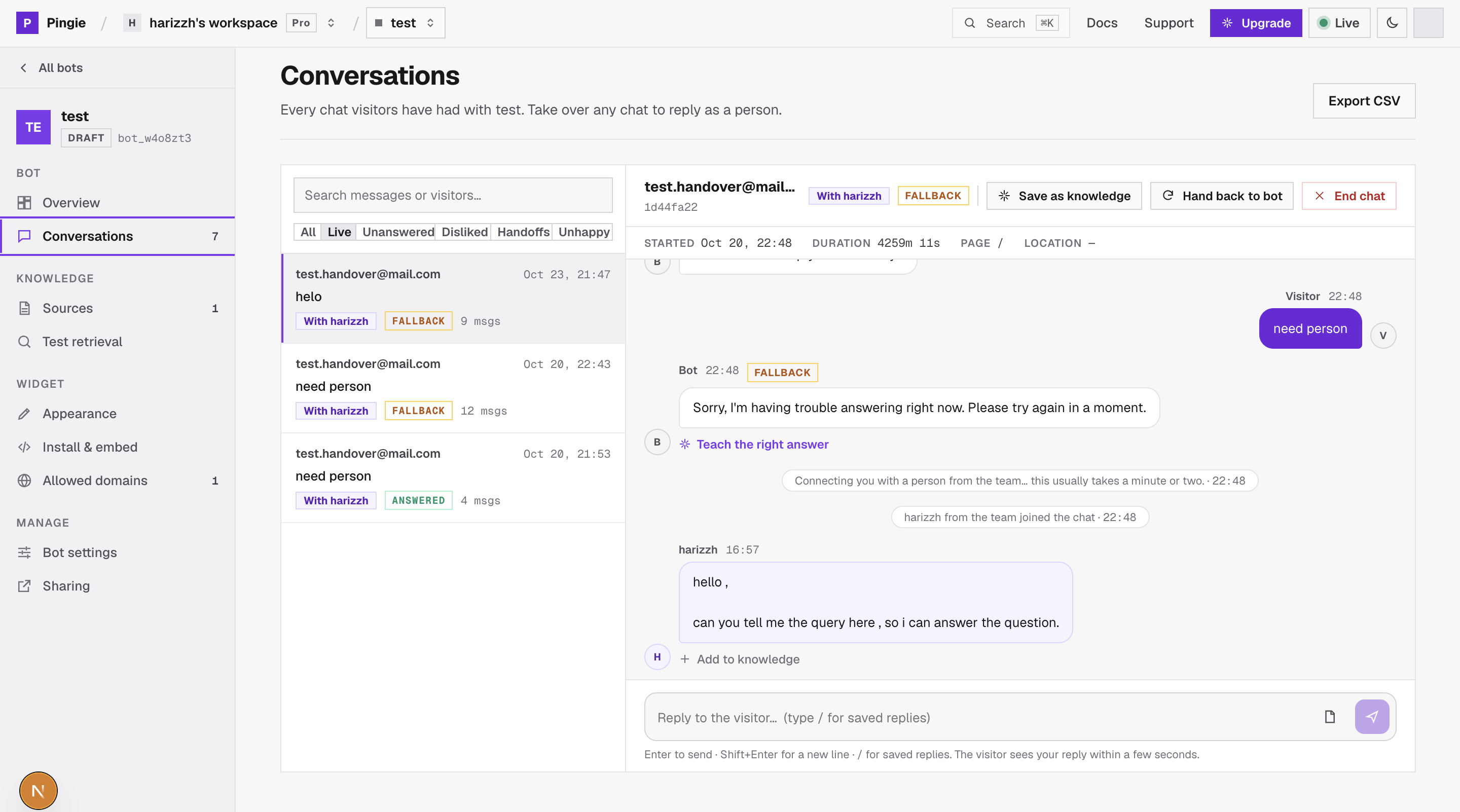
Conversations
-
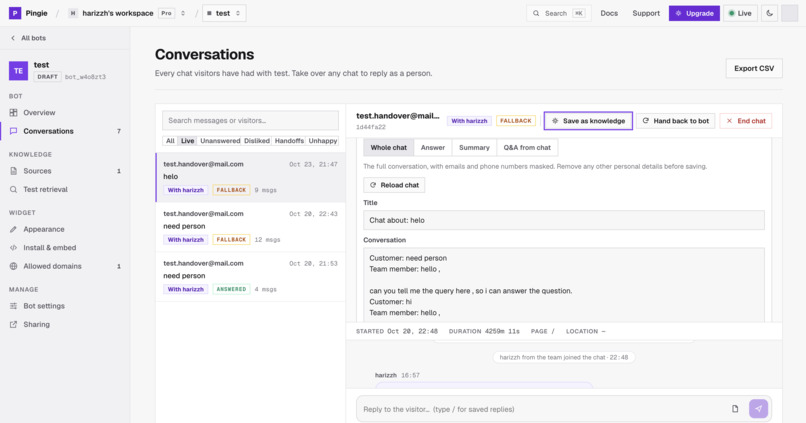
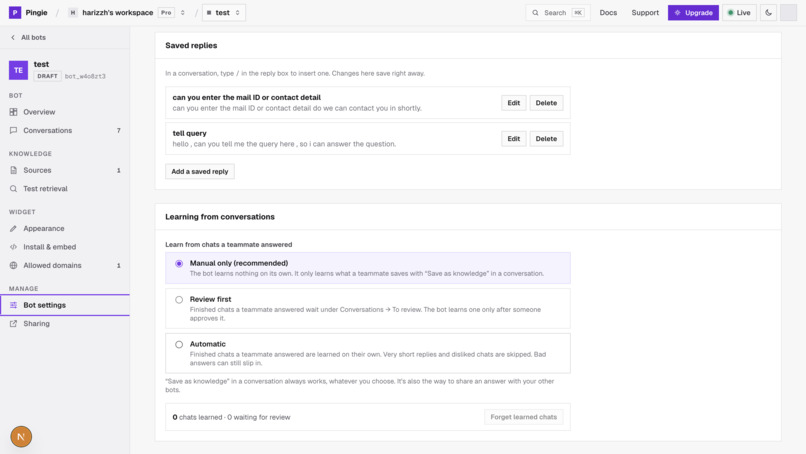
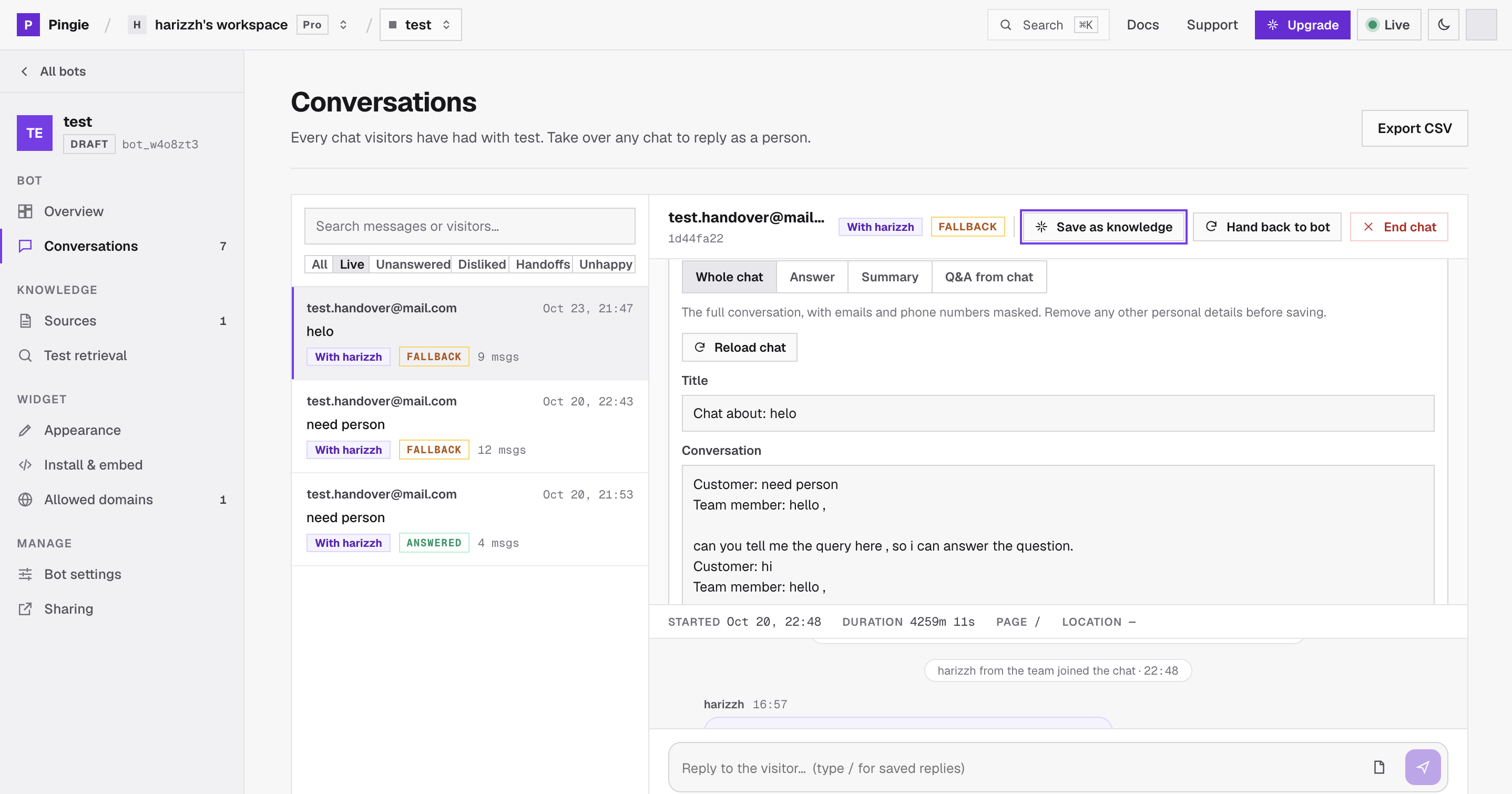
Saving knowledge from chat
-
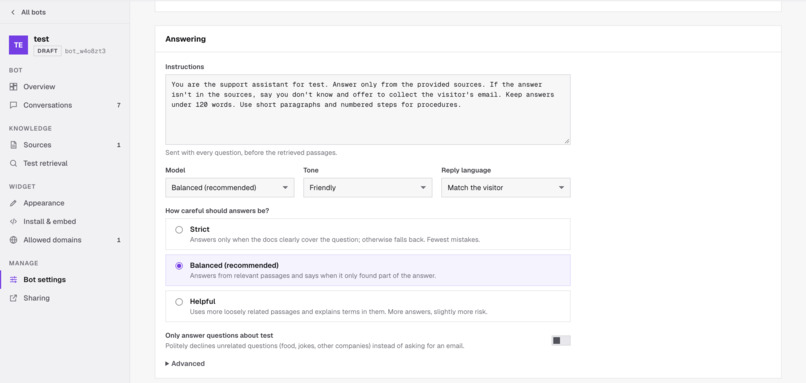
Bot Settings
-
Test Retrieval
Inspiration
We're three engineers who first built Memora, a persistent memory engine for AI. It stores good-quality knowledge, builds relationships and evidence, and retrieves it whenever an AI needs it. If the LLM is the brain's central executive, Memora is its memory.
Once Memora worked, we wanted to test it on a real problem. Companies already have the knowledge: docs, policies, help pages. But their visitors can't talk to that knowledge, and when a chatbot does answer, nobody can tell whether the answer is true. That's what Memora is best at: answering from your own knowledge and showing the evidence.
So we built Pingie for this hackathon: a website assistant that handles first-line customer support and cites its sources.
What it does
A company signs in, creates a bot, adds its knowledge as files, pages or a whole sitemap, and pastes one <script> tag into its site. Visitors can now ask things like "Can I get a refund?" and get:
"Yes! Annual plans can be refunded within 30 days." 📄 refund-policy.docx
- Every answer comes with citations to the source document
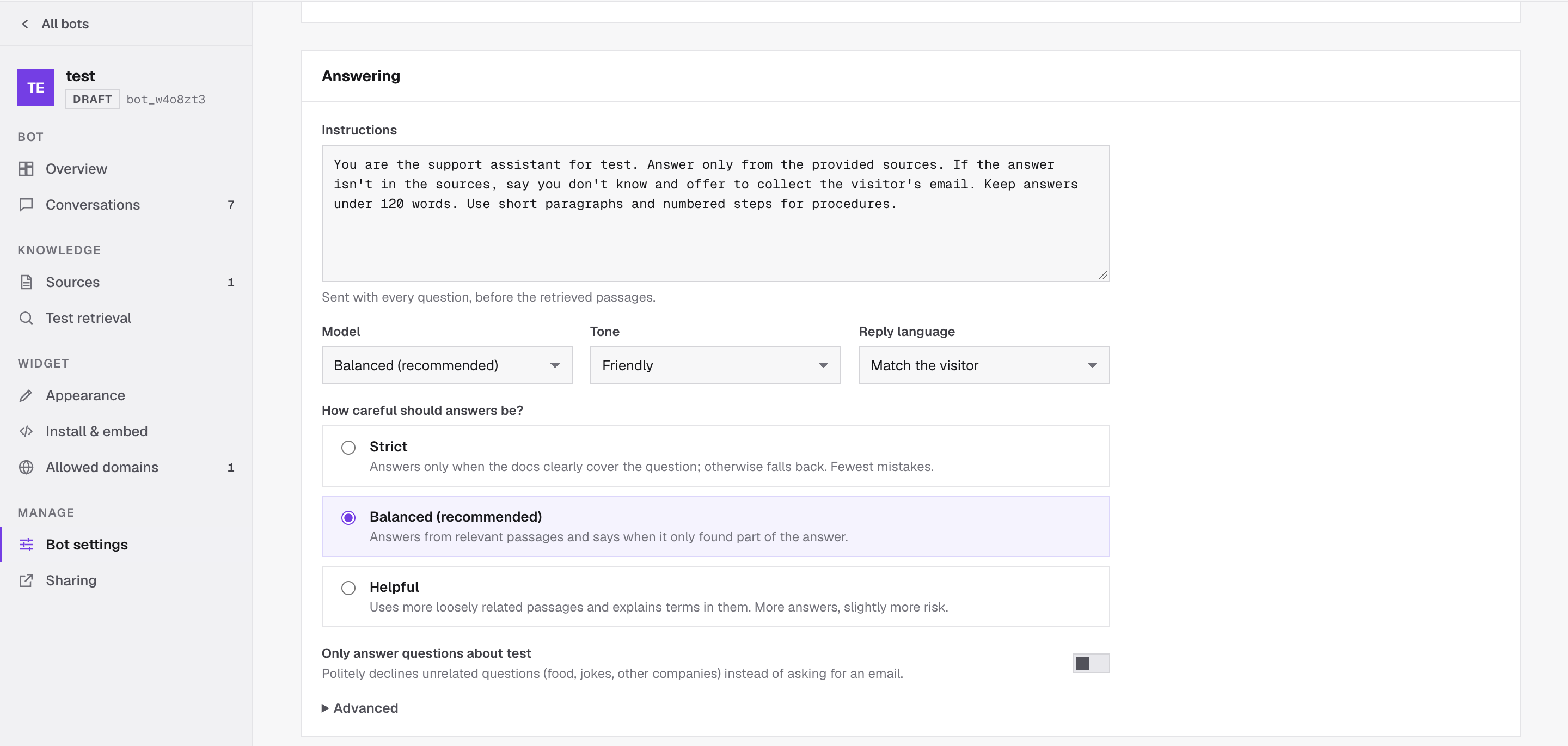
- It says when it doesn't know: if it can't answer, it falls back politely and asks for the visitor's email, so the company gets a lead instead of a wrong answer
- Partial answers are marked as partial
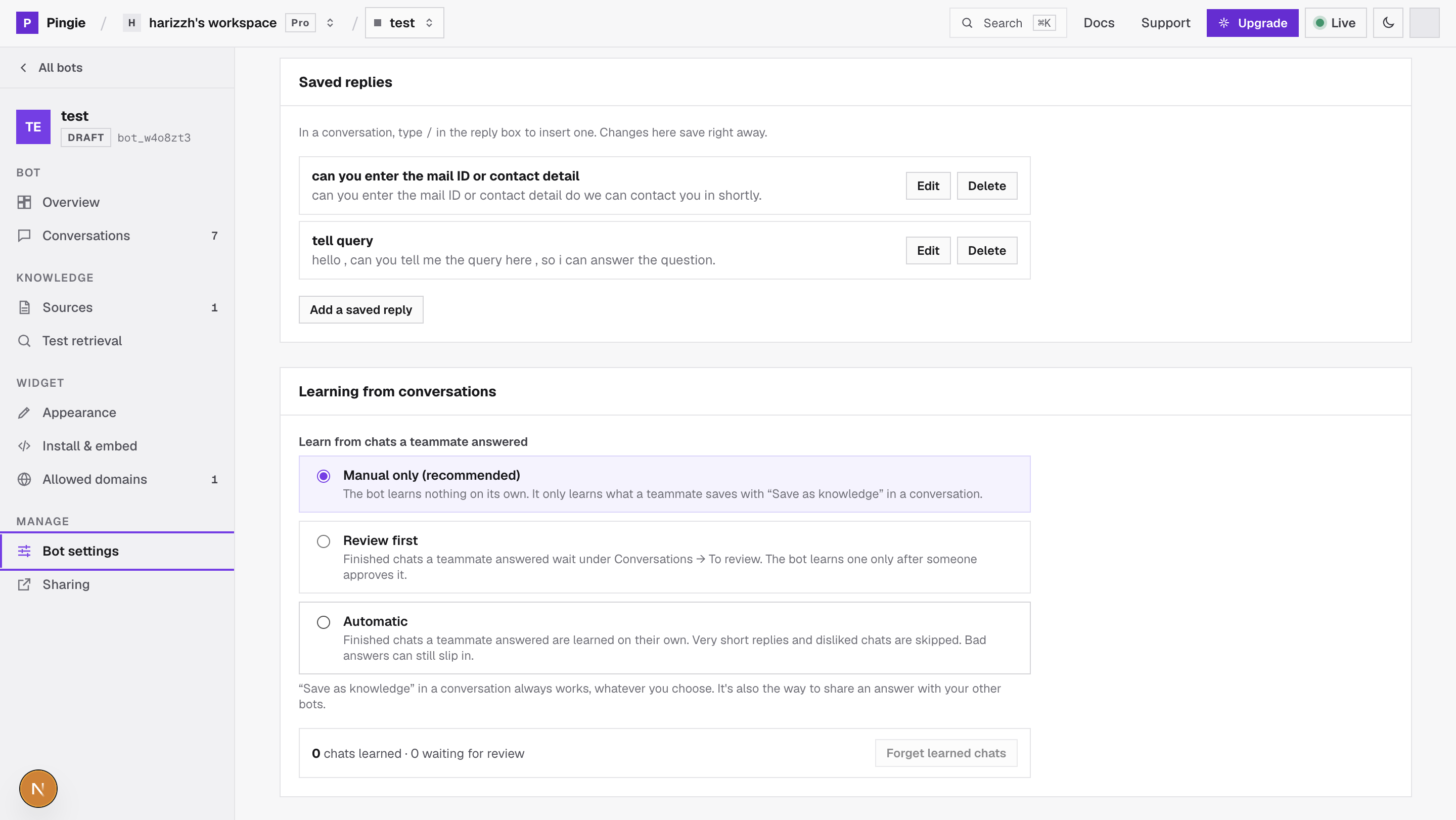
- Dashboard: analytics, conversations (filtered by unanswered, thumbs-down and handoff), captured leads, a source manager, a test retrieval playground, widget appearance, allowed domains, and per-bot instructions, tone and language
Every question goes through one pipeline:
Memora retrieval (HNSW → MMR → rerank) → Pingie reasoning (condense follow-up → similarity check → bot instructions & tone) → NVIDIA Nemotron on Nebius (streamed) → citation & answer verification
Memora does the remembering, Pingie does the reasoning. Each bot is a Memora subject and each document a Memora source. Memora returns ranked evidence without generating an answer, and Pingie does the reasoning itself.
A question only gets an answer if the evidence is strong enough:
$$ \text{answer} \iff \max_i \; \text{score}(q, c_i) \geq \tau_{\text{bot}} $$
Below the threshold, Pingie switches to the fallback and lead capture instead of guessing.
Challenges we ran into
- Streaming and verifying at once. We stream tokens live but still have to read citation markers and
NO_ANSWER/PARTIALsignals as they arrive. That needed a streaming-safe parser that never shows a half-finished marker to the visitor. - Follow-up questions. "What about monthly plans?" means nothing alone. We rewrite each follow-up with the conversation history before retrieval.
Accomplishments that we're proud of
- Pingie proved what Memora can do: answers grounded in evidence, live on real websites
- Unanswered questions become leads instead of wrong answers
- A single script tag takes a company from documents to a support assistant with citations
What we learned
Retrieval and reasoning are better kept apart. With memory in Memora and judgement in Pingie, each side can improve on its own. In customer support, honesty is a feature: a bot that says "I'm not sure, can I get your email?" earns more trust than one that sounds confident and is wrong.
What's next for Pingie
Pingie is ready for business, and we're looking for website owners who want a support assistant that answers from their own knowledge and cites its sources.
Thanks to NVIDIA and Nebius: Pingie runs NVIDIA Nemotron models on Nebius Token Factory inference.
Built With
- fastapi
- google-oauth
- memora
- nebius
- nebius-token-factory
- neon
- next.js
- nvidia-nemotron
- postgresql
- python
- rag
- react
- server-sent-events
- sqlalchemy
- typescript
- vite

Log in or sign up for Devpost to join the conversation.