-
-
https://www.pindi-ki-awaaz.app/
-
https://www.pindi-ki-awaaz.app/
-
https://www.pindi-ki-awaaz.app/
-
https://www.pindi-ki-awaaz.app/
-
https://www.pindi-ki-awaaz.app/
-
https://www.pindi-ki-awaaz.app/
-
https://www.pindi-ki-awaaz.app/
-
https://www.pindi-ki-awaaz.app/
Pindi ki Awaaz – Project Story
Inspiration
One afternoon, I noticed an elderly citizen standing outside a government office in Rawalpindi. He looked tired and frustrated. After waiting for hours, he discovered that he had come to the wrong department. The information he needed was available elsewhere, which meant another trip, another queue, more transportation costs, and more time lost.
This is not an isolated case.
Every day, thousands of citizens—especially senior citizens—struggle to navigate public services. Many travel long distances, wait in crowded offices, and spend valuable time simply trying to find the right department. For elderly individuals, this challenge is even greater. Health issues, mobility limitations, and lack of familiarity with digital systems often make the process exhausting.
The problem is not always the absence of government services.
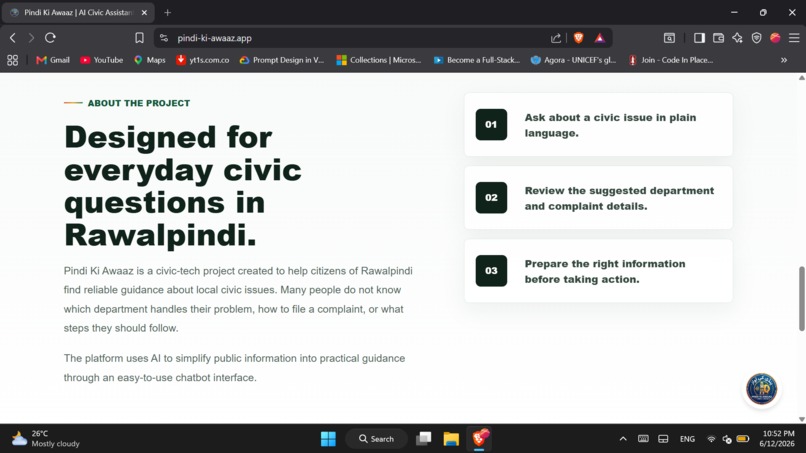
The problem is that citizens often do not know where to go, who to contact, or what procedure to follow.
That realization became the foundation of Pindi ki Awaaz.
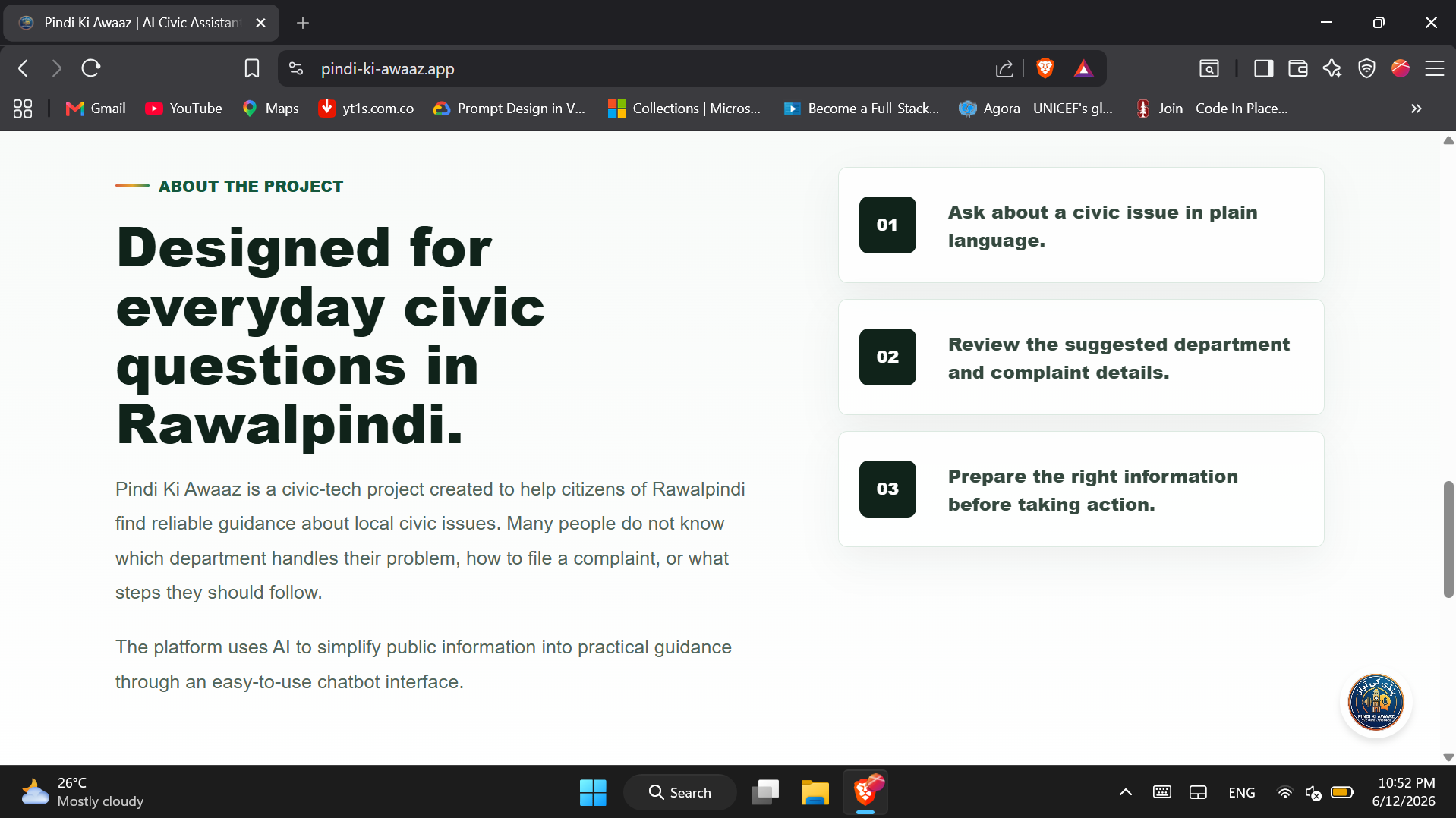
I wanted to build a solution that could act as a digital guide for citizens—one that could provide clear, instant, and accessible civic guidance without requiring people to visit multiple offices or spend hours searching for answers.
What We Built
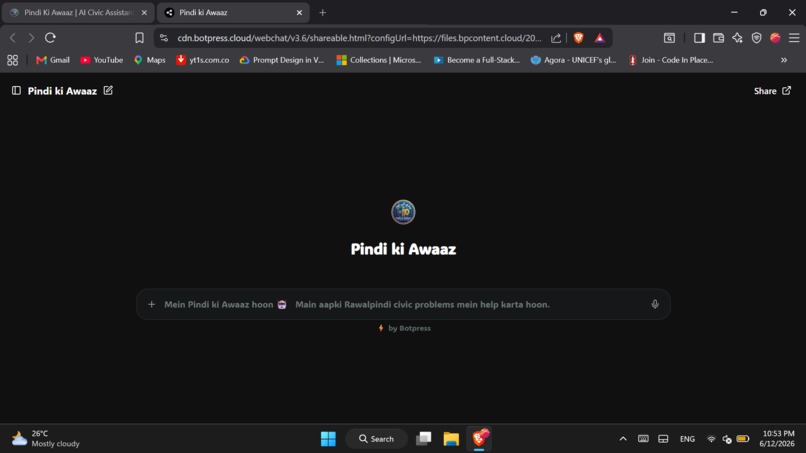
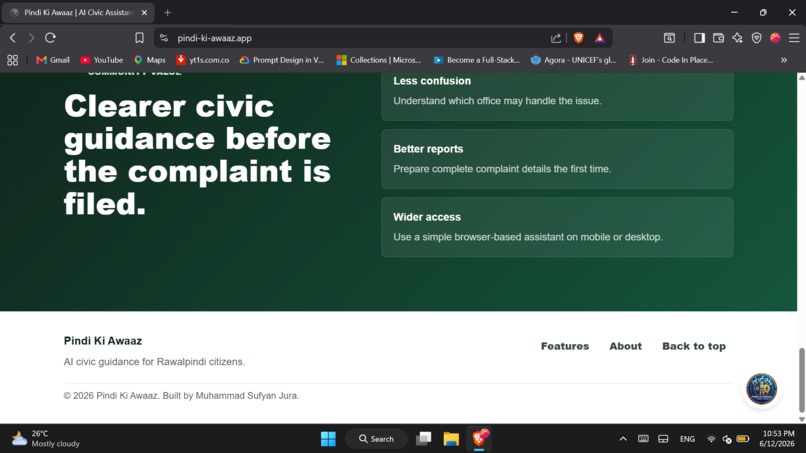
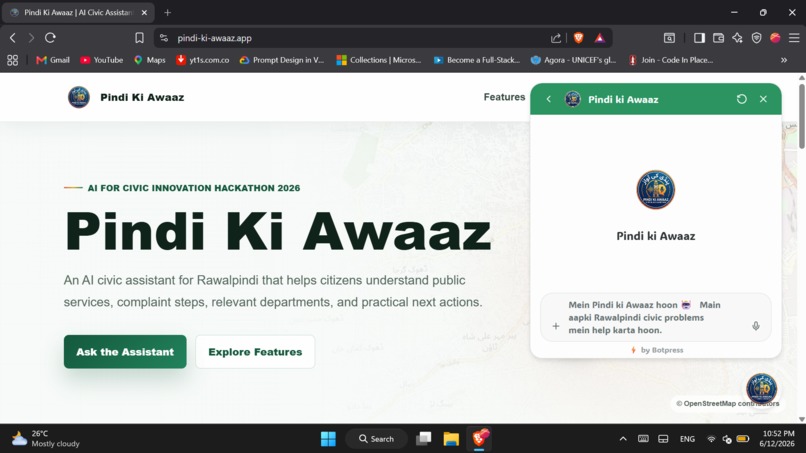
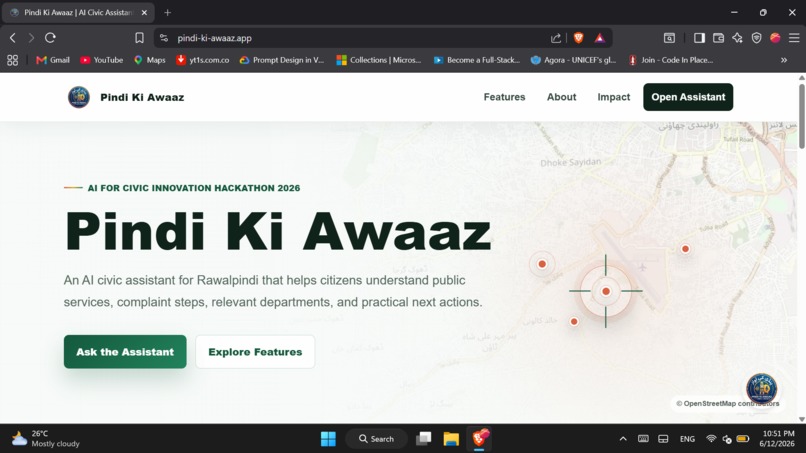
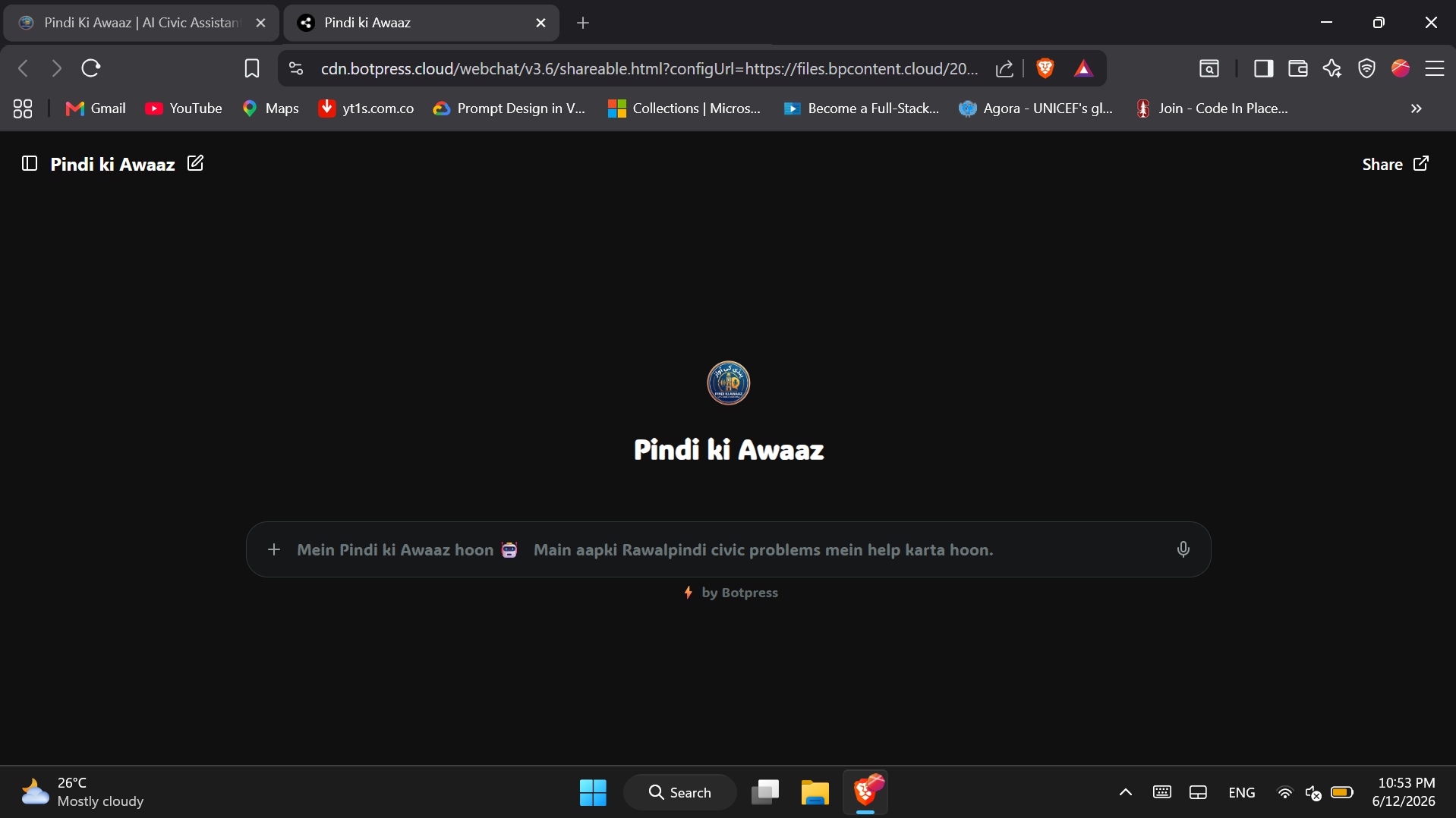
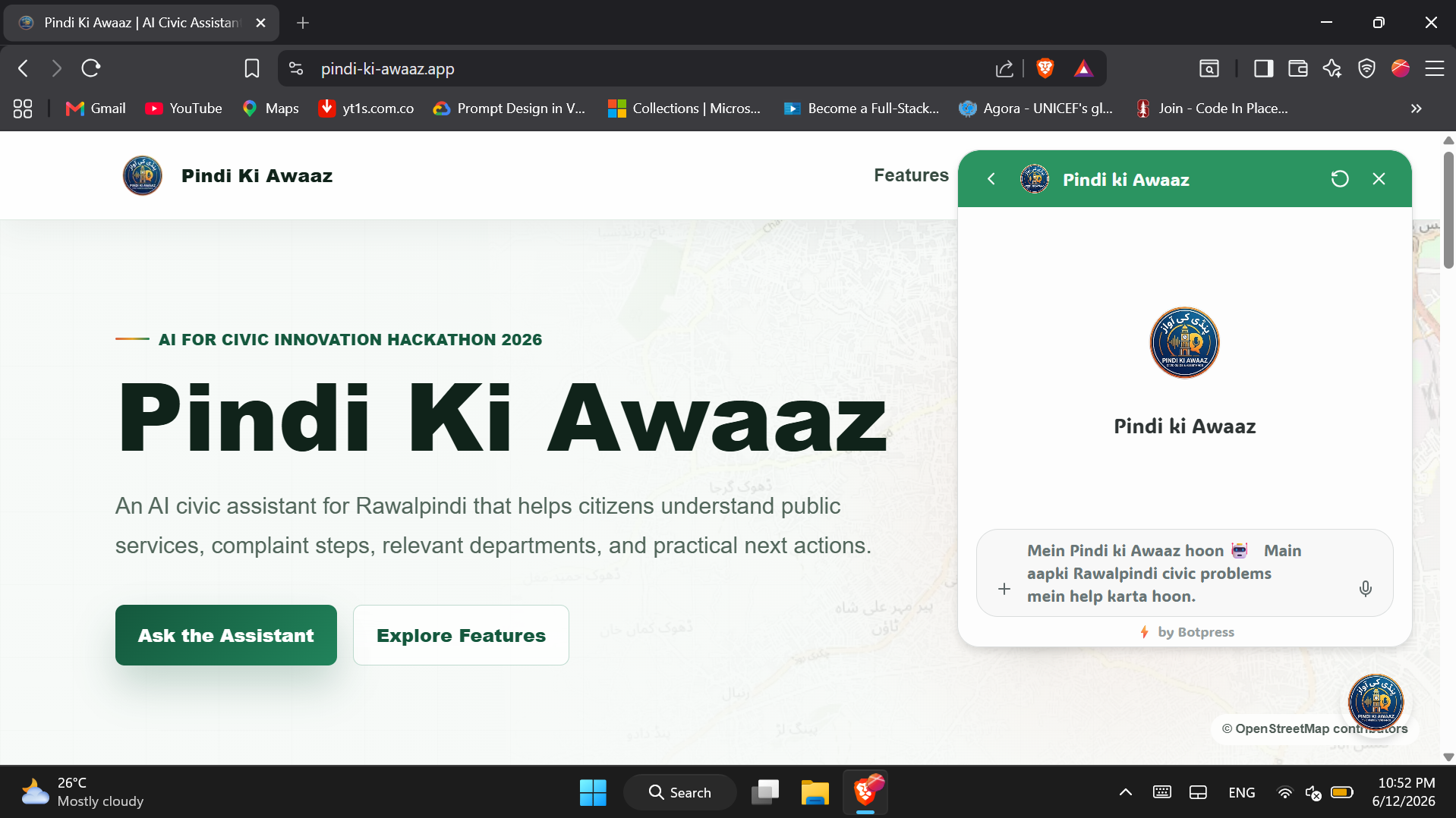
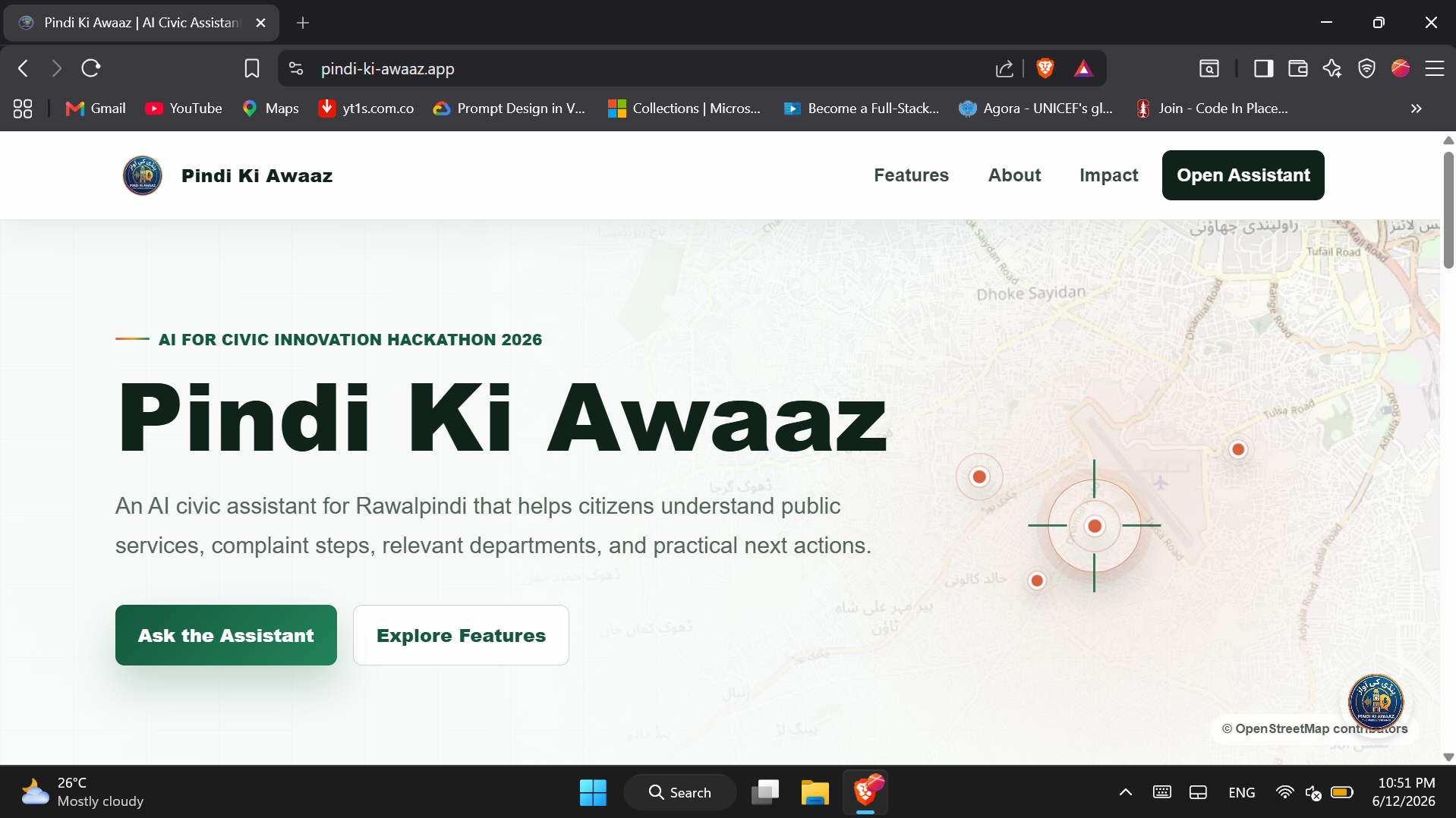
Pindi ki Awaaz is an AI-powered civic assistant designed specifically for the citizens of Rawalpindi.
Citizens can ask questions in simple natural language and receive clear guidance regarding civic issues and public services.
Examples include:
- How do I report a broken streetlight?
- Which department handles garbage complaints?
- Where should I submit a water supply complaint?
- What information is required before filing a complaint?
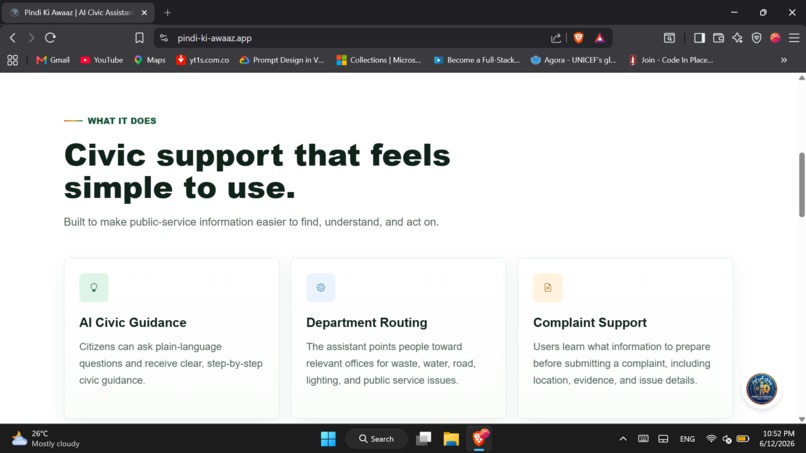
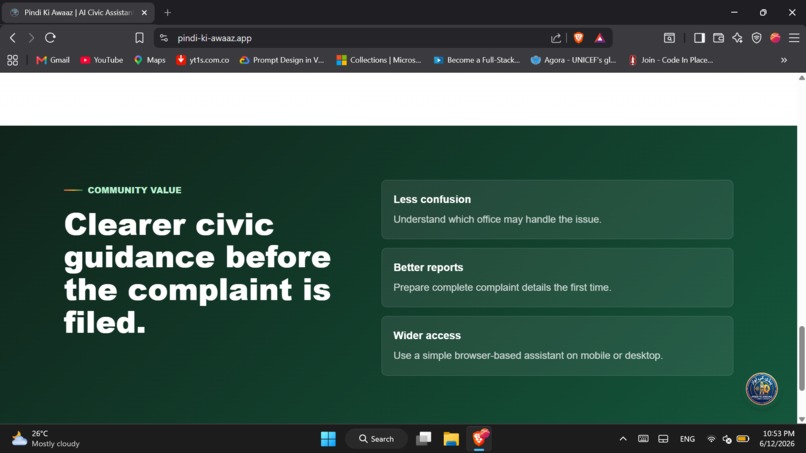
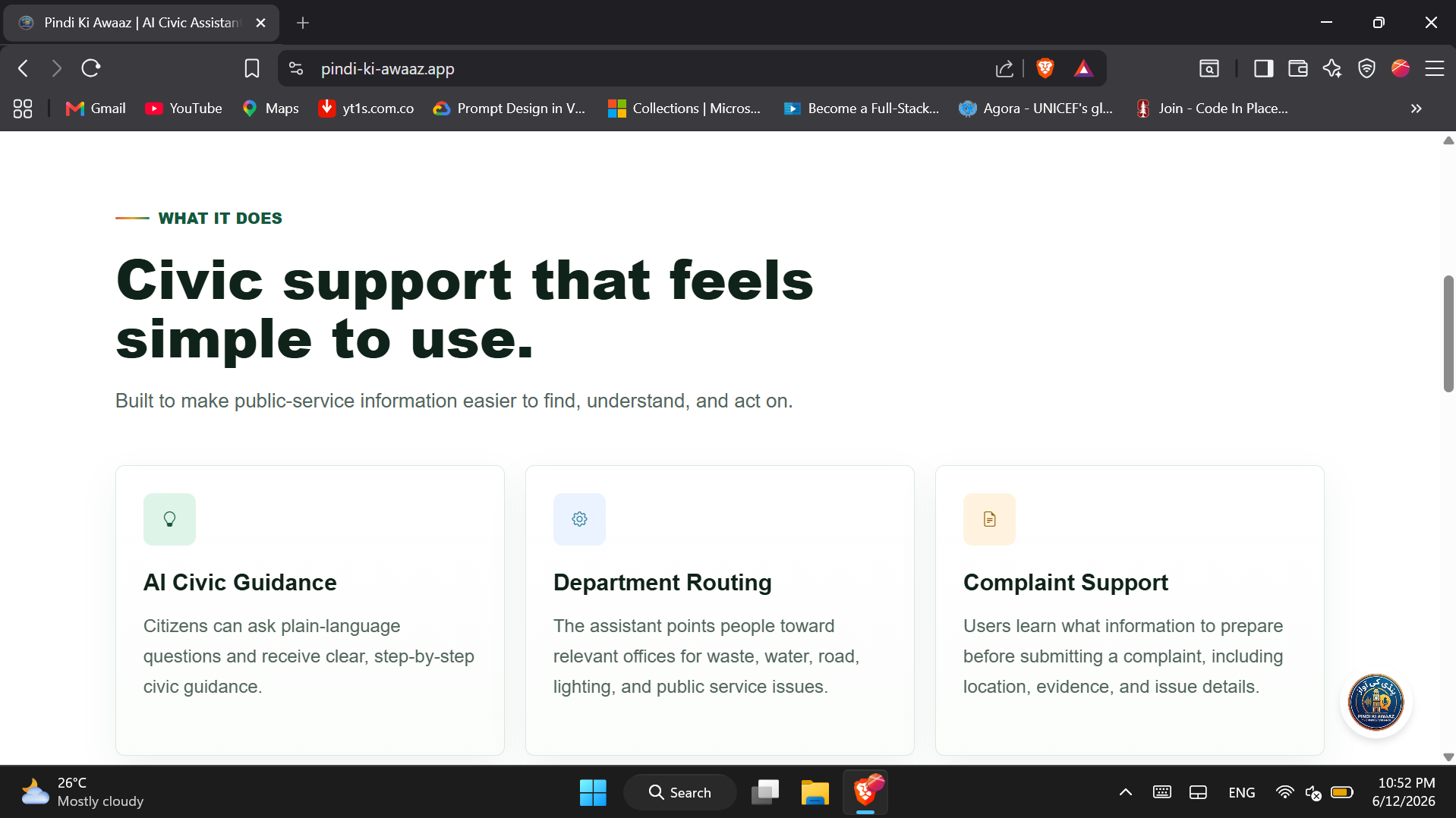
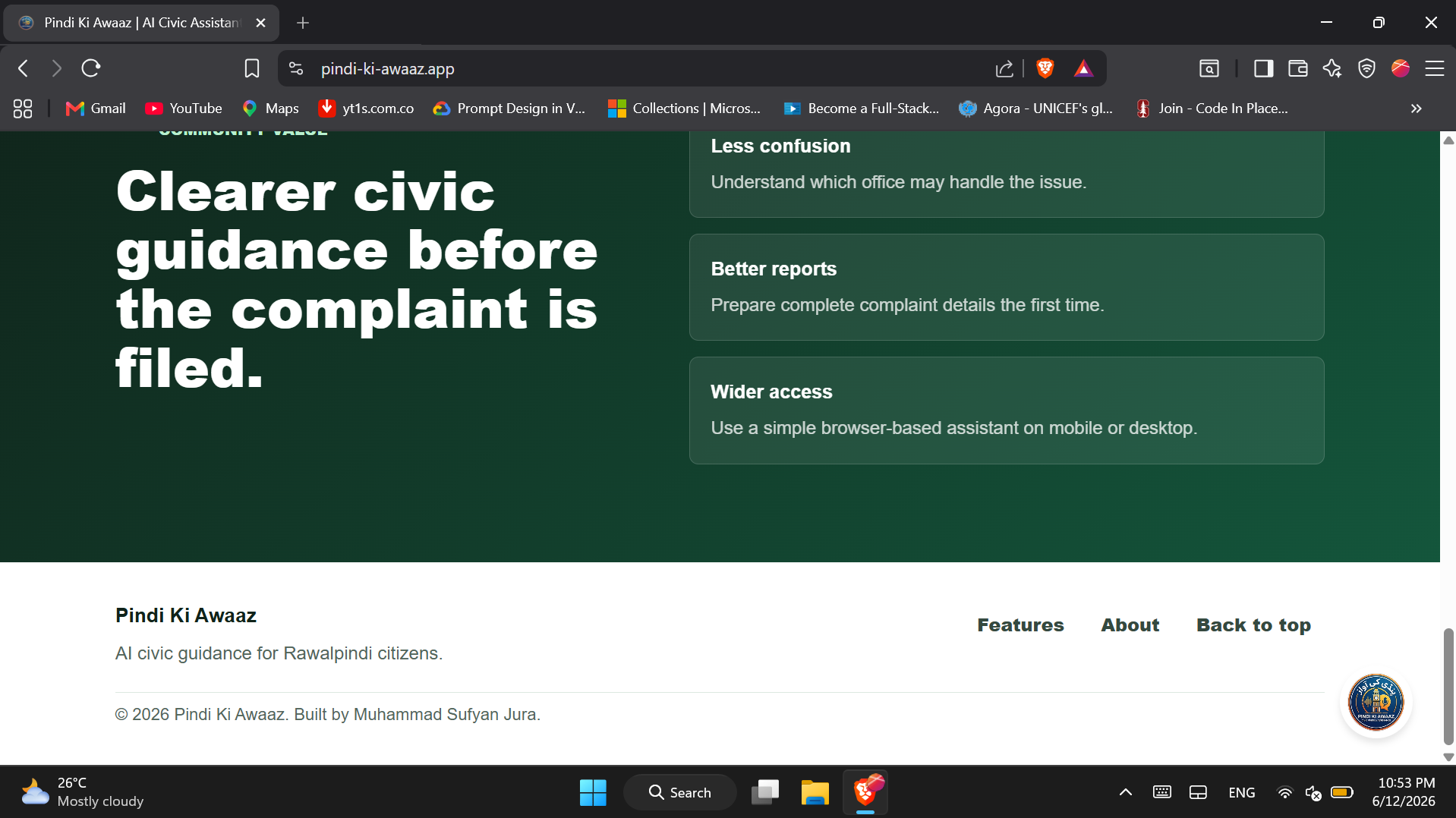
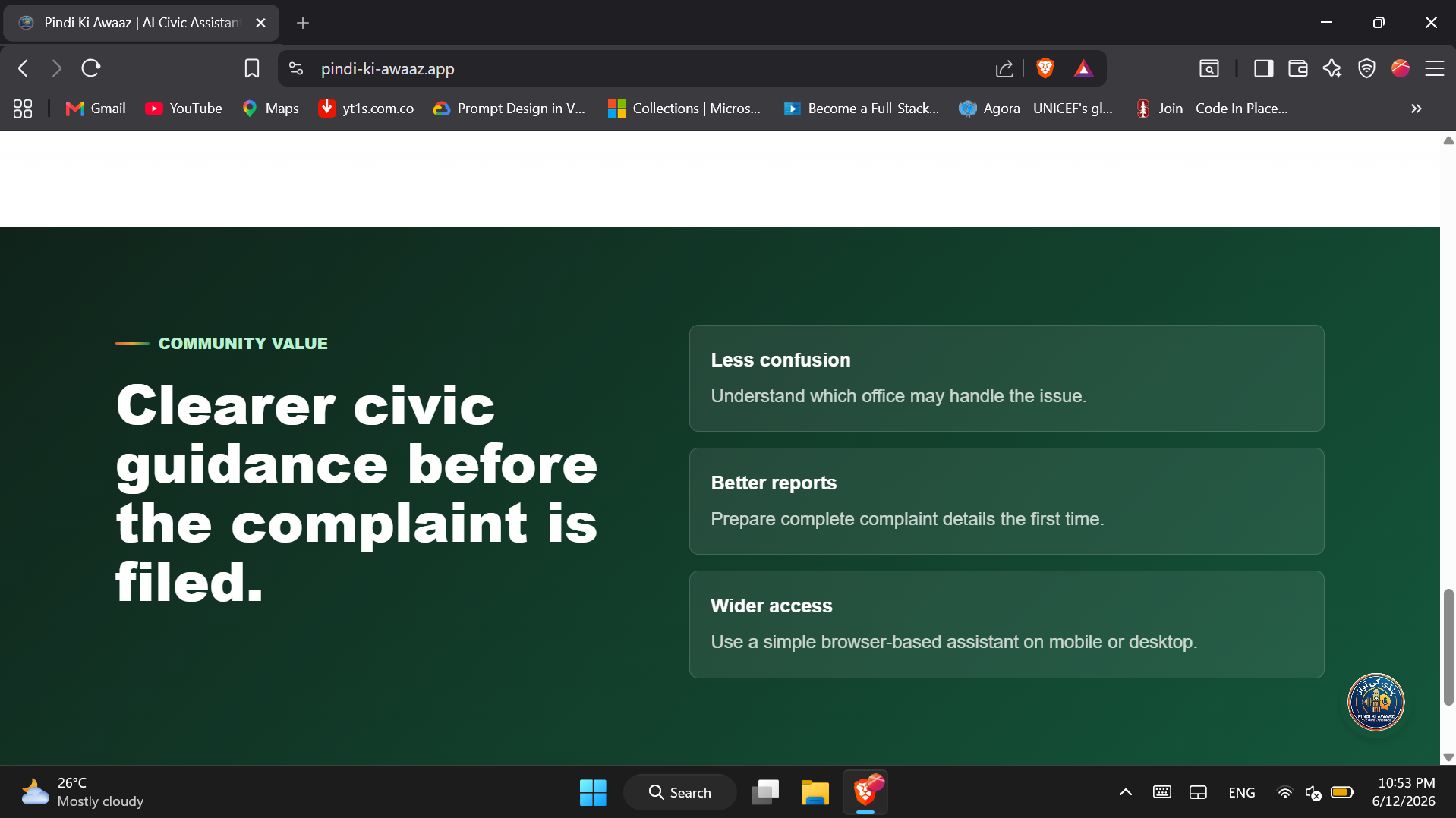
Instead of forcing citizens to navigate complex government procedures on their own, the platform provides department identification, complaint guidance, and step-by-step instructions in an easy-to-understand format.
The goal is simple: help citizens take action with confidence.
How We Built It
The project was developed using modern web technologies and conversational AI tools.
- Next.js was used to build a fast, responsive, and user-friendly web platform.
- Botpress AI powers the conversational assistant.
- A dedicated civic knowledge base was created to keep responses focused on civic issues and public services.
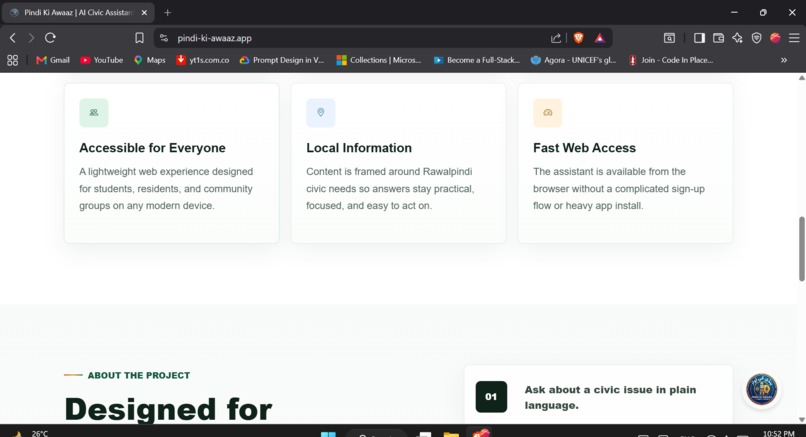
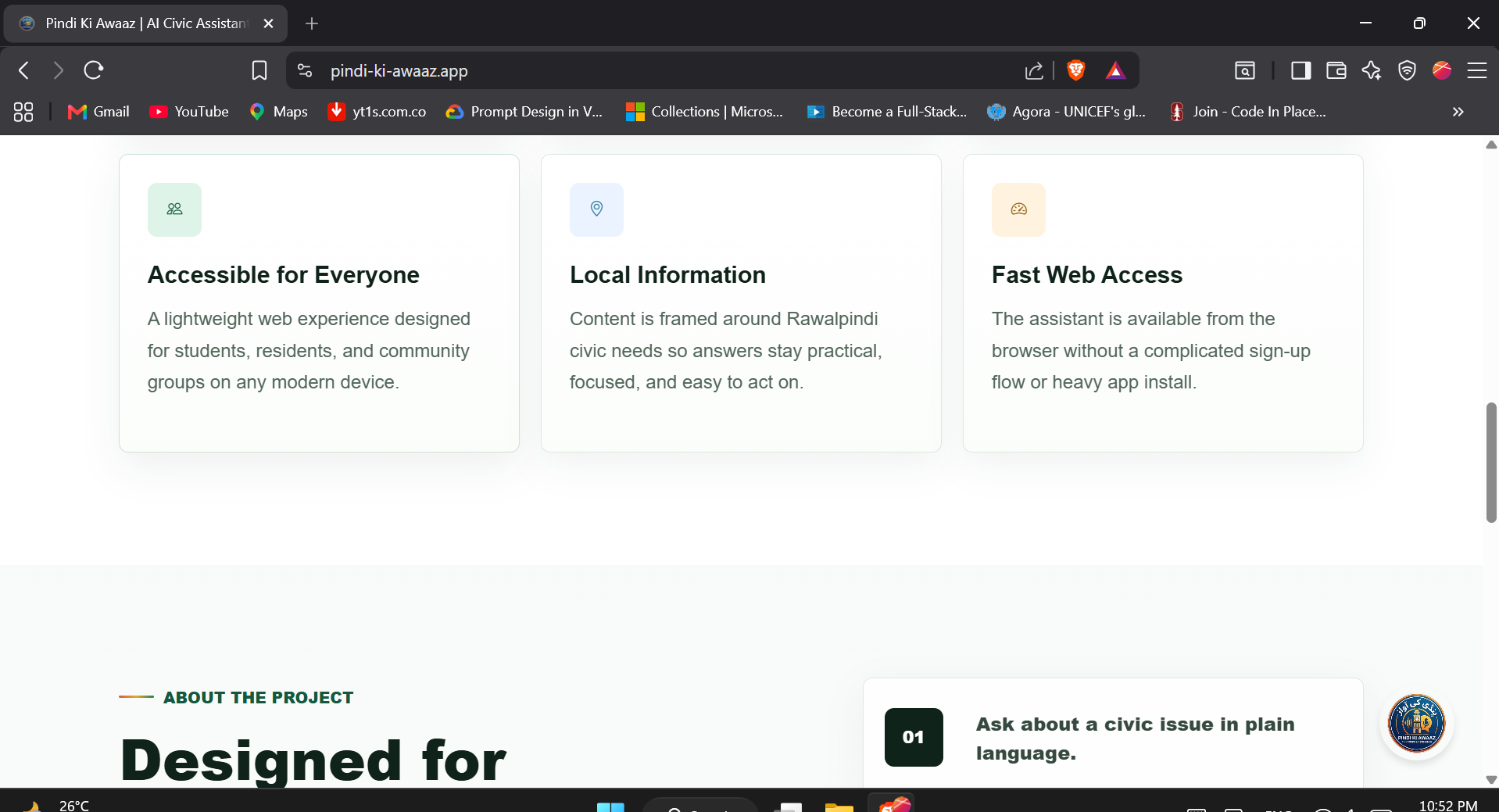
- The platform was designed with accessibility and simplicity in mind so that people of all backgrounds can use it.
By combining AI with structured civic information, the system transforms complex procedures into simple conversations.
Challenges We Faced
As a student developer, resource limitations were also a significant challenge. The platform relies on Botpress, which provides a limited amount of free credits (approximately $5 worth of usage). Once those credits are exhausted, the chatbot stops functioning until additional credits are purchased. Since purchasing and recharging credits regularly can be expensive, especially for a student, managing these limitations while continuing development and testing was a real challenge throughout the project.
What We Learned
This project taught us that technology becomes truly valuable when it solves real human problems.
We learned that many civic challenges are not caused by the absence of services, but by the lack of accessible information. We also gained valuable experience in conversational AI, civic technology, user-centered design, and full-stack web development.
Most importantly, we learned that a few minutes of clear guidance can save citizens hours of frustration.
Future Vision
Today, Pindi ki Awaaz focuses on Rawalpindi.
Tomorrow, the same model can be expanded to Islamabad, Lahore, Karachi, Peshawar, Quetta, and other cities across Pakistan by integrating city-specific civic knowledge bases.
Our long-term vision is:
A Local Civic Assistant for Every Pakistani City.
By making civic information accessible, understandable, and actionable, we hope to strengthen citizen engagement and make public services easier for everyone to navigate.
Built With
- bootpress
- css3
- javascript
- next.js
- vercel


Log in or sign up for Devpost to join the conversation.