-
-
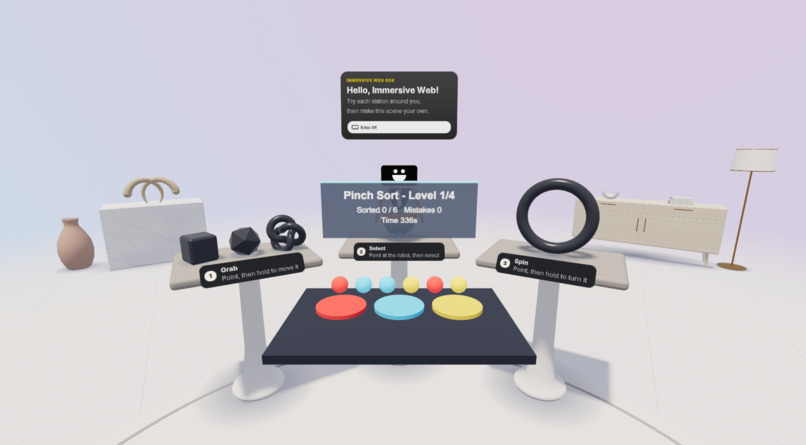
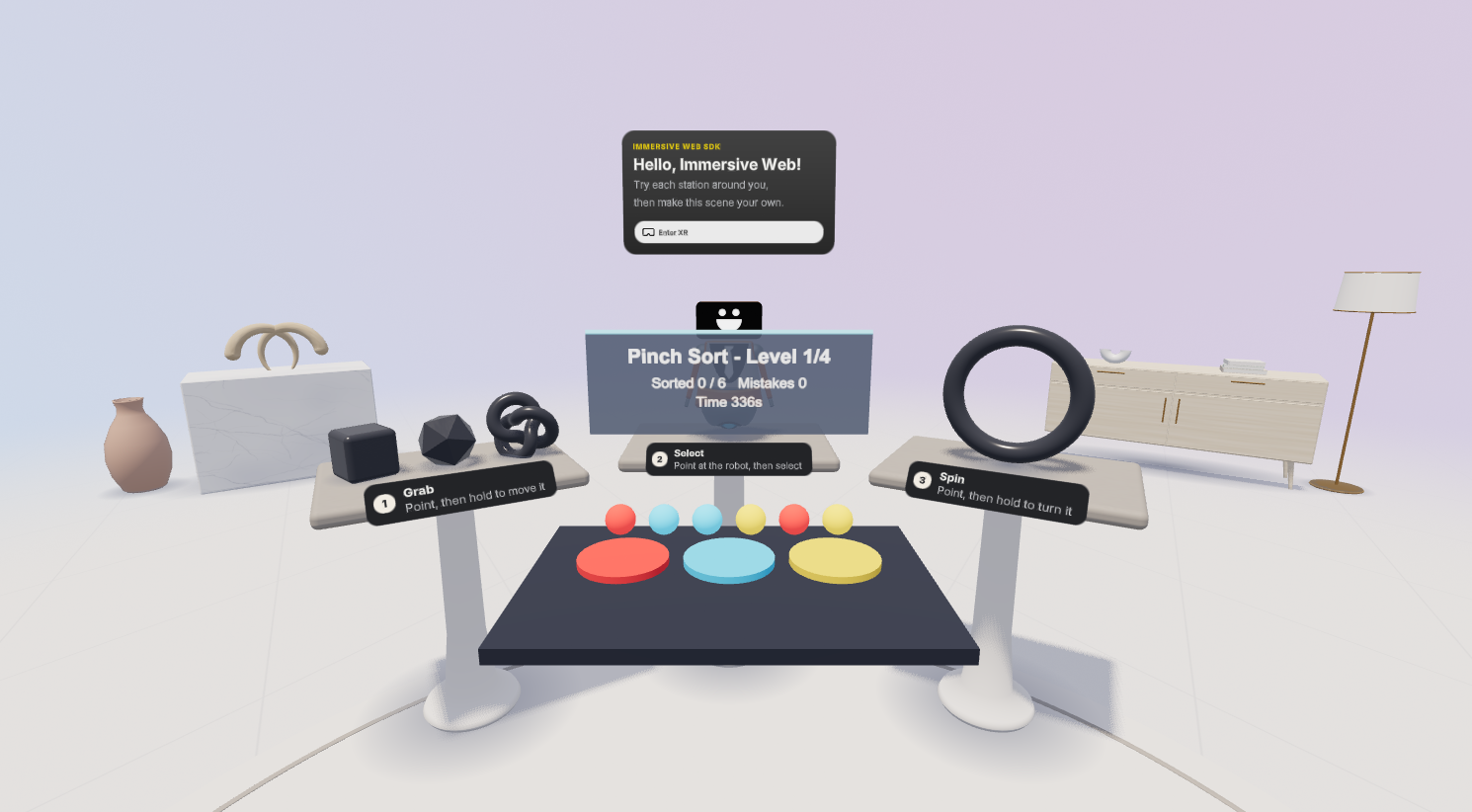
Screenshot showing the initial game environment before the sorting activity begins.
-
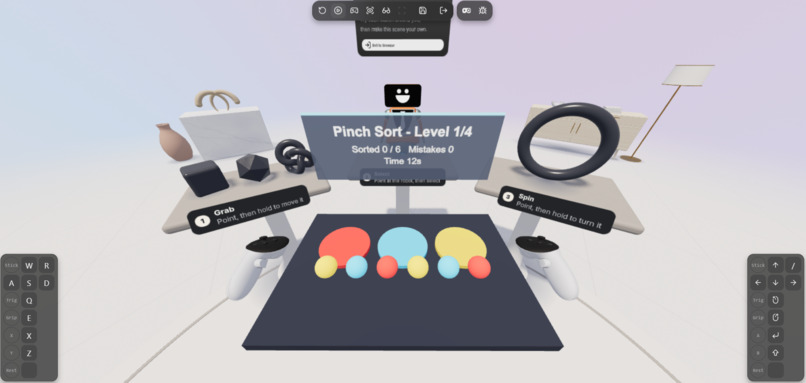
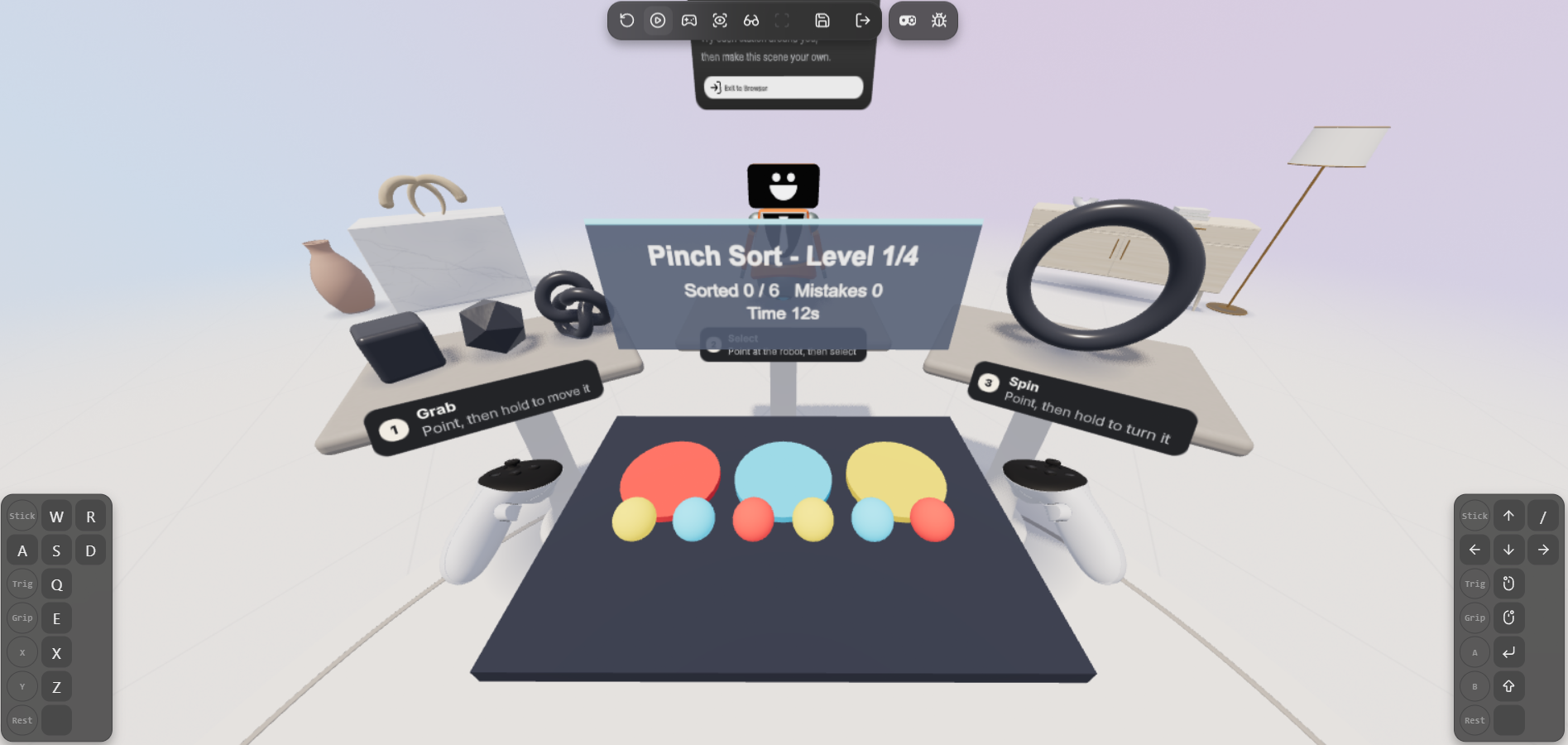
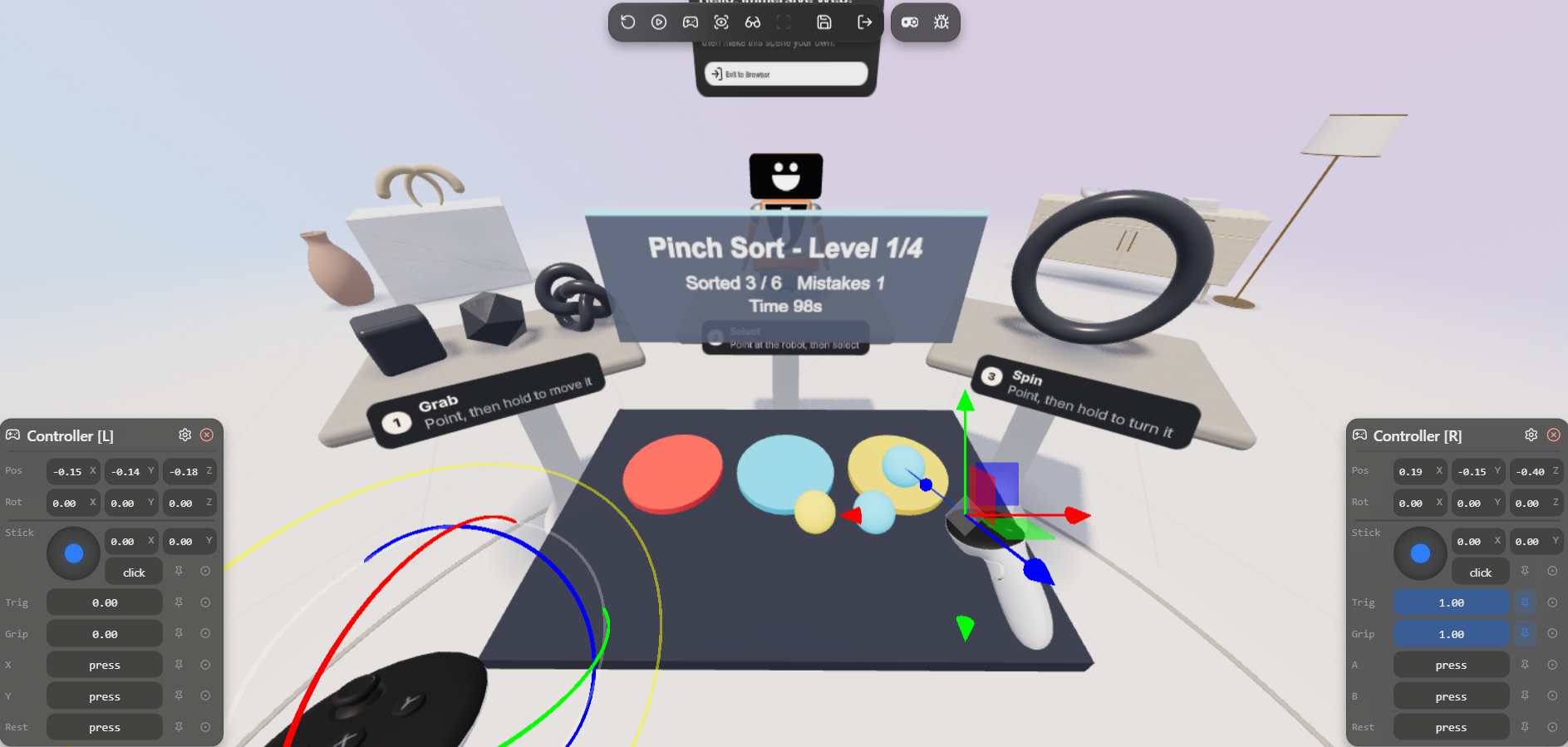
Screenshot demonstrating the game environment and interaction from the XR headset perspective.
-
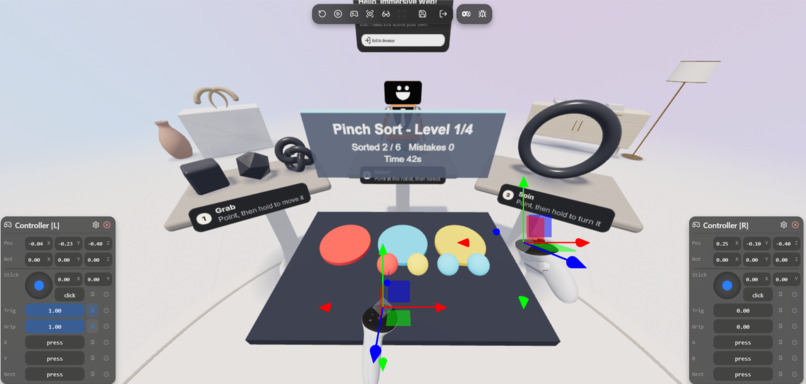
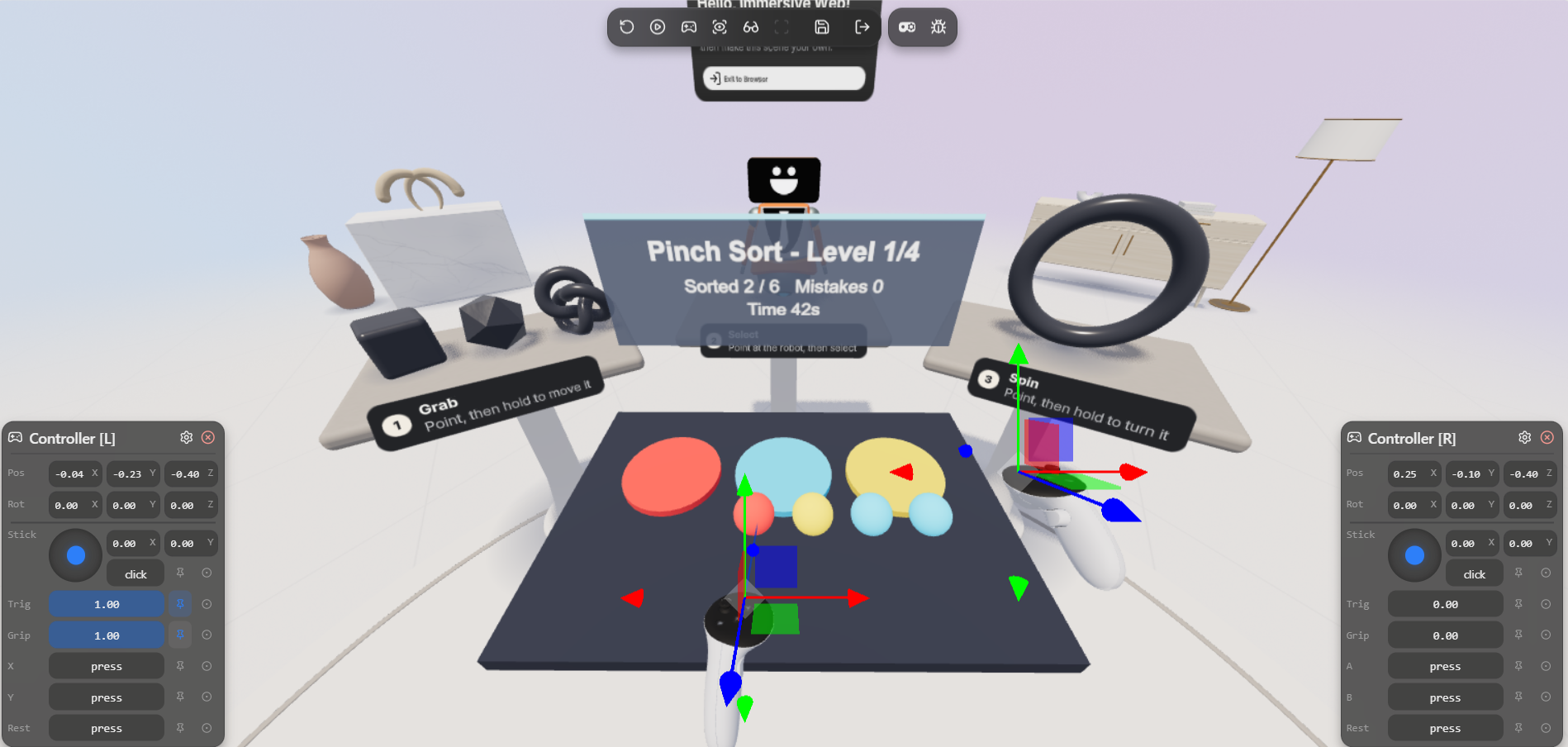
Screenshot showing two orbs correctly sorted into their respective positions.
-
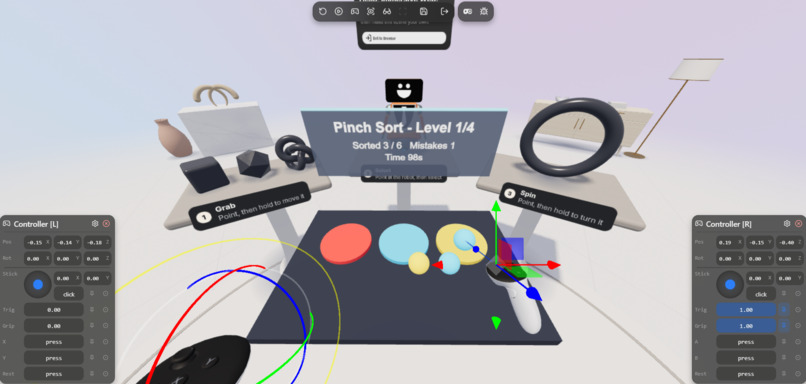
Screenshot demonstrating an incorrect orb placement or sorting mistake.
-
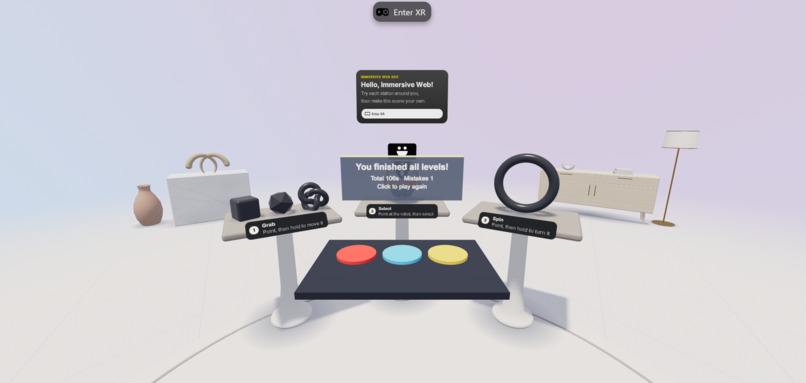
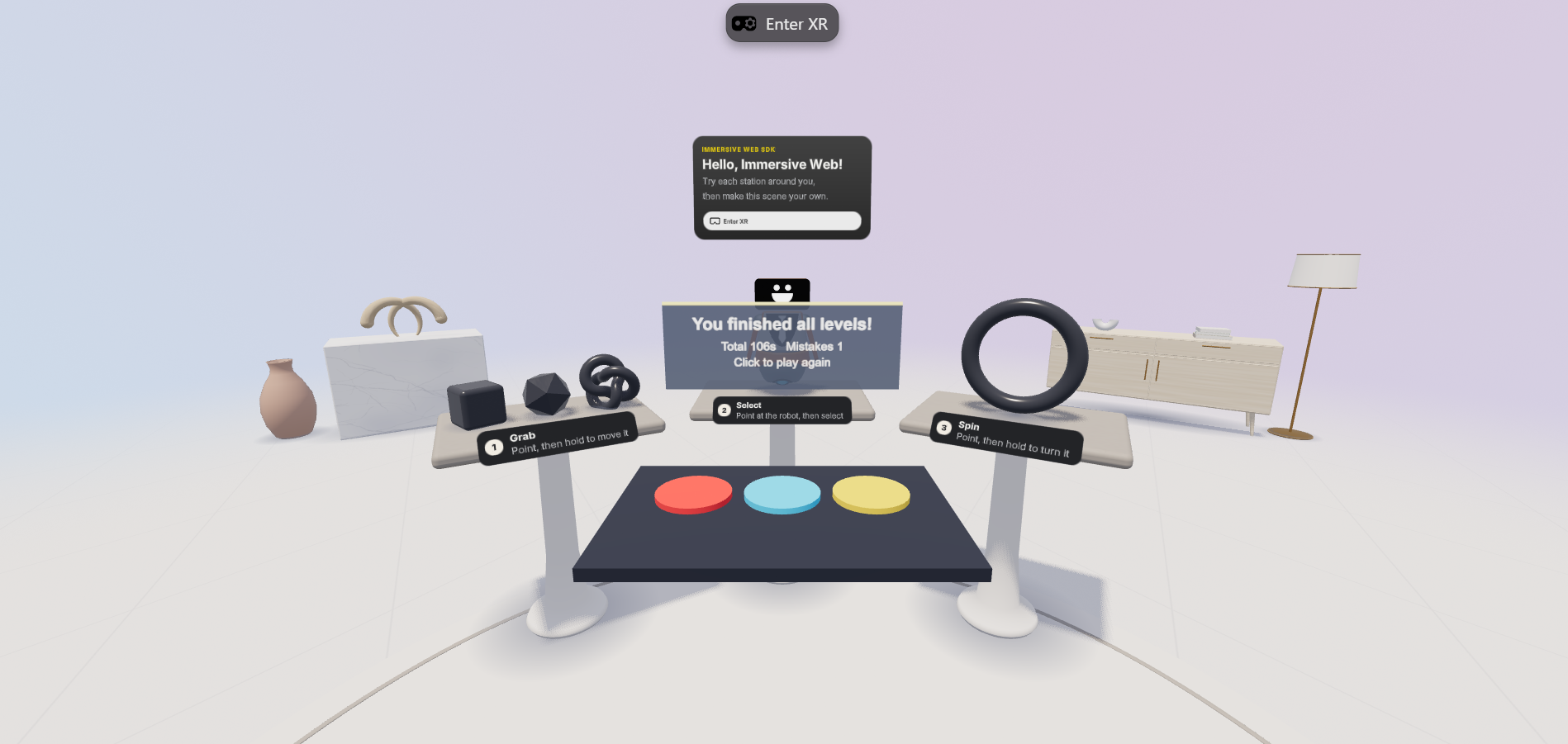
Screenshot showing the successful completion of all game levels.
Inspiration
I wanted a short, calm VR experience that passes the "one bus stop test": no controllers, no standing, nothing to learn except pinch and drop. Sorting things by color is something anyone understands in seconds, which makes it a good fit for a hands-first, seated experience.
What it does
Pinch Sort is a seated, hands-first VR sorting game. Colored orbs float above a small table. You pinch an orb, carry it to the pad of the same color, and let go. A correct match removes the orb. A wrong match adds a mistake. A live panel shows the level, the sorted count, mistakes and time. There are four levels (6, 9, 12 and 15 orbs) and a final screen with your total time and mistakes.
How we built it
Built from scratch during the competition window with the Immersive Web SDK (WebXR), Three.js, TypeScript and Vite. Orbs use the SDK's ray and distance-grab interaction, which maps to hand pinch on Quest. I wrote the game logic myself: orb layout, drop detection, scoring, level progression and the end screen. A mouse-drag mode lets anyone try it in a desktop browser. The game is published on GitHub Pages so judges can open it from a single link.
Challenges we ran into
Testing hand interaction without a headset was the hardest part. I tested in the browser and the Meta Quest 3 emulator, and the emulator's controls made grabbing hard to verify. I had to debug drop detection step by step, which led me to count a drop when the player lets go, so the game is reliable in both the headset and the browser. I have not yet been able to test on a physical headset.
Accomplishments that we're proud of
A complete, playable game with four levels, scoring and an ending, published at a public link, built from scratch in the competition window.
What we learned
How WebXR and the Immersive Web SDK handle interaction, how to debug input in an emulator, and how to design a short experience that explains itself without instructions.
What's next for Pinch Sort
Sound and visual feedback when an orb lands, new shapes and rules in later levels, a passthrough mode where orbs sort onto your real table, accessibility options (larger targets, voice control), and testing and release on Meta Quest.
Built With
- github
- immersive-web-sdk
- metaquest
- node.js
- three.js
- typescript
- vite
- webxr
