Inspiration
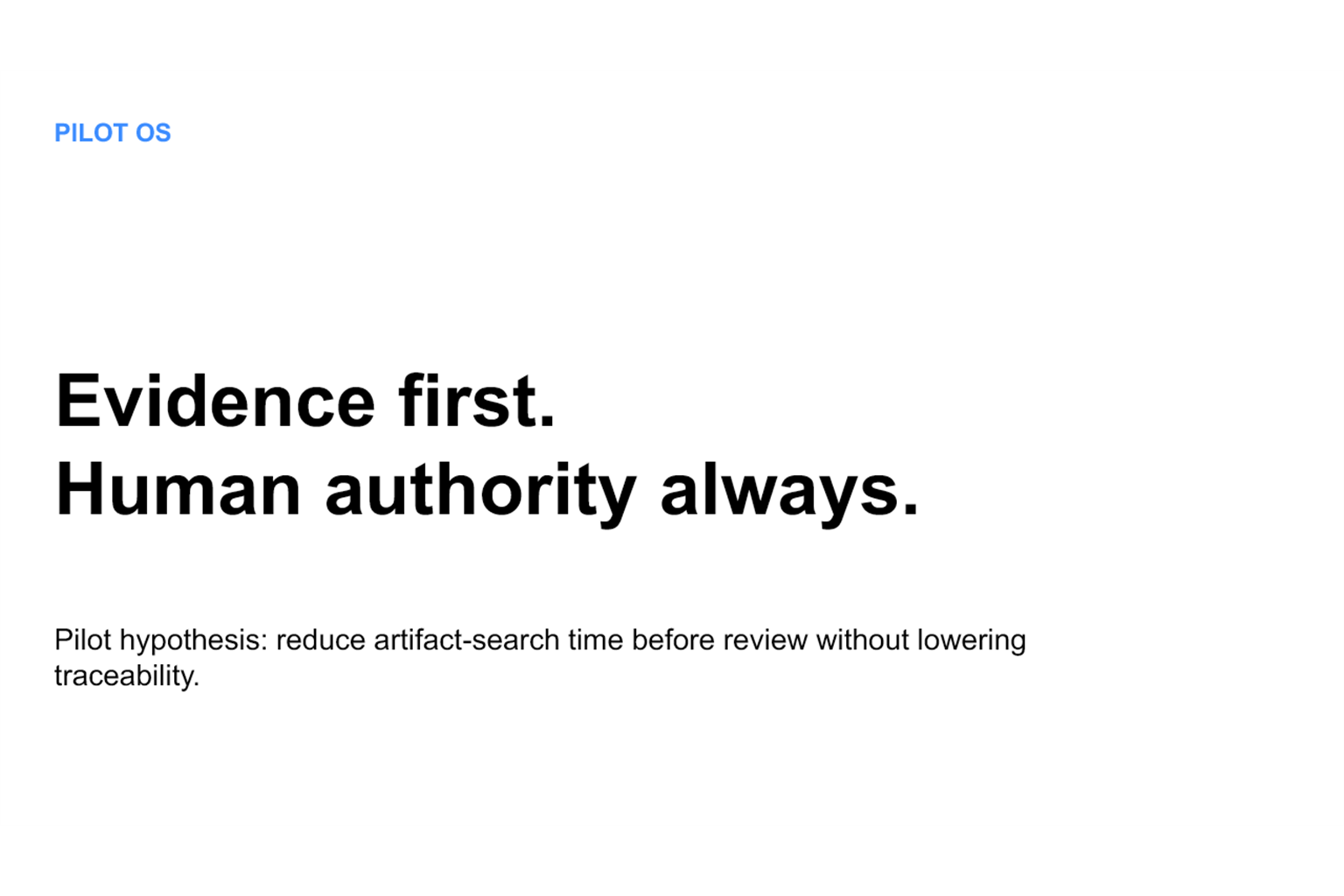
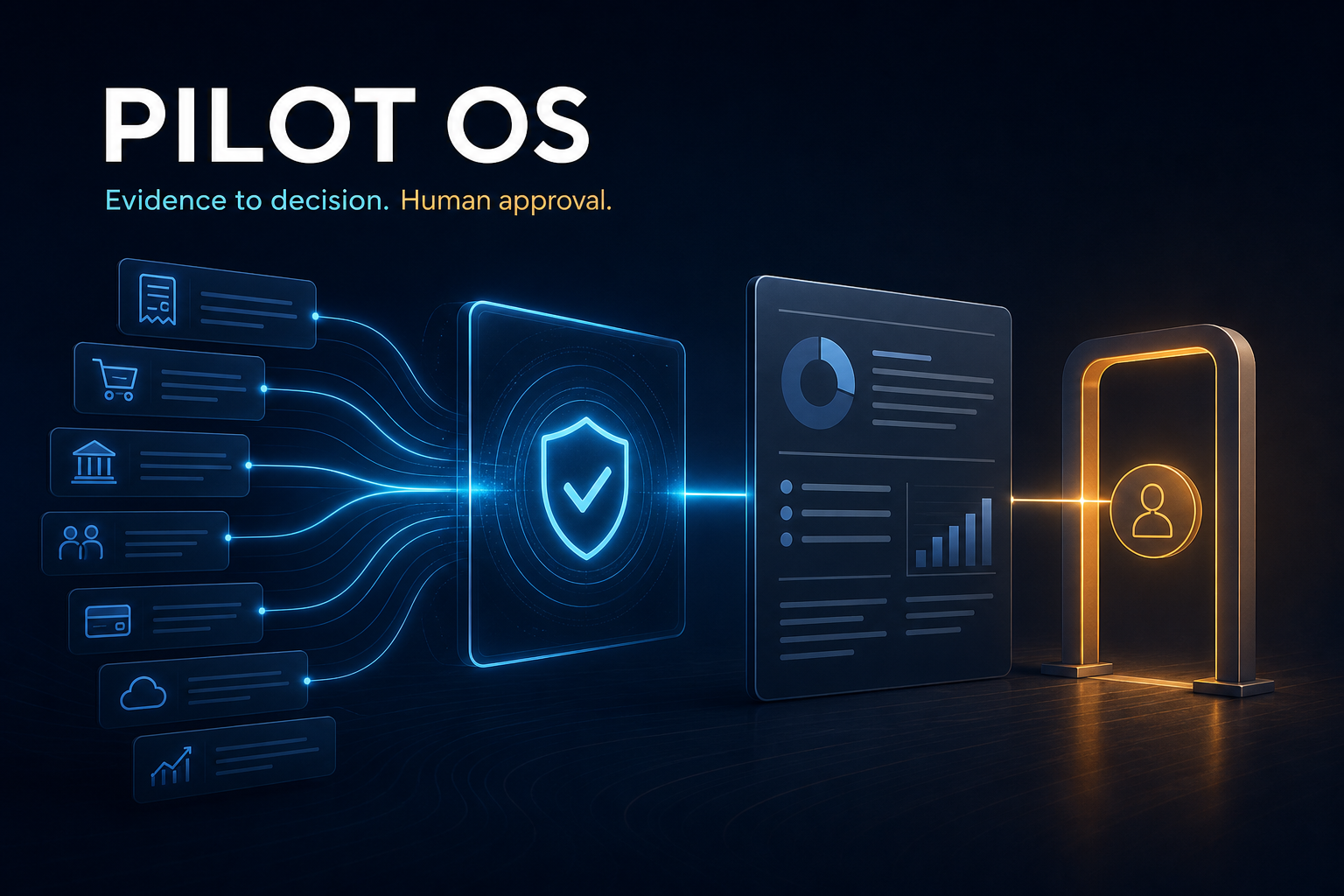
Teams rarely lack information. They lack a trustworthy path from scattered sources to a decision. AI summaries can hide evidence, contradictions, unknowns, or authority. PILOT OS makes that chain visible.
What it does
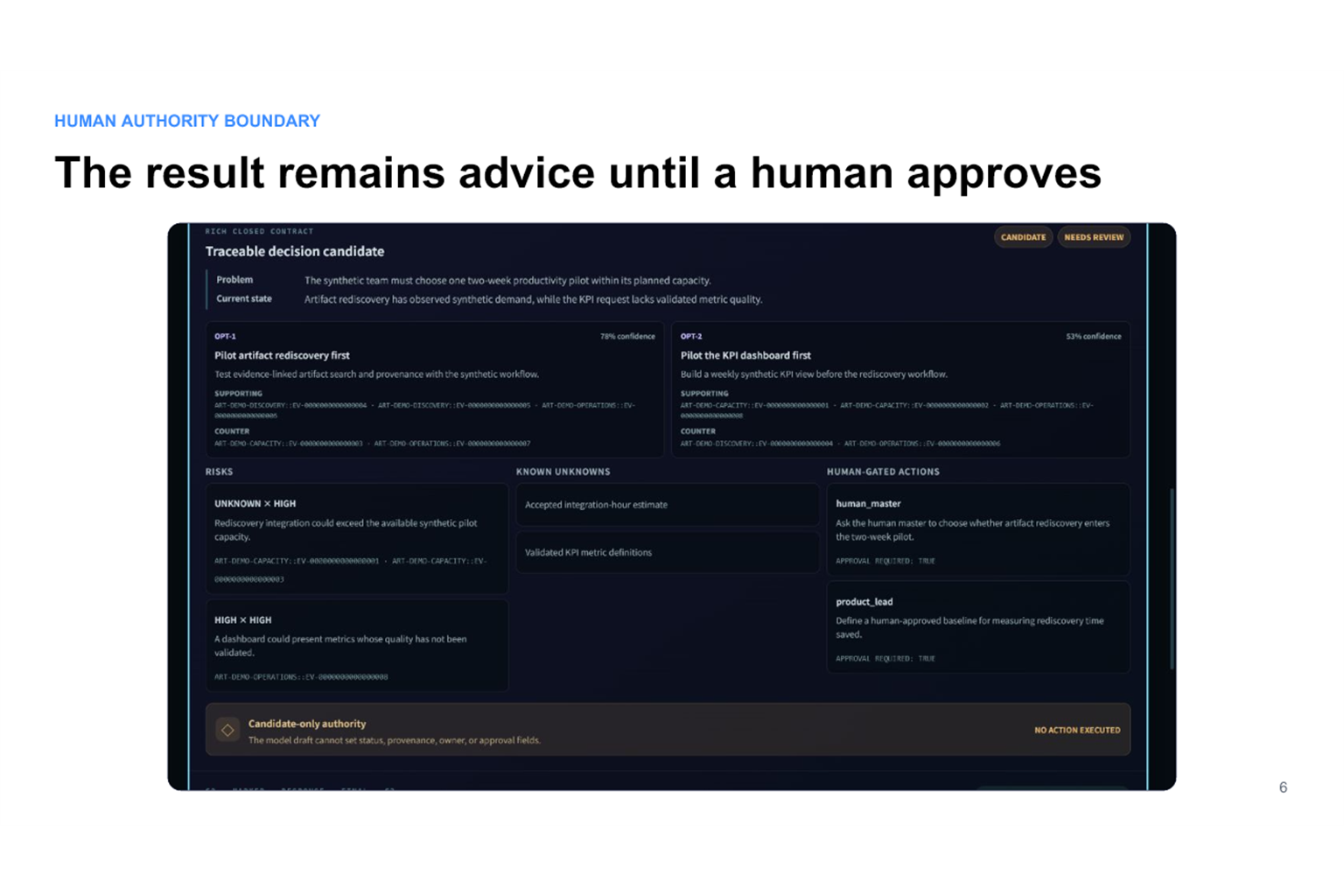
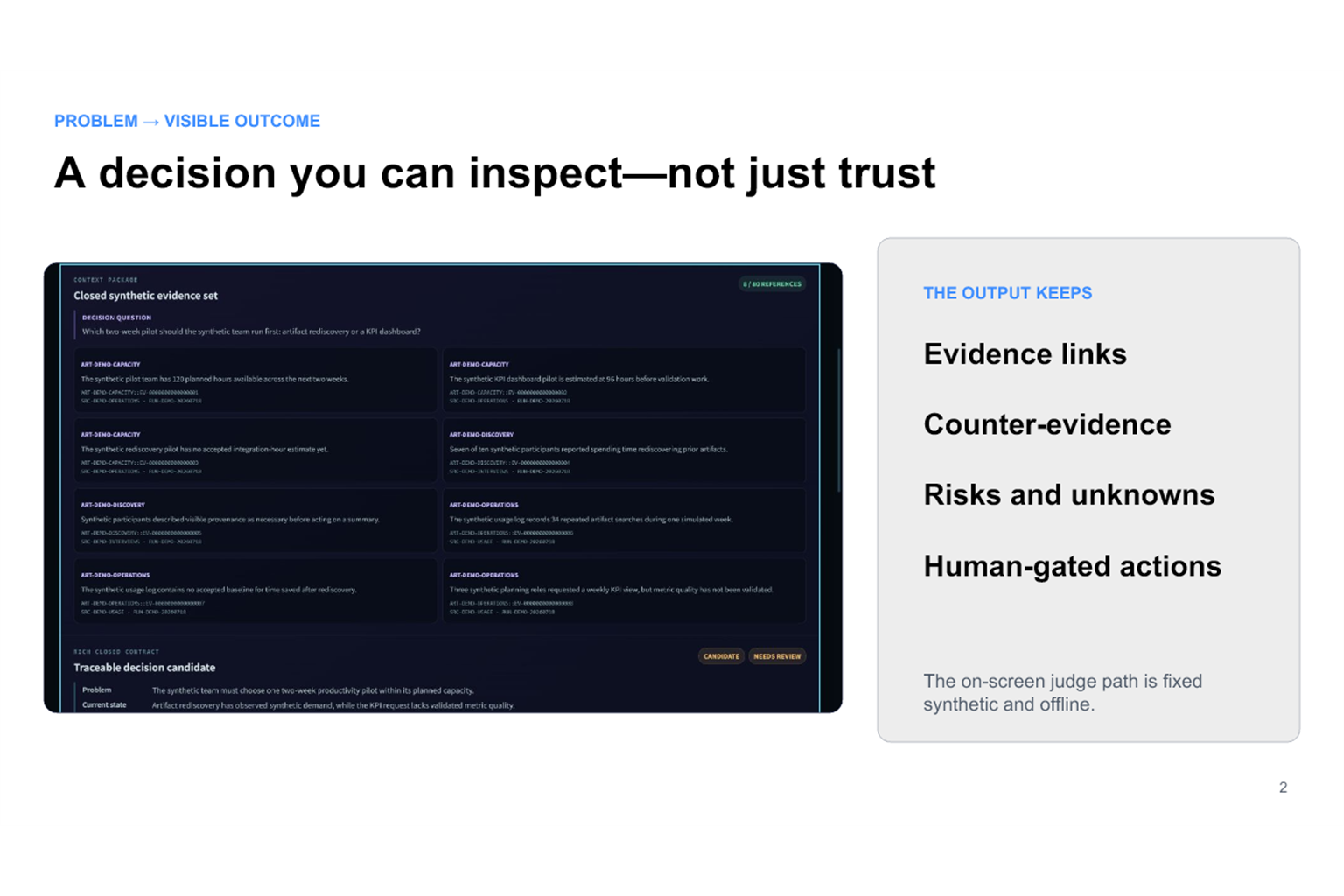
PILOT OS turns a bounded evidence package into a citation-linked Decision Brief candidate: the problem, alternatives, supporting and counter-evidence, risks, known unknowns, and human-gated next actions.
AI may propose, but it cannot approve, assign authority, change a source of truth, send data, or execute an action. Every output remains a candidate until a human reviews it.
The working demo
Judges receive a no-login, no-key interface built from eight fictional records. A guided flow moves from scattered evidence to a reviewable brief, exposes counter-evidence and uncertainty, and ends with approval still required.
The demo also includes a stale-hash attack. It changes the problem while retaining the previous hash. Validation returns HASH_MISMATCH and accepts nothing, demonstrating that stale or tampered candidates fail closed.
How we built it
During Build Week, we implemented the repository foundation, versioned Decision Brief contracts, an isolated synthetic judge experience, provenance controls, schema validation, replay protection, adversarial tests, and a fail-closed runtime boundary.
Codex was the primary engineering collaborator. It accelerated TypeScript implementation, contract design, attack testing, schema/runtime reconciliation, and release verification. The human owner retained control over the product goal, data boundary, approval scope, and release decisions.
Challenges and lessons learned
The hardest problem was not generating fluent text. It was preserving authority and provenance across every boundary.
The hardened V5 runtime remained fail-closed and made zero API sends because its native pre-script trust root was insufficient for a live security claim. A separate GPT-5.6 synthetic one-shot is a prepared candidate only: RUN NO-GO, not executed, with no actual output, excerpt, or receipt. It is not part of the submission claims.
This reinforced an important lesson: honest failure boundaries are part of the product. When evidence, identity, hashes, approval, or execution scope do not match, the correct behavior is to stop.
Design and potential impact
PILOT OS compresses an audit trail into one inspectable evidence-to-decision flow. Labels such as CANDIDATE, APPROVAL REQUIRED, and NO ACTION EXECUTED make authority visible.
Across eight synthetic fixtures, we test whether the system can reduce time to a reviewable brief while preserving citation closure, counter-evidence coverage, known unknowns, human-gate integrity, and stale-hash rejection. Real-world business impact has not yet been measured.
Built With
- 8785
- codex
- gpt-5.6
- json
- next.js
- node.js
- react
- rfc
- schema
- sha-256
- sqlite
- typescript

Log in or sign up for Devpost to join the conversation.